
Scientific PowerPoint Presentation Templates
Free scientific PowerPoint presentation templates for academic talks — conference presentations, thesis defenses, journal clubs and lab meetings. Each 16:9 deck already follows the order reviewers expect.
Reviewed by SciFig TeamUpdated
Scientific presentation templates by talk type
Academic talks differ in narrative order, not in visual design — a conference talk sells one finding to strangers, a defense demonstrates a contribution to people who read the whole thesis, a journal club walks a room through someone else’s paper, and a lab meeting is a checkpoint with people who already know the project. Pick the deck whose structure matches your talk; each one ships in a Bold and a Minimal style at 16:9, with a speaker note on every slide.
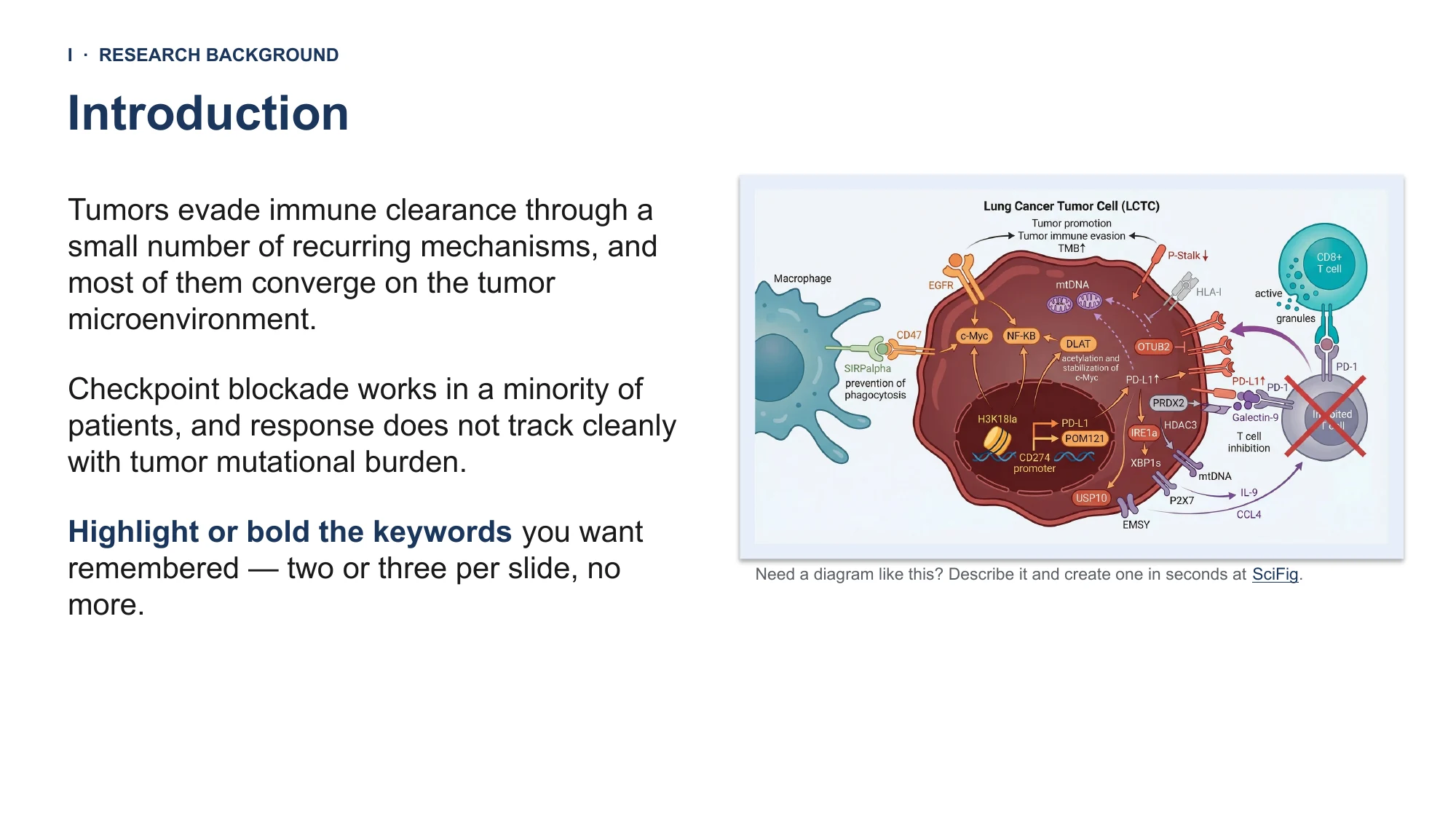 Conference Presentation Template2 styles · 23-slide conference talk deck at 16:9View layouts & download →
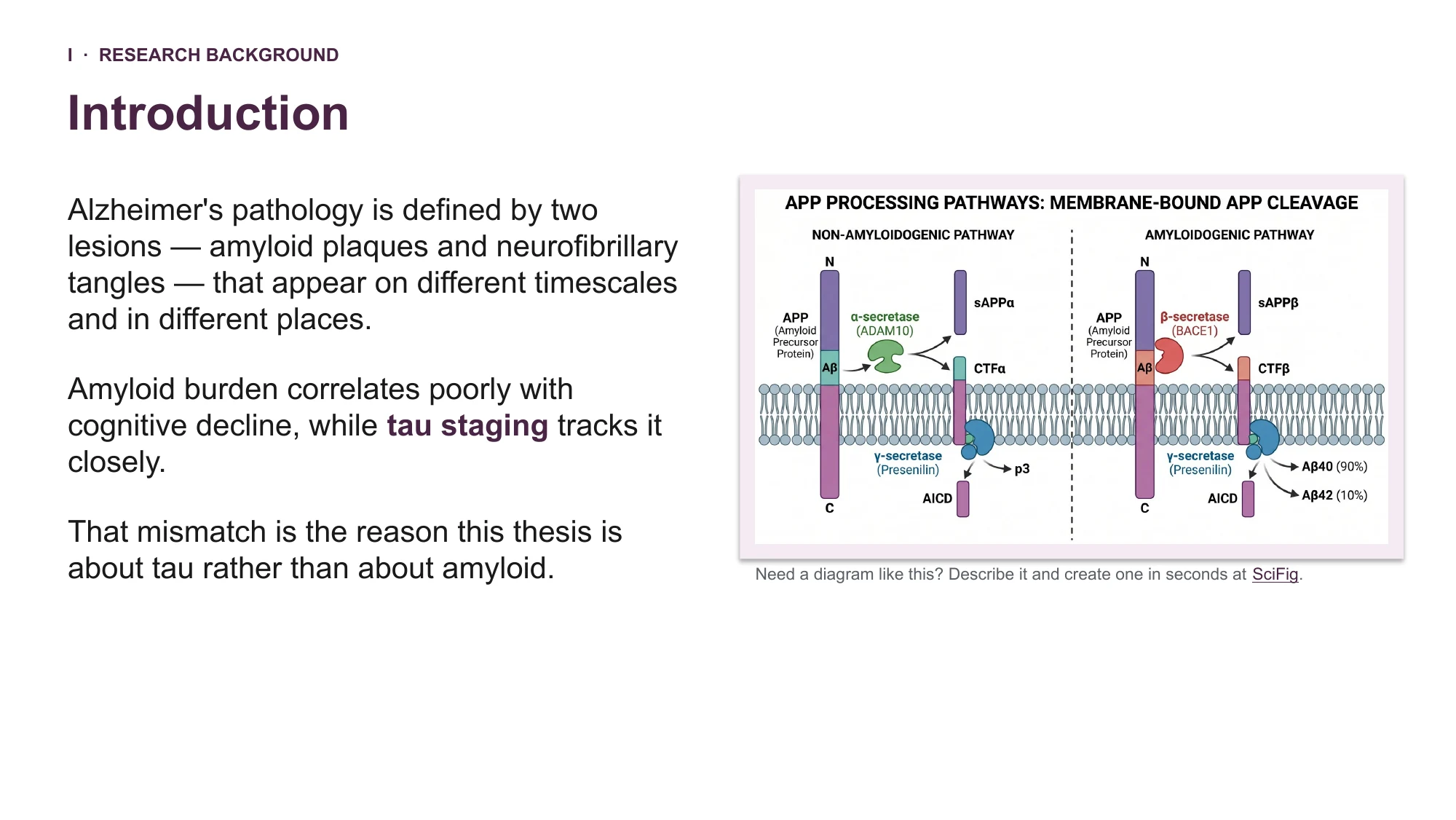 Thesis Defense Presentation Template2 styles · 22-slide defense deck with a chapter overviewView layouts & download →
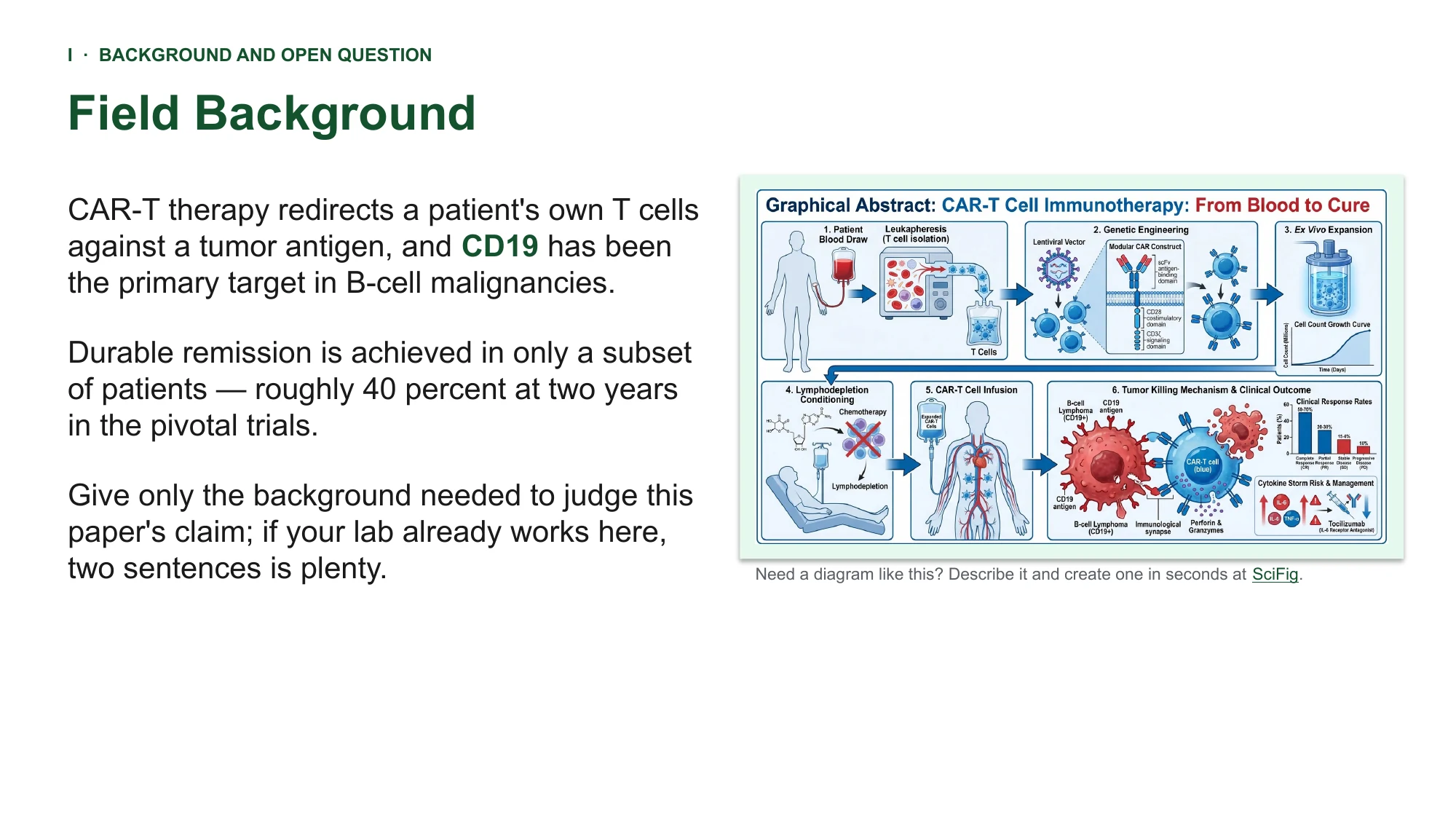 Journal Club Presentation Template2 styles · 22-slide deck with three figure slidesView layouts & download →
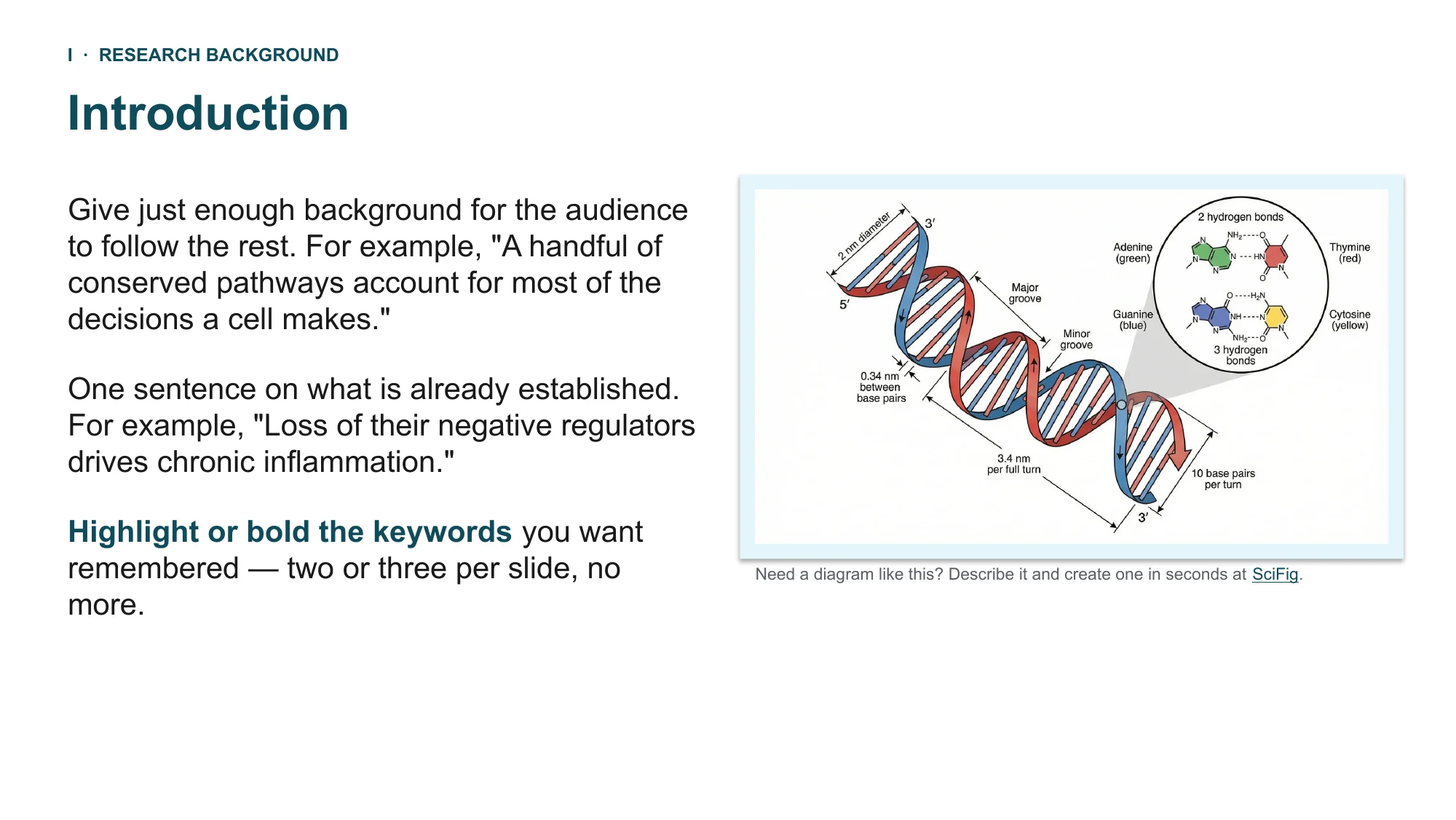 Lab Meeting Presentation Template2 styles · 20 slides, the shortest of the fourView layouts & download →
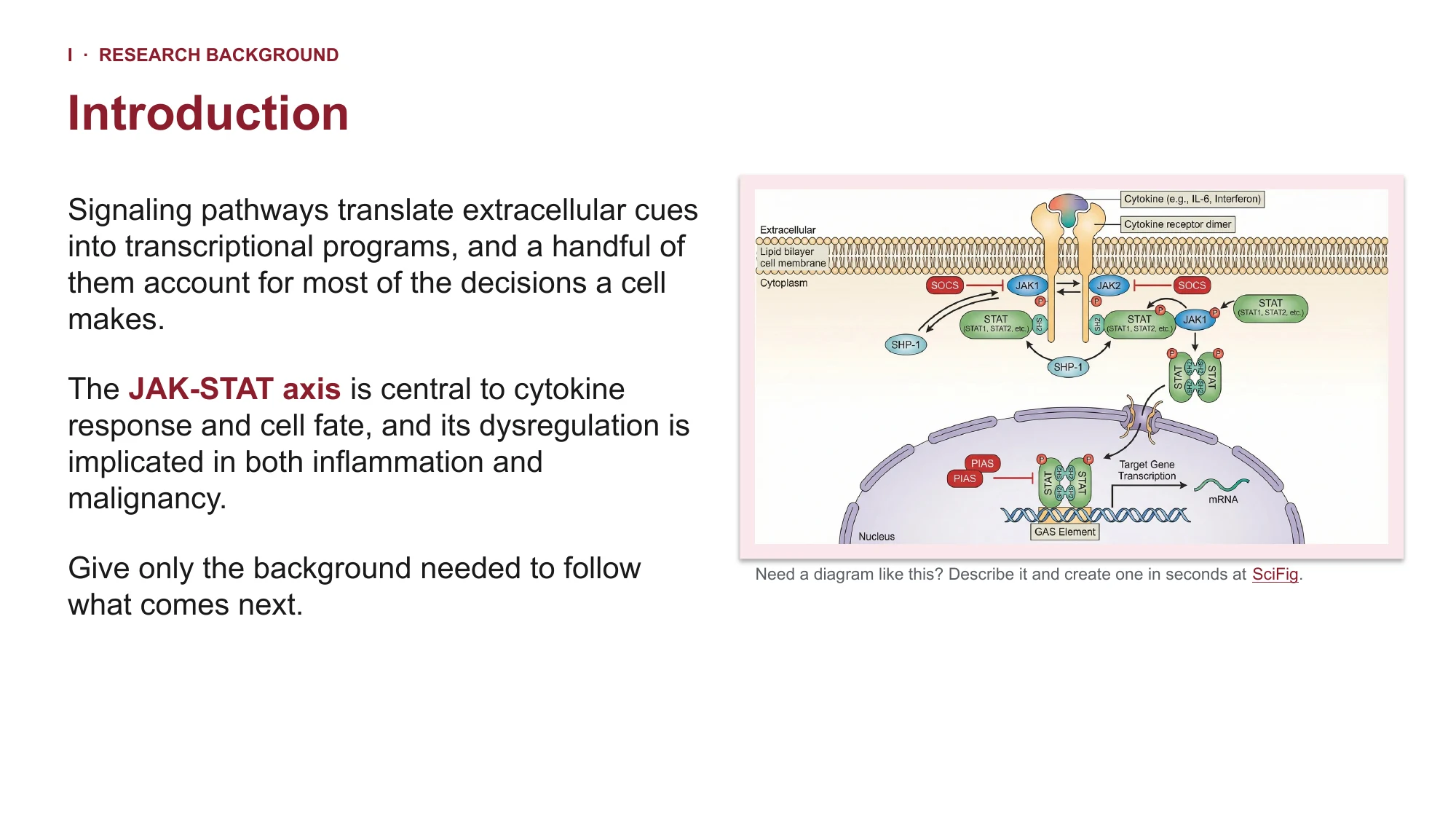 Biology Slides Template2 styles · 23 slides with a pathway figure set includedView layouts & download →
Which deck do you need?
Academic talks differ in narrative order, not in visual design. Start from the deck whose structure matches your talk.
| Talk | Typical length | Narrative shape |
|---|---|---|
| Conference talk | 10-15 min | Gap, hypothesis, methods, results, take-home |
| Thesis defense | 30-45 min | Contributions, chapter by chapter, committee questions |
| Journal club | 20-30 min | Someone else's paper, figure by figure, then critique |
| Lab meeting | 15-30 min | What changed since last time, blockers, next steps |
How to level up a scientific presentation with figures
Every deck here leaves six or seven slides for figures, and those are the slides an audience remembers.
The template already lays out where the figures go: each section has a slide built to carry its point visually. A picture lands where a paragraph does not — it is what the room remembers, and the only thing people can point back at during questions. Decide what kind of figure belongs in each slot, and for anything you do not have yet, describe it to the Scientific Figure Generator and drop the result in.
Background
a pathway, mechanism or context diagram that puts the audience into your field in one frame.
One Figure, One Message
the template leaves this slide as an empty frame on purpose. Its prompt reads "Drop your key figure here. One slide, one message — if it needs two, make two slides." This is the slide people photograph.
Study design
a schematic of what was done to what, and in what order. A schematic answers the methods question faster than the methods slide does.
Your results
the Result slides hold your own data. The template deliberately does not offer to generate these; that line is left for your figure caption.
Download a presentation template
Every deck is a plain 16:9 .pptx that opens in PowerPoint, Keynote, and Google Slides, with a speaker note on each slide and a set of ready-made figures at the end. Each deck comes in two styles: Minimal keeps every slide white, Bold puts a full-color cover and section breaks in front. Both are listed below.

Conference deck — Minimal
16:9 · 13.333 x 7.5 in · 23 slides
Conference deck — Bold
16:9 · 13.333 x 7.5 in · 23 slides

Thesis defense deck — Minimal
16:9 · 13.333 x 7.5 in · 22 slides
Thesis defense deck — Bold
16:9 · 13.333 x 7.5 in · 22 slides

Journal club deck — Minimal
16:9 · 13.333 x 7.5 in · 22 slides
Journal club deck — Bold
16:9 · 13.333 x 7.5 in · 22 slides
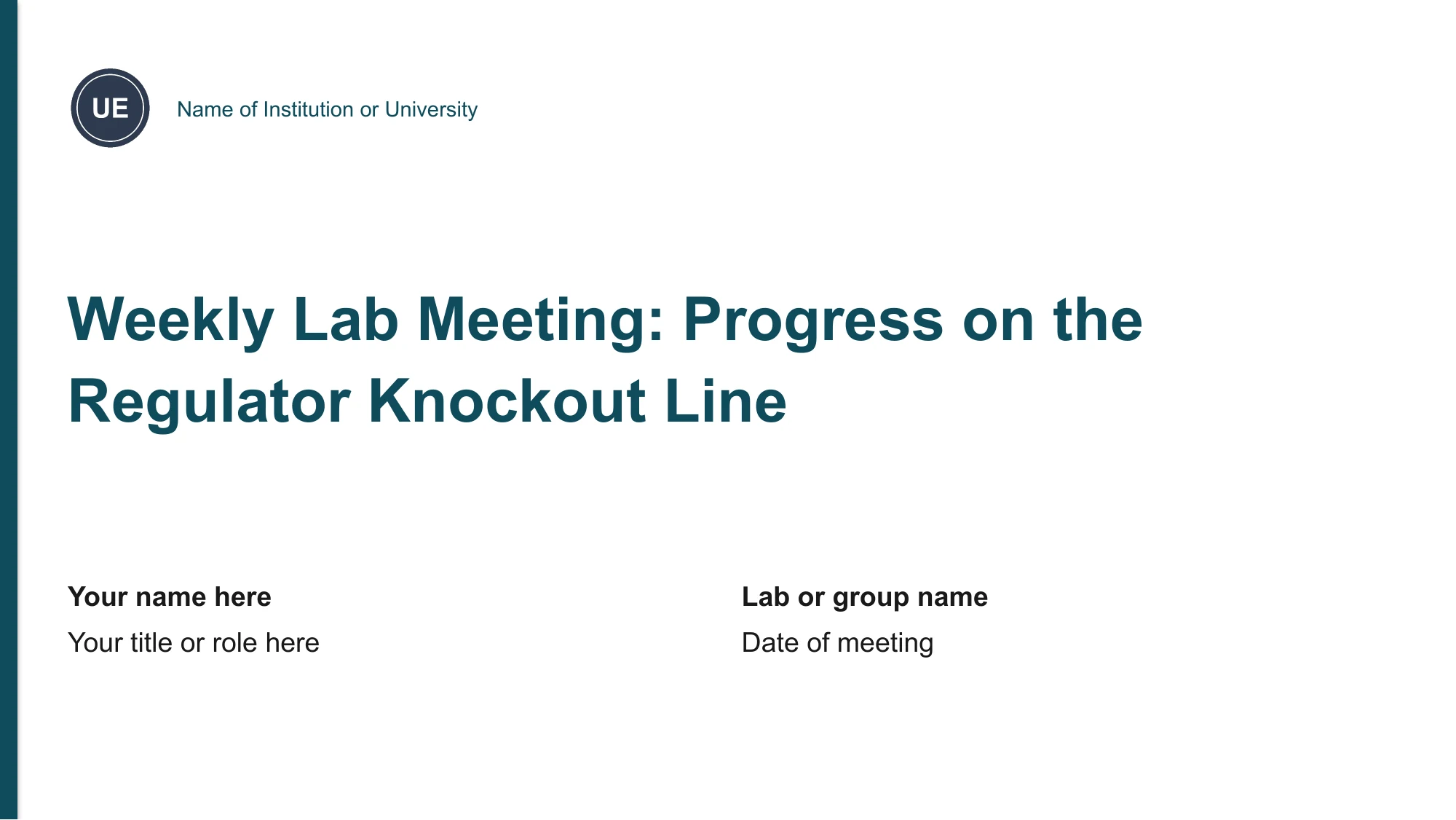
Lab meeting deck — Minimal
16:9 · 13.333 x 7.5 in · 20 slides
Lab meeting deck — Bold
16:9 · 13.333 x 7.5 in · 20 slides

Biology deck — Minimal
16:9 · 13.333 x 7.5 in · 23 slides
Biology deck — Bold
16:9 · 13.333 x 7.5 in · 23 slides
Biology and life science slides
The decks are discipline-neutral on purpose — a biology talk and a materials science talk share the same narrative order. What differs is the figures. Generate pathway diagrams, mechanisms, and experimental schematics with the SciFig tools and drop them into the figure placeholders.
Medical and clinical talks
Clinical talks add a disclosure slide and, at most meetings, a conflict-of-interest statement immediately after the title. Both slides are already in the conference deck; delete them only if your society does not require them.
Research presentation examples: what a filled-in deck looks like
Every deck here ships with example copy already in the placeholders rather than lorem ipsum, so you can see what belongs in each slot before you delete it. The examples are written as a research talk actually runs — a knowledge gap stated in one sentence, a hypothesis phrased so it could have come out false, methods given in enough detail to be judged rather than replicated, results led by what was found instead of by what was measured, and one take-home the room can repeat.
Title slide
title, authors with affiliations, and the presenting author marked. Many societies also want a disclosure slide immediately after; the conference deck has one.
The gap
why anyone should care, in about sixty seconds. This is the slide most people over-run.
The testable claim
one sentence. "We hypothesize that X will do Y in Z" beats a paragraph of context.
Methods
model system, sample size, and what was compared. Enough to judge the result.
Results
two or three slides, each led by a plain-language finding rather than a figure number.
Take-home and acknowledgements
one sentence the room remembers, then credit.
Academic presentation PowerPoint template: what to change and what to leave
These are plain .pptx files at 16:9 (13.333 x 7.5 in), the ratio every conference projector and lecture hall expects. Fonts are limited to Arial and Times New Roman so nothing silently substitutes when you move the file between machines or open it in Google Slides — the single most common way a deck breaks between the laptop it was built on and the podium. Colors are theme colors rather than hand-painted shapes, so changing the accent once updates every section divider at the same time.
Change freely
all text, the figures, the accent color, and the number of results slides.
Leave alone
the 16:9 canvas. A 4:3 rebuild letterboxes badly on modern projectors, and a 16:9 deck letterboxes on old ones — check the room before you convert.
Leave alone
the font pair, unless you embed the replacement font. A substituted font re-flows every text box.
Delete rather than hide
the disclosure slide if your society does not require it, and any results slide you are not going to speak to.
Keep the speaker notes while rehearsing
each slide has one explaining what that slide is for.
Frequently Asked Questions
Common questions about Scientific PowerPoint Presentation Templates.

Ready to publish
Scientific figures. Edit anything. Publish today.
Start for freeFree to start · No credit card required · Built for researchers