
Radar Chart Generator
Create professional radar charts for multi-dimensional data comparison — describe your axes and values, generate an online radar chart, and export for papers or presentations.
Figure prompt
Describe the figure you want to create
Not sure where to start? Use Example.
Start with 100 free credits|No credit card required
Get up to 300 free credits on day one when you join through an invite.
Reviewed by SciFig TeamUpdated
Radar Chart Generator— templates & examples
Everything you need to build your radar chart
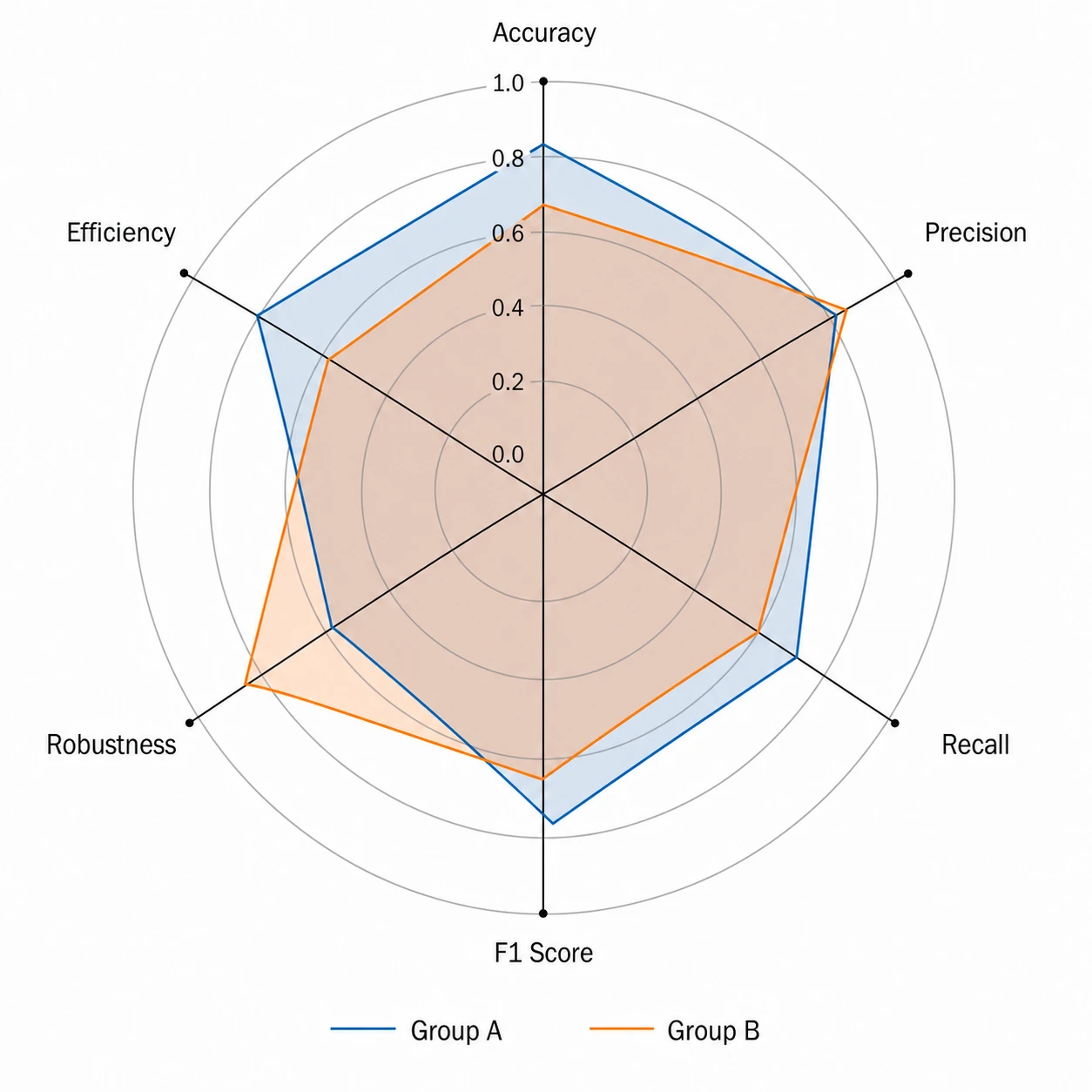
Plot multi-dimensional data on any number of axes
A clear radar chart generator should handle four to eight axes without cluttering labels or distorting the polygon. Describe your variables, axis ranges, and group values in plain language, and SciFig produces an online radar chart with precisely spaced axes, clean tick marks, and distinct colors for each group — the standard your reviewers expect for ability radar chart figures in peer-reviewed work.
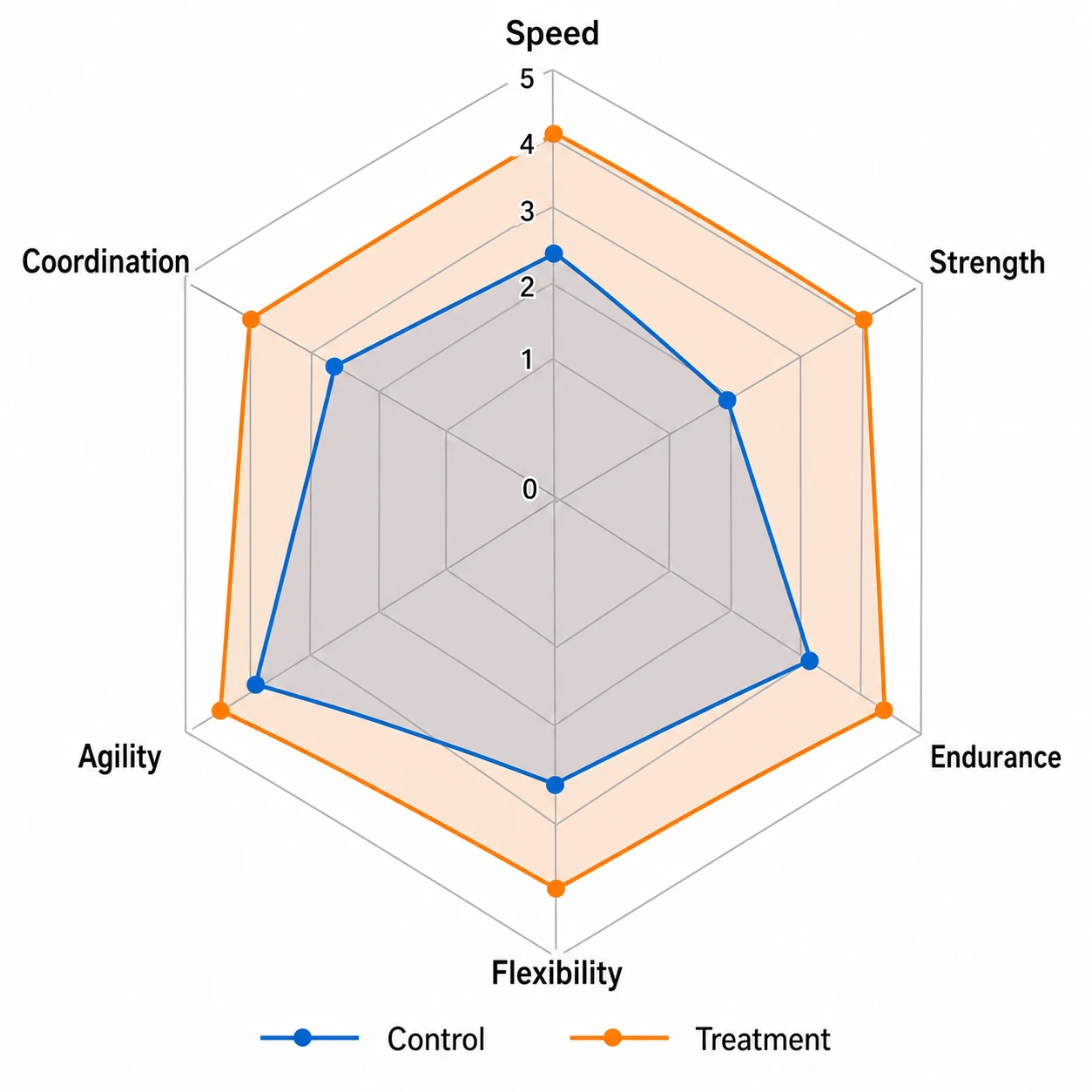
Compare groups with overlaid radar chart polygons
Multi-group radar charts let readers compare ability profiles or performance benchmarks at a glance. SciFig's radar chart generator overlays two or more polygons on the same axes with a crisp legend, uses accessible fill transparency so overlaps remain legible, and keeps axis labels readable at journal print sizes. Export as a radar chart example your colleagues can replicate.
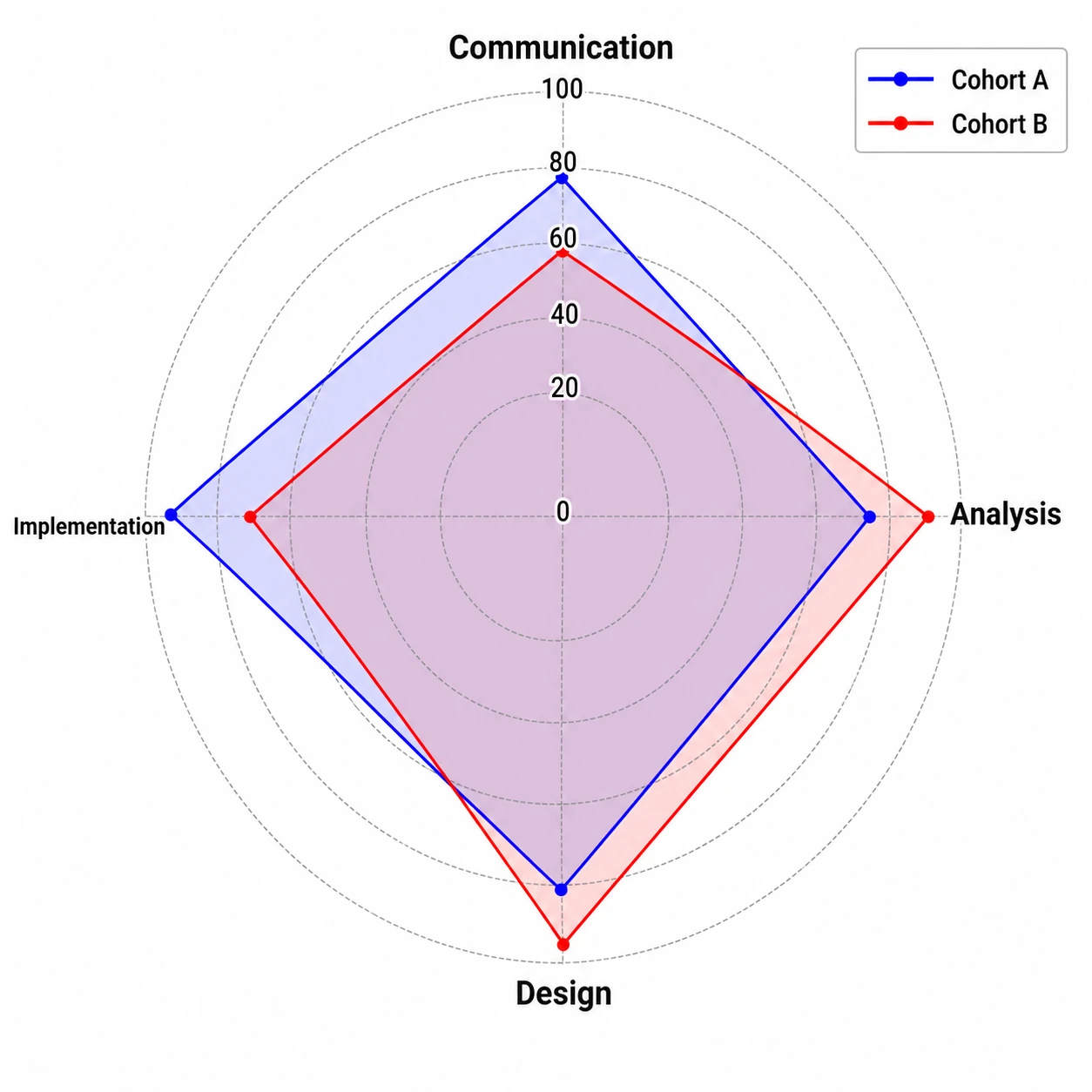
Publication-ready export for any radar chart use case
Whether you need a simple online radar chart for a conference poster or a detailed ability radar chart for a dissertation chapter, SciFig outputs a fully editable figure at the resolution and aspect ratio you need. Relabel axes, adjust the color palette, and re-export without rebuilding from scratch.
What is a radar chart?
A radar chart — also called a spider web chart or ability radar chart — displays multivariate data on axes radiating from a central point, forming a polygon that reveals strengths and weaknesses across five or more dimensions. Researchers use radar charts to compare skill profiles or visualize composite scores. With SciFig's radar chart generator you describe your axes and values and receive a clean, labeled radar diagram ready for your journal, thesis, or presentation.
Why researchers use a radar chart
- Shows strengths and weaknesses across multiple dimensions simultaneously
- Allows direct visual comparison of two or more groups on the same axes
- Compact format ideal for ability radar charts in psychology and education research
- Readers grasp overall balance and outlier axes faster than with bar charts
- Widely accepted by journals in sports science, clinical psychology, and product evaluation
- Scales from simple four-axis radar chart examples to complex eight-axis profiles
Key components of a radar chart
- Axes — radiating spokes from center, one per variable, equally spaced angularly
- Scale rings — concentric circles marking equal intervals along every axis
- Data polygon — a closed shape connecting each axis value for one group
- Group overlays — additional polygons with distinct colors or fills for comparison
- Axis labels — short descriptive names placed at the outer tip of each spoke
- Legend — identifies each group when two or more polygons are plotted
Where radar charts are used in research
- Cognitive and neuropsychological ability radar chart profiles across participant groups
- Sports science performance benchmarks comparing athletes across fitness dimensions
- Product usability evaluations scoring multiple design criteria per prototype
- Educational assessment comparing competency scores across curriculum domains
- Clinical outcome studies displaying multi-symptom severity profiles before and after treatment
- Survey research summarizing multi-item scale means for distinct respondent clusters
How to make a radar chart
Describe your radar chart
Tell SciFig what to draw in plain language — no design tools required.
Generate with SciFig
Get a clean, publication-ready figure that matches your description in seconds.
Edit & export
Vectorize it into editable SVG, relabel everything, and export for your paper, poster, or slides.
Radar Chart Generator — Frequently Asked Questions
Common questions about Radar Chart Generator.
More tools

Circuit Diagram Maker
Generate accurate circuit diagrams with labeled schematic symbols for research papers, lab reports, and technical publications.
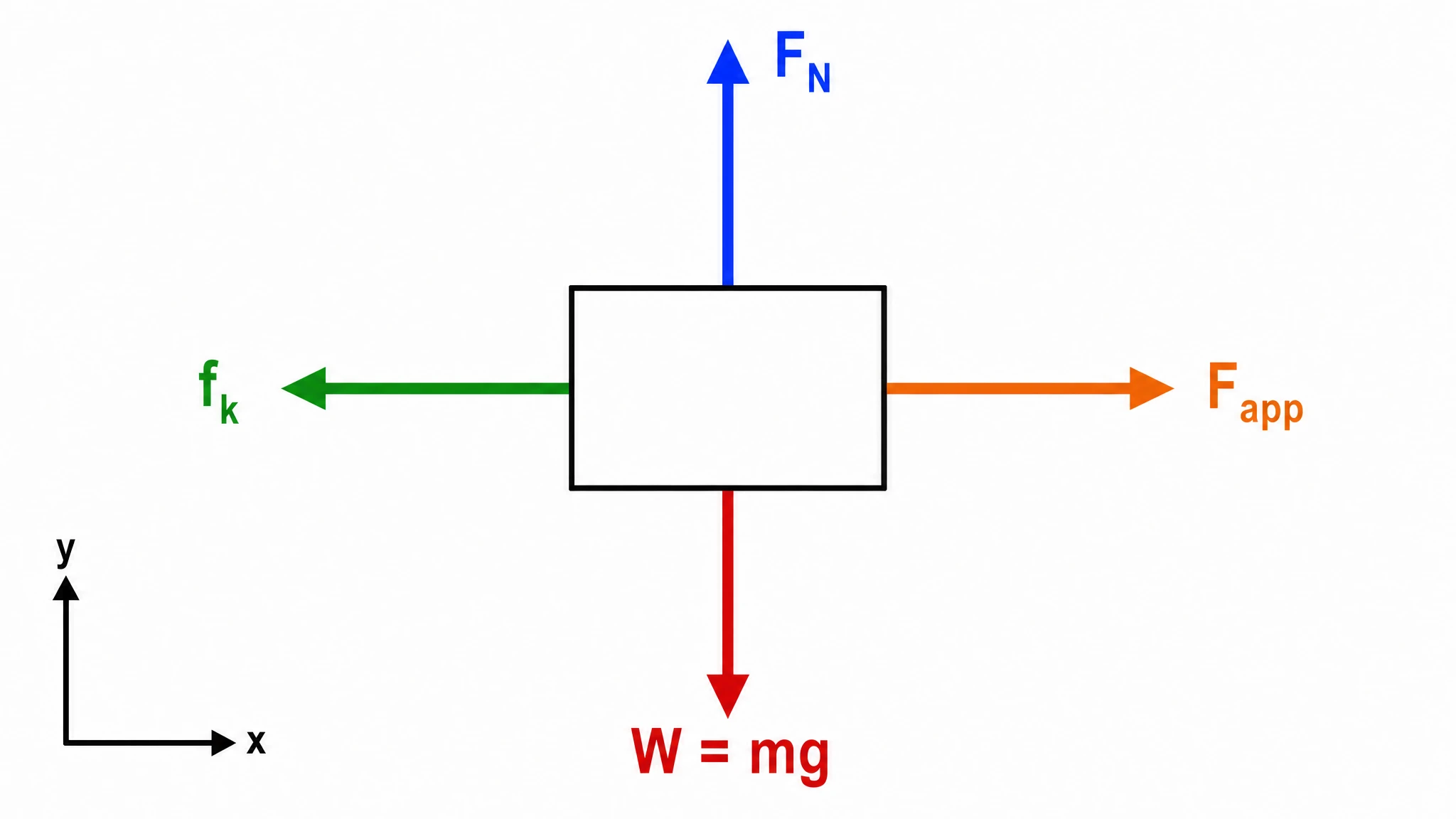
Free Body Diagram Generator
Create accurate, publication-ready free body diagrams with labeled force vectors for weight, normal force, friction, and tension in seconds.
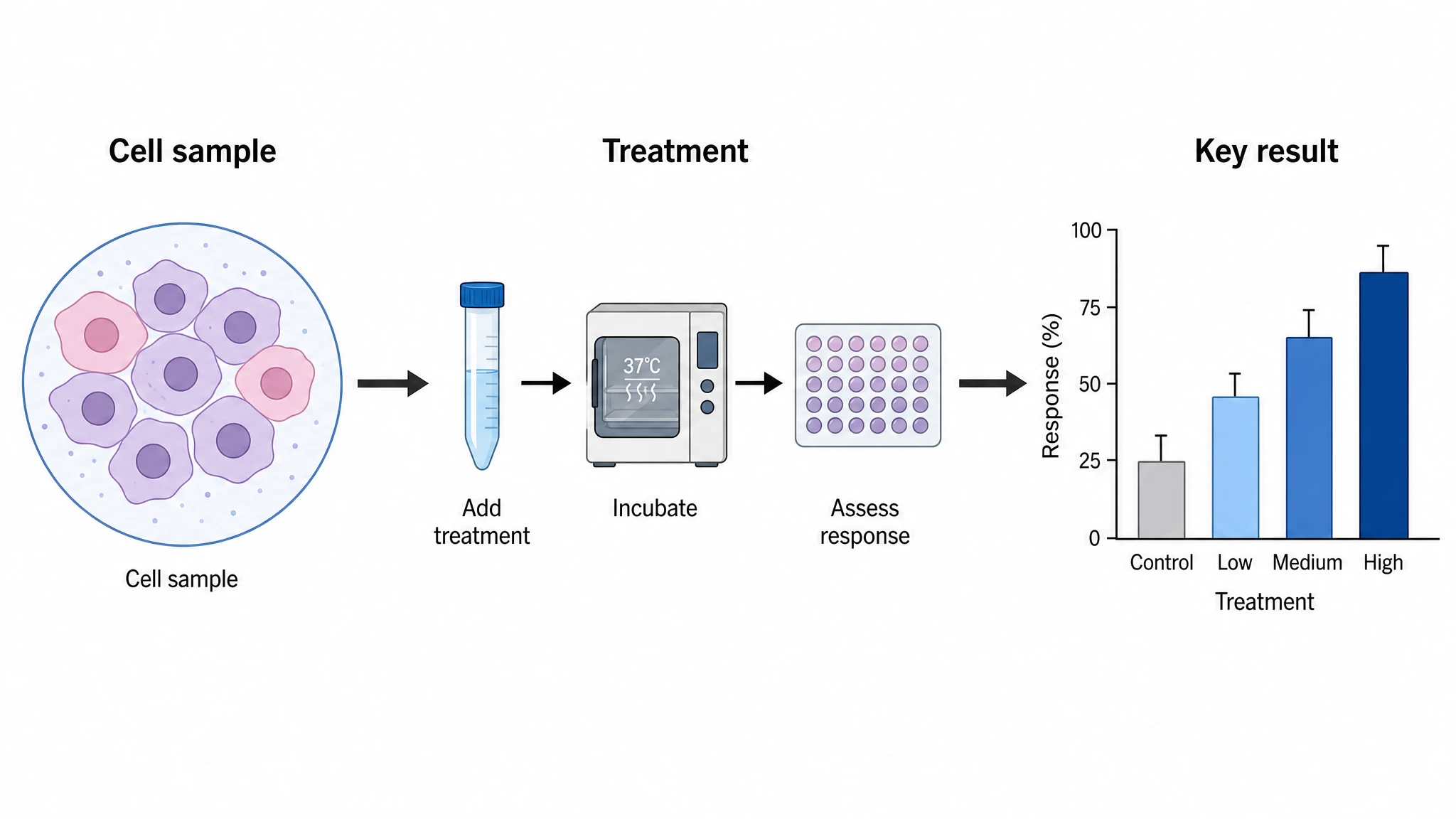
Graphical Abstract Maker
Generate a publication-ready graphical abstract — a single-panel visual summary that captures your study's methods, key finding, and result with clear icons and flow arrows.
Home
Free AI Scientific Figure Generator and Figure Maker — Create Research Figures, Images, Illustrations and Diagrams
Text-to-Figure
Generate a figure from a plain-language description
Models
Default to GPT Image 2 for journal papers; switch to Nano Banana Pro for slides and posters; pick Nano Banana 2 for routine figure work
Tutorials
Seven short walkthroughs of the AI scientific figure generator
Blog
Tutorials, tool comparisons, and publication tips for researchers.
Inspiration
Explore publication-ready scientific figure examples, copy the prompts, and use them as starting points for your own work.

Ready to publish?
Make your own radar chart in minutes.
Start for freeFree to start · No credit card required · Built for researchers