
Free Syntactic Tree Generator
Create clean, publication-ready syntactic tree diagrams — phrase-structure trees with S, NP, VP, and PP nodes — for linguistics papers, textbooks, and courses.
Start with up to 150 free credits|No credit card required
Get up to 250 free credits on day one when you join through an invite.
Updated
Free Syntactic Tree Generator— templates & examples
Everything you need to draw syntactic trees
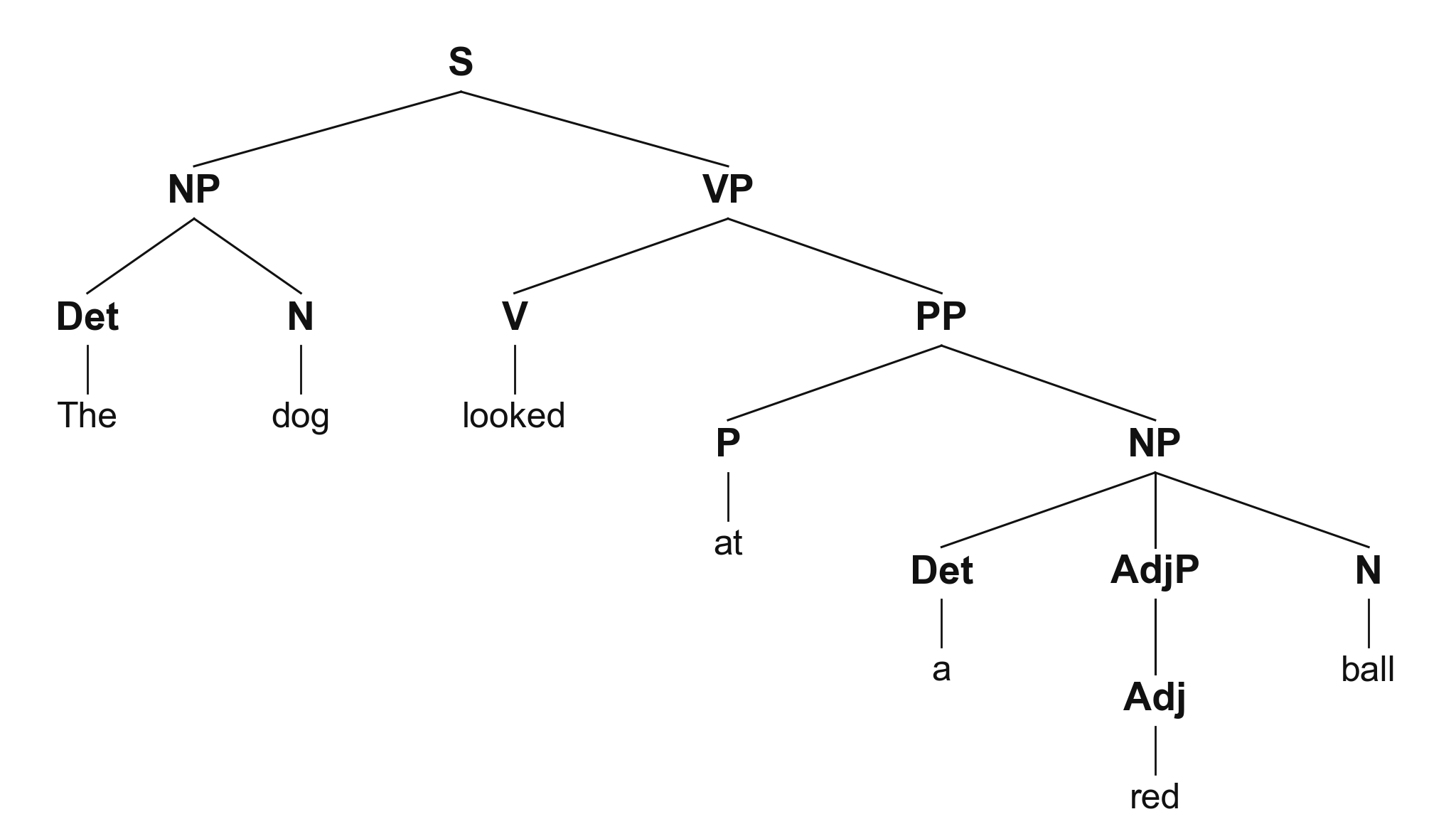
Full phrase-structure hierarchy — S, NP, VP, PP, and beyond
A proper syntactic tree must show every non-terminal node at the correct level of the constituent hierarchy. Describe your sentence and SciFig's syntactic tree generator produces a labeled tree with the root S branching into NP and VP, nested PP and AdjP complements placed correctly, and terminal leaf nodes at the bottom. Whether you need a flat phrase-structure tree or an X-bar projection with intermediate bar levels, the diagram matches the notation your linguistics textbook or journal requires.
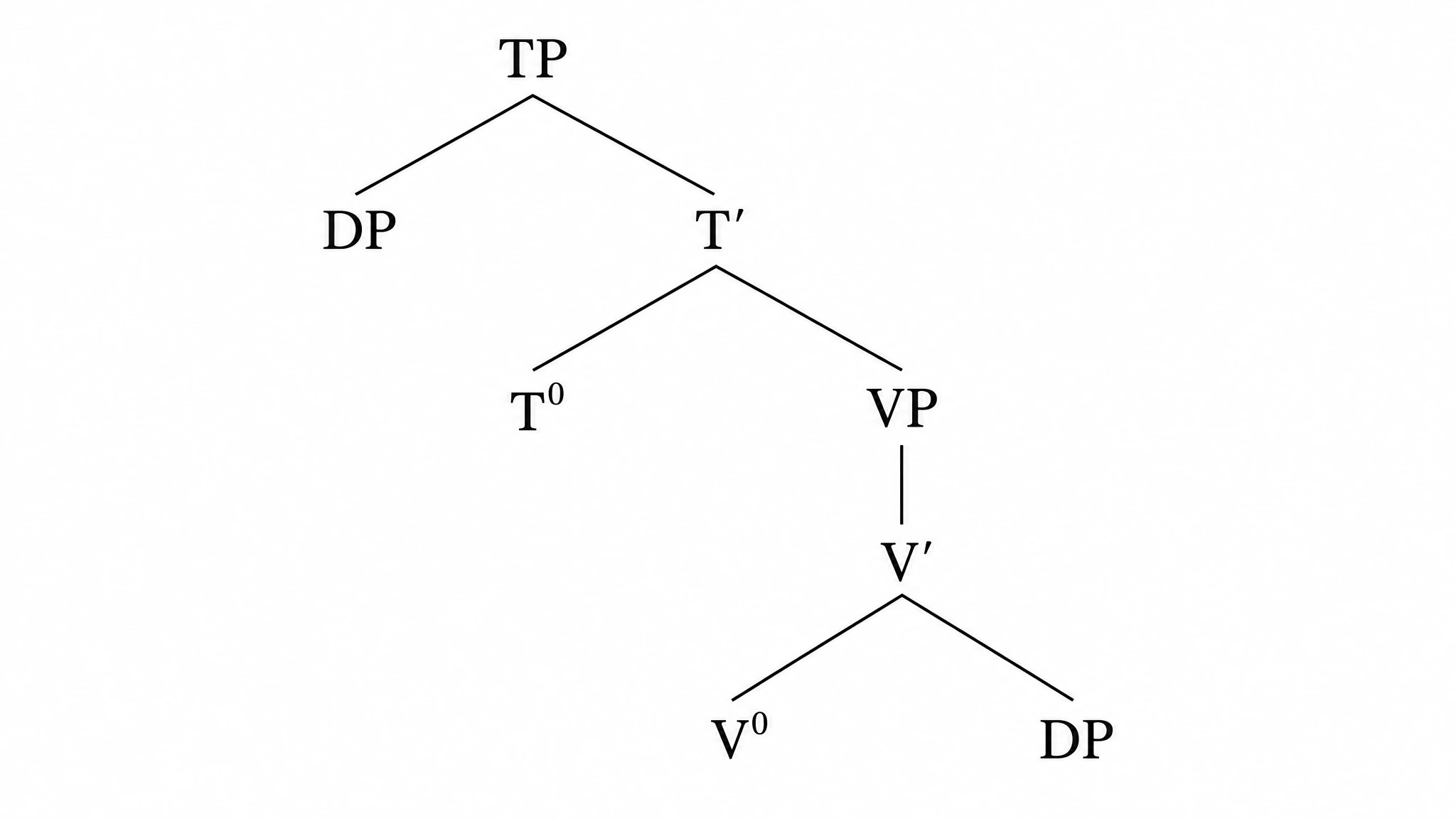
X-bar projections with specifier and complement positions
X-bar theory requires an extra bar-level node between every lexical head and its maximal projection, plus distinct specifier and complement positions. SciFig's xbar tree generator draws these intermediate X′ nodes automatically — specifiers branch to the left of the X′, complements to the right, and every head is labeled at the X⁰ level. Use it to generate X-bar trees for DP, TP, CP, and VP shells, and export a clean figure for your syntax assignment or research paper on phrase-structure grammar.
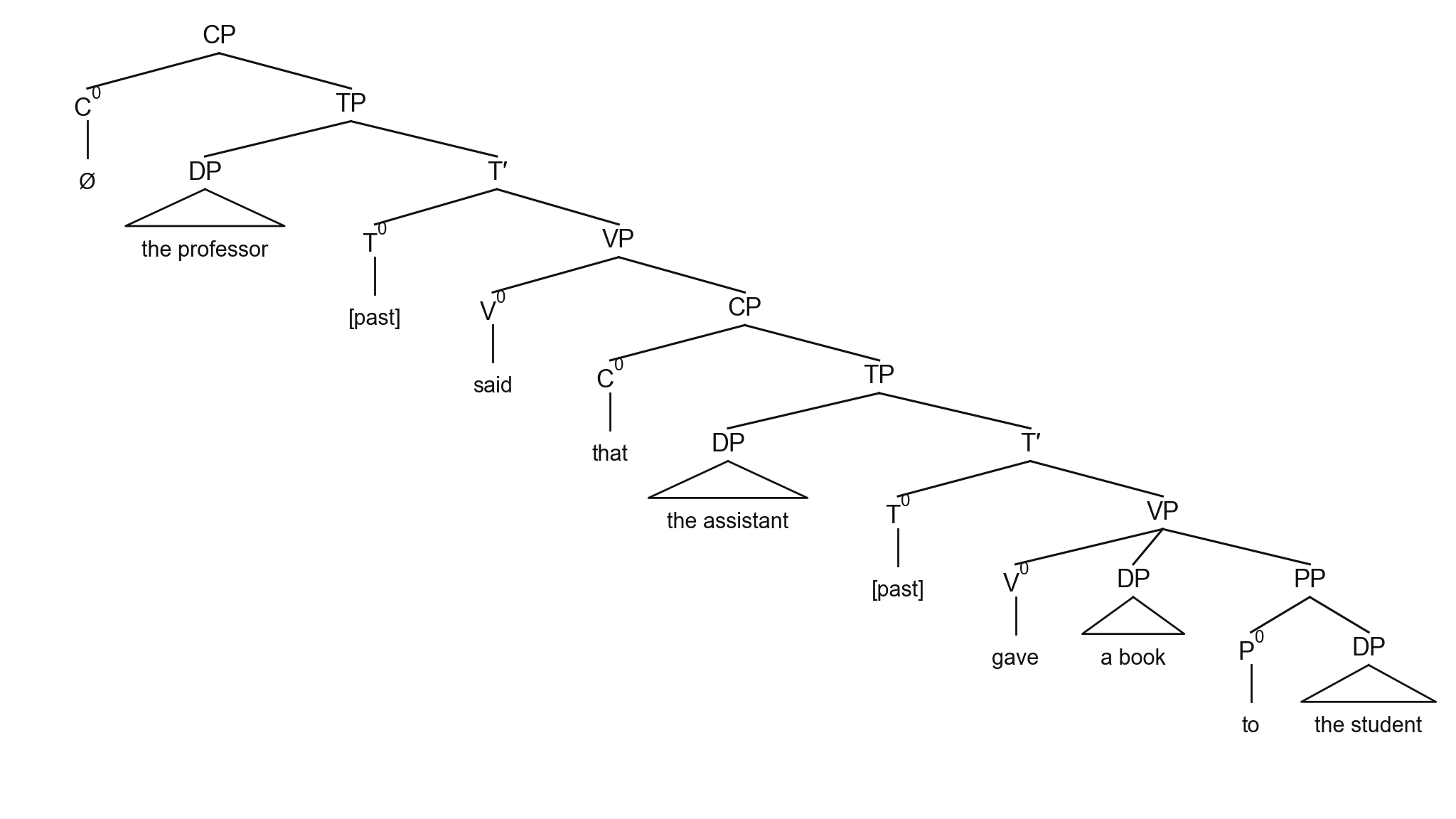
Export publication-ready figures for papers and lecture slides
Linguistics papers, textbooks, and course materials demand tree diagrams that are crisp, consistently labeled, and easy to read. SciFig acts as a linguistic syntax tree drawing editor — relabel any node, adjust branching direction, and resize for journal column width or poster format. Everything the syntax tree generator draws stays editable, so you can export the final syntactic tree as a high-resolution image for your manuscript, dissertation chapter, or slide deck without wrestling with LaTeX qtree packages or manual vector drawing.
What is a syntactic tree?
A syntactic tree — also called a phrase-structure or parse tree — shows how a sentence divides into constituents: a root S node branches into a noun phrase (NP) and verb phrase (VP), which branch further until terminal leaf nodes hold the words. Higher nodes dominate lower ones in a clear hierarchy. SciFig's syntactic tree generator turns a plain-language sentence into a properly labeled tree, also handling X-bar projections — editable and export-ready for papers or lecture slides.
Why syntactic trees are essential in linguistics
- Phrase-structure trees make the hierarchical constituency of sentences visible and testable
- Non-terminal nodes (S, NP, VP, PP) encode the categorical identity of each constituent
- Trees provide the standard notation for phrase-structure grammar rules across generative frameworks
- Visual tree diagrams make it easy to apply constituency tests such as substitution and movement
- X-bar projections in tree diagrams reveal specifier, head, and complement positions required by minimalist syntax
- Publication-quality syntactic tree diagrams are expected in syntax papers, textbooks, and conference presentations
Key components of a syntactic tree diagram
- Root node S (sentence) — the top-most non-terminal that dominates the entire sentence
- Non-terminal nodes — syntactic category labels such as NP, VP, PP, AdjP, AdvP, DP, TP, and CP
- Terminal nodes — the leaf nodes that correspond to the actual lexical items (words) in the sentence
- Branches — lines connecting a mother node to its daughter nodes, showing dominance and constituency
- Bar-level projections (X-bar theory) — intermediate X′ nodes between a head X⁰ and maximal phrase XP, with specifier and complement positions
- Triangles — optional notation for collapsing an unanalyzed constituent into a labeled triangle node
Where syntactic tree diagrams are used
- Introductory and advanced syntax courses in linguistics departments
- Research papers and journal articles in generative syntax and formal grammar
- Language acquisition studies analyzing children's phrase-structure knowledge
- Computational linguistics and natural-language processing pipelines that visualize parse trees
- Cognitive science research on sentence processing and mental grammar
- Textbooks and lecture materials illustrating phrase-structure grammar rules and X-bar theory — use as a production rules to syntax diagram converter to show how S → NP VP becomes a branching tree
How to make a syntactic tree
Describe your syntactic tree
Tell SciFig what to draw in plain language — no design tools required.
Generate with SciFig
Get a clean, publication-ready figure that matches your description in seconds.
Edit & export
Vectorize it into editable SVG, relabel everything, and export for your paper, poster, or slides.
Free Syntactic Tree Generator — Frequently Asked Questions
Common questions about Free Syntactic Tree Generator.
More tools
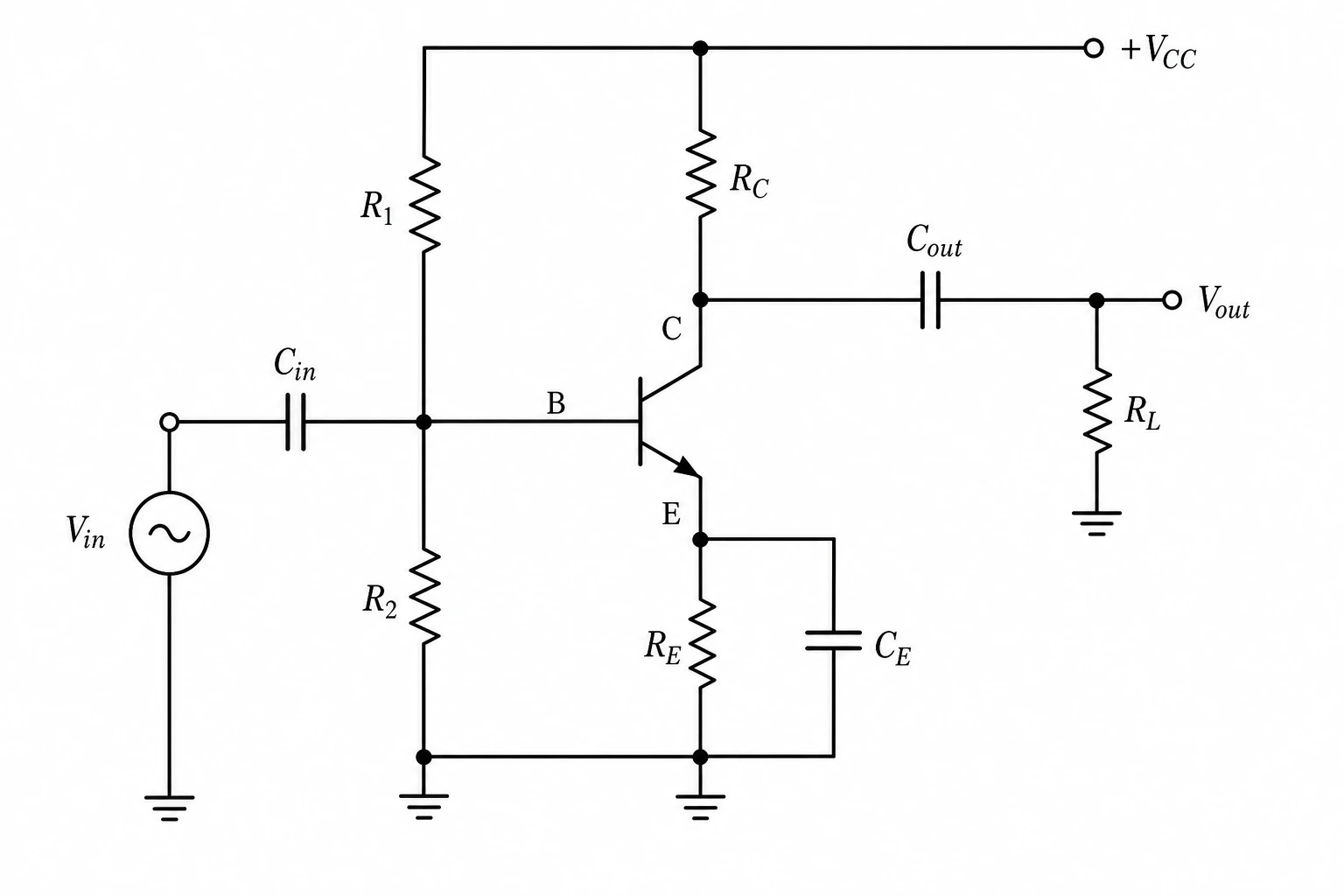
Circuit Diagram Maker
Draw electronic circuit schematics
Free Body Diagram Generator
Show forces acting on an object

Graphical Abstract Maker
Summarize your study in one panel
SciFig
Free AI Scientific Figure Generator for Illustrations, Images, Charts and Flowcharts
Models
Default to GPT Image 2 for journal papers; switch to Nano Banana Pro for slides and posters; pick Nano Banana 2.1 for routine figure work
Tutorials
Seven short walkthroughs of the AI scientific figure generator
Blog
Tutorials, tool comparisons, and publication tips for researchers.
Inspiration
Explore publication-ready illustrations, charts and flowcharts. Copy a prompt or open any template as the starting point for your own figure.
Pricing
View pricing

Ready to publish?
Make your own syntactic tree in minutes.
Start for freeFree to start · No credit card required · Built for researchers