
Dichotomous Key Maker
Build accurate dichotomous keys for species identification and biological classification — generate branching paired-question keys for coursework and research.
Figure prompt
Describe the figure you want to create
Not sure where to start? Use Example.
Start with 100 free credits|No credit card required
Get up to 300 free credits on day one when you join through an invite.
Reviewed by SciFig TeamUpdated
Dichotomous Key Maker— templates & examples
Everything you need to build your dichotomous key
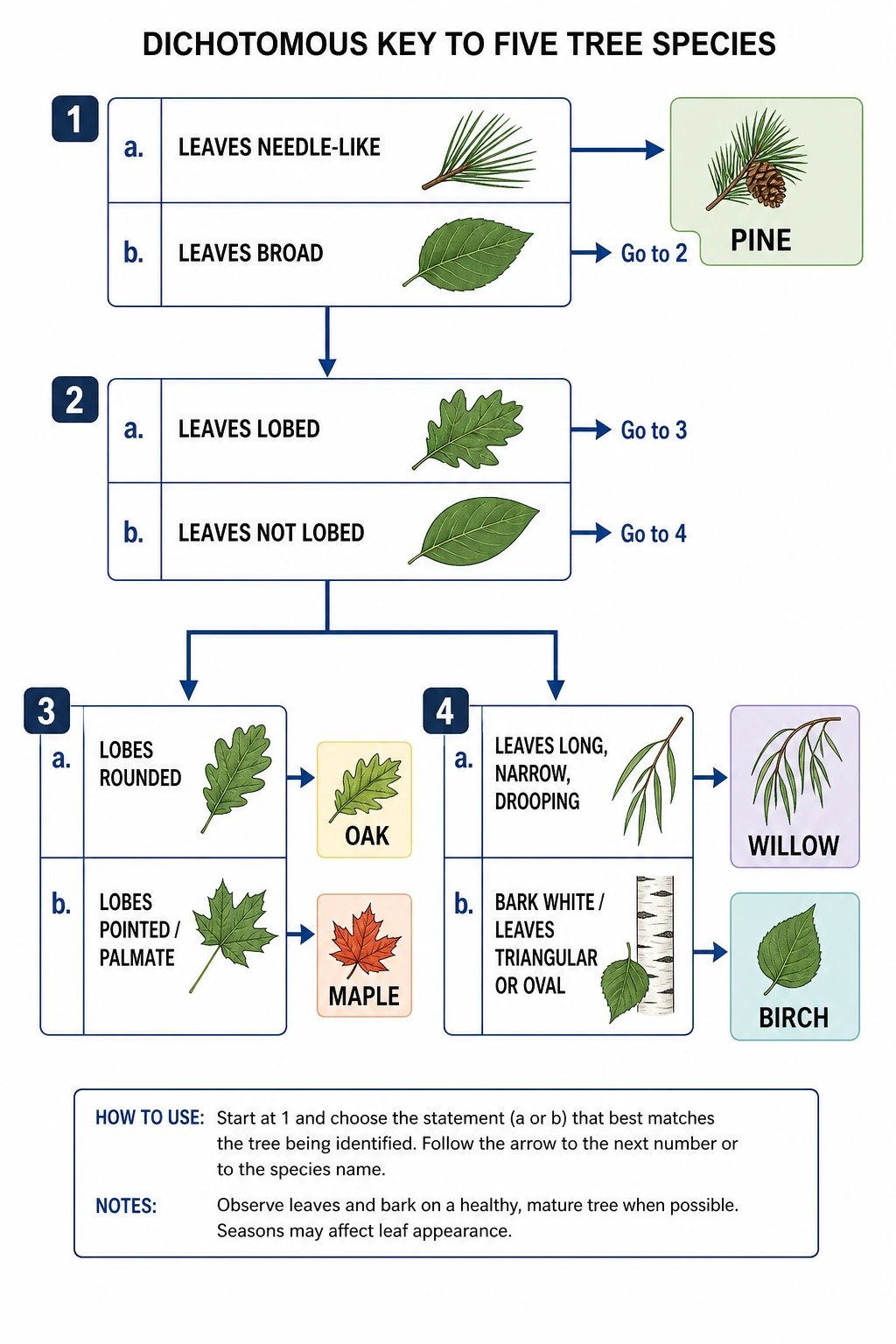
Build a dichotomous key from taxa and characters
List your organisms and their contrasting characters, and SciFig's dichotomous key maker arranges them into a branching diagram with numbered couplets and clear taxon labels. The online dichotomous key layout follows the standard format expected in biology labs and taxonomy courses — paired questions at each step, with arrows leading to the next couplet or a final identification.
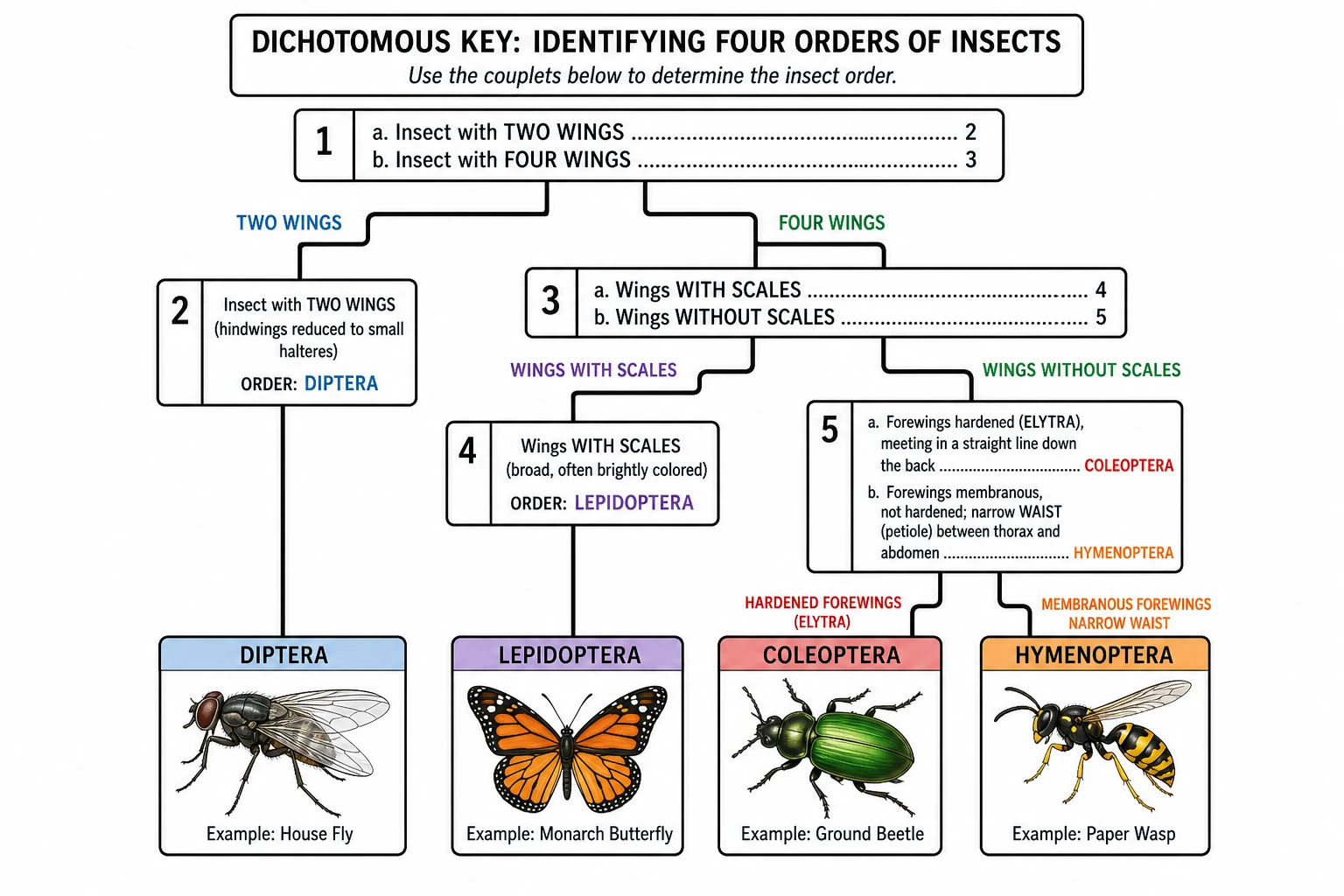
Start from a dichotomous key template
Generate a reusable dichotomous key template with blank couplets, then fill in your own organisms and distinguishing characters. SciFig also provides worked examples — a leaf identification key, an insect order key, and a mineral identification key — showing how to create a dichotomous key before you adapt it to your own taxon list.
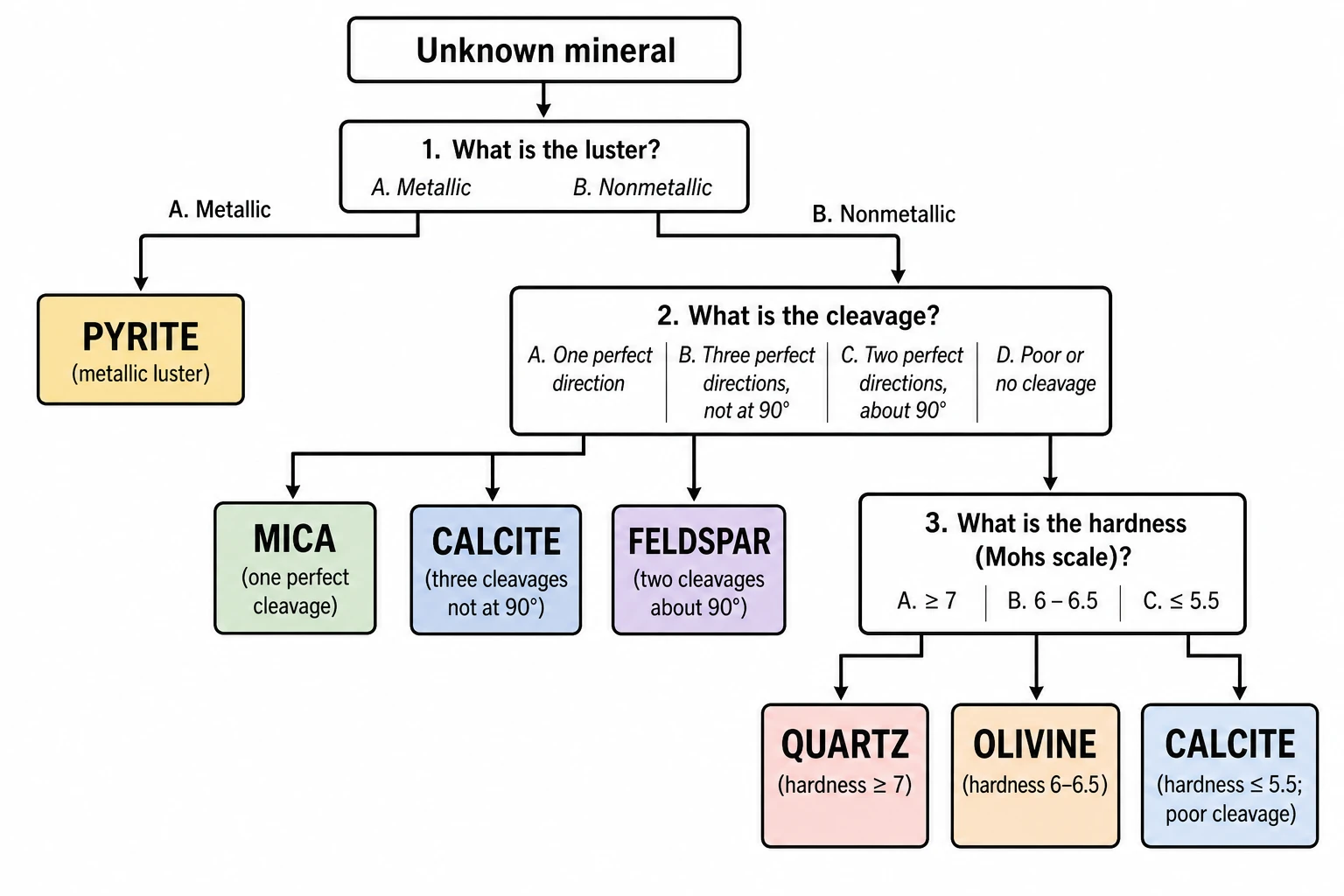
Export your online dichotomous key
Download a clean, publication-ready dichotomous key as a high-resolution figure for your lab report, field guide, or journal submission. SciFig's dichotomous key maker keeps every couplet and branch fully editable so you can add taxa, refine character descriptions, and re-export the key as your identification study evolves.
What is a dichotomous key?
A dichotomous key guides users through paired questions, or couplets, to identify an organism. At each step the user chooses one of two contrasting descriptions and follows the branch until reaching a name. Dichotomous keys are the standard format for taxonomic field guides and biology lab exercises. With SciFig's dichotomous key maker you describe your taxa and distinguishing characters and generate a clean, labeled online dichotomous key you can edit and export for assignments or publications.
Why you need a dichotomous key
- Provides a systematic, repeatable path to identify any specimen in your taxon list
- Required format for taxonomy lab reports and biology field exercises
- Reduces identification errors by forcing clear, contrasting character pairs
- Works for any domain — plants, animals, fungi, minerals, or microorganisms
- Helps students learn distinguishing characters while building the key
- Produces a shareable identification tool other researchers can use in the field
Key components of a dichotomous key
- Couplets — paired questions presenting two contrasting character descriptions
- Lead numbers — sequential numbers identifying each couplet in the key
- Characters — observable traits used to distinguish taxa at each step
- Branches — arrows or indentation indicating which path to follow
- Taxon names — the final identification reached at the end of each branch
- Scope statement — the group of organisms the key is designed to identify
Where dichotomous keys are used
- Biology lab manuals and taxonomy course assignments
- Field guides for plant, insect, bird, and mushroom identification
- Ecology fieldwork and biodiversity surveys
- Natural history museum and herbarium reference materials
- Environmental science and conservation biology studies
- Introductory science curricula from middle school through university
How to make a dichotomous key
Describe your dichotomous key
Tell SciFig what to draw in plain language — no design tools required.
Generate with SciFig
Get a clean, publication-ready figure that matches your description in seconds.
Edit & export
Vectorize it into editable SVG, relabel everything, and export for your paper, poster, or slides.
Dichotomous Key Maker — Frequently Asked Questions
Common questions about Dichotomous Key Maker.
More tools

Circuit Diagram Maker
Generate accurate circuit diagrams with labeled schematic symbols for research papers, lab reports, and technical publications.
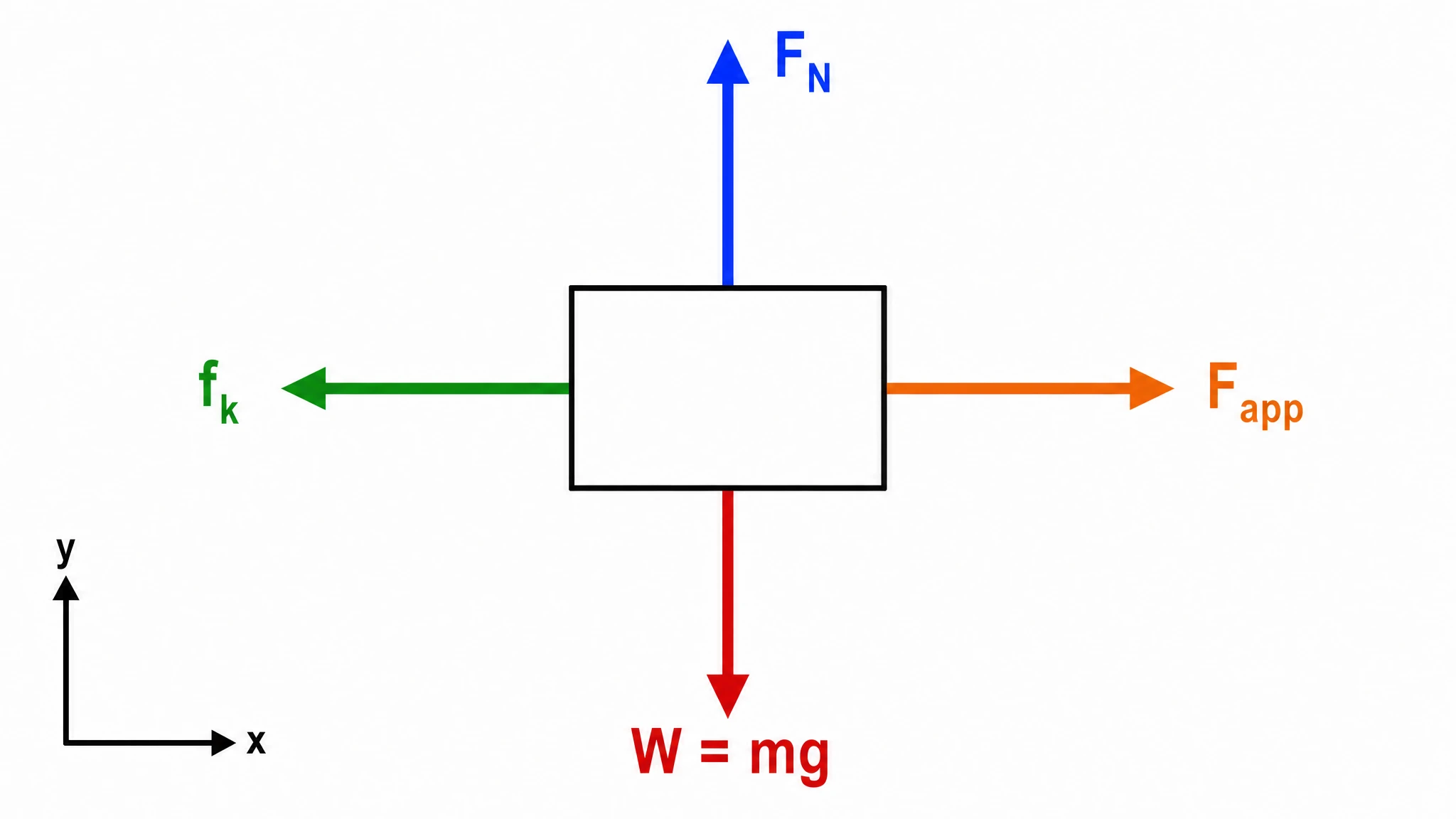
Free Body Diagram Generator
Create accurate, publication-ready free body diagrams with labeled force vectors for weight, normal force, friction, and tension in seconds.

Graphical Abstract Maker
Generate a publication-ready graphical abstract — a single-panel visual summary that captures your study's methods, key finding, and result with clear icons and flow arrows.
Home
Free AI Scientific Figure Generator and Figure Maker — Create Research Figures, Images, Illustrations and Diagrams
Text-to-Figure
Generate a figure from a plain-language description
Models
Default to GPT Image 2 for journal papers; switch to Nano Banana Pro for slides and posters; pick Nano Banana 2 for routine figure work
Tutorials
Seven short walkthroughs of the AI scientific figure generator
Blog
Tutorials, tool comparisons, and publication tips for researchers.
Inspiration
Explore publication-ready scientific figure examples, copy the prompts, and use them as starting points for your own work.

Ready to publish?
Make your own dichotomous key in minutes.
Start for freeFree to start · No credit card required · Built for researchers