
Free Food Web Maker
Build a clear food web diagram with SciFig — connect producers, consumers, and decomposers with energy flow arrows across trophic levels in seconds.
Start with up to 150 free credits|No credit card required
Get up to 250 free credits on day one when you join through an invite.
Updated
Free Food Web Maker— templates & examples
Everything you need to build your food web diagram
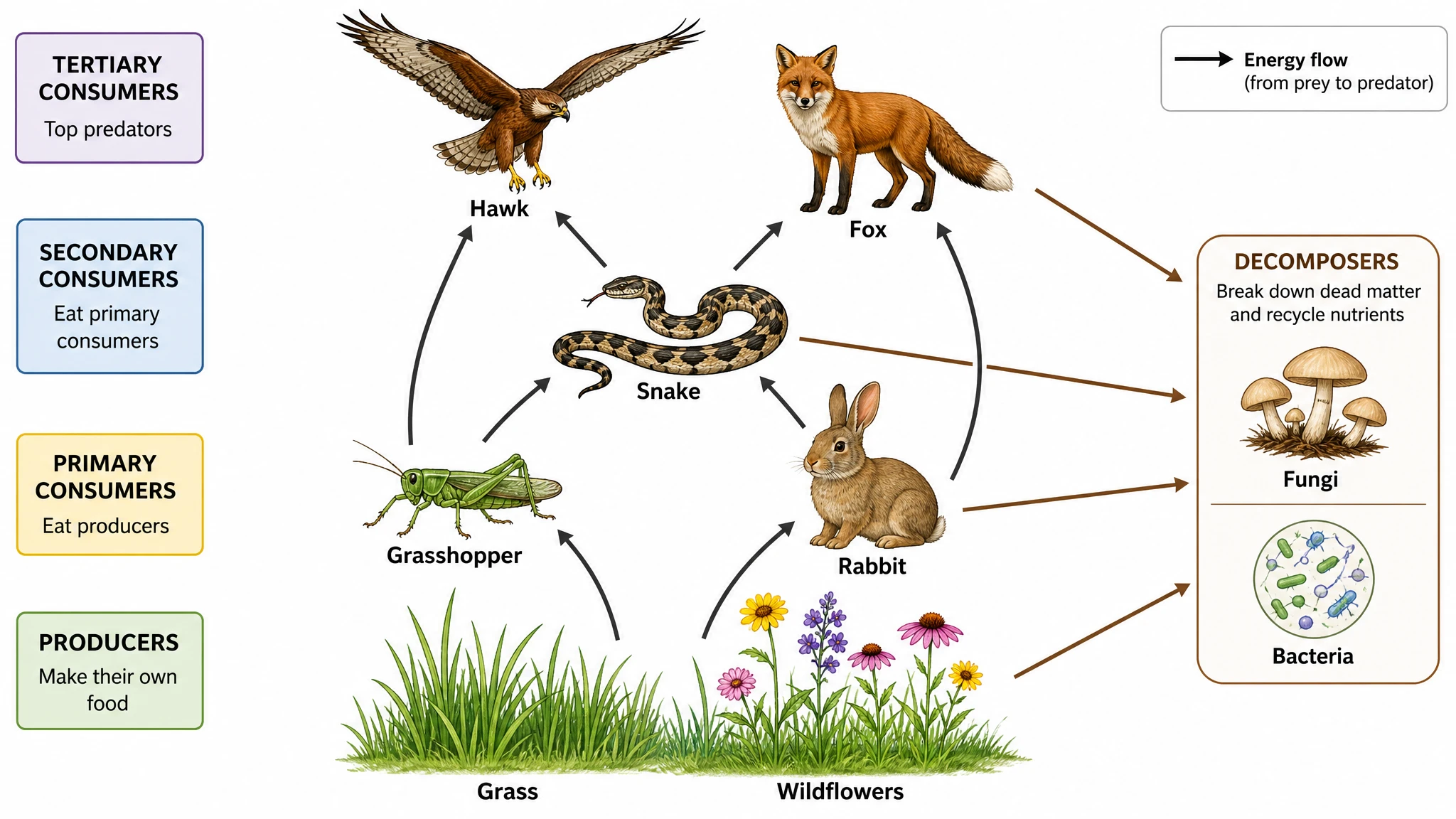
Accurate producers, consumers, and decomposers
SciFig's food web maker populates every food web diagram with the three roles a real ecosystem food web needs — producers like grasses and algae at the base, primary and secondary consumers in the middle, and decomposers recycling nutrients at the edge. Each organism is placed and labeled correctly for its trophic level, so the food web diagram is biologically sound from the first generation rather than a loose sketch you have to fix by hand.
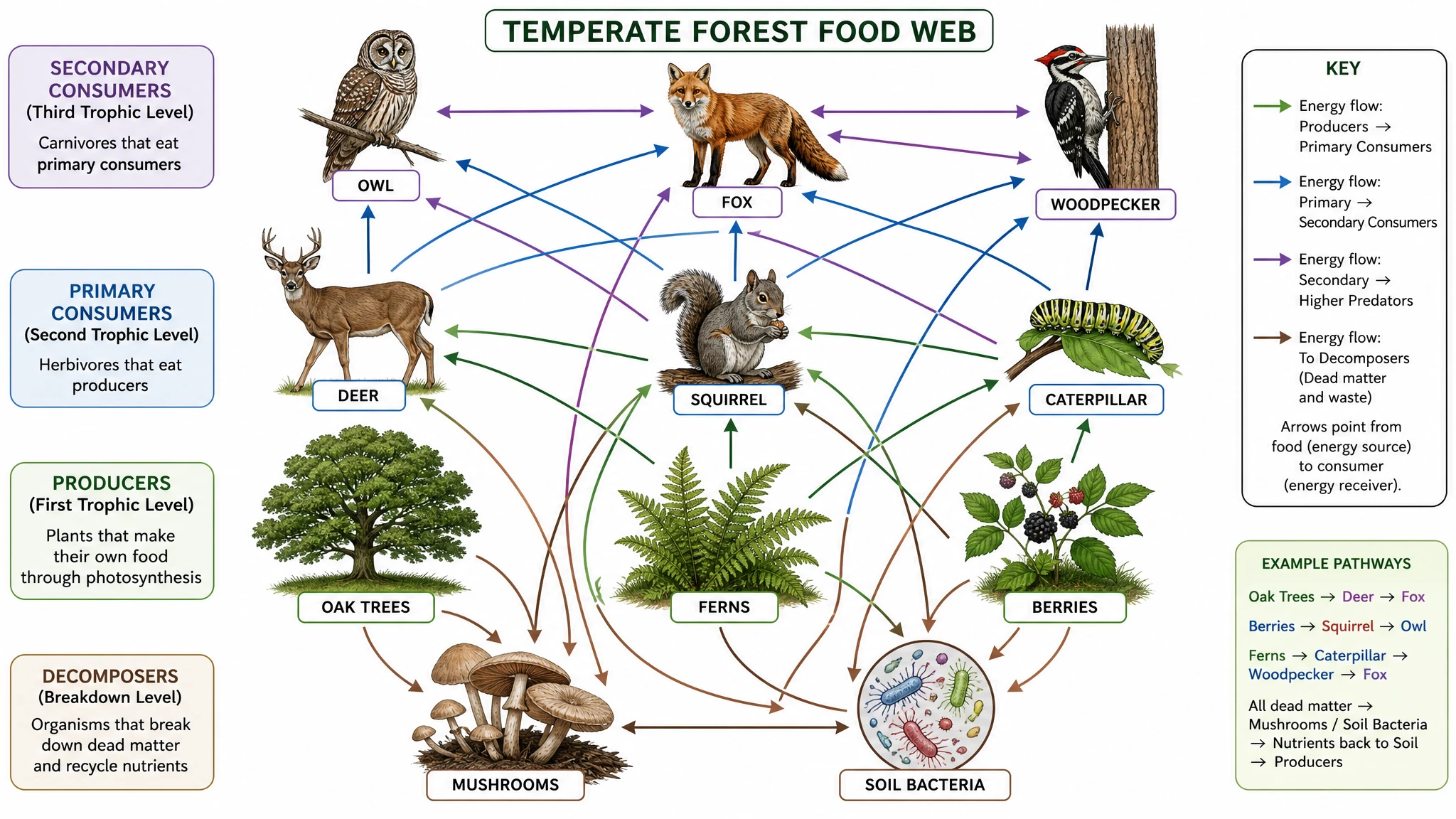
Energy flow arrows in the right direction
Every connection in your food web is drawn as an energy flow arrow pointing from prey to predator — the detail students get wrong most often. The food web generator orients each arrow from the organism being eaten toward the one eating it across all trophic levels, so your ecosystem food web reads correctly at a glance. Add, remove, or redirect any arrow and the food web diagram stays clean and publication-ready.
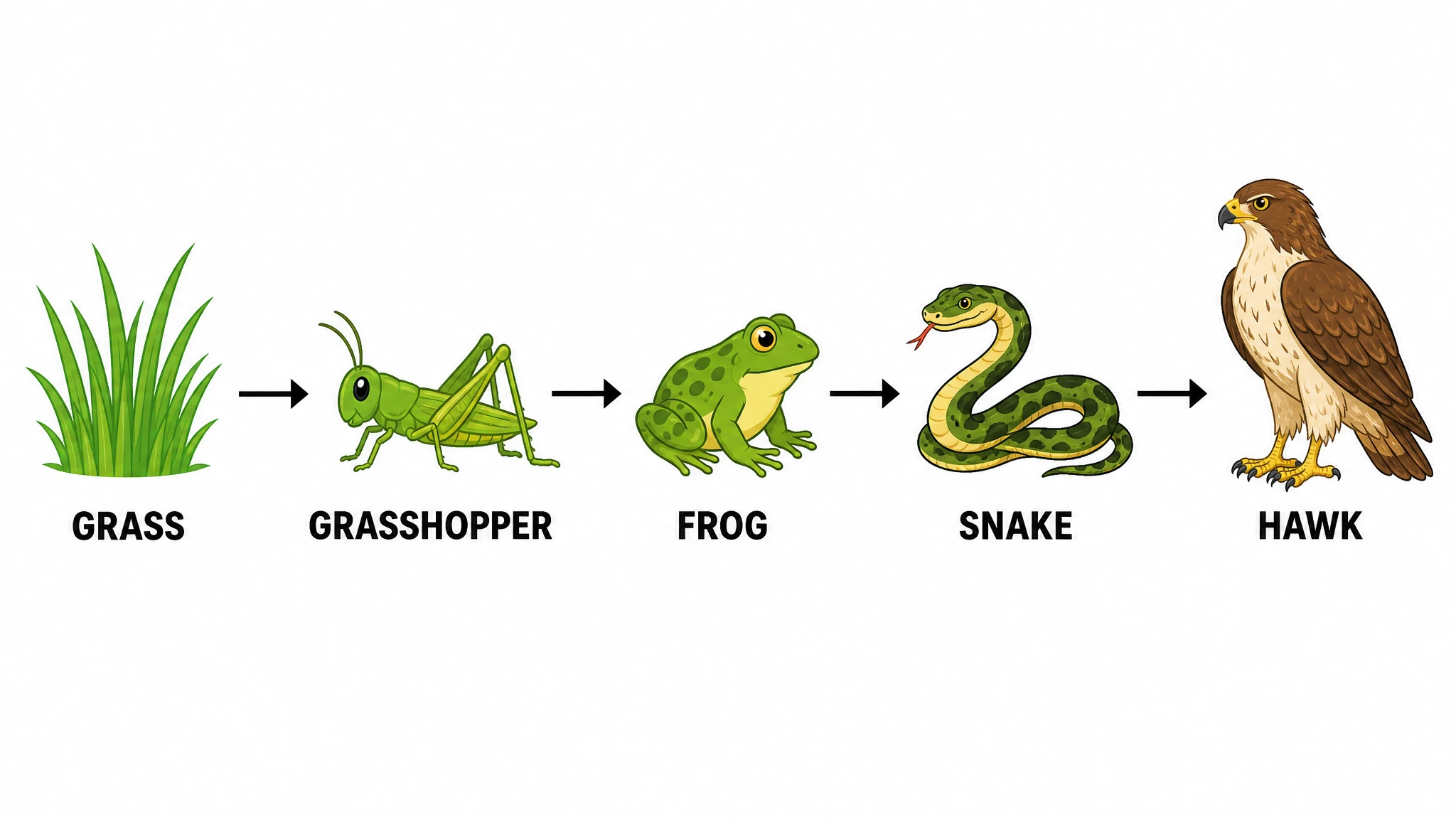
From simple food chain to full food web
Start with the food chain maker for a single linear path, then expand to a complete food web diagram showing every overlapping pathway in the ecosystem. Switch between a simple food web for kids and a detailed food web template for advanced ecology without rebuilding anything. Export the finished food web as a high-resolution image ready to drop into a slide deck, worksheet, lab report, or research figure.
What is a food web?
A food web is a diagram that maps how energy and nutrients move through an ecosystem by connecting organisms across multiple food chains. It shows producers, primary and secondary consumers, and decomposers, all linked by arrows that trace energy flow from one trophic level to the next. SciFig's food web maker turns a short description of any ecosystem into an accurate, fully editable food web diagram in seconds — relabel species, adjust arrows, and export.
Why an accurate food web diagram matters
- A food web diagram models real ecosystem complexity far better than a single linear food chain
- Correct energy flow arrows are the most common point students lose marks on, so accuracy matters for teaching
- Showing producers, consumers, and decomposers together makes nutrient cycling and trophic levels visible at a glance
- Clear ecosystem food web figures help reviewers and readers grasp food web structure in publications and reports
- Editable food web diagrams let educators adapt the same ecosystem food web for different grade levels
- A well-built food web maker output communicates predator-prey relationships faster than any text description
Key parts of a food web diagram
- Producers — plants, algae, and phytoplankton that capture solar energy and form the base of the food web
- Primary consumers — herbivores such as insects, rabbits, and zooplankton that feed directly on producers
- Secondary and tertiary consumers — carnivores and omnivores that occupy the higher trophic levels
- Decomposers — fungi and bacteria that break down dead matter and return nutrients to the ecosystem
- Arrows — energy flow arrows pointing from each organism to whatever consumes it
- Trophic levels — the stacked feeding positions that organize the food web from producers upward
Where food web diagrams are used
- Middle school and high school ecology lessons on food chains and trophic levels
- University ecology and environmental science courses covering energy flow and ecosystems
- Biology worksheets, study guides, and exam preparation on producers, consumers, and decomposers
- Lab reports and field study writeups documenting a specific ecosystem food web
- Research papers and presentations modeling predator-prey and trophic relationships
- Conservation reports illustrating how a species fits into a wider food web
How to make a food web
Describe your food web
Tell SciFig what to draw in plain language — no design tools required.
Generate with SciFig
Get a clean, publication-ready figure that matches your description in seconds.
Edit & export
Vectorize it into editable SVG, relabel everything, and export for your paper, poster, or slides.
Free Food Web Maker — Frequently Asked Questions
Common questions about Free Food Web Maker.
More tools
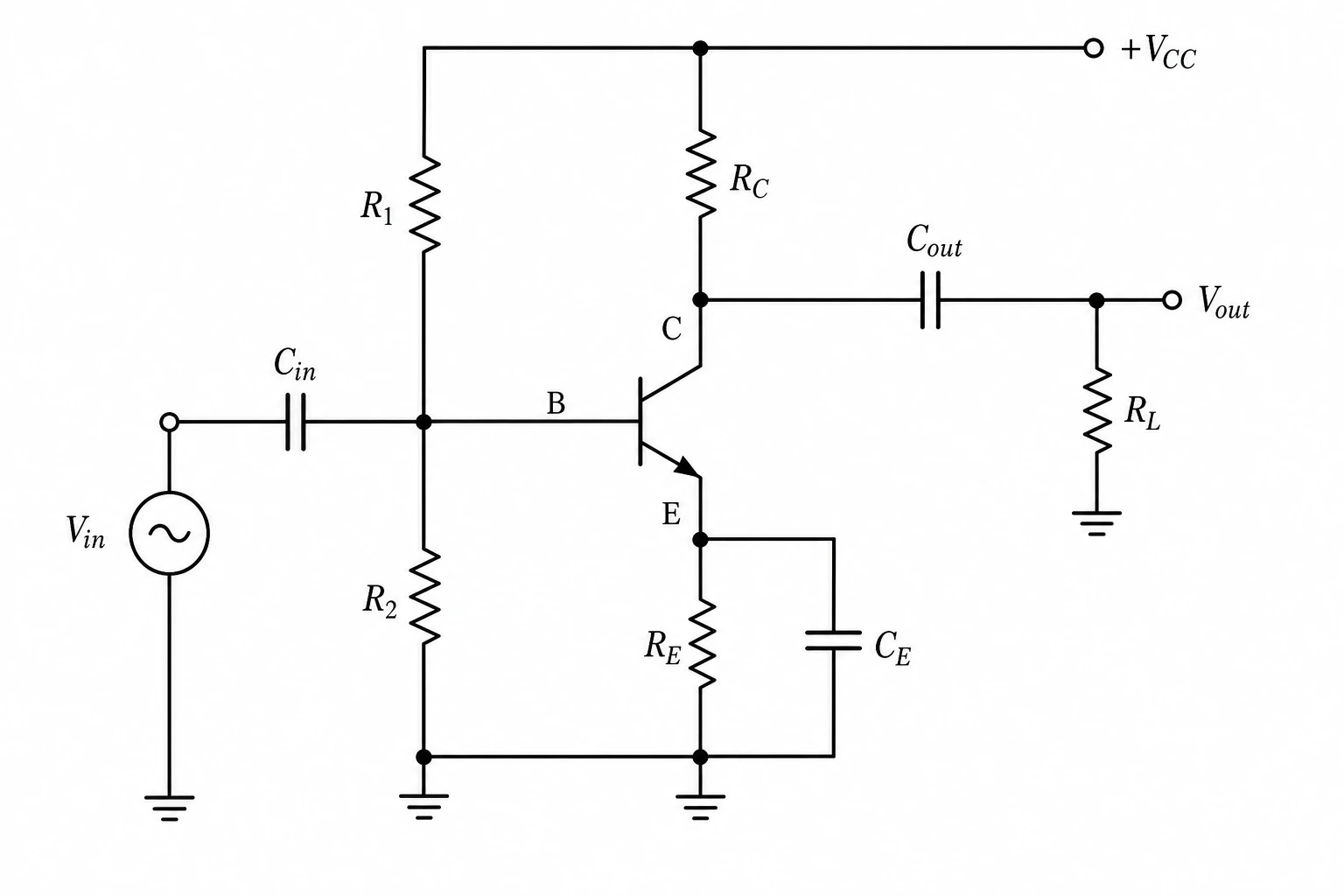
Circuit Diagram Maker
Draw electronic circuit schematics
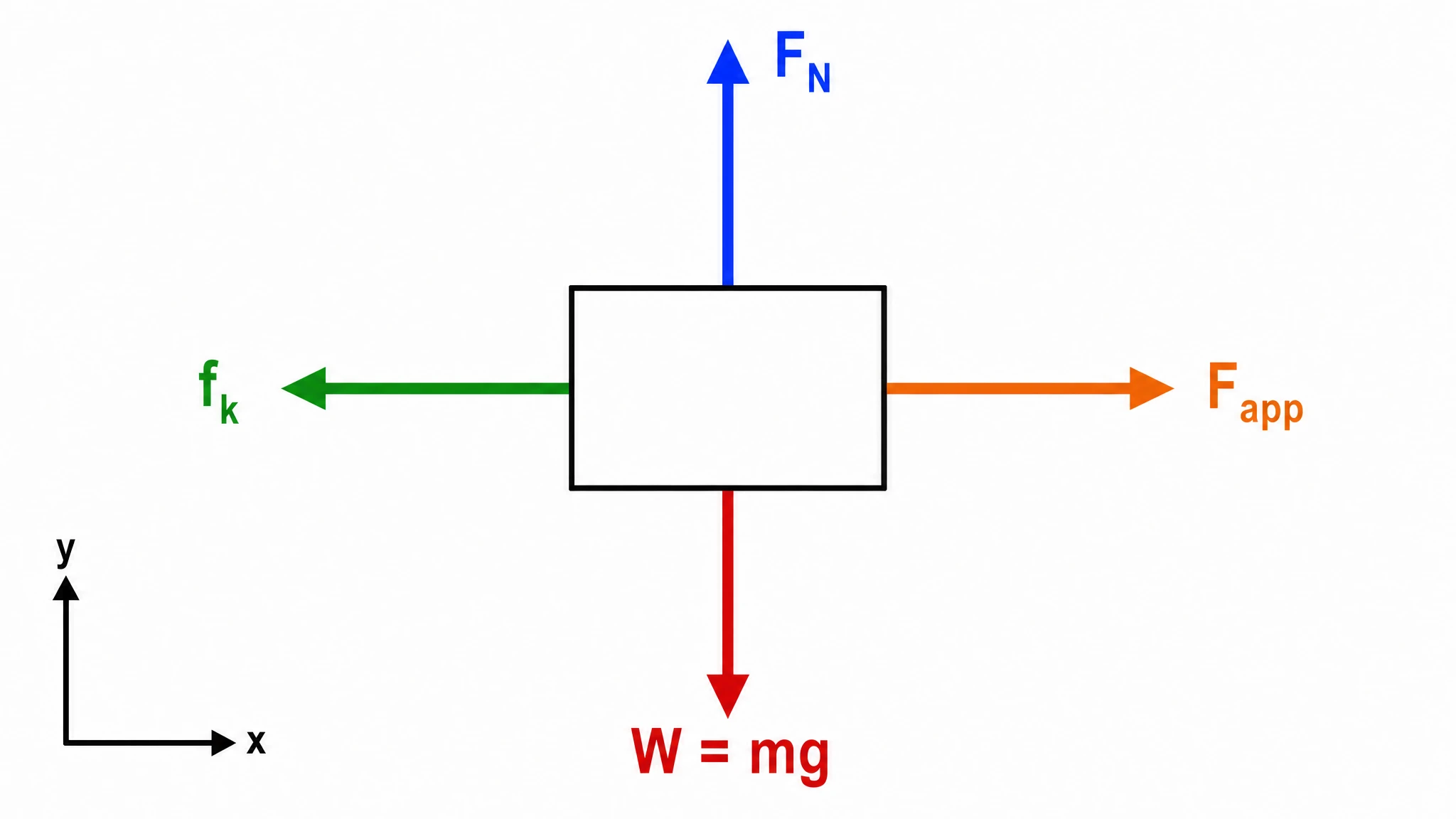
Free Body Diagram Generator
Show forces acting on an object

Graphical Abstract Maker
Summarize your study in one panel
SciFig
Free AI Scientific Figure Generator for Illustrations, Images, Charts and Flowcharts
Models
Default to GPT Image 2 for journal papers; switch to Nano Banana Pro for slides and posters; pick Nano Banana 2.1 for routine figure work
Tutorials
Seven short walkthroughs of the AI scientific figure generator
Blog
Tutorials, tool comparisons, and publication tips for researchers.
Inspiration
Explore publication-ready illustrations, charts and flowcharts. Copy a prompt or open any template as the starting point for your own figure.
Pricing
View pricing

Ready to publish?
Make your own food web in minutes.
Start for freeFree to start · No credit card required · Built for researchers