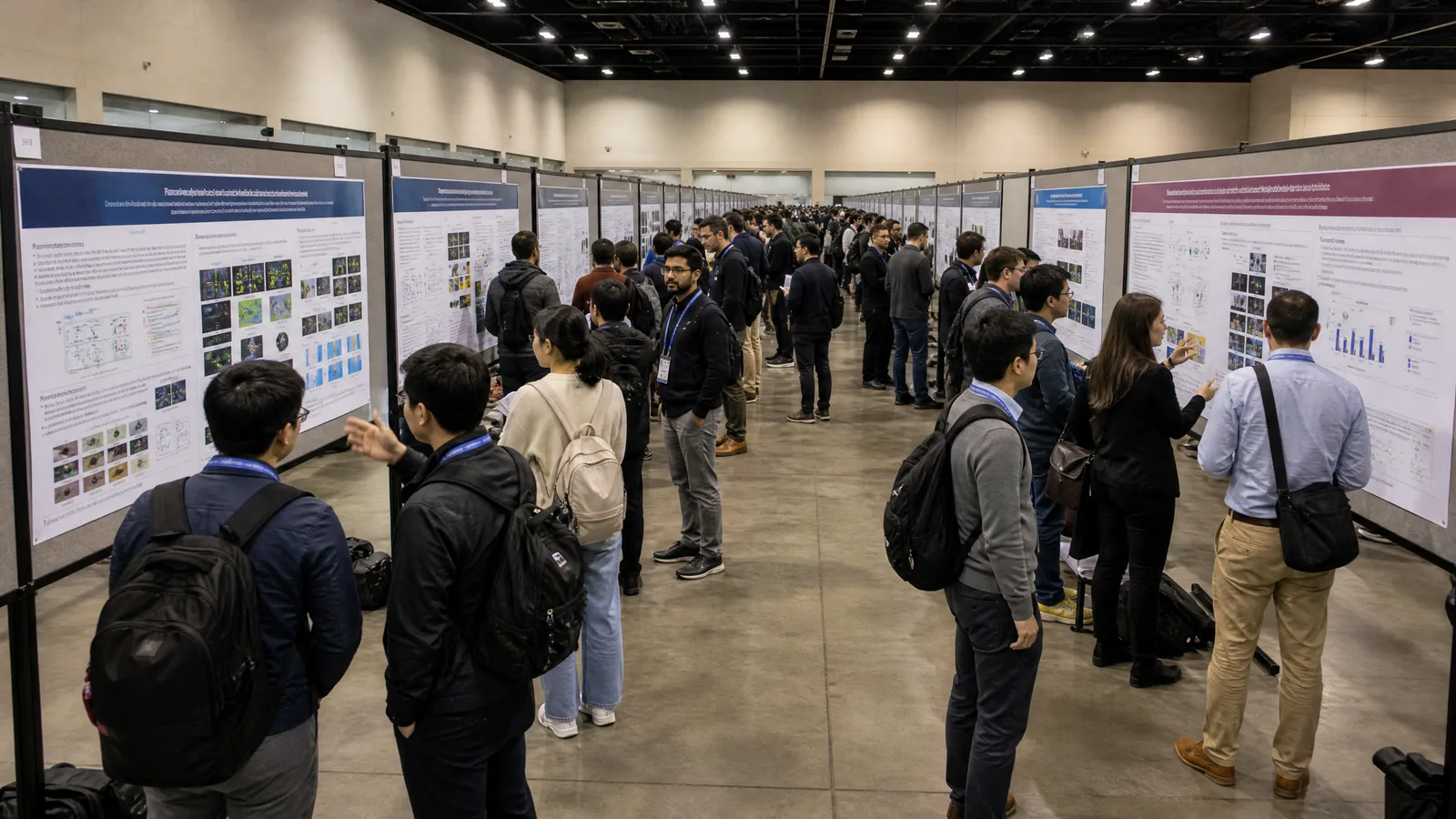
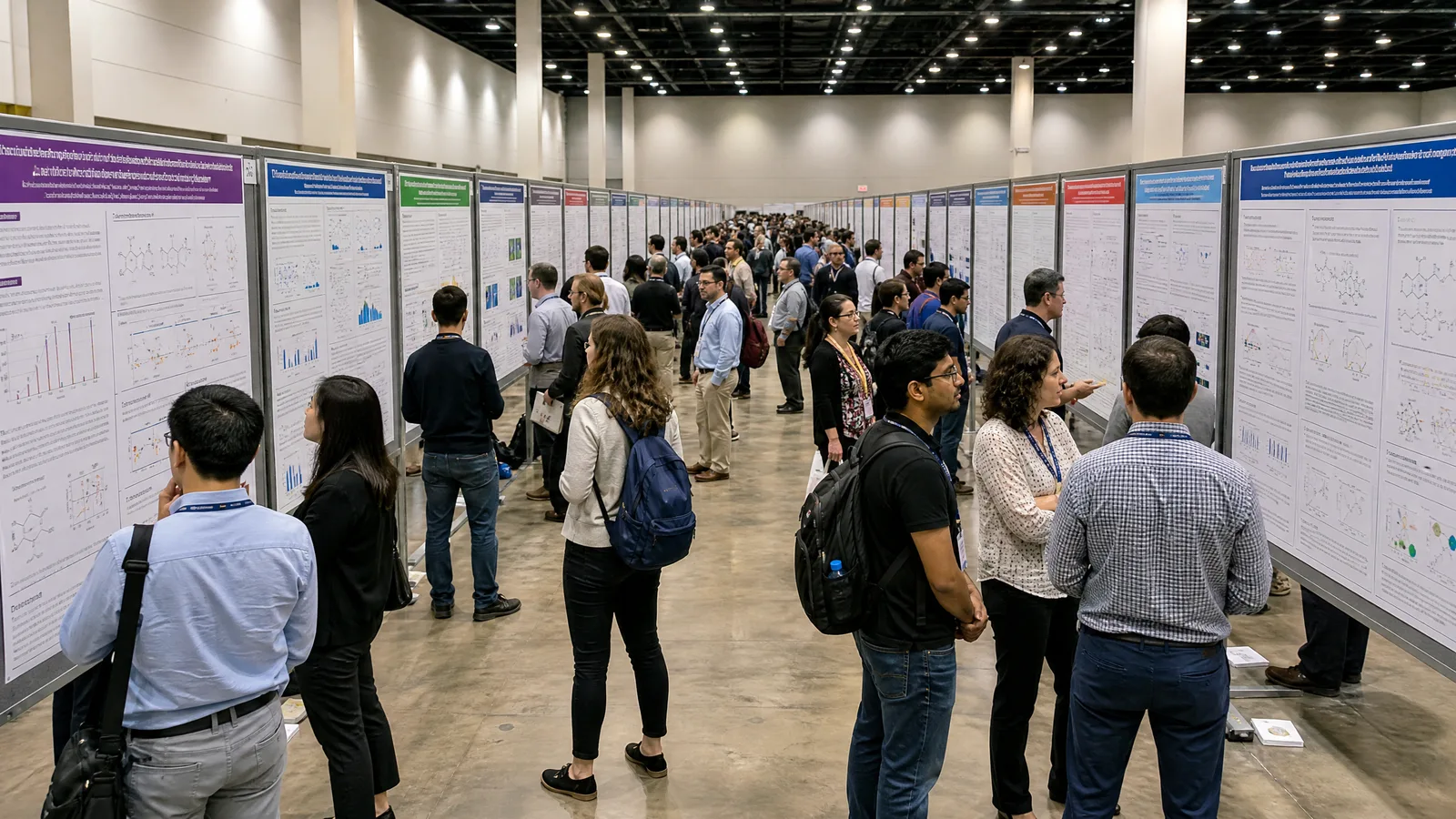
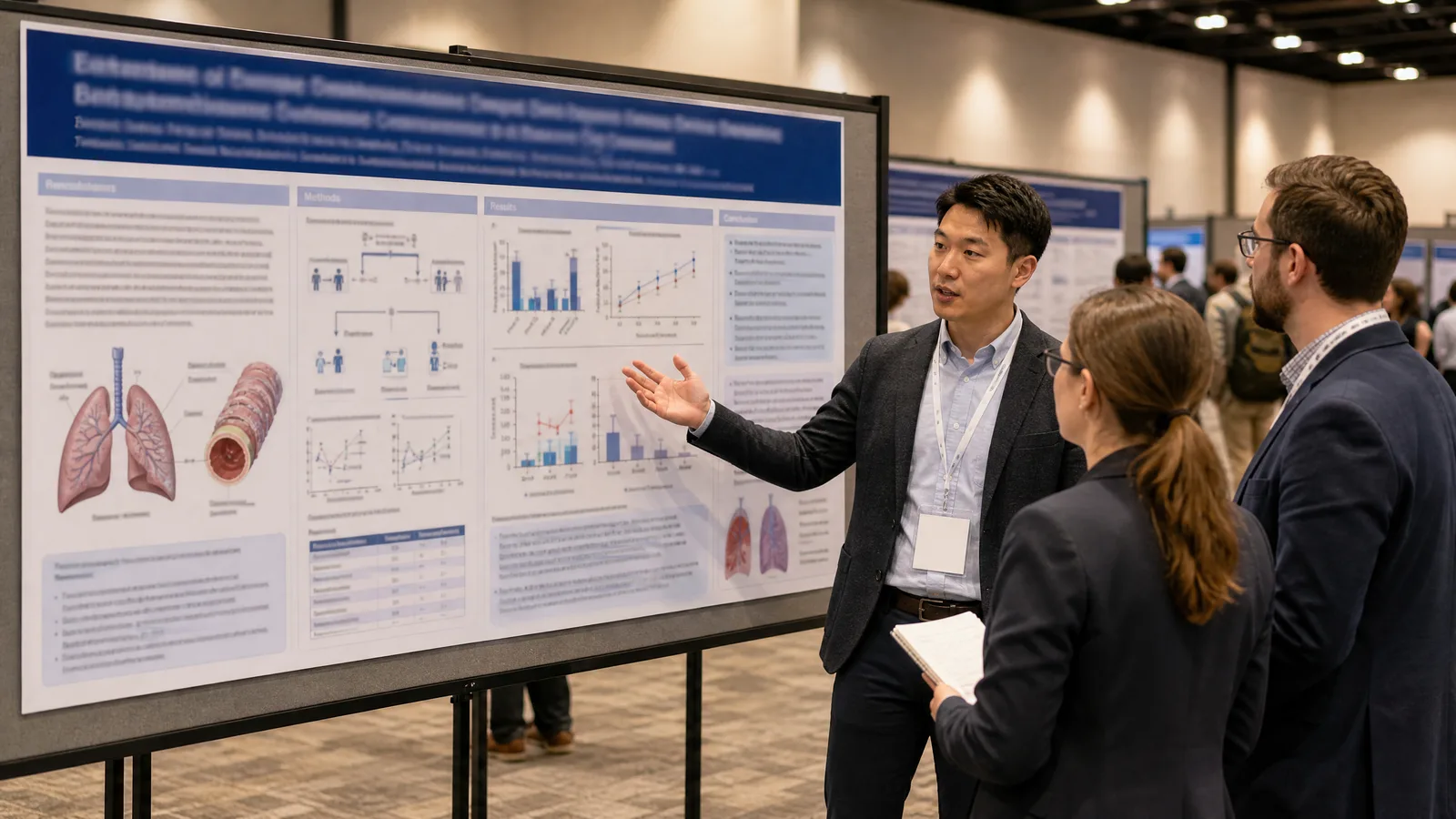
ASM Microbe 2027 runs June 22–25, 2027, at McCormick Place West Building in Chicago.
This is a practical guide to the official poster and presentation rules for ASM Microbe 2027, the American Society for Microbiology's annual meeting: the abstract deadlines, poster size and layout, ePosters, Rapid Fire talks, and the figures a microbiology poster needs.
It also covers the ASM Microbe 2027 AI policy and the abstract rules. Every date and specification below links to official ASM materials; any prior-year planning reference is labeled with its year.
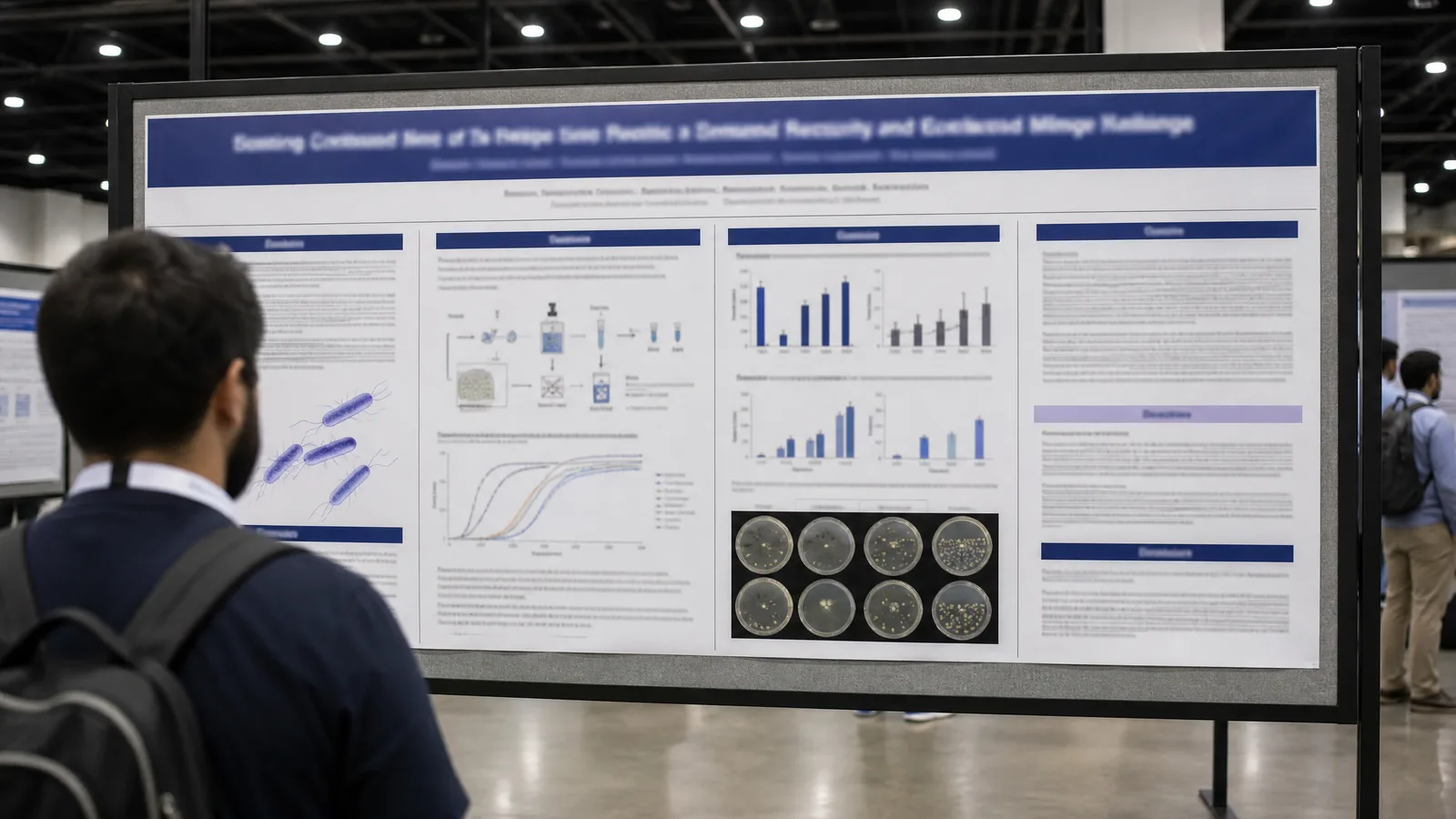
Illustrations generated with SciFig AI.
1. ASM Microbe 2027 Abstract Deadline, Key Dates & Venue
| Date | ASM Microbe 2027 milestone |
|---|---|
| November 10, 2026 | Early abstract submission opens |
| December 1, 2026, 2 p.m. ET | Early abstract submission closes |
| December 2, 2026 | General abstract submission opens |
| December 15, 2026 | Early abstract decisions sent |
| January 20, 2027, 2 p.m. ET | General abstract submission closes |
| March 3, 2027 | Regular abstract decisions sent |
| April 1, 2027 | Presenting author must be registered, or the abstract is withdrawn |
| June 22–25, 2027 | ASM Microbe 2027, McCormick Place West Building, Chicago |
2. ASM Microbe 2027 Poster Size and Format: The 2024 Rules to Plan With
| ASM Microbe poster rule (2024) | Official requirement |
|---|---|
| Size | No larger than 8 ft (L) × 4 ft (H), or 2.4 m × 1.2 m |
| Upper left corner | Assigned presentation number and date |
| Top center | Author name(s) and institution |
| Upper right corner | Institution, phone number, email address |
| Main area | A reproduction of your abstract under Introduction, Methods, Results, Conclusions, and References headings (Discussion optional), with headings in 40 pt type |
| Body text | 14 pt or larger, double-spaced, sans-serif fonts recommended |
| Readability | Materials must be easy to read from 4 feet away |
| Logos | Commercial, product, and corporate logos are not allowed; institutional logos are permitted |
The 2024 checklist also asked presenters to keep text to a minimum, use bullets, emphasize graphics, and balance text and figures. That favors a poster built around a few strong figures, such as a resistance mechanism, a growth curve, and a sampling workflow, rather than dense paragraphs.
Make the key figure for your ASM Microbe poster
Start with the mechanism, pathway, or workflow your poster is built around, then fit the rest of the board around it.
Explore the Tool3. ASM Microbe 2027 ePoster, Poster Setup, and Presentation Times
How the ASM Microbe poster sessions worked in recent years:
- One full day on display (2024): each poster stayed up for an entire day, and presenters had to be at their assigned board during their assigned presentation time.
- Setup and removal (2024): posters had to be mounted on the assigned, numbered board before 10:30 a.m. on the presentation day and removed by 5:30 p.m. on Friday and Saturday or 4:30 p.m. on Sunday.
- Presentation hours by meeting (2026): the 2026 program split poster presentation times across the ASM Applied & Environmental Microbiology Meeting, the ASM Health Meeting, and the ASM Mechanism Discovery Meeting, each with its own daily slot.
- Reclaim (2026): posters not picked up by 4:30 p.m. on the final Sunday were discarded.
The ePoster is a digital copy of the same poster, so export the printed file at full resolution and check that every label in your figures stays sharp when zoomed. Watch for the 2027 ePoster instructions after your abstract decision.
4. ASM Microbe 2027 Rapid Fire Presentations and Slides
ASM has not published a slide template, aspect ratio, or slide upload deadline for 2027 Rapid Fire talks. With 5 minutes, plan on very few slides, each carried by one figure: the question, the method in one diagram, the key result, and the take-home message. Reusing the poster's figures keeps the talk and the board consistent.
5. What Figures Do You Need for an ASM Microbe 2027 Poster?
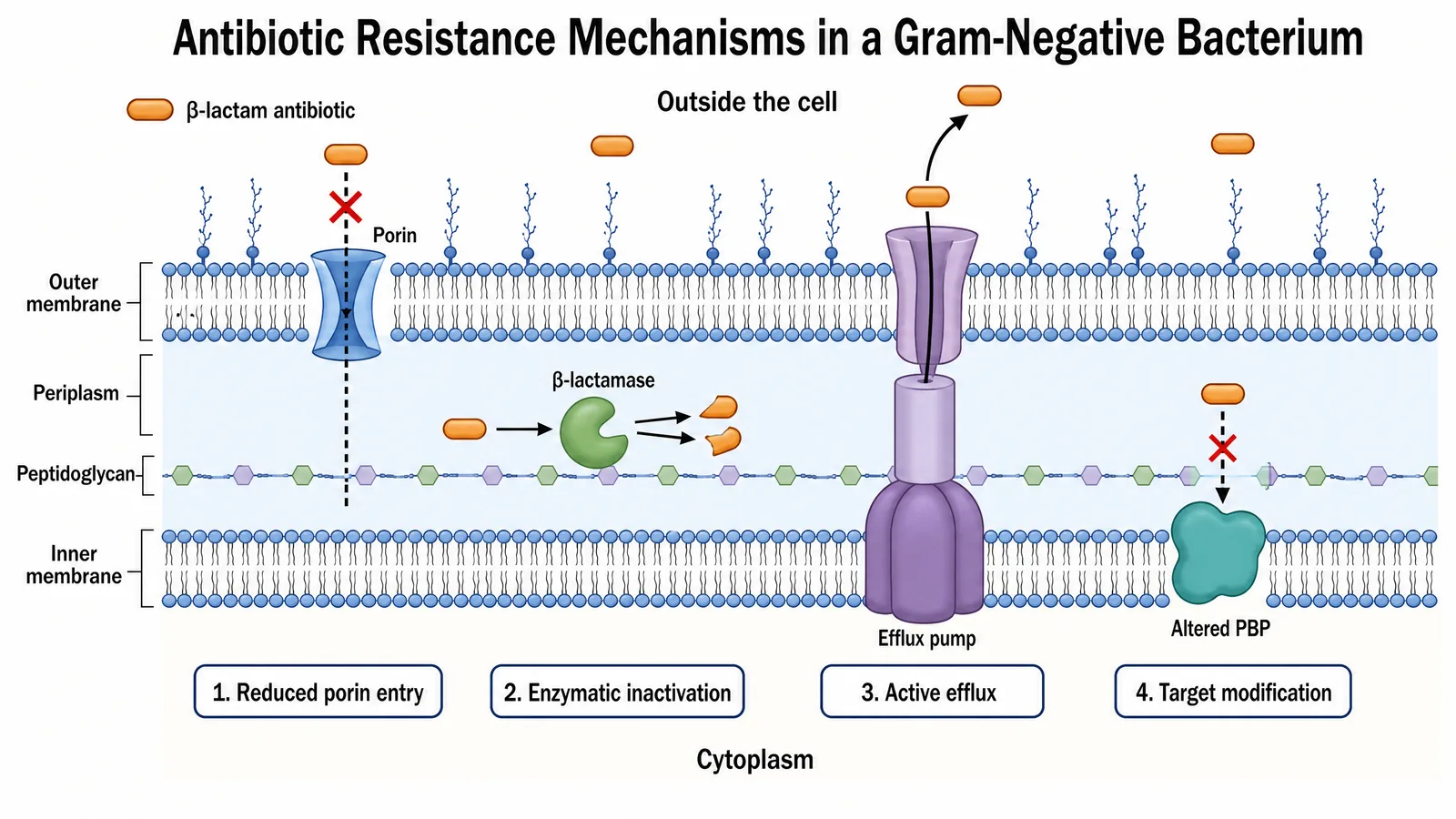
The recurring microbiology figure types are:
- Mechanism figures: antibiotic resistance, virulence factor action, host–pathogen interaction, or a phage infection cycle.
- Cell and structure diagrams: bacterial cell anatomy, the Gram-negative envelope, or biofilm architecture.
- Results charts: growth curves, MIC or zone-of-inhibition bar charts, relative abundance plots from sequencing, or heatmaps of gene expression.
- Workflow diagrams: sampling, culture, DNA extraction, sequencing, and analysis steps, or a surveillance study design.
Draw your resistance mechanism or sampling workflow
Describe the pathway, cell structure, or protocol, then edit every label, arrow, and box until the figure matches your study.
Try Free6. Designing a Winning ASM Microbe 2027 Poster: Accuracy in Microbiology Figures
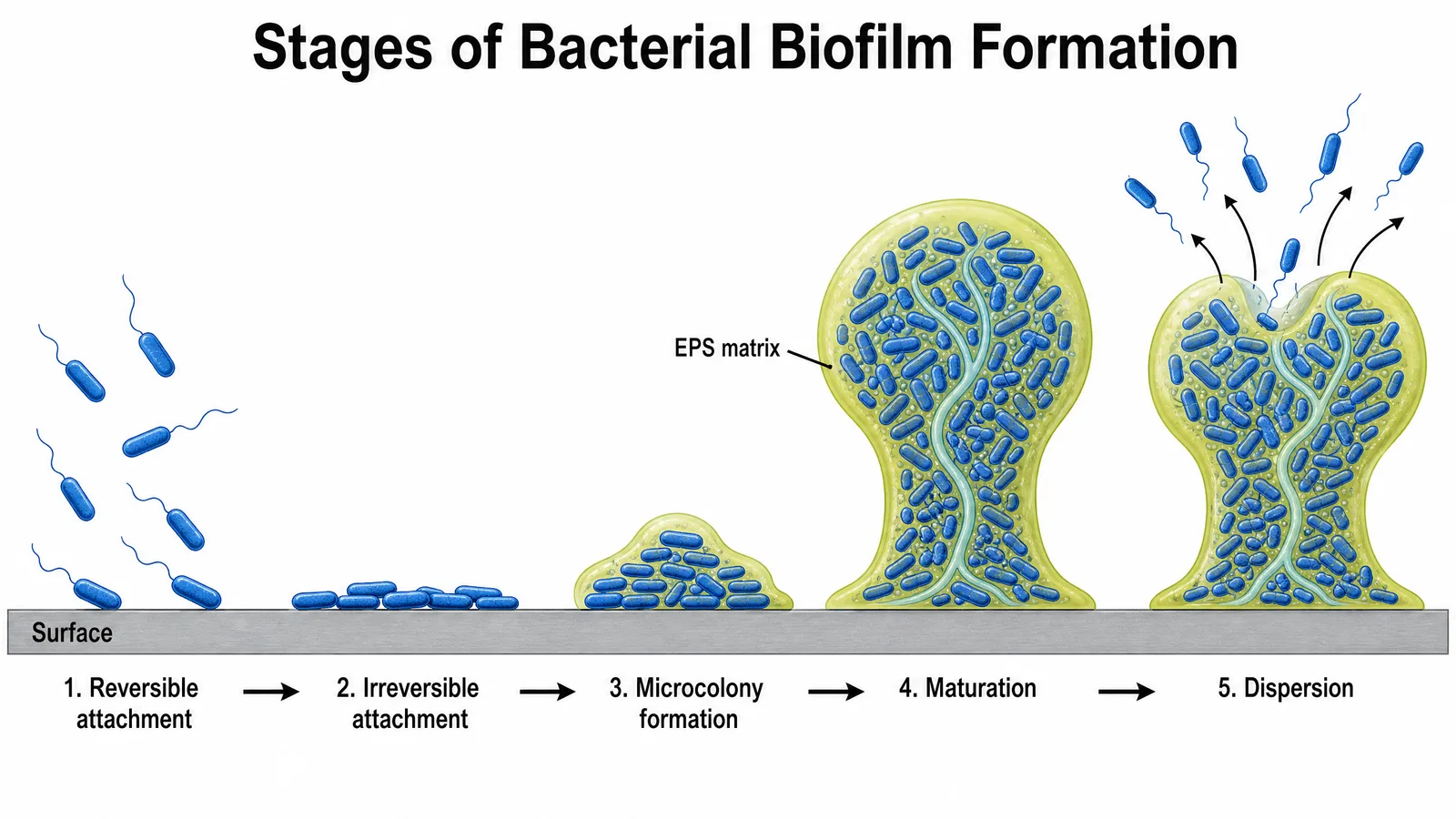
The details that carry the science are small:
- Cell envelope: in Gram-negative bacteria, β-lactamases are widely understood to act in the periplasm, between the outer and inner membranes, and penicillin-binding proteins sit on the outer face of the inner membrane. A figure that puts either in the wrong compartment reads as an error.
- Direction: an efflux pump moves the drug out of the cell, and a biofilm develops from attachment to maturation before cells disperse. Arrows that run the other way change the claim.
- Results charts: growth curves, MIC values, and abundance plots should be plotted from your data, not redrawn by eye.
Tip
The 2024 checklist asked for materials readable from 4 feet away. Print one figure at full size before the meeting and read it from that distance: if a label or axis value is hard to read, enlarge it in the figure, not just on the poster.
7. Create ASM Microbe 2027 Poster Figures with SciFig
| What you need for your poster or slides | Use | What it helps with |
|---|---|---|
| Explain a resistance mechanism, infection cycle, or graphical abstract | SciFig AI Illustration | Start from text, PDF, sketch, photo, reference, or old figure; edit any element; export PPTX or SVG |
| Turn results into growth curves, MIC bar charts, or heatmaps | SciFig DataChart | Upload CSV or Excel for a publication chart; change chart type and colors; export the data chart as PNG or PDF |
| Show the sampling workflow, sequencing steps, or study timeline | SciFig FlowChart | Generate from text or a template; edit text, boxes, and connectors; export SVG or PPTX |
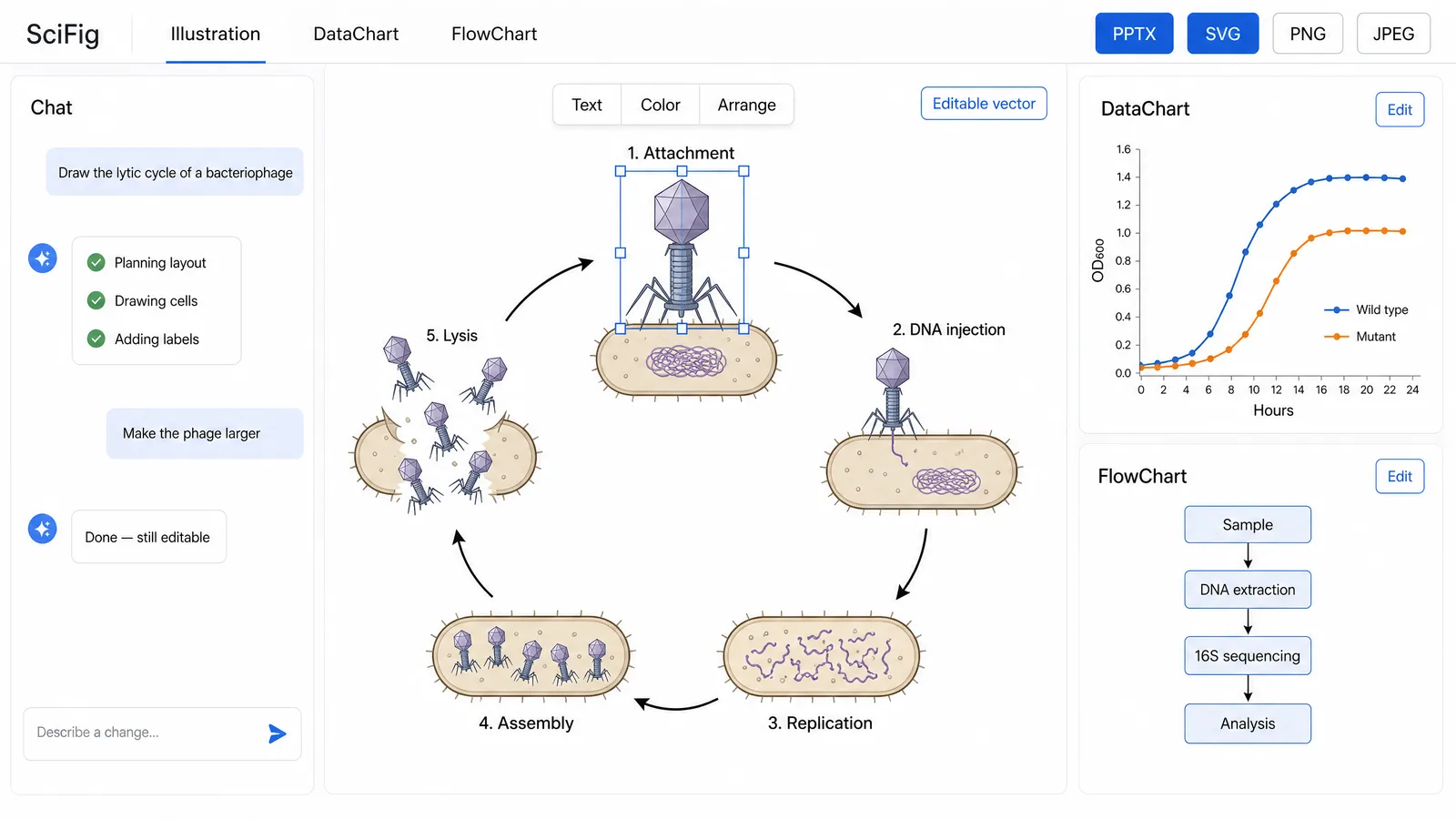
A structured prompt gives you the most control over a mechanism figure. Copy and adapt this one:
Antibiotic resistance in a Gram-negative bacterium: a cross-section of the
outer membrane, periplasm with peptidoglycan, and inner membrane. Show four
mechanisms left to right: a narrowed porin blocking a beta-lactam, a
beta-lactamase in the periplasm cleaving the drug, a tripartite efflux pump
exporting it, and an altered PBP on the inner membrane. Label every part.
Make your ASM Microbe mechanism figure, charts, and workflow
Start from a prompt, PDF, or data table, edit any label or box, and export for your poster and Rapid Fire slides.
Try Free8. ASM Microbe 2027 Logo Rules and AI Disclosure Policy
- Disclosure: "Authors are required to disclose any use of AI tools (e.g., for language editing, data analysis or content generation)."
- Authorship: "AI or LLMs cannot be credited as authors."
- Human oversight: "The use of AI-generated content is prohibited unless it reviewed and verified by the authors for accuracy and appropriateness." "Content that lacks sufficient human oversight and validation will not be accepted."
These rules cover the abstract submission. If you also make poster figures with an AI tool and want to note it on the poster, a short caption works: Figure created by the authors using SciFig.
9. ASM Microbe 2027 Abstract Rules: Character Limit, Tables, and Graphics
| ASM Microbe 2027 abstract rule | Official detail |
|---|---|
| Length | Up to 2,200 characters (title, authors, and affiliations excluded; spaces not counted) |
| Tables and graphics | Not included in the character count (maximum of 500 characters) |
| Early abstracts | November 10 – December 1, 2026, 2 p.m. ET; decisions December 15 |
| General abstracts | December 2, 2026 – January 20, 2027, 2 p.m. ET; decisions March 3, 2027 |
| Presenter registration | By April 1, or the abstract is withdrawn |
| AI use | Disclosure required; AI cannot be an author |
Frequently Asked Questions
References
- American Society for Microbiology. ASM Microbe. Accessed November 15, 2026. https://asm.org/events/asm-microbe/
- American Society for Microbiology. Present at ASM Microbe. Accessed November 15, 2026. https://asm.org/events/asm-microbe/present
- American Society for Microbiology. ASM Microbe FAQs. Accessed November 15, 2026. https://asm.org/events/asm-microbe/home/faqs
- American Society for Microbiology. ASM Microbe Session Types. Accessed November 15, 2026. https://asm.org/events/asm-microbe/scientific-program-1/session-types
- American Society for Microbiology. ASM Microbe 2024 Poster Presenter Checklist [PDF]. Accessed November 15, 2026. https://asm.org/getcontentasset/a0724121-4eb4-4c7c-a51a-eff5a82e7cde/dfc3d011-8f63-43f6-9ed8-4b444333a1d0/asm-microbe-2024_poster-presenter-checklist.pdf?language=en-US
- American Society for Microbiology. ASM Microbe 2026 Program [PDF]. Accessed November 15, 2026. https://asm.org/getmedia/5159c579-3ee2-4c1c-a91d-c82b64043f20/hd-2501-asm-microbe-2026-program_compressed.pdf