ACS Spring 2027 poster guide: the 4 × 8 ft board ACS used in 2026, the official 16:9 PowerPoint template, abstract figure limits, and chemistry figures.
SciFig Team
SciFig editorial team
ACS Spring 2027 runs March 21–25, 2027, at the Ernest N. Morial Convention Center in New Orleans.
This practical guide covers the official poster and presentation rules for the American Chemical Society's spring meeting: the poster board, mounting and attendance rules, and the official 16:9 PowerPoint template for talks.
It also covers the figures a chemistry poster, talk, and abstract each need, the abstract word count, and presenter registration. Every date and specification below links to official ACS materials; any prior-year planning reference is labeled with its year.
Need the file, not just the specs? Download our conference poster templates — 24 editable PowerPoint layouts, sized for both printed boards and e-posters.
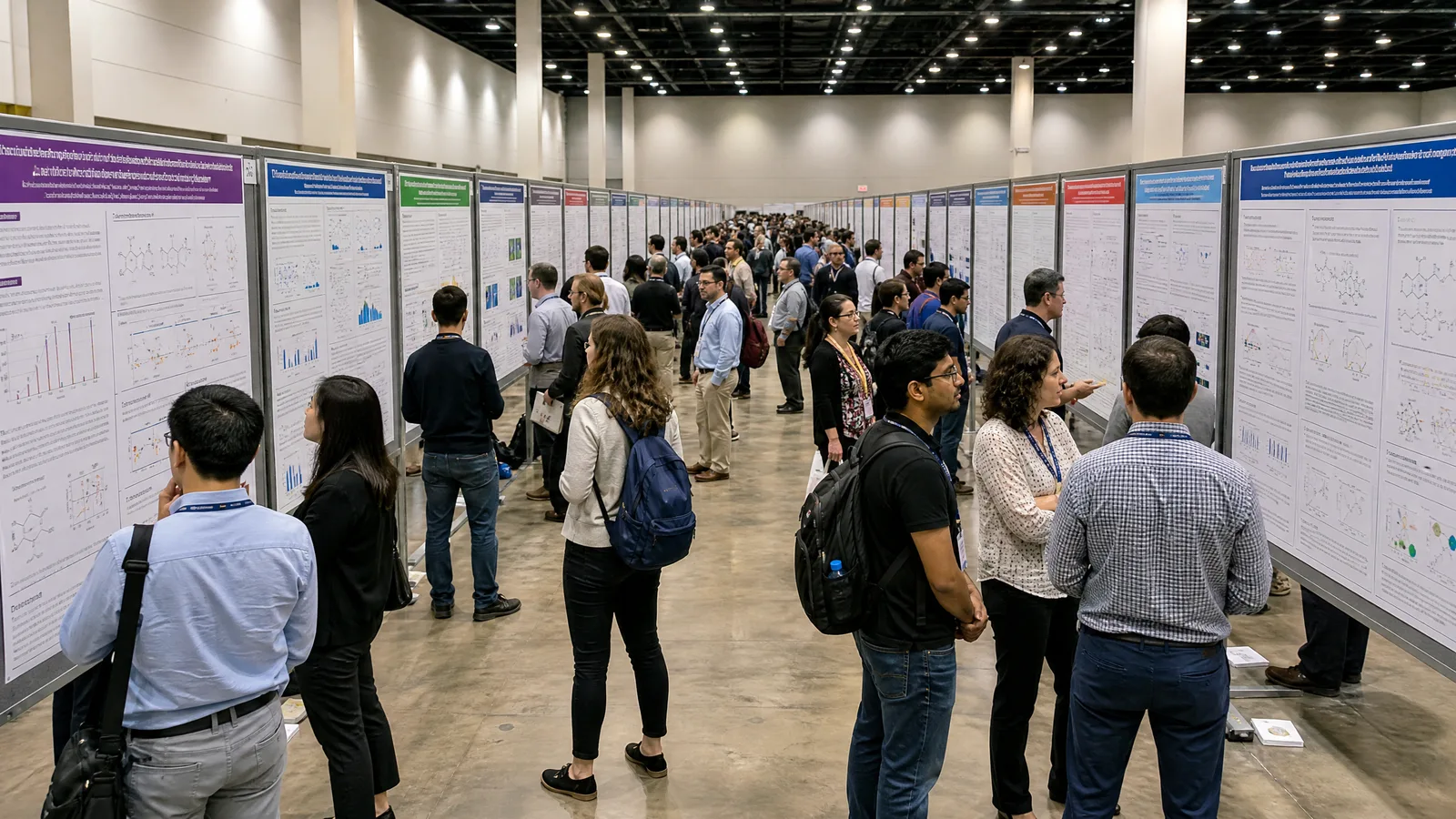
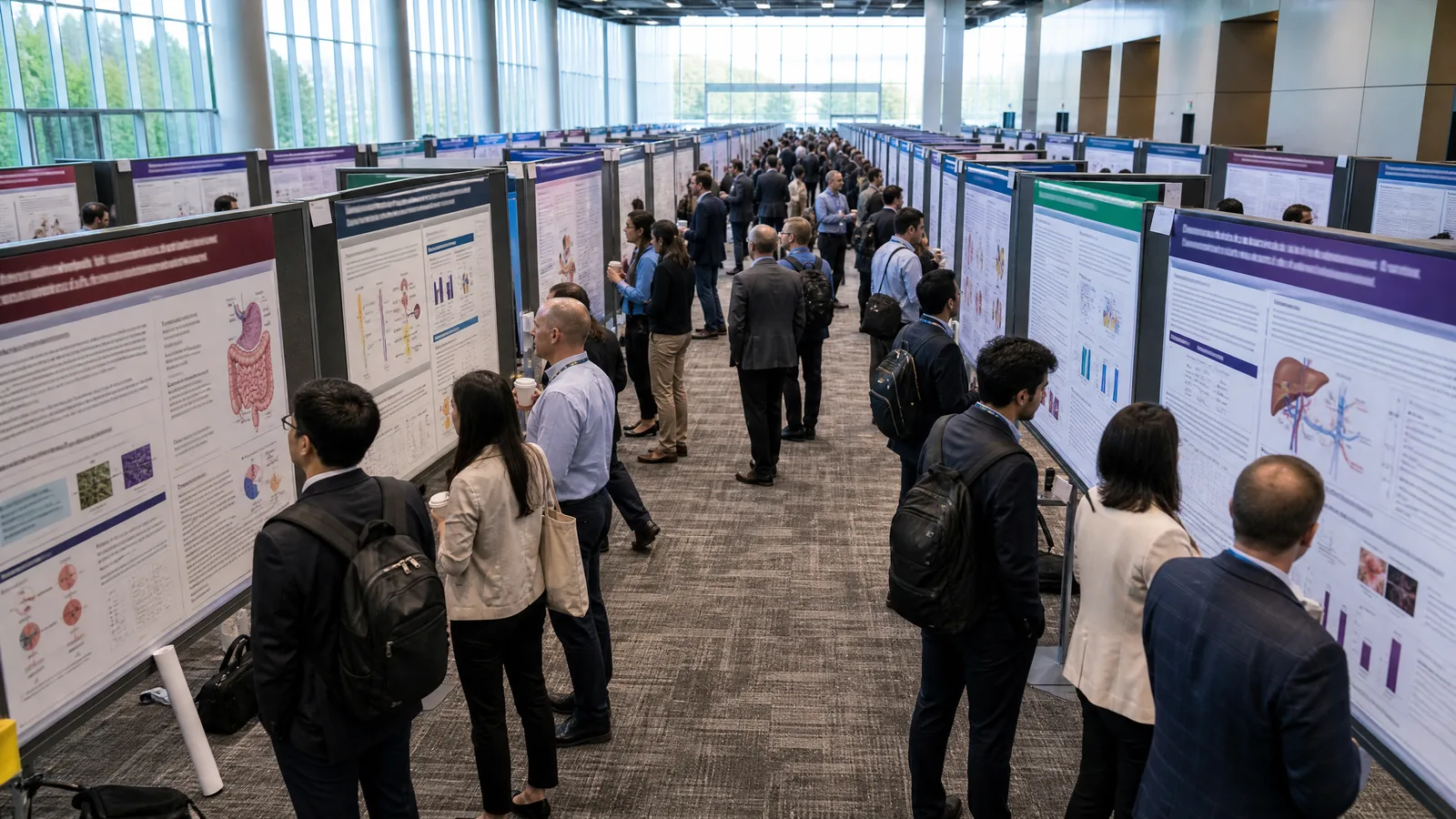
ACS Spring 2027 poster guidelines cover showing a wide chemistry poster hall with rows of complete conference posters on display boards (Figure generated with SciFig)
1. ACS Spring 2027 Dates, Venue, and Presenter Timeline
ACS Spring 2027 takes place March 21–25, 2027, in New Orleans, and all technical programming is at the New Orleans Ernest N. Morial Convention Center. Abstract submission is closed; ACS says presenters receive acceptance notices in December 2026, and meeting registration opens the same month. Some special events and all governance events are held at the headquarters hotel rather than the convention center (ACS Spring 2027 hotel page).
Abstract submission closed (11:59 EST on the posted day)
December 2026
Acceptance notices sent to presenters; meeting registration opens
From about two months before the meeting
Scheduling notices sent periodically
February 26, 2027
Book the conference hotel before this date
March 21–25, 2027
ACS Spring 2027, New Orleans
Abstract submission for Spring 2027 is closed. ACS publishes no separate late-breaking abstract window; its programming FAQ tells authors who missed the deadline to contact the symposium organizer or program chair. For a sense of scale, ACS's unaudited registration statistics list 13,714 total registrants for Spring 2026 (Atlanta and virtual).
2. ACS Spring 2027 Poster Size, Board Format, and Template
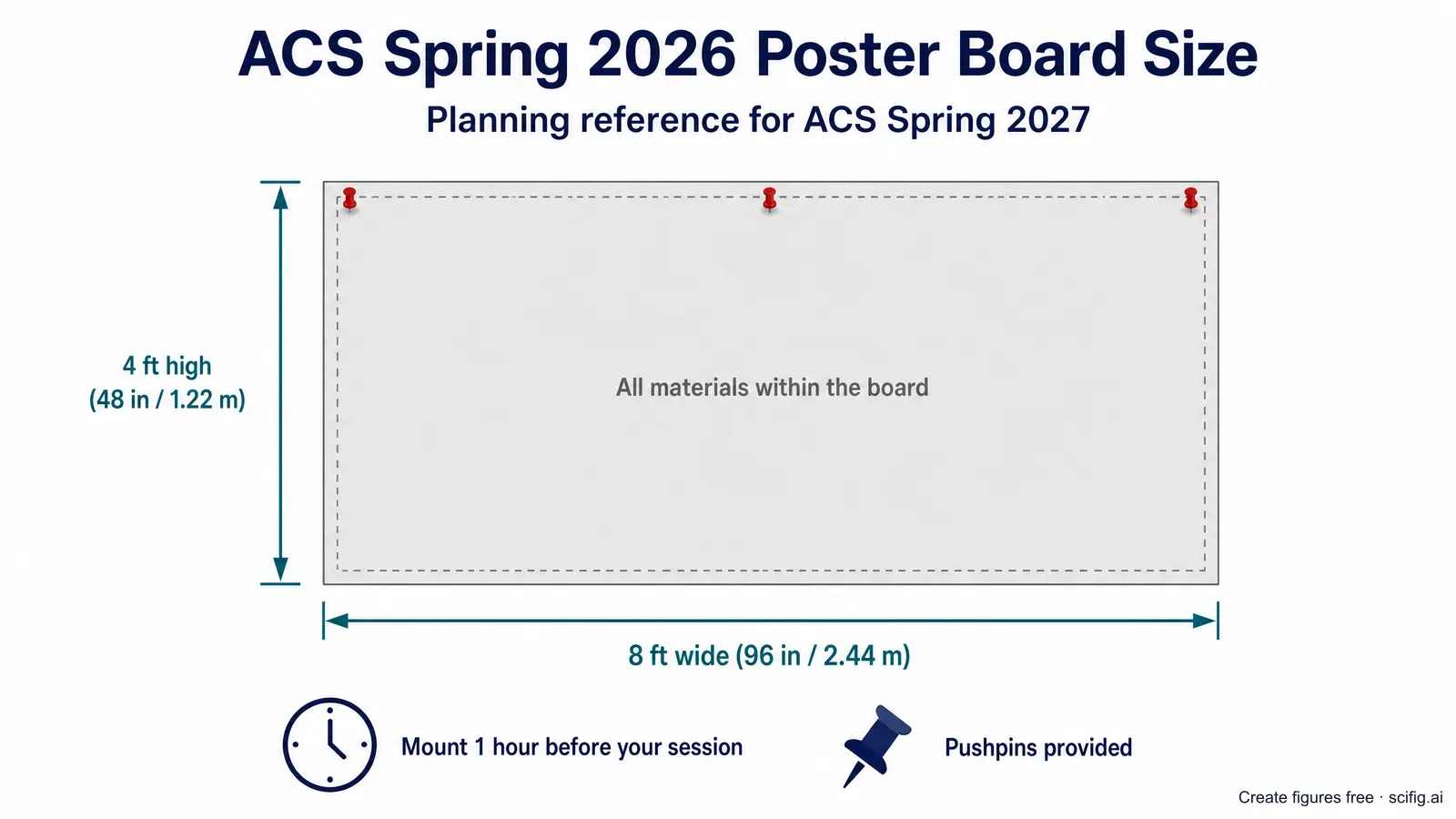
In 2026, ACS confined all poster materials to a display board 4 ft high by 8 ft wide (48 × 96 in), so we use 4 × 8 ft as the planning poster size for ACS Spring 2027. ACS has not yet published the Spring 2027 poster rules. The board is a long horizontal shape, twice as wide as it is tall, so plan your layout for that envelope. ACS does not provide an official poster template.
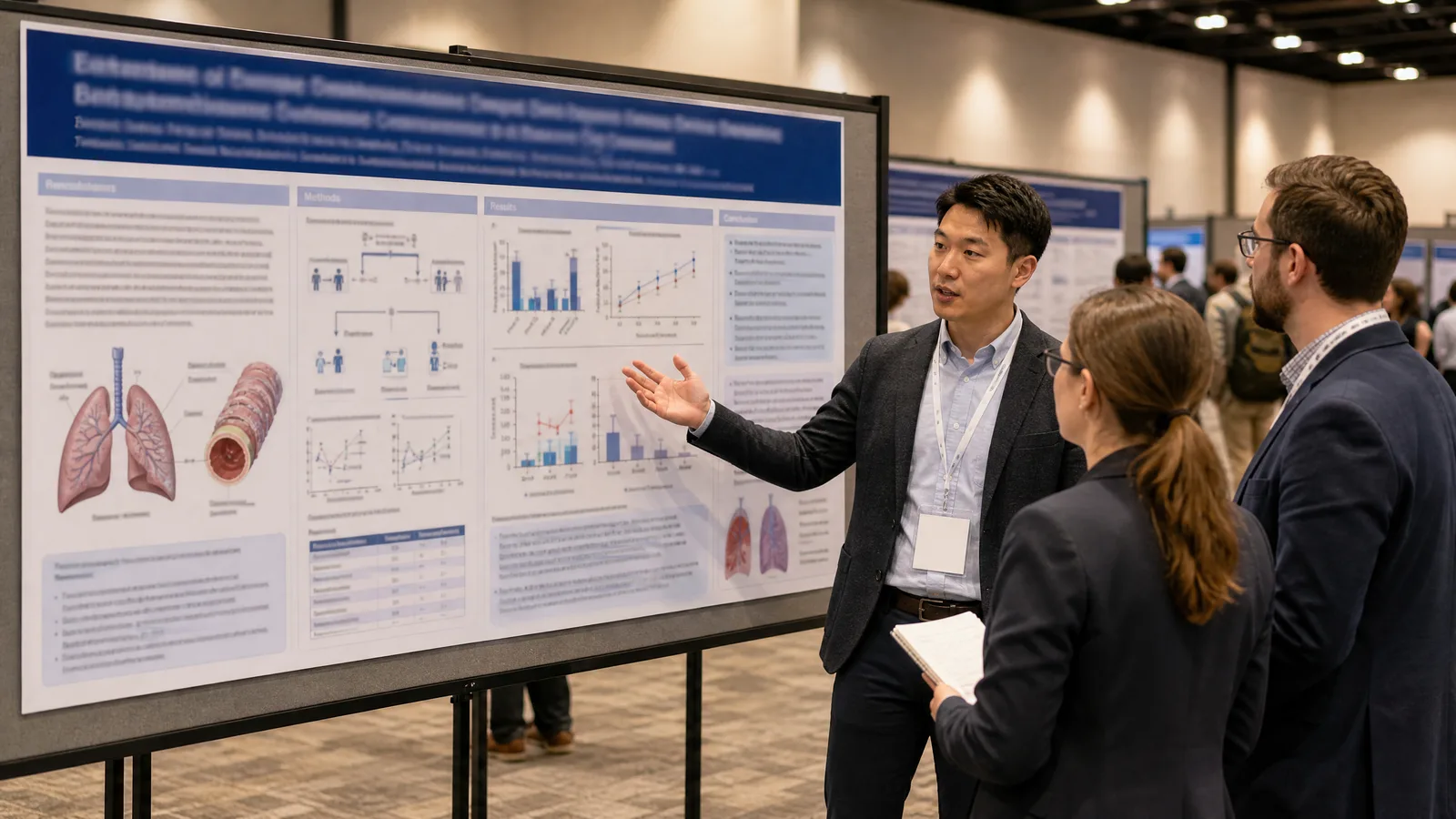
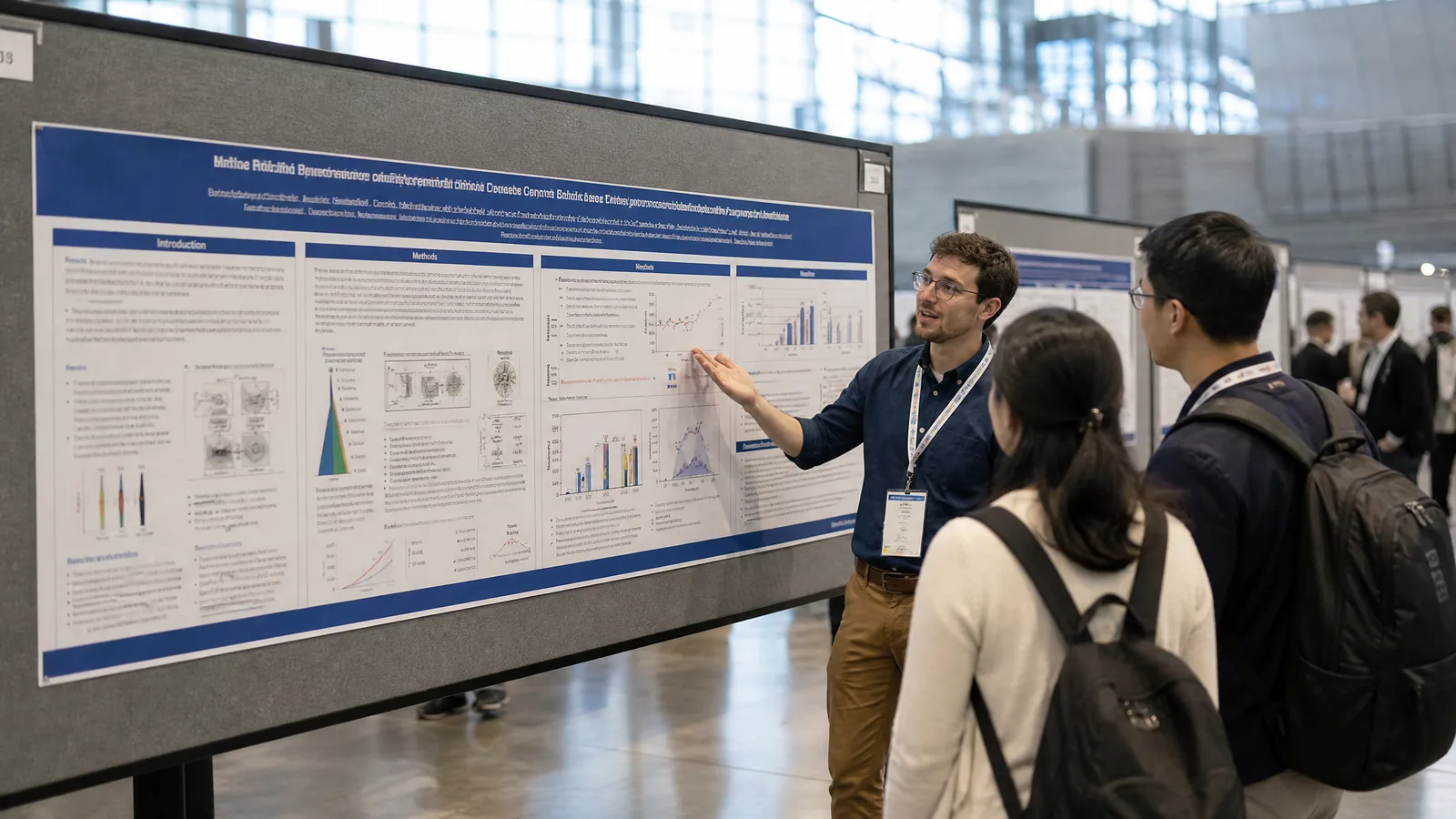
ACS Spring 2026 poster board size guide showing the 4 ft high by 8 ft wide board used as a planning reference for ACS Spring 2027 posters (Figure generated with SciFig)
The 4 × 8 ft figure appears in two official 2026 sources: the Spring 2026 Poster Presenters FAQ on the ACS meeting platform and the Fall 2026 meeting guide published in C&EN. Neither source states a required poster orientation, so the board shape is the constraint to plan around. Before you print, check the ACS Spring 2027 Presenters page for the 2027 poster instructions.
Planning question
2026 ACS rule (planning reference for 2027)
Board size
All materials within a 4 ft high × 8 ft wide display board
Mounting materials
Pushpins available at the poster session
When to mount
One hour before the scheduled session start time
Removal
Posters stay up until the session ends and come down within one hour
On a board this wide, a single dominant figure in the middle third — a catalytic cycle, a device stack, or a structure–property relationship — gives passing chemists a reason to stop. Build that hero figure first, then arrange the supporting panels and text around it.
Make the hero figure for a 4 × 8 ft chemistry poster
Start with the reaction, catalyst, or material your poster is about, then build the board layout around that one figure.
Because ACS publishes no poster template, you build the sheet yourself. Our conference poster templates give you editable PowerPoint layouts with the section structure and type scale already set — resize the canvas to fit the 4 × 8 ft board ACS used in 2026, and confirm the 2027 board size before printing.
3. ACS Spring 2027 Poster Session Guidelines
In 2026, ACS required poster presenters to mount one hour before their scheduled session, stay with the poster for the whole session, and remove it within one hour after the session ended. The 2027 poster session rules have not been published, so use these 2026 rules as a planning reference. ACS states that it cannot take responsibility for materials left beyond those time limits.
The Spring 2026 Poster Presenters FAQ on the ACS meeting platform also says that in-person presenters received their poster board number in the scheduling notice and that onsite check-in was not required. Look for the board number in your 2027 scheduling notice before you plan the walk from the hotel.
Two further rules shape what you bring. ACS prohibits capturing images or sound of speakers or presentations, or streaming and rebroadcasting them, at official ACS meetings without written consent (ACS programming FAQ). And at Fall 2026, ACS assigned each poster to one of two formats, a traditional paper/cloth poster or a Digital Interactive iPoster shown on a large monitor (Fall 2026 meeting guide); the Spring 2027 pages do not mention digital posters yet. Follow the format named in your acceptance or scheduling notice.
4. ACS Spring 2027 Oral Presentation Guidelines and PowerPoint Template
ACS provides an official ACS Spring 2027 PowerPoint presentation template on its Image Resources page, for in-person or virtual talks; the page offers it to use, not as a requirement. The template is 16:9, which matches the 16:9 screens ACS lists for every meeting room. Download the current file from that page rather than reusing an older meeting's deck.
The ACS Spring 2027 Presenters page lists the room setup: a complimentary presenter laptop, a standard HDMI cable, an LCD projector, a 16:9 screen, a lighted podium, a podium or lapel microphone, and a laser pointer. ACS does not provide adapters onsite, so Apple laptop users must bring their own. Each venue with technical sessions has a Speaker Ready Room for rehearsal and projector testing, and ACS asks presenters to arrive 30 minutes before the session for a technical check and to keep within the expected time limit.
ACS does not publish a per-talk minute figure on these pages. In 2026, the Spring 2026 Oral Presenters FAQ on the ACS meeting platform set a maximum of 240 minutes per session, required all oral presentations to be given live (no pre-recording), and said oral sessions would not be recorded for on-demand viewing. Confirm your slot length with your symposium organizer, and build a deck that still works if you have to cut two slides.
5. What Scientific Figures Does an ACS Spring 2027 Poster, Talk, and Abstract Need?
In our view, the strongest ACS Spring 2027 figures make a chemical relationship visible at a glance: a reaction mechanism or catalytic cycle, a structure–property schematic, or a material or device cross-section, supported by clean data charts. ACS allows images and tables in the abstract itself, so the figure work can start before the poster.
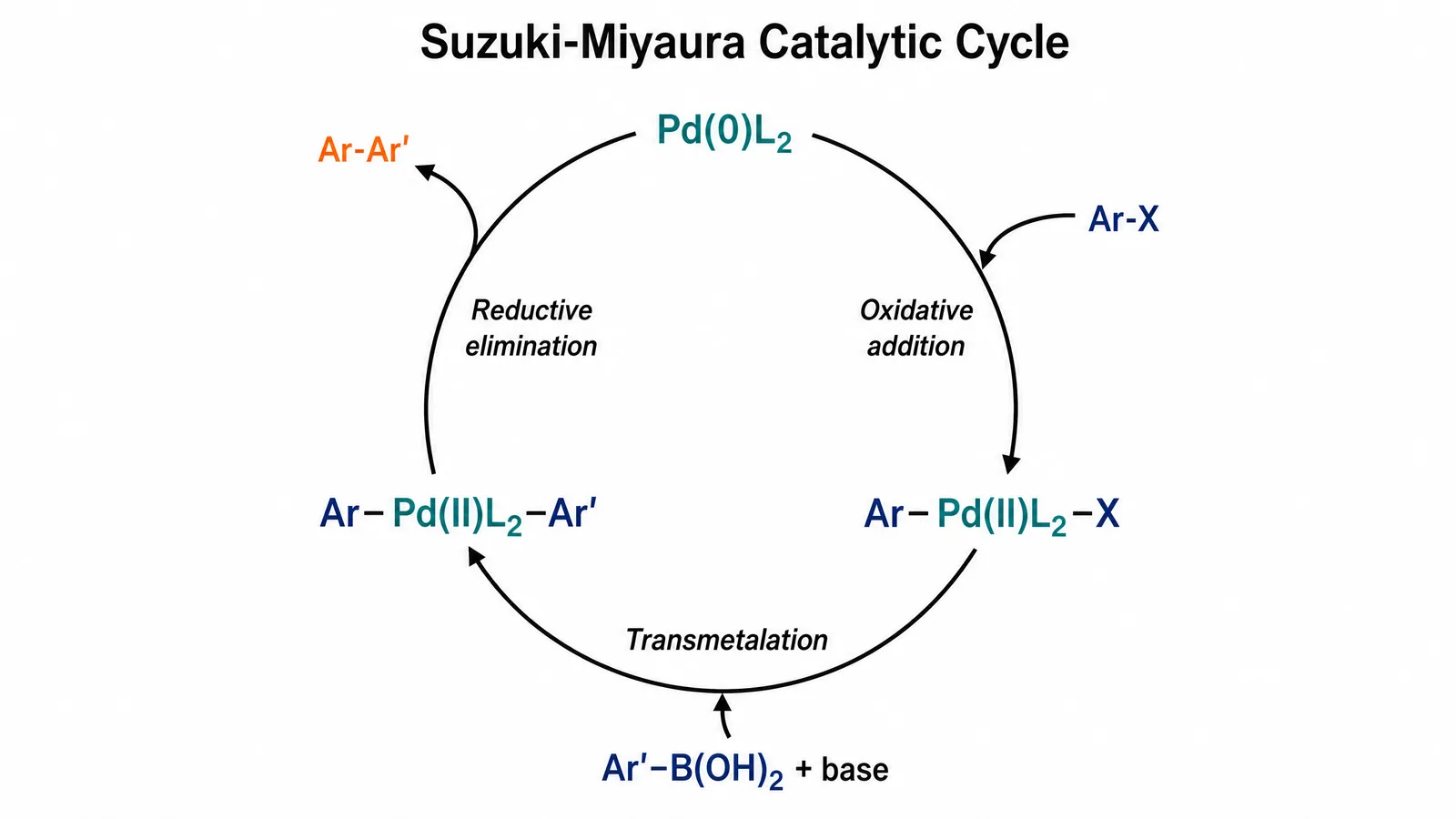
ACS Spring 2027 chemistry poster figure showing the Suzuki-Miyaura catalytic cycle with oxidative addition, transmetalation, and reductive elimination around a palladium catalyst (Figure generated with SciFig)
Each place your work appears needs a different figure:
On the poster: one hero figure that carries the claim — a catalytic cycle with the oxidation state at each step, a mechanism with curved arrows, or a device stack with the layer order — plus a few data panels.
In the talk: one figure per slide where possible, revealing the steps of a mechanism or the comparison between materials in the order you explain them.
In the abstract: a single compact image or table. Per the ACS programming FAQ, the 300-word limit includes them: an image counts as 70 words and each table row as 7 words.
In SciFig AI Illustration (AI scientific illustration), you can describe a mechanism or catalytic cycle and generate it with Text-to-Figure, or turn your accepted abstract into a figure with PDF-to-Figure. For molecules and line-bond drawings, the chemistry structure generator starts from a written description. For measured results, SciFig DataChart (charts and graphs from your data) plots spectra, kinetics, or yields precisely from your data table, and for a synthesis route or characterization workflow, SciFig FlowChart (flowcharts) outputs native SVG with every box editable.
Draw your catalytic cycle or mechanism
Describe the species, steps, and reagents, then edit every label and arrow until the figure matches your chemistry.
6. ACS Spring 2027 Poster Accuracy: Editable Chemistry and Materials Figures
A credible ACS Spring 2027 figure keeps the chemistry explicit: the direction of the catalytic cycle, the oxidation state at each step, the order of layers in a device, and what each arrow means. In SciFig, every one of those labels, arrows, and layers stays editable, so you can match the figure to your own data before it reaches a poster or slide.
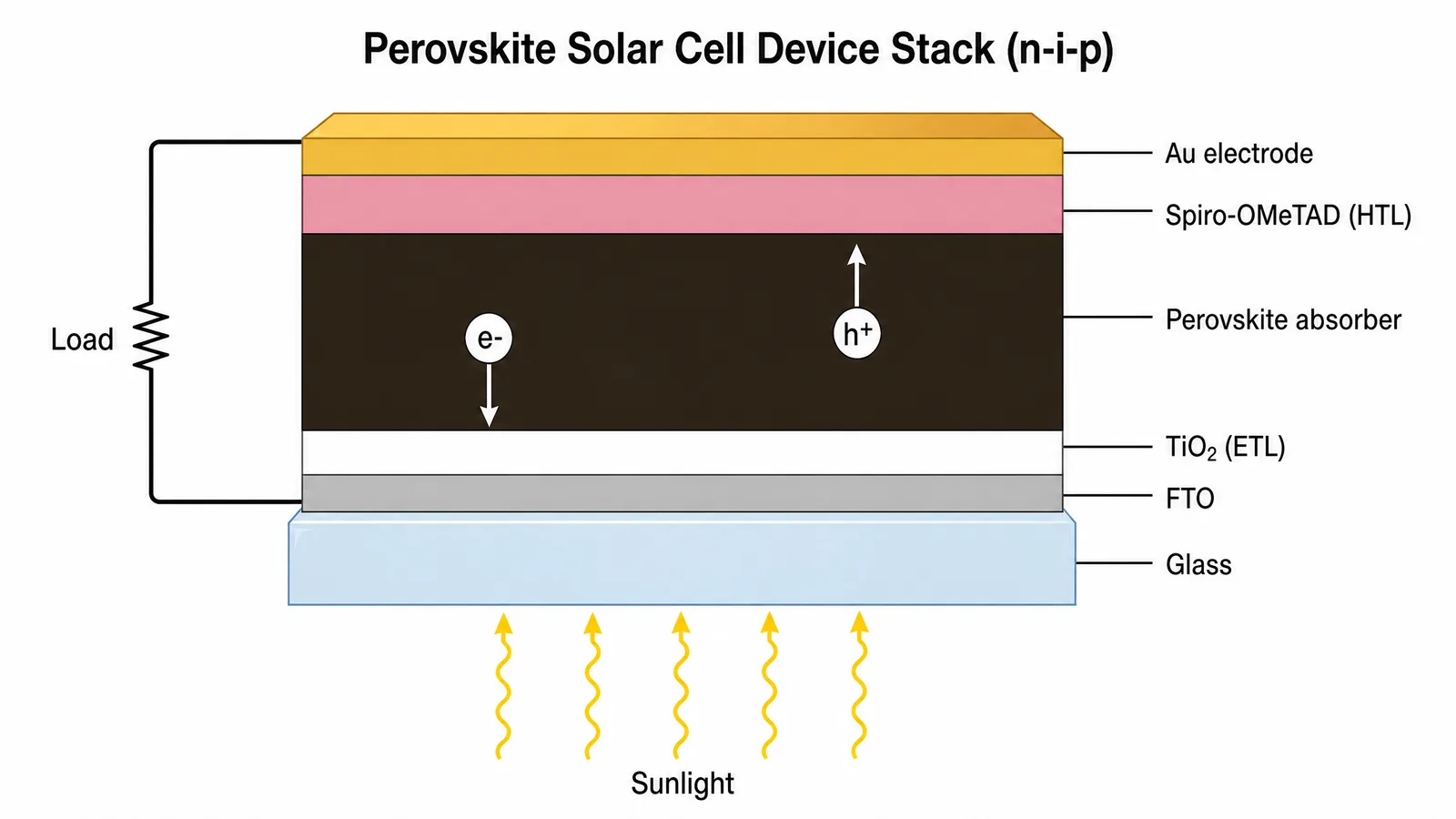
ACS Spring 2027 materials poster figure showing an n-i-p perovskite solar cell device stack from glass and FTO through TiO2, perovskite, and Spiro-OMeTAD to a gold electrode, with electron and hole transport (Figure generated with SciFig)
For a catalytic cycle, check that oxidative addition, transmetalation, and reductive elimination run in the order your mechanism proposes and that the reagents enter and the product leaves at the right step. For a device cross-section, the layer sequence, the side light enters from, and the directions of electron and hole transport carry the model; swapping the electron- and hole-transport layers changes the device. For a structure–property figure, keep measured values apart from computed or proposed ones. Each of these is an editable element in SciFig rather than something baked into a flat image.
Every species label, arrow direction, and layer name stays editable in SciFig, so you can correct any element to match your chemistry before it goes on your ACS poster or slides.
7. ACS Spring 2027 Scientific Figure Workflow with SciFig
SciFig covers the three figures an ACS Spring poster or talk usually needs — SciFig AI Illustration (AI scientific illustration) for mechanisms, catalytic cycles, and apparatus, SciFig DataChart (charts and graphs from your data) for results, and SciFig FlowChart (flowcharts) for synthesis and analysis workflows — and every result stays editable.
What you need for your poster or slides
Use
What it helps with
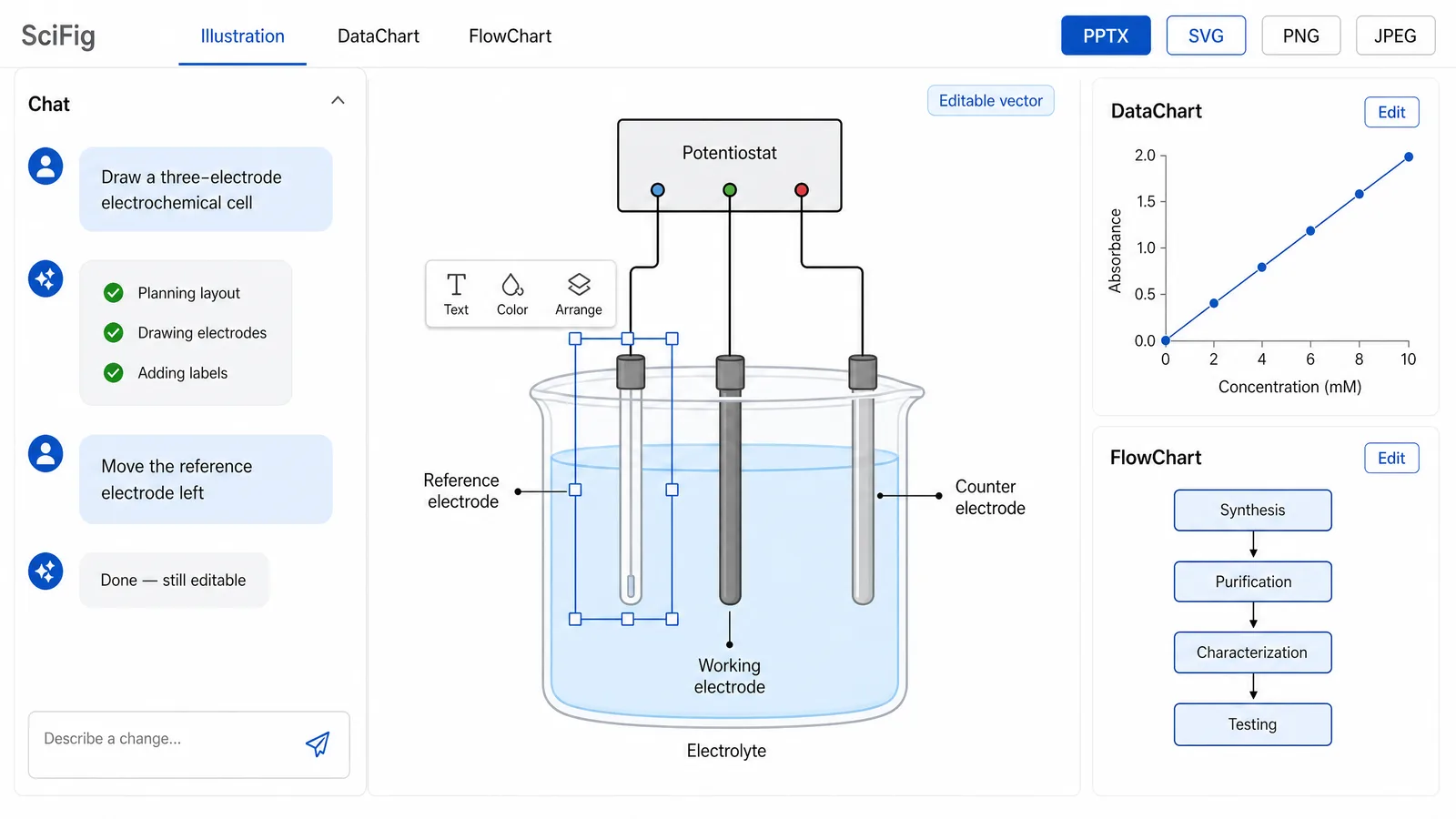
Explain a reaction mechanism, catalytic cycle, or electrochemical cell
Generate from text or a template; edit text, boxes, and connectors; export SVG or PPTX
ACS Spring 2027 SciFig workspace mockup for a chemistry poster: a chat panel generating an editable three-electrode electrochemical cell on the canvas, standard-curve DataChart and synthesis-workflow FlowChart cards, and PPTX, SVG, PNG, and JPEG export buttons (Figure generated with SciFig)
For a mechanism or apparatus figure, a structured prompt gives you the most control. Copy and adapt:
Schematic of a three-electrode electrochemical cell: a working
electrode, a platinum counter electrode, and an Ag/AgCl reference
electrode immersed in an electrolyte solution, each connected to a
potentiostat. Label every electrode and the electrolyte, and show the
current path between the working and counter electrodes.
Go from abstract to editable ACS figure
Start from text, a sketch, or your abstract PDF, edit any label in Canvas, and export to PPTX or SVG for your poster and talk.
8. ACS Spring 2027 Abstract Guidelines, Registration, and Publication
ACS abstracts are submitted through MAPS (Meeting Abstracts Programming System) with a limit of 300 words (2,500 characters), and images and tables count toward that limit. Accepted abstracts appear in the official meeting platform, program, program archive, and CAS database, but only if the presenter registers. ACS states that every presenter must register and pay the registration fee, and that failing to register withdraws the abstract from the meeting platform, program, archive, and CAS database (ACS Spring 2027 Presenters page).
The ACS programming FAQ sets the counting rules: an image counts as 70 words (560 characters) and each table row as 7 words (56 characters). The MAPS abstract submitter user guide, last updated in October 2020, adds a maximum of two tables and/or images, accepted image types of GIF, PNG, TIFF, and JPEG, and a recommended file size of 2–4 MB; it also says an image is required for every POLY division submission and that references, keywords, and acknowledgments do not belong in the abstract. Check the current MAPS screens for these 2020 details when you next submit.
By submitting, authors grant ACS a nonexclusive, perpetual, worldwide license to publish the abstract in its publication of meeting abstracts and other compilations. ACS does not name a separate journal supplement or abstract-book PDF for the meeting, so the CAS record and the meeting program are where accepted work is found. Registration for ACS Spring 2027 opens in December 2026 and requires a free ACS ID (ACS Spring 2027).
Frequently Asked Questions
ACS Spring 2027 runs March 21–25, 2027, in New Orleans, Louisiana. All technical programming is at the New Orleans Ernest N. Morial Convention Center. See §1 dates and venue.
In 2026, all poster materials had to fit a board 4 ft high by 8 ft wide (48 × 96 in). ACS has not published 2027 poster rules, and its Spring 2027 pages list no official poster template. See §2 poster size.
In 2026, ACS asked presenters to mount one hour before the scheduled session, stay for the whole session, and remove the poster within one hour after it ended. Pushpins were provided. See §3 poster session guidelines.
Yes. ACS offers an optional ACS Spring 2027 PowerPoint template on its Image Resources page, in 16:9 to match the meeting-room screens. ACS also supplies a presenter laptop and HDMI cable. See §4 oral presentation guidelines.
Yes. ACS abstracts can include images and tables, but they count toward the 300-word limit: an image counts as 70 words and each table row as 7 words. See §8 abstract guidelines.
Yes. Every presenter must register and pay the registration fee; otherwise ACS withdraws the abstract from the program, archive, and CAS database. Registration opens in December 2026. See §8 registration.
Accepted abstracts of registered presenters appear in the official meeting platform, program, program archive, and the CAS database. ACS names no separate journal supplement. See §8 publication.
References
All specifications and dates above are drawn from official American Chemical Society materials, accessed November 14, 2026:
Disclaimer: This article is educational content about scientific figure design for conference posters and presentations. Confirm current dates and specifications on the official ACS pages before submitting, printing, or traveling. SciFig is an independent AI scientific figure platform covering illustrations (SciFig AI Illustration), charts and graphs (SciFig DataChart), and flowcharts (SciFig FlowChart) and is not affiliated with or endorsed by the American Chemical Society.
Keep going
Recommended resources
Templates, tools, and further reading for your research