250th ECS Meeting 2026 Poster Guidelines and Template
Official 250th ECS Meeting 2026 guidelines: A0 portrait poster size, the Sept 4 late-poster deadline, oral talk format, and ECS Meeting Abstracts publication.
SciFig Team
SciFig editorial team
The 250th ECS Meeting runs October 25–29, 2026, at the BMO Centre in Calgary, Canada.
This is a practical guide to the official poster and presentation rules for The Electrochemical Society's 250th Meeting: the A0 portrait poster format, and the abstract submission timeline — including the late-poster window that stays open through September 4.
It also covers oral presentation logistics and the separate digital presentation option, where accepted abstracts are published in ECS Meeting Abstracts, and the electrochemistry figures that make a poster or slide worth stopping for. Every date and specification below links to official ECS materials.
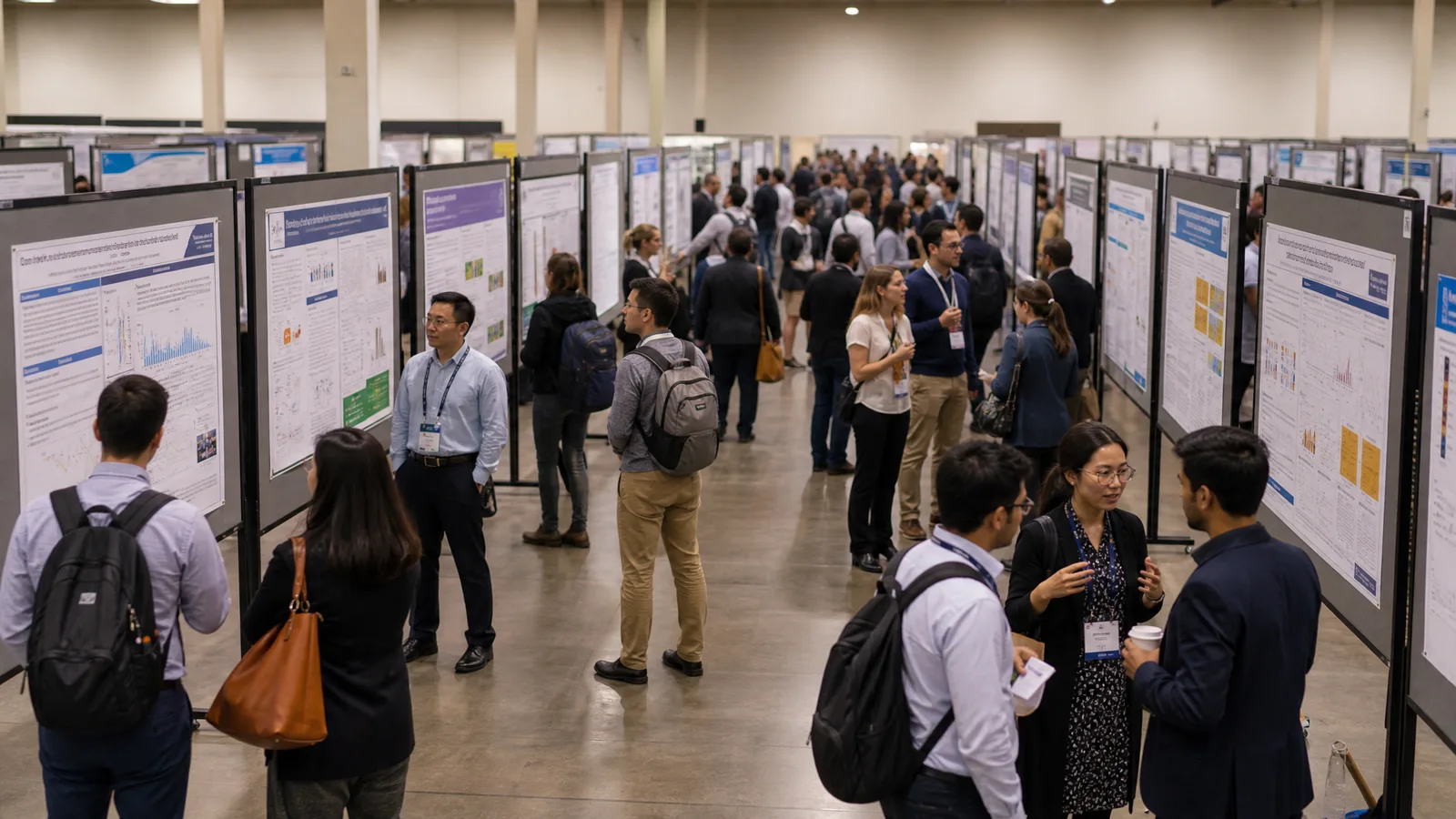
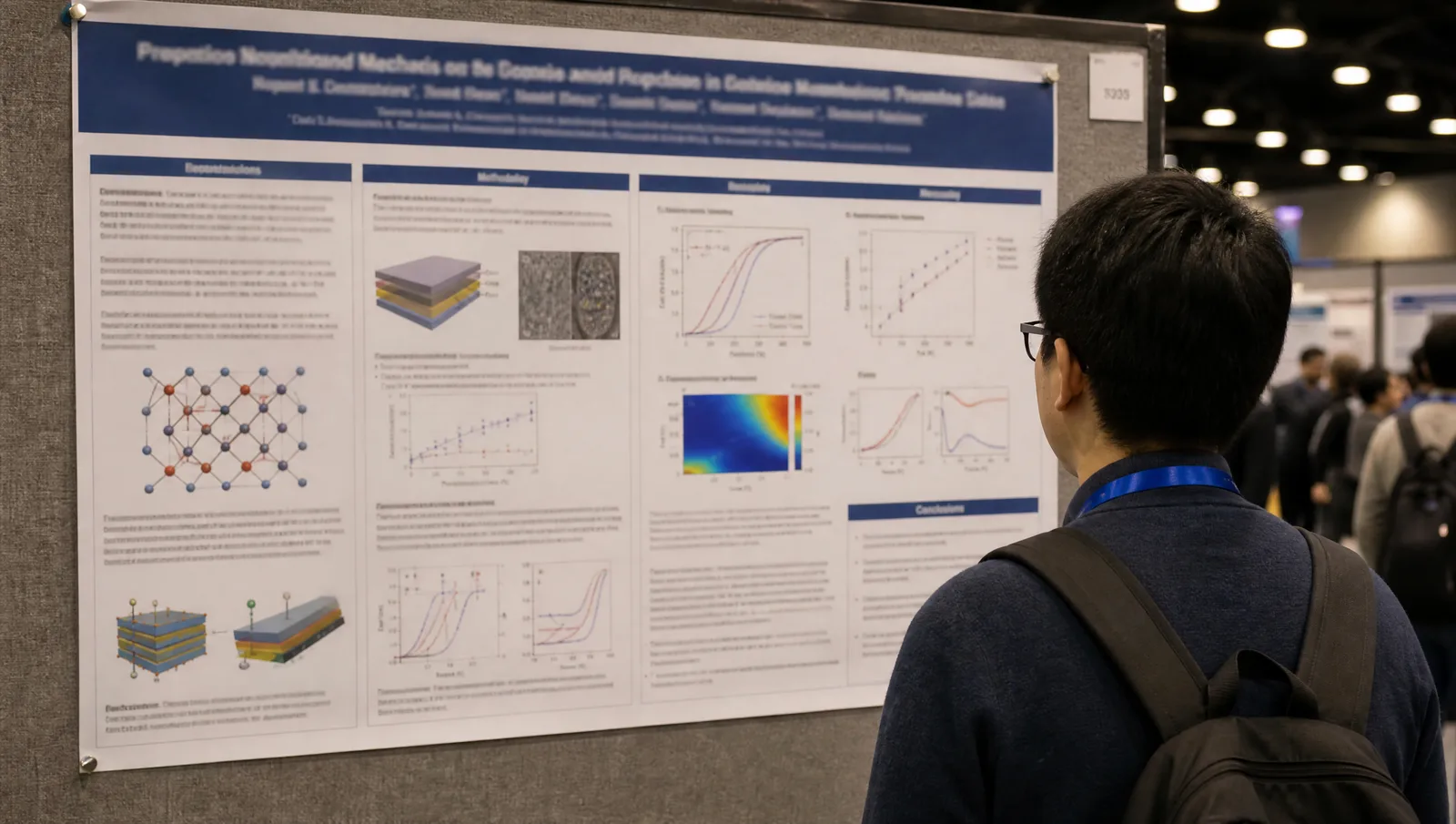
250th ECS Meeting 2026 poster hall at the BMO Centre in Calgary: rows of A0 portrait posters along a wide aisle, attendees discussing electrochemistry figures (Figure generated with SciFig)
Transparency note: Illustrations in this article were generated with SciFig AI and reviewed by the author for scientific accuracy. Factual claims about dates and specifications link to official ECS materials.
1. 250th ECS Meeting 2026 at a Glance: Dates, Venue, and Key Deadlines
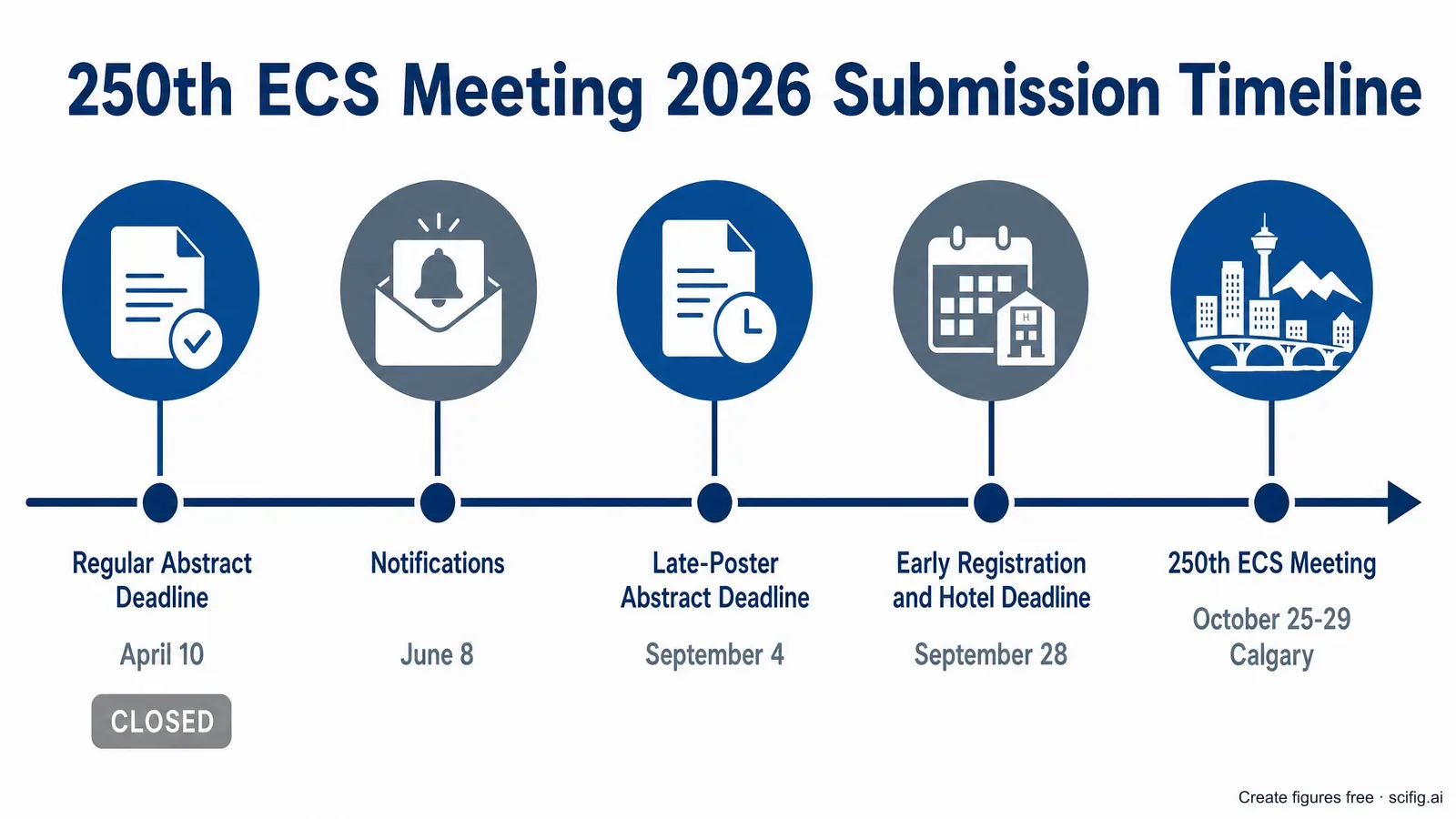
The 250th ECS Meeting runs October 25–29, 2026, at the BMO Centre in Calgary, Canada, and abstract acceptance notifications went out to presenting authors on June 8, 2026. If you already have an accepted abstract, your next milestones are the meeting itself and, before that, the early registration and hotel deadline. If you have not yet submitted, the regular abstract window (covering the full A–M subject-area program) closed on April 10, 2026 — but a late-submission track for poster presentations remains open through Friday, September 4, 2026, covering the "LA"–"LM"/"LZ" late-poster categories and the "Z" general-topics symposia.
250th ECS Meeting 2026 submission timeline: regular abstract April 10 closed, notifications June 8, late-poster September 4, meeting October 25-29 Calgary (Figure generated with SciFig)
Date
Milestone
March 27, 2026
Regular abstract submission deadline (original)
April 10, 2026
Regular abstract submission deadline (extended) — now closed
June 8, 2026
Notification of abstract acceptance/rejection to presenting authors; Online Program published
June 2026
Meeting registration opens
September 4, 2026
Late-poster abstract submission deadline (11:59 PM Eastern Time) — open now
September 28, 2026
Hotel block and early meeting registration deadline
October 25–29, 2026
250th ECS Meeting, BMO Centre, Calgary, Canada
A submission note: the regular and late-poster tracks are separate systems inside the same Call for Papers portal — check which subject-area category you fall under before you submit, since only the "Late" and "Z" general-topics categories remain open after April.
2. 250th ECS Meeting 2026 Abstract Submission: Format, the Late-Poster Deadline, and Notification
A 250th ECS Meeting abstract is capped at 750 words, must not include the title or author list in the body text (the system appends that automatically), and permits one supplementary image — but only as a JPG file; PNG images are rejected. If your regular submission window has already closed, the late-submission poster categories ("LA" through "LM," "LZ," and the "Z" general topics) stay open until September 4, 2026, 11:59 PM Eastern Time, which is currently the only active entry point for a new 250th ECS Meeting abstract.
These rules come straight from the official 250th ECS Call for Papers. A few points shape how you prepare the text:
750 words maximum — write tightly; the system enforces this limit at submission.
One JPG image only — if you plan to include a supplementary figure, table, or equation image, export it as JPG (not PNG) before you upload.
Title and authors are separate fields — don't waste your word count restating them in the abstract body.
Regular-track notifications went out June 8, 2026 — late-poster submissions follow the standard organizer review process after the September 4 close.
Because that one abstract image is the first thing a reviewer sees, it is worth spending the extra few minutes to generate a clean, publication-style schematic rather than a hastily cropped lab photo.
3. 250th ECS Meeting 2026 Poster Size and Format: The Official A0 Portrait Guidelines
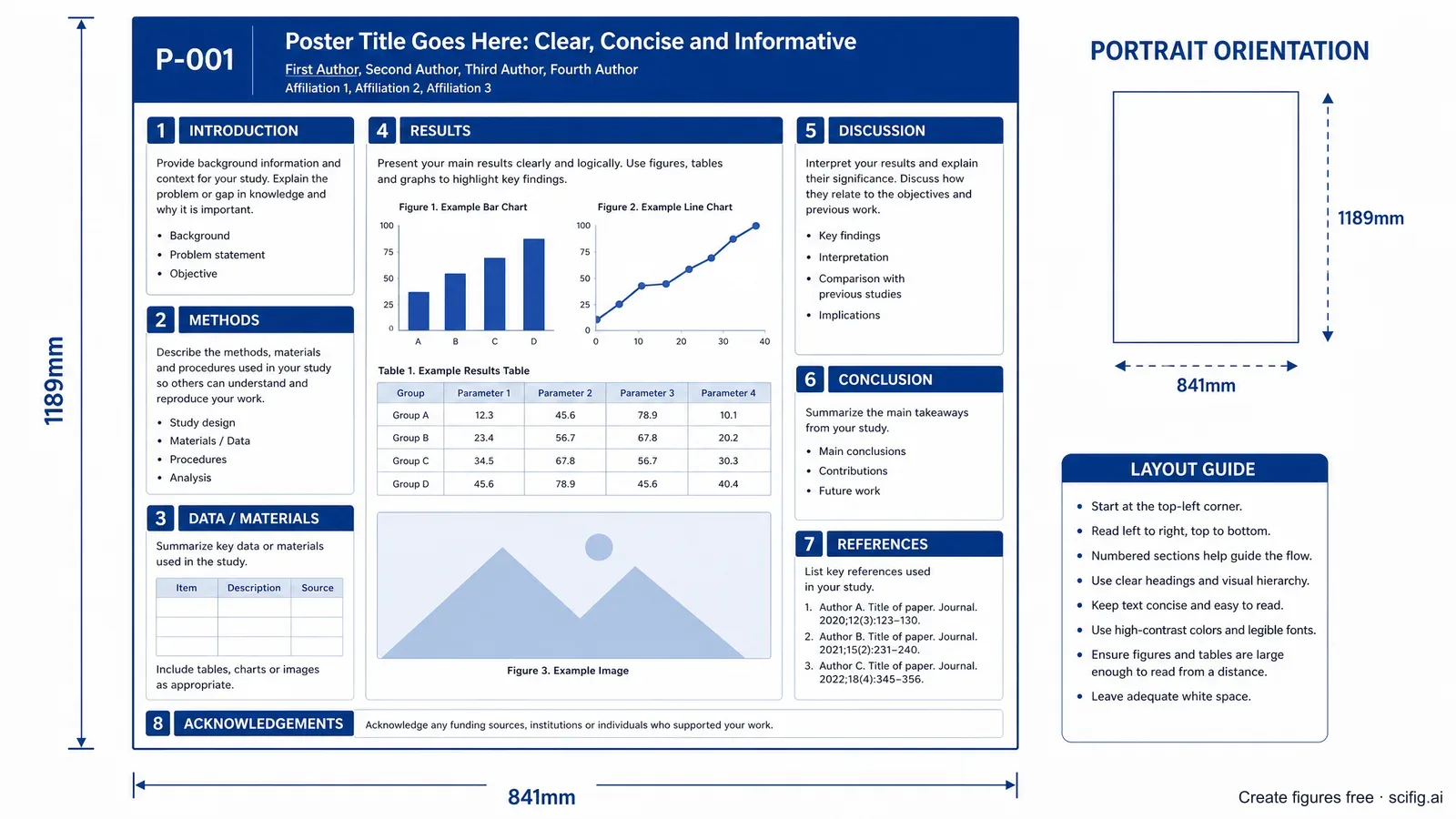
A 250th ECS Meeting poster must be printed at A0 size (841 × 1189 mm / 33.1 × 46.8 in) and laid out in portrait (vertical) orientation — a landscape layout will not fit the board. The paper title, poster number, author names, and institutional affiliations must sit at the top of the sheet, with the rest of the content flowing left to right starting from the top-left corner. Recommended title lettering is 2.5–5 cm (1–2 in) tall, and every illustration, chart, or figure should be legible from 1.5 m (5 ft) away — the working distance in a busy poster aisle.
Portrait A0 only — no landscape option; plan your column layout for a tall sheet.
English only, no commercial advertising — keep the sheet to your science.
Minimize written text — use it only to emphasize data, letting figures carry the explanation.
Bring a small handout copy — A4 (8.5 × 11 in) reprints are welcome for attendees to take away; pushpins are supplied on-site.
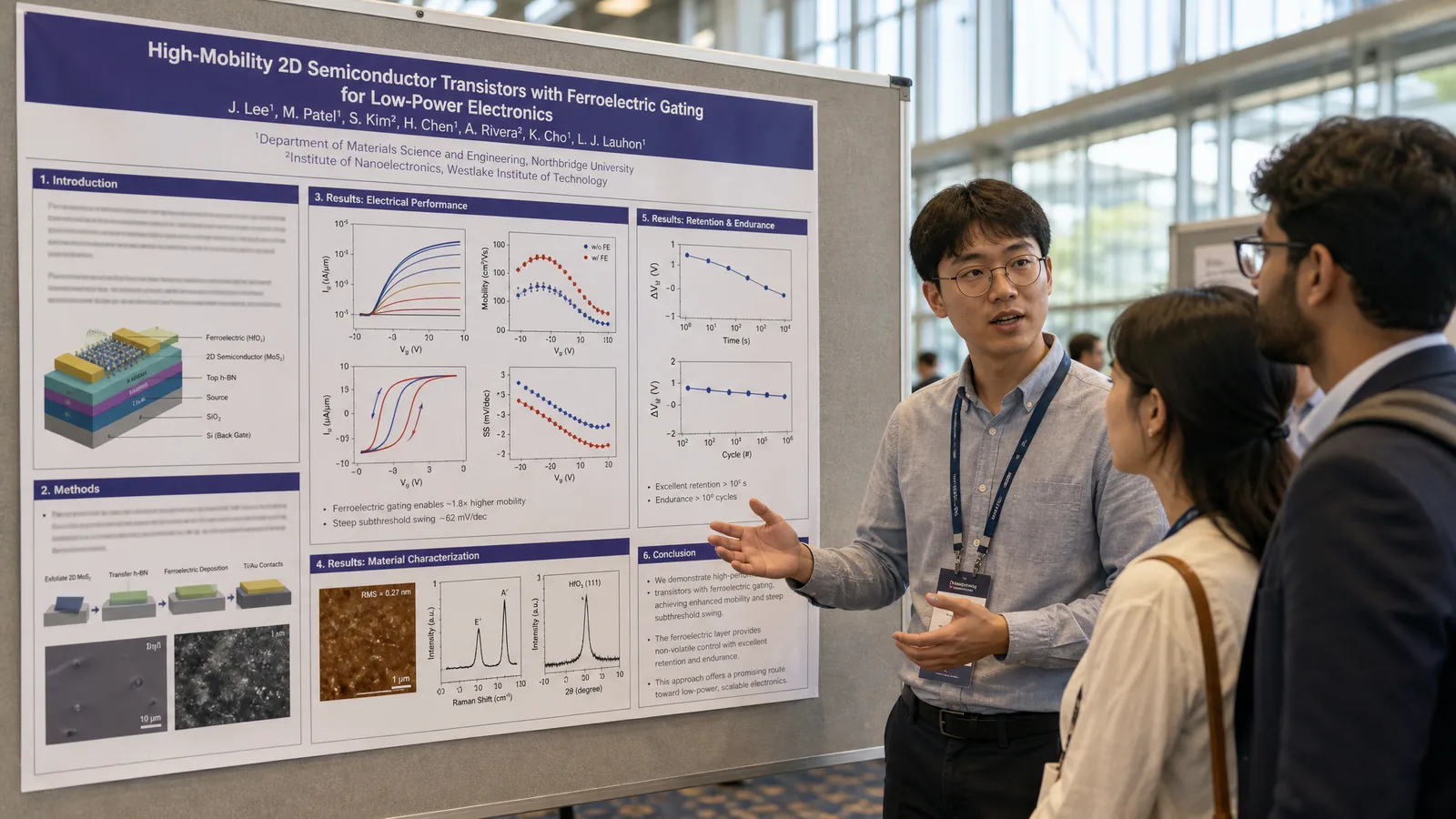
250th ECS Meeting 2026 poster template: A0 portrait layout with a top title band, author line, and left-to-right introduction, methods, results and conclusion panels (Figure generated with SciFig)
The electrochemistry figures on that sheet — a battery or fuel-cell schematic, a reaction mechanism, an electrode-electrolyte interface diagram — are usually the slowest part of the layout to produce. You can generate publication-grade versions online for free and drop them straight into your poster composition.
Need a hero figure for your ECS poster?
Start from an electrochemical cell schematic, a reaction mechanism, or an interface diagram before you open your poster template.
A landscape sheet will not fit this board, so the portrait canvas is settled before you start. Our conference poster templates ship A0 portrait as its own file in editable PowerPoint, with the print type scale already set so figures stay legible from the 1.5 m working distance ECS asks for.
4. 250th ECS Meeting 2026 Oral Presentations and the Digital Presentation Option
Oral presentations at the 250th ECS Meeting must be delivered in English from a USB flash drive on the laptop and LCD projector provided in each session room — no additional Q&A time is scheduled, so your talk and any questions must fit inside the slot given in your acceptance notification. ECS does not publish a single fixed number of minutes or a slide aspect ratio for every oral slot; the exact length is communicated to each presenter individually, so confirm it in your notification rather than assuming a default.
Separately, ECS offers a Digital Presentation option — a pre-recorded video, slide deck, or one-page poster PDF — for presenters who cannot attend Calgary in person. This is not an e-poster requirement for every attendee; it is an alternate track for remote participation, per the official ECS digital presentation information, which recommends video lengths of roughly 15–20 minutes for a contributed talk, 30–40 minutes for an invited or keynote talk, and 10–15 minutes for a poster recording — figures worth using as a planning reference for that track specifically, not as the live in-person time limit. If you are competing in the Z01 General Student Poster Session, note that student competitors must additionally upload a digital poster file in advance and be present for in-person judging on Tuesday evening of the meeting.
Whichever format you present in, the visual demand is the same: a handful of slides or a single poster sheet needs one clear figure — a cell schematic, a mechanism, an interface diagram — doing the explaining instead of a block of text.
ECS publishes no slide aspect ratio or template, and no Q&A time is scheduled separately — the talk has to fit its slot exactly. Our scientific presentation templates are 16:9 academic decks already ordered the way a conference talk runs, so the structure is done before you start timing it.
5. What Figures Do You Need? Electrochemical Cell, Mechanism, and Interface Schematics for Your Poster or Slide
Whether you work in batteries, fuel cells, corrosion, sensors, or semiconductor electrochemistry, two figure types recur across almost every 250th ECS Meeting poster and slide — and both are the slowest to draw by hand. The exact system varies by symposium (lithium-ion, solid-state, PFAS remediation, electrocatalysis, and dozens more), but the underlying visual jobs repeat:
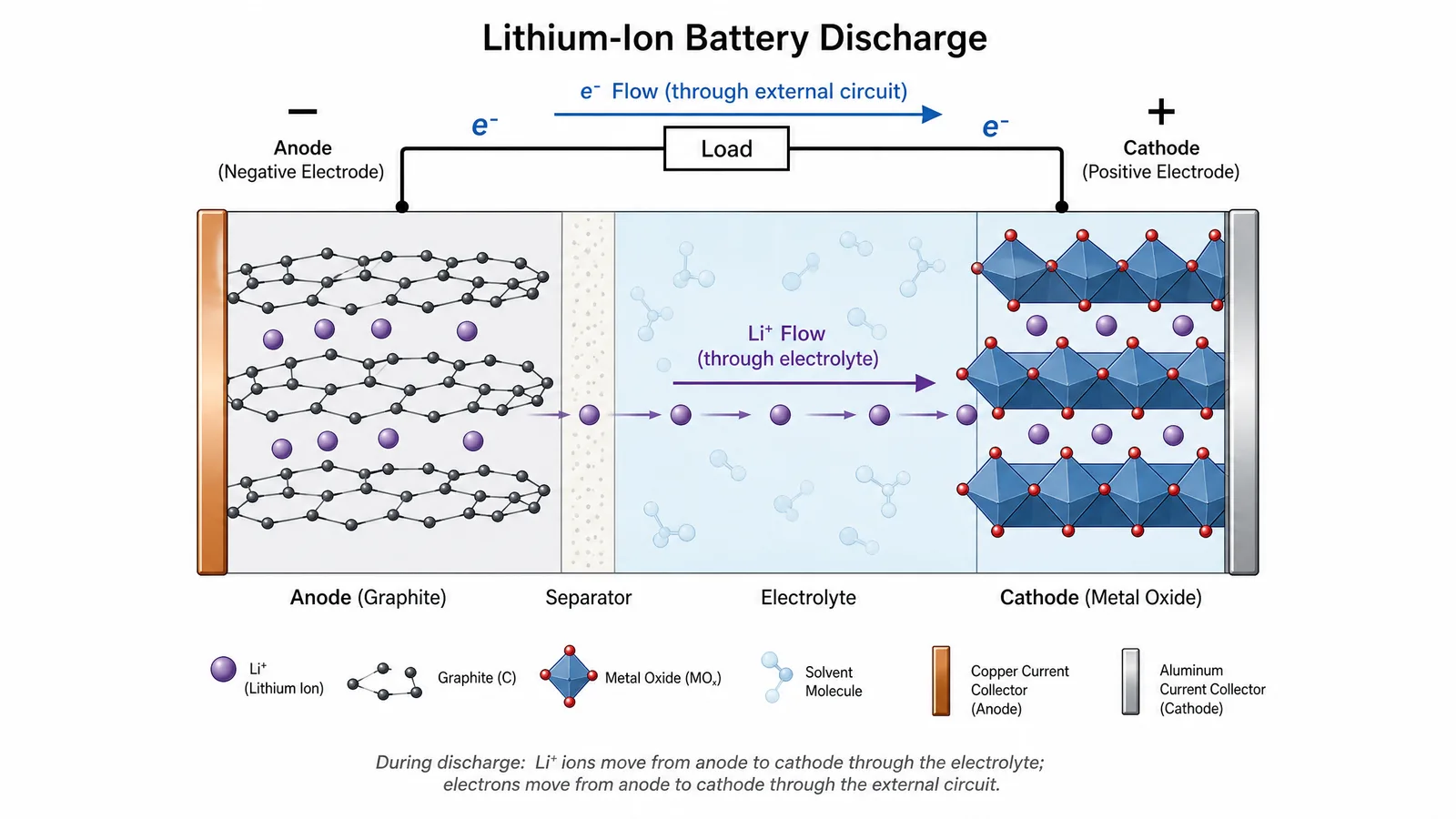
Electrochemical cell / reaction mechanism schematic — the anode, cathode, electrolyte, and separator of a battery, fuel cell, or electrolyzer, with ion flow through the electrolyte and electron flow through the external circuit clearly separated and correctly directed.
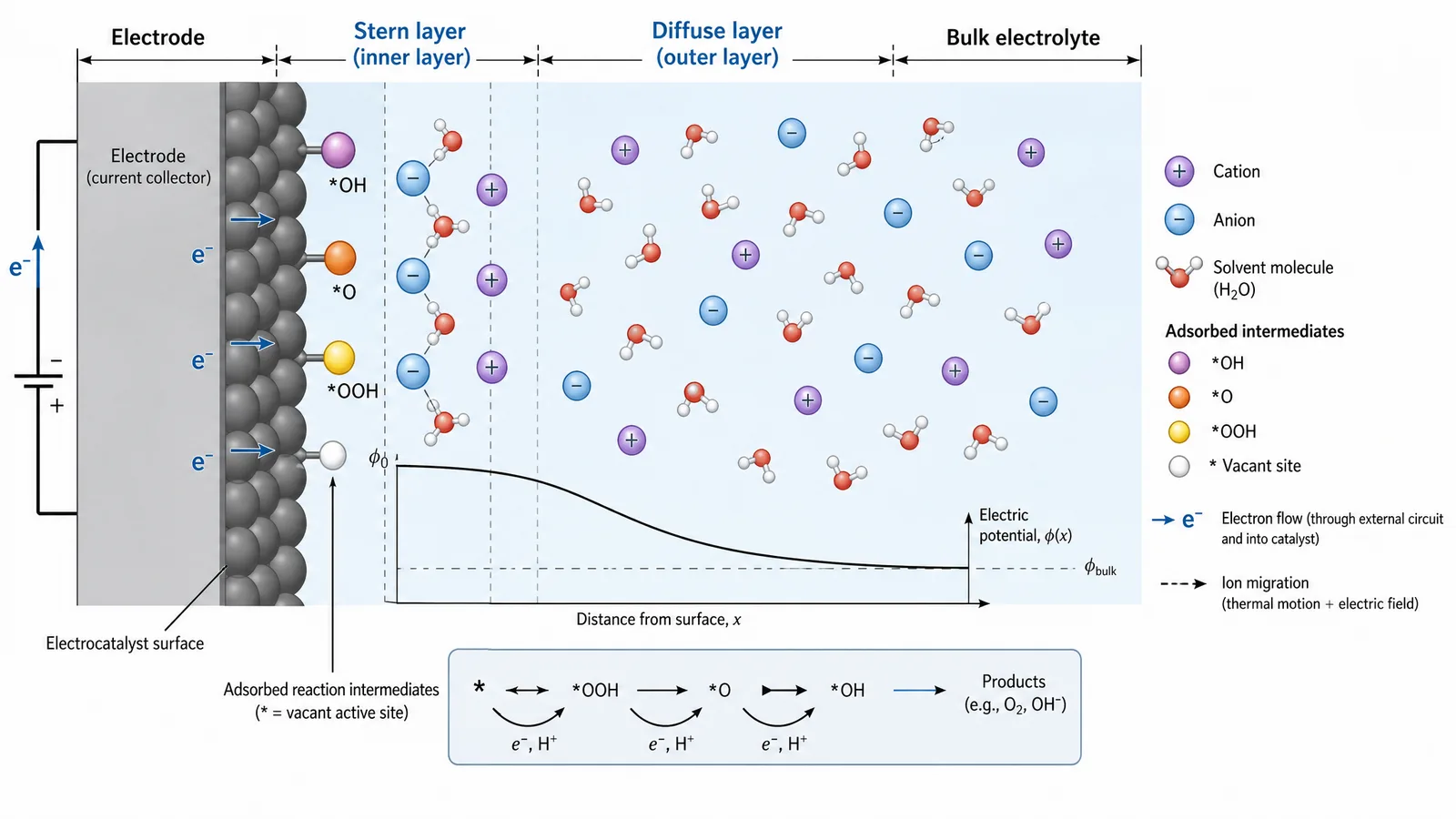
Electrode, interface, and transport-process diagram — the electrode-electrolyte interface (electrical double layer, adsorbed reaction intermediates) or a transport pathway (ion diffusion, charge transfer) that your data is explaining.
250th ECS Meeting 2026 electrochemical cell figure: anode, cathode, separator and electrolyte with lithium-ion flow through the electrolyte and electron flow (Figure generated with SciFig)
6. Designing a Winning ECS Poster: Accuracy That Survives Peer Scrutiny
A winning 250th ECS Meeting poster passes two tests: it is grasped in three seconds by someone walking the aisle, and it is scientifically exact enough to survive scrutiny from an electrochemist standing in front of it. The strongest A0 sheets are built around one dominant "hero" figure — usually the cell schematic or the mechanism behind the key result — with supporting panels arranged to reinforce it rather than compete with it.
That second test is where scientific figures live or die — and where general-purpose AI image generators fall short. A tool like Nano Banana Pro or GPT Image can produce something that looks about 99% right, but on a scientific figure of an electrochemical cell or interface 99% right is effectively 0% right: a reversed anode/cathode label, an electron drawn traveling through the electrolyte instead of the external circuit, or a mislabeled interface layer turns a compelling poster into one that misleads a reviewer. A flat, raster AI image also gives you no way to fix that last one percent.
This is the core difference with SciFig. Every figure is a fully editable SVG whose elements — arrows, labels, layers, electrodes — you can modify individually, so you (the author who actually knows the electrochemistry) can adjust every element until the science is exactly right. The mistakes that reward this element-level review are exactly the ones a reviewer notices first:
Anode/cathode polarity reversed — the same cell diagram often gets relabeled incorrectly when switching between charge and discharge states; get the polarity right for the state you are illustrating.
Electron and ion pathways crossed — electrons must travel through the external circuit, and ions (Li⁺, H⁺, and so on) through the electrolyte; drawing electrons through the electrolyte or ions through the wire is the classic conceptual error in cell schematics.
Electrode-electrolyte interface structure drawn incorrectly — the Stern layer and diffuse layer of the electrical double layer, or the charge and position of adsorbed reaction intermediates at a catalyst surface, are easy to get backwards or invent outright.
250th ECS Meeting 2026 electrode-electrolyte interface figure: an electrical double layer with Stern and diffuse layers, adsorbed intermediates at the catalyst surface (Figure generated with SciFig)
Whether your 250th ECS Meeting poster earns its attention comes down to whether these figures are accurate, clear, and legible from five feet away — which is exactly where an editable AI figure workflow compresses days of design work into hours without giving up scientific control.
7. Create Your 250th ECS Meeting Figures with AI: The SciFig Workflow
You already have two things most colleagues do not: your accepted abstract and a precise understanding of your cell chemistry or mechanism — use both to generate your figures online for free, then edit them until they are exactly right. Here is the SciFig workflow for a 250th ECS Meeting presenter, starting in SciFig AI Illustration (AI scientific illustration):
Path 1 — Upload your accepted abstract PDF. Drop it into PDF-to-Figure. It parses your methods and results and returns a cell schematic or mechanism diagram in one click — every element stays editable, so you can adjust it to your data and poster layout instead of starting from a blank canvas.
Path 2 — Copy a structured prompt. For a cell or interface schematic, Text-to-Figure gives more control. Copy and adjust to your system:
Schematic of a lithium-ion battery during discharge: a graphite anode
releasing Li-ions across a porous separator through the electrolyte to
a metal-oxide cathode, with electrons flowing through the external
circuit to power a load.
Path 3 — Sketch and scan. If you sketched your cell design or reaction mechanism on paper, photograph it and drop it into Sketch-to-Figure to get a publication-style version that preserves your topology.
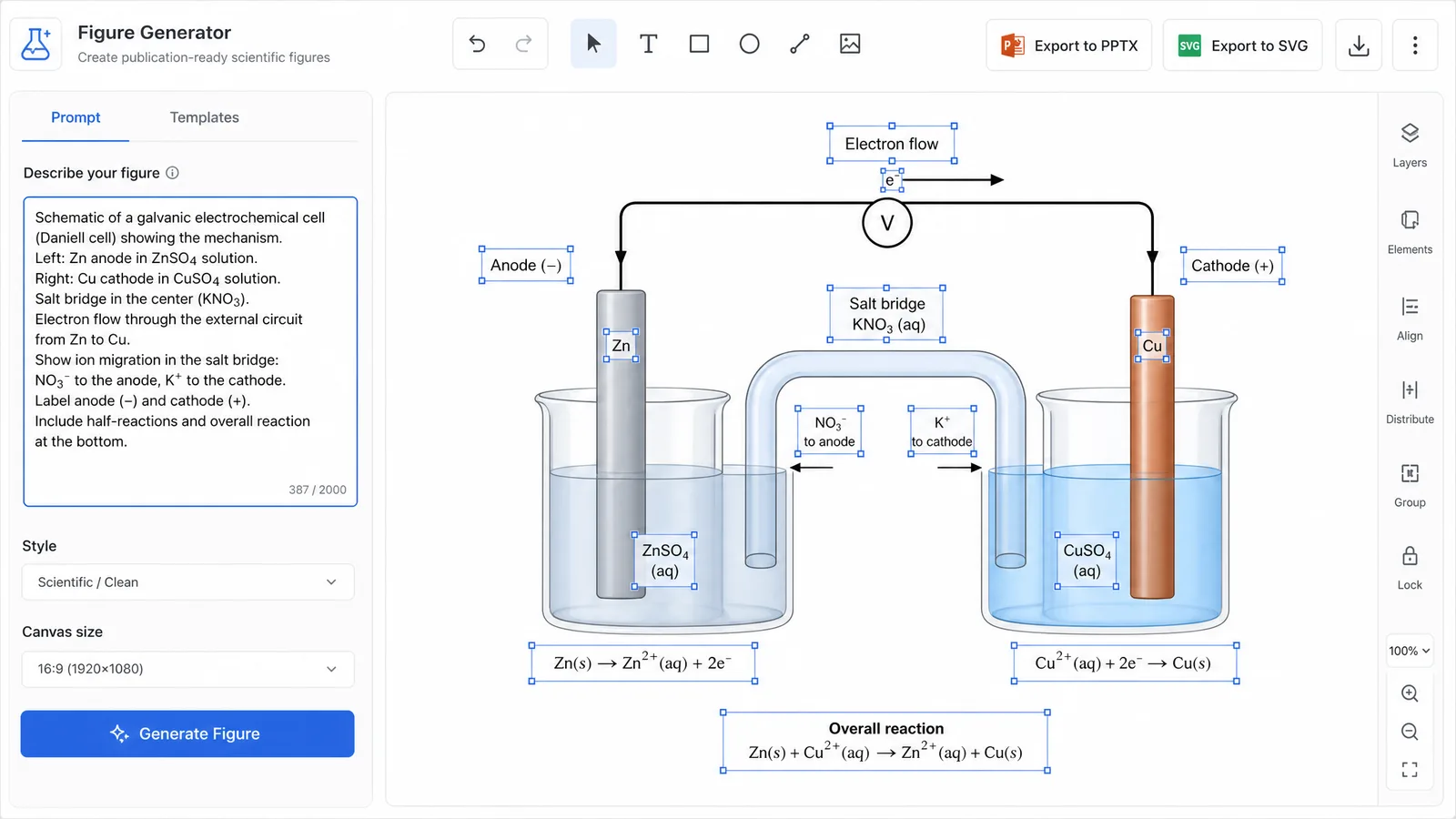
250th ECS Meeting 2026 poster figure workflow in SciFig: an electrochemical cell prompt left, editable SVG diagram right, PPTX and SVG export (Figure generated with SciFig)
From any path, you edit individual elements in the vector canvas — adjust labels, arrow directions, layer boundaries — and export to editable PPTX or layered SVG at high resolution for your A0 print or slide deck without artifacting. Start free, no card required: 150 credits on day one (3 figures), plus daily check-in credits that grow with your streak (up to 150 a day) — up to about 44 figures in your first month, so most authors work through a full set of poster figures over their first few days. For companion guides in this conference series, see the SITC 2026 poster guide and the ESMO 2026 poster guide.
Optional — disclose your AI use. Many conferences and journals now ask authors to disclose AI assistance and to remain responsible for the accuracy of their work. If you build and review a figure in SciFig, you can add one line to its caption — for example: Figure created by the authors using SciFig and reviewed for scientific accuracy (scifig.ai).
Start your ECS figure from prompt, PDF, or sketch
Use the path that matches what you already have, then edit every element until the electrochemistry is exact.
8. Where 250th ECS Meeting Abstracts Are Published (ECS Meeting Abstracts and ECS Transactions)
Accepted 250th ECS Meeting abstracts are published as extended abstracts in ECS Meeting Abstracts — an open-access journal hosted on IOPscience and freely available in the ECS Digital Library — with publication timed around the meeting itself. This is a separate publication from ECS Transactions (ECST), the Society's peer-reviewed conference proceedings series, which carries full-length papers from selected symposia rather than every accepted abstract.
If your symposium organizer invites a full paper for ECS Transactions, that submission and its deadline are handled separately from your abstract — check with your session organizer for the specifics, since ECS has not published a single meeting-wide ECST submission deadline for the 250th Meeting. For most presenters, ECS Meeting Abstracts is the citable record: once it is live, use it to confirm the published version of your abstract and keep your poster, slides, and abstract figure telling the same story.
Frequently Asked Questions
A 250th ECS Meeting poster must be printed at A0 size (841 × 1189 mm / 33.1 × 46.8 in). Title, poster number, author names, and affiliations go at the top, and content is read left to right from the top-left corner. Title lettering should be 2.5–5 cm (1–2 in) tall, and figures should be legible from 1.5 m (5 ft) away.
ECS Meeting posters must be portrait (vertical) — A0 at 841 × 1189 mm. There is no landscape option, so design your title band and columns for a tall sheet from the start, per the official ECS author and presenter information.
No — the 250th ECS Meeting does not require an e-poster for standard in-person presenters. ECS instead offers an optional Digital Presentation track (video, slide deck, or one-page poster PDF) for presenters who cannot attend Calgary in person; it is a separate remote-participation option, not a universal e-poster requirement.
Yes, if you submit through the late-poster categories before the September 4, 2026 deadline. The regular abstract window (covering the A–M subject-area program) closed April 10, 2026, but the "Late" poster categories and the "Z" general-topics symposia remain open through 11:59 PM Eastern Time on September 4, 2026, via the official Call for Papers.
ECS does not publish one fixed length for every oral slot — the exact time is stated in each presenter's acceptance notification, and no additional Q&A time is scheduled beyond it. Presentations are delivered from a USB flash drive on the provided laptop and projector; confirm your slot length ahead of time rather than assuming a default.
Accepted abstracts are published as extended abstracts in ECS Meeting Abstracts, an open-access journal on IOPscience that is freely available through the ECS Digital Library. Full papers invited to ECS Transactions are a separate, symposium-specific track, not the default publication venue for every abstract.
Z01 is the 250th ECS Meeting's student poster competition, which requires competitors to upload a digital poster file in advance and be present for in-person judging on the Tuesday evening of the meeting, in addition to displaying their printed A0 poster.
References
All specifications and dates above are drawn from official ECS materials, accessed July 21, 2026:
The Electrochemical Society. 250th ECS Meeting — Homepage. electrochem.org. Accessed July 21, 2026. https://www.electrochem.org/250
Disclaimer: This article is educational content focused on scientific figure design for conference posters and presentations. Dates and specifications are summarized from official ECS materials linked above and were accurate at the time of writing; always confirm current details on the official electrochem.org website before printing, submitting, or traveling.
Keep going
Recommended resources
Templates, tools, and further reading for your research