ESMO 2026 Poster & Presentation Guidelines and Template
Complete guide to ESMO 2026 poster and presentation guidelines: 190 x 110 cm poster size, format rules, deadlines, abstract book access, and standout figures.
SciFig Team
SciFig editorial team
ESMO Congress 2026 runs 23–27 October 2026 at IFEMA Madrid, Spain.
This is a practical guide to the official poster and presentation rules for ESMO Congress 2026: the 190 × 110 cm poster size and format, the e-Poster and oral presentation rules, and the exact deadlines.
It also covers where accepted abstracts appear in Annals of Oncology and the oncology figures that separate a poster that gets read from one that gets walked past. Every date and specification below links to official ESMO materials.
Need the file, not just the specs? Our conference poster templates are unbranded, editable PowerPoint layouts you can resize to ESMO's 190 × 110 cm — nothing commercial on the board for reviewers to flag.
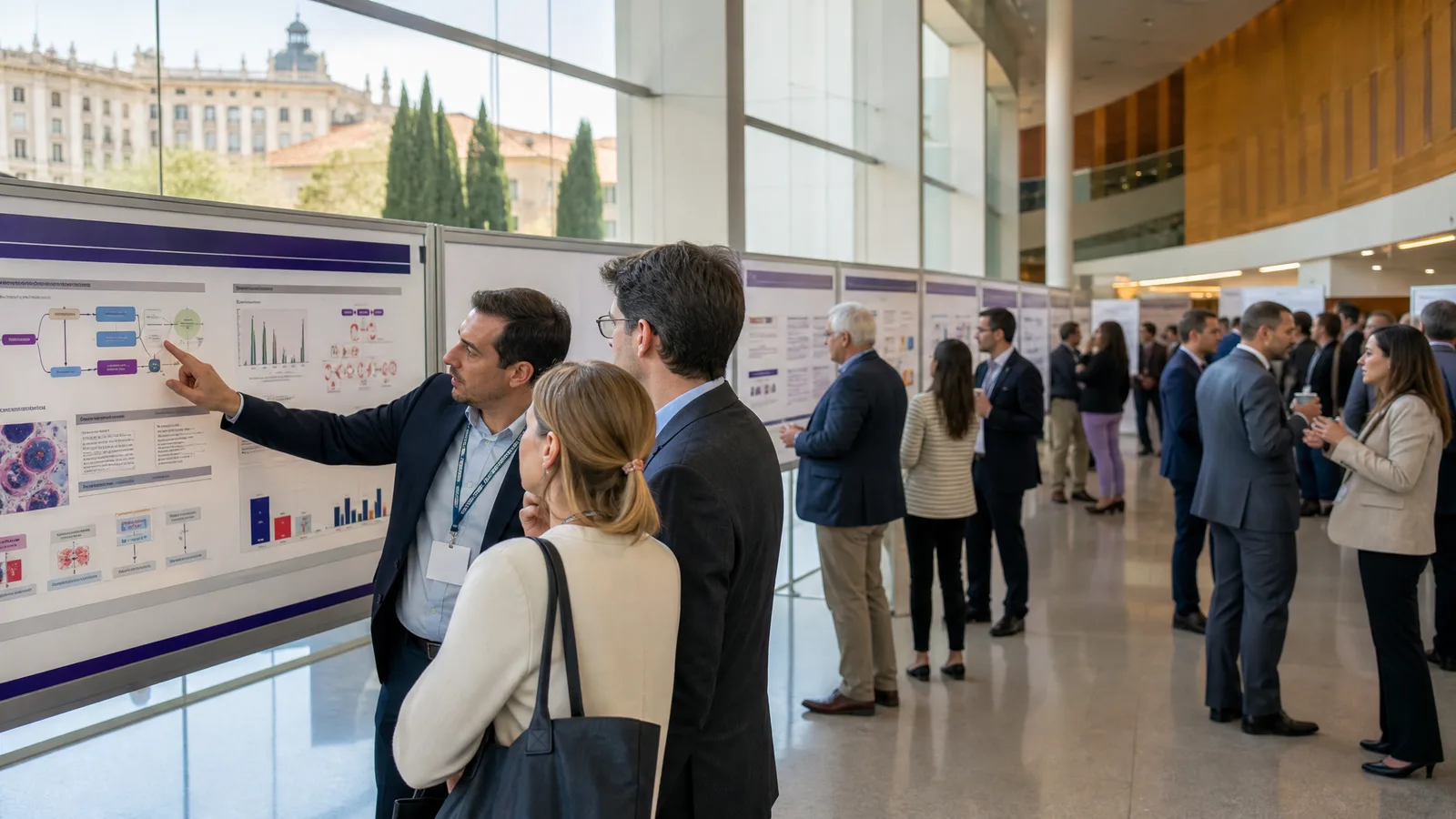
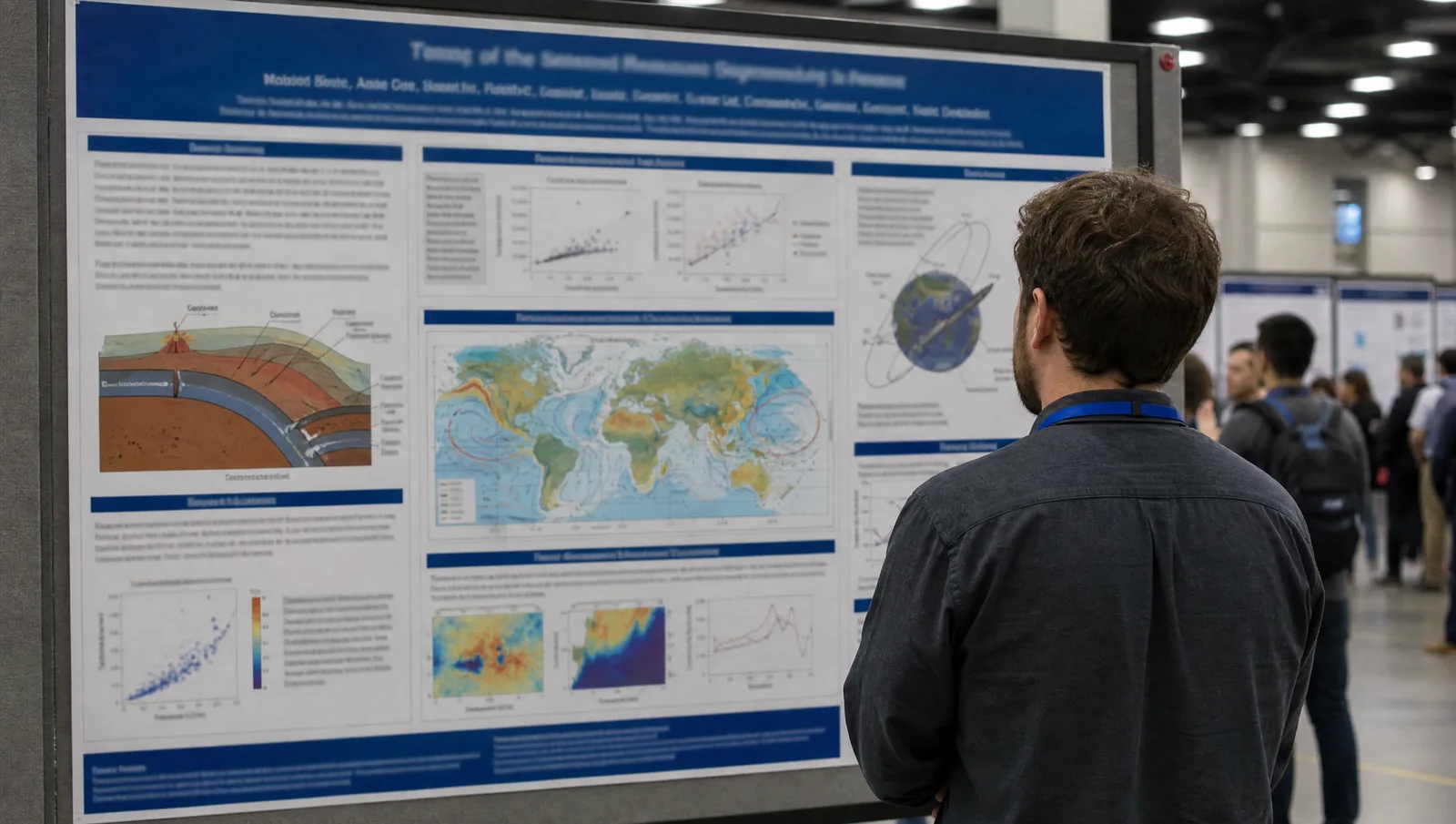
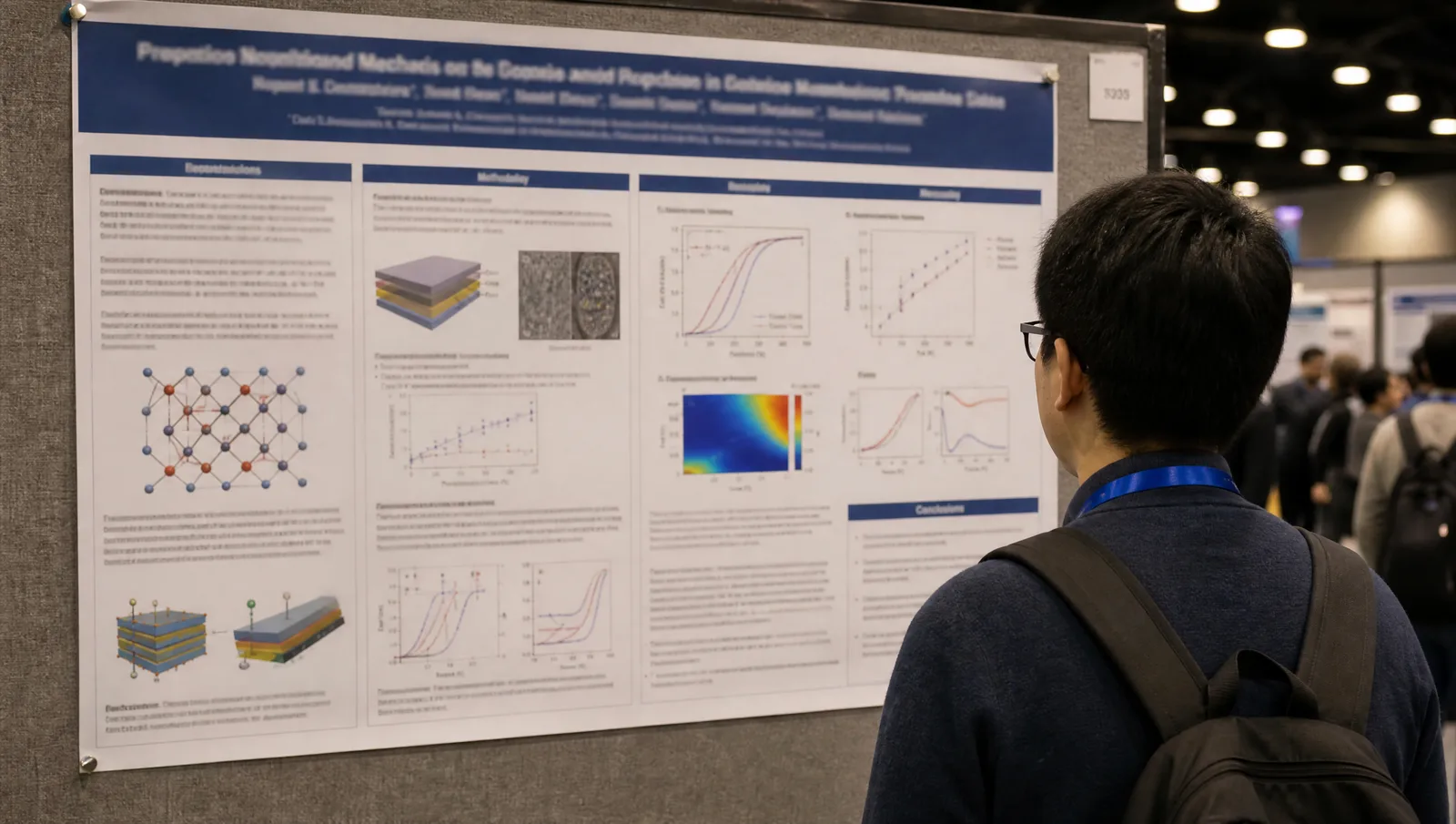
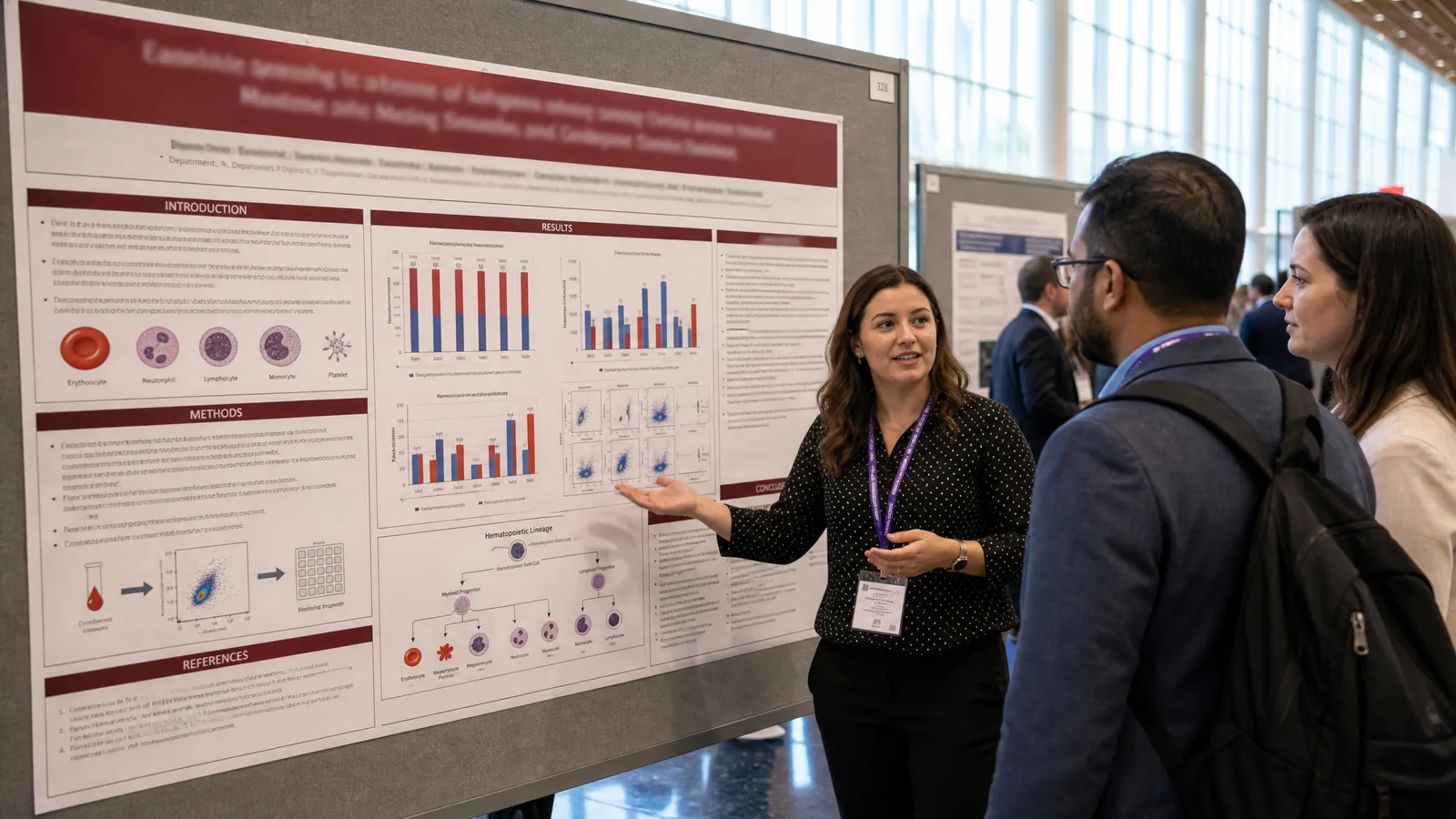
ESMO Congress 2026 oncology poster session at IFEMA Madrid: rows of landscape posters and presentations, delegates discussing trial schema and drug MOA figures (Figure generated with SciFig)
Transparency note: Illustrations in this article were generated with SciFig AI and reviewed by the author for scientific accuracy. Factual claims about dates and specifications link to official ESMO materials.
1. ESMO 2026 at a Glance: Key Dates After Your Abstract Acceptance
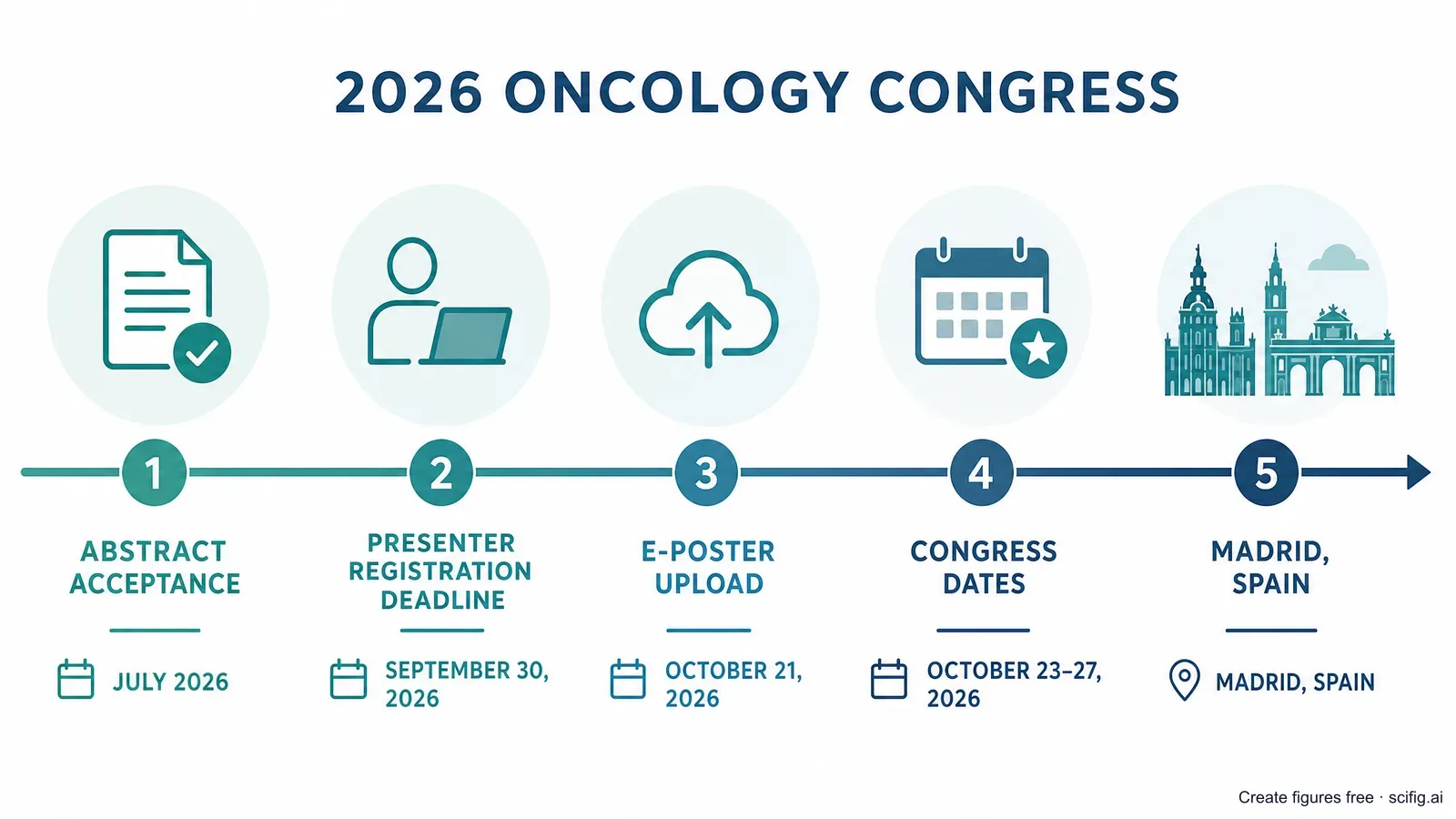
ESMO Congress 2026 runs 23–27 October 2026 at IFEMA Madrid, Spain. Regular abstract outcomes were released 8–10 July 2026; from there, the presenter (or a designated replacement) must be registered by 30 September 2026, and accepted abstract titles appear in the online programme by 17 July 2026. That gives most authors roughly 14 weeks from acceptance to Congress — enough time to prepare a strong ESMO poster and ESMO presentation, but not enough to leave the figures until the last week.
Here is the ESMO 2026 poster and presentation timeline that matters now that your abstract is accepted, drawn from the official ESMO Congress 2026 abstracts page:
ESMO 2026 poster and presentation timeline: regular acceptance 8-10 July, presenter registration 30 September, e-Poster upload 21 October, Congress 23-27 October Madrid (Figure generated with SciFig)
Date
Milestone
12 May 2026
Regular abstract / Trials in Progress deadline (closed)
8–10 July 2026
Regular abstract outcome notifications ← you are here
17 July 2026
Accepted abstract titles available in the online Programme
8 September 2026
Late-breaking abstract (LBA) deadline
16–18 September 2026
Late-breaking abstract outcome notifications
30 September 2026
Presenter registration deadline (mandatory)
21 October 2026
E-Poster upload deadline (21:00 CEST)
23–27 October 2026
ESMO Congress 2026, IFEMA Madrid
One scheduling note: the time zone switches from CEST to CET between 24 and 25 October, so double-check any deadline expressed in local time.
2. ESMO 2026 Poster Size, Format, and Guidelines (Official Specs)
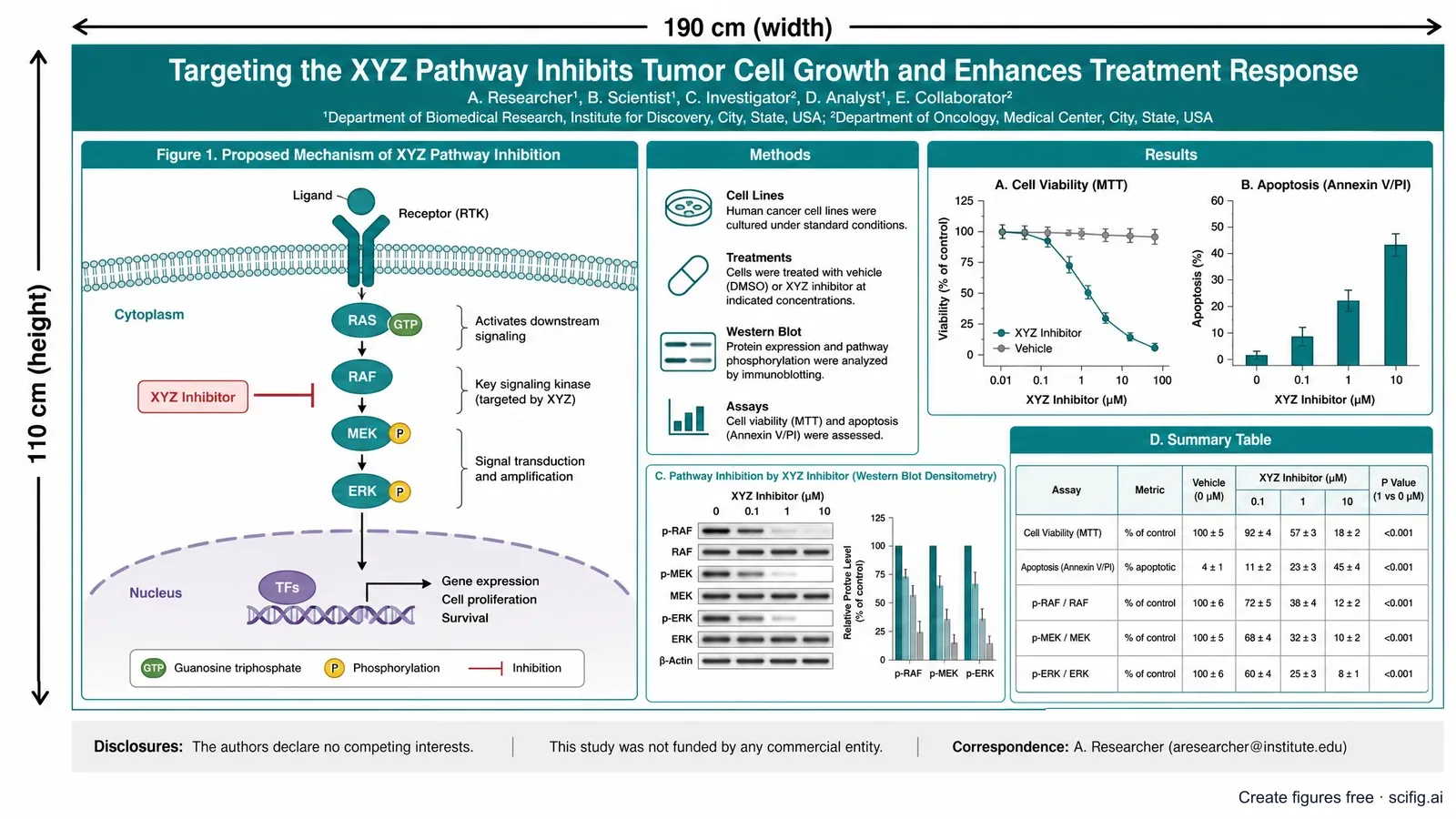
An ESMO Congress 2026 printed poster must be 190 cm wide × 110 cm high, in horizontal (landscape) orientation. You hang it on the assigned board in the Poster Area, Hall 5, and your text should be legible from one meter away. Every poster must carry its Final Publication Number (FPN), a disclosure statement from the first and presenting author, and — if the study was funded — a "Study sponsored by…" line. There is no on-site printing service, so plan your printing and shipping ahead.
Landscape 190 × 110 cm — build your layout to this ratio from the start; a portrait design will not fit the board hardware.
Readable at one meter — use high contrast and generous type; reviewers skim before they stop.
QR / AR / text key codes are allowed but must carry the ESMO disclaimer notice and avoid links to overt product advertising.
No clearly identifiable commercial templates or branding — ESMO reviewers flag commercial bias. This is why the smartest approach is to build your own clean layout and drop in the scientific figures that carry the science, rather than a branded template.
ESMO flags clearly identifiable commercial templates — so what you actually want is a plain one. Our conference poster templates are unbranded academic layouts in editable PowerPoint: no sponsor marks, no product styling, just the section structure and type scale already set. Resize the canvas to ESMO's 190 × 110 cm and drop your figures in. If any SciFig credit line appears in the file, delete it while you edit.
ESMO 2026 poster size and template: 190 x 110 cm landscape poster layout with title bar, FPN, hero figure, methods and results panels, disclosure footer (Figure generated with SciFig)
The ESMO poster figures — trial schema, drug mechanism, tumor microenvironment — are the slowest part of that layout to produce. You can generate publication-grade versions of them online for free and drop them straight into your PowerPoint composition.
Need a hero figure for your ESMO poster?
Start from a trial schema, MOA diagram, or pathway visual before you open PowerPoint.
3. ESMO 2026 E-Poster: PDF Format and Upload Deadline
Every ESMO 2026 poster presenter must also prepare an e-Poster: a PDF file, up to 500 MB, in horizontal (landscape) format at the same 190 × 110 cm size, uploaded by 21 October 2026 (21:00 CEST). The e-Poster appears on searchable screens in Hall 5 and on the Congress virtual platform. If you were accepted specifically for the E-Poster format (rather than paper Poster Display), no paper poster is printed at all — the PDF is the deliverable.
The full ESMO 2026 e-Poster PDF requirements are in the official ESMO Congress 2026 e-Poster Presenters Instructions (PDF). Like the paper poster, the e-Poster must include the FPN, a disclosure statement, and all supporting material — "tables, drawings, charts and pictures." Because an ESMO e-Poster is viewed on screens, crisp vector-style figures read far better than photographed or low-resolution images. Upload instructions reach first authors from ESMO's technical supplier on 31 August 2026.
4. ESMO 2026 Oral Presentation: Official Slide Template and Time Limits
If your abstract was accepted as a Proffered Paper or Rapid Oral, your slides must be 16:9 landscape PowerPoint (.pptx — KeyNote is not accepted), and ESMO strongly recommends its official slide template. A Proffered Paper allows a maximum of 14 slides (including title and disclosure) for a 10-minute talk; a Rapid Oral allows a maximum of 8 slides for a 5-minute talk. A disclosure slide is mandatory at the start and must stay on screen for 5–10 seconds. Slides upload to the Congress portal by 22 September 2026 (2 October for LBAs).
For an ESMO 2026 oral presentation, download the official assets here: ESMO Congress 2026 Speakers Template (PPTX) and the ESMO Congress 2026 Oral Presenters Instructions (PDF). ESMO's own guidance is blunt about visuals: keep to a maximum of about 10 lines or 15–20 words per slide, use high-contrast lettering, and let visual material support your talk rather than transcribe it. With a 10-minute Proffered Paper capped at 14 slides, nearly every ESMO presentation slide needs one clear figure doing the explaining — a mechanism schematic, a trial design, a pathway — not a wall of text.
5. What Figures Do You Need? Poster vs Presentation
Whether you are building a poster, an e-Poster, or oral slides, oncology audiences expect the same handful of scientific figures — and the most time-consuming ones can be generated online for free in minutes. The exact mix depends on your track (breast, lung, GI, GU, immunotherapy, and so on), but across ESMO the recurring figure types are consistent, and each maps to a specific job on your poster or slide.
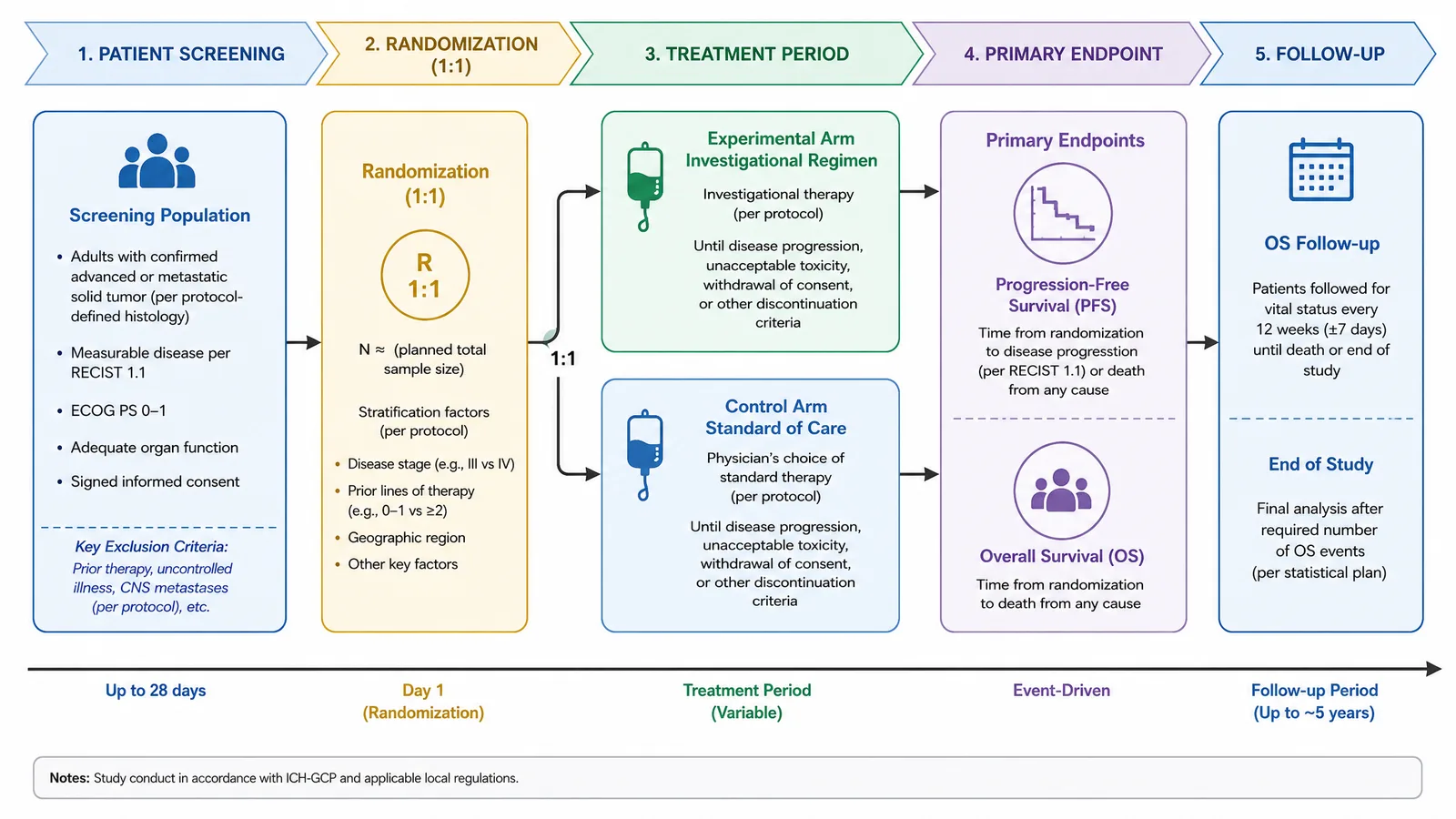
Trial schema / study design — enrollment, randomization, treatment arms, follow-up. The figure that answers "what did you actually do?" before anyone reads your methods.
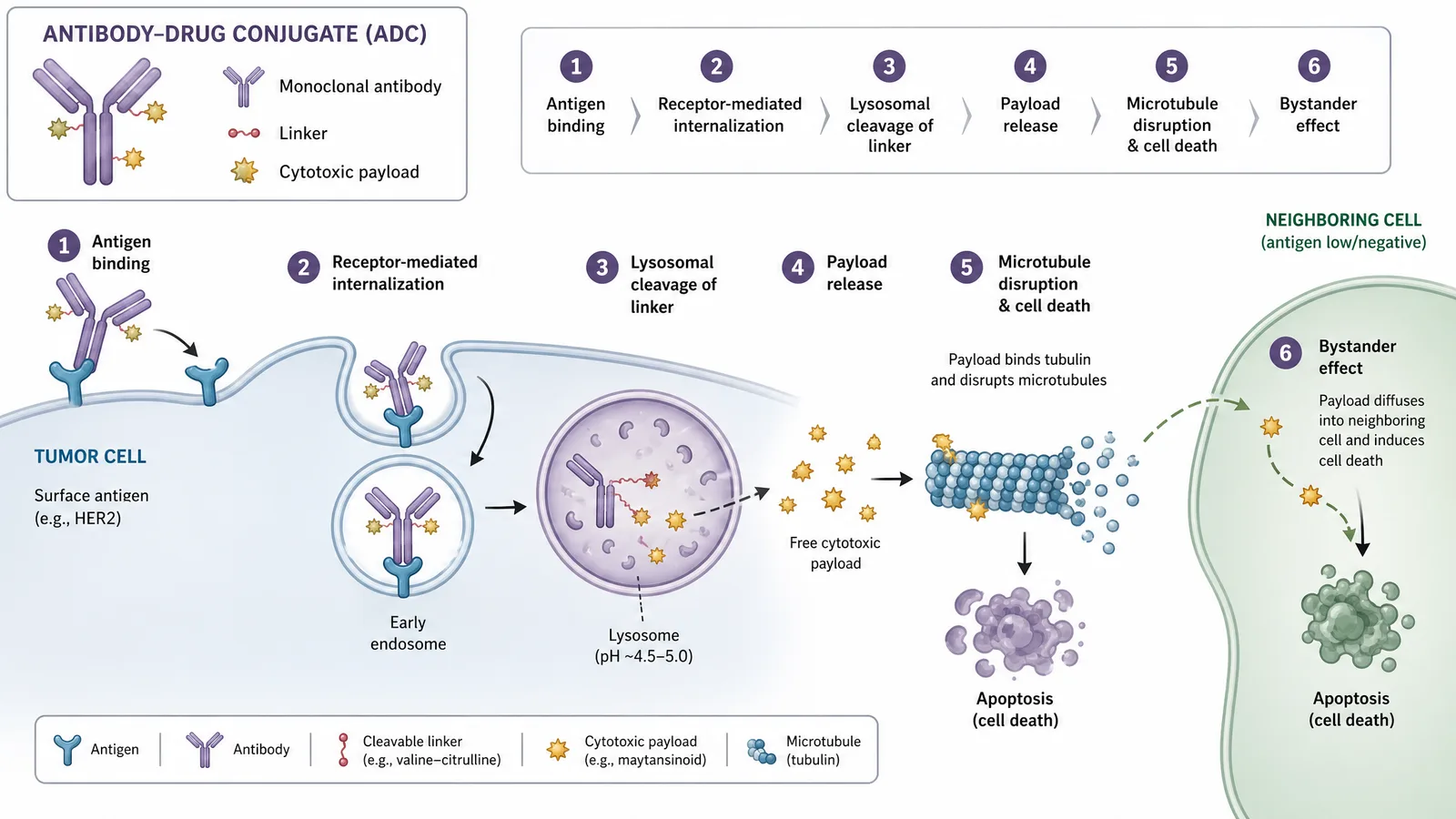
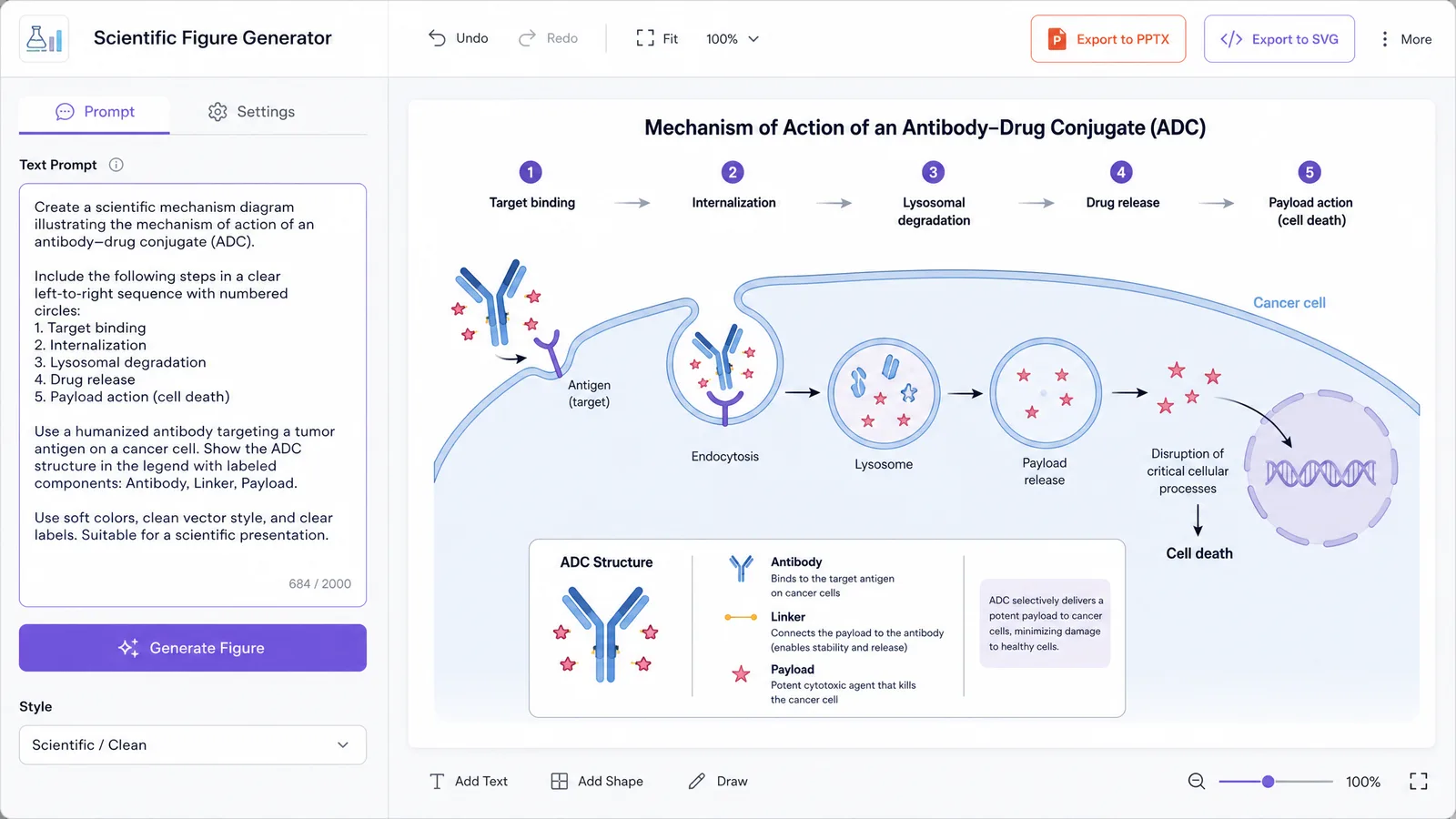
Drug mechanism of action (MOA) — antibody-drug conjugate (ADC) internalization and payload release, immune checkpoint blockade, targeted-therapy signaling. The figure that decides whether your poster gets read.
Tumor microenvironment (TME) — CAFs, tumor-associated macrophages, T-cell landscape, aberrant vasculature. Increasingly central to immunotherapy posters.
Signaling pathway — the specific cascade your study intervenes on, drawn with publication-grade clarity.
An ESMO poster author building four of these, and an ESMO oral presenter needing one clean figure per slide, face the same bottleneck: these diagrams historically take hours each in Adobe Illustrator. You can generate them from a text prompt or turn your accepted abstract PDF into a figure instead — every element stays editable, so you can adjust it to your data and layout, then export.
Turn your abstract into a trial schema or MOA diagram
Paste the study design or mechanism and generate a clean, editable figure for your poster.
6. Designing a Winning ESMO 2026 Poster: Layout and Figure Anatomy
A winning ESMO poster passes the three-second test: a delegate walking past should grasp your key finding before they decide to stop. Because ESMO bans commercial templates, the best layouts are built around one dominant "hero" figure — usually the trial schema or the drug MOA with the key result overlaid — with everything else arranged to support it. Restraint wins: a landscape 190 × 110 sheet with one strong figure and disciplined information density beats a dense grid of small panels every time.
The recurring oncology poster figures each reward specific care:
ADC mechanism — get the linker chemistry, the drug-to-antibody ratio, and the intracellular payload-release location right; these are the details reviewers notice.
Tumor microenvironment — distinguish cell types correctly (CAFs vs normal fibroblasts, M1 vs M2 macrophages) rather than inventing cell states.
ESMO 2026 phase 3 trial schema figure: screening, 1:1 randomization to experimental vs control arm, treatment, PFS and OS endpoint follow-up (Figure generated with SciFig)
Whether your ESMO 2026 poster earns its attention comes down to whether these poster figures are accurate, clear, and legible from a meter away. That is exactly where an AI figure workflow compresses days of design work into hours.
7. Create Your ESMO 2026 Figures with AI: The SciFig Workflow
You already have two things most colleagues do not: your accepted abstract PDF and a clear understanding of your study's mechanism — use both to generate your figures online for free quickly. Here is the ESMO figure workflow for an acceptance recipient:
Path 1 — Upload your accepted abstract PDF. Drop the PDF into PDF-to-Figure. It parses your Background, Methods, and Results and returns a trial schema and mechanism diagram in one click. SciFig generates the figure, and every element stays editable so you can adjust it to your data and poster layout — no blank canvas.
Path 2 — Copy a structured prompt. For a mechanism or pathway figure, Text-to-Figure gives more control. Copy and adjust to your study:
Schematic of an antibody-drug conjugate mechanism: antibody binds a
tumor-surface antigen, receptor-mediated internalization, lysosomal
cleavage of the linker, cytotoxic payload release, microtubule
disruption, and bystander effect on adjacent antigen-negative cells.
Path 3 — Sketch and scan. If you sketched your hero figure on paper, photograph it and drop it into Sketch-to-Figure to get a publication-style version that preserves your topology.
ESMO 2026 poster figure workflow in SciFig: ADC mechanism prompt on the left, editable SVG diagram on the right with PPTX and SVG export for your poster or slides (Figure generated with SciFig)
From any ESMO figure path, you can edit individual elements in the vector canvas, adjust labels and colors, and export to editable PPTX or layered SVG for final composition — at high resolution for the 190 × 110 cm print without artifacting. Start free: 150 credits on day one, plus daily check-in credits. For the companion guides in this conference series, see the EHA 2026 poster guide and the AAIC 2026 poster guide.
Optional — disclose your AI use. Many conferences and journals now ask authors to disclose AI assistance and to remain responsible for the accuracy of their work. If you build and review a figure in SciFig, you can add one line to its caption — for example: Figure created by the authors using SciFig and reviewed for scientific accuracy (scifig.ai).
Start your ESMO figure from prompt, PDF, or sketch
Use the path that matches what you already have, then export a poster-ready visual.
ESMO explicitly prohibits clearly identifiable commercial templates, commercial bias, and product branding on posters and slides — so how you handle logos matters. Institutional logos for your university or hospital are standard and expected; what ESMO reviewers flag is sponsor branding, drug trade-name promotion, and slide or poster templates carrying commercial identity. Keep any funding relationship to the required "Study sponsored by…" acknowledgment rather than a branded layout.
If you need to create or clean up an institutional logo or a simple figure mark for your ESMO poster, you can do it directly from the SciFig homepage — no branded template required, just the clean visual assets your poster needs.
Tip
The single highest-leverage decision in your preparation window is which figure becomes the hero. Pick the one your delegates need to remember 24 hours later — usually the drug MOA or the trial schema with the key result overlaid — and design the rest of the 190 × 110 sheet around it.
9. Where to Find the ESMO 2026 Abstract Book (Annals of Oncology)
The ESMO 2026 Abstract Book is best treated as the citable record you check after the poster and presentation workflow is underway, not as the first step in designing your figures. Accepted ESMO Congress 2026 abstracts are published in the ESMO Congress 2026 Abstract Book — a supplement to the official ESMO journal, Annals of Oncology — and become available online around the Congress dates. Searches for the "ESMO 2026 abstract book" or "ESMO 2026 abstract PDF" almost always mean this Annals of Oncology supplement.
The submission rules that shaped your abstract are in the official ESMO Congress 2026 Abstract Regulations (PDF): a maximum of 250 words, structured as Background / Methods / Results / Conclusion, with one table or figure permitted. Once the abstract book is live, use it to confirm the citable version of your ESMO abstract, then make sure the ESMO poster, e-Poster, and presentation figures tell the same study story.
FAQ
An ESMO Congress 2026 printed poster is 190 cm wide × 110 cm high, in horizontal (landscape) orientation, hung on the assigned board in the Poster Area, Hall 5 at IFEMA Madrid. Your text should be readable from one meter away, and the poster must show its Final Publication Number (FPN) and a disclosure statement. The e-Poster PDF uses the same 190 × 110 cm landscape dimensions. Build your layout to this ratio from the start, because a portrait design will not fit the board hardware.
ESMO 2026 posters are landscape (horizontal) — 190 cm wide × 110 cm high for both the printed poster and the e-Poster PDF. There is no portrait option, so design your panels for a wide format from the outset. A single dominant hero figure plus supporting panels works far better in landscape than a tall column layout, and it passes the three-second test reviewers and delegates apply as they walk the hall.
Accepted ESMO Congress 2026 abstracts are published in the ESMO Congress 2026 Abstract Book, a supplement to Annals of Oncology, ESMO's official journal, available online around the Congress dates (23–27 October 2026). This is the citable version of record. Accepted abstract titles also appear in the online Programme section by 17 July 2026 for regular abstracts and 25 September 2026 for late-breaking abstracts.
Regular abstract outcome notifications for ESMO Congress 2026 were released between 8 and 10 July 2026. Late-breaking abstract outcomes follow between 16 and 18 September 2026. Once accepted, the presenting author must be registered by 30 September 2026 or the abstract is withdrawn from the programme and the Abstract Book. That leaves regular-acceptance authors roughly 14 weeks to prepare their poster or slides before the 23 October Congress opening.
ESMO prohibits clearly identifiable commercial templates and commercial branding on posters. Institutional (university/hospital) layouts are fine, but sponsor branding and commercial poster templates are flagged by reviewers. The recommended approach is a clean, self-built 190 × 110 cm landscape layout centered on one strong scientific figure — trial schema, drug mechanism, or pathway — rather than a branded template. You can generate those figures with SciFig, export them as editable PPTX or layered SVG, and compose the poster in PowerPoint.
If you are accepted for Poster Display, yes — you must prepare both a printed 190 × 110 cm paper poster and an e-Poster PDF (uploaded by 21 October 2026). If you are accepted specifically for the E-Poster format, you prepare only the PDF and no paper poster is printed. The e-Poster appears on searchable screens in Hall 5 and on the Congress virtual platform, so vector-style figures that stay crisp on screen are worth the effort.
References
All specifications and dates above are drawn from official ESMO Congress 2026 materials, accessed July 19, 2026:
Disclaimer: This article is educational content focused on scientific figure design for conference posters and presentations. It is not medical advice and should not be used for clinical decisions. Dates and specifications are summarized from official ESMO materials linked above and were accurate at the time of writing; see the official ESMO website for current details before printing or submitting. SciFig is a scientific figure platform covering AI illustrations (SciFig AI Illustration), data charts (SciFig DataChart), and flowcharts (SciFig FlowChart) — it does not diagnose, treat, or advise on patient care.
Keep going
Recommended resources
Templates, tools, and further reading for your research