ASH 2026 Poster & Presentation Guidelines and Template
Official ASH 2026 poster and presentation guidelines: the 4 x 6 ft landscape poster ASH prints, the 5-minute video upload, oral slides, and Blood publication.
SciFig Team
SciFig editorial team
The 68th ASH Annual Meeting runs December 12–15, 2026 at the Ernest N. Morial Convention Center in New Orleans.
This is a practical guide to the official poster and presentation rules for the American Society of Hematology's 68th Annual Meeting: the poster size and format, the poster upload and its virtual component, oral slides and the official PowerPoint template, the hematology figures a poster or slide needs, where accepted abstracts are published in Blood, and the disclosure, embargo, and AI policy every presenter must follow. Every date and specification below links to official ASH materials.
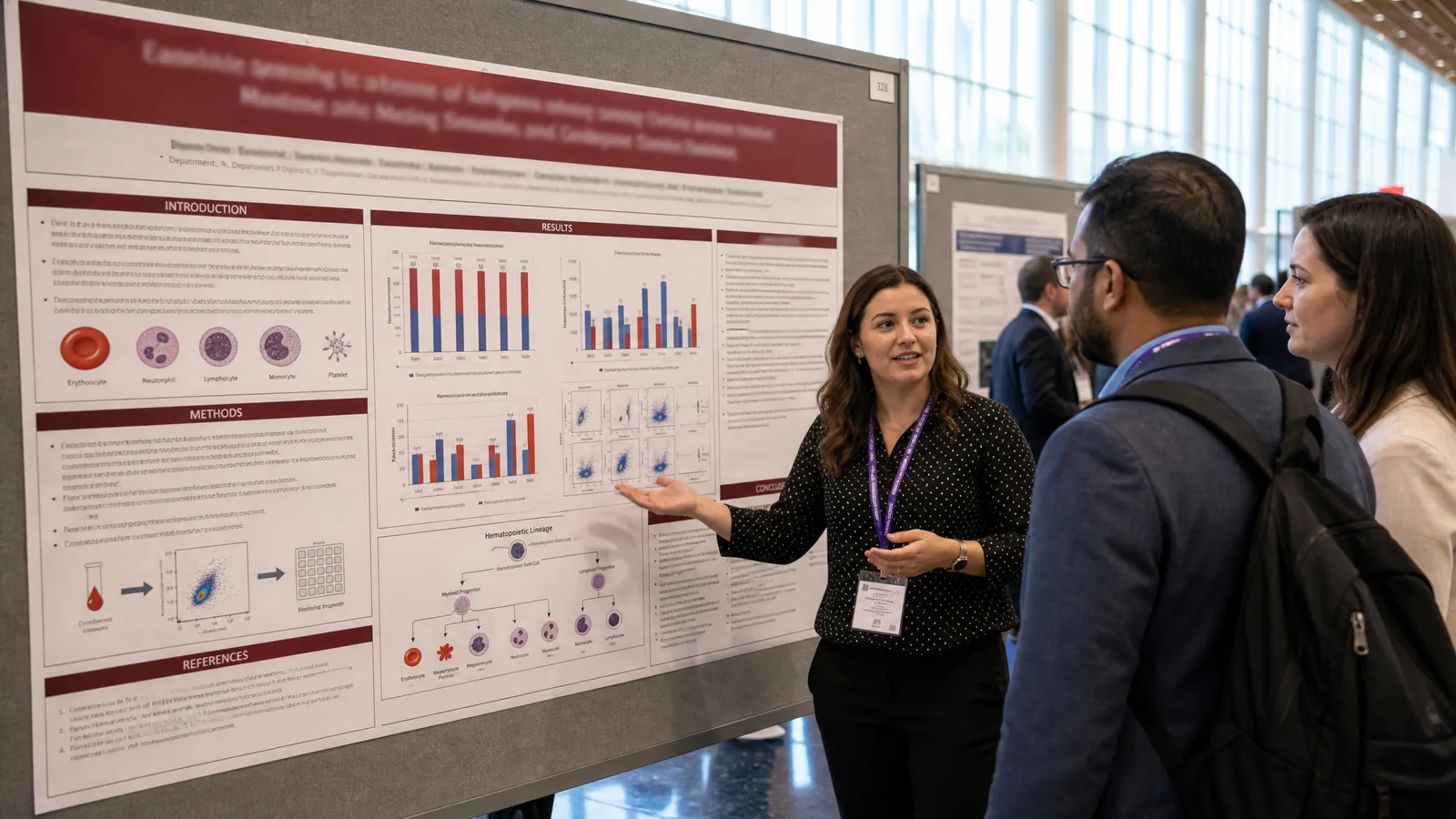
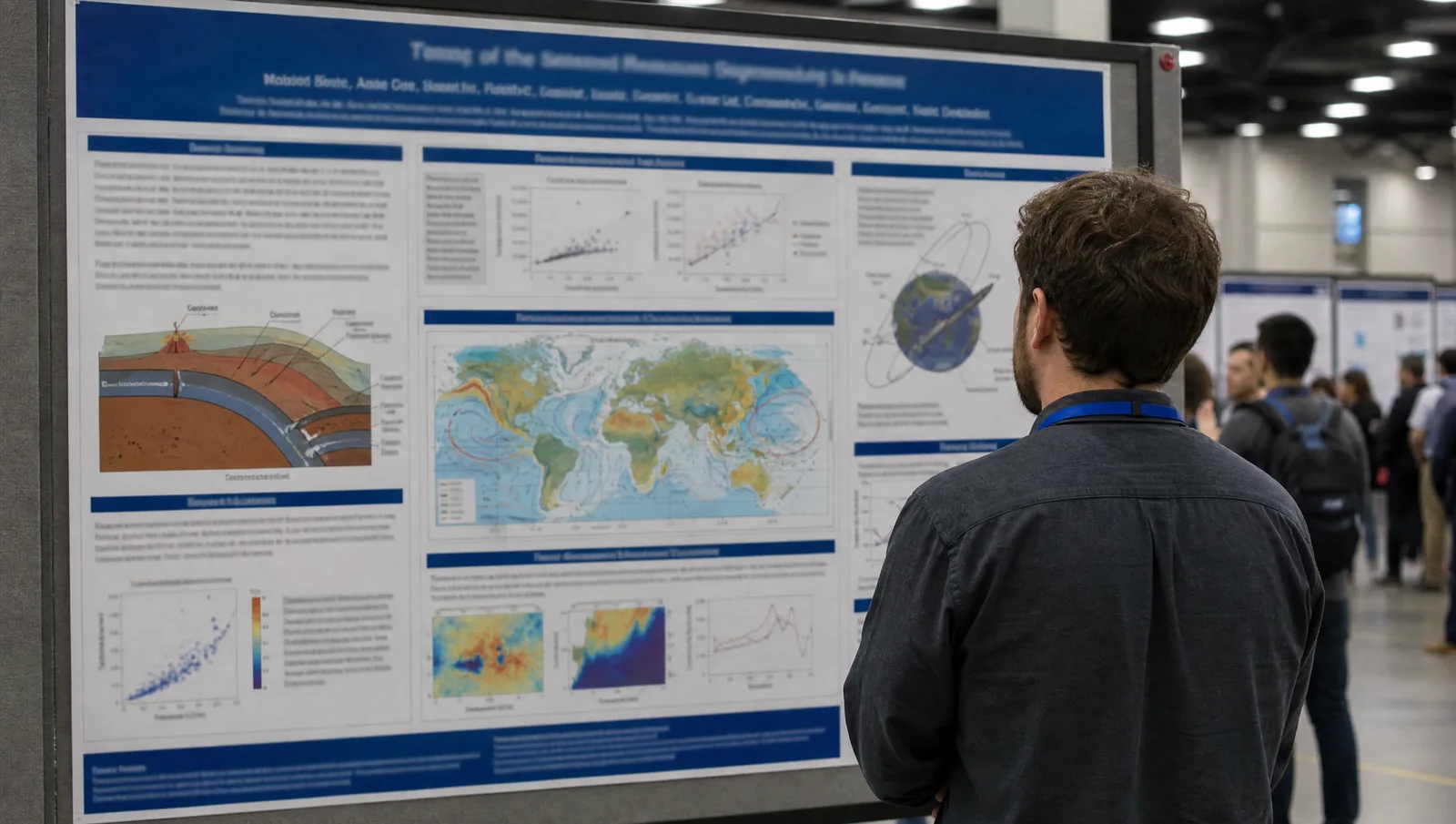
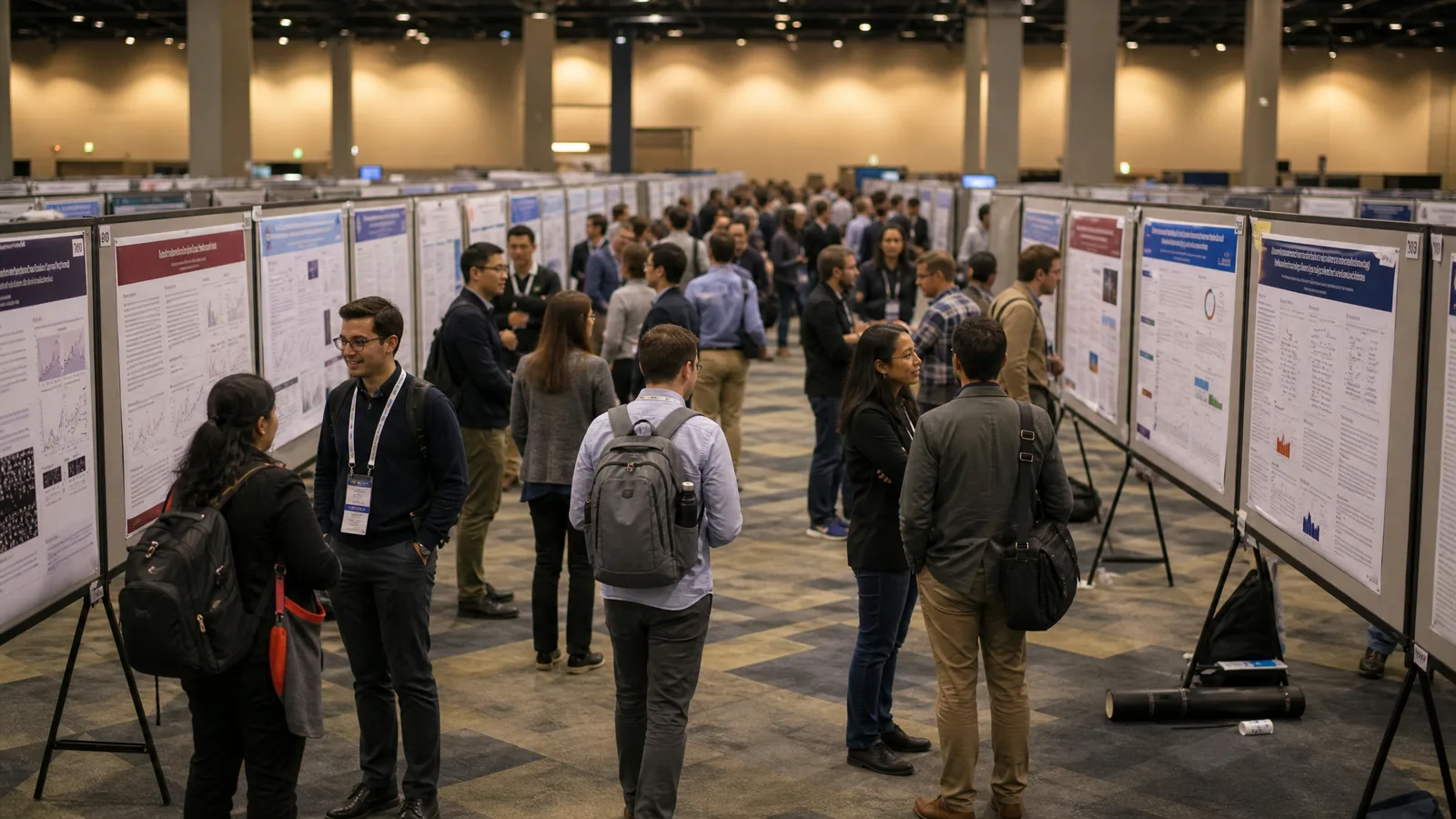
ASH 2026 hematology poster session in New Orleans: a presenter wearing a lanyard explains a landscape poster with a title bar and author panels to two attendees (Figure generated with SciFig)
Transparency note: Illustrations in this article were generated with SciFig AI and reviewed by the author for scientific accuracy. Factual claims about dates and specifications link to official ASH materials.
1. ASH 2026 at a Glance: Dates, Venue & Key Deadlines
The 68th ASH Annual Meeting & Exposition runs December 12–15, 2026 at the Ernest N. Morial Convention Center in New Orleans, Louisiana (Central Time), as a hybrid meeting, and the regular abstract submission deadline is August 4, 2026 (11:59 p.m. Pacific). ASH draws more than 30,000 attendees and over 5,000 abstracts (the meeting hashtag is #ASH26), and each abstract carries a $95 handling fee. One rule shapes everyone's planning: the presenting author must attend in person in New Orleans — virtual registrants can watch but cannot present. Acceptance notifications are sent in the fall; ASH states that "in October, presenters will be contacted" to begin uploading slides, but the exact 2026 notification date is not published as of July 21, 2026, so confirm it on the official presenter resources.
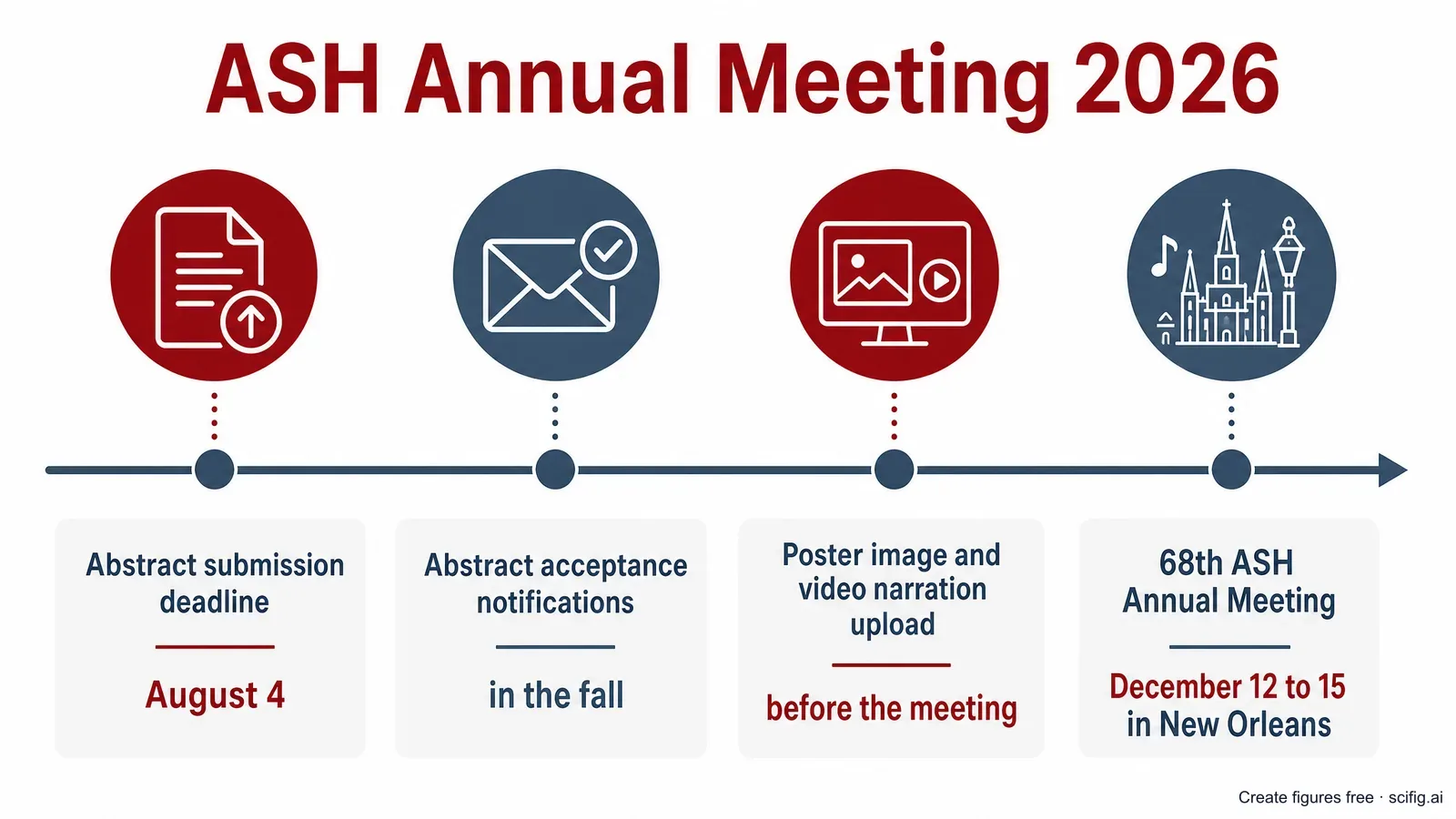
Here is the ASH 2026 timeline that matters for a poster or presentation, drawn from the official ASH Annual Meeting page and Key Dates and the ASH call for abstracts. For the session-by-session schedule, ASH posts its preliminary program on the annual meeting site.
ASH 2026 submission timeline: regular abstract deadline August 4, notifications October, poster and 5-min video upload in the fall, meeting December 12-15 New Orleans (Figure generated with SciFig)
Non-member, group, exhibitor, and media registration opens
October 2026
Acceptance notifications sent; presenters contacted to upload slides (exact 2026 date not published as of July 21, 2026)
Fall 2026
Poster and 5-minute video upload deadline (exact date to be confirmed on official presenter resources)
December 12–15, 2026
68th ASH Annual Meeting & Exposition, New Orleans
A registration note: submitting an abstract does not register you for the meeting, and the presenting author must be there in person, so map your ASH 2026 program and travel once your presentation is confirmed.
2. ASH 2026 Poster Size, Format & Guidelines
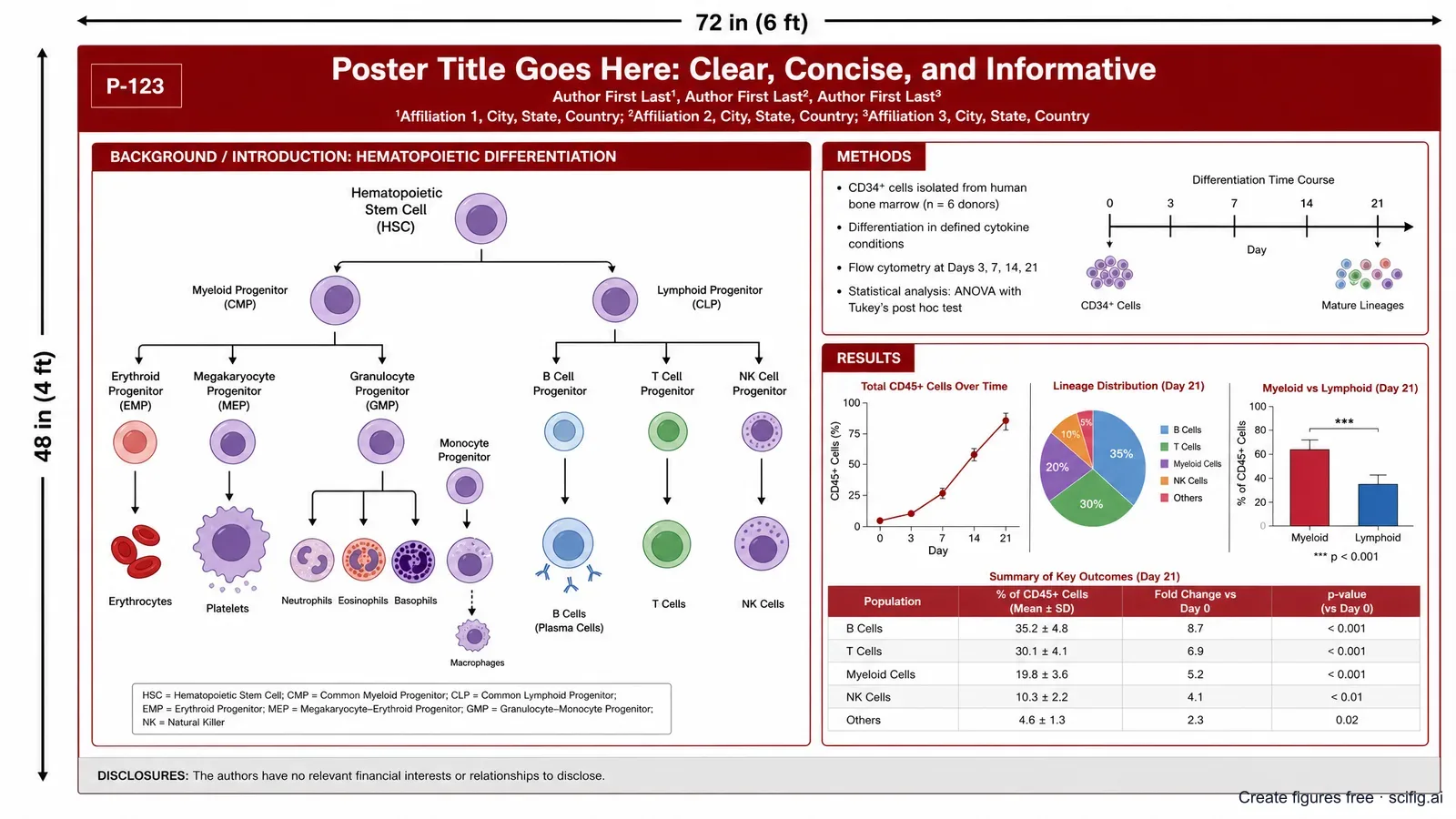
ASH provides a poster board of roughly 4 ft tall × 6 ft wide in landscape (horizontal) orientation for each ASH 2026 poster, and — unlike most meetings — ASH prints and hangs your poster for you if you upload it by the deadline. Each board is numbered, and your poster is mounted for you when you meet the upload cutoff; if you miss it, you print and bring your own. ASH's poster guidelines also ask you to keep the title large and legible, avoid mounting the sheet on a heavy backing board, and steer clear of any commercial or product-promotional poster. One honest caveat on ASH 2026 poster size: the board dimensions above reflect ASH's general (recent-year) specification, and the exact 2026 board size should be confirmed on the official presenter resources before you finalize your ASH poster dimensions and format.
Landscape, roughly 4 × 6 ft — design to this wide ratio from the start; a portrait layout wastes a landscape board.
ASH prints and hangs it if you upload on time — the single most important deadline for a poster presenter is the upload cutoff, not travel day.
Show your poster number — accepted abstracts and their poster boards are numbered, so place your number clearly on the sheet.
No commercial or product posters — ASH prohibits promotional posters; keep the sheet scientific.
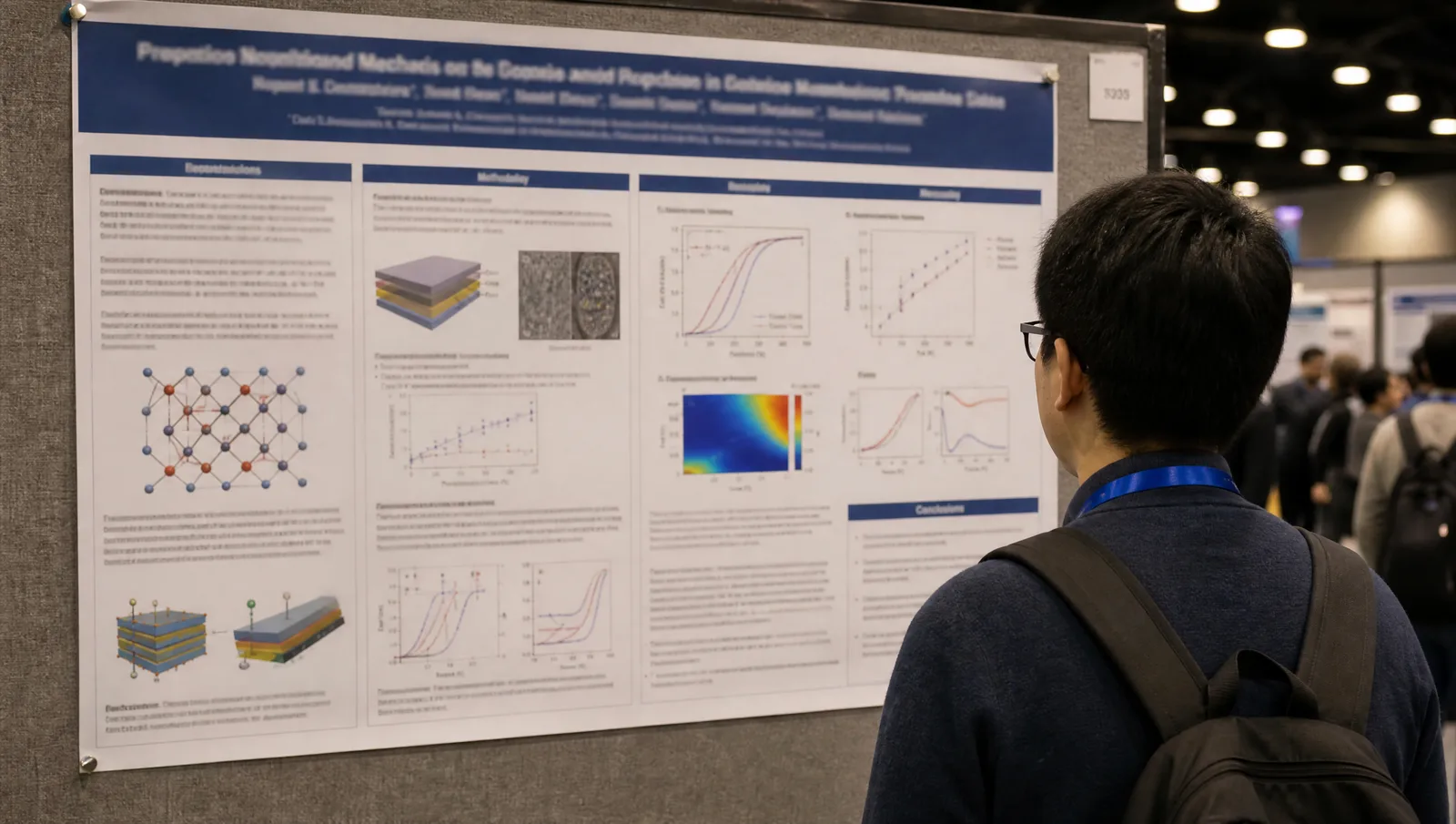
ASH 2026 poster size and template: 4 x 6 ft landscape hematology layout with title bar, author panel, hero mechanism figure, methods, results and disclosure (Figure generated with SciFig)
The hematology figures on an ASH poster — a CAR-T mechanism, a hematopoietic differentiation tree, a signaling pathway — are the slowest part of that layout to build. You can draw and edit publication-grade versions online and drop them straight into your PowerPoint composition.
Need a hero figure for your ASH poster?
Start from a CAR-T mechanism, hematopoiesis tree, or pathway visual, then edit every element before you open PowerPoint.
Every ASH 2026 poster presenter uploads two things through Freeman's Orchestrate platform: a static poster image and a 5-minute PowerPoint video narration, which together form the meeting's on-demand virtual component. The static image is what ASH prints and hangs on your board, and both the image and the short narrated video are what remote and on-demand attendees view online. This makes the ASH poster upload the pivot of your whole schedule: hit it and ASH handles printing; miss it and you lose the printed board and the virtual slot.
The upload requirements live in the official ASH presenter resources, with the exact file specifications provided inside each presenter's Orchestrate account. Because the ASH poster video and static image are viewed on screens as well as printed, crisp vector-style figures read far better than photographed or low-resolution graphics — a mechanism diagram exported cleanly stays legible when a delegate zooms in on a laptop. One honesty note: the exact fall upload deadline is not yet finalized in the public presenter materials as of July 21, 2026 (the resources page currently shows more than one candidate date), so confirm the definitive poster and video upload deadline on the official ASH presenter resources.
If your abstract is selected for an ASH 2026 oral presentation, you must present live and in person in New Orleans — ASH does not accept pre-recorded oral talks — and you upload your slides through Orchestrate, then check them in the on-site Speaker Ready Room. ASH also publishes an official PowerPoint Template for Presenters and an Abstract Poster Template (.pptx) that you can download from the ASH presenter resources page; use the official ASH slide template and poster template as your starting frame rather than rebuilding one. As with the poster upload, ASH says slide instructions are provided in October, so plan for a fall preparation window.
For an ASH 2026 presentation, download the official templates from the ASH presenter resources (ASH holds the copyright, so link to and download the current file rather than reusing an old copy). One field is genuinely open: the exact oral time limits per session type are not published as of July 21, 2026 — ASH states the instructions arrive in October — so confirm your ASH oral presentation length on the official presenter resources instead of assuming a slot. What does not change is the visual demand: a short oral slot leaves room for only a handful of slides, so nearly every ASH presentation slide needs one clear figure — a mechanism schematic, a differentiation tree, a pathway — doing the explaining rather than a wall of text.
5. What Figures Do You Need? Poster & Slides
ASH abstracts are text only — no figures or tables may be included in an ASH abstract submission — so every scientific figure you prepare belongs on your poster or in your oral slides, not in the abstract. This is a meaningful difference from meetings that allow an abstract figure: at ASH, your figures do their work in exactly two places, the printed poster and the oral presentation. The exact mix depends on your track (cell therapy, myeloid or lymphoid malignancy, hemostasis, benign hematology, and so on), but a few hematology figure jobs recur across the meeting.
On your poster, the recurring hematology figure types are:
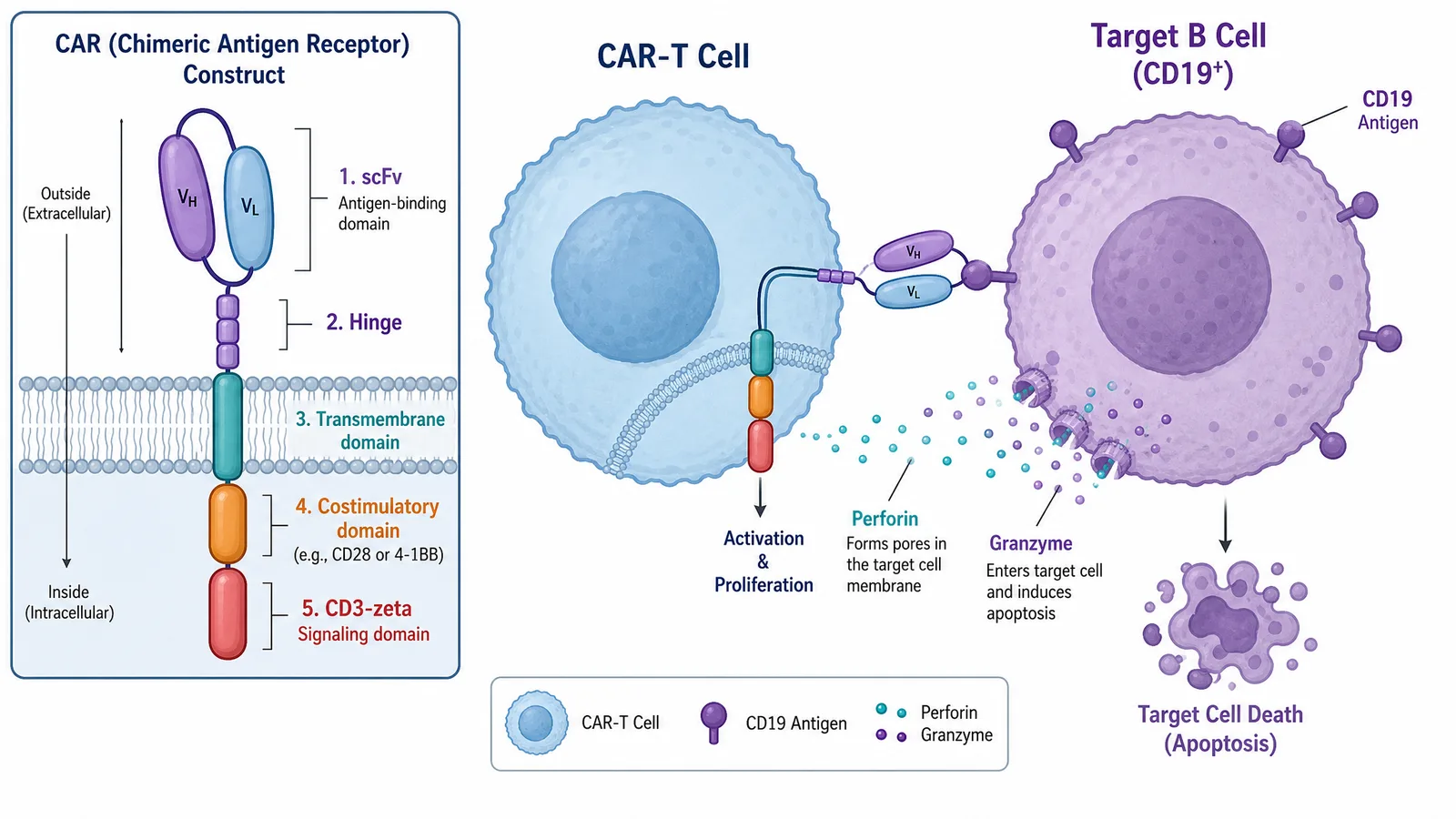
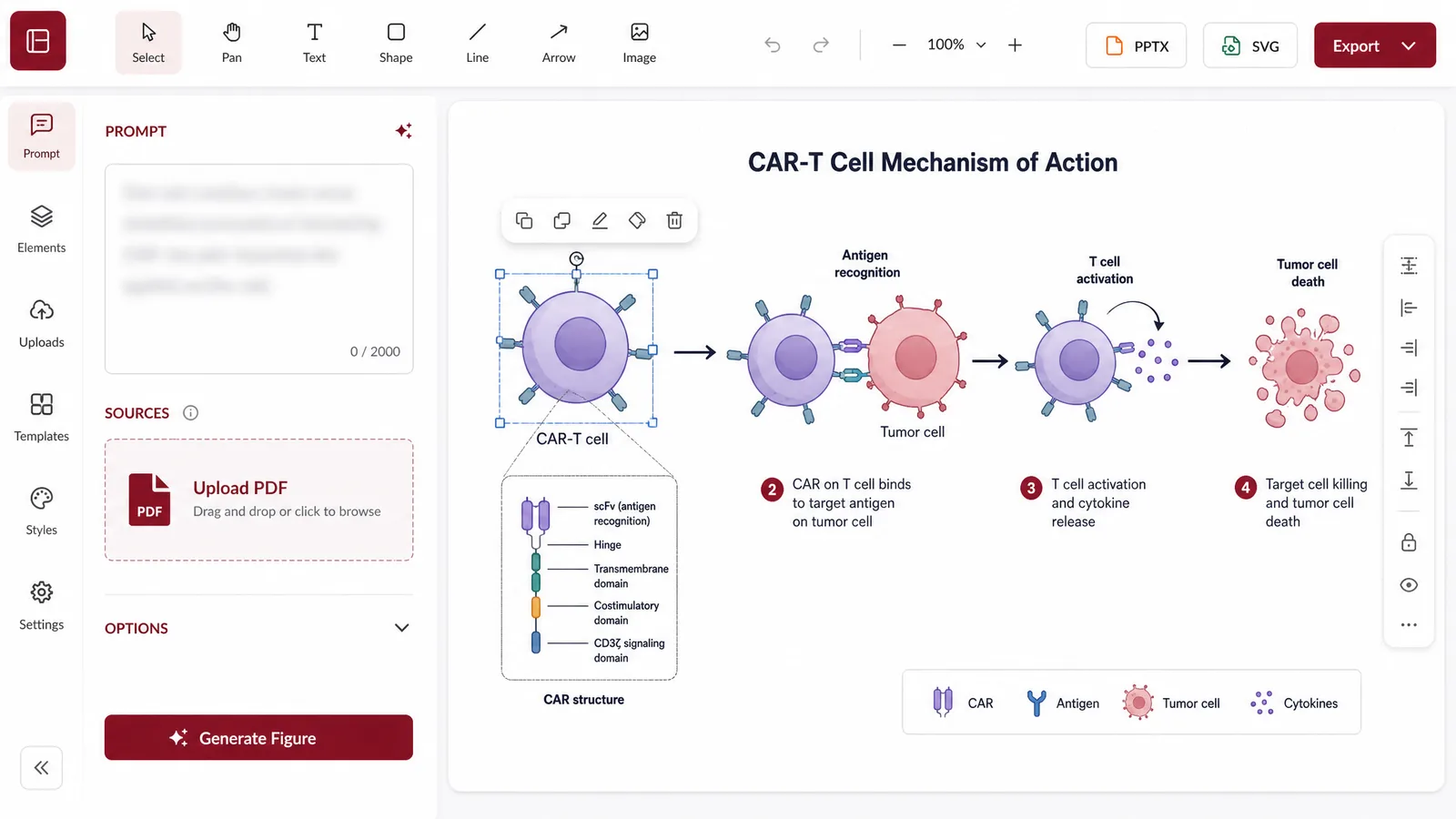
CAR-T / cell-therapy mechanism — the CAR construct, antigen recognition, and tumor-cell killing. Often the figure that decides whether a busy delegate stops.
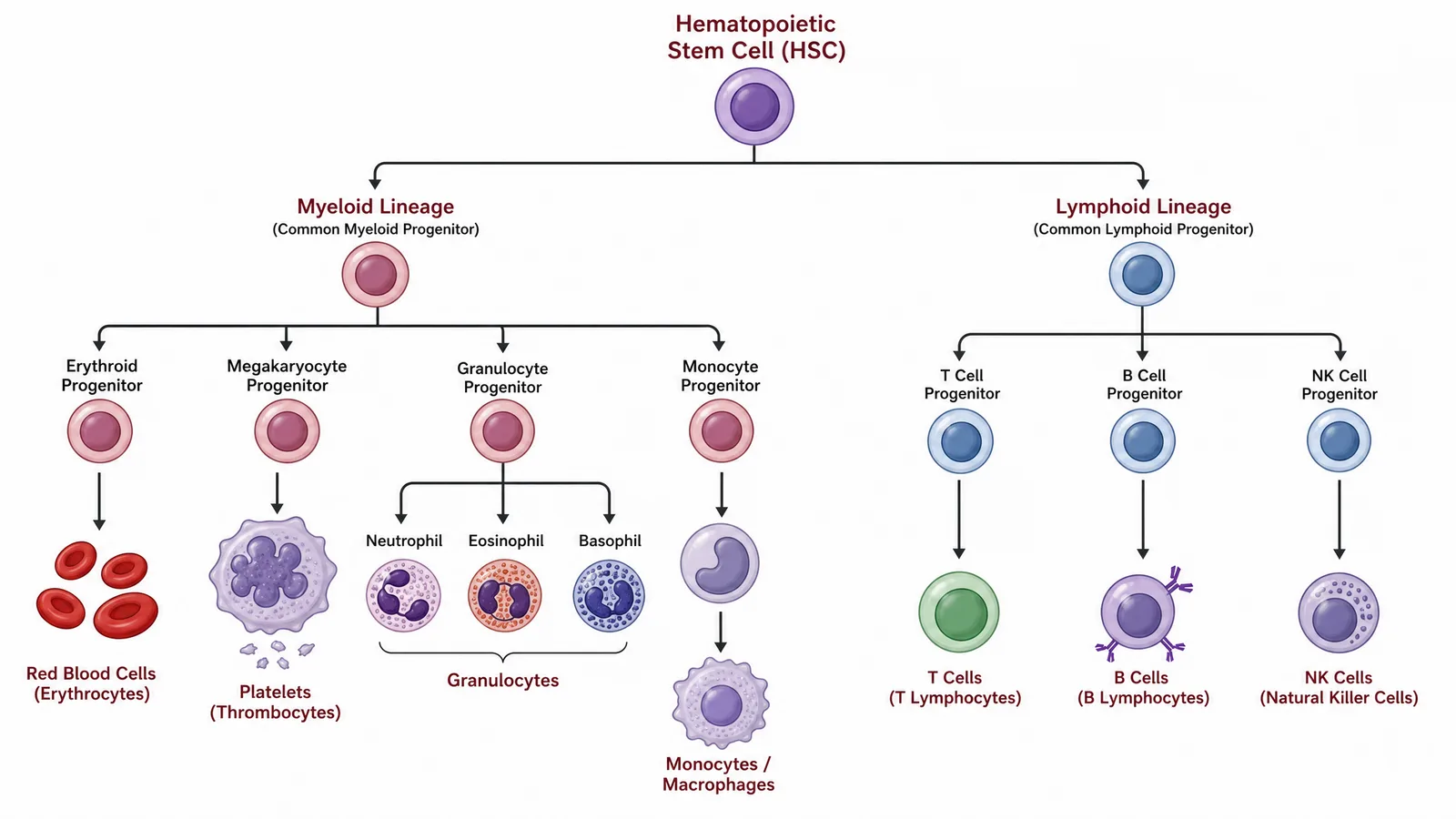
Hematopoiesis and lineage differentiation — the hematopoietic stem cell branching into correctly ordered myeloid and lymphoid lineages, the backdrop for much of the meeting's science.
Signaling or oncogenic pathway — the specific cascade behind your data (for example a BCR-ABL / Philadelphia-chromosome axis), drawn with publication-grade clarity.
ASH 2026 CAR-T cell mechanism figure: chimeric antigen receptor construct with scFv, hinge, transmembrane, costimulatory and CD3-zeta domains recognizing CD19 (Figure generated with SciFig)
On your slides, an oral presenter needs one clean figure per slide — usually the single mechanism or pathway figure that carries the talk, since your slot is short.
6. Designing a Winning Hematology Poster: Accuracy the Way ASH Requires It
A winning ASH poster passes two tests: it is grasped in three seconds by a delegate walking past, and it is scientifically exact enough to survive scrutiny from a hematologist standing in front of it. The strongest layouts are built around one dominant "hero" figure — usually the CAR-T mechanism or the pathway central to your data with the key result beside it — and everything else supports it. A roughly 4 × 6 ft landscape board with one strong, correct figure beats a dense grid of small panels every time.
The second test is where scientific figures live or die — and where general-purpose AI image generators fall short. A tool like Nano Banana Pro or GPT Image can produce something that looks about 99% right, but on a scientific figure 99% right is effectively 0% right: a scrambled CAR domain order, a myeloid lineage drawn where a lymphoid one belongs, a mislabeled Philadelphia chromosome, or perforin/granzyme arrows pointing the wrong way turns a compelling poster into one that misleads a reviewer. A flat, raster AI image also gives you no way to fix that last one percent — there are no elements to select and correct.
Every figure is a fully editable SVG (and PPTX) whose arrows, labels, receptors, and cells you modify individually, so you (the person who actually knows the hematology) can adjust every element until the science is exactly right. SciFig AI Illustration (AI scientific illustration) generates a publication-style figure from your description or reference, and vectorization turns it into an editable SVG where you can modify any arrow, label, receptor, or cell. The hematology figures that reward this care are exactly the ones reviewers scrutinize:
CAR-T construct — get the domain order right (scFv, hinge, transmembrane, costimulatory, CD3ζ); a garbled construct is the first thing a cell-therapy reviewer notices.
Hematopoiesis and lineage — keep the myeloid and lymphoid branches distinct and correctly ordered rather than inventing cell types or hierarchies that do not exist.
Pathway direction — draw BCR-ABL / Philadelphia-chromosome and cytolytic (perforin/granzyme) steps in the correct order and direction, not reversed.
ASH 2026 hematopoiesis differentiation figure: a hematopoietic stem cell branching into correctly ordered myeloid and lymphoid lineages (Figure generated with SciFig)
Whether your ASH 2026 poster earns its attention comes down to whether these figures are accurate, clear, and legible — which is exactly where an author-controlled, editable figure workflow compresses hours of vector drawing without giving up scientific control or authorship.
7. Create Hematology Figures: The SciFig Workflow
You already have two things most colleagues do not: your accepted abstract text and a clear understanding of your study's mechanism — use both to create your figures, then edit each element until the science is exactly right and you can sign off on it. Remember the framing from the previous section: you drive every step and can modify any element, and ASH's AI policy (§8) is the reference for author responsibility and for disclosing tool use. For hematology projects whose destination permits AI-generated figures, the SciFig workflow starts from your own study material:
Path 1 — Upload your accepted abstract PDF. Drop it into PDF-to-Figure. It reads your Background, Methods, and Results and returns a mechanism or pathway diagram built from your own text, with every element editable so you can adjust it to your data. (Your abstract itself carries no figure, so this simply turns your own text into a figure you control.)
Path 2 — Copy a structured prompt. For a mechanism or pathway figure, Text-to-Figure gives more control. Copy and adjust to your study:
Schematic of a CAR-T cell mechanism: a chimeric antigen receptor with
scFv, hinge, transmembrane, costimulatory, and CD3-zeta domains on a
T cell recognizing CD19 on a B cell, triggering perforin and granzyme
release and lysis of the target cell.
Path 3 — Sketch and scan. If you sketched your hero figure on paper, photograph it and drop it into Sketch-to-Figure to get a publication-style version that preserves your topology, with every element editable.
ASH 2026 hematology figure workflow in SciFig: a CAR-T mechanism prompt left, an editable layered SVG diagram right, PPTX and SVG export (Figure generated with SciFig)
From any path, you edit individual elements in the vector canvas — adjust labels, colors, receptor and domain placement — then export to editable PPTX or layered SVG for final composition, at high resolution for the large poster print without artifacting. Start free, no card required: 150 credits on day one (3 figures), plus daily check-in credits that grow with your streak (up to 150 a day) — up to about 44 figures in your first month, so most authors work through a full set of poster figures over their first few days. For the companion guides in this conference series, see the EHA 2026 poster guide, the SITC 2026 poster guide, and the ESMO 2026 poster guide.
Optional — disclose your AI use (ASH requires it). ASH prohibits AI-generated posters and slides, but it permits author-controlled tools you build and review yourself, and it expects you to disclose AI assistance and remain the responsible author. If you construct and verify a figure in SciFig, you can add one line to its caption — for example: Figure created by the authors using SciFig and reviewed for scientific accuracy (scifig.ai).
Start your ASH figure from prompt, PDF, or sketch
Use the path that matches what you already have, then edit every element until the hematology is exact.
8. ASH 2026 Presenter Disclosure, Embargo & AI Policy
Every ASH 2026 presenter must complete the conflict-of-interest (COI) disclosure, honor the abstract embargo, and follow ASH's strict AI policy — so plan disclosures and tool use alongside your figures, not after. ASH's abstract embargo runs from the moment you submit until the meeting ends, meaning results should not be publicized ahead of your session, and copyright in an accepted abstract transfers to ASH. Your poster and slides should also carry the disclosure statement your COI forms require.
ASH’s call for abstracts prohibits AI generation of original text, slides, and posters. It permits spelling and grammar checks in a closed system and revision of existing text under human oversight. SciFig DataChart calculates charts from your data table, with AI planning the chart; SciFig FlowChart and SciFig AI Illustration generate visual content with AI. Keeping a note of how each figure was prepared is a useful reference when you read ASH's policy against your own workflow.
9. Where ASH 2026 Abstracts Are Published (Blood)
Accepted ASH 2026 abstracts are published in Blood — ASH's official journal — as an online abstract supplement (conventionally Supplement 1), which becomes the citable version of record. Searches for "ASH 2026 abstracts" or the "ASH abstract PDF" almost always mean this Blood supplement, hosted at ashpublications.org/blood.
Because your abstract enters this permanent Blood record — as text only, with your figures living on the poster and slides rather than in the abstract — it is worth making sure the science reads consistently across all three. Once the supplement is live, use it to confirm the citable version of your ASH abstract, then keep every figure on your poster and in your deck telling the same study story.
FAQ
The 68th ASH Annual Meeting & Exposition runs December 12–15, 2026 at the Ernest N. Morial Convention Center in New Orleans, Louisiana, as a hybrid meeting on Central Time. The presenting author must attend in person to present; virtual registrants can watch but cannot present. See §1 ASH 2026 at a Glance for the full timeline.
The regular ASH 2026 abstract submission deadline is August 4, 2026 (11:59 p.m. Pacific), with a $95 handling fee per abstract. Acceptance notifications are sent in the fall — ASH contacts presenters in October to upload slides — but the exact 2026 notification date is not published as of July 21, 2026. See §1 ASH 2026 at a Glance.
An ASH 2026 poster board is roughly 4 ft tall × 6 ft wide in landscape orientation and is provided by ASH. Design to a wide ratio from the start. This reflects ASH's general specification, so confirm the exact 2026 board dimensions on the official presenter resources. See §2 ASH 2026 Poster Size, Format & Guidelines.
Yes — ASH prints and hangs your poster if you upload it by the deadline; miss the cutoff and you print and bring your own. You upload a static poster image plus a 5-minute PowerPoint video to Freeman's Orchestrate platform for the on-demand virtual component. See §3 ASH 2026 Poster Upload & Virtual Component.
No — ASH abstracts are text only; no figures or tables may be included in an ASH abstract submission. Your scientific figures belong on the poster and in your oral slides instead, not in the abstract. See §5 What Figures Do You Need?.
Not to generate them — ASH prohibits "generation of original text, slides, and posters using AI tools." If you use a tool the way you use vector illustration software — authoring and editing every element yourself — ASH's policy remains the reference for author responsibility and for disclosing tool use. See §8 ASH 2026 Presenter Disclosure, Embargo & AI Policy.
ASH had not published the exact 2026 oral time limits as of July 21, 2026 — the society states that presentation instructions are provided in October. Oral presenters must present live and in person and upload slides through Orchestrate. Confirm your slot length on the official presenter resources. See §4 ASH 2026 Oral Presentation.
Accepted ASH 2026 abstracts are published in Blood, ASH's official journal, as an online abstract supplement (conventionally Supplement 1). This is the citable version of record, and it is what "ASH 2026 abstracts" searches usually mean. See §9 Where ASH 2026 Abstracts Are Published.
References
All specifications and dates above are drawn from official ASH materials, accessed July 21, 2026:
Disclaimer: This article is educational content focused on scientific figure design for conference posters and presentations. It is not medical advice and should not be used for clinical decisions. Dates and specifications are summarized from official ASH materials linked above and were accurate at the time of writing; always confirm current details on the official ASH website before printing or submitting. SciFig is an AI scientific figure platform covering illustrations (SciFig AI Illustration), data-driven charts (SciFig DataChart), and flowcharts (SciFig FlowChart) — it does not diagnose, treat, or advise on patient care.
Keep going
Recommended resources
Templates, tools, and further reading for your research