Your AAIC 2026 abstract was accepted. Practical guide to poster format, the six presentation tiers, an eight-week prep window, and Beyond the Data.
SciFig Team
SciFig editorial team
Your inbox lit up in late March. Subject line: "AAIC 2026 — Abstract Decision." You scrolled past the disclosures, the platform link, the committee thanks, and there it was — your dementia work was accepted. London is eight working weeks of useful prep away, and a 2,500-character abstract has to become a poster that holds its ground against four thousand others at ExCeL. Where do you start?
This is a practical guide for the basic scientist, neurologist, or clinical trialist whose AAIC 2026 acceptance just landed.
We cover format rules, the six presentation tracks, the preparation window, and — uniquely for this congress — the Beyond the Data visual art submission that no other major neurology meeting offers.
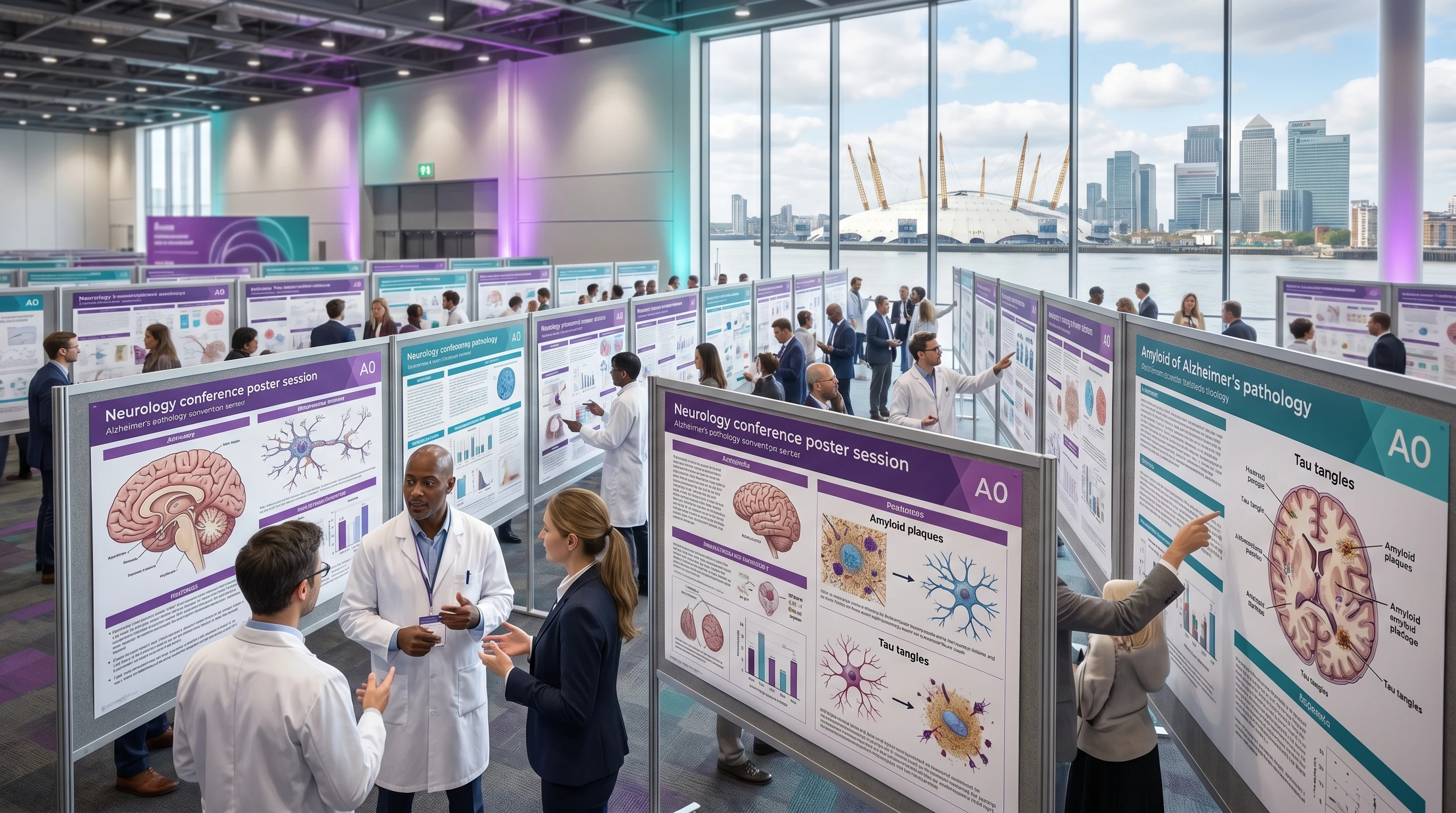
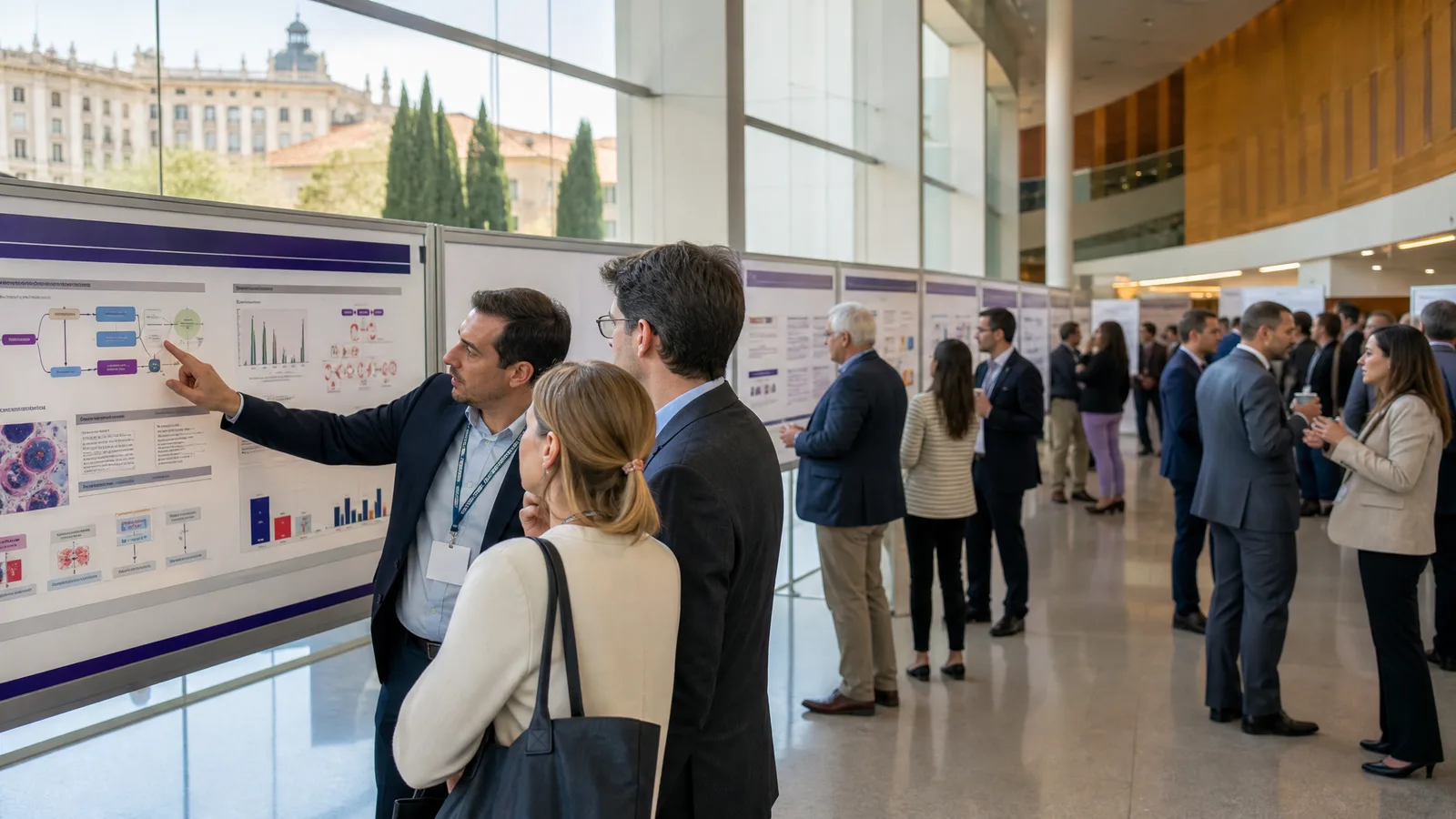
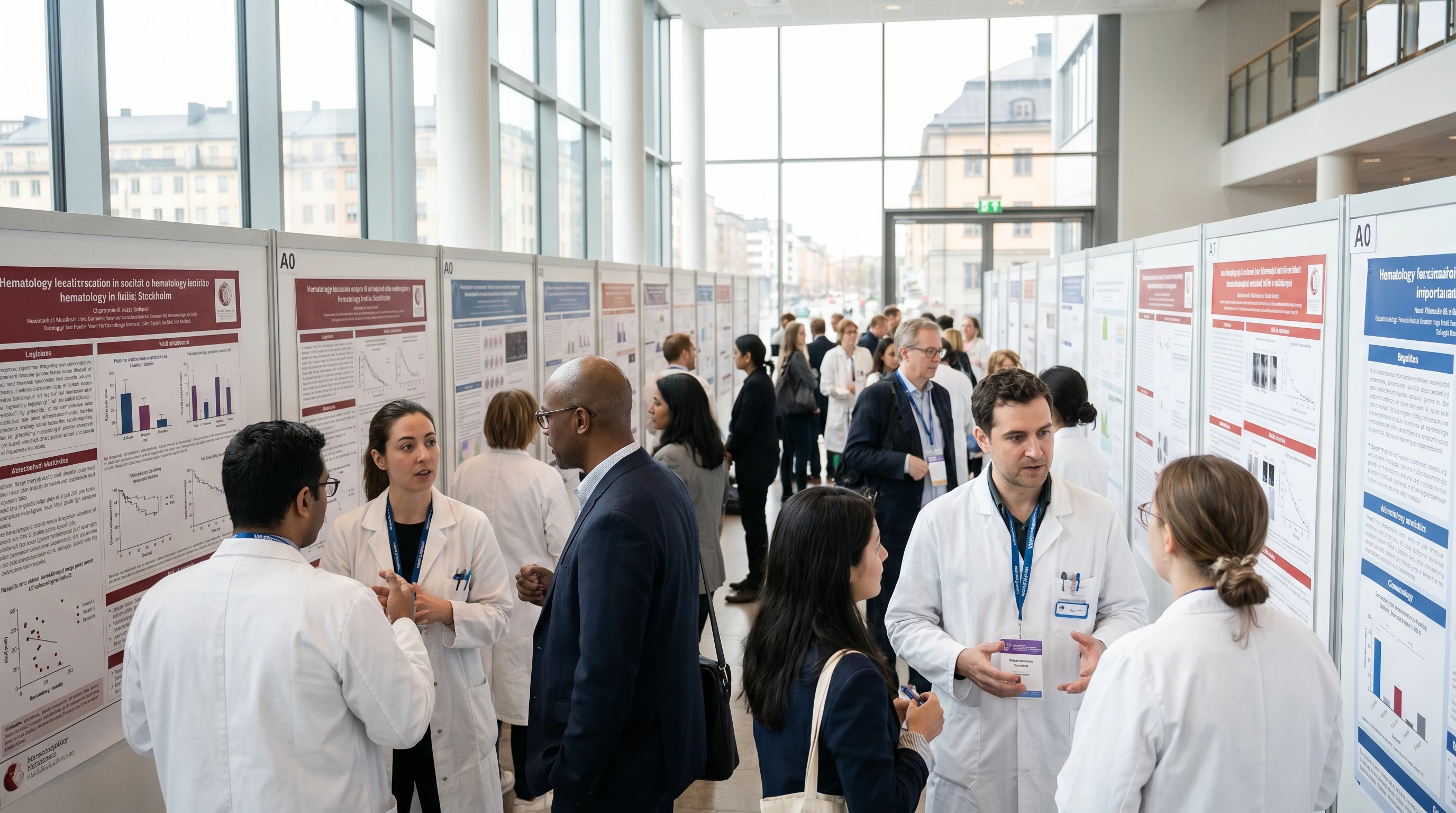
AAIC 2026 conference poster session at ExCeL London with 4000+ dementia research posters mounted on boards, researchers discussing Alzheimer's mechanism diagrams (Figure generated with SciFig)
Transparency note: Illustrations in this article were generated with SciFig AI and reviewed by the author for scientific accuracy. Cited claims link to peer-reviewed sources and official AAIC materials.
1. AAIC 2026 at a Glance: Dates, Venue, and the Six Acceptance Tracks
The Alzheimer's Association International Conference 2026 returns to Europe at ExCeL London, organised by the Alzheimer's Association. Pre-conferences run 10–11 July, the main programme 12–15 July, and AAIC For All on 16 July. The meeting draws roughly 8,000–10,000 dementia researchers, clinicians, and trainees across tracks spanning basic neuroscience, biomarkers, clinical trials, neuroimaging, neuropsychology, and care research (AAIC 2026 Home).
All accepted abstracts publish as an open-access supplement to Alzheimer's & Dementia® — your work is citable from the moment that supplement appears. The Scientific Programme Committee allocates submissions across six tracks (Section 5), so "accepted" can mean a 12-minute podium talk in front of 800 delegates, a quiet poster slot, or — for the visual-art entry — a piece hung in a curated exhibit.
2. Complete Submission Timeline for the 2026 Meeting
Here is what is behind you and what is ahead.
Date
Milestone
Early January 2026
Regular abstract submission opened
Early February 2026
Regular abstract submission deadline
Late March 2026
Regular abstract acceptance notifications sent ← you are here
AAIC pre-conferences (ISTAART, professional interest area meetings)
12–15 July 2026
AAIC2026 main scientific programme, ExCeL London
16 July 2026
AAIC For All (public-facing day)
Regular acceptance recipients have roughly 14–15 weeks from late March to opening day — which sounds generous and isn't, once you subtract day-job obligations, IRB queries, co-author review cycles, and the four to six business days a print shop needs. Developing Topics authors who receive a mid-June notification have closer to four working weeks, and their visual workflow has to compress accordingly. Confirm the specific deadlines on the official AAIC abstract overview — Alzheimer's Association sometimes shifts dates by a week as the meeting approaches.
3. Abstract Types You Submitted: Original, Update, Encore
The submission rules are behind you, but they shape the document a reviewer just approved. AAIC accepts three submission types, and the type you chose determines how much new data you owe a poster reviewer.
Original abstracts present unpublished data. Update abstracts extend previously submitted AAIC work with new analyses or longer follow-up — reviewers expect a clear delta. Encore abstracts are an AAIC-specific convention: work already presented at another international meeting in the prior 12 months may be submitted verbatim, but it appears in the programme without re-publication in the Alzheimer's & Dementia® supplement. That detail matters for citation strategy — if your Encore work was already in a major journal, AAIC programme inclusion adds reach but not a new citable reference. Whichever type you submitted, poster reviewers have access to your abstract text and will notice when figures contradict the cohort sizes or endpoints you declared.
4. AAIC 2026 Preparation: The 8-Week Window from Acceptance
Fifteen calendar weeks sounds generous. Subtract day-job commitments, IRB queries, co-author cycles, summer holidays, and the four to six business days a print shop needs, and the useful window is closer to eight working weeks. Developing Topics authors operate inside half that.
A realistic schedule:
Weeks 1–2 — Decide your tier strategy. Map the five sections of your abstract to four or five poster panels. Sketch the hero figure — amyloid plaque, TREM2 signaling, hippocampal atrophy — on paper before any software is opened.
Weeks 3–4 — Generate visual assets. A pathway diagram that would take a week of Adobe Illustrator labour compresses to a focused day of prompting and vector refinement.
Weeks 5–6 — Layout, typography, peer review. Send the draft to one neuropathologist and one statistician outside your team. They catch the unlabelled Braak stage and the ambiguous p-value you no longer see.
Weeks 7–8 — Print proof, shipping. Book a London-based print partner early — July is high tourist season and print queues lengthen.
Developing Topics authors compress every stage roughly in half, which means visual generation cannot start from a blank canvas. The abstract-PDF-in / starter-figure-out workflow in Section 8 is essentially mandatory at that timeline.
AAIC has not published the 2026 board dimensions, so build a layout you can rescale rather than rebuild. Our conference poster templates cover the sizes conferences actually hang, in editable PowerPoint, portrait and landscape — start the sheet now and switch to the confirmed size once AAIC posts it.
5. The Six AAIC 2026 Presentation Formats Explained
This year's congress places accepted abstracts into one of six distinct tracks, defined in the official AAIC abstract and session guidelines. Knowing which one you landed in shapes every visual decision that follows.
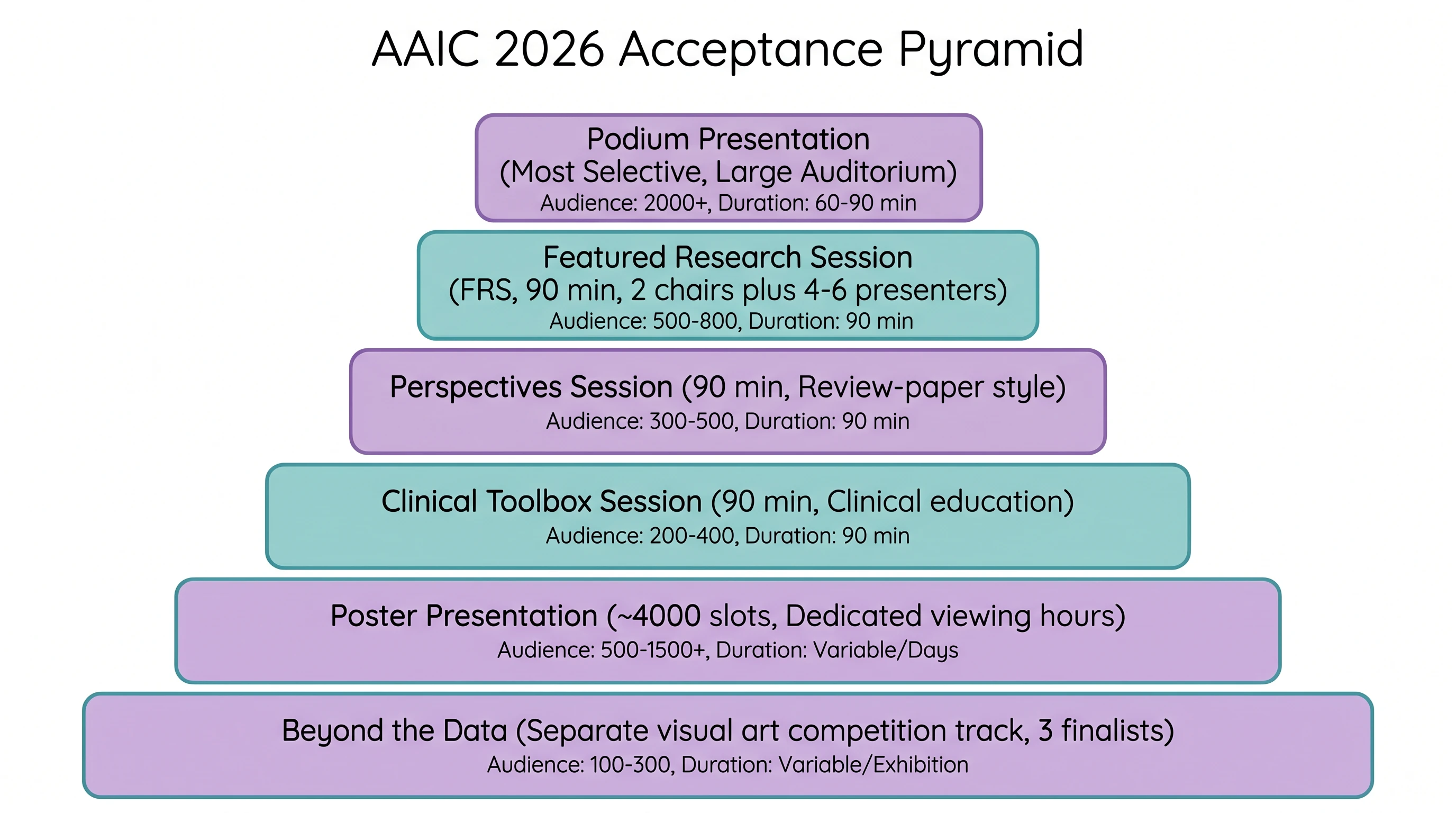
AAIC 2026 six-tier presentation pyramid: Podium, FRS, Perspectives, Clinical Toolbox, Poster, and Beyond the Data art track with audience size labels (Figure generated with SciFig)
Podium Presentation — The top tier. Typically 12 minutes plus three minutes of moderated discussion. Slides carry the argument; any supporting poster is your "office hours" sheet after the talk.
Featured Research Session (FRS) — A 90-minute themed block with two chairs and four to six presenters around a tightly scoped topic (e.g. "Anti-amyloid antibodies: efficacy and ARIA safety"). Roughly the prestige equivalent of a journal special issue — you need both a polished 8–10 minute deck and a robust poster.
Perspectives Session — Also 90 minutes, structured like a review-paper roundtable. Speakers synthesise rather than report.
Clinical Toolbox Session — A clinical-education track aimed at practising neurologists, geriatricians, and nurse practitioners. Visuals lean toward decision trees and diagnostic flowcharts rather than mechanism diagrams.
Poster Presentation — The classical format and destination for the majority of accepted abstracts. The bar for visual clarity is highest here — you compete for attention with several thousand others in the same hall.
Beyond the Data — AAIC's separate visual-art track, judged independently and detailed in Section 7. Acceptance is parallel to, not exclusive of, a standard submission.
Visual strategy diverges by track. Podium and FRS presenters need narrative figures that read during an 8–12 minute walkthrough. Poster Presentation authors need standalone information density that survives a 90-second skim.
Whichever tier you land in, a podium or Featured Research deck is yours to build from an empty file — AAIC publishes no slide template. Our scientific presentation templates are 16:9 academic decks already ordered the way a conference talk runs: background, methods, results, discussion, conclusion.
6. What Your Poster Should Look Like: Visual Anatomy for Dementia Research
Walk through any AAIC poster hall and the same visual vocabulary recurs across nearly every accepted abstract — these are the structural backbone of how the field communicates.
Amyloid-Beta Plaque Pathology
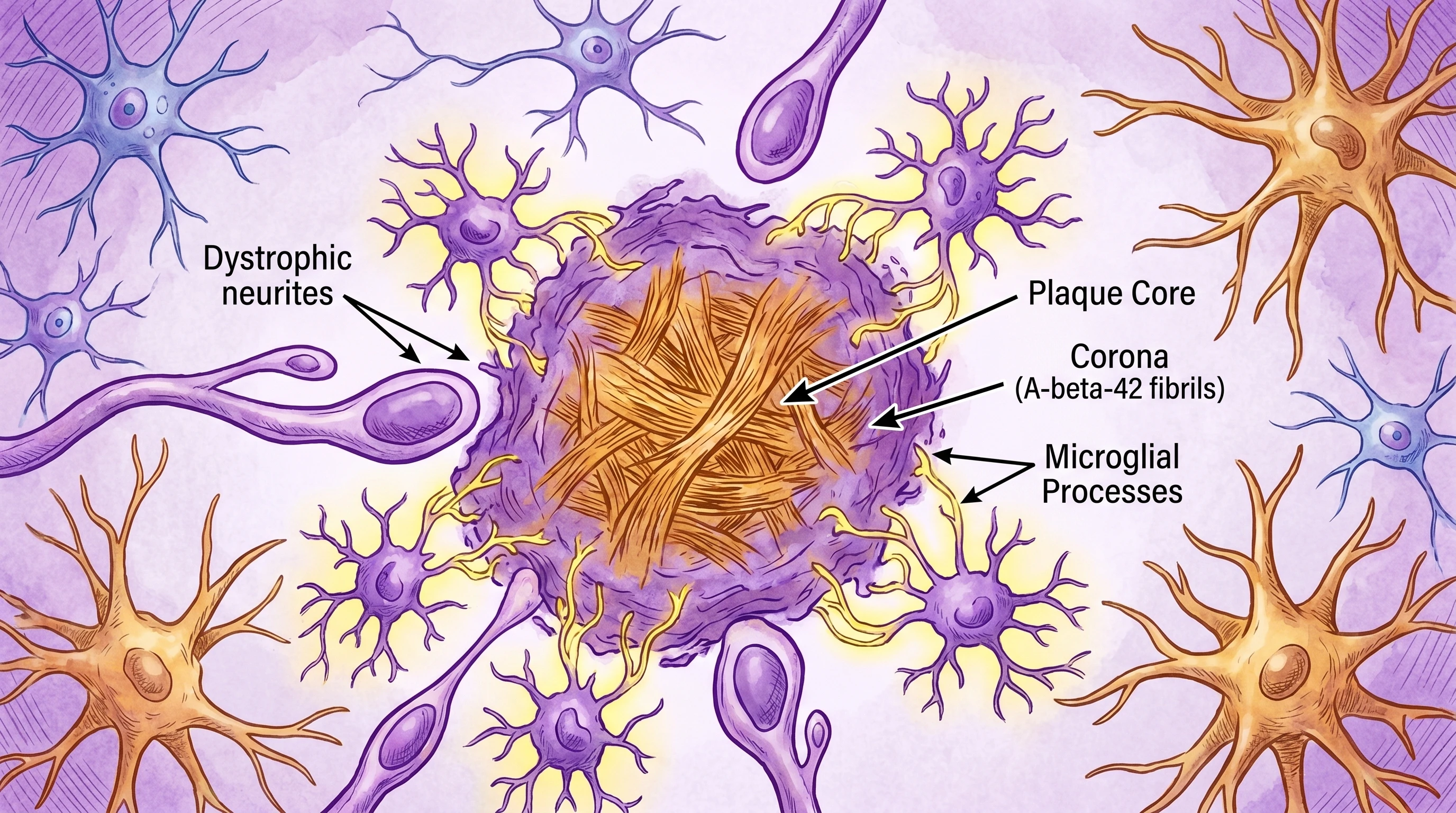
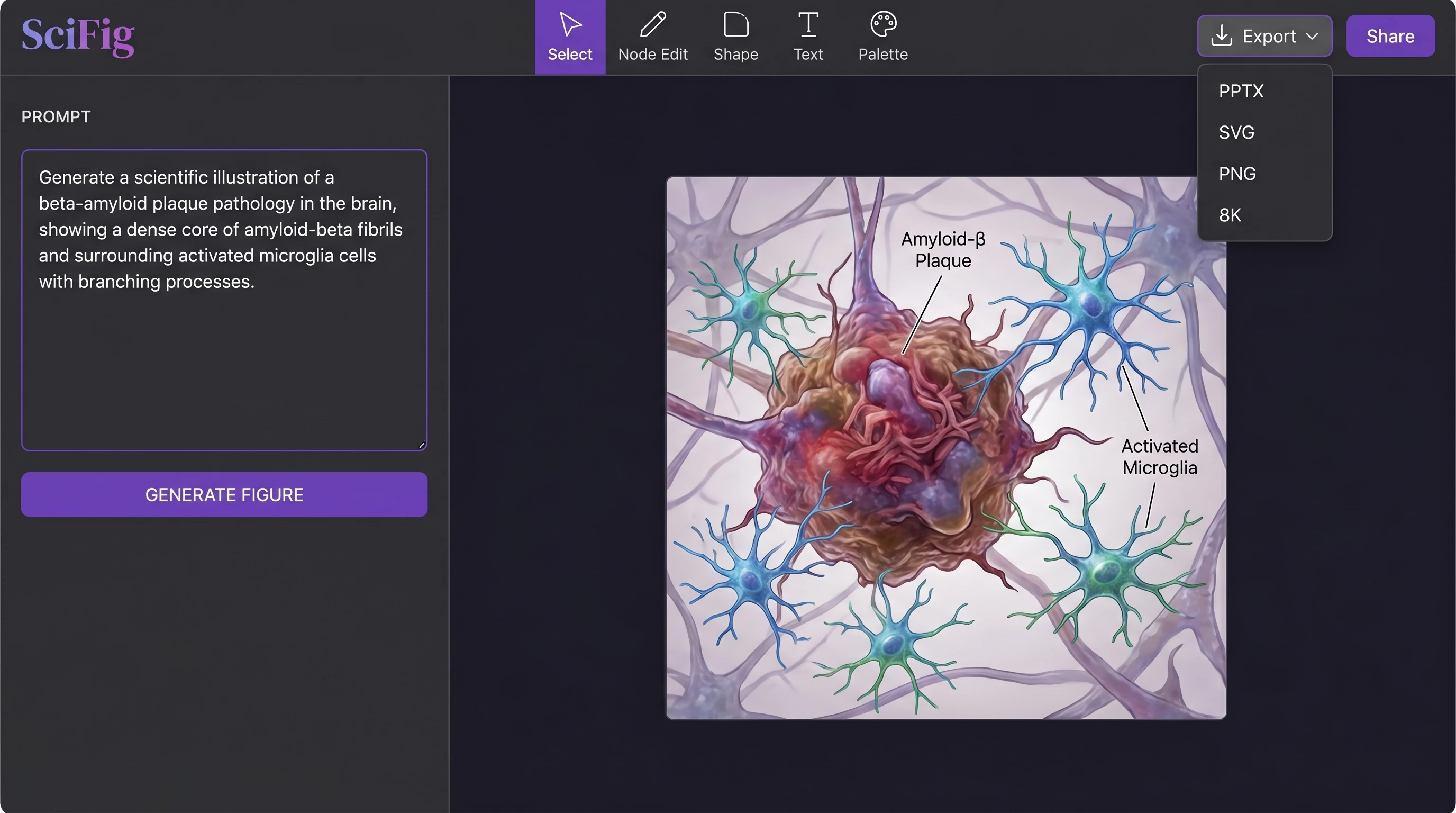
The most reproduced figure across Basic Science and Drug Development. Dense-core plaque, diffuse plaque, surrounding dystrophic neurites, activated microglia engulfing the corona, reactive astrocytes nearby. If your study touches Aβ in any form, your audience expects this as the orientation panel.
Wherever a study involves drug development, biomarker validation, or familial AD mutations, an α/β/γ-secretase processing schematic anchors the molecular logic — APP cleavage into sAPPα, sAPPβ, C99, AICD, and Aβ40/42 is one of the most-drawn diagrams in neuroscience and one of the easiest to mis-label. Clinical and Neuropsychology posters add anatomical orientation panels: hippocampal CA1 / CA3 / dentate gyrus, entorhinal cortex layer II as the origin of NFT spread, default mode network nodes on a sagittal brain.
Microglia, TREM2, and Neuroinflammation
The neuroinflammation theme has grown from a niche subtopic into one of the conference's largest tracks. Resting versus activated microglia, TREM2-DAP12-SYK signaling, disease-associated microglia (DAM) state transitions, microglia-astrocyte crosstalk — a poster from this theme without a TREM2 schematic now reads as incomplete.
Anti-Aβ Antibody Mechanism
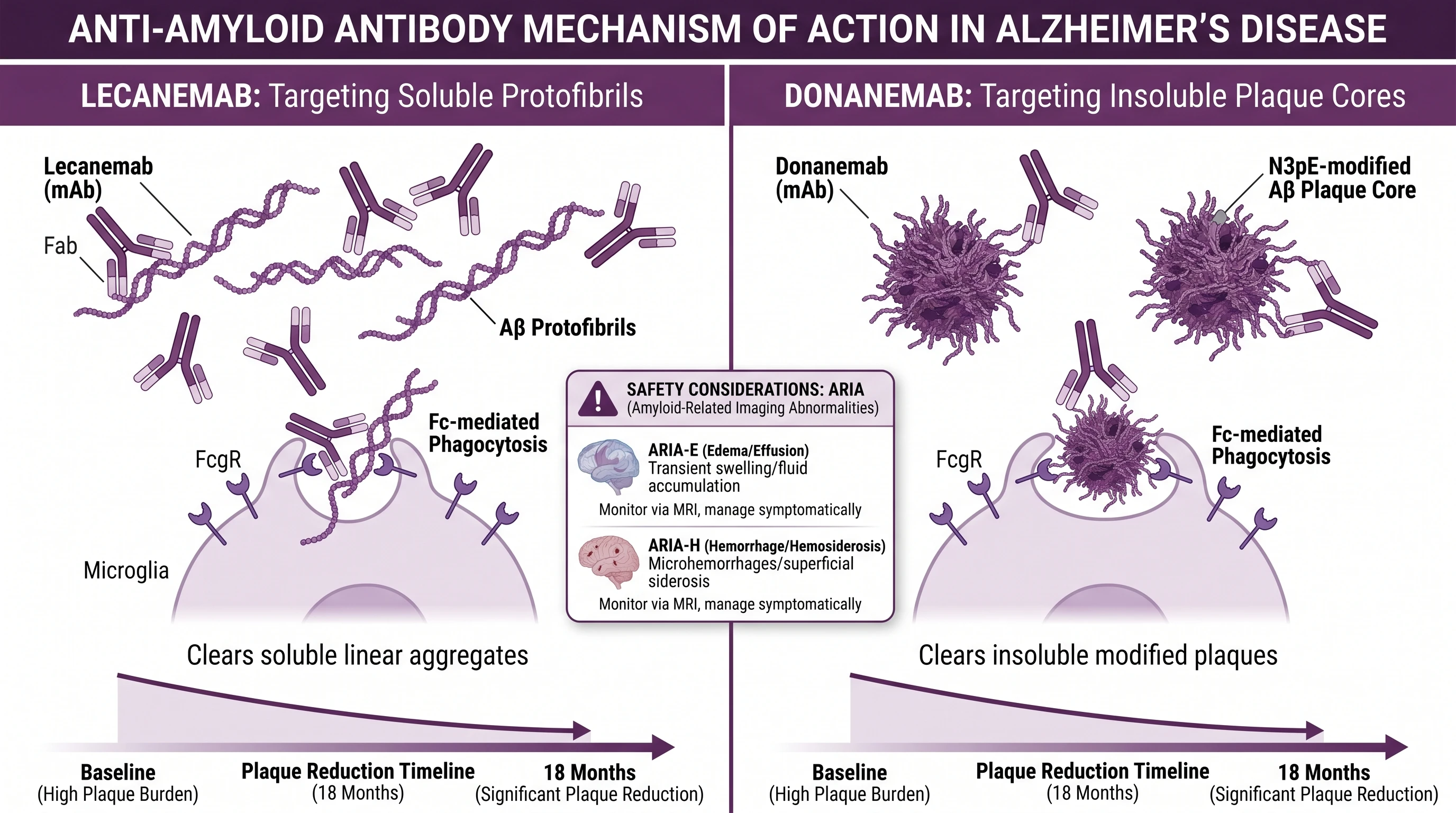
The 2024–2026 drug-development cycle put lecanemab, donanemab, and the next wave of anti-amyloid antibodies at the centre of clinical conversation. Their mechanism — Fc-mediated microglial phagocytosis of protofibrils versus N3pE pyroglutamate-modified plaque cores — is the most-asked-about visual at recent AAIC meetings.
Every clinical abstract opens with a study design figure — CONSORT flow for interventional trials, a horizontal timeline for observational cohorts. These earn their real estate because they answer "what did you actually do?" before a reader commits to the methods box.
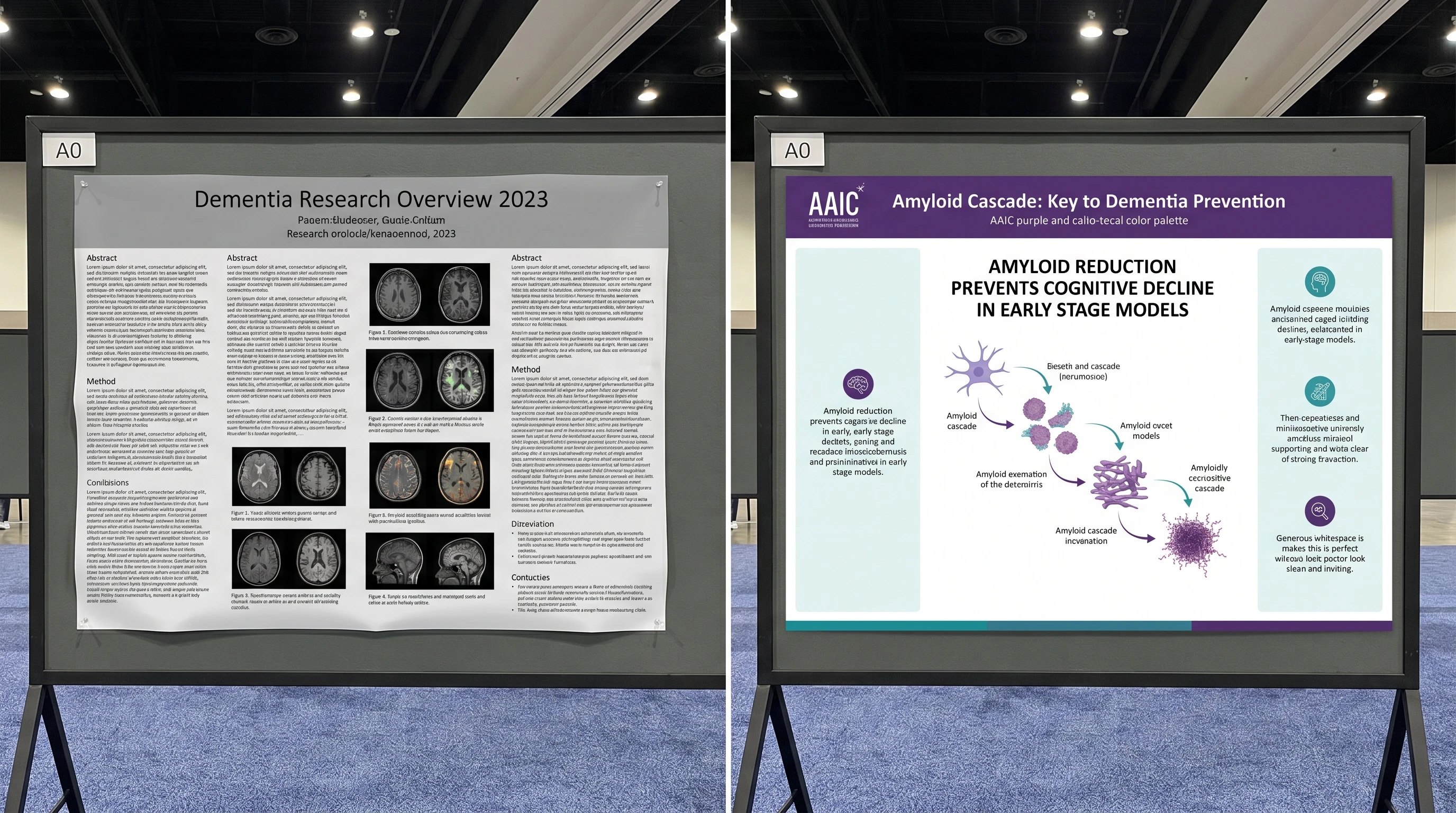
Keep conceptual artwork separate from evidence drawn from acquired images or measured tables:
Clinical scans and microscopy — retain the original images from your imaging facility or laboratory, with the appropriate de-identification and acquisition details.
Results plots — use DataChart for supported charts from your own table, including Kaplan–Meier curves and forest plots; retain specialist analyses in your statistical workflow.
Keep a consistent visual style across the poster and record the source material used for each figure.
7. Beyond the Data: AAIC's Unique Visual Art Submission Track
One feature of this Alzheimer Association meeting has no equivalent at any other major neurology conference: Beyond the Data. Documented on the official Beyond the Data page, this is a separate submission track for visual material that does not fit the conventional poster format.
What gets accepted. Three categories: research figures (neuroimaging analyses, immunohistochemistry, brain autoradiography, electron microscopy); scientific illustrations (mechanism diagrams, anatomical visualisations, conceptual artwork); and photography (microscopy art, clinical environment documentation, patient-and-caregiver portraiture with appropriate consent and identifying-information removed). Submissions are scored for both scientific merit and visual craft at roughly equal weight — unusual for any scientific-society programme.
Selection and recognition. Three finalists are recognised in the Beyond the Data Art Competition and receive a conference fellowship for the following year plus consideration for a journal cover slot in Alzheimer's & Dementia®. Selected pieces are mounted in a curated exhibit area within the poster hall.
Where SciFig fits. Illustration supports the scientific-illustration category: mechanism diagrams, pathway schematics, and conceptual anatomical art. DataChart serves table-based results plots, while FlowChart handles editable trial and experimental diagrams. For Beyond the Data, select the category and permissions that match the actual work you submit.
The 2027 submission window typically opens approximately November based on prior years — treat any specific date as provisional and confirm via the AAIC Beyond the Data page as autumn 2026 approaches. If you are already thinking about 2027, you have roughly six months to iterate and peer-review a composed final piece rather than a rushed one. For design principles that carry over, see how to design a winning AAIC 2026 poster.
You already have two assets in hand that earlier-career colleagues do not: your accepted abstract PDF (attached to the late-March decision email) and clear knowledge of your study's biology. Use both.
Path 1 — Upload your accepted abstract PDF. Drop the PDF into SciFig's PDF-to-Figure tool. It parses Background, Methods, and Results and generates a starter mechanism diagram in one click. For most clinical abstracts this produces a first draft of the trial schema and a disease-mechanism figure within seconds — you refine from a 70%-there draft that already understands your study's biology, not from zero.
Path 2 — Copy a structured prompt. For supporting figures (APP processing, TREM2 signaling, hippocampal anatomy), Text-to-Figure gives finer control. A starter prompt for amyloid plaque pathology:
Cross-section of Alzheimer's disease brain tissue showing dense-core
amyloid-beta plaque (Aβ42 fibrils) in extracellular matrix, surrounded by
dystrophic neurites, activated microglia engulfing plaque periphery,
reactive astrocytes nearby. Healthy neurons in background for contrast.
Publication-style illustration with callout labels for plaque core,
corona, and microglial processes.
Path 3 — Sketch on a tablet, upload the photo. If you drafted the hero figure on paper, photograph it and drop it into Sketch-to-Figure. The model preserves your topology — receptor positions, arrow directions, compartment boundaries — and produces a publication-style version while keeping your scientific decisions intact.
From any path you can refine the prompt, edit vector elements, export to editable PPTX or layered SVG, and generate at 8K for A0 printing. Building five core dementia figures — schema, amyloid, APP, TREM2 / microglia, results visual — compresses from 25–40 hours of design work to roughly 4–6 hours of prompting and refinement. Treat the mechanism scientific figure as the hero, the trial-schema scientific figure as the reader's map, and each supporting scientific figure as evidence scaffolding. For Developing Topics authors inside a four-week window, this is the difference between meeting the print deadline and not.
See paper-to-figure in action
Upload a paper PDF and generate an editable scientific figure from its context.
A new SciFig account starts with 100 starter credits plus a daily check-in of at least 50 credits — 150 credits on day one, then 50–150 a day on a 7-day streak (100 on day 3, 150 on day 7). Each publication-style figure costs 50 credits to generate, so a five-figure set comes together across your first few days — three figures on day one, then at least one a day. Taking any of them into the vector canvas for an editable PPTX or layered SVG export is a separate 150-credit pass. Most regular-acceptance Poster Presentation authors finish the full visual set in their first preparation week without additional purchase — see pricing if you anticipate heavier iteration or coordinate figures for an FRS session. For mistakes to avoid in early drafts, see the five most common mistakes researchers make on scientific figures.
Create figures from your paper
Turn your paper’s context into editable, publication-ready illustrations.
Title legible from three metres at the standard reading angle
Key finding stated in plain language above the methods panel
No trade names where generic INNs apply; recheck anti-amyloid antibody nomenclature
Author disclosures linked or printed per AAIC policy
Patient-identifying information removed from any clinical photography or case material
Embargo respected (no pre-publicising data on social or preprint servers)
Poster file exported as PDF or PPT, A0 landscape, single page; backup on USB and cloud
Print proof reviewed at full size — crisp at 25% zoom can be unreadable at 100%
Print scheduled with a London-based partner or shipped well in advance of 10 July
Tip
The highest-leverage decision in your remaining preparation window is which figure becomes the hero. Pick the figure your delegates need to remember 24 hours later — usually the mechanism diagram or the trial schema with the primary endpoint overlaid — and design the rest of the poster around it.
FAQ
AAIC has not publicly released physical poster dimensions for the 2026 meeting at ExCeL London, but the international standard default for dementia and neurology conferences is A0 landscape (841 × 1189 mm, or 33.1 × 46.8 in). Plan your layout to this size unless AAIC confirms otherwise closer to the congress. Portrait orientation risks not fitting the supplied board hardware. When in doubt, confirm with the Alzheimer's Association meetings team the week before printing, and use the pre-congress checklist above to lock format details before sending the file to your print partner.
Podium Presentation is the top individual tier — typically 12 minutes plus discussion in a session hall holding several hundred delegates, with slides carrying the argument. Featured Research Session (FRS) is a 90-minute themed block with two chairs and four to six presenters organised around a tightly scoped topic — closer to a journal special issue in format. Podium authors invest most preparation time in their slide deck; FRS authors invest in both an 8–10 minute slide segment and a robust poster, because FRS audiences read closely and ask hard questions. Visual strategy diverges accordingly — covered in Section 5.
The Developing Topics (late-breaking) submission window for AAIC 2026 closes in early May 2026, with acceptance notifications sent in mid-June and the main congress opening 12 July at ExCeL London. Developing Topics authors who receive a mid-June notification have roughly four working weeks until the meeting — half the timeline of regular-acceptance recipients. This compressed window makes AI-assisted figure generation essentially mandatory, especially for the amyloid pathology, APP processing, and TREM2 signaling diagrams that dominate dementia posters. Confirm exact dates on the official AAIC abstract overview.
Beyond the Data is AAIC's separate visual-art submission track, with no direct equivalent at other major neurology conferences. It accepts research figures (neuroimaging analyses, IHC, electron microscopy), scientific illustrations, and photography. Three finalists are recognised in the Beyond the Data Art Competition and receive a conference fellowship plus journal-cover consideration in Alzheimer's & Dementia®. The 2027 submission window typically opens approximately November based on prior years — confirm via the official Beyond the Data page as autumn 2026 approaches. SciFig fits the scientific-illustration category; microscopy and clinical photography remain outside the tool. Section 7 covers the full eligibility breakdown.
Many delegates choose a London-based print partner to avoid the cost, fragility, and customs friction of carrying an A0 poster tube through Heathrow. Lead time is typically 2–3 business days at local print shops plus 1 day for hotel delivery — book early because July overlaps with peak London tourist season and print queues lengthen. International shipping from your home country is feasible but requires a 4–6 day buffer plus customs paperwork. If your Developing Topics acceptance arrives in mid-June, local London printing is the only realistic option given the four-week window.
Disclaimer: This article is educational content focused on scientific figure design for conference posters. It is not medical advice and should not be used for clinical decisions. The disease mechanisms, drug indications, and pathology described here are summarized from peer-reviewed sources cited above; for clinical practice, consult primary literature, official treatment guidelines, and licensed clinicians. SciFig is a scientific figure tool — it does not diagnose, treat, or advise on patient care.
Keep going
Recommended resources
Templates, tools, and further reading for your research