SciFigSciFig
  • Tools

    Tools

    All SciFig figure generators and the vector editor in one place.

    Figure Tools

    Text-to-Figure

    Figure Enhancer

    Sketch-to-Figure

    Reference-to-Figure

    PDF-to-Figure

    Photo-to-Figure

    Vector Canvas

  • Models

    Models

    Default to GPT Image 2 for journal papers, Nano Banana Pro for slides and posters, Nano Banana 2 for routine figure work.

    Start here

    Models Overview

    Default to GPT Image 2 for journal papers; switch to Nano Banana Pro for slides and posters; pick Nano Banana 2 for routine figure work

    Model pages

    GPT Image 2

    Recommended default — best for journal submission: chemistry, math, dense labels

    Nano Banana Pro

    Editorial-style specialist — best for slides, posters, and BioRender-style figures

    Nano Banana 2

    Balanced everyday model — practical speed-quality balance for routine figure work

  • Inspiration
  • Tutorials
  • Blog
  • Pricing
Credit Rewards
English
Get Started Free
Credit Rewards
English
Get Started Free
  1. Home
  2. /
  3. Blog
  4. /
  5. Tutorials
  6. /
  7. Amyloid-Tau Mechanism Diagrams for AAIC 2026
Tutorials·2026-05-23·21 min read

Amyloid-Tau Mechanism Diagrams for AAIC 2026

Draw publication-ready amyloid-tau mechanism diagrams for AAIC 2026: 4 Aβ aggregation stages, APP processing, NFT formation, lecanemab/donanemab MOA.

SciFig Team

SciFig Team

Scientific Illustration Experts

On this page

  • 1. Why Amyloid-Tau Diagrams Anchor Every Alzheimer's Poster
  • 2. Anatomy of an Amyloid-Beta Plaque Figure: 4 Aggregation Stages
  • 3. The APP Processing Pathway: α vs β vs γ Secretase
  • 4. Tau Pathology: From Soluble Tau to Neurofibrillary Tangles
  • 5. The Amyloid Cascade Hypothesis Visualized
  • 6. Anti-Amyloid Antibodies (Lecanemab and Donanemab) Mechanism
  • 7. Anti-Tau Therapies: Antibody and ASO Approaches
  • 8. From Prompt to Publication-Ready: SciFig Workflow for Amyloid-Tau Mechanism Diagrams
  • 9. Common Mistakes When Drawing Amyloid-Tau Diagrams
  • 10. Free Trial CTA + Related Reading: 7 Copy-Paste Amyloid-Tau Prompts
  • FAQ

You are eight days from the AAIC upload deadline and your amyloid-tau mechanism figure is fighting you. The APP processing panel shows α-secretase feeding into Aβ — the opposite of what α-secretase does. Your tau tangles float in extracellular space, when NFTs live inside neurons. Your lecanemab arrow points at the dense plaque core, when lecanemab binds soluble protofibrils. Four rerolls in, each version trades one error for another, and a reviewer who has read these diagrams for thirty years catches the wrong cell biology in five seconds.

This is the AAIC 2026 mechanism-figure problem. Amyloid and tau pathology make up the most-submitted Basic Science topic, and the disease-modifying therapy class — lecanemab and donanemab — anchors Drug Development. The canonical pathway maps were laid down by Selkoe, Hardy, Braak, and Iqbal, and every Alzheimer's researcher carries them in working memory. A wrong arrow direction or a tangle in the wrong compartment tells a reviewer the underlying biology is not understood. This guide walks through the four-stage Aβ aggregation cascade, the α/β/γ logic of APP processing, tau hyperphosphorylation and NFT formation, the modern amyloid cascade, anti-amyloid MOA, anti-tau therapies, and the AI-assisted workflow that compresses an Illustrator afternoon into a single SciFig session.
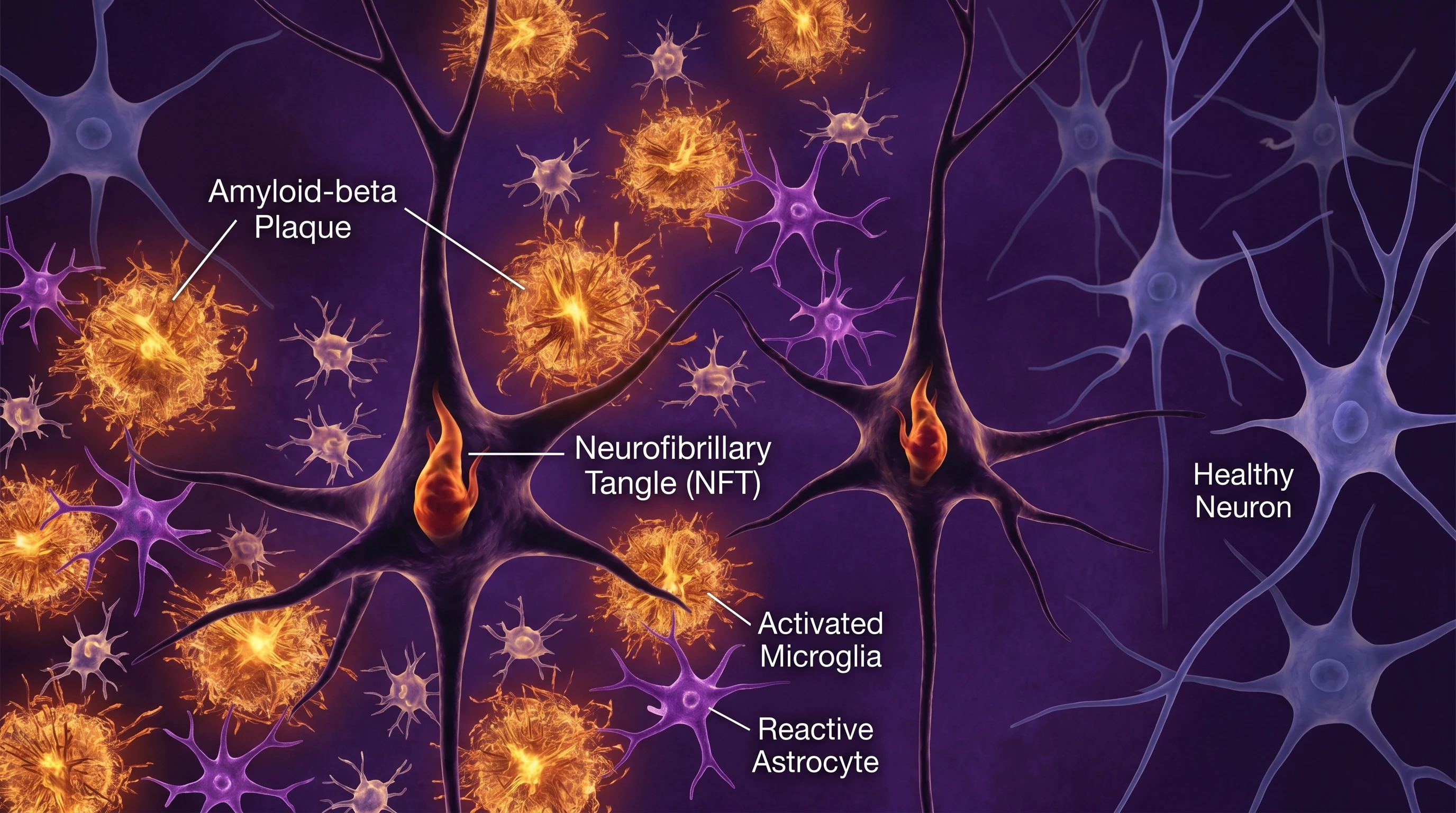
Cross-section of Alzheimer hippocampus showing dense amyloid plaques, intracellular tau tangles in pyramidal neurons, and reactive microglia (Figure generated with SciFig)

Transparency note: Illustrations in this article were generated with SciFig AI and reviewed by the author for scientific accuracy. Cited claims link to peer-reviewed sources, FDA approval letters, and NIA educational materials.

1. Why Amyloid-Tau Diagrams Anchor Every Alzheimer's Poster

Within the Alzheimer's research community, amyloid and tau are the framework everyone else's work is mapped onto. The NIA Alzheimer's Disease fact sheet (Accessed 2026-05-22) places plaques and tangles at the center of the canonical model, and the 2023 traditional approval of lecanemab and the 2024 approval of donanemab gave the amyloid-targeting hypothesis a clinical foothold that did not exist a decade ago (FDA Leqembi approval; FDA Kisunla approval · both Accessed 2026-05-22).

For AAIC posters, almost every Basic Science submission needs at least one amyloid-tau figure that interlocks correctly with the rest of the field. A correct figure shows Aβ generated through amyloidogenic APP processing, aggregating across four canonical stages, triggering downstream tau hyperphosphorylation, NFT formation, synaptic loss, and cognitive decline — with biomarker callouts for the imaging and CSF crowd. A wrong figure breaks the chain anywhere along that sequence, and the poster's mechanistic story collapses.

"Amyloid-tau mechanism" is not one figure either. It is at least six interlocking figures — Aβ aggregation, APP processing, tau pathology, the amyloid cascade itself, anti-amyloid antibody MOA, and anti-tau therapy — and a comprehensive disease-modifying therapy poster needs all six. For the AAIC poster format itself, presentation tiers, and the Beyond the Data track, start with AAIC 2026 poster guidelines and beyond the data. For winning-poster design principles, see how to design a winning AAIC 2026 poster.

2. Anatomy of an Amyloid-Beta Plaque Figure: 4 Aggregation Stages

The four-stage aggregation cascade is the most miscounted figure in the field. Generic image models routinely produce two- or three-stage cascades, conflating protofibril with plaque or collapsing the soluble oligomer into the monomer. The canonical sequence has exactly four stages, and each carries a distinct biological identity that determines which therapy targets which species.

  1. Monomer — A single Aβ peptide, either 40 or 42 amino acids long. Aβ40 dominates in healthy brain (roughly 9:1 ratio over Aβ42), while Aβ42 is more aggregation-prone and accumulates preferentially in Alzheimer's.
  2. Soluble oligomer — Aβ peptides assemble into trimers, dodecamers (Aβ*56 species) and other small soluble aggregates. It is well-established that this species is the most synaptotoxic — Lesné et al. 2006 (Accessed 2026-05-22) showed Aβ*56 alone impaired memory in transgenic mice.
  3. Protofibril — Linear, β-sheet-rich fibrillar aggregates that remain soluble but show clear filamentous structure. This is the species lecanemab binds.
  4. Mature dense-core plaque — Insoluble fibrillar deposits visible on histology. The core carries the N-terminally truncated, pyroglutamate-modified Aβ epitope (Aβ-N3pE) that donanemab targets.
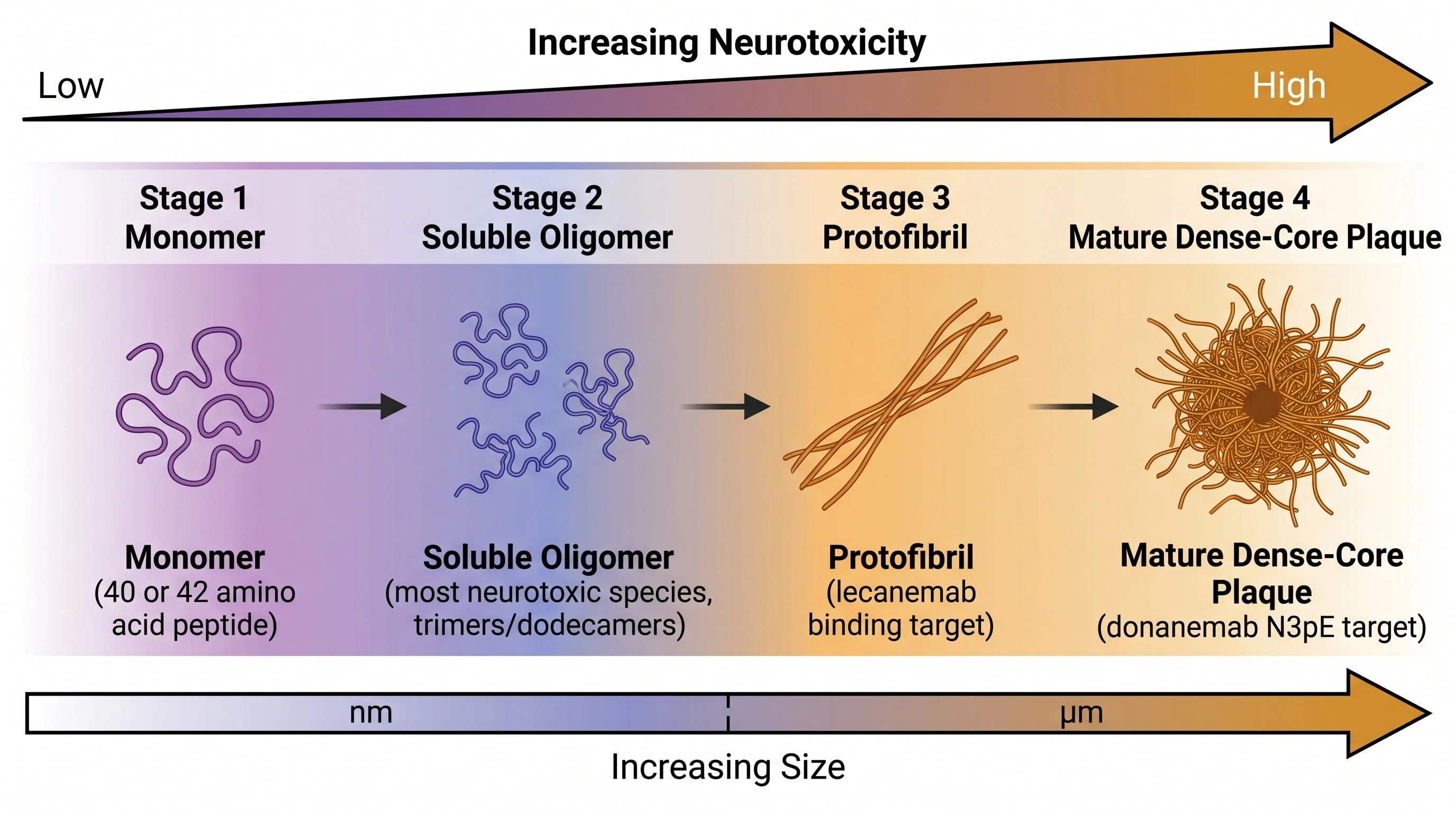
Four-stage Aβ aggregation cascade from monomer to dense-core plaque, with lecanemab and donanemab target species annotated (Figure generated with SciFig)

A poster drawing only "monomer → plaque" without the soluble-oligomer intermediate signals that the author has not engaged with the synaptotoxicity literature.

3. The APP Processing Pathway: α vs β vs γ Secretase

APP processing is where AI-generated figures fail most spectacularly. The pathway has two branches, and the directionality of α versus β determines whether Aβ is generated at all.
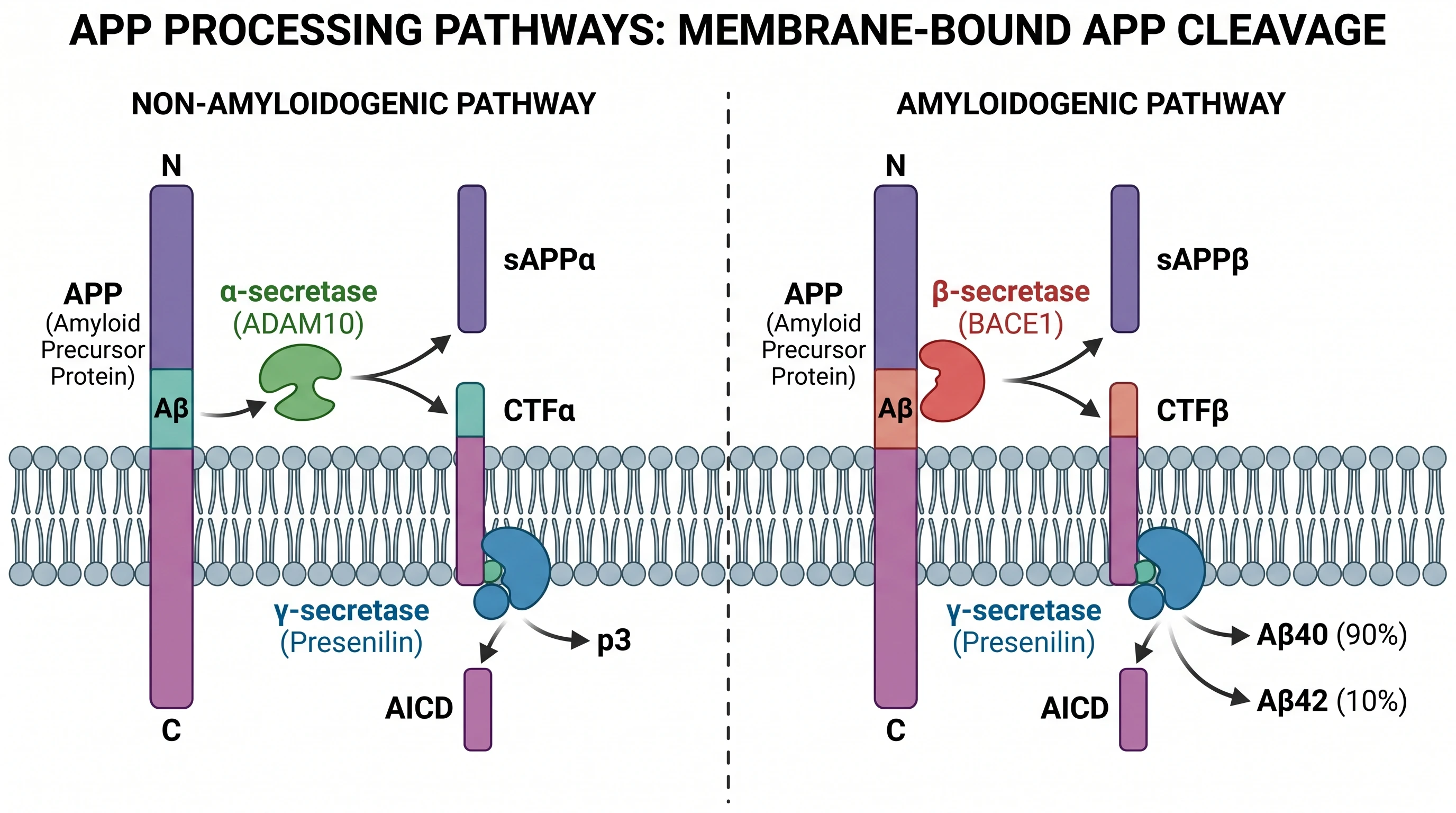
The non-amyloidogenic pathway runs through α-secretase (primarily ADAM10), which cleaves within the Aβ domain of APP. This produces sAPPα and a membrane-tethered CTFα stub. Because the cut is inside the Aβ sequence, no intact Aβ peptide is ever produced. α-secretase is protective against amyloid accumulation, not a step toward it.
The amyloidogenic pathway is a two-step sequence. β-secretase (BACE1) cleaves at the N-terminus of the Aβ sequence, releasing sAPPβ and leaving CTFβ in the membrane. γ-secretase, a transmembrane complex centered on presenilin, then cleaves CTFβ within the membrane to release intact Aβ — either Aβ40 (~90% of products) or Aβ42 (~10%) — plus the APP intracellular domain (AICD). Vassar 2014 (Accessed 2026-05-22) details BACE1, and De Strooper et al. 2012 (Accessed 2026-05-22) covers the γ-secretase complex (both Accessed 2026-05-22).
APP processing comparing non-amyloidogenic alpha-secretase pathway producing sAPP-alpha versus amyloidogenic BACE1 and gamma-secretase generating Abeta40 and Abeta42 (Figure generated with SciFig)

The single most important visual decision is which side of the panel each enzyme appears on. α-secretase on the left as the protective branch, β plus γ on the right as the amyloidogenic branch — that arrangement matches every review article and lets reviewers parse the figure in seconds. Drawing α-secretase as the first step of the amyloidogenic pathway will collapse reviewer confidence regardless of how clean the rest of the artwork is.

4. Tau Pathology: From Soluble Tau to Neurofibrillary Tangles

Tau pathology unfolds inside the neuron — the single most frequently misdrawn aspect of amyloid-tau figures. Generic image models routinely place NFTs in the extracellular space next to plaques. Reviewers spot this in under five seconds.
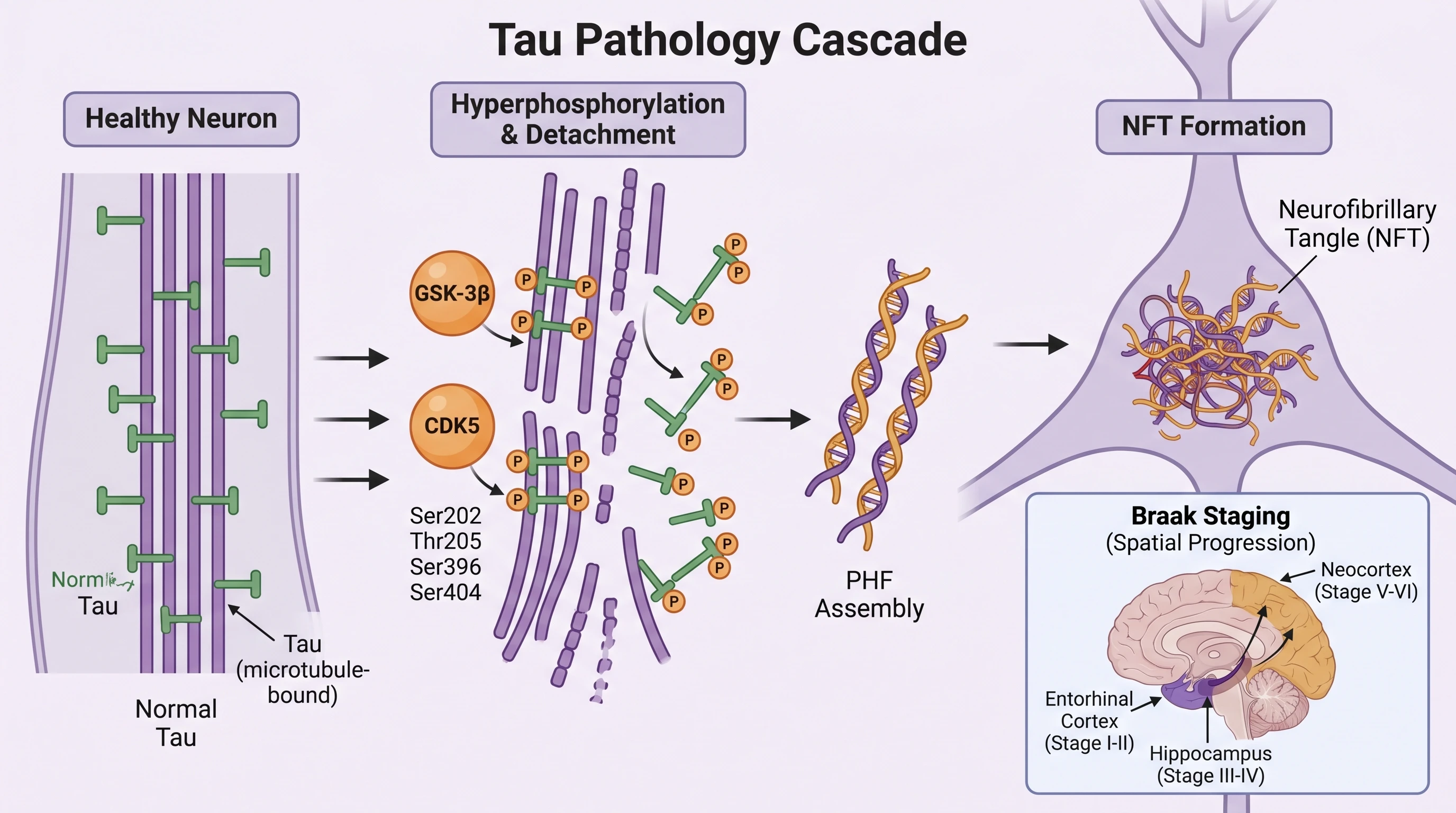
Tau is a microtubule-associated protein that stabilizes axonal microtubules. In disease, tau becomes hyperphosphorylated at residues including Ser202, Thr205 (together the AT8 epitope), Ser396, and Ser404. Hanger et al. 2009 (Accessed 2026-05-22) mapped the phosphorylation landscape, and Iqbal et al. 2016 (Accessed 2026-05-22) reviews how hyperphosphorylation drives NFT formation (both Accessed 2026-05-22).
The kinases responsible — primarily GSK-3β and CDK5 (Hooper et al. 2008 · Accessed 2026-05-22) — add phosphate groups; phosphatases such as PP2A remove them. In AD, the balance tips toward hyperphosphorylation, tau detaches from microtubules, microtubules destabilize, and free hyperphosphorylated tau self-assembles into paired helical filaments (PHFs). Cryo-EM by Fitzpatrick et al. 2017 (Accessed 2026-05-22) resolved PHF structure to near-atomic detail. PHFs then bundle into the intracellular NFTs that define the disease histologically.
Tau hyperphosphorylation at Ser202, Thr205, Ser396, Ser404 by GSK-3-beta and CDK5 forming paired helical filaments and intracellular NFTs (Figure generated with SciFig)
NFTs spread in a stereotyped spatial sequence — the Braak staging system 1991 (Accessed 2026-05-22) — from transentorhinal cortex (stage I) through entorhinal/hippocampus (stages II-IV) to neocortex (stages V-VI). Clavaguera et al. 2013 (Accessed 2026-05-22) showed that tau aggregates propagate trans-synaptically in a prion-like fashion, providing the mechanistic basis for Braak's anatomical observations.

Non-negotiable correctness checks: phosphorylation arrows point from kinase to tau (kinase adds, phosphatase removes); tau attached to microtubules in the healthy state and detached in disease; PHFs and NFTs inside the neuronal cytoplasm, never extracellular.

5. The Amyloid Cascade Hypothesis Visualized

The amyloid cascade hypothesis has organized thirty years of Alzheimer's research. Selkoe and Hardy 2016 (Accessed 2026-05-22) reviewed the hypothesis at twenty-five years and codified the revisions accumulated. Within the field, the cascade remains the consensus mechanistic spine, even as the causal weight on each step is debated.

The canonical chain: APP processing imbalance produces excess Aβ → Aβ aggregates through the four stages → soluble oligomers drive synaptic dysfunction → tau hyperphosphorylation downstream of Aβ → NFT formation → neuronal death → hippocampal/cortical atrophy → cognitive decline → dementia.
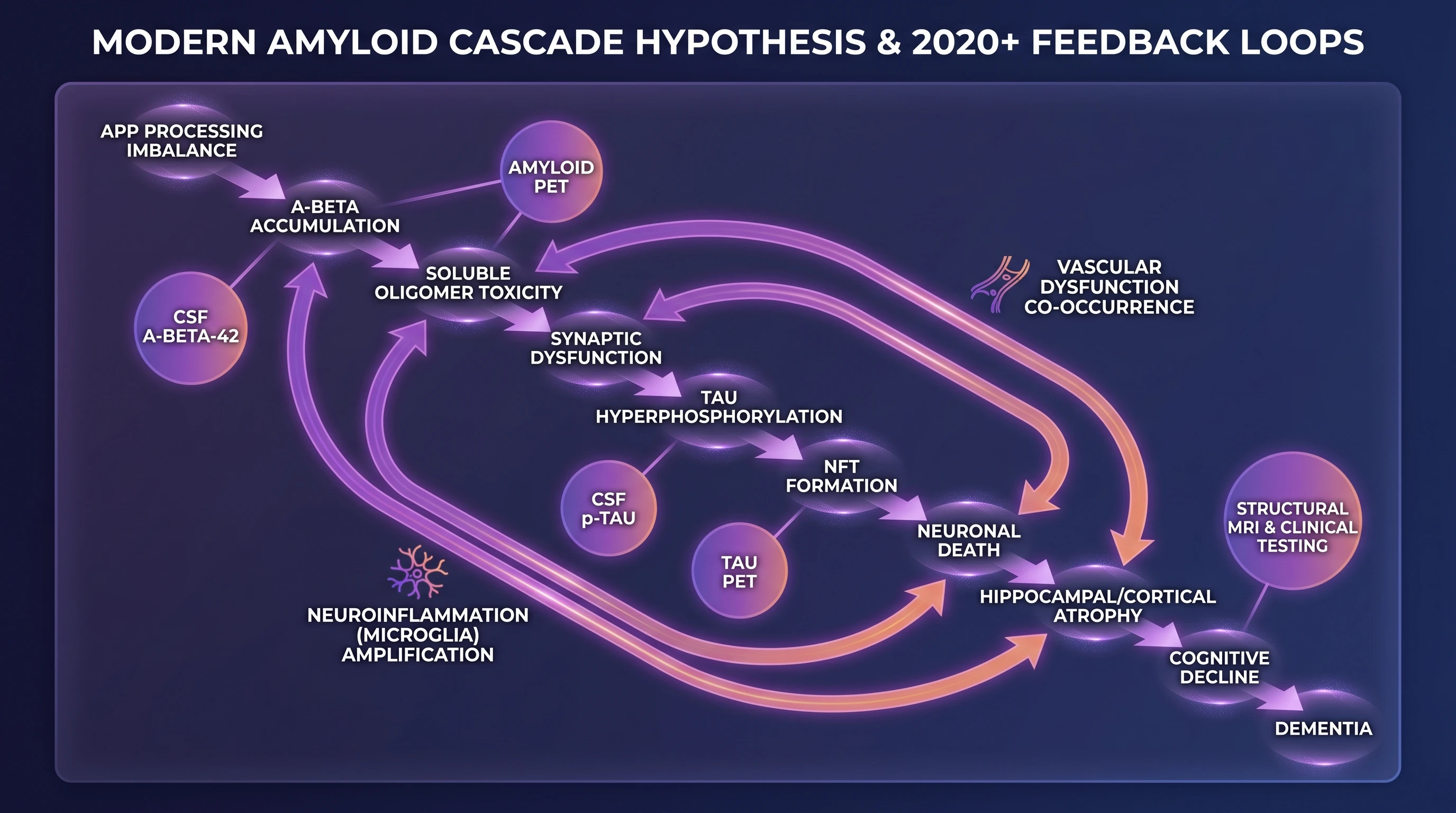
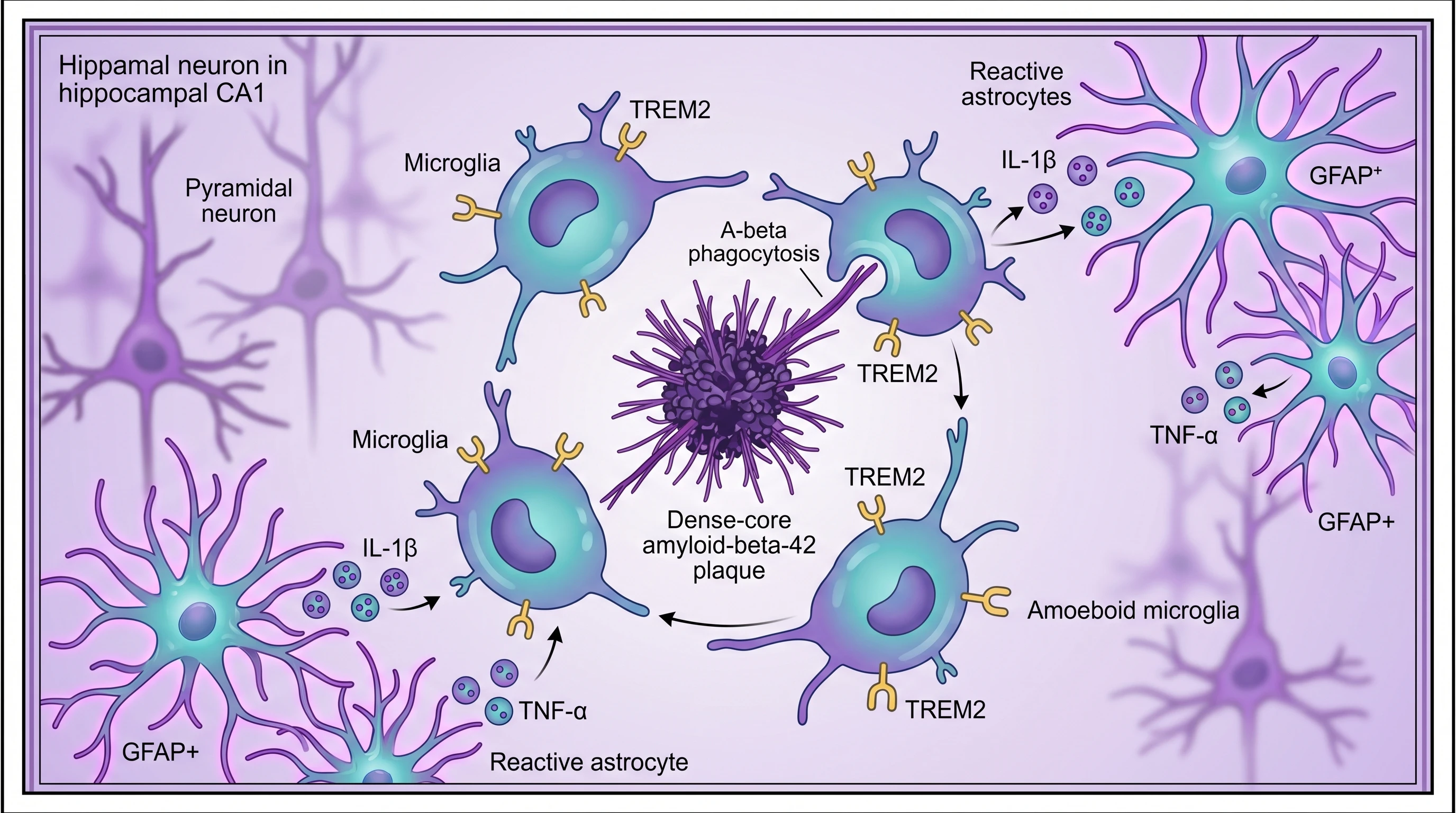
The 2020-era revisions add bidirectional feedback. Neuroinflammation through microglial activation is both a downstream consequence and an upstream amplifier of amyloid and tau pathology; vascular dysfunction co-occurs in a substantial fraction of patients. In our analysis, the most useful framing for AAIC 2026 figures is to draw the linear cascade as the spine and overlay neuroinflammation and vascular loops as annotations — reviewers read the canonical sequence first and the revisions second. For a deeper microglia-amyloid interaction figure, see TREM2, microglia, and neuroinflammation diagrams for AAIC 2026.
Modern amyloid cascade hypothesis showing Abeta accumulation triggering tau pathology, synaptic dysfunction, neuroinflammation feedback, and biomarker measurement points (Figure generated with SciFig)
The biomarker layer is what most AAIC posters underuse. CSF Aβ42 (decreased in AD) and CSF p-tau (increased) — reviewed by Blennow and Zetterberg 2018 (Accessed 2026-05-22) — give trial-relevant readouts at distinct cascade points. Amyloid PET from the PIB work of Klunk et al. 2004 (Accessed 2026-05-22) and tau PET tracers visualize the cascade in vivo (both Accessed 2026-05-22). Biomarker callouts turn a static mechanism figure into a translational schematic.

6. Anti-Amyloid Antibodies (Lecanemab and Donanemab) Mechanism

Anti-amyloid antibodies are the most reviewed topic of the AAIC 2026 cycle, and the side-by-side MOA figure is one of the highest-value figures you can put on a disease-modifying therapy poster.

Lecanemab (Leqembi) is a humanized IgG1 monoclonal antibody that binds soluble Aβ protofibrils — the linear filamentous aggregates between oligomer and mature plaque. The CLARITY-AD trial (van Dyck et al. NEJM 2023) (Accessed 2026-05-22) reported 27% slowing of cognitive decline on CDR-SB at 18 months in early symptomatic AD; FDA converted lecanemab to traditional approval in July 2023.
Donanemab (Kisunla) is a humanized IgG1 monoclonal antibody that binds the N3pE pyroglutamate-modified Aβ epitope, present only in the dense core of mature plaques. The TRAILBLAZER-ALZ2 trial (Sims et al. JAMA 2023) (Accessed 2026-05-22) reported 35% slowing of cognitive decline on iADRS in the low-tau population; FDA approved donanemab in July 2024.

Both antibodies share a downstream mechanism after target engagement: the Fc domain engages microglial Fcγ receptors, microglia phagocytose the antibody-bound Aβ, and plaque burden on amyloid PET decreases substantially over 12-18 months. They differ in which Aβ species they remove — lecanemab depletes the soluble protofibril pool upstream of plaque formation, donanemab strips down already-formed plaque cores.
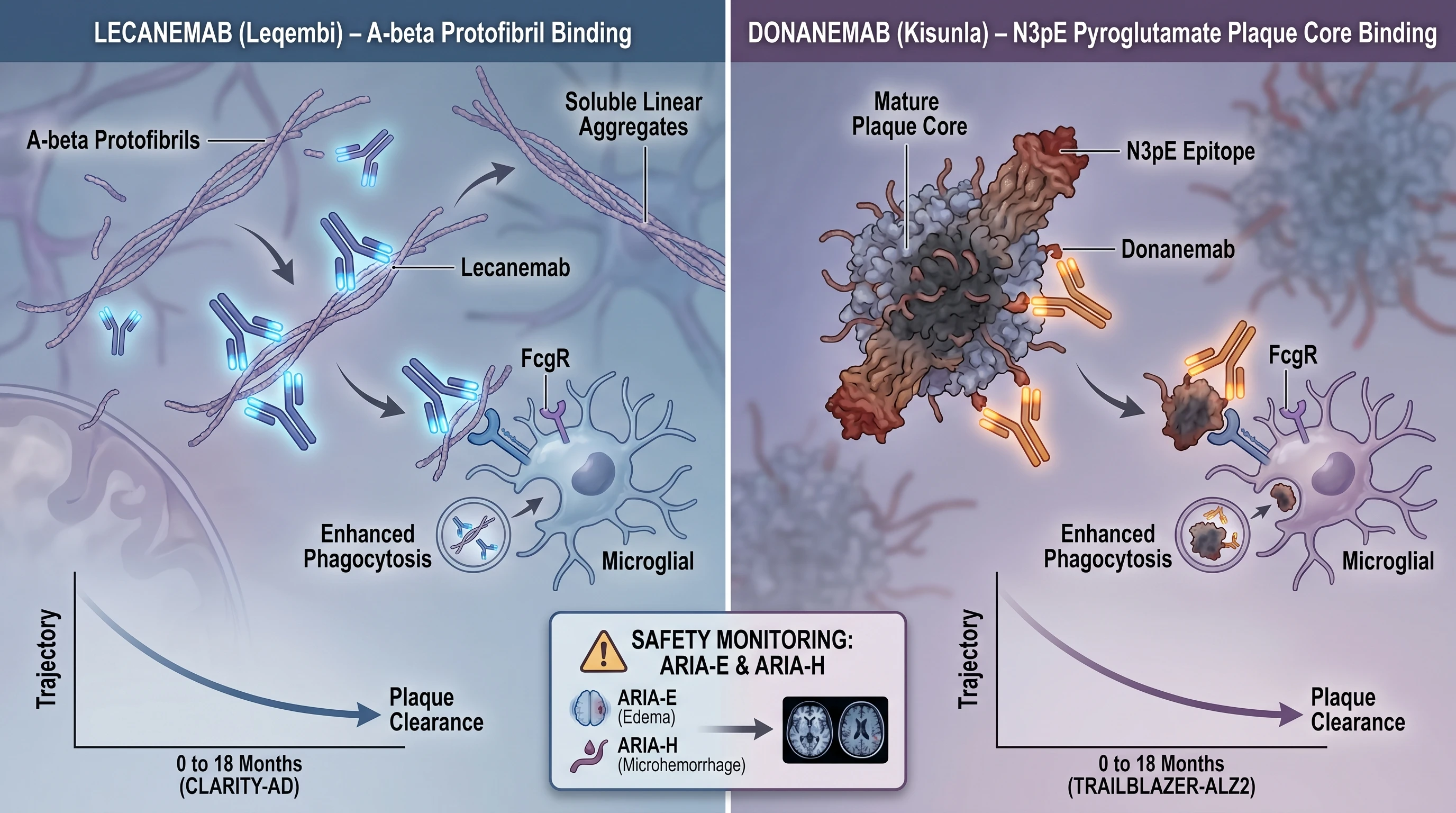
Lecanemab targeting Abeta protofibril aggregates versus donanemab targeting N3pE plaque cores, both triggering microglial Fc receptor-mediated phagocytosis (Figure generated with SciFig)
The safety side of the figure is non-optional. Both drugs share the amyloid-related imaging abnormalities (ARIA) class effect: ARIA-E (cerebral edema, FLAIR MRI) and ARIA-H (cerebral microhemorrhages, susceptibility-weighted MRI). The Sperling et al. 2011 Alzheimer's Association recommendations (Accessed 2026-05-22) defined the ARIA monitoring framework both labels now use, with intensified surveillance in APOE4 homozygotes (~2-3× the ARIA risk of non-carriers). A complete MOA figure includes an ARIA-E/ARIA-H imaging inset.
For historical context, the predecessor aducanumab received accelerated approval in 2021 on plaque clearance rather than cognitive benefit (controversy reviewed by Knopman et al. 2021 · Accessed 2026-05-22), and was withdrawn in 2024.

7. Anti-Tau Therapies: Antibody and ASO Approaches

Anti-tau therapeutics lag anti-amyloid clinically but represent a substantial fraction of the AAIC 2026 Drug Development pipeline. The figure design problem is twofold: showing extracellular versus intracellular targeting strategies, and showing pre-tangle versus post-tangle intervention windows.
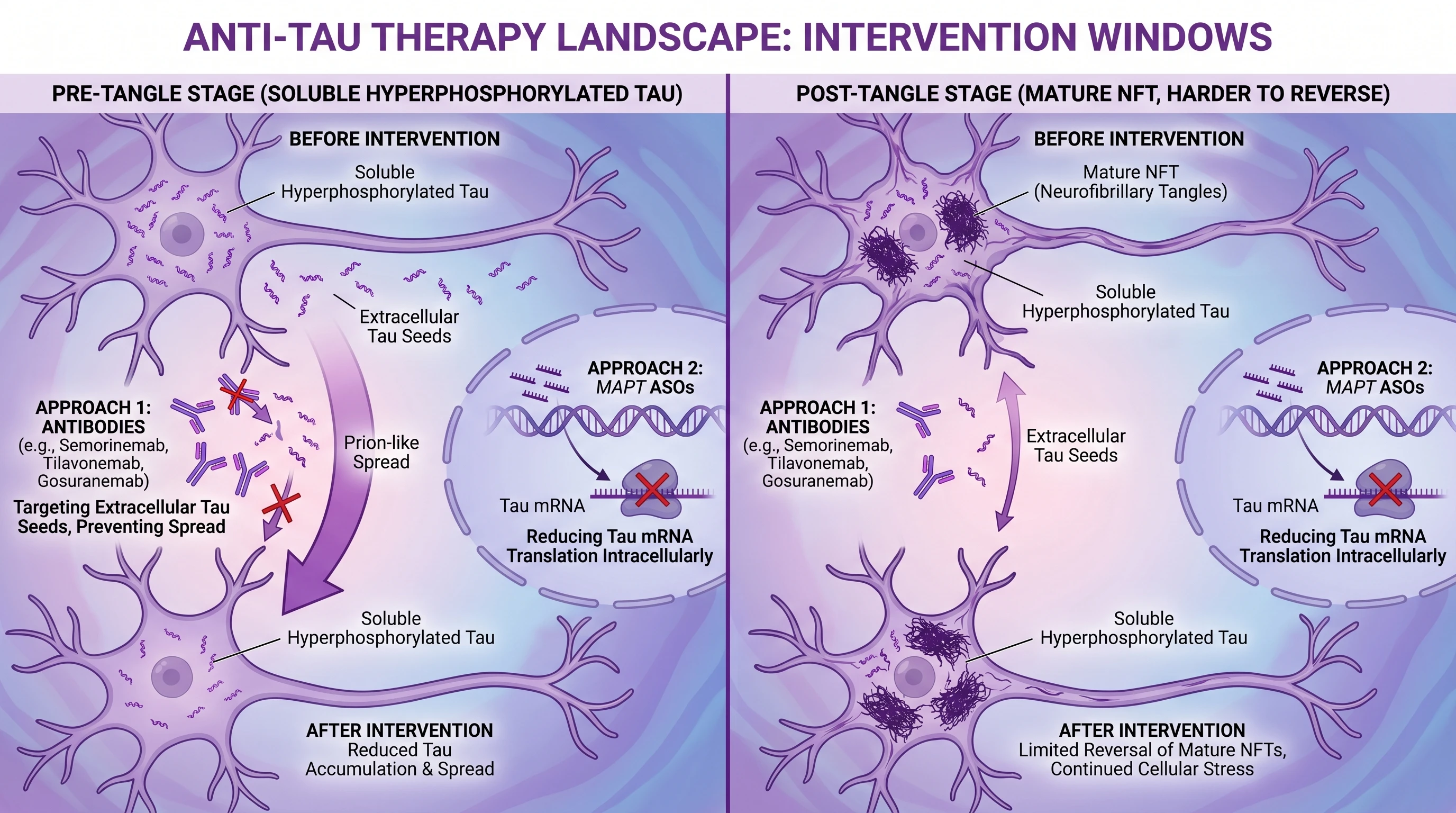
Anti-tau antibodies — semorinemab, tilavonemab, gosuranemab — target extracellular tau. The mechanistic premise, reviewed by Congdon and Sigurdsson 2018 (Accessed 2026-05-22), is that tau spreads trans-synaptically in a prion-like manner and that antibodies can intercept released tau seeds before they enter the next neuron. Clinical readouts in mild-to-moderate AD have been mixed; the dominant interpretation is that extracellular antibodies arrive too late for patients with established tangles.
Tau antisense oligonucleotides (ASOs) — particularly MAPT-targeting ASOs — reduce tau mRNA translation intracellularly. DeVos et al. 2017 (Accessed 2026-05-22) showed tau ASO reduced tau accumulation and reversed seeding in mouse models, and several MAPT ASOs are in early-phase trials.
Anti-tau antibodies targeting extracellular tau spread versus MAPT antisense oligonucleotide reducing tau mRNA, with pre-tangle and post-tangle intervention windows (Figure generated with SciFig)

The pre-tangle versus post-tangle distinction is what the figure most needs to convey. Pre-tangle disease — soluble hyperphosphorylated tau, few mature NFTs — is the intervention window where both antibody and ASO strategies remain mechanistically plausible. Post-tangle disease (established intraneuronal NFTs) is much harder to reverse, and current trials increasingly stratify by tau PET burden to enrich for the pre-tangle window.

8. From Prompt to Publication-Ready: SciFig Workflow for Amyloid-Tau Mechanism Diagrams

You are drafting the APP processing panel. You ask a generic image model to "show APP cleavage by alpha, beta, and gamma secretase." The model produces a panel with α-secretase pointing into the amyloidogenic pathway as the first step. Anyone who has read a review article spots the error in five seconds — α-secretase is the non-amyloidogenic enzyme, cleaving within the Aβ domain and preventing Aβ from being released. With that one arrow misplaced, reviewer confidence in the rest of your figure collapses. You re-roll; the next version mislabels CTFβ. You re-roll again; γ-secretase is drawn as extracellular. The figure stays wrong in a different place every time.

This is not a single-tool failure. It is the technical state of generative AI on complex mechanism diagrams: training corpora skew toward popularly described mechanisms rather than carefully ordered textbook diagrams; models are not built around the molecular grammar neuroscientists use; and secretase directionality, kinase versus phosphatase activity, intracellular versus extracellular compartments, and Aβ aggregation stages are all decisions where models produce syntactically valid wrong answers. In mechanism work, 99% correct equals 0% — one reversed arrow tells the reviewer the underlying biology is not understood.

SciFig is built for exactly this gap. Best-in-class image generation models bring the first pass to a high-fidelity starting point — the four-stage cascade, APP branch logic, the tau phosphorylation map, the lecanemab-versus-donanemab side-by-side — most of which is topologically correct on draft one. For the precision details that matter most — α-versus-β secretase ordering, intracellular versus extracellular tau, the specific Aβ species lecanemab binds — an editable vector canvas lets you click any label and rename it, drag any arrow and reverse its direction, swap α-secretase for β without rerolling. Sketch-to-figure preserves a topology you draw on paper or whiteboard. The entire workflow stays inside SciFig — one-click export to editable PowerPoint, layered SVG, or 8K PNG for A0 poster printing. No roundtrip to Illustrator.

See AI Scientific Figure Generation in Action

Watch how researchers create publication-ready scientific figures from text descriptions.

Explore the Tool

Here is the path. Copy this prompt verbatim into SciFig's Text-to-Figure tool to start the APP processing figure:

APP (amyloid precursor protein) processing diagram showing membrane-bound
APP with cleavage sites. Left side: non-amyloidogenic pathway, alpha-secretase
(ADAM10) cleaves within the Abeta domain producing sAPP-alpha plus CTF-alpha,
followed by gamma-secretase producing p3 plus AICD. Right side: amyloidogenic
pathway, beta-secretase (BACE1) cleaves at the N-terminus producing sAPP-beta
plus CTF-beta, followed by gamma-secretase (presenilin complex) generating
Abeta40 (90%) and Abeta42 (10%) plus AICD. Color-coded enzymes, side-by-side
comparison, publication-ready style.
For the remaining figures, copy the prompts in Section 10 below. Adjust to your study: swap phosphorylation sites, swap antibody targets, or change the Braak color palette to match your poster typography. The SciFig vector canvas refines each label without rerolling. For pathway-figure iteration, the cell signaling pathways tutorial walks through canvas refinement step by step. To start from a hand-drawn topology, sketch-to-figure converts your paper diagram into a clean vector figure.

9. Common Mistakes When Drawing Amyloid-Tau Diagrams

The errors reviewers spot most often in amyloid-tau poster figures fall into five categories.

  • Aβ40 versus Aβ42 ratio drawn incorrectly — In healthy brain, Aβ40 dominates Aβ42 roughly 9:1. In AD, the ratio shifts toward Aβ42, but Aβ40 still represents the majority of total Aβ. Kuperstein et al. 2010 (Accessed 2026-05-22) establishes the toxicity relevance of the Aβ42/Aβ40 ratio. A figure drawing Aβ42 as the majority species in any context misrepresents the biology.
  • Neurofibrillary tangles drawn extracellularly — NFTs are by definition intracellular, forming inside pyramidal neurons from PHFs of hyperphosphorylated tau. Drawing them adjacent to plaques in extracellular space is the most common topology error in AI-generated AD figures.
  • Lecanemab's target mislabeled as plaque core — Lecanemab binds soluble Aβ protofibrils. Drawing lecanemab pointing at the dense plaque core is the donanemab target. The figure must show that the two antibodies remove different Aβ species.
  • Tau phosphorylation arrow direction errors — Kinases (GSK-3β, CDK5) add phosphate groups; phosphatases (PP2A) remove them. Reversing arrow direction reverses meaning. AT8 (Ser202/Thr205), Ser396, and Ser404 are added by kinases, not phosphatases.
  • Hippocampus and entorhinal cortex anatomical confusion — Entorhinal cortex is the medial temporal cortical structure adjacent to the hippocampus; the hippocampus proper sits medial to it. Stage I-II involves transentorhinal/entorhinal regions, stage III-IV expands into hippocampus and limbic structures, stage V-VI reaches neocortex. Labeling hippocampus as the stage I site misrepresents the anatomical sequence.
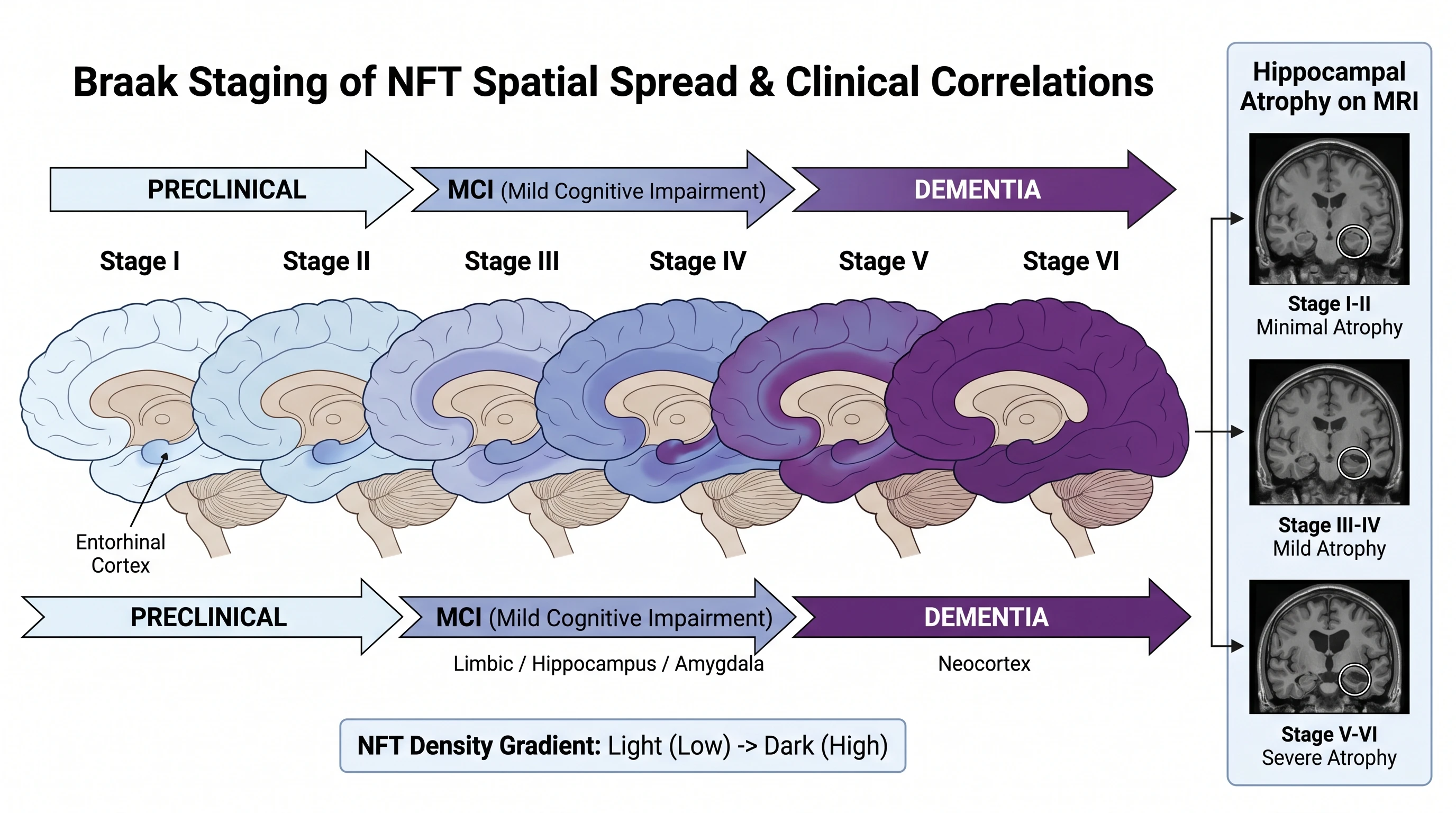
Braak staging diagram showing NFT spread across six stages from entorhinal cortex through hippocampus to neocortex, correlated with clinical severity (Figure generated with SciFig)
A related figure worth including — the amyloid-microglia interaction. Disease-associated microglia (DAM) cluster around plaques and contribute to both containment and inflammatory amplification. For posters touching the neuroimmune axis, see TREM2, microglia, and neuroinflammation diagrams for AAIC 2026. For a broader checklist of figure errors, see 5 common figure mistakes researchers make.

10. Free Trial CTA + Related Reading: 7 Copy-Paste Amyloid-Tau Prompts

The seven remaining SciFig prompts for the figures in this article. Copy any of them directly into Text-to-Figure.

APP processing pathway — see Section 8 above.
4 stages of Aβ aggregation:
Four-stage Abeta aggregation pathway diagram: Stage 1 monomer (40 or 42
amino acid peptide), Stage 2 soluble oligomer (most neurotoxic species,
trimers and dodecamers), Stage 3 protofibril (linear fibrillar aggregate,
lecanemab binding target), Stage 4 mature dense-core plaque (donanemab
N3pE pyroglutamate target). Horizontal flow with size scale bar and
toxicity gradient annotated, color-coded by stage, publication style.
Tau hyperphosphorylation and NFT formation:
Tau pathology cascade: normal tau bound to axonal microtubules then
hyperphosphorylation by GSK-3-beta and CDK5 kinases at key sites Ser202,
Thr205, Ser396, Ser404, then tau detachment from microtubules, then
microtubule destabilization, then paired helical filament (PHF) assembly,
then neurofibrillary tangle (NFT) formation in pyramidal neuron cytoplasm.
Inset showing Braak staging spatial progression entorhinal cortex to
hippocampus to neocortex.
Modern amyloid cascade hypothesis with revisions:
Modern amyloid cascade hypothesis flowchart: Abeta accumulation from APP
processing imbalance, then soluble oligomer toxicity, then synaptic
dysfunction, then tau hyperphosphorylation, then NFT formation, then
neuronal death, then hippocampal and cortical atrophy, then cognitive
decline, then dementia. Add 2020 revisions: neuroinflammation microglia
feedback loop, vascular dysfunction co-occurrence. Annotate biomarker
measurement points CSF Abeta42, p-tau, amyloid PET, tau PET.
Lecanemab versus donanemab MOA comparison:
Side-by-side comparison of two anti-amyloid antibodies. Left panel:
lecanemab (Leqembi) binds Abeta protofibrils, soluble linear aggregates,
preventing further fibrillogenesis. Right panel: donanemab (Kisunla)
binds N3pE pyroglutamate-modified Abeta epitope present only in mature
plaque cores. Both engage Fc-gamma receptors on microglia leading to
enhanced phagocytosis and plaque clearance over 18 months. Inset on
ARIA-E (edema) and ARIA-H (microhemorrhage) safety monitoring.
Anti-tau therapy approaches:
Anti-tau therapy landscape. Approach 1: antibodies (semorinemab,
tilavonemab, gosuranemab) targeting extracellular tau seeds, preventing
prion-like spread between neurons. Approach 2: MAPT antisense
oligonucleotides reducing tau mRNA translation intracellularly. Show
pre-tangle stage (soluble hyperphosphorylated tau) versus post-tangle
stage (mature NFT) intervention windows. Cellular illustration with
clear before and after states.
Braak staging across the brain:
Braak staging of NFT spatial spread across 6 stages on lateral brain
cross-section: Stage I-II transentorhinal and entorhinal cortex, Stage
III-IV limbic and hippocampus and amygdala, Stage V-VI neocortex. Color
gradient from light to dark showing NFT density progression. Correlate
stages with clinical severity: I-II preclinical, III-IV MCI, V-VI
dementia. Side panel showing hippocampal atrophy on MRI at each stage.
Hero amyloid-tau cross-section:
Detailed scientific illustration of Alzheimer's disease pathology:
hippocampal CA1 region cross-section showing dense-core amyloid-beta
plaques in extracellular space (Abeta42 fibrils), intracellular tau
neurofibrillary tangles inside pyramidal neurons with characteristic
flame-shape morphology, activated microglia engulfing plaques, reactive
astrocytes nearby. Healthy neurons in background for contrast. Deep
purple and amber color palette, publication-style.
A new SciFig account starts with 150 starter credits plus 50 refill credits every day. The eight figures in this article typically consume 70-110 credits with iteration — your starter pack covers the entire amyloid-tau set with daily refill margin for refinement. See the pricing page for multi-poster cycles across AAIC, CTAD, and ISTAART submissions.
For AAIC poster format and the Beyond the Data track, see AAIC 2026 poster guidelines and beyond the data. For winning-poster design principles, see how to design a winning AAIC 2026 poster. For the microglia/neuroinflammation axis, the companion piece TREM2, microglia, and neuroinflammation diagrams for AAIC 2026 covers the receptor and signaling vocabulary.

Create Scientific Figures Now

Describe your scientific figure in natural language — get publication-ready illustrations in minutes.

Try Free
FAQ


Disclaimer: This article is educational content focused on scientific figure design for conference posters and publications. It is not medical advice and should not be used for clinical decisions. The disease mechanisms, drug indications, and treatment protocols described here are summarized from peer-reviewed sources cited above; for clinical practice, consult primary literature, official treatment guidelines (e.g., NCCN / ESMO / ASH), and licensed clinicians. SciFig is a scientific illustration tool — it does not diagnose, treat, or advise on patient care.
SciFig Team

SciFig Team

Scientific Illustration Experts

Building AI-powered tools that help researchers create publication-quality scientific illustrations.

Try SciFig

Built for researchers

  • Text-to-Figure generation
  • Sketch-to-Figure conversion
  • Vector / SVG / PPT export
  • 200 free credits to start
Start FreeView pricing →

No credit card required

Continue Reading

TREM2 Microglia Diagrams for AAIC 2026
Tutorials23 min read

TREM2 Microglia Diagrams for AAIC 2026

Draw publication-ready TREM2-microglia diagrams for AAIC 2026: homeostatic to DAM continuum, DAP12-SYK signaling, R47H loss-of-function, cytokine cascade.

SciFig TeamSciFig Team·2026-05-23
CAR-T Mechanism Illustration for EHA 2026 Posters
Tutorials18 min read

CAR-T Mechanism Illustration for EHA 2026 Posters

Draw publication-ready CAR-T mechanism diagrams for EHA 2026 posters: 5 visual components, 4 CAR generations, BiTE family, and copy-paste AI prompts.

SciFig TeamSciFig Team·2026-05-22
Hematopoiesis Diagrams for EHA 2026 Researchers
Tutorials18 min read

Hematopoiesis Diagrams for EHA 2026 Researchers

Draw publication-ready hematopoiesis diagrams for EHA 2026 posters: classical tree, bone marrow niche, JAK/STAT pathway, AML block, and AI prompts.

SciFig TeamSciFig Team·2026-05-22
Call to action background

Ready to start?

Publication-ready scientific figures, in minutes

Start Creating Free

Free to start · No credit card required · Built for researchers

Text-to-FigureSketch-to-FigureReference-to-FigurePDF-to-FigurePhoto-to-Figure6 Publication StylesText-to-FigureSketch-to-FigureReference-to-FigurePDF-to-FigurePhoto-to-Figure6 Publication StylesText-to-FigureSketch-to-FigureReference-to-FigurePDF-to-FigurePhoto-to-Figure6 Publication Styles
Every Text EditablePrecision InpaintMultimodal Enhance8K UpscalingEditable PPTXLayered SVG8K PNG / JPGEvery Text EditablePrecision InpaintMultimodal Enhance8K UpscalingEditable PPTXLayered SVG8K PNG / JPGEvery Text EditablePrecision InpaintMultimodal Enhance8K UpscalingEditable PPTXLayered SVG8K PNG / JPG
SciFig

SciFig helps researchers turn ideas into publication-ready scientific figures with AI — export editable PPTX, SVG, PNG, and JPG for journals and presentations.

Featured on There's An AI For ThatFeatured on Toolify

Tools

  • Text-to-Figure
  • Sketch-to-Figure
  • PDF-to-Figure
  • Reference-to-Figure
  • Photo-to-Figure
  • Figure Enhancer
  • Vector Canvas

Models

  • GPT Image 2
  • Nano Banana Pro
  • Nano Banana 2

Resources

  • Inspiration
  • Tutorials
  • Blog

Company

  • Pricing
  • Contact

Legal

  • Privacy Policy
  • Terms of Service
  • Cookie Policy

© 2026 SciFig. All rights reserved.