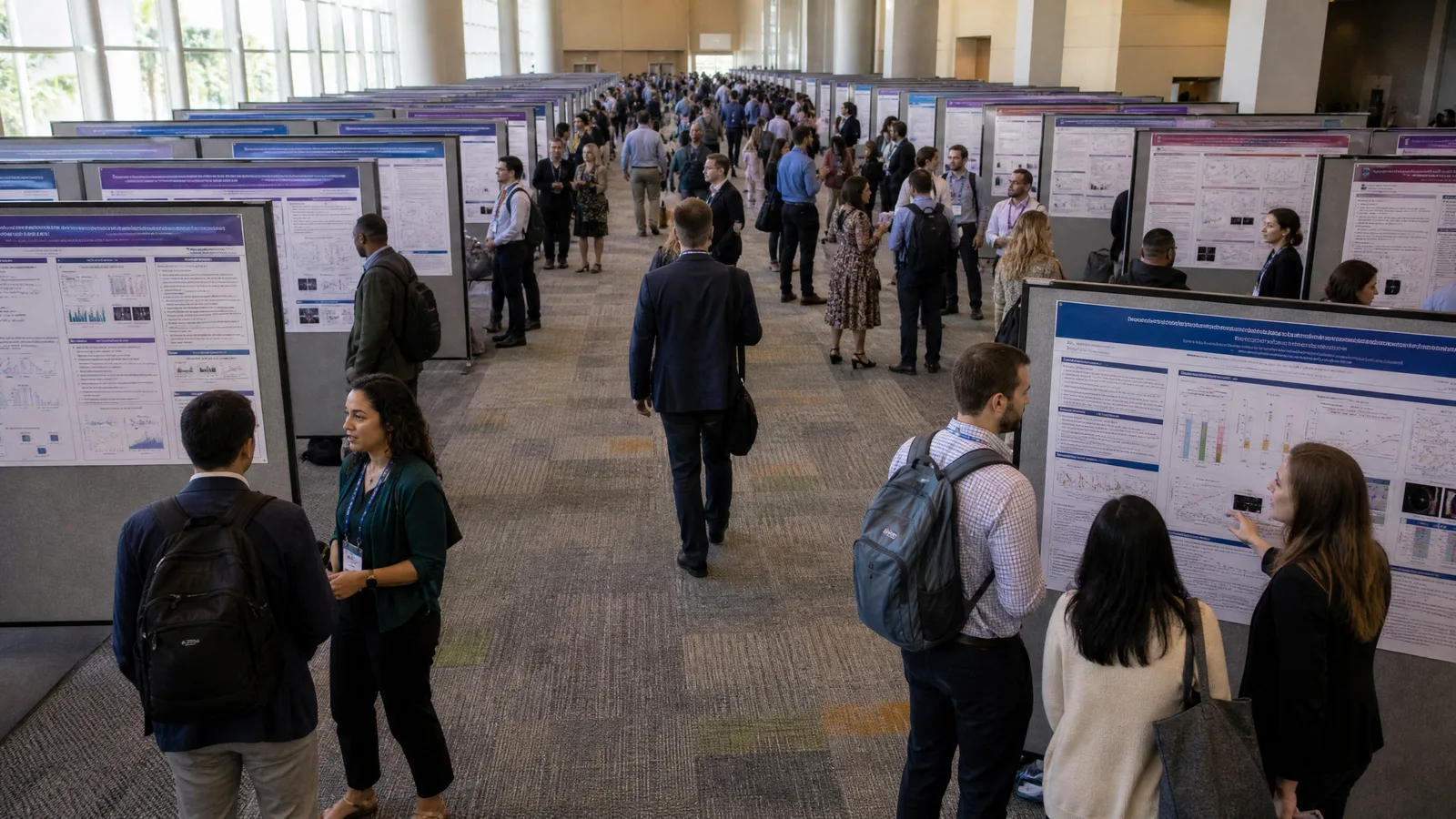
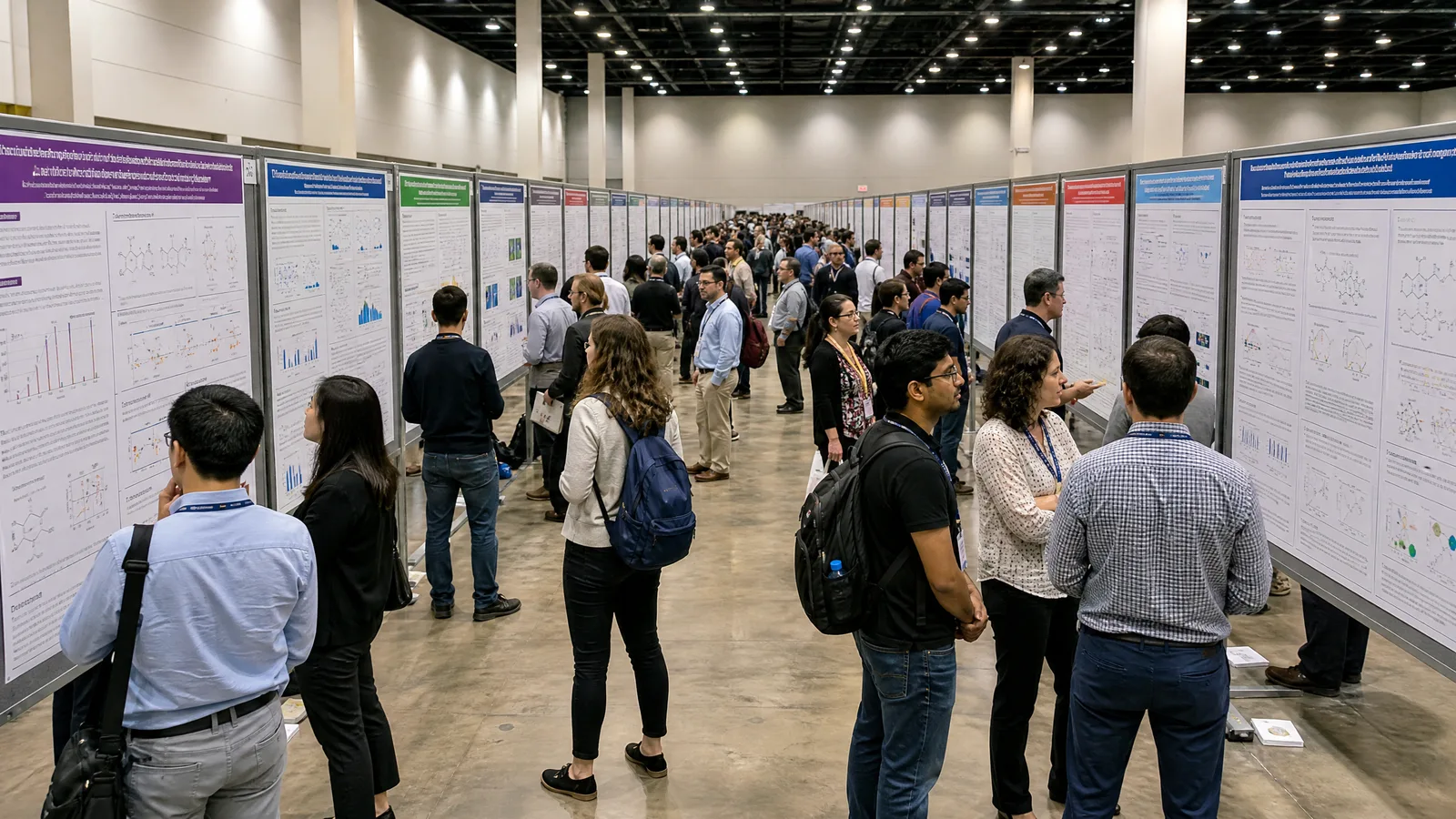
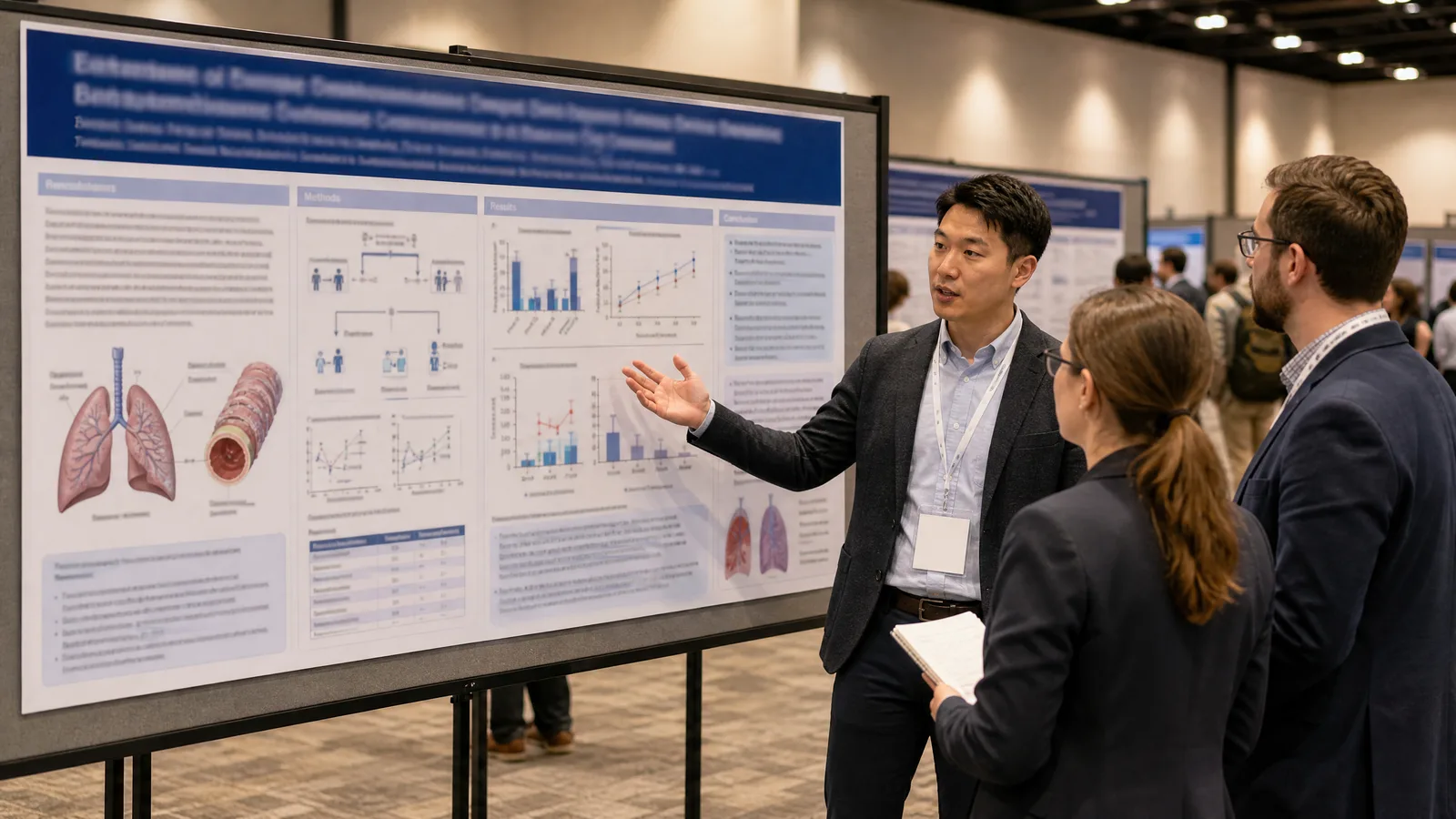
ASCO 2027 runs June 4–8, 2027, at McCormick Place in Chicago.
This practical guide covers the official poster and presentation rules for the 2027 ASCO Annual Meeting: the 77 × 48 in landscape poster board, the half-size Trials in Progress format, the official #betterposter templates, and the required e-poster upload.
It also covers oral time limits and slide templates, the logo and disclosure rules, the abstract rules, and publication in the Journal of Clinical Oncology. Every date and specification below links to official ASCO materials.
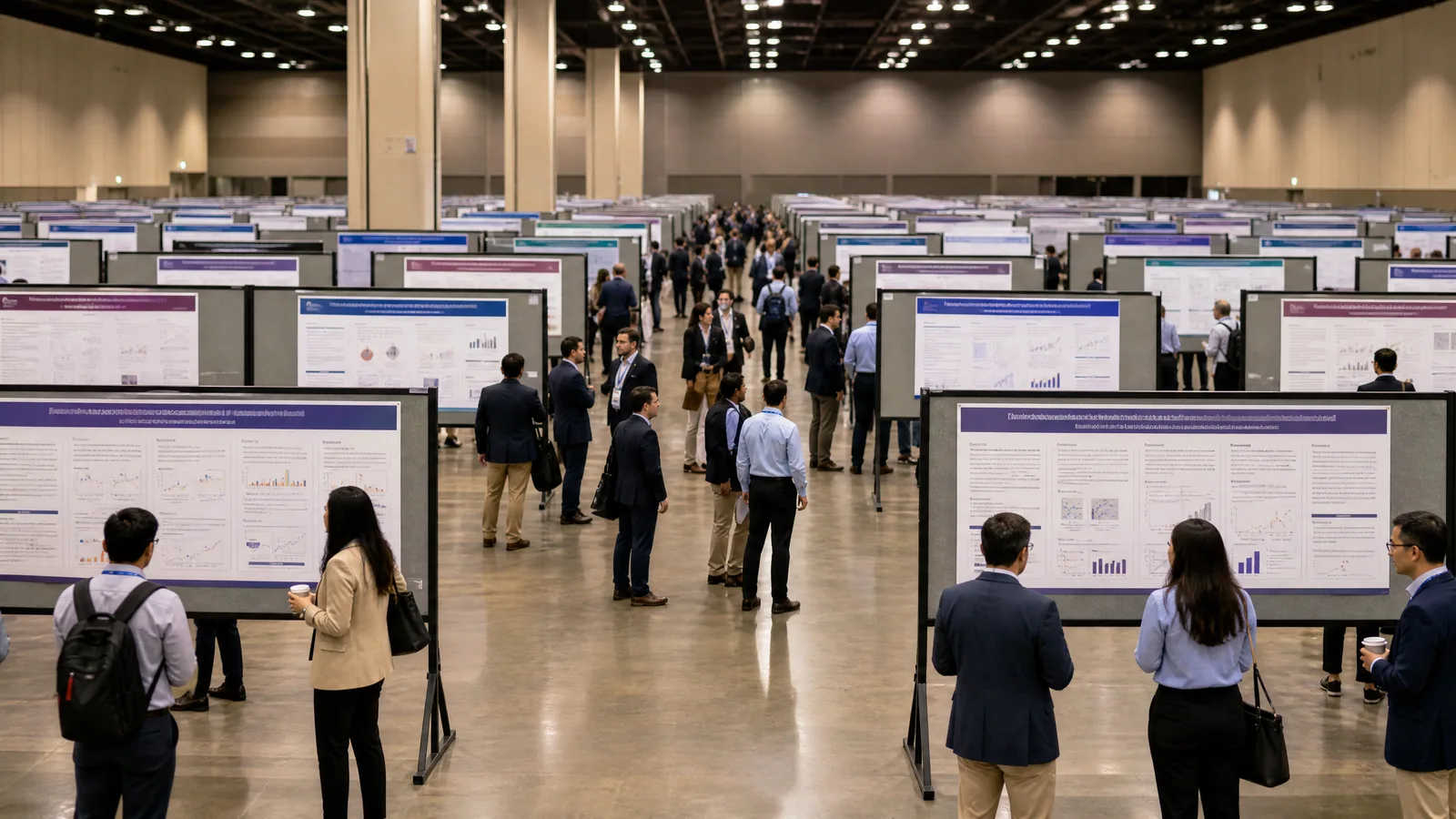
Illustrations generated with SciFig AI.
1. ASCO 2027 Poster Deadline, Key Dates & Venue
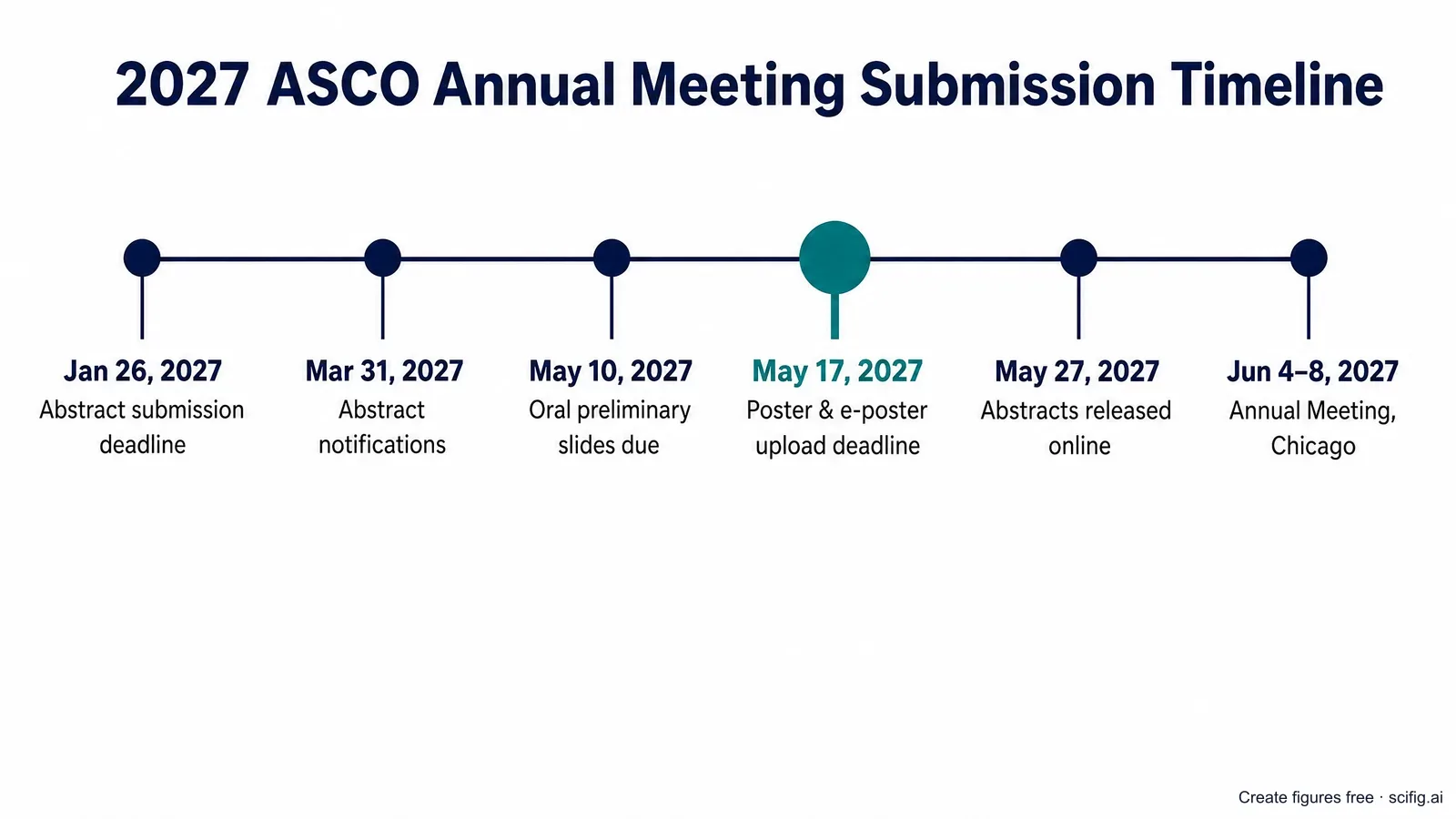
| Date | ASCO 2027 milestone |
|---|---|
| November 4, 2026 | Abstract submission opens |
| January 26, 2027, 11:59 PM ET | Abstract submission deadline |
| March 8, 2027, 12:00 PM ET | Late-breaking abstract deadline (a placeholder abstract is required by January 26) |
| March 31, 2027 | Abstract notifications sent to first authors |
| April 14, 2027 | Hotel reservation and early registration deadline |
| May 10, 2027, 11:59 PM ET | Oral presenters upload preliminary slides |
| May 17, 2027 | Posters and optional materials due in Speaker Center |
| May 27, 2027, 5:00 PM ET | Regular abstracts released on ASCO.org/abstracts |
| June 5–7, 2027 | Poster sessions |
| June 4–8, 2027 | ASCO Annual Meeting, McCormick Place, Chicago |
Presenters are required to register for the meeting; ASCO does not list a separate presenter registration deadline, so the April 14 early registration date is the practical one to plan around. Poster sessions run Saturday, June 5 (9:00 AM–12:00 PM and 1:30–4:30 PM CDT), Sunday, June 6 (9:00 AM–12:00 PM CDT), and Monday, June 7 (9:00 AM–12:00 PM and 1:30–4:30 PM CDT). ASCO says the 2027 meeting will showcase over 2,700 poster presentations across 23 tracks.
2. ASCO 2027 Poster Size, Format, and Official Template
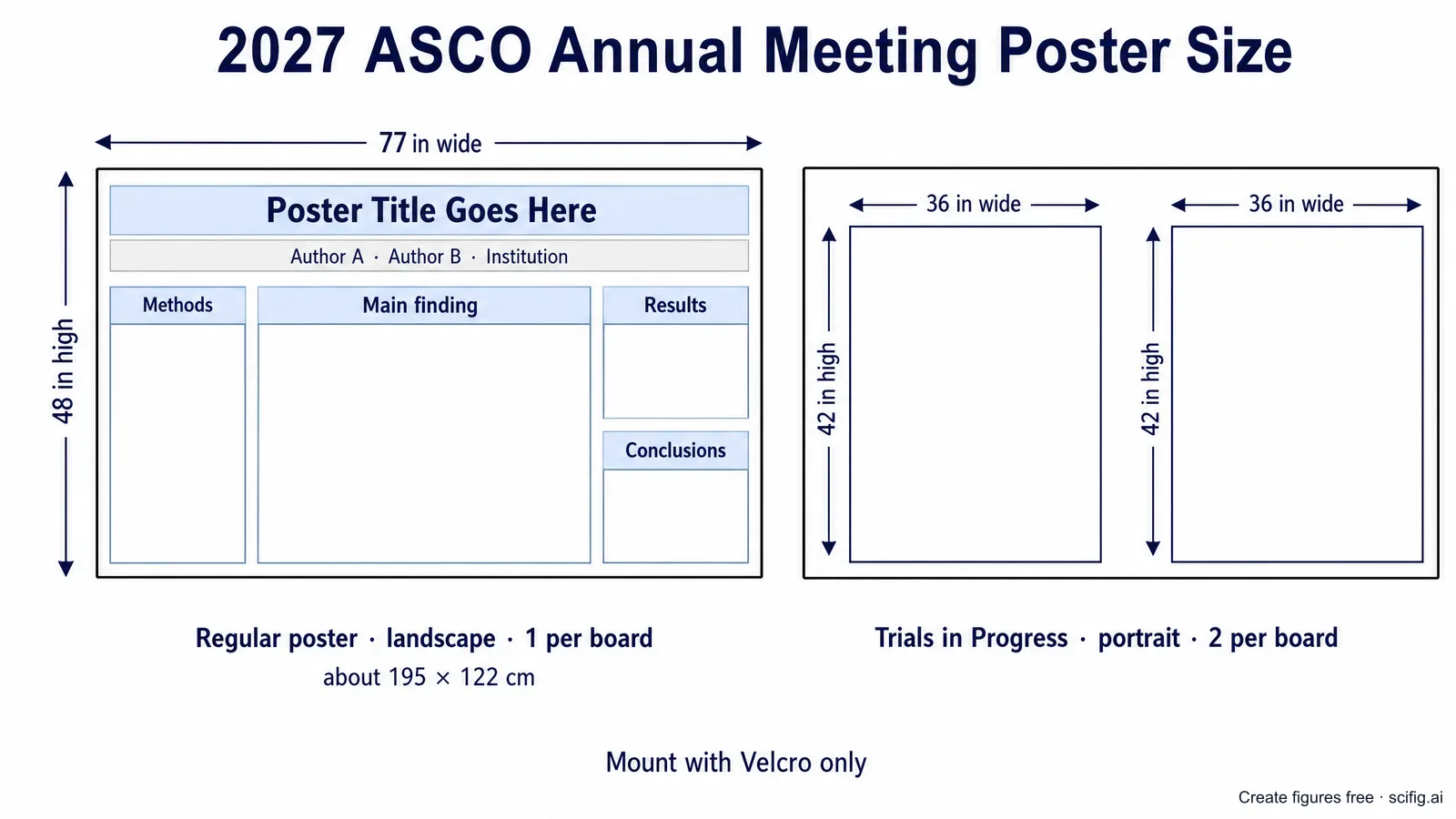
| ASCO 2027 poster rule | Official requirement |
|---|---|
| Regular poster | Landscape, max 77 in wide × 48 in high, 1 per board |
| Trials in Progress poster | Portrait, 36 in wide × 42 in high, 2 per board; no preliminary data |
| Required content | Abstract title, the 4- or 5-digit abstract publication number, and 1 email address |
| Co-authors | Not required on the printed or electronic poster (disclosures link to the abstract online) |
| Mounting | Velcro is provided at each board; glue, tape, paint, and staples are not allowed |
| Hanging time | From 8:30 AM CT for 9:00 AM sessions; from 1:00 PM for 1:30 PM sessions |
| Removal | At the end of the session; unclaimed posters go to reclaim bins outside Room S101 and are discarded after 5:00 PM on Monday, June 7 |
A #betterposter layout gives the main finding most of the board, so the figure carrying that finding matters more than usual: a trial schema, a mechanism of action, or a survival curve has to read from the aisle.
Make the main-finding figure for your ASCO poster
Start with the trial design, mechanism, or result your #betterposter layout puts center stage, then fit the rest of the board around it.
Explore the Tool3. ASCO 2027 E-Poster Formats and Speaker Center Upload
- Short recording: up to 5 minutes, either a video describing the poster or a short slide deck (up to 5 slides) with audio or video. Other formats are accepted as long as the output is an MP4 file.
- Release timing: e-posters and additional materials go online at the scheduled time of the poster session, in the ASCO Meeting Experience for registered attendees only.
ASCO does not publish a pixel size or aspect ratio for the e-poster, so the simplest route is to export the same file you print. Clean, high-resolution figures matter here because attendees can zoom in on screen. If you print through ASCO's partner Genigraphics, pick-up is in the McCormick Place South Building, outside Room S101, from Friday, June 4 (12:00–6:00 PM CDT) through Monday, June 7; ordering details and pricing are shared closer to the meeting.
4. ASCO 2027 Oral Presentation Time Limits and Slide Template
| ASCO 2027 presentation detail | Official rule |
|---|---|
| Oral abstract | 12 minutes, Q&A separate |
| Rapid oral abstract | 6 minutes, Q&A separate |
| Presenters | 1 designated presenter per abstract |
| Preliminary slides | Speaker Center, May 10, 2027, 11:59 PM ET |
| Final slides | No later than 4 hours before the session |
| Disclosure slide | Displayed automatically by ASCO |
| At the lectern | Mouse advances slides; presenter view with notes is not available |
The Speaker Ready Room is at McCormick Place, Level 4, Room N426, with five rehearsal rooms. Because presenter notes are not shown at the lectern, put the logic of each slide into its figure rather than into a script: a 6-minute rapid oral leaves room for only a few figure-led slides.
5. What Figures Do You Need for an ASCO 2027 Poster and Slides?
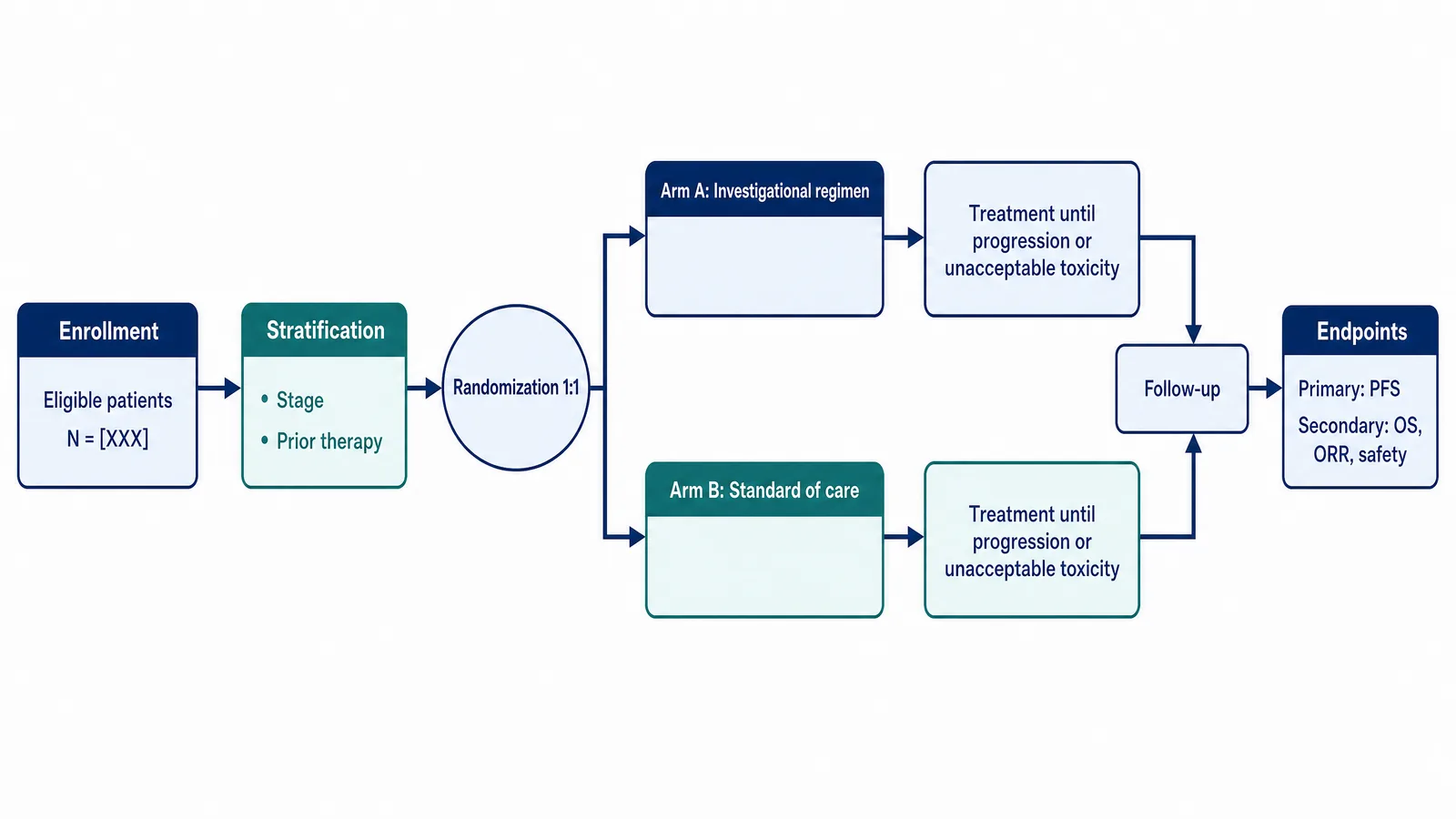
- Trial schema: eligibility, stratification factors, randomization ratio, arms, treatment duration, and endpoints in one left-to-right flow. A Trials in Progress poster is often built around this figure alone, since no preliminary data may be shown.
- Participant flow: a CONSORT-style diagram of screening, allocation, follow-up, and analysis.
- Mechanism of action: how the investigational agent reaches its target and what it blocks downstream.
- Results charts: Kaplan–Meier survival curves, forest plots of subgroup hazard ratios, waterfall plots of tumor response, or swimmer plots.
Draw your trial schema or mechanism of action
Describe the arms, endpoints, or drug target, then edit every box, arrow, and label until the figure matches your study.
Try Free6. Designing a Winning ASCO 2027 Poster: Accuracy in Trial Schemas and MOA Figures
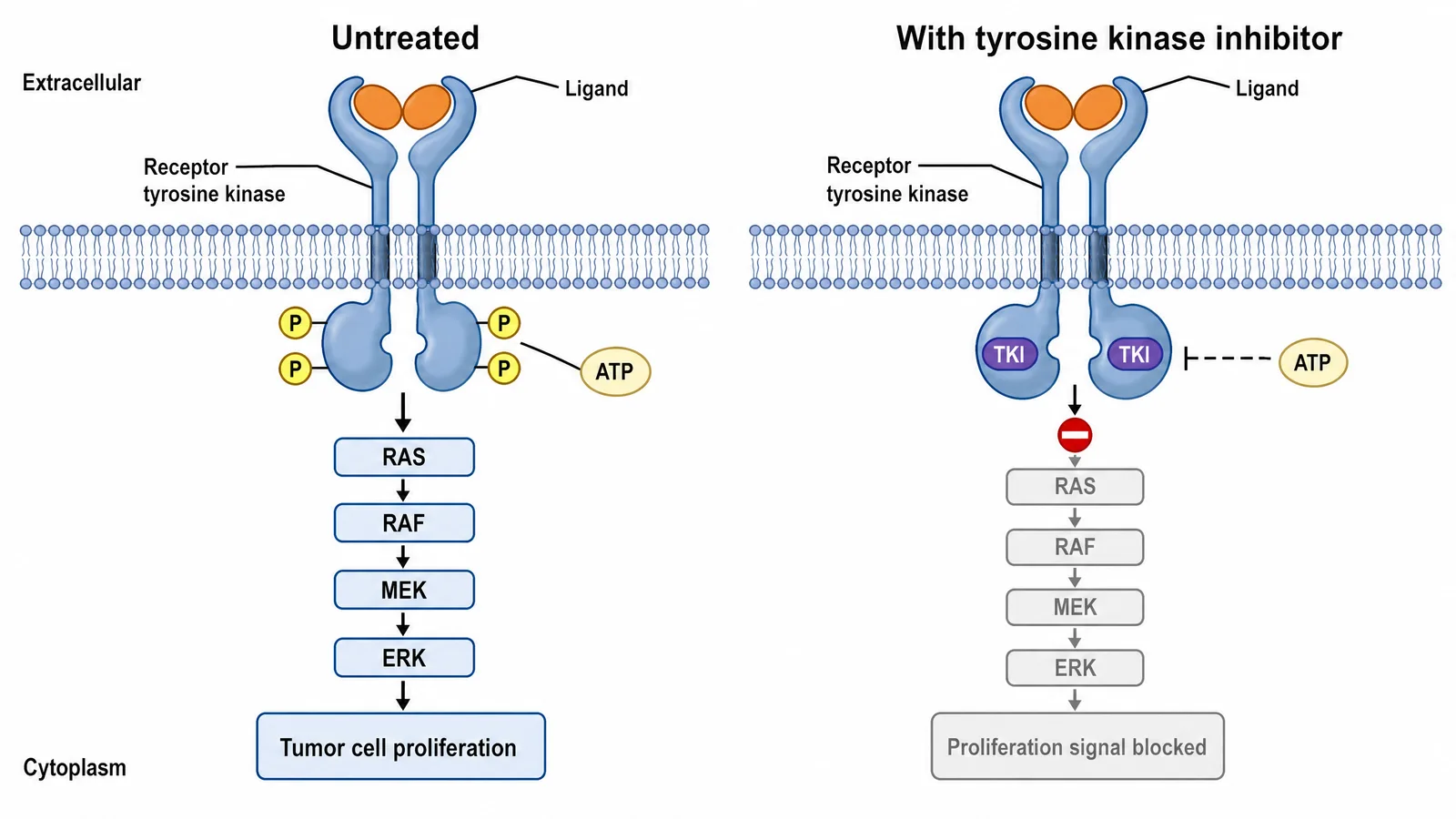
The details that carry the science are small:
- Trial schema: the randomization ratio, stratification factors, arm names, crossover rules, and which endpoint is primary must match the protocol exactly.
- Mechanism of action: many tyrosine kinase inhibitors are understood to compete with ATP at the kinase domain, so the drug, the ATP pocket, the missing phosphorylation, and the direction of the downstream cascade all have to agree.
- Results charts: axis labels, numbers at risk, and the hazard ratio reference line should be plotted from your data, not redrawn by eye.
Tip
A Trials in Progress poster cannot include preliminary data, so its trial schema is the poster. Give it most of the 36 × 42 in board and make every arm, stratification factor, and endpoint readable from the aisle.
7. Create ASCO 2027 Poster Figures with SciFig
| What you need for your poster or slides | Use | What it helps with |
|---|---|---|
| Explain a drug mechanism, pathway, or graphical abstract | SciFig AI Illustration | Start from text, PDF, sketch, photo, reference, or old figure; edit any element; export PPTX or SVG |
| Turn trial results into Kaplan–Meier, forest, or waterfall charts | SciFig DataChart | Upload CSV or Excel for a publication chart; change chart type and colors; export the data chart as PNG or PDF |
| Show the trial schema or a CONSORT diagram | SciFig FlowChart | Generate from text or a template; edit text, boxes, and connectors; export SVG or PPTX |
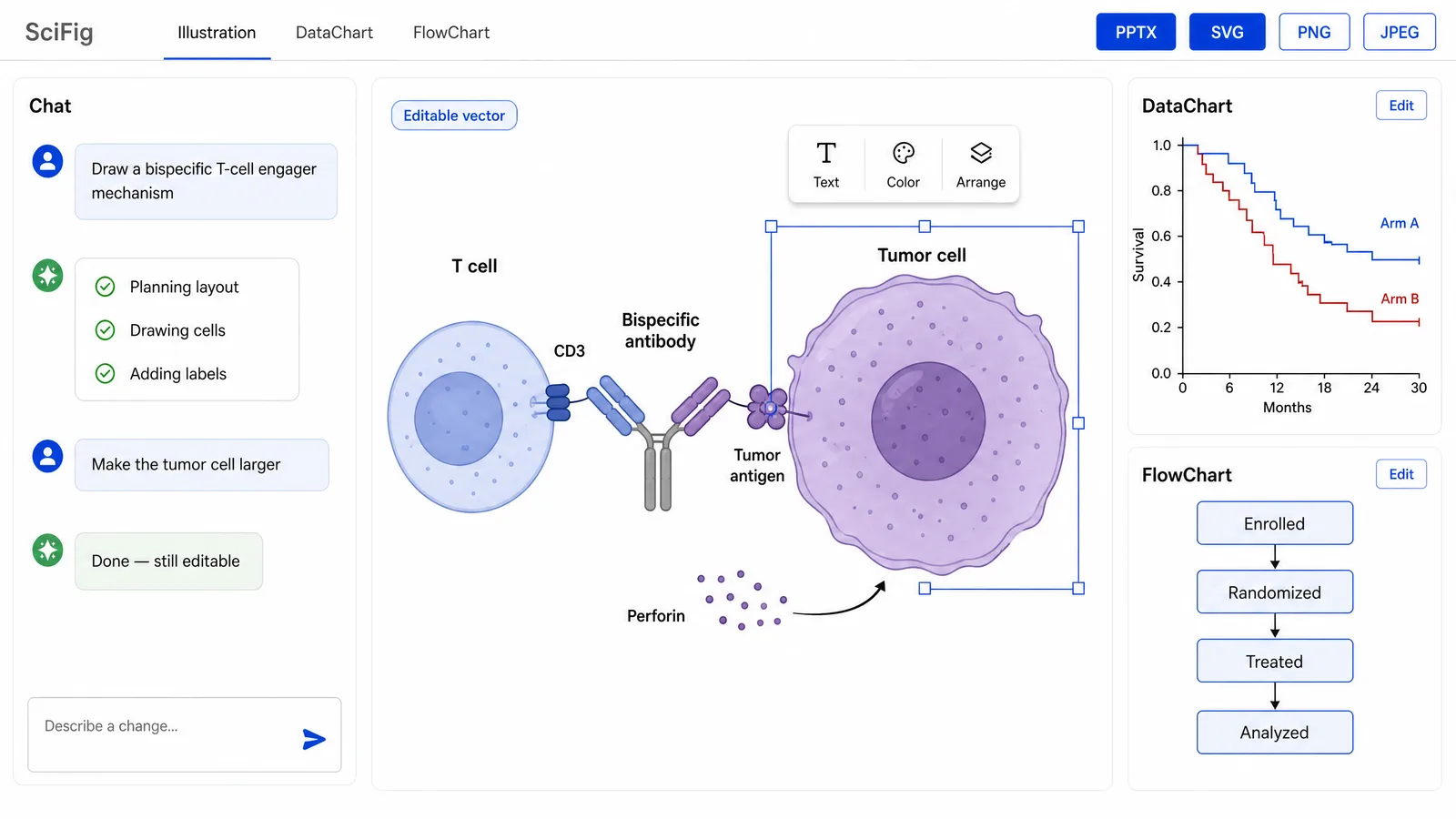
A structured prompt gives you the most control over a mechanism figure. Copy and adapt this one:
Mechanism of action of a tyrosine kinase inhibitor in a tumor cell: a growth
factor binds a receptor tyrosine kinase dimer in the membrane; the inhibitor
occupies the ATP-binding pocket of the kinase domain, phosphorylation is
blocked, and RAS–RAF–MEK–ERK signaling to proliferation is switched off.
Label every component; show untreated and treated panels side by side.
Make your ASCO mechanism figure, charts, and trial schema
Start from a prompt, PDF, or data table, edit any label or box, and export for your poster and slides.
Try Free8. ASCO 2027 Poster Logo, Disclosure, QR Code, and AI Rules
- Disclosure: all authors disclose relationships with for-profit health care companies through ASCO's disclosure system. Disclosures link to the abstract online and are published in the Program Guide, so co-author information is not needed on the poster, and ASCO displays the disclosure slide for oral presenters automatically.
- QR codes: a QR code must link to educational content, not advertising or for-profit company branding. A poster or slide deck with a QR code must carry ASCO's notice that copies obtained through the code are for personal use only and may not be reproduced without permission from ASCO or the author.
- AI in abstracts: ASCO's guidance on large language models and AI tools generally discourages using them to generate written content in submissions; AI tools used to help write an abstract must be noted in the abstract body, while grammar, spelling, formatting, and reference clean-up tools need no disclosure. ASCO does not accept abstracts listing nonhuman authors.
The AI guidance addresses written abstract content. If you make poster figures with an AI tool and want to note it, a short caption works: Figure created by the authors using SciFig.
9. ASCO 2027 Abstract Rules and Journal of Clinical Oncology Publication
| ASCO 2027 abstract rule | Official limit |
|---|---|
| Length | 2,600 characters including title, body, and table |
| Figures | Illustrations and figures are not permitted |
| Tables | One data table, no more than 10 rows |
| Authors | Up to 20 per abstract |
| First-author limit | Up to 2 regular abstracts |
| Not accepted | Case reports |
| Submission fee | $80 |
Frequently Asked Questions
References
- American Society of Clinical Oncology. ASCO Annual Meeting. Accessed November 14, 2026. https://www.asco.org/annual-meeting
- American Society of Clinical Oncology. Dates to Know. Accessed November 14, 2026. https://www.asco.org/annual-meeting/dates-know
- American Society of Clinical Oncology. Abstracts & Presentations. Accessed November 14, 2026. https://www.asco.org/annual-meeting/abstracts-presentations
- American Society of Clinical Oncology. Submission Details. Accessed November 14, 2026. https://www.asco.org/annual-meeting/abstracts-presentations/submission-details
- American Society of Clinical Oncology. Abstract Requirements. Accessed November 14, 2026. https://www.asco.org/annual-meeting/abstracts-presentations/submission-details/requirements
- American Society of Clinical Oncology. Abstract Selection Process & Presentations. Accessed November 14, 2026. https://www.asco.org/annual-meeting/abstracts-presentations/submission-details/abstract-selection-process-presentations
- American Society of Clinical Oncology. Poster Presenter Guidelines. Accessed November 14, 2026. https://www.asco.org/annual-meeting/abstracts-presentations/poster-presenter-guidelines
- American Society of Clinical Oncology. Oral Presenter Guidelines. Accessed November 14, 2026. https://www.asco.org/annual-meeting/abstracts-presentations/oral-presenter-guidelines
- American Society of Clinical Oncology. Disclosures. Accessed November 14, 2026. https://www.asco.org/annual-meeting/abstracts-presentations/disclosures
- American Society of Clinical Oncology. Abstract Policies, Embargoes & Exceptions. Accessed November 14, 2026. https://www.asco.org/annual-meeting/abstracts-presentations/abstract-policies-embargoes-exceptions
- American Society of Clinical Oncology. 2027 ASCO Annual Meeting Call for Abstracts [PDF]. Accessed November 14, 2026. https://cdn.bfldr.com/KOIHB2Q3/as/2tpw5w87446j4tkfpqprhwjn/AM27-Call-for-Abstracts
- American Society of Clinical Oncology. ASCO Guidance on Use of Large Language Models and Artificial Intelligence Tools (August 2024) [PDF]. Accessed November 14, 2026. https://cdn.bfldr.com/KOIHB2Q3/as/k8fcg73k826vsjwpmfhsgw/2024-Aug-ASCO-Guidance-on-use-of-Large-Language-Models-Artificial-Intelligence-Tools
- Genigraphics. ASCO Poster Printing. Accessed November 14, 2026. https://www.genigraphics.com/asco
- ASCO Speaker Center. 2027 ASCO Annual Meeting Speaker Center. Accessed November 14, 2026. https://asco.confex.com/asco/2027/gateway.cgi