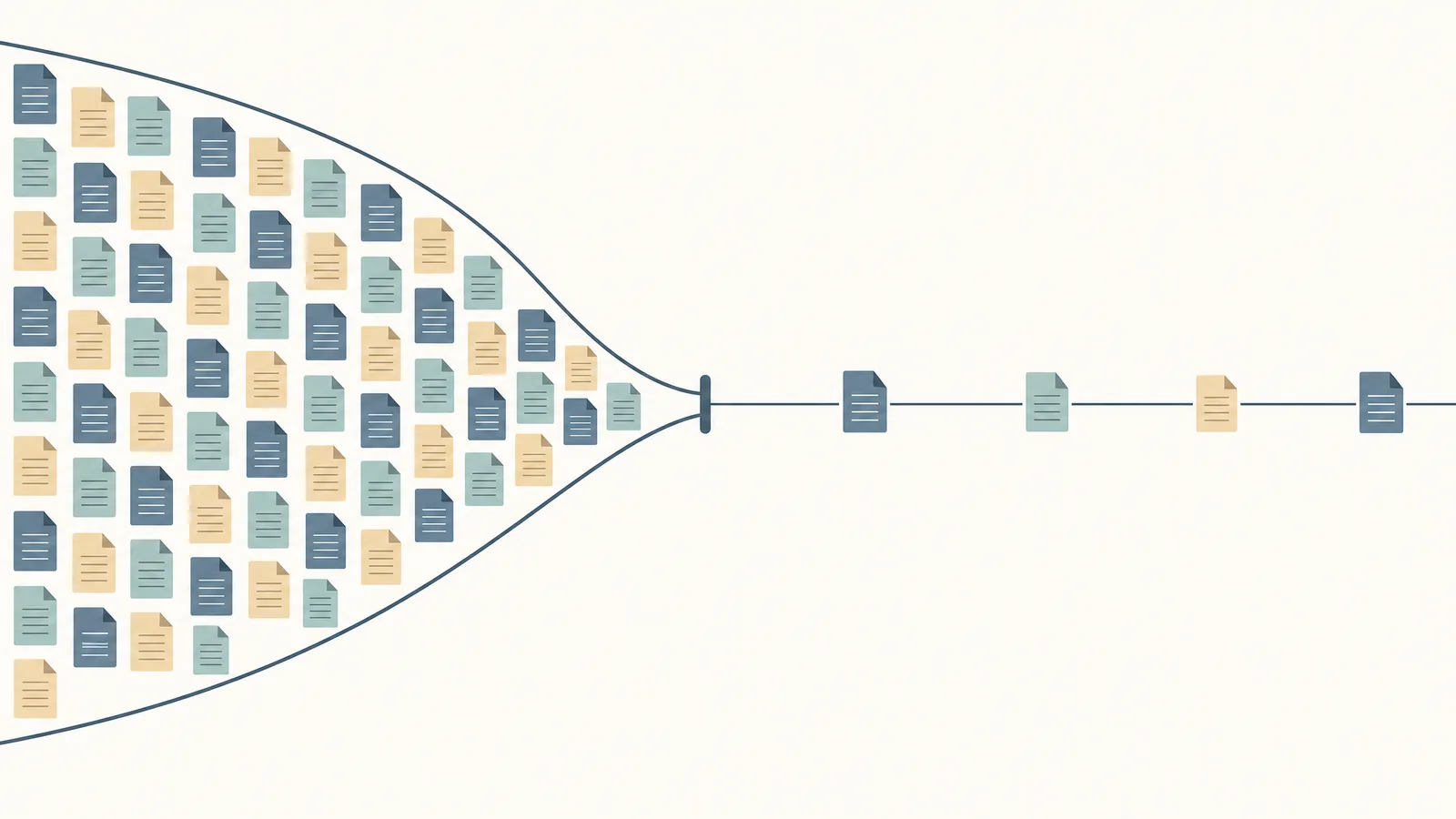

Nature Communications reports a median 9 days to first editorial decision, and 242 days to acceptance.
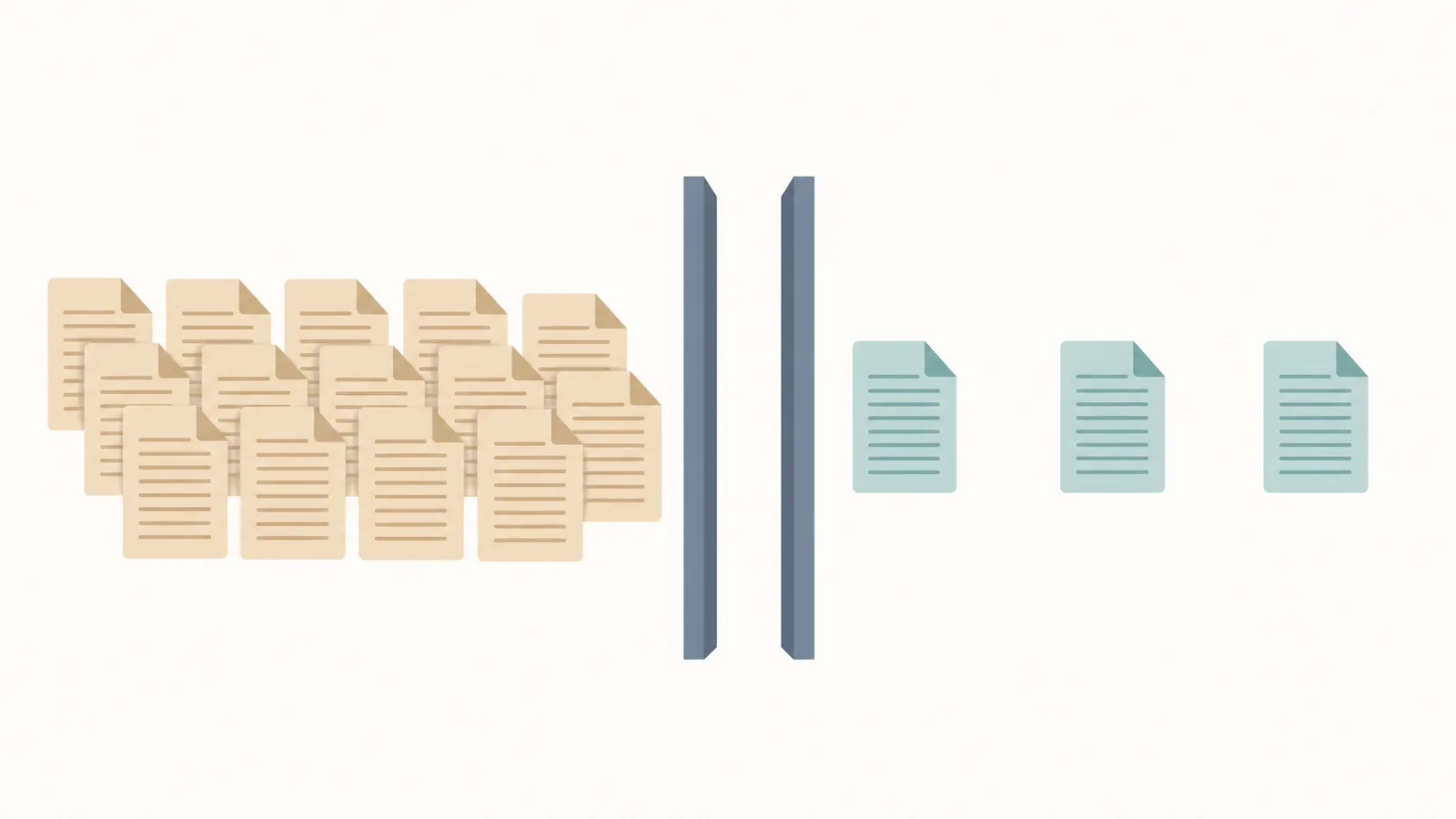
Those two numbers describe very different events, and the gap between them is where most of the anxiety lives. Day 9 is not when you hear what reviewers thought. It is when an editor decides whether reviewers will see your paper at all.
How long does Nature Communications take to reach a first decision?
"the median time in days from when the journal receives a manuscript submission to when the submission is either sent out for peer review or rejected"
So at the 9-day mark one of two things has happened: your paper went to referees, or it was declined without review. It is a fork, not a verdict.
The official 2025 figures:
| Metric | Median | Source |
|---|---|---|
| Submission → first editorial decision | 9 days | Nature Communications, Speed 2025 |
| Submission → acceptance | 242 days | Nature Communications, Speed 2025 |
The 233 days between them cover peer review, your revisions, re-review, and final acceptance. Revision time is yours, and it is usually the largest single block.
What does each submission status actually mean?
The tracking system shows you a status string; the journal describes its editorial process in prose. Nowhere are the two matched up, which is why these labels generate so much anxiety.
Here is the mapping, with each status placed against the stage Nature Communications describes in its published editorial process.
| Status you see | Which published stage it corresponds to | What is happening |
|---|---|---|
| Submitted / received | Pre-assignment | Administrative checks on files, authorship and competing interests |
| With editor / editor assigned | "Each new submission is assigned to a primary editor, who reads the paper, consults with the other editors" | A person is reading it and consulting colleagues about scope, advance and interest |
| Under consideration | Same stage, still open | The paper has not been declined and has not yet been sent out |
| Still not sent out for review | Same stage, still open | Nothing has gone wrong. You have not passed day 9's fork yet |
| Under review / with referees | "Manuscripts that meet these editorial criteria are sent out to external referees" | Referees have the paper |
| Decision in process | Post-review editorial assessment | Editors weigh the reports and decide |
| Revision | "The decision letter will specify a deadline (typically two months)" | The clock is now yours |
Why "still not sent out for review" is not a bad sign
It is the most-searched Nature Communications status for a reason: it is the one that looks like nothing is happening. Two facts make it readable.
What it does not tell you is which way the decision will go. Editors decline at this stage on scope and advance, and no status string distinguishes "about to send out" from "about to decline."
Use the wait on the figures
While the desk decision is pending, the figures are the one thing you can still improve without anyone’s permission.
Explore the ToolWhat the full timeline looks like, stage by stage
Combining the journal's published figures with author-reported intervals:
| Stage | Typical duration | Source |
|---|---|---|
| Submission → sent to review or declined | 9 days (median) | Journal |
| Immediate rejection decision | 11 days (median) | Author reports |
| Reviewer recruitment, once you pass the desk | 1–3 weeks | Author reports |
| First review round | 1.9 months (median) | Author reports |
| Revision window granted | "typically two months" | Journal |
| Review rounds until a decision | 2.0 rounds, 2.7 reports per paper | Author reports |
| Submission → acceptance | 242 days (median) | Journal |
| Total handling, accepted manuscripts | 4.5 months (median) | Author reports |
Author-reported totals run faster than the journal's 242-day median, because the people who file a report skew toward papers that moved. Plan against the journal's number; use the author figures to see the shape of each stage.
What most authors actually experience
Aggregating what authors report, three rough cases:
- Fast — around 6 weeks end to end, when reviewers come back quickly and only minor revisions are asked for.
- Typical — several months, dominated by one revision round and re-review.
- Slow — 10 to 14 months. Roughly one paper in five takes more than eight months, usually because a reviewer requests new experiments.
Timelines by field
Handling times vary by discipline more than most authors expect, largely because experimental turnaround differs:
| Field | Typical submission → acceptance |
|---|---|
| Genomics / bioinformatics | 3–4 months |
| Physics (condensed matter) | 3–5 months |
| Neuroscience | 4–6 months |
| Organic chemistry | 4–6 months |
| Ecology / evolution | 4–7 months |
| Clinical / translational | 5–8 months |
These come from author reports rather than the journal, so treat them as expectations rather than commitments.
Two rules from the journal's editorial process are worth knowing before you get there:
- Revisions returned within the stated deadline keep their original submission date. Miss it and you may be treated as a new submission.
- A rejection with an invitation to resubmit is not a revision. Resubmitted manuscripts "will not retain their earlier submission date," and the journal considers "a maximum of two resubmissions" per manuscript.
After acceptance, the paper appears as an Article in Press — an early-access version with a permanent DOI that can be cited — before the final Version of Record replaces it at the same DOI.
When should you email the editor?
The journal publishes no service-level target, so this is judgement. A workable threshold: the journal's own median is 9 days, and author reports put immediate rejections around 11 days. Waiting until you are well past both — say, three to four weeks with no notification — before sending one short, polite status enquiry keeps you inside normal practice.
Rebuild figures inside the revision window
Revision time is yours and it is the largest single block. Vector output sized to the journal’s columns saves a round.
Try FreeWhere to go next
If your paper is in the revision window, the next two pages are the ones that save time.
- "What do the figures have to meet before I resubmit?" — vector line art, 300 DPI photographs, 88 mm or 180 mm widths, maximum 10 display items. Nature Communications formatting requirements.
- "What binds at which stage?" — the first submission is deliberately loose, the final one is exact. Nature Communications submission guide.
- "Remind me what the journal is worth?" — impact factor 18.1, five-year 18.9, plus SNIP and SJR for cross-field comparison. Nature Communications impact factor.
Frequently asked questions
Sources
Reviewed 2026.
- Nature Communications — Journal Metrics — Speed 2025 figures (9 days, 242 days) and the journal's definition of first editorial decision.
- Nature Communications — Editorial process — editor assignment, the notification-on-review-start rule, the two-month revision deadline, the two-resubmission limit, and Article in Press.
- SciRev — Nature Communications — author-reported durations across 201 reports.
The journal's Speed metrics are revised annually; author-reported figures update continuously as more researchers file reports.