
Nature Communications has an impact factor of 18.1, with a five-year impact factor of 18.9.
Both figures are published by Nature Portfolio on the journal's own metrics page and carry the year label 2025. The underlying metric is Clarivate's, released through the 2026 Journal Citation Reports.
The number is easy to find. What it means for your submission decision is the part worth reading.
The number is one input to a submission decision; the scientific figure standards further down this page are the part that decides how much work the submission takes.
Nature Communications at a glance
| Metric | Value |
|---|---|
| Impact Factor | 18.1 (2025) |
| 5-Year Impact Factor | 18.9 (2025) |
| ISSN | 2041-1723 (online) |
| Abbreviation | Nat Commun — the form to use in reference lists |
| Publisher | Nature Portfolio (Springer Nature), United Kingdom |
| Access model | Fully open access |
| APC | £5,490 / $7,350 / €6,150 plus applicable tax |
| Display item limit | 10 figures and/or tables |
| Main text guidance | ≤ 5,000 words |
You searched 2026 — why the value says 2025
| What you searched | What it means | The answer |
|---|---|---|
| "Nature Communications impact factor 2026" | The number available to you in 2026 | 18.1, labelled 2025 |
| "Nature Communications impact factor 2025" | The same current number | 18.1 |
| "Nature Communications 2026 JIF" | Not published yet | Released in the following annual cycle |
Where this number comes from and how to check it
To verify independently:
- Check the publisher's journal metrics page — it is the fastest primary source and it is public
- Check Journal Citation Reports directly if your institution has access, which also gives you category rank and quartile
- Confirm you are comparing the same citation year across journals — mixing a 2025 JIF with a 2024 JIF makes a comparison meaningless
We are not the authority on this number. Clarivate publishes it and Nature Portfolio restates it; we cite both so you can check either.
Next step: Nature Communications figure specs
88 mm or 180 mm column widths, vector line art, 300 DPI photographs, and a maximum of 10 display items.
Explore the ToolWhat an 18.1 does and does not tell you
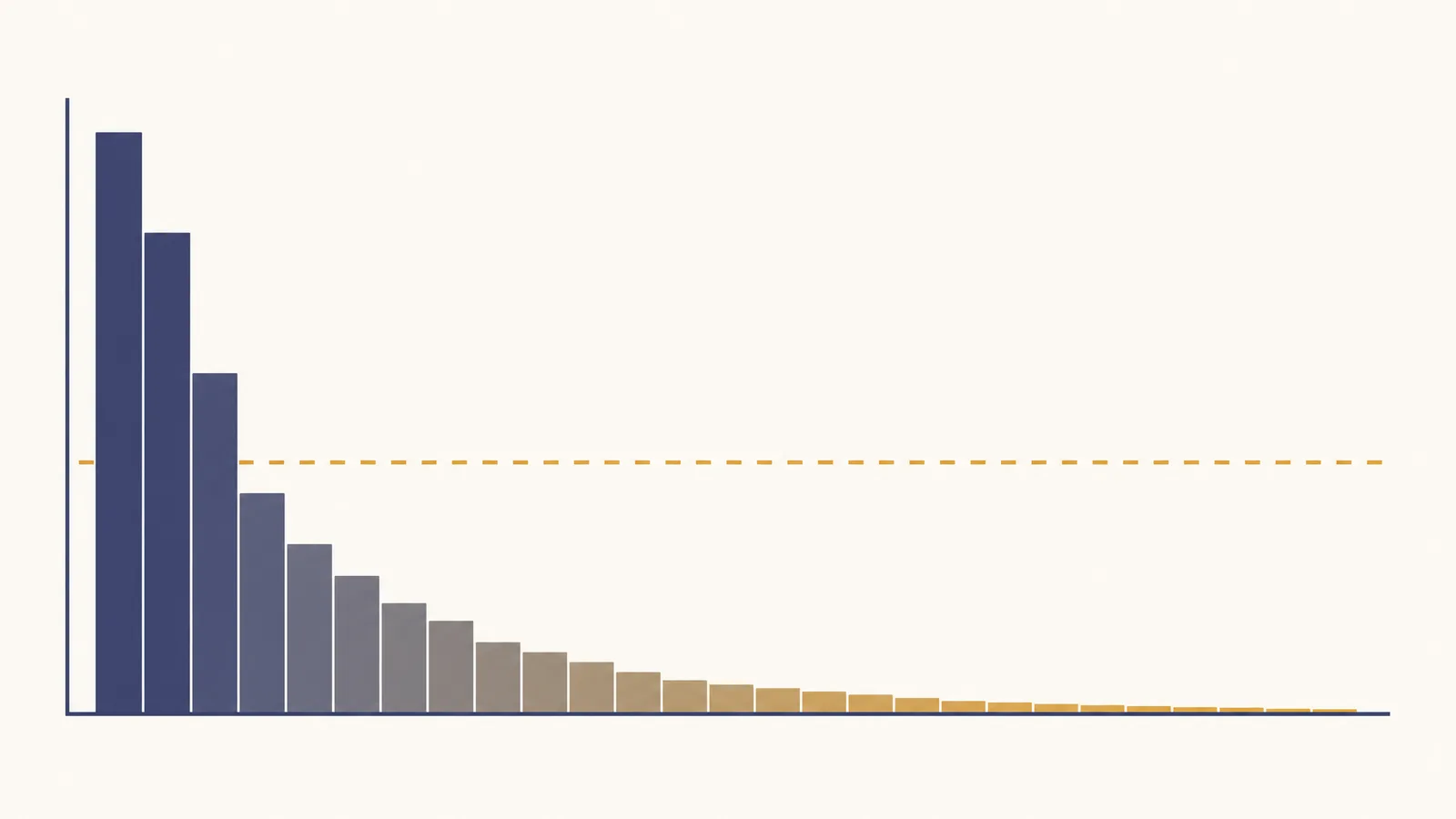
More practically, the number tells you nothing about the two things that actually decide your outcome:
- Whether an editor will send your paper out for review. Nature Communications has no external editorial board; decisions are made by full-time professional editors who are PhD-level scientists. Your abstract and cover letter have to convince a generalist that the advance is significant within your field.
- Whether you can afford it. The APC is $7,350 (or £5,490 / €6,150), determined by the acceptance date, with no submission or page charges. Waivers and discounts exist for corresponding authors in the lowest-income countries.
Beyond the headline: the other metrics on the same page
The impact factor is the number people search for, but Nature Portfolio publishes six more on the same journal metrics page, all carrying the 2025 label. Each answers a different question, and two of them are more useful than the JIF for a submission decision.
| Metric | 2025 value | What it actually answers |
|---|---|---|
| Journal Impact Factor | 18.1 | Average citations per citable item over a two-year window |
| 5-year Journal Impact Factor | 18.9 | The same over five years — higher here, so citations keep accruing past year two |
| Source Normalized Impact per Paper (SNIP) | 3.422 | Citation rate corrected for field citation habits. Useful when comparing across disciplines, where raw JIFs are not comparable |
| SCImago Journal Rank (SJR) | 4.904 | Citations weighted by the prestige of the citing journal — a citation from a highly cited venue counts for more |
| Immediacy Index | 3.8 | How quickly papers start being cited within the year of publication |
| Eigenfactor Score | 1.64865 | The journal's share of total citation traffic across the whole database |
| Article Influence Score | 5.590 | Eigenfactor expressed per article; 1.0 is the average article in the database |
Springer Nature states on that same page that it is a signatory of the San Francisco Declaration on Research Assessment, and that it does not regard these citation measures as measures of journal quality.
How Nature Communications compares
Here is the one comparison this guide can make from primary sources on both sides — Nature Communications against eLife, the other journal covered in this series:
| Nature Communications | eLife | |
|---|---|---|
| Impact factor | 18.1 (2025) | None — partially indexed, so not eligible |
| Web of Science | SCIE | Core Collection, ESCI, partial feed |
| Display item limit | 10 | No limit |
| APC | $7,350 | $3,750 |
| Review model | Traditional confidential peer review | Public reviews published on preprints |
| First editorial decision | 9 days (median) | Decline at 8 days (median) if not sent for review |
- Scope fit. A generalist editor has to see the advance as significant to a broad readership. This decides more desk rejections than quality does.
- What you are allowed to show. Ten display items is a real constraint if your evidence is figure-heavy. Journals differ enormously here, and it is checkable before you submit rather than after.
- What the review record will look like afterwards. At some venues a critical review disappears when you submit elsewhere; at others it is published alongside the paper permanently.
- What the APC costs and when it is charged. On acceptance versus at review start is a materially different funding problem.
Should you submit to Nature Communications?
- Your work is a significant advance within its field, even if it lacks the cross-disciplinary reach of Nature itself
- You need a fully open access venue with a recognised journal-level metric
- Your figures and tables fit within 10 display items
- Your funding covers a $7,350 APC, or you qualify for a waiver
- Your study genuinely needs more than 10 display items to present its evidence
- The APC is not covered and no waiver applies
- Your finding is incremental within a narrow specialty — a strong field journal may reach your actual readers more effectively
- You are relying on the venue's name rather than the significance of the advance
Before you submit: figure requirements
Rebuild to 88 mm or 180 mm
Vector line art that survives production, sized to the journal’s column widths from the start rather than retrofitted.
Try FreeWhere to go next
The impact factor is one input. Three questions usually follow it, and each has its own page here.
- "How long will it take?" — a median of 9 days to the first editorial decision and 242 days to acceptance, which are answers to two very different questions. Nature Communications review timeline also decodes what each submission status means.
- "What do the figures have to meet?" — vector line art, 300 DPI photographs, built to 88 mm or 180 mm, maximum 10 display items. Nature Communications formatting requirements.
- "What does submitting involve?" — format-flexible first submission up to 30 MB, no pre-submission enquiries, $7,350 APC set at acceptance. Nature Communications submission guide.
Frequently asked questions
Sources
The metrics here come from Nature Portfolio's own journal metrics page, and the fees and limits from the journal's author pages. Reviewed 2026.
- Nature Communications — Journal Metrics — impact factor and five-year impact factor
- Nature Communications — Open Access Fees and Funding — article processing charge and waivers
- Nature Communications — Article content type — word limits and display item allowance
- Nature Communications — Guide to authors — editorial model and scope
The underlying impact factor is Clarivate's, published through Journal Citation Reports; the figure quoted here is the publisher's own restatement of it, which means you can check it without a JCR subscription. Category rank and quartile are JCR fields — look them up there for the category relevant to your field.