Nature Communications requires vector line art, 300 DPI photographs, and figures built to 88 mm or 180 mm.
You have the figures. What you do not have is confidence that they will survive production without a "please resubmit at higher resolution" email. Nature Communications publishes its figure specifications in full, and most of the delays we see trace back to three of them: line art that was saved as a bitmap, figures built at the wrong column width, and text that stops being legible after reduction.
This page collects what the journal actually requires, in the order you need it while preparing files.
Nature Communications states its scientific figure requirements precisely, which is helpful — provided you build to them from the start rather than retrofitting.
Nature Communications figure specifications at a glance
| Parameter | Requirement |
|---|---|
| Line art, graphs, charts, schematics | Vector only — EPS, AI, or PDF, exported directly from the source application |
| Line art that cannot be vector | 1,200 DPI |
| Photographs and bitmapped images | TIFF, minimum 300 DPI |
| Single-column width | 88 mm (≥ 1,040 pixels) |
| Double-column width | 180 mm (≥ 2,080 pixels) |
| Target page size | 210 × 276 mm |
| Colour mode (photographs) | RGB |
| Figure lettering | Sans-serif, e.g. Helvetica — same typeface and approximate size across every figure in the paper |
| Thinnest line | No smaller than 1 point |
| Maximum display items | 10 (figures and/or tables), depending on word count |
| Chemical structures | ChemDraw template, submitted as .cdx at 100% |
Everything above is stated in the journal's own submission guidance. The rest of this page explains what each one means in practice.
How wide should a Nature Communications figure be?
Figures must be built to one of two column widths — the journal states that "one- or two-column format figures are required," so an in-between width will be resized by production, usually not in your favour.
- Single column: 88 mm, which at 300 DPI means at least 1,040 pixels of actual figure content
- Double column: 180 mm, which means at least 2,080 pixels
The pixel counts exclude peripheral white space. A 2,080-pixel canvas with 300 pixels of margin on each side is a 1,480-pixel figure, and it will look soft in print.
Build to the final page size from the start. The journal asks you to prepare figures "to fit the pdf page size (210 × 276 mm)" — designing at final size is the only reliable way to check the thing everyone gets wrong, which is whether the labels are still readable after reduction.
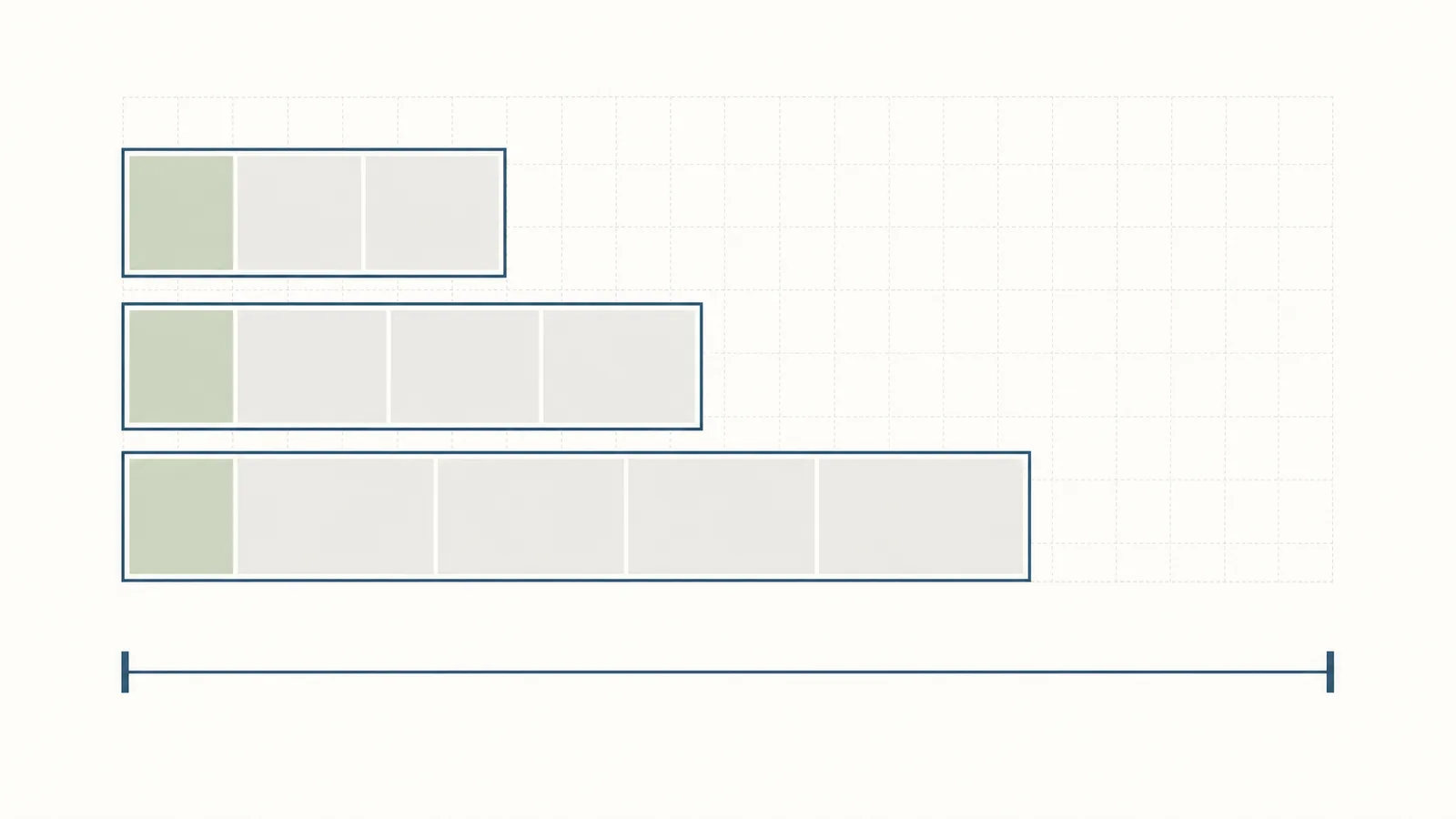
Build at 88 mm or 180 mm from the start
Designing at final page size is the only reliable way to check that labels are still legible after reduction.
Explore the ToolDoes Nature Communications require vector figures?
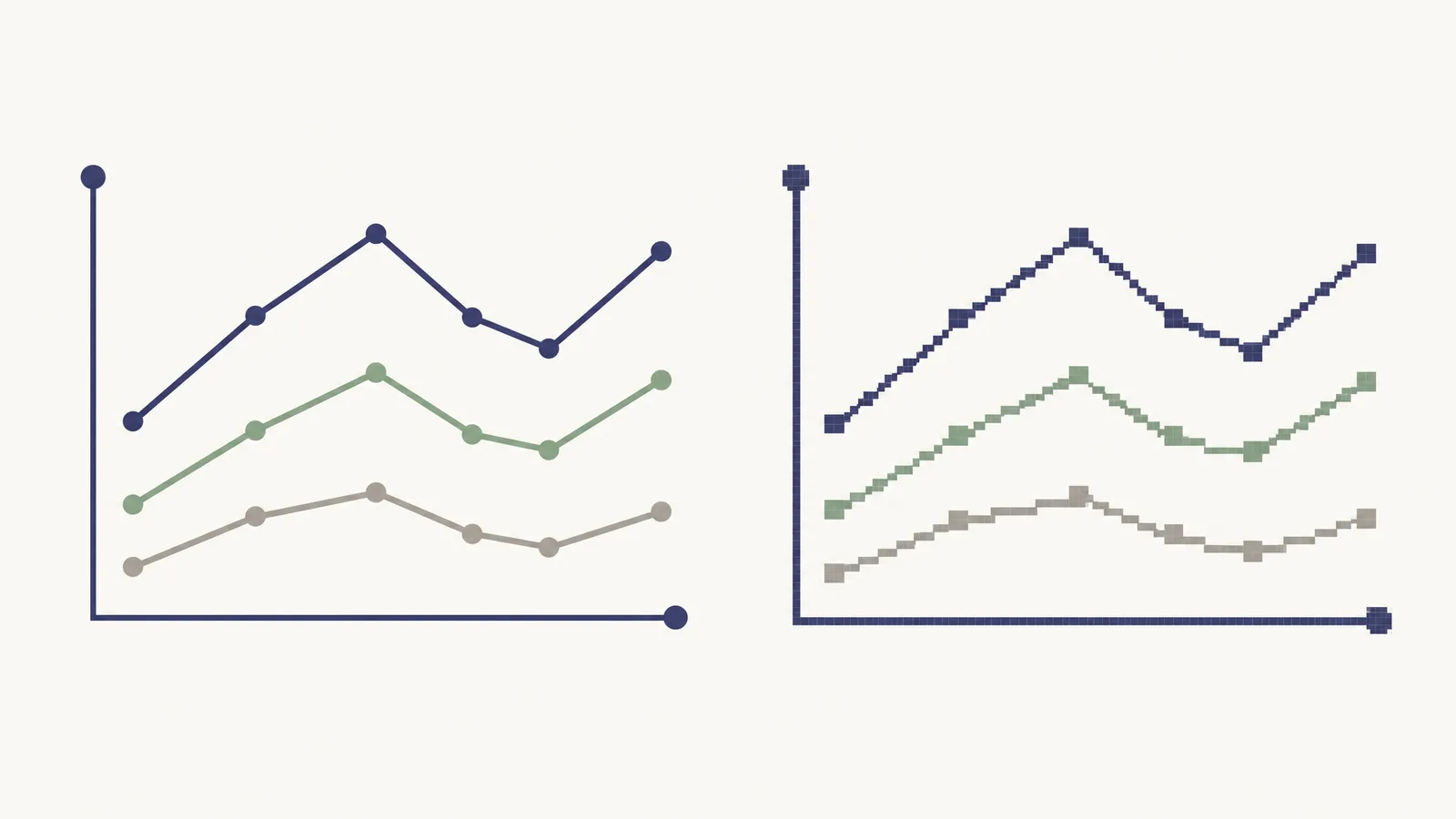
The journal then closes the usual escape routes. Vector files "should not be flattened, compressed, converted or saved as bitmaps, jpegs or other non-vector file types." Exporting your plot to PNG and placing it in Illustrator does not make it a vector figure.
Adobe Illustrator is the stated preference, but Word and PowerPoint files are accepted. If you submit either, supply any placed images as separate TIFFs prepared to the photographic standard below.
What resolution do photographs need?
One specific warning in the guidance is worth repeating because it still happens: do not scan laser printouts of figures. The dot pattern on a laser print creates a moiré pattern when scanned, and no amount of resolution fixes it.
The journal is direct about consequences — figures that miss these standards "will not reproduce well and may delay publication until we receive high-resolution images."
What font and line weight should figures use?
Three requirements here are easy to satisfy and commonly missed:
What Nature Communications does not want to see
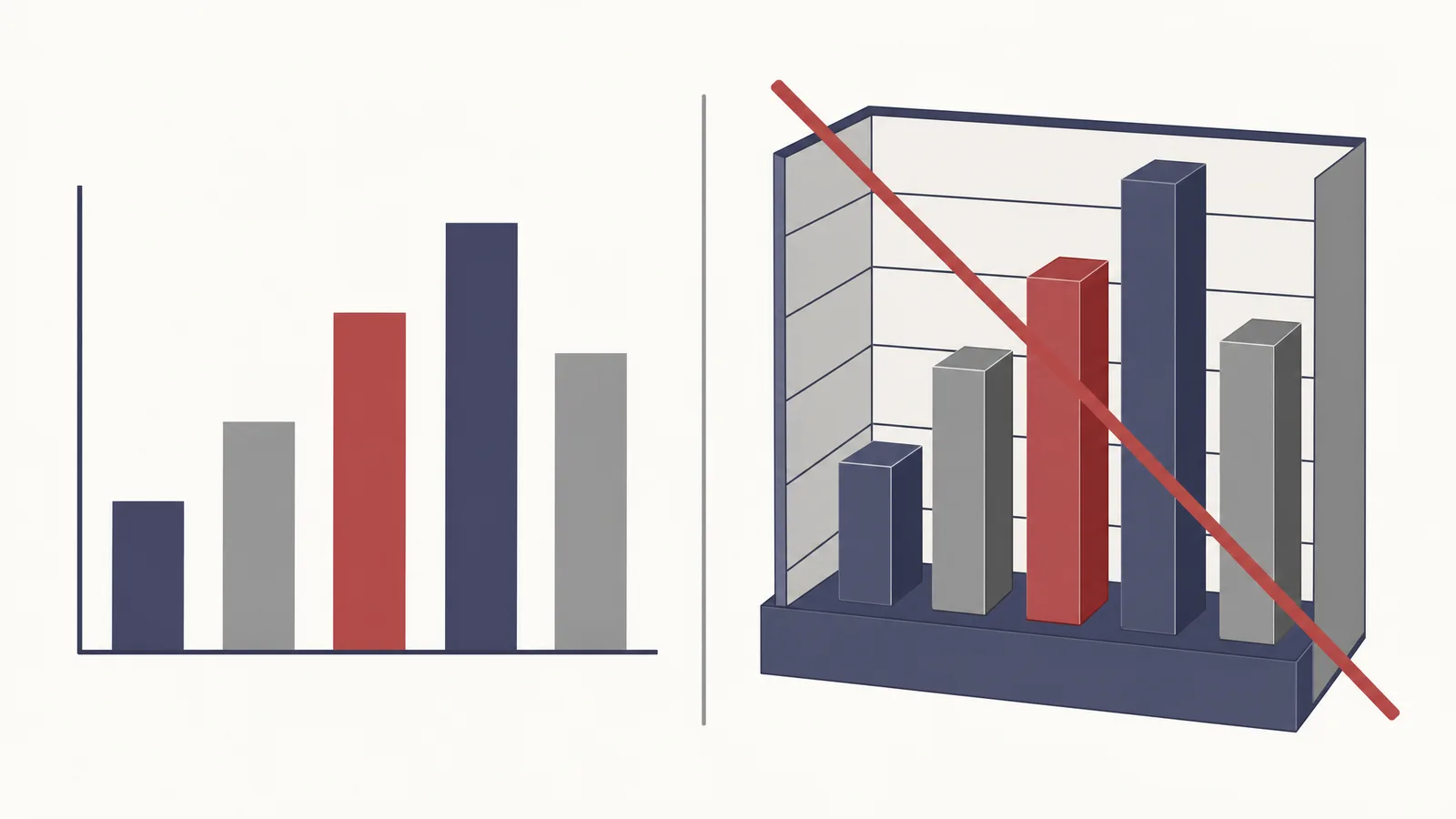
The guidance names specific things to avoid, and these are stylistic rejections rather than technical ones:
- Excessive boxing around figure elements
- Unnecessary colour
- "Spurious decorative effects" — three-dimensional 'skyscraper' histograms are called out by name
- Highly pixelated computer drawings
- Truncated vertical axes on histograms that exaggerate small differences
Can you use AI to generate a Nature Communications figure?
"Use of AI is governed according to risk level, not by tool type. The same framework applies across all roles: authors, reviewers and editors."
If you have seen the sentence "Springer Nature journals are unable to permit its use for publication" quoted in guidance about AI-generated images — including in earlier versions of this page — that wording is no longer on the publisher's policy page. Neither are the three exceptions that used to accompany it. The page carries no version number and no effective date, which is exactly why the operative habit is to read the current policy rather than any summary of it, this one included.
"Creating photorealistic images (deepfakes)"
The other Red entries that can catch a figure are about substance rather than medium: "Fabricating data, citations or results," and presenting AI-generated conclusions "as human-derived." A schematic of a signalling pathway is neither photorealistic nor fabricated data, so it does not land in Red by virtue of having been drawn with software.
That is not the same as being cleared. Two obligations apply to everything, at every level:
"Human accountability is non-transferable — Accountability for scholarly content, evaluation, and editorial decisions cannot be delegated to AI systems."
and, for authors specifically, "Disclose AI use for trust and transparency." Green-tier use is described as "likely to be reversible and verifiable," which is a useful test to apply to your own figure: can you show where every element came from, and change any of them?
What this means for using SciFig
Stated plainly, because getting this wrong costs you a submission.
Three practical boundaries for this journal:
- Disclose it. If a generative step contributed to a manuscript figure, say so in Methods. The current policy asks for disclosure even in its lowest-risk tier; under-declaring is the failure mode that costs you a correction, not over-declaring.
- You still have to check every element. Accountability is non-transferable, and no export step transfers it. A pathway diagram with a mislabelled arrow is your error regardless of what drew the arrow — review it as you would a figure a co-author sent you.
- Photorealistic imagery is out. That entry sits in Red without qualification, and it is the one line here that has no "with disclosure" escape.
None of this reaches the figures you make outside a manuscript — grant applications, conference posters, slide decks, theses, lab websites. A journal's AI policy governs what that journal publishes; it says nothing about the rest of your year, which for most researchers is the larger share of the figures they make.
How many figures can a Nature Communications paper have?
What are the word limits for a Nature Communications paper?
None of them are hard caps. Nature Communications states that it "does not have strict formatting requirements" and offers these as best practice — the phrasing in the author guidelines is "as a general guide, we suggest." Editors do not bounce a manuscript for running 5,200 words. What the numbers really tell you is the shape of paper the journal expects.
| Element | Suggested limit |
|---|---|
| Main text | 5,000 words (excluding abstract, Methods, references, figure legends) |
| Title | 15 words maximum |
| Abstract | 200 words, and no references |
| Methods | typically under 3,000 words |
| Each figure legend | 350 words |
| References | should not exceed 70 |
Two of these matter more than the rest.
Do figures need to be formatted this way at first submission?
The practical reading: prepare figures well enough to be judged at review, and do the production-grade export once the paper is accepted. What you should not do is design at the wrong column width at the start, because rebuilding a figure at 88 mm when it was composed at an arbitrary size means re-laying-out every label.
Figure problems that delay publication
From the requirements above, the failures that cost the most time:
- Line art delivered as PNG or JPEG. Requires rebuilding from source, not just re-exporting.
- Figure built at an arbitrary width. Labels that looked fine at 240 mm become unreadable at 88 mm.
- Mixed typefaces across figures. Each figure looks fine alone; the set looks inconsistent.
- Hairlines below 1 point. Invisible in print, and the plotting library's default.
- Placed images inside Word or PowerPoint files without the separate TIFFs the journal asks for.
Fix these before production does
Vector line art, 1 pt minimum line weight, and one consistent typeface across every figure in the paper.
Try FreeWhere to go next
- "When do these requirements actually bind?" — the first submission is format-flexible; these specifications apply at final submission. Nature Communications submission guide sets out which rules apply at which stage.
- "How long until I hear anything?" — a median of 9 days to the first editorial decision, 242 days to acceptance. Nature Communications review timeline.
- "Is it worth it?" — impact factor 18.1, five-year 18.9, plus the five other metrics the publisher reports. Nature Communications impact factor.
Frequently asked questions
Sources
Every specification here was read from the journal's own author pages, quoted for Articles — the only research format Nature Communications publishes. Reviewed 2026.
- Nature Communications — How to submit — figure formats, resolution, column widths, lettering and line weight
- Nature Communications — Article content type — word limits, display item allowance, abstract and title limits
- Nature Communications — Open Access Fees and Funding — article processing charge
- Nature Communications — Guide to authors — editorial scope and submission policy