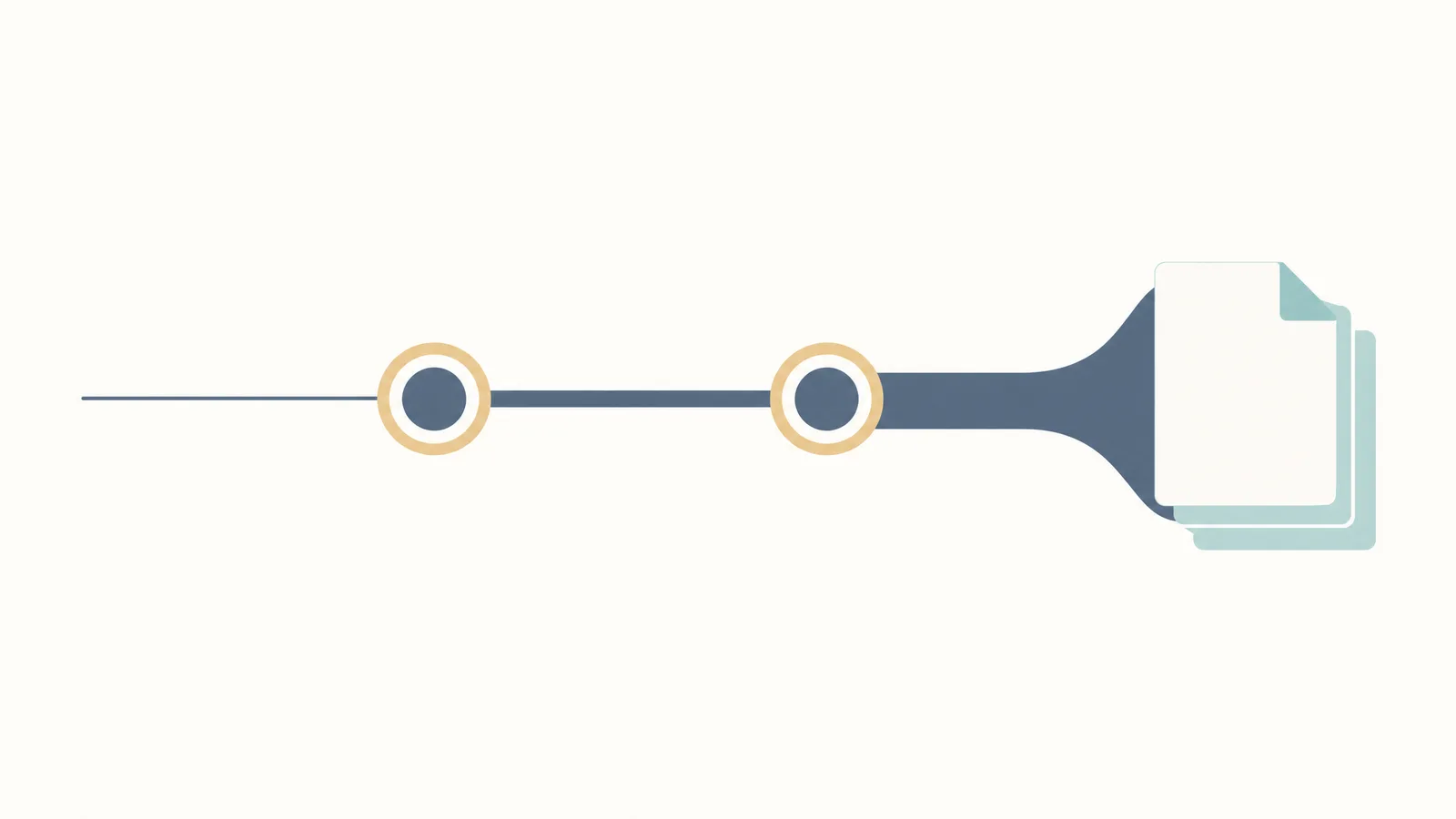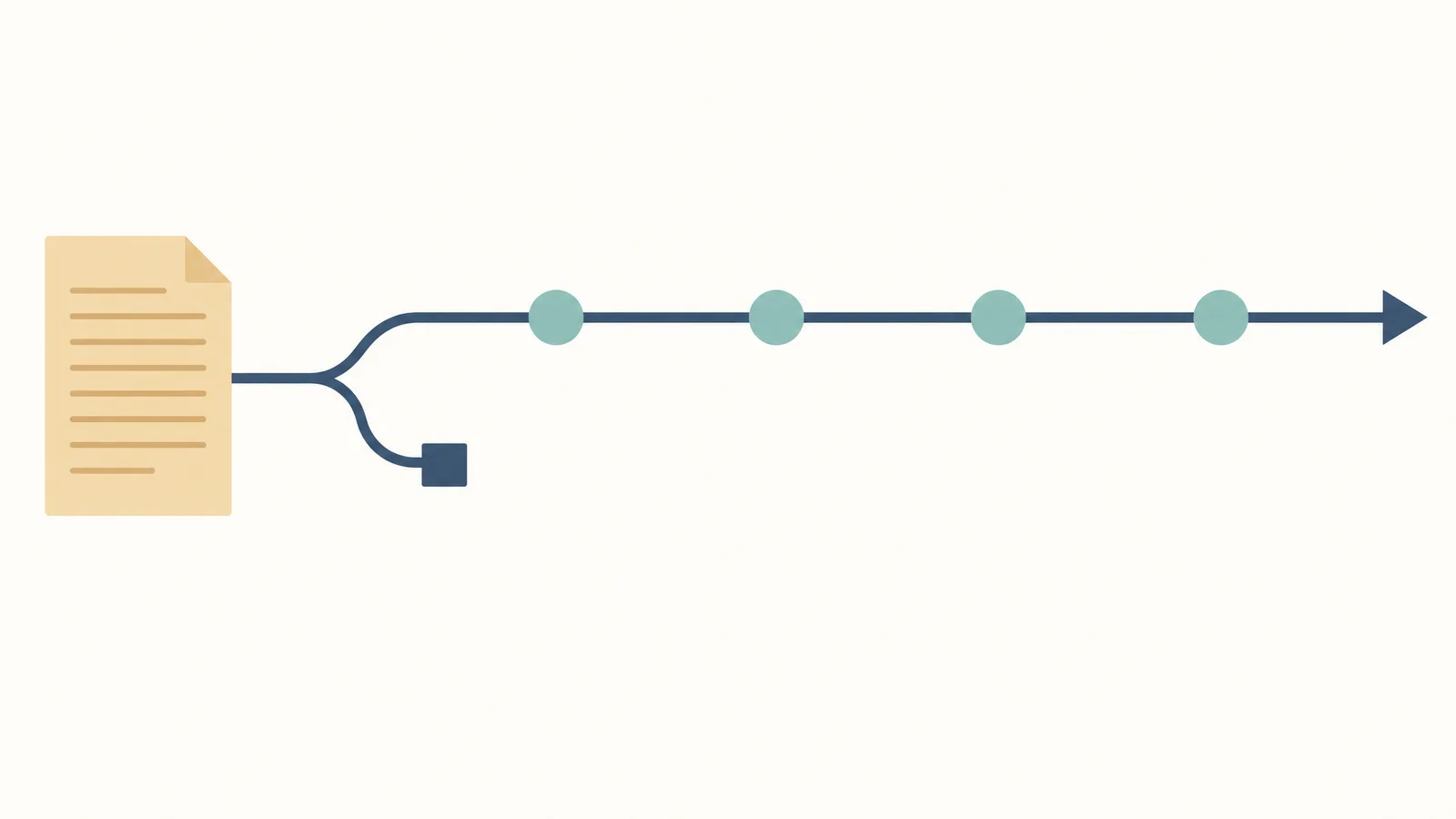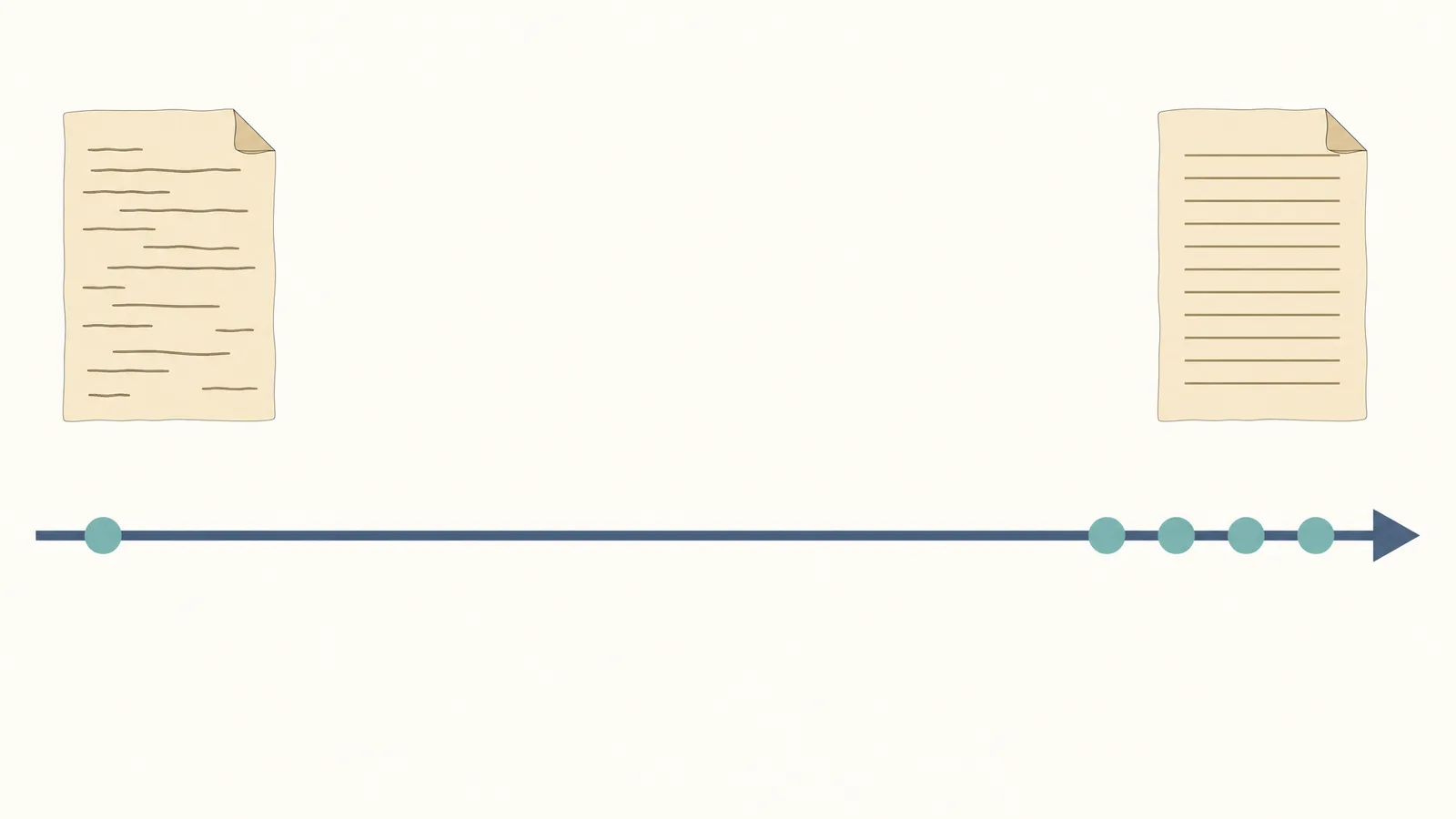
Nature accepts about 8% of submissions, with a median of 8 days to the first editorial decision.
Those two numbers set the shape of the whole process. Nature is designed to say no quickly and to say yes slowly — the median from submission to acceptance is 321 days — and almost every decision you make before you click submit should follow from that.
Key numbers before you submit to Nature
| Acceptance rate | about 8% of submitted manuscripts |
| Submission to first editorial decision | 8 days (median) |
| Submission to acceptance | 321 days (median) |
| Decline without review | "usually informed within a week" |
| Rounds of review | "at least one round, usually two or three, sometimes more" |
| Referees per paper | "most papers are sent to two or three" |
| Access model | Hybrid — subscription route free, Gold Open Access optional |
| APC (Gold OA) | £9,390.00 / $12,850.00 / €10,850.00 |
| Impact factor | 56.1 (2025 JIF, 2026 JCR release; five-year 56.7) |
| Main text | 2,500 words at 6 pages · 4,300 words at 8 pages |
| Summary paragraph | ≤ 200 words, fully referenced |
| Title | 75 characters including spaces |
| References | ≤ 50 in the main article |
| Methods | ≤ 3,000 words |
| Display items | 4 at 6 pages, 5–6 at 8 pages, plus up to 10 Extended Data items |
| First submission file | single Word or PDF, ≤ 30 MB |
| Presubmission enquiries | not required for Articles; answered "usually… within two working days" |
How to submit to Nature, step by step
1. Decide whether to send a presubmission enquiry
Optional, and for Articles Nature is lukewarm about them:
"Presubmission enquiries are not required for Articles, and can be difficult to assess reliably; Nature editors cannot make an absolute commitment to have a contribution refereed before seeing the entire paper."
They are more useful for Reviews and Perspectives, which Nature actively invites. If you do send one:
- Put "a fully referenced first paragraph in Nature format" in the 'abstract' box
- List the references in the 'manuscript comments' box, along with any general cover letter information
- Do not attach a cover letter as a separate file, and do not send the whole paper — "Entire papers should not be sent as presubmission enquiries"
- Expect an answer "usually… within two working days," though Nature does not guarantee the speed
A negative response is not open to discussion, but it does not bar you — authors "may nevertheless formally submit the paper if they wish."
2. Prepare the manuscript to first-submission standard, not production standard
This is where most wasted effort happens. Nature states plainly:
"The Nature journals are flexible with regard to the format of initial submissions. Within reason, style and length will not influence consideration of a manuscript."
Concretely, at first submission:
- Combine text and figures into a single PDF or Word file, up to 30 MB. Nature "strongly encourages" it. Figures may sit within the text or collected at the end, with each legend on the same page as its figure. A PDF should carry line numbers.
- Do not produce high-resolution figures. "High-resolution image files are not required at initial submission" — you only need enough resolution for referees to assess the data. The journal repeats the point as an instruction: "Do not submit publication-quality figures until asked to do so by an editor."
- LaTeX users supply PDFs at this stage. "We accept LaTeX files at the acceptance stage, but before that time please supply PDFs."
- A cover letter is optional but useful. It is not shared with referees, so it is the right place for confidential information, conflicts of interest, and any related work in press or submitted elsewhere.
3. Disclose related and overlapping work
Not optional, and easy to overlook:
"It is a requirement of submission that you alert us to any related manuscripts with overlapping authorship that are under consideration (including under appeal) or in press at other journals… Copies of these manuscripts should be clearly marked and included as separate files with your submission."
4. Choose your review options at submission
5. Submit, and stop touching it
Nature's process from here is editor-led. Decisions "are made by Nature's editors, not its referees," and Nature "does not employ an editorial board of senior scientists, nor is it affiliated to a scientific society or institution." There is nobody to lobby and no board meeting to wait for.
Figures good enough for referees, not for production
At first submission you need legible, well-coloured figures at 5–7 pt text — not high-resolution files.
Explore the ToolWhat happens after you upload: the timeline
Three published figures anchor the whole process.
| Stage | Published figure |
|---|---|
| Decline without review | "Authors are usually informed within a week" |
| First editorial decision | 8 days (median) |
| Submission to acceptance | 321 days (median) |
Between the first and the last:
- Referees. "Most papers are sent to two or three referees, but some are sent to more or, occasionally, just to one." Referees work to an agreement to "deliver a report within two weeks or other agreed time limit."
- Rounds. "All Articles published in Nature go through at least one round of review, usually two or three, sometimes more."
- Turnaround on reports. "Decisions by editors are routinely made very rapidly after receipt of reports."
A decision letter arrives in one of five forms: unconditional acceptance; acceptance in principle subject to revision, usually without going back to referees; a deferred decision requiring further experiments and a further round of review; rejection that states explicitly whether a resubmission would be welcome; or rejection with no further consideration. That fourth category is worth reading closely — Nature writes the invitation or its absence deliberately.
If the answer is no, the decision letter also carries the transfer route: authors can "transfer all manuscript materials, the decision letter and any referee comments to a selection of Springer Nature journals without re-entering submission information," using the link in that letter.
Appeals are possible but narrow: "Decisions are reversed on appeal only if the editors are convinced that the original decision was made in error or critical new information or data has been added." Appeals need a point-by-point response and take low priority against new submissions — and while one is pending, do not submit the paper elsewhere.
What does each submission status actually mean?
What Nature does publish is more useful than a glossary anyway, because it lets you locate yourself on a timeline instead of decoding a string.
- Decisions are made by full-time editors. Nature "does not employ an editorial board of senior scientists, nor is it affiliated to a scientific society or institution," and "the judgement about which papers will interest a broad readership is made by Nature's editors, not its referees."
- Most submissions never reach referees, and that outcome arrives fast: "Authors are usually informed within a week if the paper is not being considered."
- The median first editorial decision is 8 days.
- If it goes out, "most papers are sent to two or three referees," each working to a two-week reporting agreement, across "at least one round of review, usually two or three, sometimes more."
- The median from submission to acceptance is 321 days.
| Time since submission | What the published figures suggest is happening | Is silence a problem? |
|---|---|---|
| Days 0–7 | Editorial assessment. This is where most manuscripts end, and Nature says a decline usually arrives inside a week | No. Silence in week one is the ordinary case |
| Around day 8 | The median first editorial decision falls here — a decline, or word that the paper has gone to referees | No. A median means half of all papers take longer than this |
| Weeks 2–6 (out for review) | Two or three referees, each on a two-week agreement, reporting at different times. The editor waits for the set | No. Reports almost never land together |
| Beyond ~8 weeks with no change | Long enough that a referee has probably dropped out and been replaced — a routine event, not a signal about your paper | This is the point where a short enquiry is reasonable |
| Months 3–12 | Revision rounds. Two or three are normal, and the 321-day acceptance median is mostly made of them | The clock here is largely yours, not the journal's |
- Read your own record in the manuscript tracking system. Whatever label it shows for your paper is authoritative for your paper in a way no third-party glossary can be. It costs a login.
- Read the transition, not the string. The two facts that carry meaning are whether it was sent for review and how long the record has been unchanged. A status word you cannot interpret plus a date you can is enough to place yourself in the table above.
- Ask only when the arithmetic supports it — roughly, once two full referee windows have passed with no change. Address the enquiry through the manuscript tracking system to the handling editor; that route reaches the person who actually has your file, and Nature lists its other editorial contact routes on its contact page.
- Keep the enquiry to one short paragraph: manuscript number, submission date, the status currently displayed, and one question — typically whether the manuscript is still with referees. Do not ask for a predicted decision date; nobody has one.
- Do not submit elsewhere while a decision or an appeal is pending. Nature asks that you not submit to another journal during an appeal, and a duplicate submission is a separate problem from a slow one.
Acceptance rate and desk rejection at Nature
Nature publishes its own acceptance rate, which is unusual, and states it alongside the reason:
"Nature's aim is to publish the best research across a wide range of scientific fields, which means it has to be highly selective. As a result, only about 8% of submitted manuscripts will be accepted for publication. Most submissions are declined without being sent out for peer review."
Two readings of that sentence matter more than the 8%.
APC, open access, and waivers
| Route | Cost |
|---|---|
| Traditional subscription publishing | No APC |
| Gold Open Access | £9,390.00 / $12,850.00 / €10,850.00 |
The publisher's wording:
"Gold Open Access – same publishing process as above. The difference is that when an article is accepted for publication, the author/s or funder/s pay an Article Processing Charge (APC). The final version of the published article is then free to read for everyone. The APC to publish Gold Open Access in Nature is £9390.00/$12850.00/€10850.00."
Three boundaries around that.
Nature is a hybrid journal, not a fully open access one, so the automatic country-based clause is written for a category Nature does not sit in. The discretionary route is not restricted that way — but it has a hard deadline:
"All applications for discretionary APC waivers and discounts should be made at the point of manuscript submission; requests made during the review process or after acceptance are unable to be considered."
One further cost that is not published: Nature Portfolio "charges our authors a fee for the printing of their colour figures" and directs authors to "contact our offices for exact pricing and details." The amount is not on any Nature page. The commitment that is on the page: "Inability to pay this charge will not prevent publication of colour figures judged essential by the editors, but this must be agreed with the editor prior to acceptance."
Pre-submission checklist
- Advance is significant beyond your own field — the criterion an editor applies before review
- Summary paragraph ≤ 200 words, fully referenced, following Nature's prescribed four-part shape
- Title ≤ 75 characters including spaces; subheadings ≤ 40 characters
- Main text near 2,500 words (6 pages) or 4,300 words (8 pages), excluding title, author list, acknowledgements and references
- Display items budgeted in quarter-pages: 4 modest items at 6 pages, 5–6 at 8 pages
- Extended Data within 10 items — Supplementary Information may not contain figures
- References ≤ 50; Methods ≤ 3,000 words, with Methods-only references excluded from the count
- Figures legible for referees, text at 5–7 pt, no red/green contrast, no rainbow scale — but not production resolution
- Everything combined into a single Word or PDF file under 30 MB, PDF line-numbered
- Related or overlapping manuscripts declared and attached as separate files
- ORCID ready for the corresponding author (required before the final version, and unchangeable at proof stage)
- Reporting Summary prepared if the paper is life sciences or behavioural and social sciences
- Discretionary APC waiver applied for now, if you will need one
- Data deposited where a public repository is mandated, with accession numbers ready — full access is required at publication
What the official pages don't answer
Three things you will not find settled anywhere on nature.com, and what to do about each.
.ai, .eps or .pdf with editable layers, photographs as layered PSD or TIFF at 300 dpi or above — and, for Extended Data only, .jpeg, which is the preferred format there.Get Nature figures right before production sees them
Editable vector at 89 or 183 mm, text between 5 and 7 pt, strokes between 0.25 and 1 pt, and nothing flattened.
Try FreeWhat does Nature require if AI helped make a figure?
Worth settling before you plan display items, because it decides what goes in your Methods section rather than what goes in your figures.
Two obligations apply throughout: "Human accountability is non-transferable," and, for authors, "Disclose AI use for trust and transparency." Nature's own author guidance is the more specific of the two documents on mechanics — large language model use "should be properly documented in the Methods section," and that is the safe place for a figure disclosure as well.
Frequently asked questions
Sources
Every requirement, timing and fee here was read from Nature's own author and editorial pages. Reviewed 2026.
- Nature — Editorial criteria and processes — acceptance rate, desk rejection, referees, rounds of review, decision letter categories
- Nature — Initial submission — submission format, cover letter, related manuscripts, double-anonymised review, transfers, appeals
- Nature — Formatting guide — word, title and reference limits, display item budget, file size, colour charge
- Nature — Presubmission enquiries — when they are useful and how to format one
- Nature — Publishing options — hybrid model, Gold Open Access APC, eligible formats
- Nature — Final submission — production requirements and ORCID
- Nature — Journal Metrics — median decision times and impact factor
- Springer Nature — Journal policies — APC waivers and discounts