How to Submit to JAMA: Timeline, Costs, and Decisions
JAMA accepts 10% of submissions and 4% of research papers, decides in a median 2 days without review, charges no author fees, and has no open access option.
Alex Carter
Founder, SciFig
JAMA accepts 10% of submissions overall and 4% of research papers.
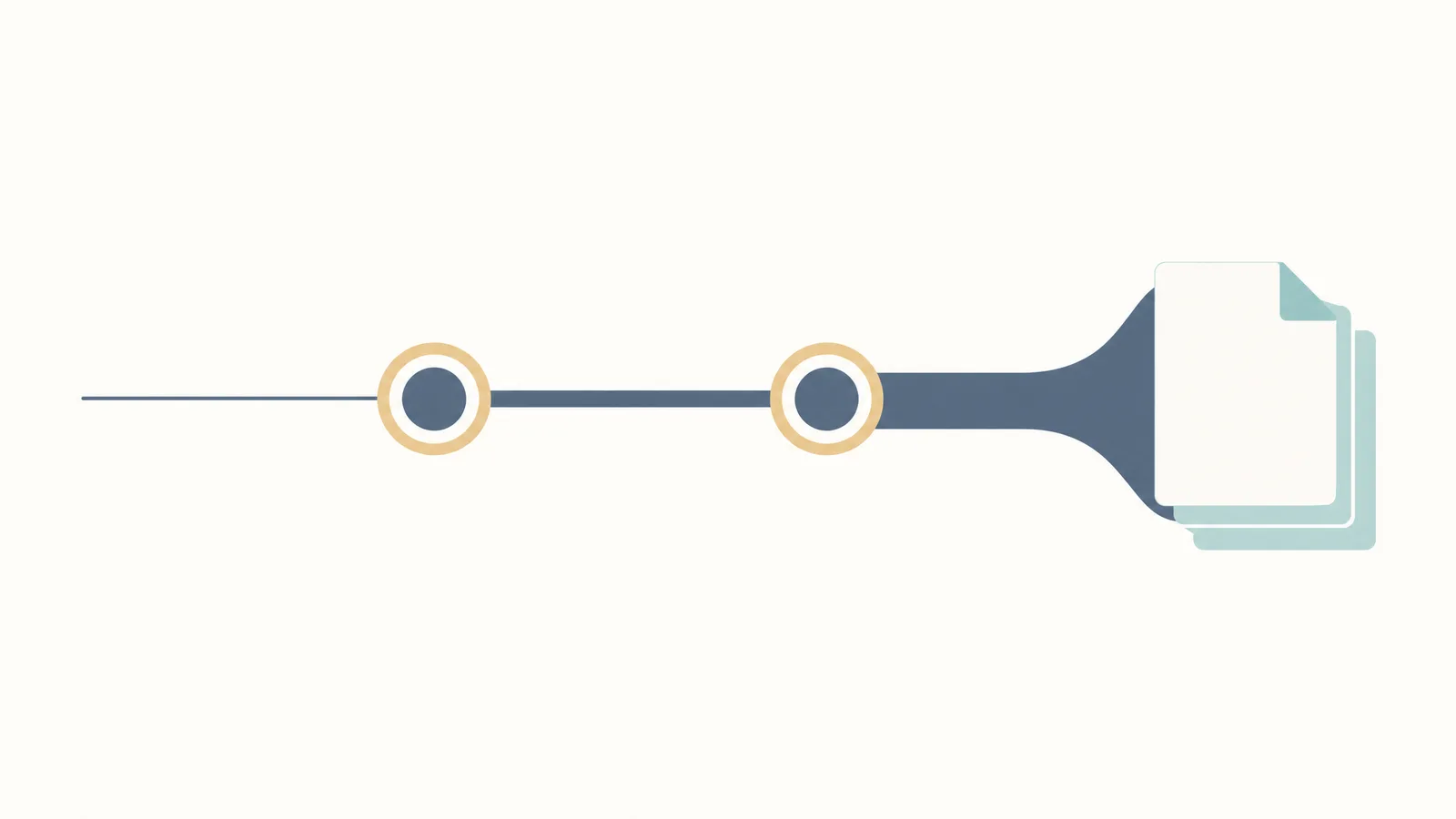
Most of that filtering happens before peer review: the median time to a first decision without external review is 2 days. Knowing which of the two tracks you are on changes how you plan everything after upload.
Pick the article type first, not last. The limits differ sharply — an Original Investigation gets 3000 words and up to 5 tables and/or figures; a Research Letter gets 800 words and two small items. Some types (Special Communication, Narrative Review, Diagnostic Test Interpretation) require a presubmission inquiry before you write.
Check that your study type has a reporting guideline. JAMA follows the EQUATOR network guidelines, and randomized and nonrandomized clinical trials must submit the study protocol with its statistical analysis plan as a supplemental file.
Prepare the manuscript file. A 10-, 11-, or 12-point font, double-spaced, with a ragged right margin. Figures may be embedded at the end of the file for initial review.
Write the cover letter. Include full contact details for the corresponding author and state whether any related papers from the same study have been published, posted as a preprint, or submitted elsewhere.
Upload at the JAMA manuscript system (manuscripts.jama.com). Correspondence goes to the editorial office at the address given on the Instructions for Authors page.
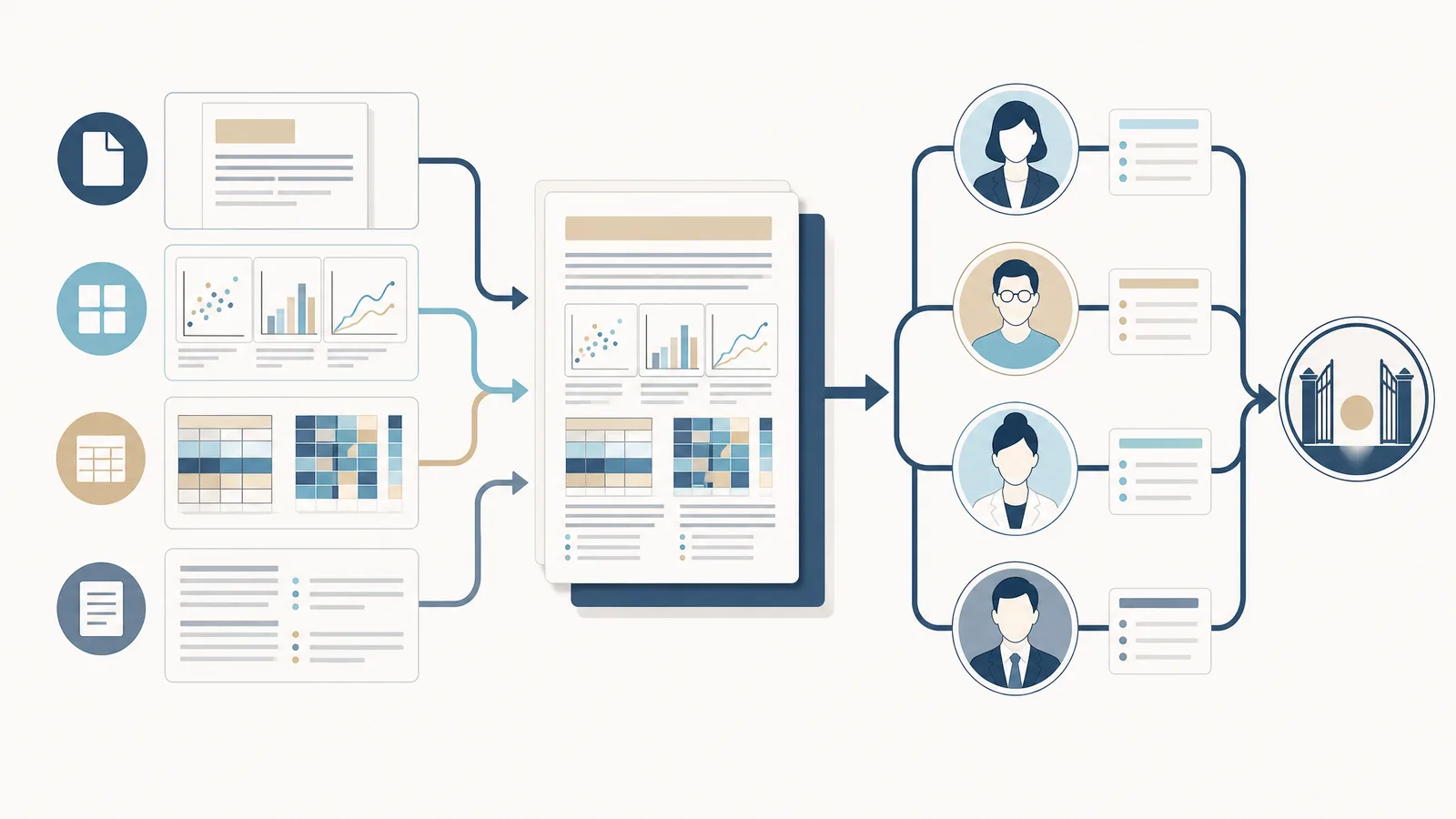
Expect the figure rules to bite at revision, not at submission. The narrow file-format list and resolution minimums apply once a revision is requested — the JAMA formatting requirements set out both stages.
What happens after you upload: the timeline
There are two paths, and JAMA publishes a median for each.
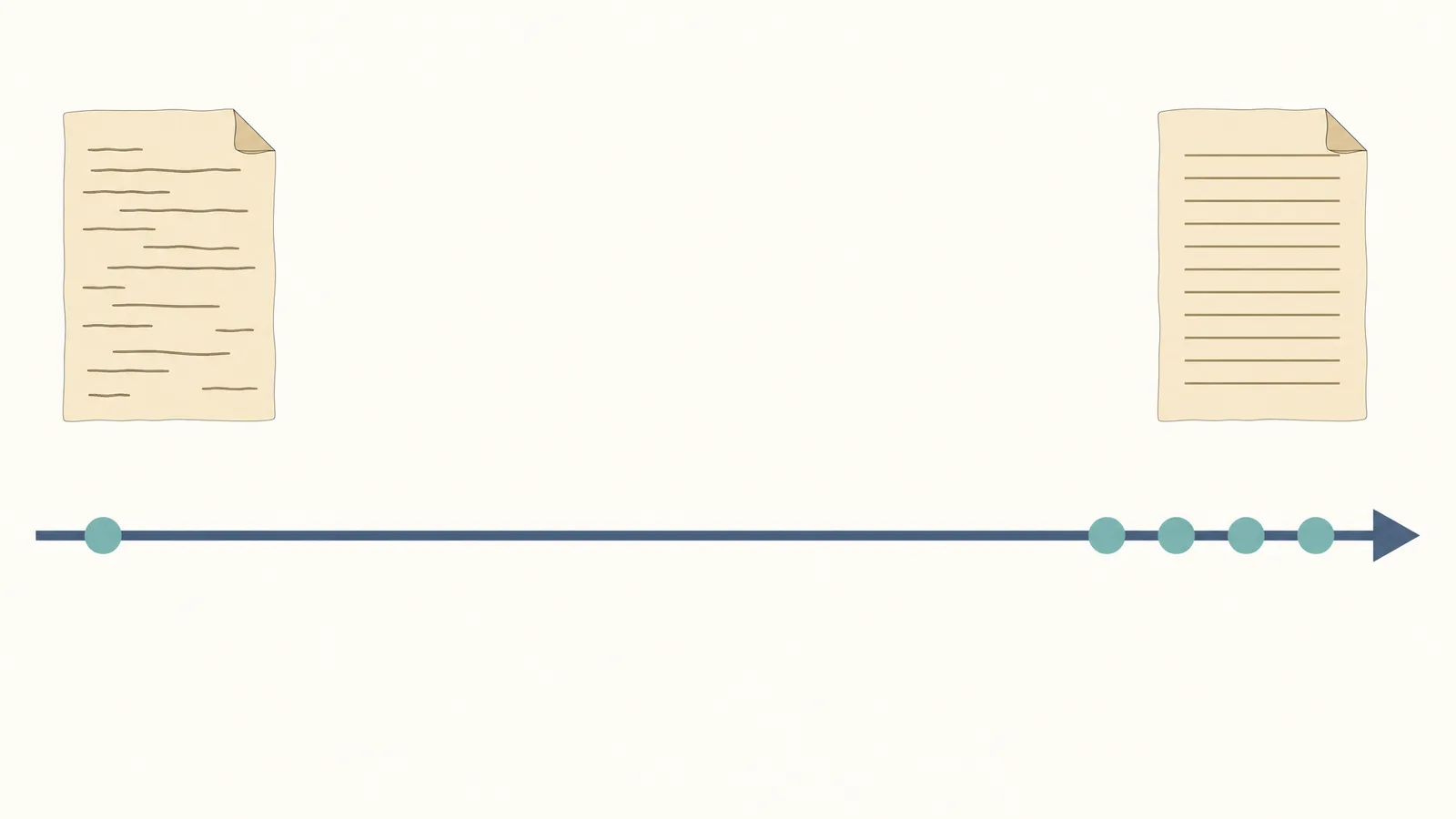
Path one — no external review. Median 2 days. Most submissions end here. This is an editorial decision about scope, significance, and fit for a general medical readership, not a judgement on the quality of the science.
Path two — external peer review. Median 24 days to a first decision. Add revision rounds on top of that.
After acceptance, the median time from acceptance to online first publication for research manuscripts is 39 days. If the work is time-sensitive and tied to a major meeting, JAMA Express offers expedited review and online publication within four weeks of submission.
What does each submission status actually mean?
JAMA does not publish a table mapping the status labels in its submission system to editorial stages, and we do not import status names from other publishers' systems — the same word means different things in different platforms.
What you can read reliably is the elapsed time against the two published medians. A submission still without a decision after roughly a week has, in all likelihood, passed the initial editorial screen and entered the external review path with its 24 days median; a decision arriving in the first two or three days is almost certainly the editorial screen. If a status has not changed well past the reviewed-decision median, the corresponding-author contact on the Instructions for Authors page is the route to ask.
Acceptance rate and desk rejection at JAMA
The two rates answer different questions. 10% is the overall acceptance rate across more than 12,700 annual submissions. 4% is the rate for research manuscripts specifically, out of more than 5,700 received.
JAMA does not publish a separate desk-rejection percentage, but the 2 days median for a decision without external review tells you the shape of it: the editorial screen is where the majority of the difference between 12,700 submissions and the published journal is made. Plan for it rather than being surprised by it — decide in advance which JAMA Network specialty journal is your next venue, because papers not accepted by JAMA can be referred there automatically, together with the reviewer comments.
APC, open access, and waivers
This is the section where searches most often land on the wrong number, because the JAMA Network runs several fee models and only some of them apply to JAMA itself.
JAMA does not offer an open access option. The journal states plainly that it does not offer the option to publish an article under an open access license. There is no APC to budget for, because there is nothing to buy.
JAMA charges no author fees at all. Research articles become free to read on the JAMA site 6 months after publication, and the journal deposits published research into PubMed Central, where it becomes publicly available on the same six-month schedule.
You can still comply with a green-OA mandate. Authors of research articles may deposit the accepted version — the peer-reviewed manuscript, not the final published version — in a public repository of their choice on the date of acceptance, provided it is not made publicly available until the date of publication and links to the final version.
The fees you may have seen belong to other JAMA Network journals. JAMA Network Open and JAMA Health Forum are fully open access and bill the corresponding author $4000 USD. The JAMA Network specialty journals bill $6000 USD for open access, and authors there can decline it in favour of the standard publishing agreement, after which the article becomes freely accessible 12 months later. Waivers and discounts are available based on the corresponding author's country of residence, following the WHO Research4Life list.
Pre-submission checklist
Article type chosen, and a presubmission inquiry sent if that type requires one
Word count inside the limit for that type; display items inside the cap
EQUATOR reporting guideline followed; protocol and statistical analysis plan attached for trials
Structured abstract and Key Points prepared, where the article type requires them
Data sharing statement included
Manuscript double-spaced in 10–12 point type with a ragged right margin
Cover letter with full corresponding-author contact details and a statement about related papers or preprints
Labelled images prepared in two versions, with and without markers
Figures created at their final resolution rather than upsampled later
Any AI use disclosed in the Acknowledgment section or the Methods section, with tool, version, and manufacturer
What the official pages don't answer
Three things JAMA does not publish, and what to do instead:
A column width for figures. JAMA gives resolution minimums and a size band for online-only figures (300 dpi, 3 to 5 inches wide) but no millimetre column width for main-article figures. Design at print size and keep labels editable; production restyles most graphs anyway.
A desk-rejection rate. Use the 4% research acceptance rate and the 2 days median together — they describe the same funnel from two directions.
Whether your case report has a home here. JAMA's own guidance says it is very rare for this journal to publish case reports. The Clinical Challenge format — an actual patient case with a clinical image and a "What Would You Do Next?" structure — is the nearest fit, and the specialty journals are the realistic alternative.
Does JAMA allow AI-generated figures?
Not for a JAMA submission. Clinical images and clinical illustrations created or manipulated by AI or machine learning tools are not permitted, unless part of formal research design or methods, which must then be fully disclosed; drafting opinion articles and letters with AI is not permitted at all. The full policy, including where the disclosure goes, is in the JAMA formatting guide.
For work you have already produced, Vector Canvas turns a raster figure into editable vector layers and Figure Enhancer raises an existing figure to publication standard — both are editing steps on your own artwork. The same scientific figure usually also has to work in grant applications, posters, defense slides, and lab pages; where a target setting allows AI-generated content for that task, you can also explore Text-to-Figure for a new generated draft.
Get the figure right before the revision request
JAMA's file-format and resolution rules apply at revision. Building to them now saves a round trip.