PLOS ONE charges $2,477, accepts 26% of submissions, and returns a first decision in a median of 32 days.
This page walks the sequence in order, with the numbers PLOS publishes about itself.
Key numbers before you submit to PLOS ONE
| Article processing charge | $2,477 for most articles — payable on acceptance, priced at the rate effective on your submission date |
| Acceptance rate | 26% (2025 metric year, PLOS) |
| Time to first decision | 32 days median (2025 metric year, PLOS) |
| Time to publication | 209 days median (2025 metric year, PLOS) |
| Reviewer turnaround | 10 days typical, after agreeing to review |
| Peer review model | Single-anonymized |
| Decision types | Reject · Major revision · Minor revision · Accept |
| Accept decisions | Two — provisional editorial accept, then formal accept |
| Articles published | 18,300 (2025 metric year) |
| Word limit | None |
| Figure limit | None |
| Licence | CC BY, authors retain copyright |
| eISSN | 1932-6203 |
| Manuscript file formats | DOC, DOCX or RTF; LaTeX submitted as PDF |
How to submit to PLOS ONE, step by step
- Manuscript file — DOC, DOCX or RTF, not locked or protected; double-spaced, single column, continuous line numbers, no footnotes, no more than three heading levels. LaTeX users upload a PDF instead, built from the PLOS template.
- Full title (250 characters) and short title (100 characters), both in sentence case. The short title is mandatory and easy to overlook.
- Abstract, 300 words maximum, no citations.
- Figures as separate files — not embedded in the manuscript PDF for LaTeX submissions. Formatting requirements are waived at this stage; see the timing note below.
- Cover letter, one page maximum, summarising the contribution, relating it to prior work, naming the article type, and suggesting Academic Editors. Do not put fee-waiver requests in it — PLOS states explicitly that these are entered separately in the submission system.
- Financial disclosure statement, entered in the submission form rather than in the manuscript. Worth preparing carefully: it "cannot be changed after initial submission without journal approval."
- Competing interests, also declared through the system rather than in the manuscript file.
- Confirmation about related manuscripts — that the work is not under consideration elsewhere, with copies of any related submissions.
- Optional: a Striking Image, cropped from a figure or supporting information file already in the submission.
- Initial checks. In-house staff screen for competing interests, compliance with editorial and ethical policies, financial disclosures and data availability. Submissions may be returned for changes at this stage — this is where desk rejection happens.
- Editorial review. The manuscript is assigned to an Academic Editor with relevant expertise, usually a member of the PLOS ONE Editorial Board, occasionally an invited Guest Editor. The editor assesses it against the publication criteria and decides whether external review is needed.
- Peer review. The handling editor invites reviewers. Reviewers who accept typically have 10 days. Review is single-anonymized: reviewers remain anonymous unless they choose to sign.
- Decision. One of Reject, Major revision, Minor revision or Accept, sent as a formal letter with reviewer feedback.
- Revision, if invited. Revised manuscripts usually go back to the original Academic Editor, who may decide directly or send them out again.
- Editorial accept — the first of two. PLOS states it plainly: "PLOS One uses two levels of accept decision. When the handling editor is satisfied with the scientific aspects of the manuscript they'll issue an editorial accept decision. This is a provisional acceptance, pending final checks for formatting and technical requirements."
- Formal accept. "Once the final requirements are fulfilled, the journal office will send a formal accept decision, and your manuscript will move on to production."
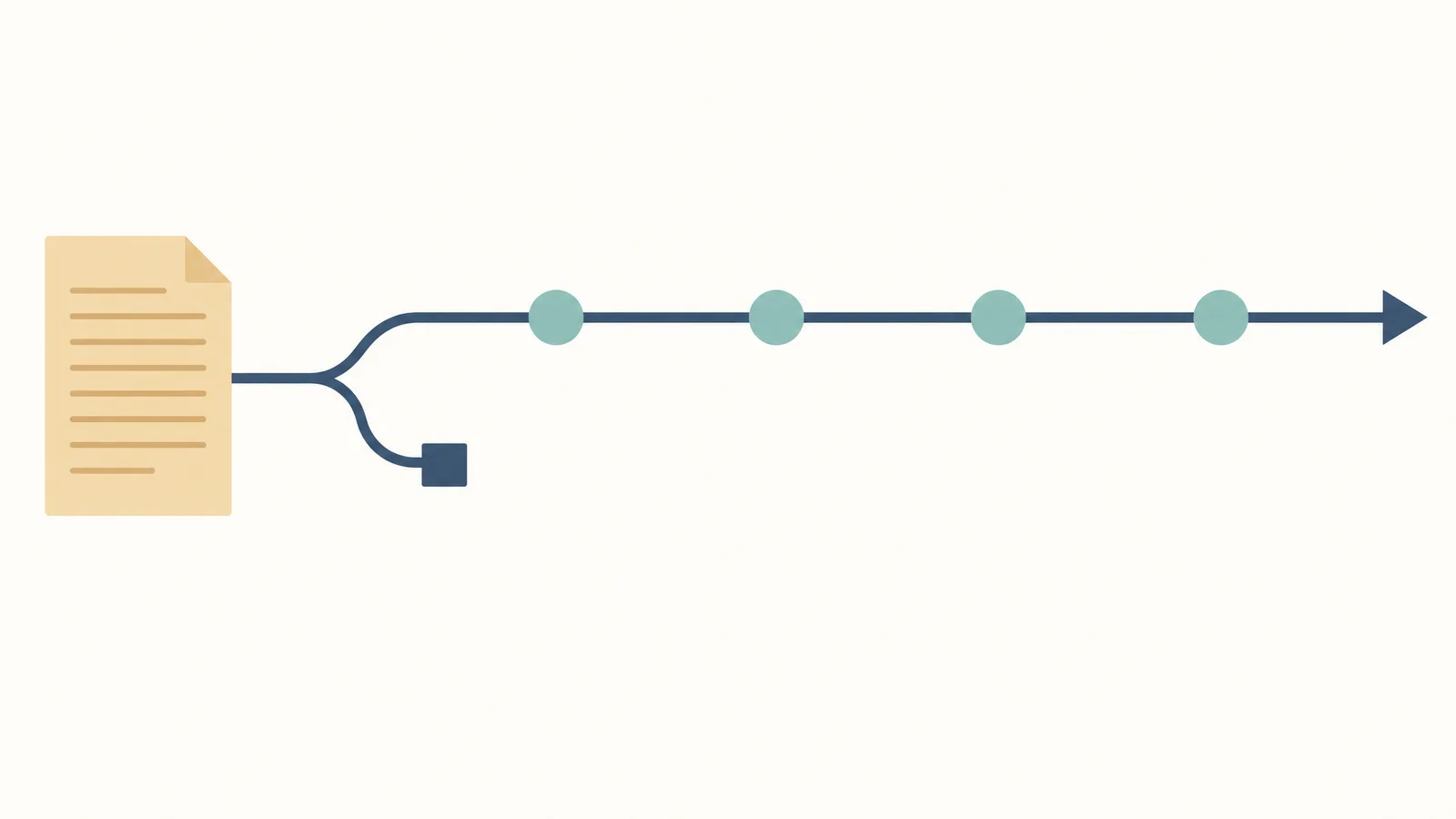
The work moves to the end, it does not disappear
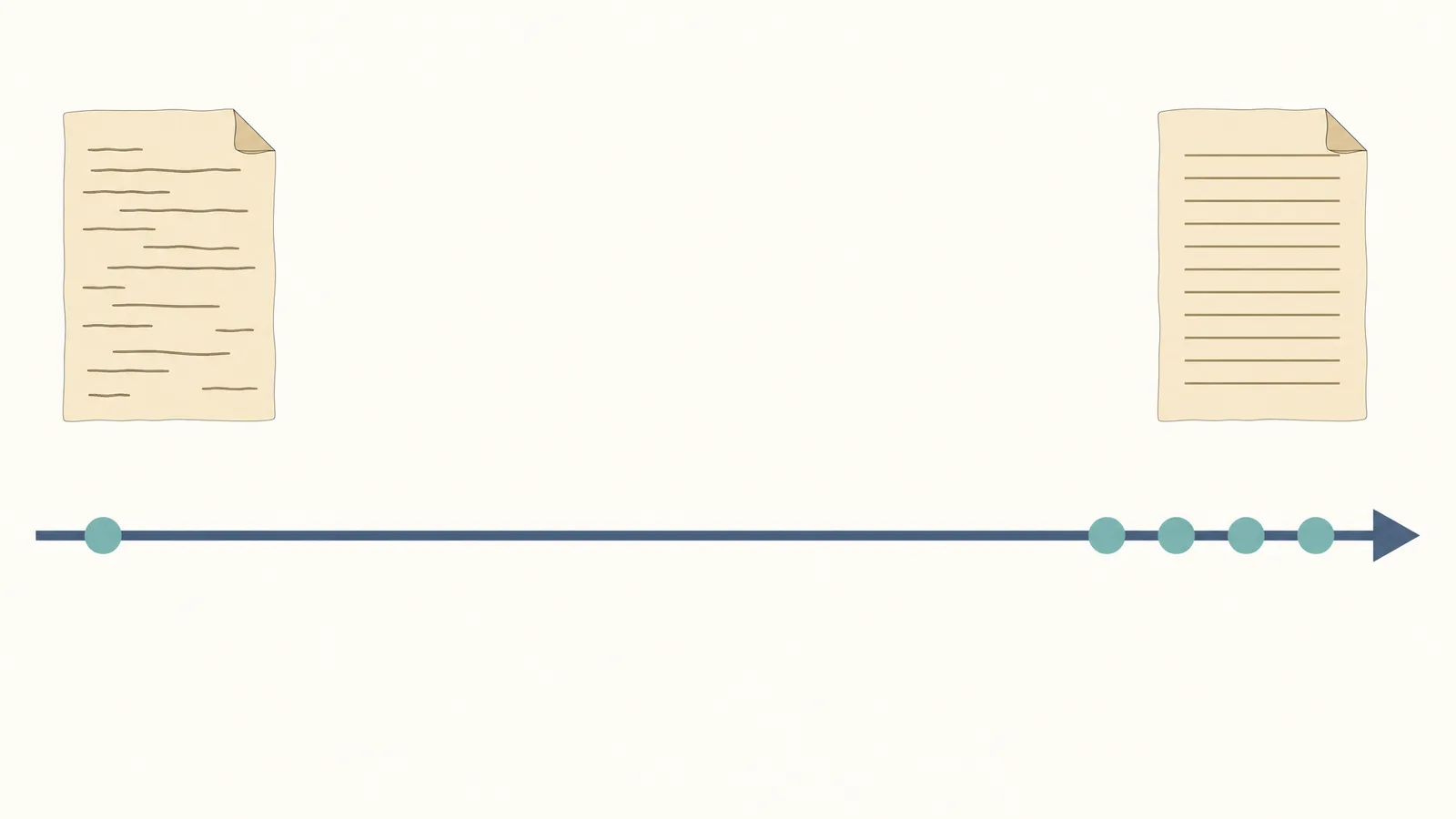
Formatting is waived until editorial accept — then TIFF or EPS, 789–2250 px, Arial or Times at 8–12 pt, all at once.
Explore the ToolWhat happens after you upload: the timeline
For the 2025 metric year, PLOS publishes three medians for PLOS ONE:
| Median | |
|---|---|
| Time to first decision | 32 days |
| Time to publication | 209 days |
| Reviewer turnaround, once a reviewer agrees | 10 days |
Two things to hold alongside those numbers.
Do not read the 17 against the 32. "Time to First Editorial Decision (Rejection or Peer Review)" is the initial screen — the point at which your manuscript is either desk-rejected or sent out — while "Time to first decision" on the metrics page is the first decision proper. They are different measurements from different years, and averaging or comparing them produces a number that describes nothing.
What does each submission status actually mean?
The submission system shows a status while your manuscript moves through the process, and the wording is not self-explanatory. These are the definitions PLOS gives, verbatim:
| Status | What PLOS says it means |
|---|---|
| Manuscript submitted | "The journal has received the submission and is conducting an initial editorial assessment and screening for technical requirements." |
| Editor invited | "The journal office is identifying potential editors to handle the submission." |
| With editor | "The manuscript has been placed with a member of the editorial board for handling." |
| Under review | "The handling editor has invited peer reviewers to evaluate the submission." |
| Required reviews complete | "Some or all assigned reviewers have submitted comments." |
| Decision in process | "The handling editor has drafted a decision, but it has not yet been finalized or sent to the authors." |
Four things worth knowing that the table alone does not tell you:
One naming note, because it costs people search time: PLOS's author pages call it "our submission system" or "the online submission system" throughout. If you are looking for guidance under a platform brand name, you will not find it on the PLOS pages — the six statuses above are the journal's own vocabulary, and they are the ones your submission will display.
Acceptance rate and desk rejection at PLOS ONE
Two numbers get quoted here. They come from two different PLOS pages, cover different years, and are calculated differently — so they need to be used separately rather than combined.
APC, open access, and waivers
| Article type | Fee |
|---|---|
| All other articles (the standard research article rate) | $2,477 |
| Study Protocols | $2,477 |
| Registered Report Protocol | $1,852 |
| Lab Protocols | $1,536 |
| Registered Report Article | $1,088 |
So the money is due at acceptance — potentially six or seven months after you submit — but the amount is locked at the rate in force when you submitted. Two practical consequences: a mid-review price rise does not reach you, and a budget built around the fee needs to survive until acceptance rather than being spent at submission.
- Group A countries: "Publication in any PLOS journal is free for authors based at institutions located in a Research4Life Group A country who do not have external funding for their research study." Free, not reduced.
- Group B countries: authors with no external funding publish free in PLOS Biology, PLOS Medicine and PLOS Sustainability and Transformation; "For all other journals, the publication fee will be reduced to $940." PLOS ONE falls under that $940 rate.
- Eligibility is by the institution's country, and authors must indicate they require Research4Life assistance at the time of manuscript submission.
- Apply at submission, or not at all. "Assistance must be formally applied for at submission. Requests made during the review process or after acceptance will not be considered." This is the single most consequential deadline in the fee system, and it falls at the point where authors are least likely to be thinking about money.
- Decisions take about ten days. "An author can apply for PFA when submitting an article for publication. A decision is usually sent to the author within 10 business days."
- It does not touch your editorial outcome. "Information about applications for fee assistance are not disclosed to journal editors or reviewers", and PLOS states that publication decisions are based solely on editorial criteria.
- Exhaust other funding first. The application form asks about alternative sources — the authors' institution, the institutional library, government agencies and funders — and funding disclosure information forms part of the review.
- The channel matters. You cannot apply by email or by asking an editor, and fee-waiver requests must not go in the cover letter.
Pre-submission checklist
- Manuscript in DOC, DOCX or RTF, unlocked — or a PDF built from the PLOS LaTeX template
- Double-spaced, single column, continuous line numbers, no footnotes, maximum three heading levels
- Full title within 250 characters, sentence case; study design in the subtitle for trials, systematic reviews and meta-analyses
- Short title within 100 characters
- Abstract within 300 words, no citations
- References in Vancouver style
- Figures uploaded as separate files, cited in text as
Fig 1,Fig 2in ascending order; captions in the manuscript - Blot and gel papers: original uncropped images compiled into a single PDF named
S1_raw_images, 20 MB maximum - Data availability statement, and a repository DOI if data are deposited
- Financial disclosure statement drafted and ready to paste into the submission form — it cannot be changed later without approval
- Competing interests declared in full, including any patents or products in development
- Cover letter, one page, with no fee-waiver request in it
- Research4Life eligibility indicated, or a PFA application prepared — at submission, not later
- Institutional agreement checked with your library
- Optional: a Striking Image cropped from a figure already in the submission
Do the figure work once
Build to the PLOS ONE specification now and the gap between editorial accept and formal accept is a formality, not a rebuild.
Try FreeWhat the official pages don't answer
Four questions the guidance leaves open, and what to do about each.
What must you declare if AI helped prepare the submission?
Two boundaries are worth knowing at planning time. Fabricating or misrepresenting primary research data with AI is unacceptable regardless of disclosure. And noncompliance is handled as "misrepresentation of methods, contributions, and/or results" — with institutional notification, rejection, retraction or an editorial notice as the stated outcomes, which is a different category of problem from a formatting query.
Frequently asked questions
Sources
Fees, timings, acceptance rate and process descriptions were read from PLOS's own pages. Reviewed 2026.
- PLOS ONE — Editorial and Peer Review Process — submission statuses, decision types, the two-level accept, review model and reviewer turnaround
- PLOS ONE — Submission Guidelines — manuscript formats, title and abstract limits, cover letter, financial disclosure, competing interests, Striking Image
- PLOS — Metrics — 2025 acceptance rate, time to first decision, time to publication and articles published
- PLOS ONE — Journal Information — publication criteria, scope, the journal timings table through January–June 2023, licence and indexing
- PLOS — Publication fees — fees by article type, payment and pricing dates, Research4Life, Publication Fee Assistance, institutional models
- PLOS ONE — Figures — the formatting waiver up to provisional editorial accept, and the blot and gel requirements
- PLOS ONE — Publishing Information — eISSN, founding year, continuous publishing schedule