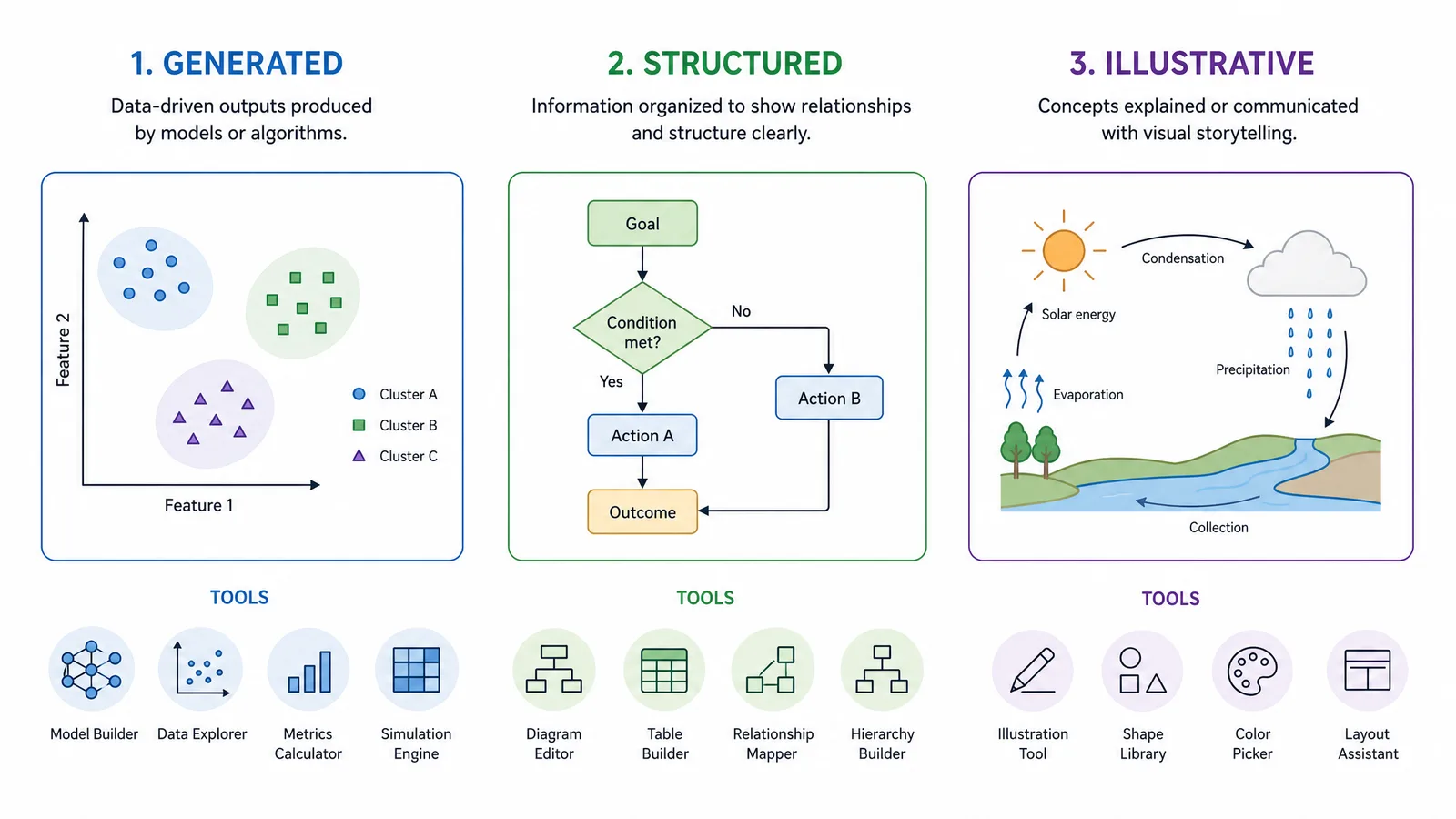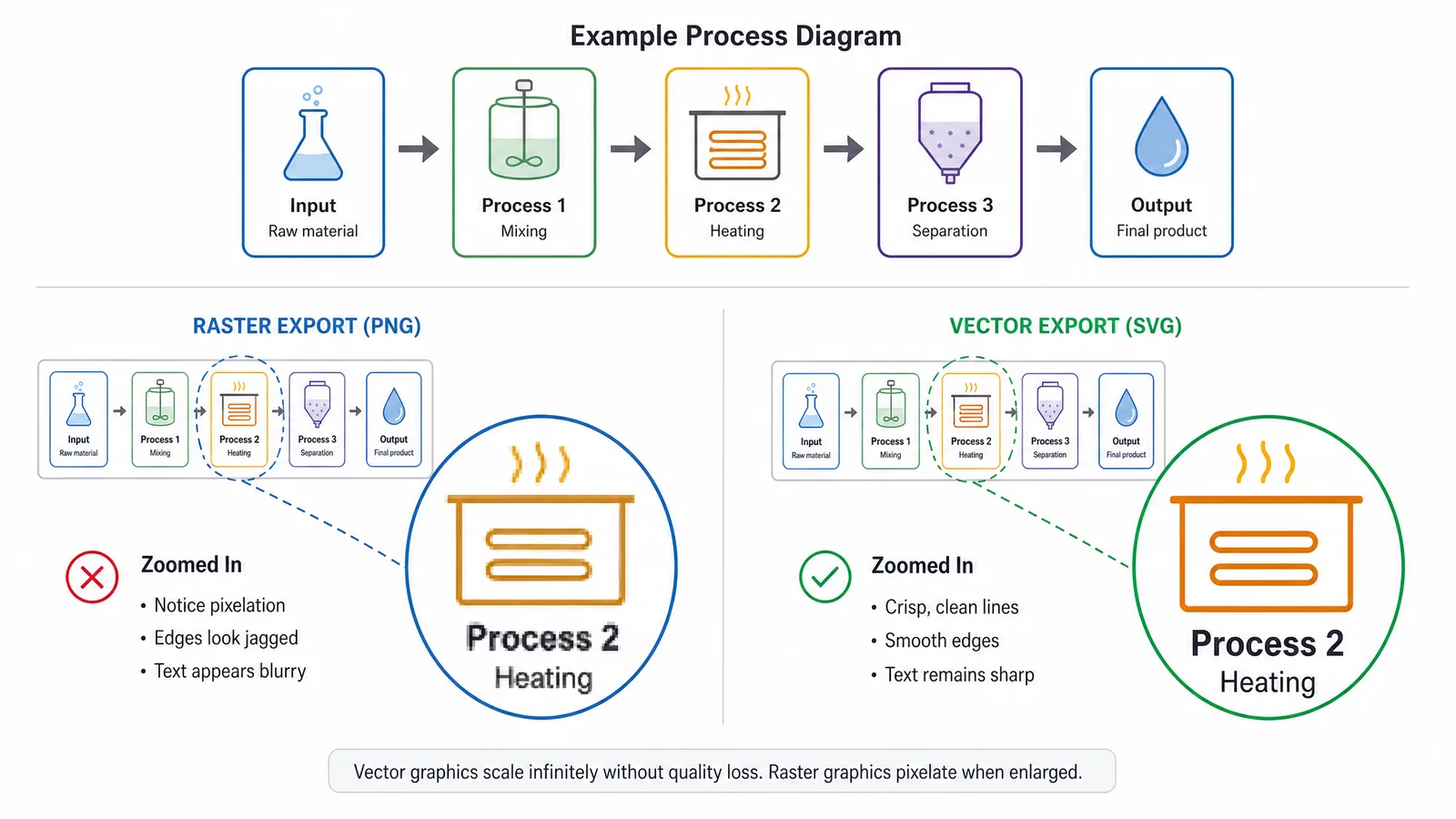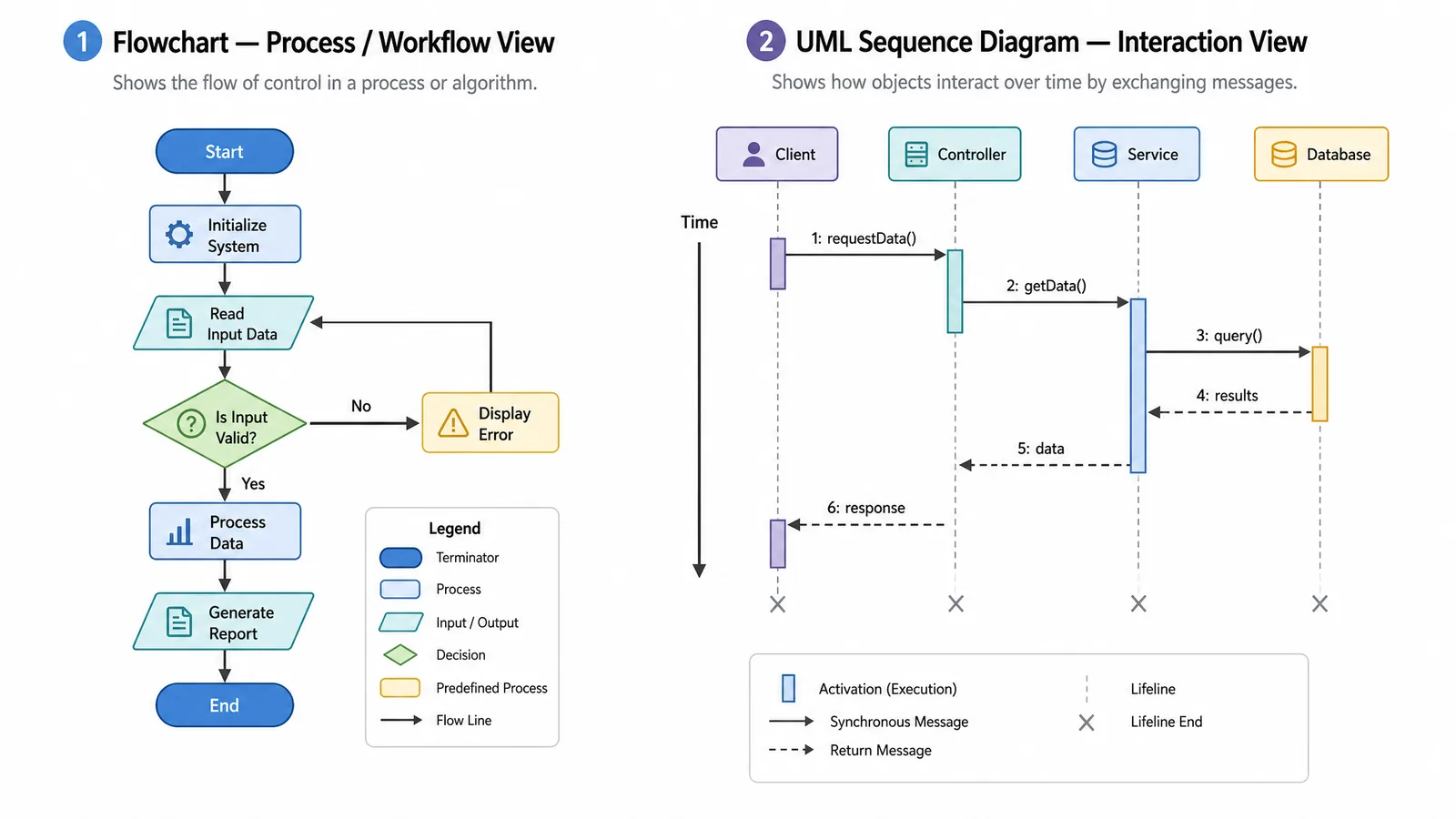

Canva makes attractive diagrams quickly; journals ask for different properties.
Speed and visual polish are real advantages, and for a lab website or a teaching handout Canva is often the right answer. The friction appears at submission, where the questions become which export formats are available on your tier, whether embedded template assets are licensed for publication, and whether a reviewer can be given an editable source.
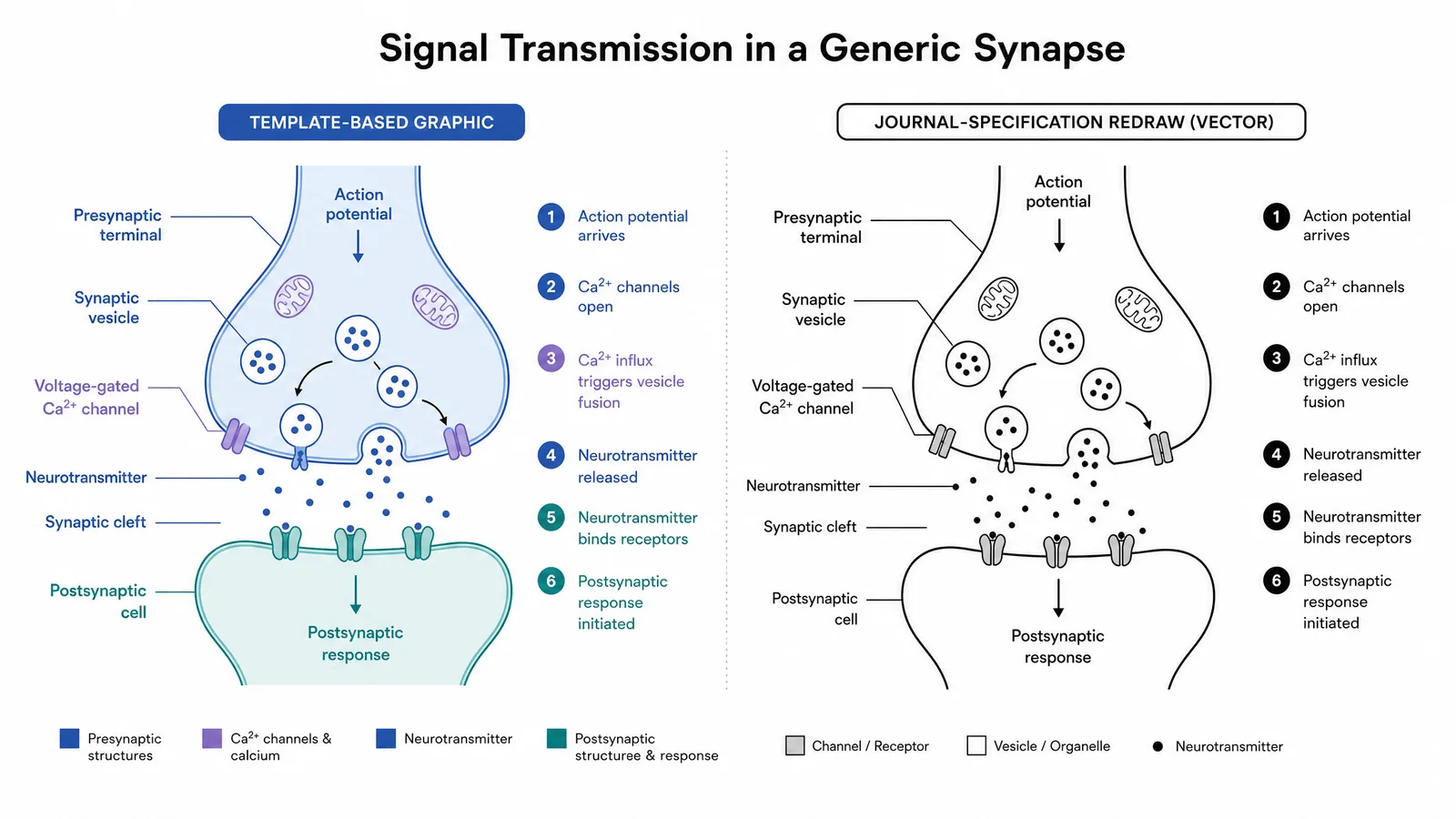
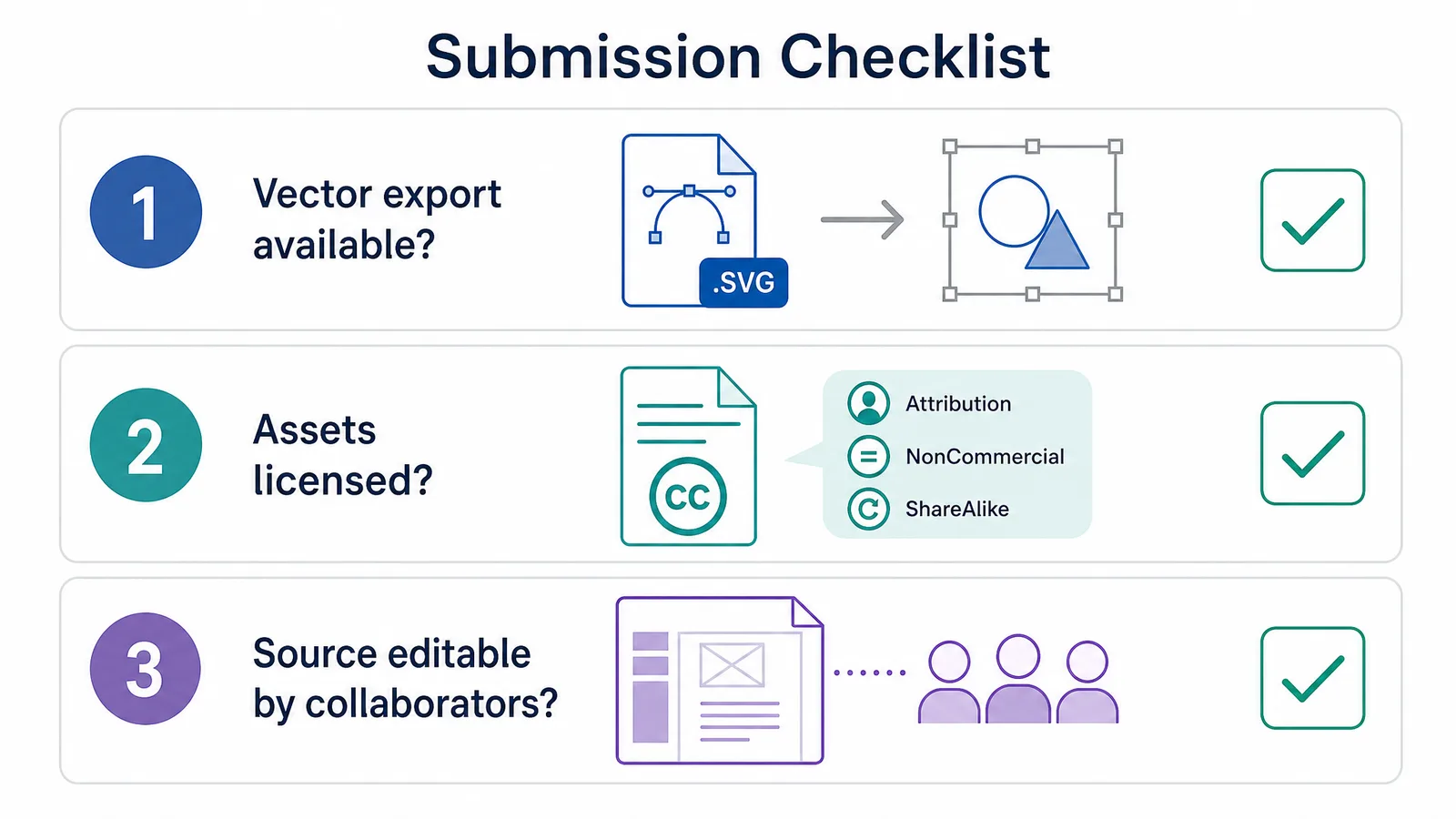
Three Questions Before You Commit
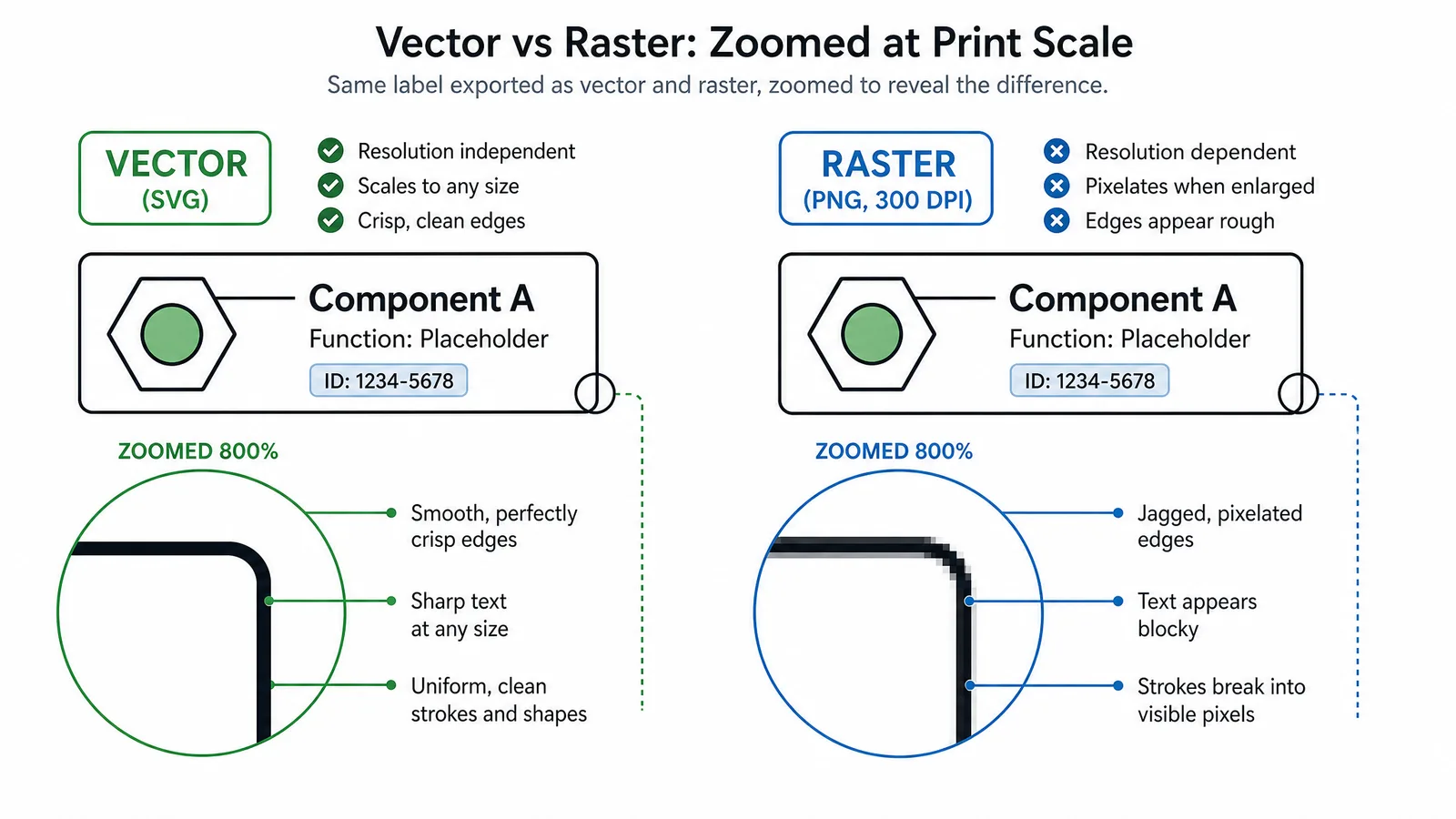
- Can you export vector? Journals generally require SVG, PDF, or EPS for line art. Raster export is often the failure point.
- Are the assets licensed for your use? Stock elements inside templates carry their own terms, and academic publication is not always covered by a free tier.
- Can a collaborator edit it? If the source only opens in one account, handover during revision becomes painful.
The Alternatives Compared
| Tool | Vector export | Offline | Asset licensing clarity | Best for |
|---|---|---|---|---|
| draw.io / diagrams.net | SVG, PDF | Yes | Own shapes, clear | Structured diagrams |
| Inkscape | SVG, PDF, EPS | Yes | You supply assets | Final figure artwork |
| Excalidraw | SVG | Yes | Own shapes, clear | Sketch-stage diagrams |
| Figma | SVG, PDF | Limited | Community assets vary | Collaborative design |
| Affinity Designer | SVG, PDF, EPS | Yes | You supply assets | Illustration-grade work |
| Mermaid | SVG | Yes | Text only, clear | Version-controlled diagrams |
| Google Drawings | SVG, PDF | Limited | Own shapes, clear | Quick shared diagrams |
See AI Scientific Figure Generation in Action
Watch how researchers create publication-ready scientific figures from text descriptions.
Explore the Tooldraw.io / diagrams.net
The most direct replacement for diagram work. Free, offline-capable, exports SVG and PDF, and its shape libraries are unambiguous to use in publication. Less visually opinionated than Canva, which for a scientific figure is usually the correct trade.
Excalidraw
Fastest path from idea to shareable diagram, with a deliberately provisional look. Best at the sketch stage rather than as a finishing tool.
Inkscape and Affinity Designer
Where diagrams should finish if the destination is a journal. Full vector control, EPS and CMYK where required, and no licensing ambiguity because you supply the assets.
Mermaid and Google Drawings
Mermaid suits diagrams that belong in a repository. Google Drawings is unfashionable but genuinely useful for a quick diagram several people need to edit, and it exports SVG.
The Template Licensing Point
This is the part most easily overlooked. Design platforms bundle stock photography, icons, and illustrations, and those assets are licensed by the platform under terms that differ from the terms covering your own work. Free tiers commonly restrict certain assets, and "free for personal use" does not reliably cover a figure in a commercially published journal.
For a scientific figure the safest position is to use assets whose licensing you control: shapes drawn yourself, icon sets with explicit open licences, or figure elements generated for you with clear terms. If you do use platform assets, record which ones and under what tier, because reconstructing that six months later is unpleasant.
Tip
Check the target journal's figure specification before you start, not after the diagram looks right. Resolution, format, and colour mode requirements are trivial to satisfy at the design stage and expensive to retrofit.
Create Scientific Figures Now
Describe your scientific figure in natural language — get publication-ready illustrations in minutes.
Try Free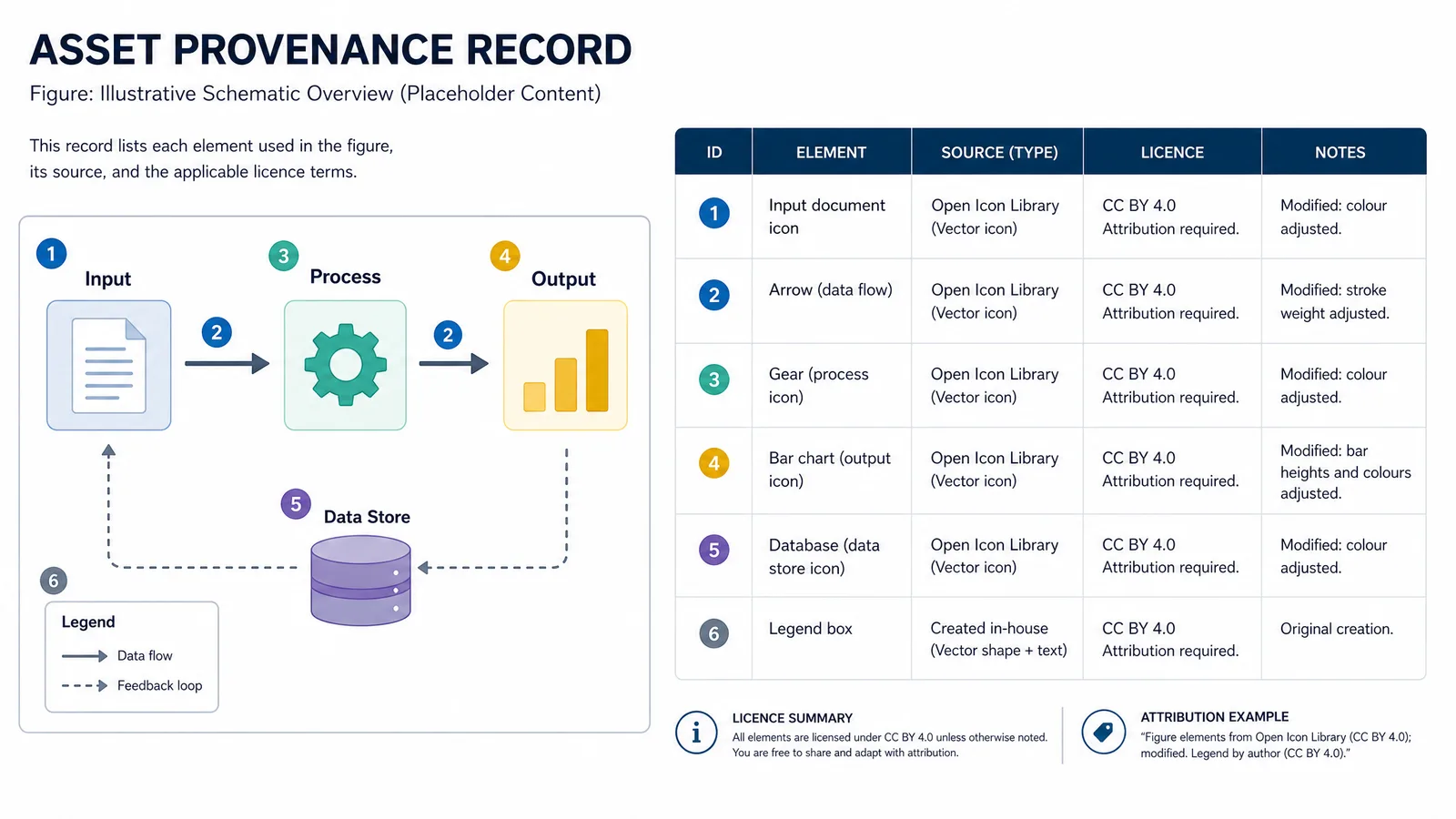
Related Reading
Related reading: 7 Best BioRender Alternatives in 2026 (Free & Paid), Free Scientific Icon Libraries 2026 Guide.