SOHO 2026 Poster & Presentation Guidelines and Template
Official SOHO 2026 poster guidelines: the 55 x 35.5 in landscape poster/ePoster template, the Aug 28 ePoster deadline, abstract rules, and CLML publication.
SciFig Team
SciFig editorial team
SOHO 2026 runs September 9–12, 2026 at the George R. Brown Convention Center, Houston, Texas.
This is a practical guide to the official poster and presentation rules for the Society of Hematologic Oncology's 14th Annual Meeting: the 55 × 35.5 in landscape poster and ePoster template, and the August 28 ePoster upload deadline.
It also covers what the abstract rules do and do not allow, where accepted abstracts are published in Clinical Lymphoma, Myeloma & Leukemia, and the hematologic oncology figures that make a poster worth stopping for. Every date and specification below links to official SOHO materials.
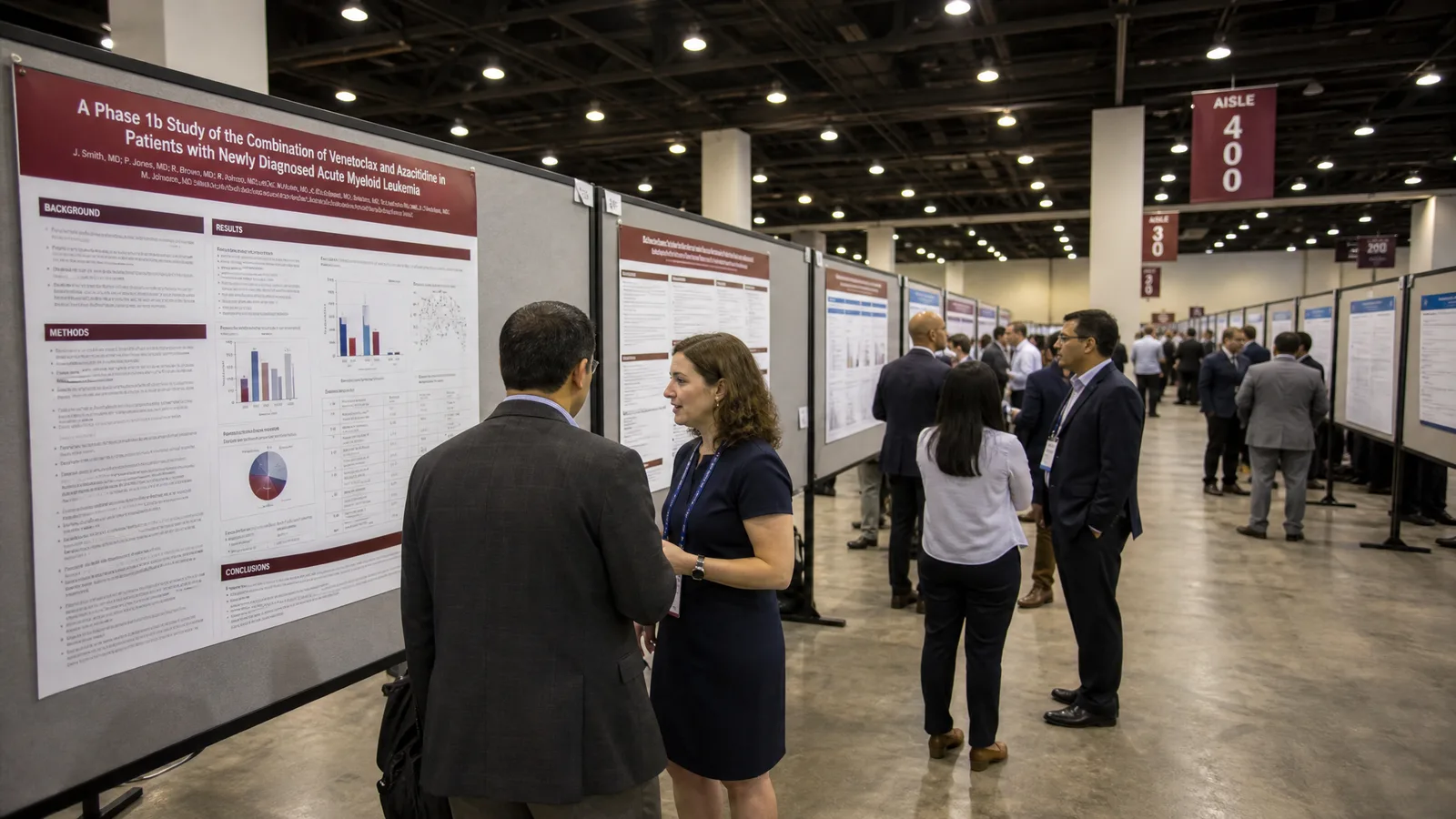
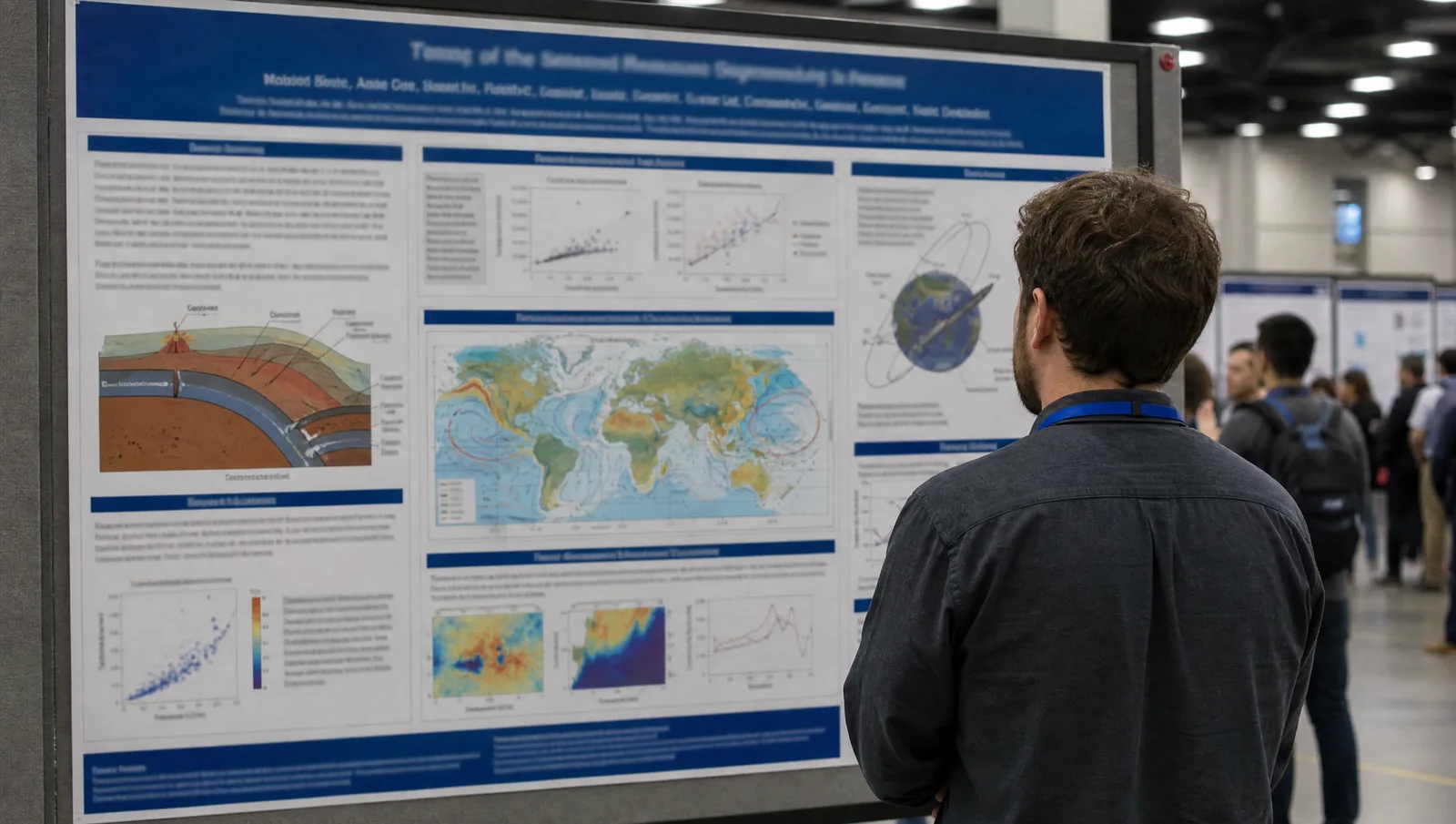
SOHO 2026 poster hall in Houston: rows of landscape hematologic oncology posters along a poster walk aisle, delegates discussing pathway and CAR-T figures (Figure generated with SciFig)
Transparency note: Illustrations in this article were generated with SciFig AI and reviewed by the author for scientific accuracy. Factual claims about dates and specifications link to official SOHO materials.
1. SOHO 2026 at a Glance: Dates, Venue, and Abstract Deadlines
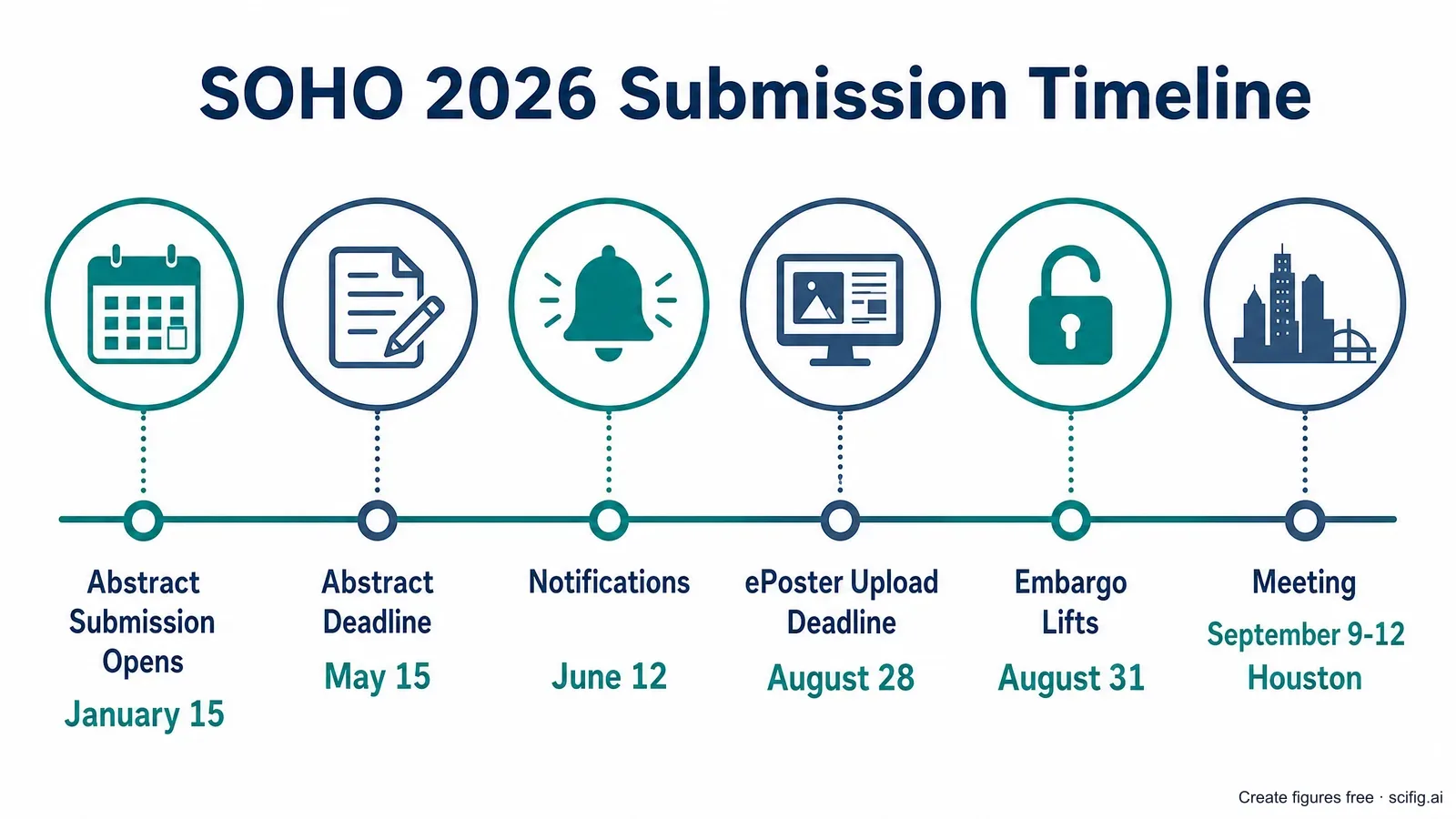
SOHO 2026 runs September 9–12, 2026 at the George R. Brown Convention Center in Houston, Texas, as a hybrid meeting with in-person and on-demand access, and the abstract submission deadline is May 15, 2026 (11:59 p.m. CT). The presenting author must be a SOHO member — membership is free — and this is worth confirming early, since it is not required by comparable hematology or oncology meetings. Acceptance notifications are the one date where SOHO's own official pages disagree: the 2026 Submission Guidelines state "on or before June 12, 2026," while the Abstracts FAQ page says notifications go out "by June 15th" — so treat mid-June as the notification window and check your inbox (and spam folder) from June 12 onward.
SOHO 2026 poster and presentation timeline: submission opens Jan 15, closes May 15, notifications mid-June, ePoster upload Aug 28, meeting Sept 9-12 Houston (Figure generated with SciFig)
Date
Milestone
15 January 2026
Abstract submission opens (soho.click/abstract)
15 May 2026
Abstract submission closes (11:59 p.m. CT)
12–15 June 2026
Acceptance notifications sent (June 12 per Submission Guidelines PDF; June 15 per Abstracts FAQ)
10 June 2026
Early registration rate deadline
Wednesday, 9 September 2026
Poster session; Poster Walks (guided group tours) run Wed–Fri lunch, Level 3, Poster Hall B3
28 August 2026
ePoster upload deadline (11:59 p.m. CDT)
31 August 2026 (5:00 p.m. CT)
Embargo lifts; accepted abstracts posted online
9–12 September 2026
SOHO 2026 Annual Meeting, George R. Brown Convention Center, Houston
A membership note: presenting authors are required to be SOHO members to submit, but membership is free at soho.click/join. Register for the meeting itself at soho.click/2026 — SOHO members get a 40% registration discount, and accepted poster presenters receive complimentary registration.
2. SOHO 2026 Poster Size and Format: The 55 × 35.5 in Landscape Template
A SOHO 2026 poster and ePoster use the same 55 in wide × 35.5 in tall (140 cm × 90 cm) landscape template — and both a printed poster and an ePoster are required, since one does not substitute for the other. That dual requirement is easy to miss: SOHO's official ePoster instructions state plainly that "the ePoster submission does not take the place of your printed poster. Both formats are required for SOHO 2026." Building both from one landscape file keeps the layout consistent.
These SOHO 2026 poster size and format rules come from the official ePoster creation guidelines, distributed by SOHO's designated ePoster vendor. A few points shape how you build the sheet:
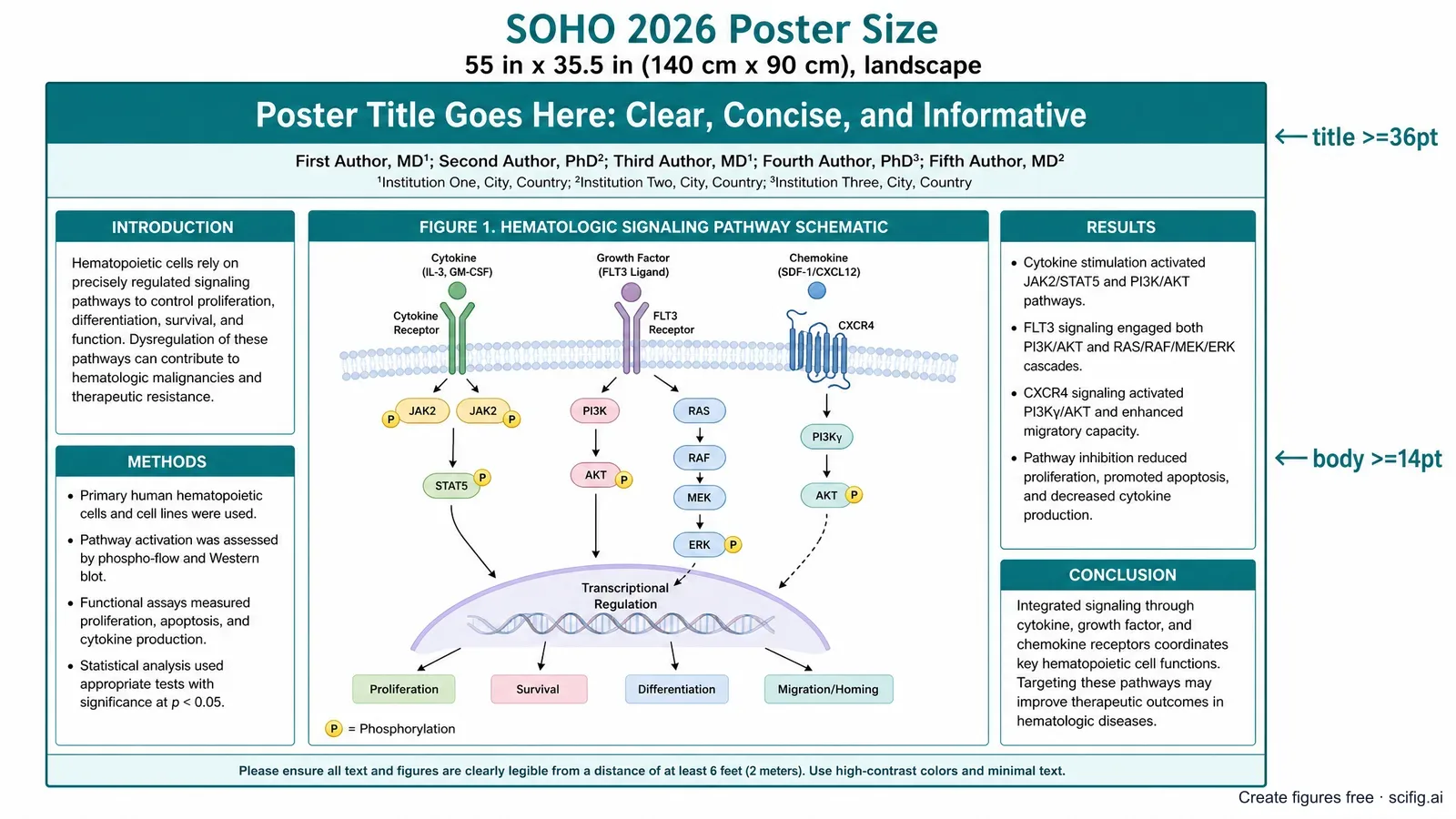
55 × 35.5 in (140 × 90 cm), landscape — a single-page PDF, not a multi-slide deck.
Header text no smaller than 0.5 in (36 pt); body text no smaller than 0.25 in (14 pt) — use upper-and-lower case, not all caps, for readability.
File naming convention: category-poster number-poster.pdf (for example, HL-001-Poster.pdf).
Poster Walks: guided group tours through the Poster Hall (Level 3, Poster Hall B3) run Wednesday through Friday at lunch, with a poster leader walking each group through the top posters in a disease category — so a poster that reads clearly from a few feet away, not just up close, matters here.
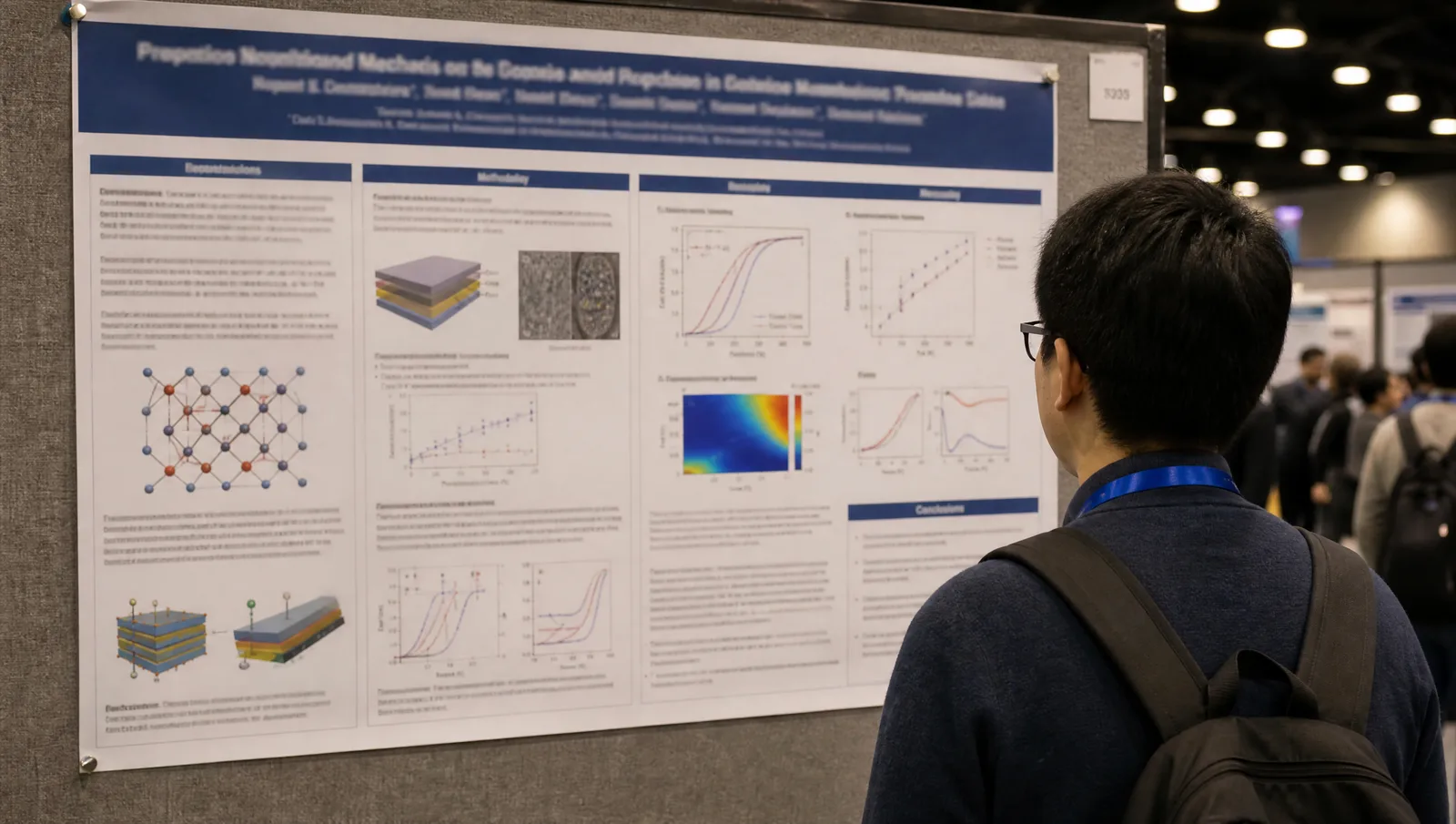
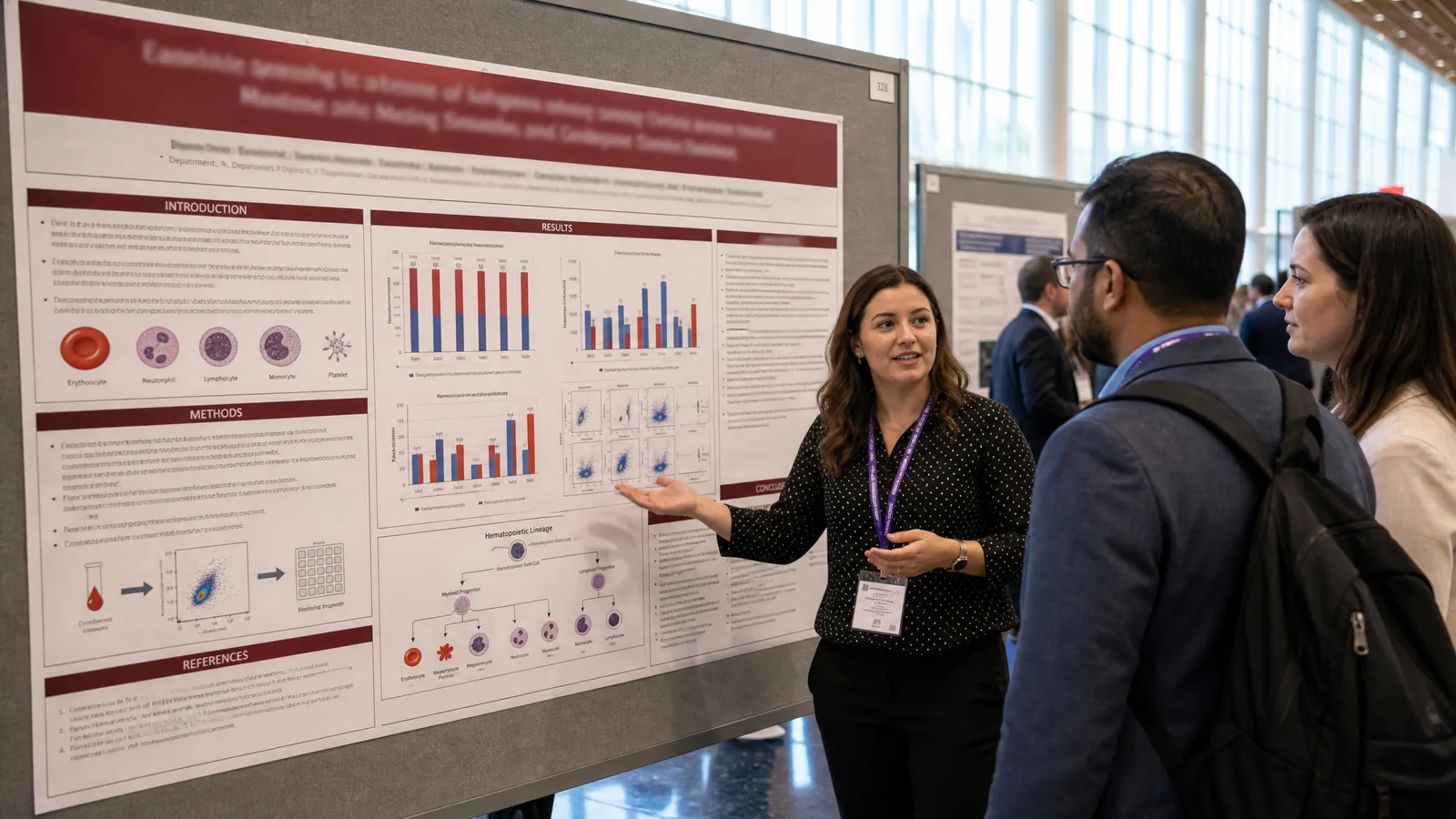
SOHO 2026 poster size and template: a 55 x 35.5 in landscape layout with title bar, author band, and multi-column introduction, methods and results panels (Figure generated with SciFig)
The signaling-pathway and cell-therapy figures on a SOHO poster — BTK/BCR signaling, BCL2-pathway apoptosis, a CAR-T construct — are usually the slowest part of that layout to produce. You can generate publication-grade versions online for free and drop them straight into your poster file.
Need a hero figure for your SOHO poster?
Start from a BCR/BTK pathway, a BCL2 mechanism, or a CAR-T construct before you open your poster template.
The printed sheet and the ePoster are the same 55 × 35.5 in landscape file, so you build one canvas and use it twice. Our conference poster templates give you an unbranded landscape layout in editable PowerPoint with the section structure and print type scale already set — resize the canvas once and both deliverables are covered.
3. SOHO 2026 ePoster: Requirements and the August 28 Upload Deadline
Every accepted SOHO 2026 abstract requires an ePoster, uploaded through the official submission portal by August 28, 2026, at 11:59 p.m. CDT. Submission happens at soho2026.epostersubmission.com using a unique Poster Submission Code emailed to each corresponding author; the wizard also accepts an optional video (single .mp4 file, up to 2 GB), which SOHO strongly encourages but does not require.
The ePoster uses the same 55 × 35.5 in landscape PDF as the printed poster (see §2), and resubmission is allowed anytime before the deadline if you need to fix a typo or swap a figure. Because the ePoster stays available to registrants after the meeting, a crisp vector-style figure holds up on screen far better than a scanned or photographed panel — a pathway diagram exported cleanly stays legible when someone zooms in later.
4. SOHO 2026 Oral Abstract Presentations: What's Confirmed and What's Still TBD
SOHO reserves oral presentation slots for abstracts the Scientific Committee judges "exceptional" during review, but as of July 21, 2026, SOHO had not published a general oral presentation time limit or slide template on its official pages. If your abstract is selected for an oral slot, the specific format arrives with your acceptance notification — so do not assume a slide ratio or time limit until you see it in writing.
What does not depend on that detail: an oral abstract slot at SOHO is still a short, focused presentation to a hematology and oncology audience, and nearly every slide benefits from one clear figure — a pathway schematic, a construct diagram, a trial or cohort schema — doing the explaining instead of a wall of text or a dense table.
SOHO had published no oral time limit or slide template as of writing, so do not assume a ratio until it is in writing — but the structure can be built now. Our scientific presentation templates are 16:9 academic decks already ordered the way a conference talk runs: background, methods, results, discussion, conclusion.
5. What Figures Do You Need? SOHO 2026 Poster and Presentation Figures
Whether you are building a poster or oral slides, SOHO's hematologic oncology audience expects the same core figures — and unlike some meetings, SOHO abstracts cannot carry any at all, so your poster and slides are where the visual story has to live. SOHO's abstract rules are explicit: "no tables, figures, graphs, or images are allowed in the abstract submission." That makes the poster and any oral slides the only place your mechanism, construct, or study design gets drawn — there is no fallback abstract figure to lean on.
Across the meeting's 13 disease categories — from acute leukemias and lymphomas to multiple myeloma, MDS/MPN, and cellular therapy — three figure types recur on posters and slides:
Signaling pathway or mechanism of action (MOA) — BCR/BTK signaling in CLL and mantle cell lymphoma, or BCL2-pathway apoptosis in the context of venetoclax, drawn with the correct upstream-to-downstream order.
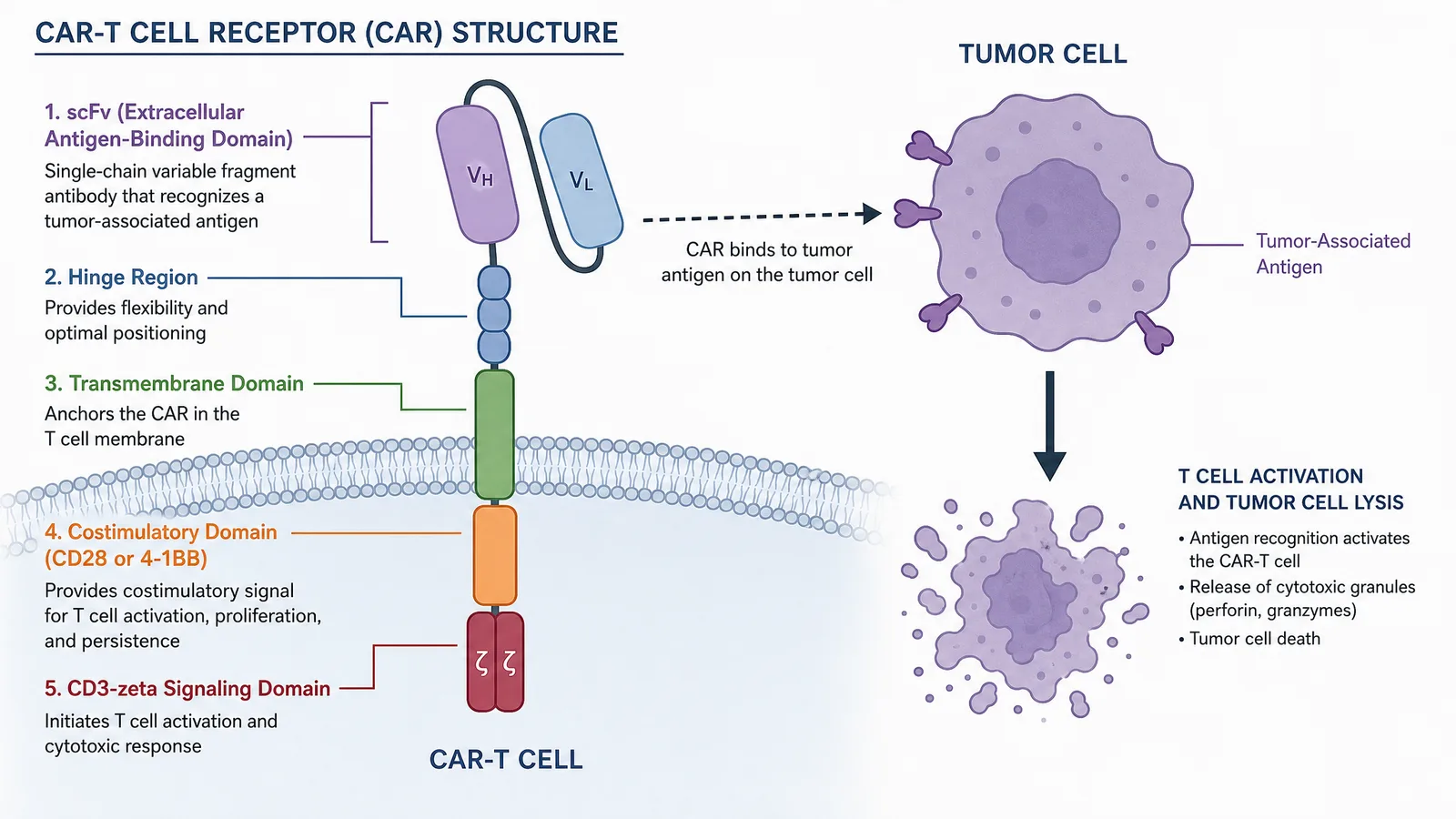
CAR-T or adoptive cell therapy construct — the scFv, hinge, transmembrane, costimulatory domain, and CD3ζ signaling tail, central to the meeting's cellular therapy track.
Trial or cohort schema — the study design, arms, and endpoints behind your data, drawn with publication-grade clarity for a poster or a single slide.
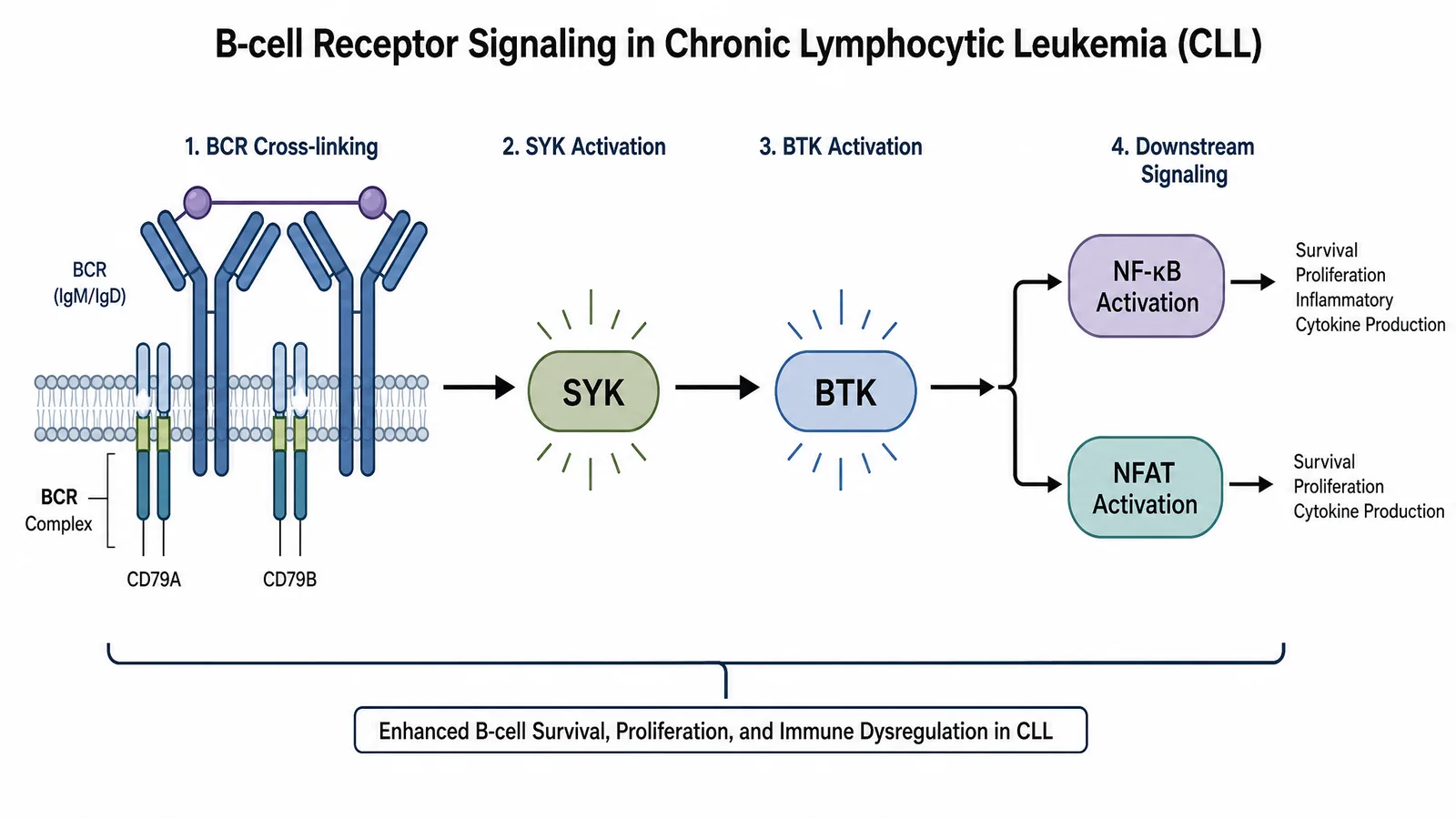
SOHO 2026 BCR-BTK signaling pathway figure: B-cell receptor cross-linking activating SYK and BTK, driving NF-kB and NFAT signaling in CLL and mantle cell lymphoma (Figure generated with SciFig)
Each of these historically takes hours in Adobe Illustrator or PowerPoint's shape tools. You can generate them from a text prompt or turn your accepted abstract into a figure instead — every element stays editable, so you can adjust it to your data and layout, then export to your 55 × 35.5 in poster template.
Turn your abstract into a pathway or CAR-T diagram
Paste your study mechanism or design and generate a clean, editable figure for poster, slide, or ePoster.
6. Designing a Winning SOHO Poster: Accuracy That Survives Peer Scrutiny
A winning SOHO poster passes two tests: it is grasped in a few seconds during a Poster Walk, and it is scientifically exact enough to survive scrutiny from a hematologist standing in front of it. The best layouts are built around one dominant "hero" figure — usually the pathway MOA or the CAR-T construct with the key result nearby — with everything else arranged to support it on the 55 × 35.5 in landscape sheet.
The second test is where scientific figures live or die — and where general-purpose AI image generators fall short. A tool like Nano Banana Pro or GPT Image can produce something that looks about 99% right, but on a scientific figure 99% right is effectively 0% right: a reversed pathway arrow, a mislabeled domain, or an inverted mechanism turns a compelling poster into one that misleads a reviewer. A flat, raster AI image also gives you no way to fix that last one percent.
This is the core difference with SciFig. Every figure is a fully editable SVG whose elements — arrows, labels, receptors, domains — you can correct individually, so you, the author who actually knows the biology, can adjust any element until the figure matches your science. The hematologic oncology figures that reward this care are exactly the ones reviewers scrutinize:
BCR/BTK pathway — get the signaling order right (BCR cross-linking → SYK → BTK → NF-κB/NFAT); a common mistake places BTK upstream of the B-cell receptor itself.
BCL2-pathway apoptosis — BCL2 normally restrains pro-apoptotic BAX/BAK and BIM; a venetoclax mechanism figure that shows BCL2 promoting apoptosis has inverted the biology.
CAR-T construct — get the domain order right (scFv, hinge, transmembrane, costimulatory domain, CD3ζ); a construct missing the CD3ζ signaling tail is the detail a cell-therapy reviewer notices first.
SOHO 2026 CAR-T cell construct figure: a chimeric antigen receptor with scFv, hinge, transmembrane, costimulatory and CD3-zeta domains driving tumor-cell lysis (Figure generated with SciFig)
Whether your SOHO 2026 poster earns attention during a Poster Walk comes down to whether these figures are accurate, clear, and legible from a few feet away — which is exactly where an editable AI figure workflow compresses days of design work into hours without giving up scientific control.
7. Create Your SOHO 2026 Figures with AI: The SciFig Workflow
You already have two things most colleagues do not: your accepted abstract and a clear understanding of your study's mechanism — use both to generate your figures online for free, then edit them until they are exactly right. Here is the SciFig workflow for a SOHO presenter:
Path 1 — Upload your accepted abstract. Drop it into PDF-to-Figure. It parses your background and methods and returns a pathway diagram or trial schema in one click. SciFig generates the figure, and every element stays editable so you can adjust it to your data and poster layout — no blank canvas.
Path 2 — Copy a structured prompt. For a mechanism or pathway figure, Text-to-Figure gives more control. Copy and adjust to your study:
Schematic of BCR/BTK signaling in chronic lymphocytic leukemia: B-cell
receptor cross-linking activates SYK, which activates BTK, driving
downstream NF-kB and NFAT signaling and B-cell survival; show a BTK
inhibitor blocking the kinase and interrupting the cascade.
Path 3 — Sketch and scan. If you sketched your hero figure on paper, photograph it and drop it into Sketch-to-Figure to get a publication-style version that preserves your topology.
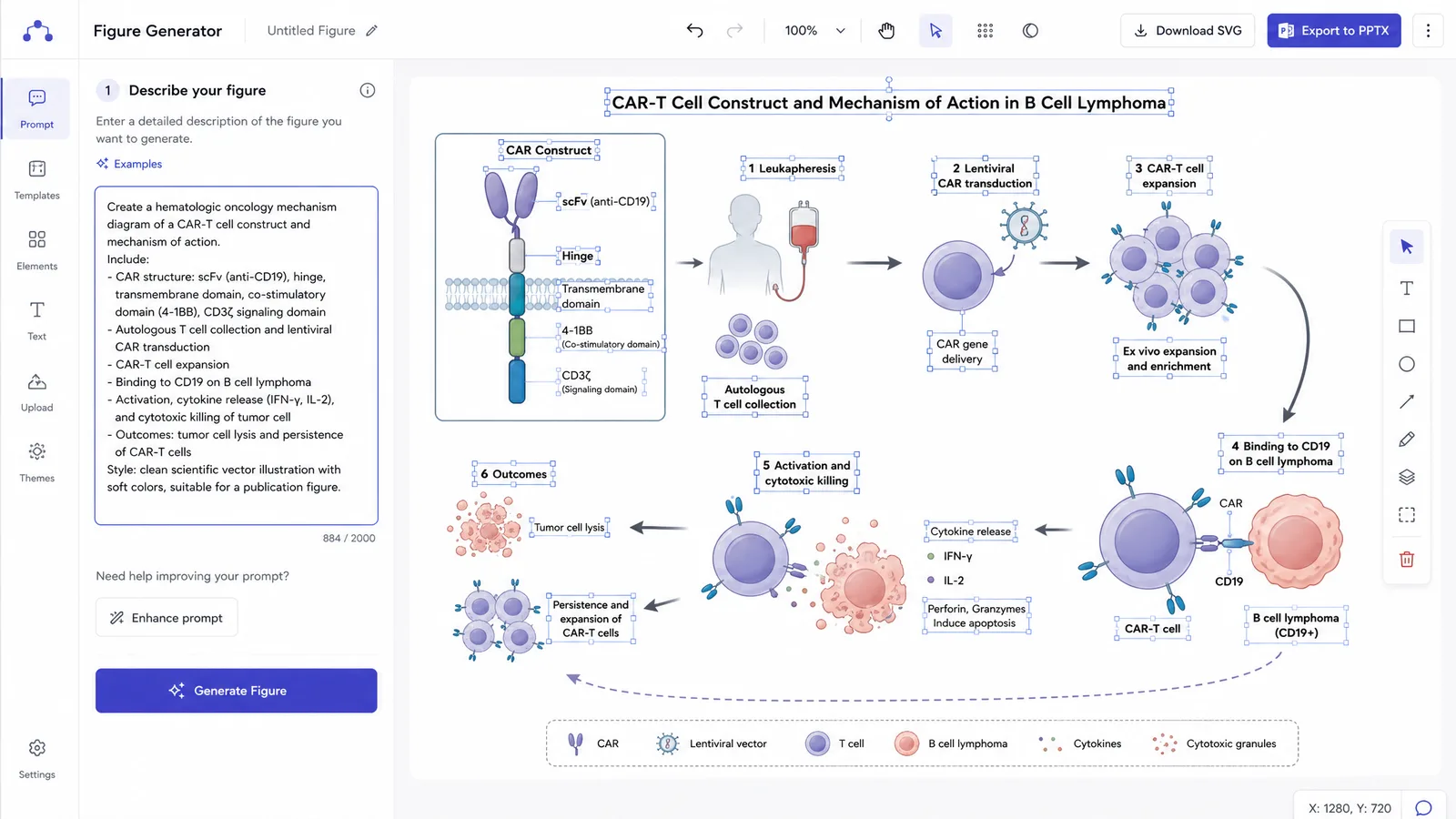
SOHO 2026 poster figure workflow in SciFig: pathway prompt on the left, editable SVG diagram on the right, with PPTX and SVG export for a poster or slide (Figure generated with SciFig)
From any path, you edit individual elements in the vector canvas — labels, arrows, domain placement — and export to editable PPTX or layered SVG for final composition, at high resolution for the 55 × 35.5 in poster without artifacting. Start free: 150 credits on day one, plus daily check-in credits. For the companion guides in this conference series, see the ASH 2026 poster guide and the EHA 2026 poster guide.
Optional — disclose your AI use. SOHO has not published a specific generative-AI policy, but many journals and meetings now ask authors to disclose AI assistance and remain responsible for accuracy. If you build and review a figure in SciFig, you can add one line to its caption — for example: Figure created by the authors using SciFig and reviewed for scientific accuracy (scifig.ai).
Start your SOHO figure from prompt, PDF, or sketch
Use the path that matches what you already have, then edit every element until the science is exact.
8. SOHO 2026 Abstract Awards, Disease Categories, and Disclosure Rules
SOHO 2026 awards eight poster prizes — $2,500 for first place, $1,750 for second, $1,000 for third, and $500 each for five honorable-distinction posters — and every abstract must state whether informed consent was obtained and disclose any off-label drug use. Abstracts are organized into 13 disease categories: acute lymphoblastic leukemia, acute myeloid leukemia, cellular therapy, chronic lymphocytic leukemia, chronic myeloid leukemia, Hodgkin lymphoma, aggressive B-cell lymphoma, indolent B-cell lymphoma, mantle cell lymphoma, T-cell lymphoma, myelodysplastic neoplasms, myeloproliferative neoplasms, and multiple myeloma.
SOHO does not run a separate conflict-of-interest disclosure form the way some societies do — the informed-consent and off-label statements live directly in the abstract text, per the official Submission Guidelines. Accepted poster presenters also receive complimentary meeting registration, on top of eligibility for the eight cash awards judged on novelty, significance, and clarity.
Tip
The single highest-leverage decision in your preparation window is which figure becomes the hero on your 55 × 35.5 in sheet. Pick the one your Poster Walk group needs to remember afterward — usually the pathway MOA or the CAR-T construct with the key result nearby — and design the rest around it.
9. Where SOHO 2026 Abstracts Are Published (Clinical Lymphoma, Myeloma & Leukemia)
Accepted SOHO 2026 abstracts are reprinted for distribution in the Meeting Proceedings supplement of Clinical Lymphoma, Myeloma & Leukemia (CLML), and the embargo on accepted abstracts lifts August 31, 2026, at 5:00 p.m. CT, when they are posted online. Searches for "SOHO 2026 abstracts" or "SOHO abstract book" almost always mean this CLML supplement, published just before the meeting opens.
Because your abstract text cannot carry a figure (see §5), it is worth making sure the mechanism or pathway your poster and slides depict tells the same story a reader would infer from your published CLML abstract text alone.
FAQ
A SOHO 2026 poster and ePoster use the same 55 in wide × 35.5 in tall (140 cm × 90 cm) landscape template. Both a printed poster and an ePoster are required — the ePoster does not replace the printed one. Header text should be at least 0.5 in (36 pt) and body text at least 0.25 in (14 pt). See §2 SOHO 2026 Poster Size and Format.
Yes — SOHO's official ePoster instructions state that the ePoster submission does not take the place of your printed poster, and both formats are required for SOHO 2026. Both use the same 55 × 35.5 in landscape file, uploaded as a single PDF for the ePoster. See §2 SOHO 2026 Poster Size and Format.
The SOHO 2026 ePoster upload deadline is August 28, 2026, at 11:59 p.m. CDT, submitted via a unique Poster Submission Code at the official ePoster portal. A video file (.mp4, up to 2 GB) is encouraged but optional. See §3 SOHO 2026 ePoster Requirements.
No — SOHO's abstract rules explicitly prohibit tables, figures, graphs, or images in the abstract submission. Your mechanism, construct, or study design has to be drawn on your poster and any oral slides instead — see §5.
The SOHO 2026 abstract submission deadline is May 15, 2026 (11:59 p.m. CT). Acceptance notifications go out in mid-June — the official Submission Guidelines PDF says "on or before June 12, 2026," while the Abstracts FAQ page says "by June 15th," so check your inbox from June 12 onward. See §1 SOHO 2026 at a Glance.
Yes — the presenting author must be a SOHO member, though membership is free and can be obtained at the time of submission. No sponsorship by an existing member is required. See §1 SOHO 2026 at a Glance.
Accepted SOHO 2026 abstracts are published in the Meeting Proceedings supplement of Clinical Lymphoma, Myeloma & Leukemia (CLML), posted online when the embargo lifts on August 31, 2026, at 5:00 p.m. CT. See §9 Where SOHO 2026 Abstracts Are Published.
References
All specifications and dates above are drawn from official SOHO materials, accessed July 21, 2026:
Disclaimer: This article is educational content focused on scientific figure design for conference posters and presentations. It is not medical advice and should not be used for clinical decisions. Dates and specifications are summarized from official SOHO materials linked above and were accurate at the time of writing; see the official SOHO website for current details before printing or submitting. SciFig is a scientific figure platform covering AI illustrations (SciFig AI Illustration), data charts (SciFig DataChart), and flowcharts (SciFig FlowChart) — it does not diagnose, treat, or advise on patient care.
Keep going
Recommended resources
Templates, tools, and further reading for your research