
The best Prezi alternative depends on whether you need motion or reliability.
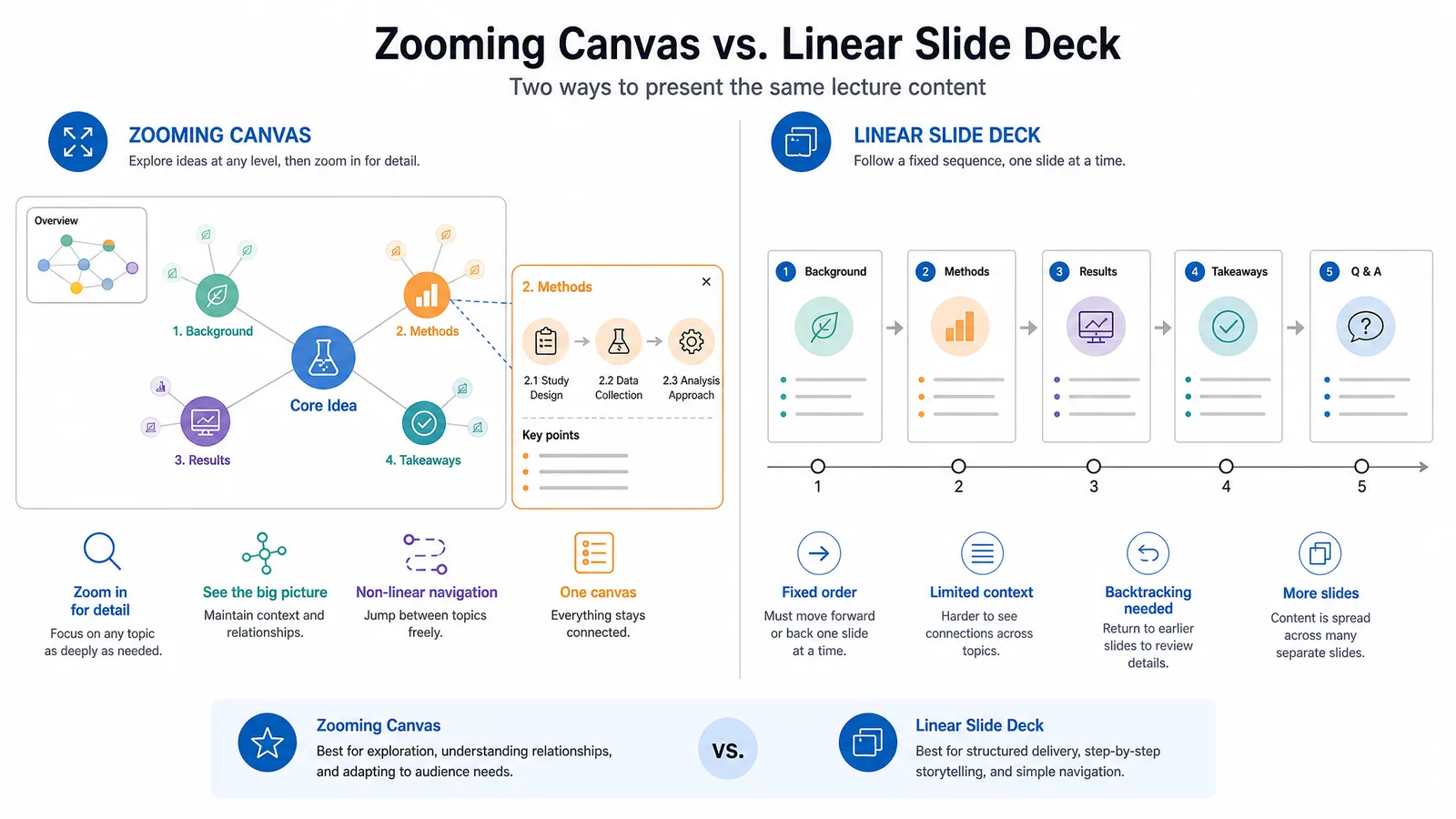
Prezi's zooming canvas is genuinely good at showing how parts relate to a whole, which is why it caught on for teaching. It is less good at the things academic and classroom presenting actually demand: working offline in a lecture theatre with no wifi, exporting to a format a conference AV desk accepts, and not making an audience motion-sick during a 45-minute session.
What Actually Matters for Academic Presenting
Before comparing tools, be clear about the constraints that break presentations in practice:
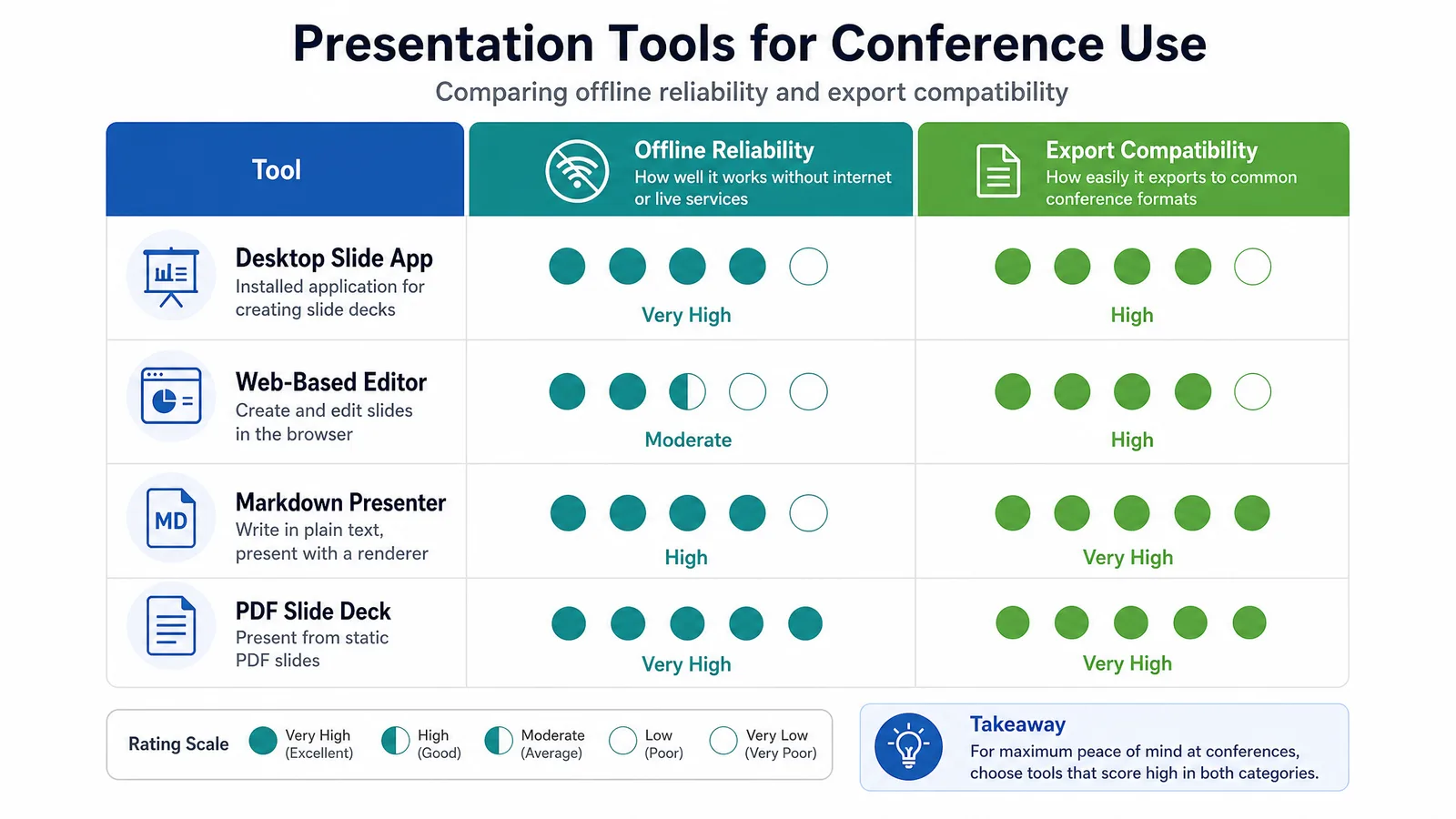
- Offline reliability. Many lecture halls and conference rooms have unreliable wifi. A browser-only tool is a risk.
- Export format. Conference AV desks overwhelmingly accept PDF and PowerPoint. Anything else means presenting from your own laptop, which is not always allowed.
- Figure fidelity. Scientific figures must stay sharp when projected. Tools that rasterize on export degrade axis labels and thin lines.
- Motion discipline. Zooming transitions that delight for three minutes fatigue an audience over forty.
The Alternatives Compared
| Tool | Best for | Works offline | Exports PDF / PPTX | Fit for scientific figures |
|---|---|---|---|---|
| PowerPoint | Conference talks, wide compatibility | Yes | Native | Good with vector paste |
| Keynote | Polished visuals on macOS | Yes | Yes | Good |
| Google Slides | Co-authored decks | Limited | Yes | Moderate |
| LaTeX Beamer | Equation-heavy talks | Yes | PDF native | Excellent |
| Canva | Fast visual polish | Limited | Yes | Moderate |
| Figma Slides | Design-led talks | Limited | Yes | Good |
| Marp / reveal.js | Version-controlled decks | Yes | PDF / HTML | Good |
See AI Scientific Figure Generation in Action
Watch how researchers create publication-ready scientific figures from text descriptions.
Explore the ToolPowerPoint
Still the default for a reason: every AV desk accepts it, it works offline, and it handles vector paste from most figure tools without rasterizing. Its animation tools are enough for progressive disclosure, which is the only motion most talks need. If you present at conferences, this is the safe answer.
Keynote
Better typography and smoother built-in transitions than PowerPoint, and Magic Move gets you Prezi-like continuity between slides without the disorientation of a zooming canvas. Restricted to Apple hardware, and exports to PowerPoint occasionally shift layouts, so check before you travel.
LaTeX Beamer
If your talk is equation-heavy, Beamer removes an entire class of problems: equations render identically to your paper, the output is PDF, and the deck is plain text under version control. The cost is that visual layout is laborious, so it suits mathematical and theoretical talks better than image-led ones.
Google Slides
The strongest option when several co-authors edit the same deck simultaneously. Offline support exists but is fragile enough that you should export a PDF backup before travelling.
Marp and reveal.js
Markdown or HTML decks that live in your repository alongside the analysis code. Excellent for reproducibility and diffing, and both export to PDF. Worth the setup only if you already work in that ecosystem.
Where the Figures Come From
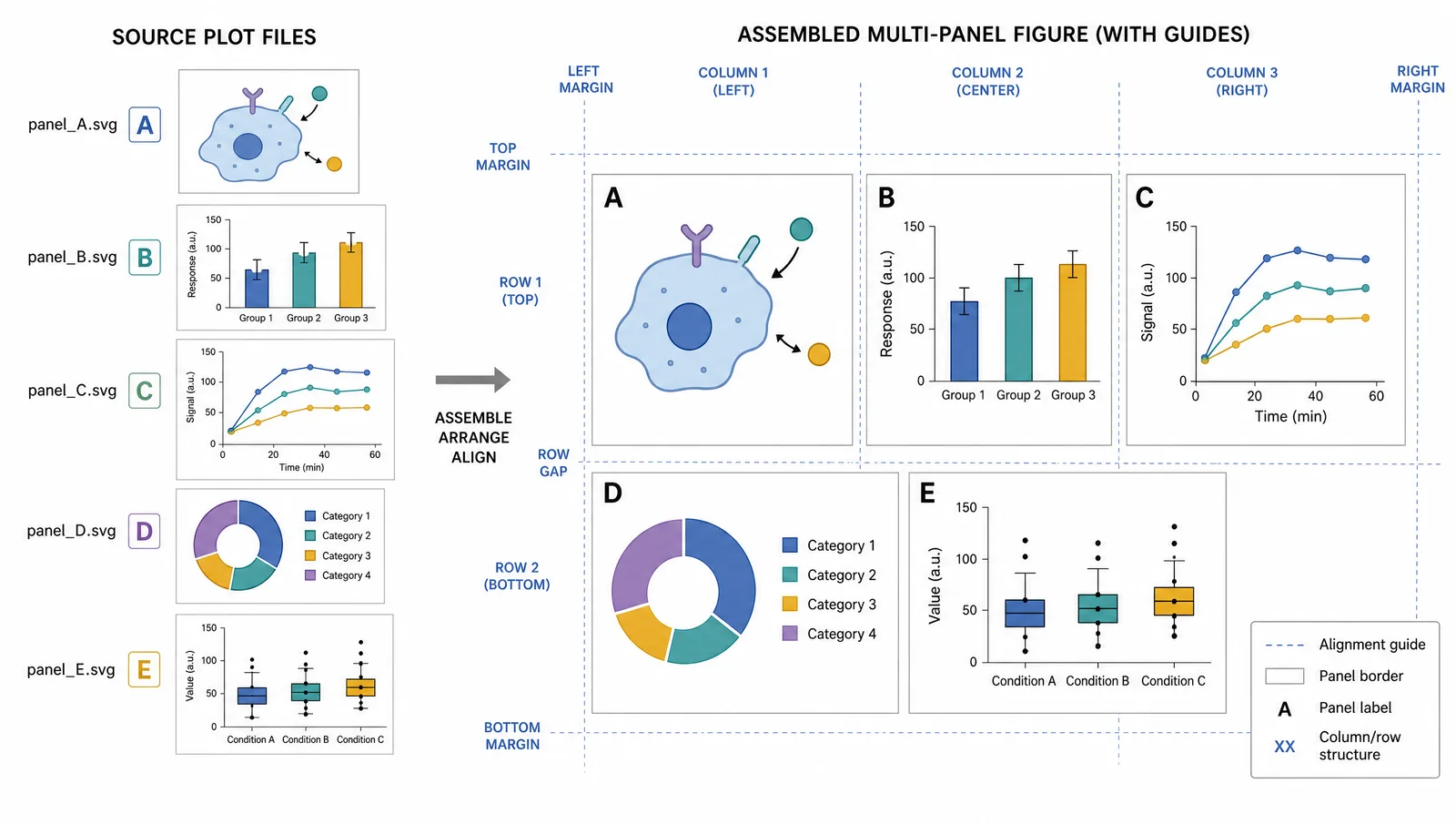
Presentation software is a layout tool, not a figure tool. The quality of a scientific talk is set by the figures you place into it, and pasting a low-resolution screenshot into an otherwise polished deck is the most common way a good talk looks amateur.
Tip
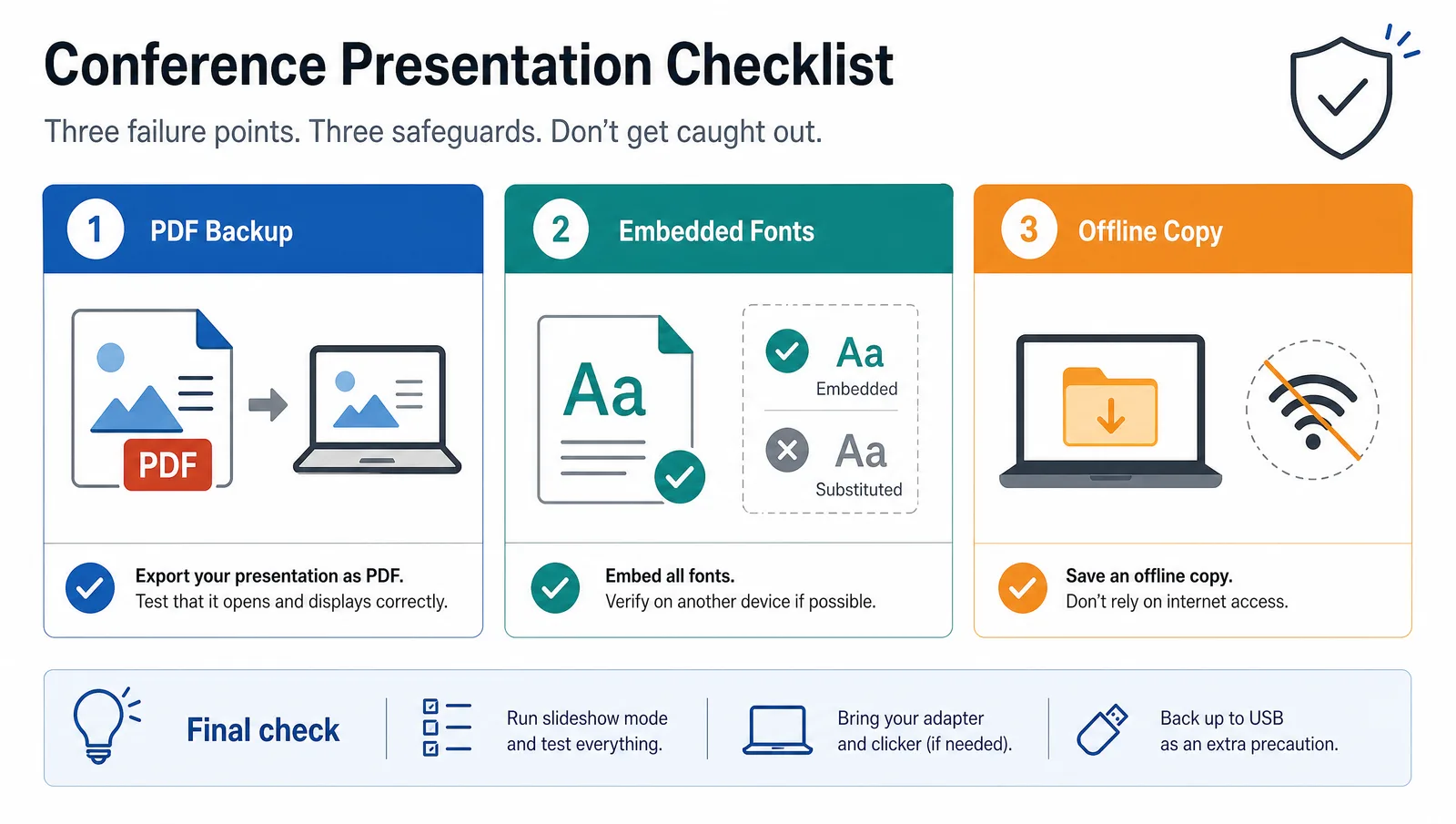
Always carry a PDF export on a USB stick, with fonts embedded. It costs two minutes and it is the single most effective insurance against AV problems, whichever tool you choose.
Create Scientific Figures Now
Describe your scientific figure in natural language — get publication-ready illustrations in minutes.
Try Free
Related Reading
Related reading: 7 Best BioRender Alternatives in 2026 (Free & Paid), 18 Scientific Poster Examples to Learn From in 2026.