Official Keystone Structural Biology 2026 guidelines: the 1x1 m poster board size, layout rules, the Sep 8 abstract deadline, and short-talk selection.
SciFig Team
SciFig editorial team
Keystone's Integrative Structural Biology meeting runs 28 September–1 October 2026 in Breckenridge, Colorado.
This is a practical guide to the official poster rules for the Keystone Symposia meeting Integrative Structural Biology: Bridging Fields, Techniques, and Scales: the poster board size and layout, and how short talks are selected from abstracts.
It also covers the September 8 poster abstract deadline, where abstracts appear afterward, and the structural-biology figures that make a poster or short talk worth stopping for. Every date and specification below links to official Keystone Symposia materials.
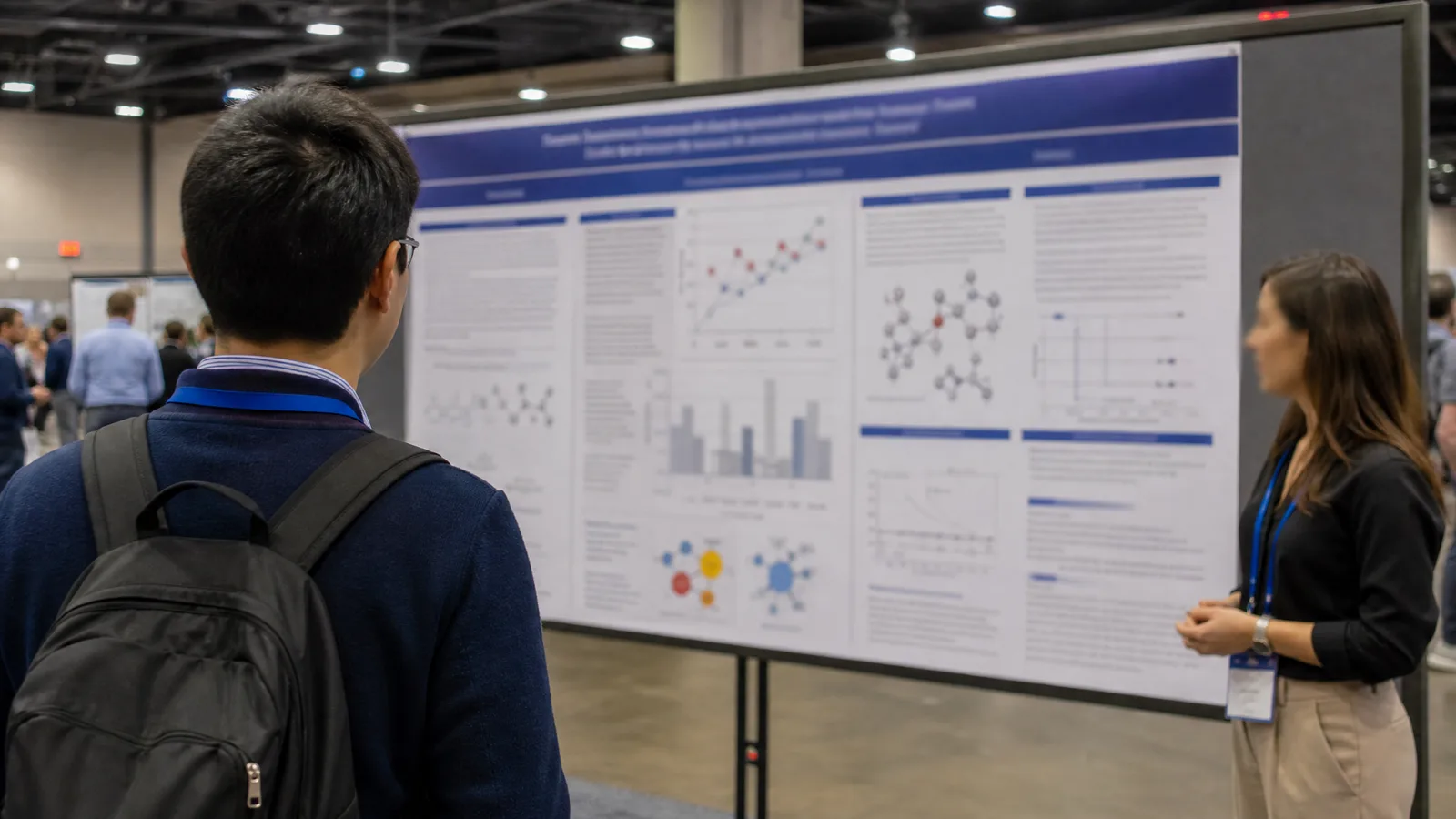
Keystone Integrative Structural Biology 2026 poster session in Breckenridge: a presenter explains a 1 by 1 metre poster with a title bar and multi-panel layout (Figure generated with SciFig)
Transparency note: Illustrations in this article were generated with SciFig AI and reviewed by the author for scientific accuracy. Factual claims about dates and specifications link to official Keystone Symposia materials.
1. Keystone Structural Biology 2026 at a Glance: Dates, Venue, and Deadlines
The Keystone Symposia meeting Integrative Structural Biology: Bridging Fields, Techniques, and Scales runs 28 September–1 October 2026 at the Village at Breckenridge in Breckenridge, Colorado, and the poster abstract deadline that still matters is 8 September 2026. Organized by Alex de Marco, Giulia Palermo, and Niccolò Banterle, this is a focused, single-track symposium rather than a large convention — which shapes both the poster format and how work is selected.
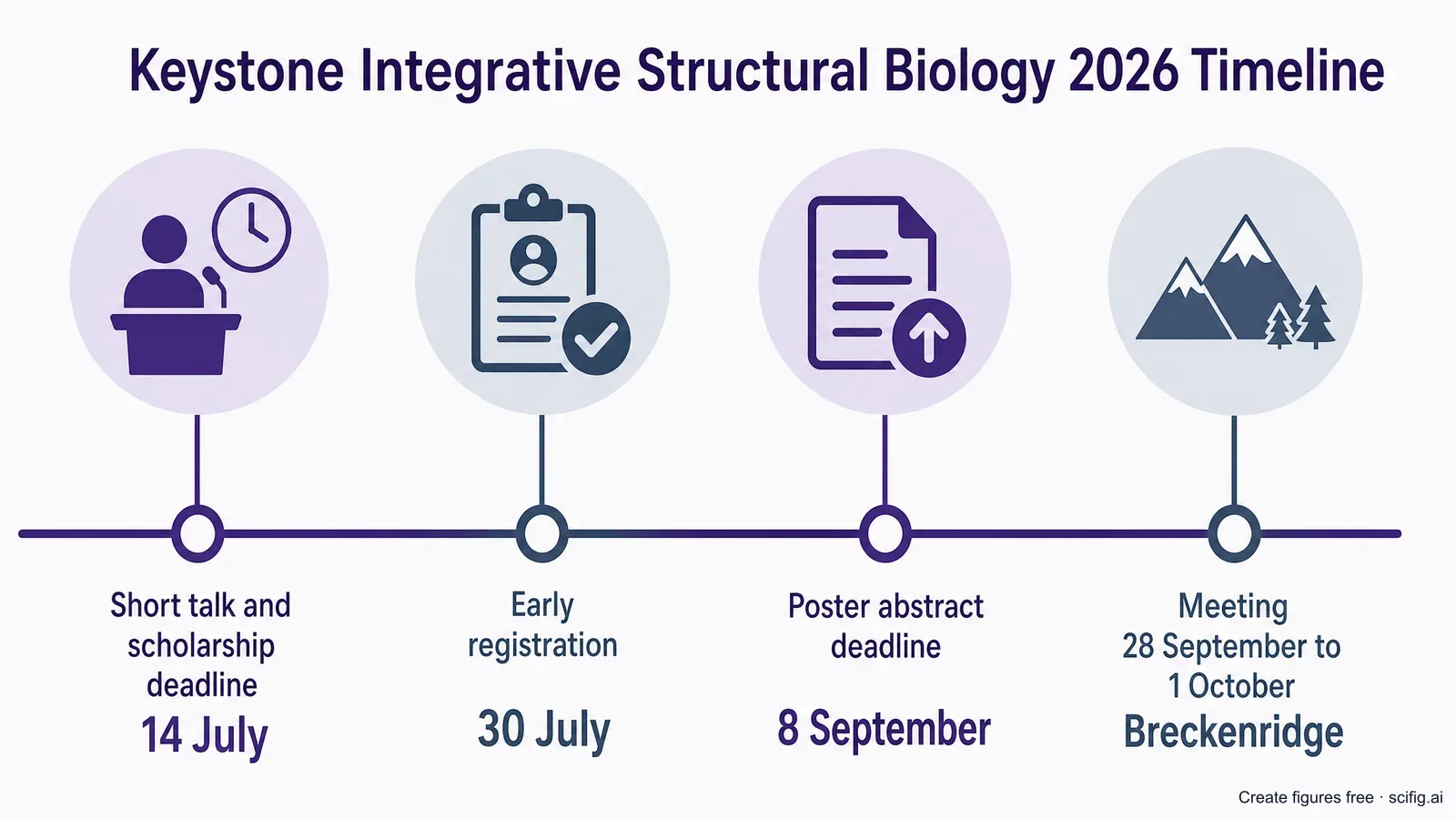
Here is the Keystone 2026 timeline that matters, drawn from the official meeting page and the deadlines page.
Keystone Integrative Structural Biology 2026 timeline: short talk and scholarship 14 July, early registration 30 July, poster abstract 8 September, meeting 28 Sept-1 Oct (Figure generated with SciFig)
Date
Milestone
14 July 2026
Short talk abstract and scholarship application deadline
If you are reading this after 14 July 2026, the short-talk and scholarship windows have closed — but you can still submit a poster abstract through 8 September 2026 and present at one of the two evening poster sessions.
2. Keystone 2026 Poster Board Size (1×1 m), Layout, and Design Rules
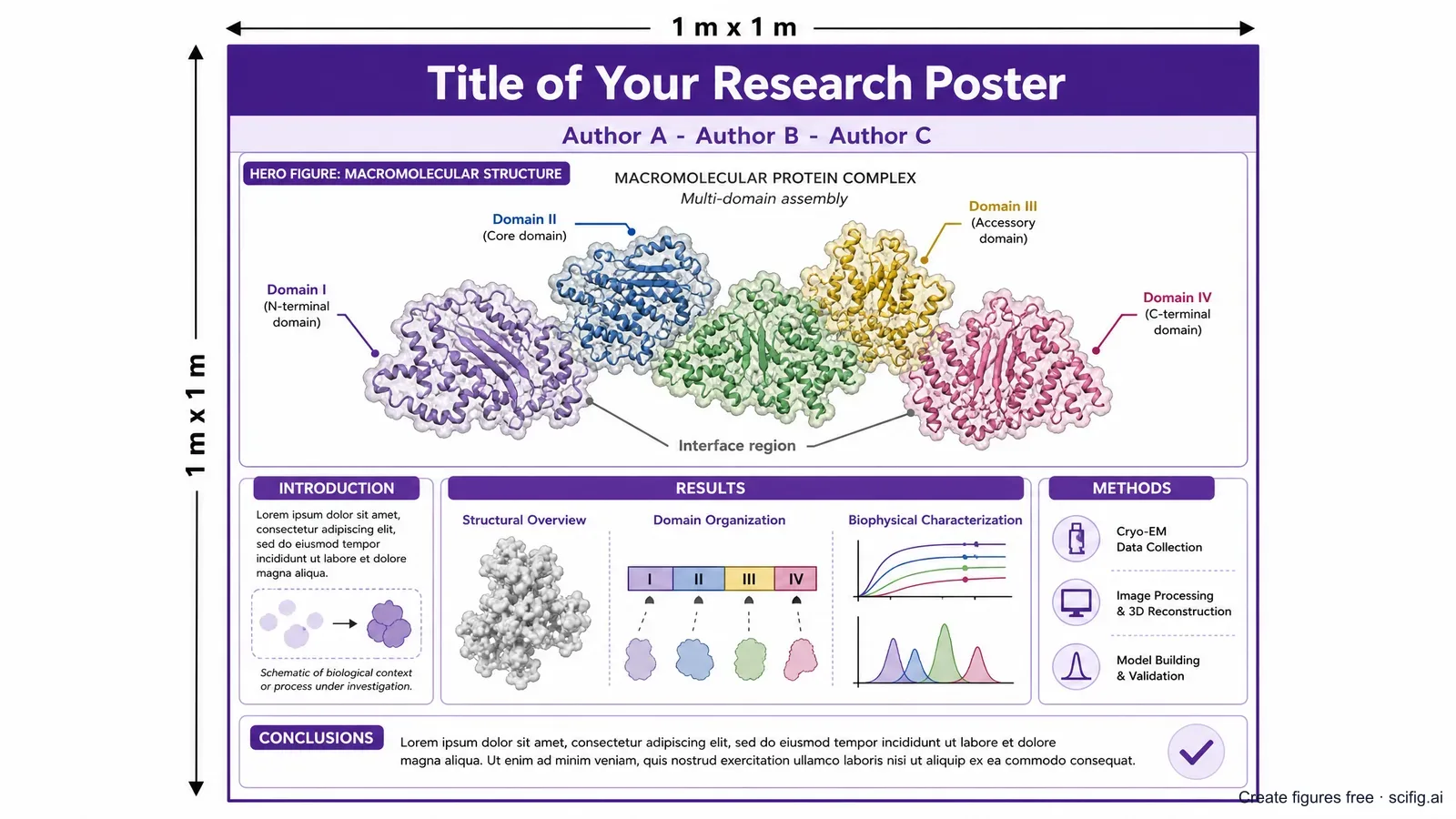
A Keystone 2026 poster must fit a board of maximum 1 metre × 1 metre (about 3.3 × 3.3 ft) — oversized posters cannot be accommodated — and Keystone provides the board plus push pins or adhesive. This is a board dimension, not a print-shop "poster size" like a large landscape sheet, so design a square-ish layout that fits within 1 × 1 m. Posters are displayed at two evening sessions: Poster Session 1 on Tuesday and Poster Session 2 on Wednesday, both 7:30–10:00 PM.
Keystone's official poster display guidelines recommend a layout that reads from 3–5 feet away — a sans-serif font, a light background with dark text, bullet-style content, and high-resolution images — organized as Title, Authors and Affiliations, Introduction, Materials and Methods, Results, Conclusions, References, Acknowledgments, and Contact Information. Because shipping a printed poster risks loss or delay, Keystone suggests carrying a fabric or vinyl poster that folds into your luggage.
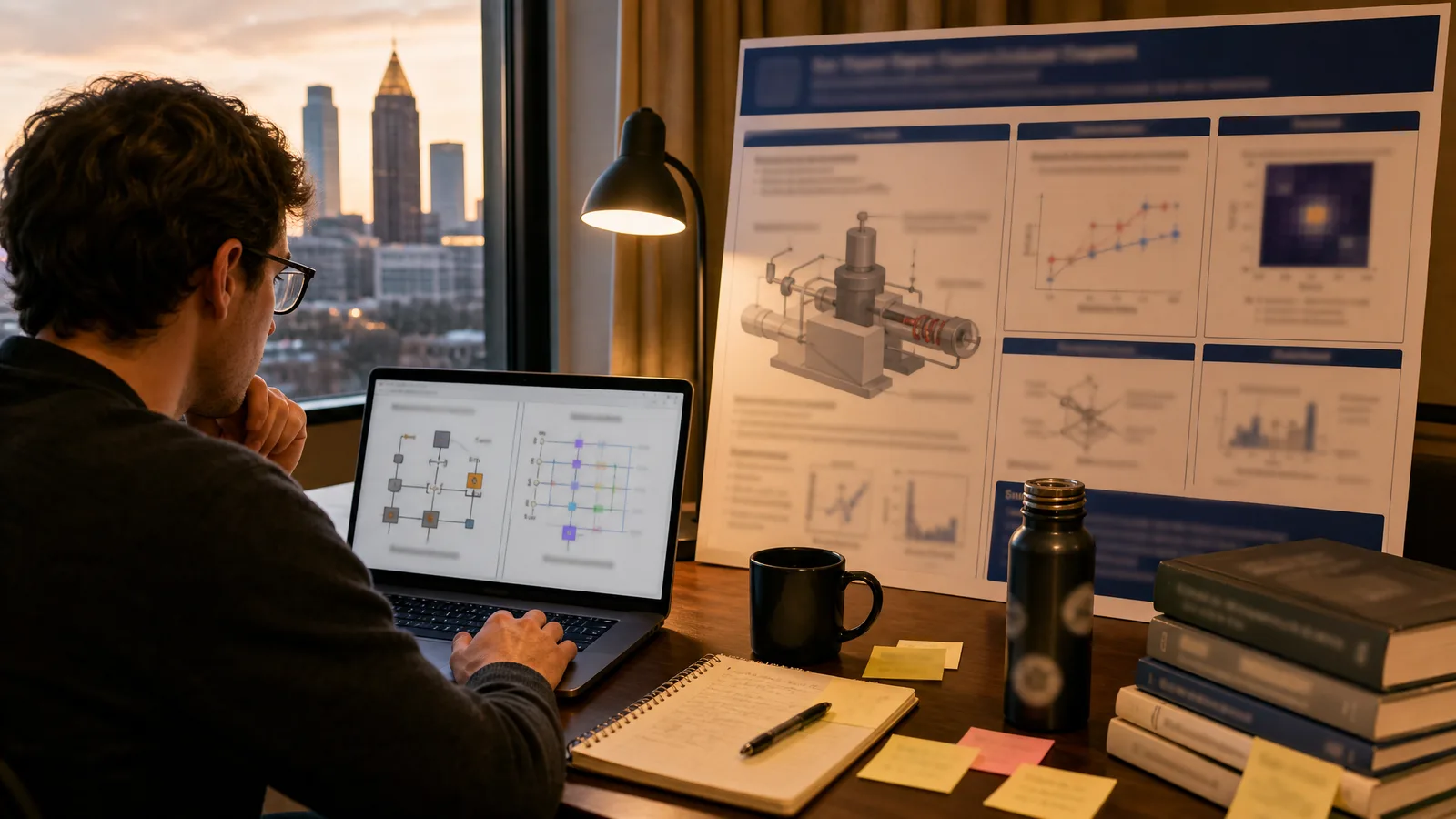
Keystone 2026 structural biology poster template: a 1 by 1 metre board layout with a title bar, author row and IMRaD panels around a hero molecular figure (Figure generated with SciFig)
The structural-biology figures on that board — a multiscale integration schematic, a protein complex mechanism — are the slowest part of the layout to produce. You can generate publication-grade versions online for free and drop them straight into your composition.
Need a hero figure for your Keystone poster?
Start from a multiscale integration schematic or a protein complex mechanism before you build your 1 x 1 m board.
A 1 × 1 m board is square, so an A0 portrait sheet will not scale into it — the columns go stubby. Our conference poster templates include a square layout built as a balanced grid rather than a squeezed rectangle; resize it down to 1 × 1 m and the structure still reads.
3. From Abstract to Short Talk: Selection and the Sep 8 Poster Deadline
Keystone selects some short talks directly from submitted abstracts: an abstract submitted by the 14 July 2026 deadline was considered for both a short talk and a poster, while abstracts submitted after that date are considered for a poster only. Selection is by peer review from the meeting organizers based on scientific quality, and there is a $50 abstract submission fee. The poster abstract deadline is 8 September 2026.
For a focused Keystone symposium, the abstract is your entry point — there is no separate journal supplement or e-poster system to navigate. Submit through the Keystone portal, and after the poster deadline, plan your single 1 × 1 m board around the one figure that carries your story. Scholarships (up to $1,500, judged on the poster abstract) required application by 14 July 2026.
Keystone publishes no slide template or time limit for short talks, so the deck starts from an empty file. Our scientific presentation templates are 16:9 academic decks already ordered the way a short conference talk runs: background, methods, results, discussion, conclusion.
4. What Figures Do You Need for a Structural Biology Poster?
A structural-biology poster at Keystone lives or dies on its central figure, and the meeting's integrative theme — bridging techniques and scales — calls for exactly the kind of schematic that is slow to draw by hand. Two figure types recur across the program's sessions on multiscale microscopy, computational integration, and structural dynamics.
On your poster and short-talk slides, the recurring structural-biology figure types are:
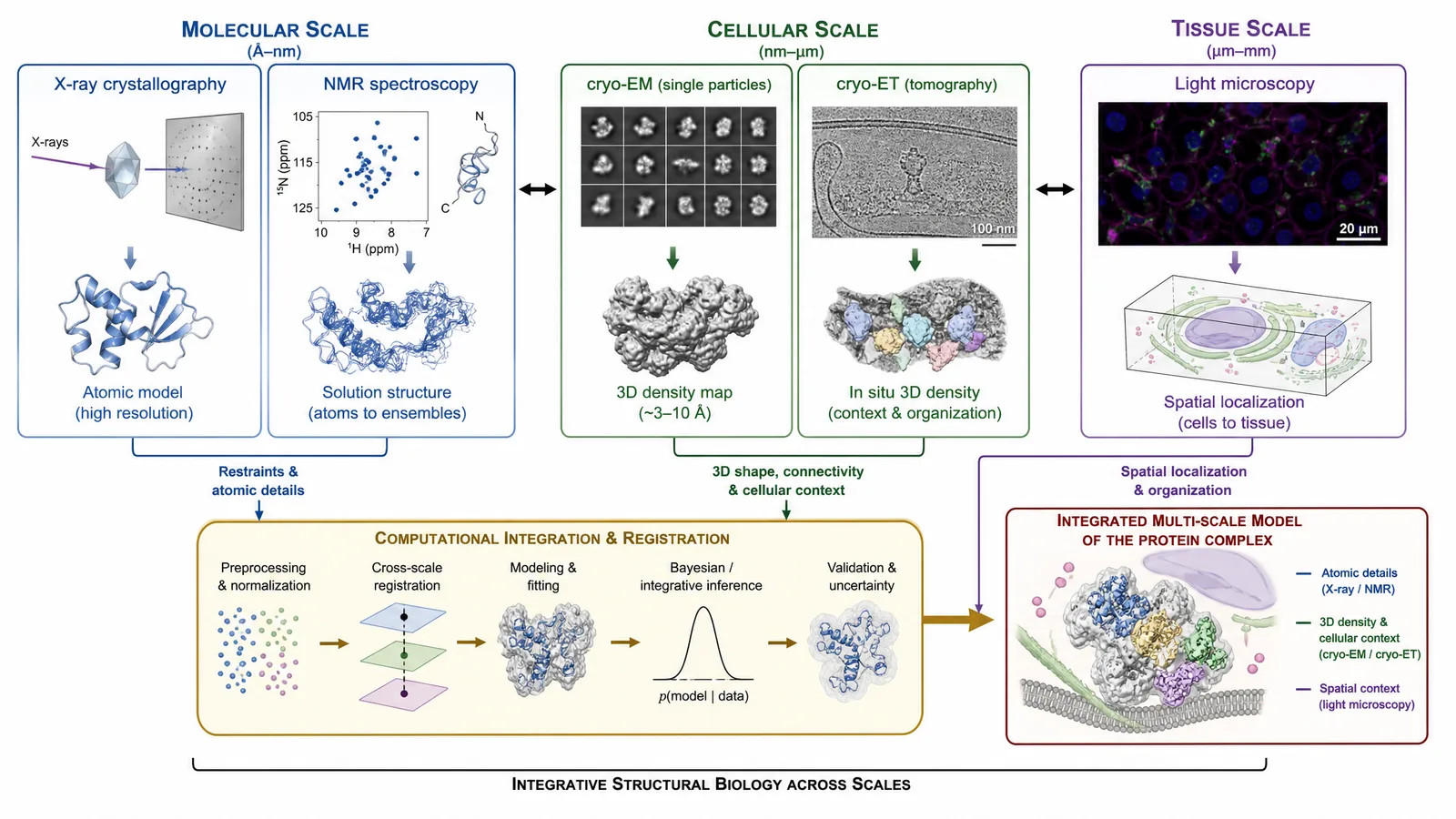
Multiscale / correlative integration schematic — how data from X-ray crystallography or NMR (molecular), cryo-ET and cryo-EM (cellular), and microscopy (tissue) are registered and integrated, echoing the meeting's multiscale-microscopy and correlative-dataset sessions.
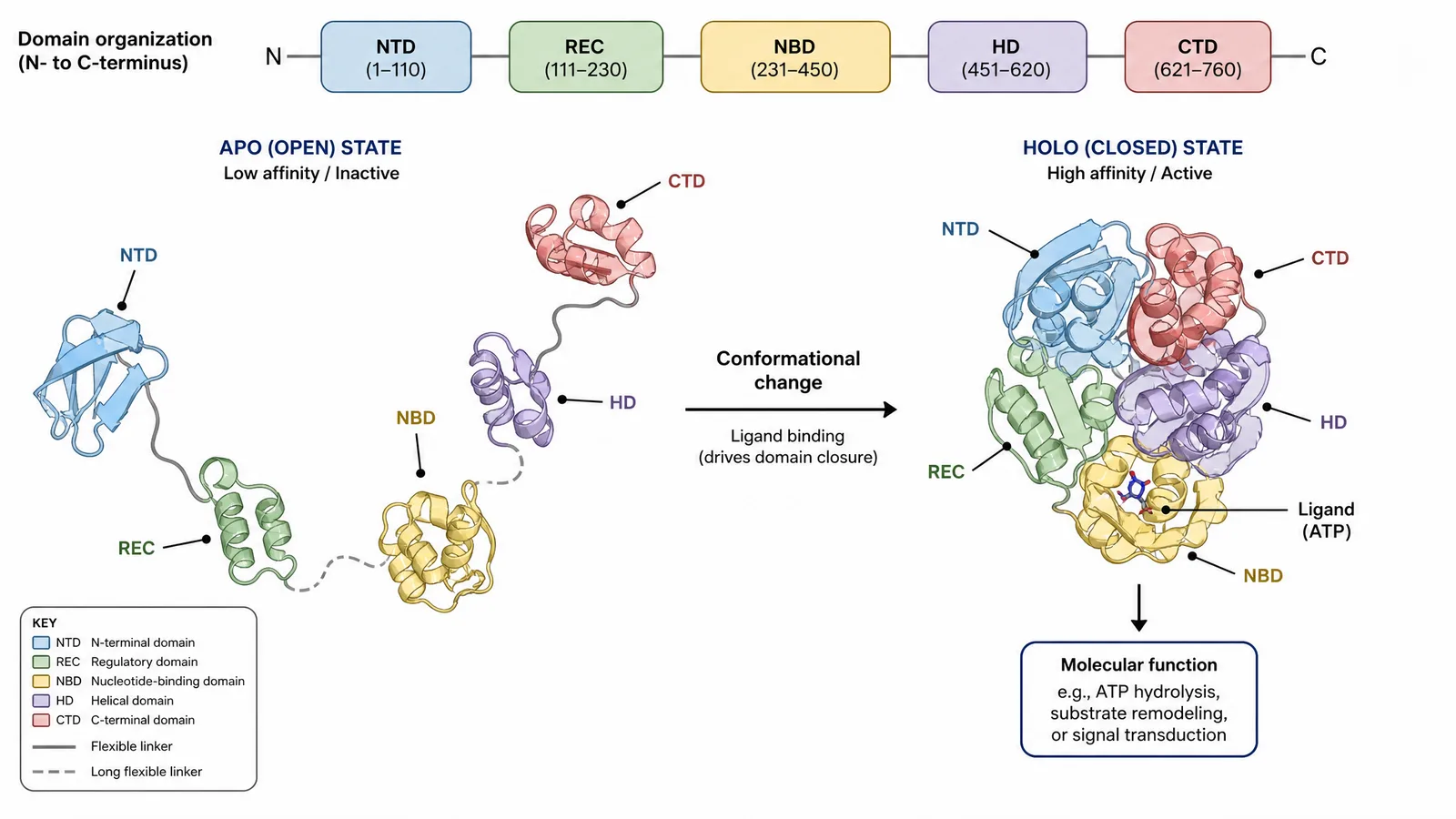
Protein complex structure–function mechanism — the domain architecture of a complex and how its conformational dynamics drive function, echoing the meeting's structural-dynamics and computational-integration sessions.
Keystone 2026 multiscale structural biology integration figure: X-ray and NMR molecular data, cryo-ET and cryo-EM cellular data registered into a single model (Figure generated with SciFig)
5. Designing a Winning Keystone Poster: Accuracy at Every Scale
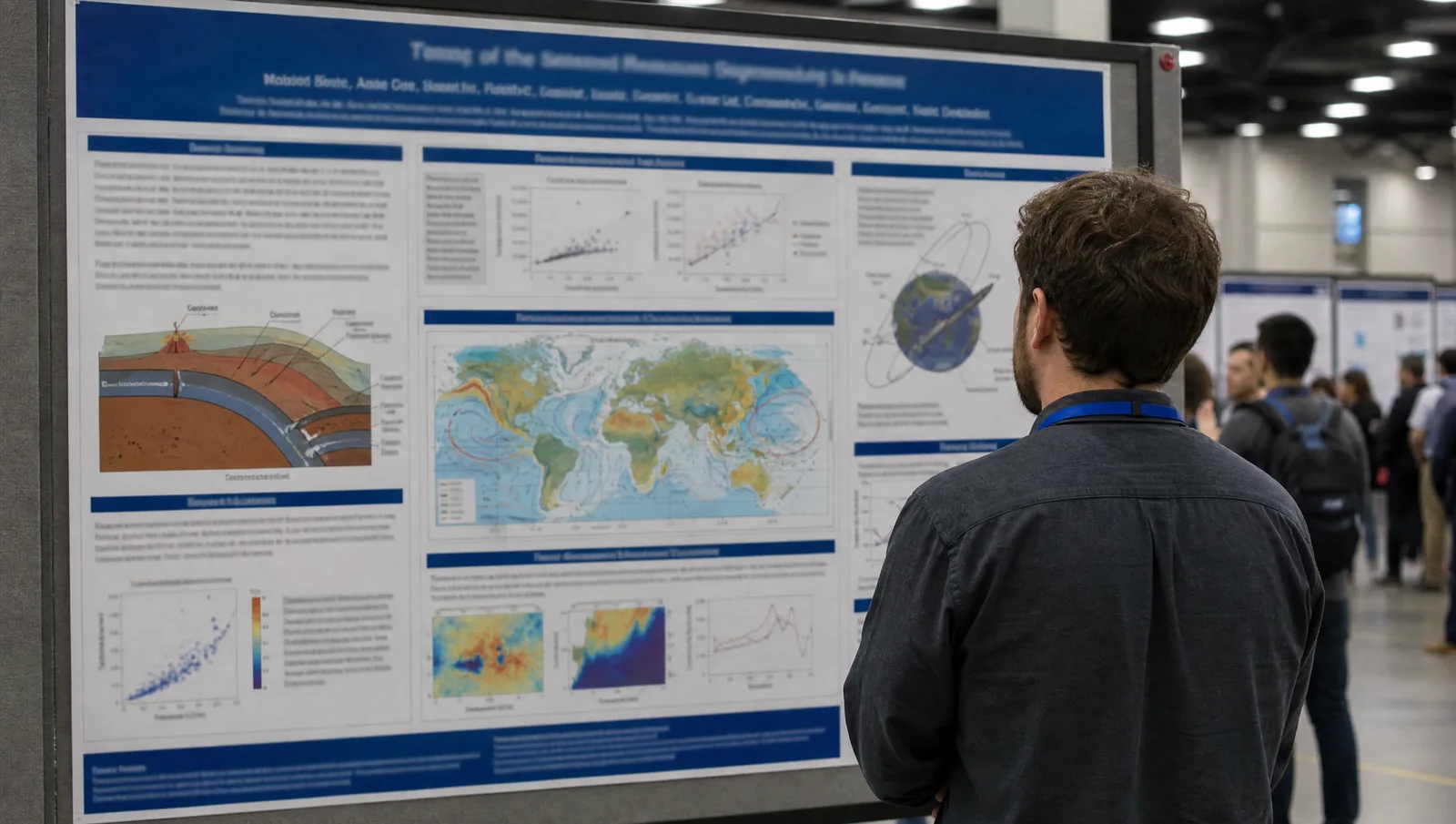
A strong Keystone poster passes two tests: it draws a colleague in during a busy evening session, and it is scientifically exact enough to survive scrutiny from a structural biologist who works on the same complex. In a single-track symposium, the people reading your 1 × 1 m board are specialists — so build around one dominant "hero" figure and make every domain, interface, and scale correct.
The second test is where scientific figures live or die — and where general-purpose AI image generators fall short. A tool like Nano Banana Pro or GPT Image can produce something that looks about 99% right, but on a structural figure 99% right is effectively 0% right: a domain in the wrong order, a mislabeled interface, or a broken multiscale registration turns a compelling poster into one that misleads a specialist. And a flat, raster AI image gives you no way to fix that last one percent.
This is the core difference with SciFig. Every figure is a fully editable SVG whose elements — domains, subunits, arrows, labels — you can correct individually, so you (the author who actually knows the structure) can adjust any element until the figure matches your science:
Domain architecture — keep the order and boundaries of a complex's domains correct rather than approximating them.
Multiscale registration — show how molecular, cellular, and tissue data actually align rather than a loose collage.
Conformational state — distinguish apo from holo, or open from closed, rather than blurring the dynamics your study is about.
Keystone 2026 protein complex mechanism figure: a multi-domain protein complex with labeled domains and a conformational change driving its molecular function (Figure generated with SciFig)
Whether your Keystone poster earns its attention comes down to whether these figures are accurate, clear, and legible at 3–5 feet — which is exactly where an editable AI figure workflow compresses days of design work into hours without giving up scientific control.
6. Create Your Structural Biology Figures with AI: The SciFig Workflow
You already have two things most colleagues do not: your accepted abstract and a clear understanding of your structure — use both to generate your figures online for free, then edit them to exactly right. Here is the SciFig workflow for a Keystone presenter:
Path 1 — Upload your accepted abstract PDF. Drop it into PDF-to-Figure. It parses your Introduction, Methods, and Results and returns a mechanism or integration schematic in one click. SciFig generates the figure, and every element stays editable so you can adjust it to your data and poster layout — no blank canvas.
Path 2 — Copy a structured prompt. For a mechanism or integration figure, Text-to-Figure gives more control. Copy and adjust to your study:
Schematic of integrative structural biology: X-ray and NMR molecular
structures, cryo-EM and cryo-ET cellular maps, and light microscopy
registered and combined across scales into a single integrated model
of a protein complex, with labeled domains.
Path 3 — Sketch and scan. If you sketched your hero figure on paper, photograph it and drop it into Sketch-to-Figure to get a publication-style version that preserves your topology.
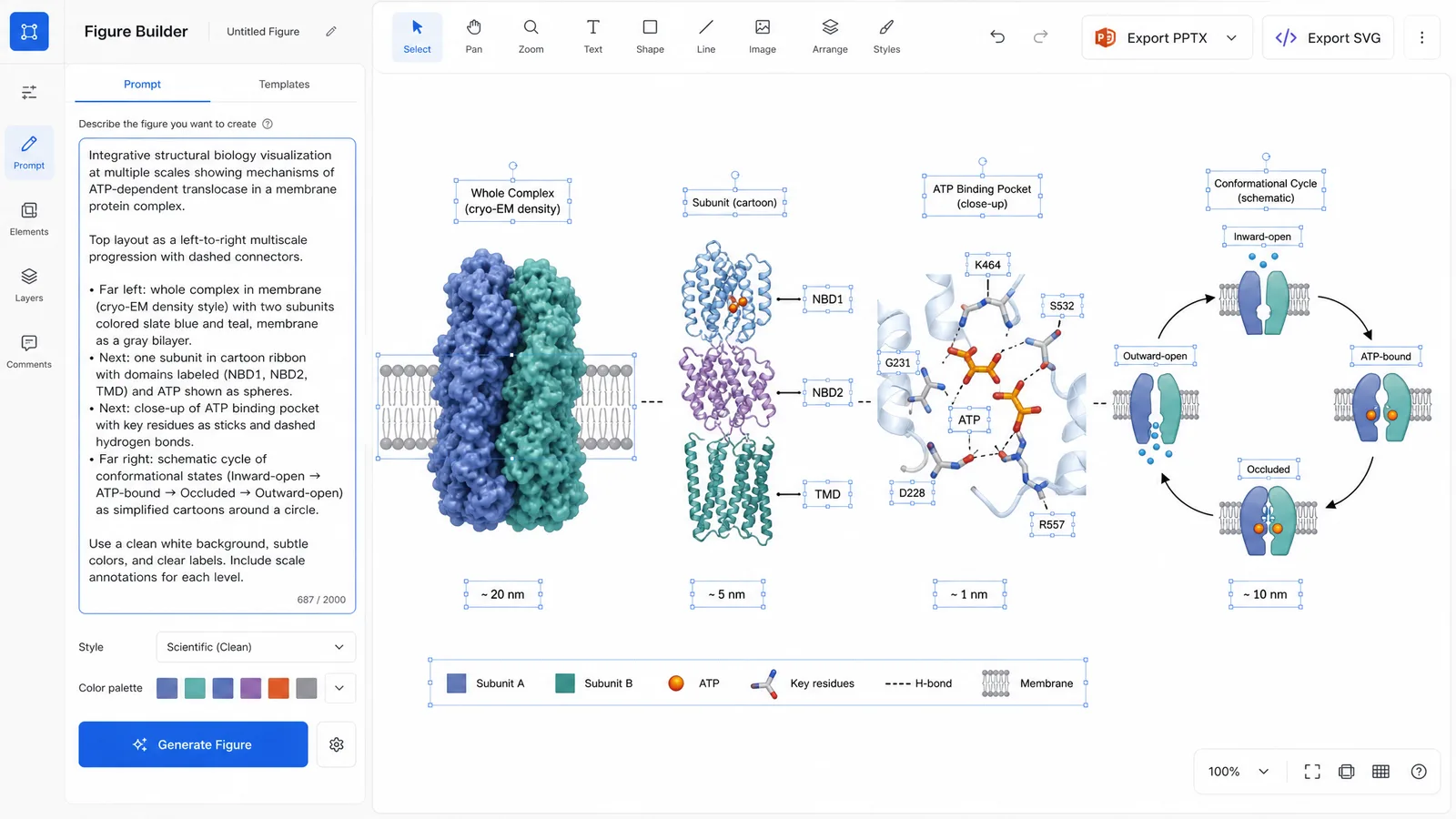
Keystone 2026 structural biology figure workflow in SciFig: an integrative structure prompt left, an editable SVG diagram right, PPTX and SVG export (Figure generated with SciFig)
From any path, you edit individual elements in the vector canvas — adjust labels, domains, colors — and export to editable PPTX or layered SVG at high resolution for your 1 × 1 m board. Start free: 150 credits on day one, plus daily check-in credits. For companion guides in this conference series, see the SITC 2026 poster guide and the ESMO 2026 poster guide.
FAQ
A Keystone 2026 poster must fit a board of maximum 1 metre × 1 metre (about 3.3 × 3.3 ft) — oversized posters cannot be accommodated. Keystone provides the board plus push pins or adhesive. Because this is a board dimension rather than a print-shop poster size, design a square-ish layout, and consider a fabric or vinyl poster that folds into luggage to avoid shipping loss.
The Keystone Integrative Structural Biology poster abstract deadline is 8 September 2026. An abstract submitted by the earlier 14 July 2026 deadline was considered for both a short talk and a poster; abstracts after that date are considered for a poster only. There is a $50 abstract submission fee.
Keystone abstracts are not published in a journal or printed abstract book — they are posted on the Keystone Symposia website and its secure KS Connect mobile app, where meeting participants can view them for roughly 90 days after the meeting. There is no journal supplement to plan for, so the abstract and poster themselves are your record.
Keystone selects some short talks directly from submitted abstracts, by peer review from the meeting organizers based on scientific quality. An abstract submitted by 14 July 2026 was considered for both a short talk and a poster; later abstracts are considered for a poster only. You do not apply separately for a short talk — a strong abstract is the entry point.
Keystone provides poster display guidelines and the board (1 × 1 m) plus fixings, but recommends building your own layout — a light background with dark text, sans-serif font, bullet-style content, high-resolution images, readable from 3–5 feet, organized as Title, Authors, Introduction, Methods, Results, Conclusions, References, Acknowledgments, and Contact. The figures are yours to design.
References
All specifications and dates above are drawn from official Keystone Symposia materials, accessed July 21, 2026:
Disclaimer: This article is educational content focused on scientific figure design for conference posters and presentations. Dates and specifications are summarized from official Keystone Symposia materials linked above and were accurate at the time of writing; see the official Keystone Symposia website for current details before submitting or traveling. SciFig is a scientific figure platform covering AI illustrations (SciFig AI Illustration), data charts (SciFig DataChart), and flowcharts (SciFig FlowChart).
Keep going
Recommended resources
Templates, tools, and further reading for your research