Global Physics Summit 2027 Poster Template and Guidelines
APS 2027 poster planning guide: confirmed Atlanta dates and venues, unpublished specifications, abstract rules, physics figure ideas, and a review workflow.
SciFig Team
Scientific Illustration Experts
The APS Global Physics Summit 2027 runs April 11–16, 2027, in Atlanta, Georgia.
This practical guide separates confirmed 2027 facts from still-unpublished presenter details. It covers the current status of APS poster, ePoster, slide, and abstract rules, and explains which 2026 instructions must not be reused.
It also shows how to plan experimental apparatus diagrams, optical paths, quantum circuits, and system schematics while monitoring the official 2027 event page, any presenter instructions APS publishes, and any author notice you receive. Every meeting fact below links to official APS material.
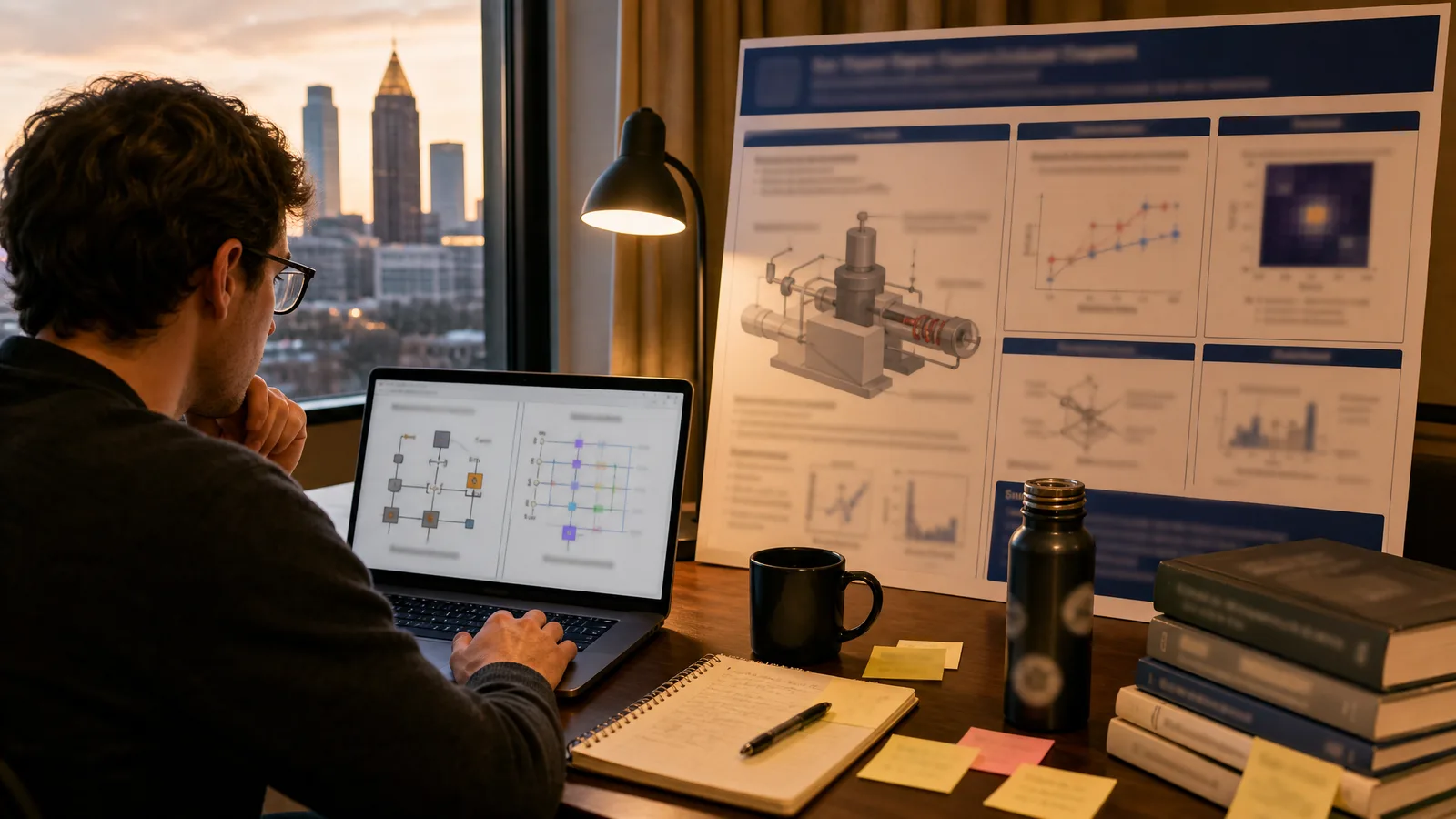
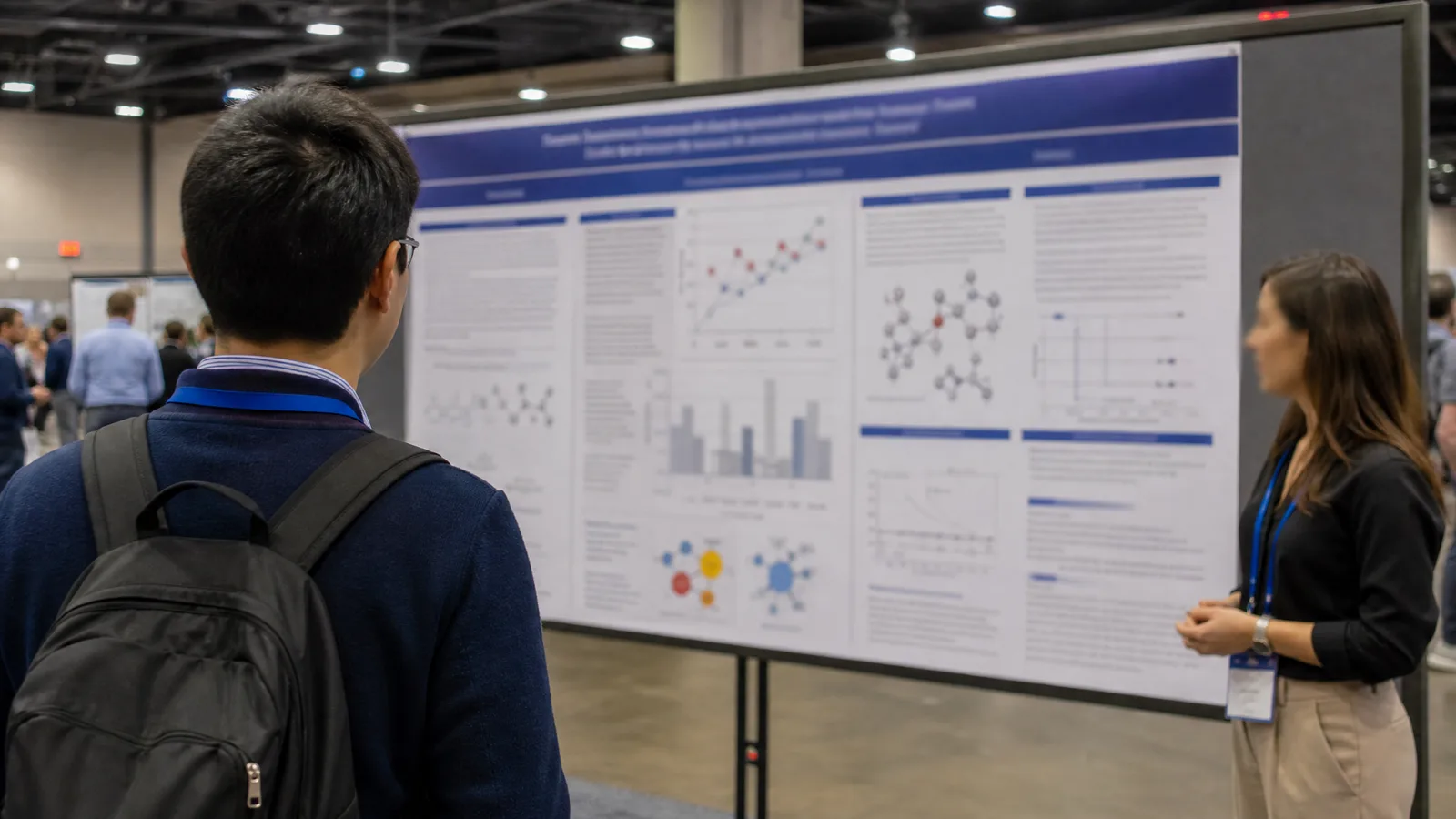
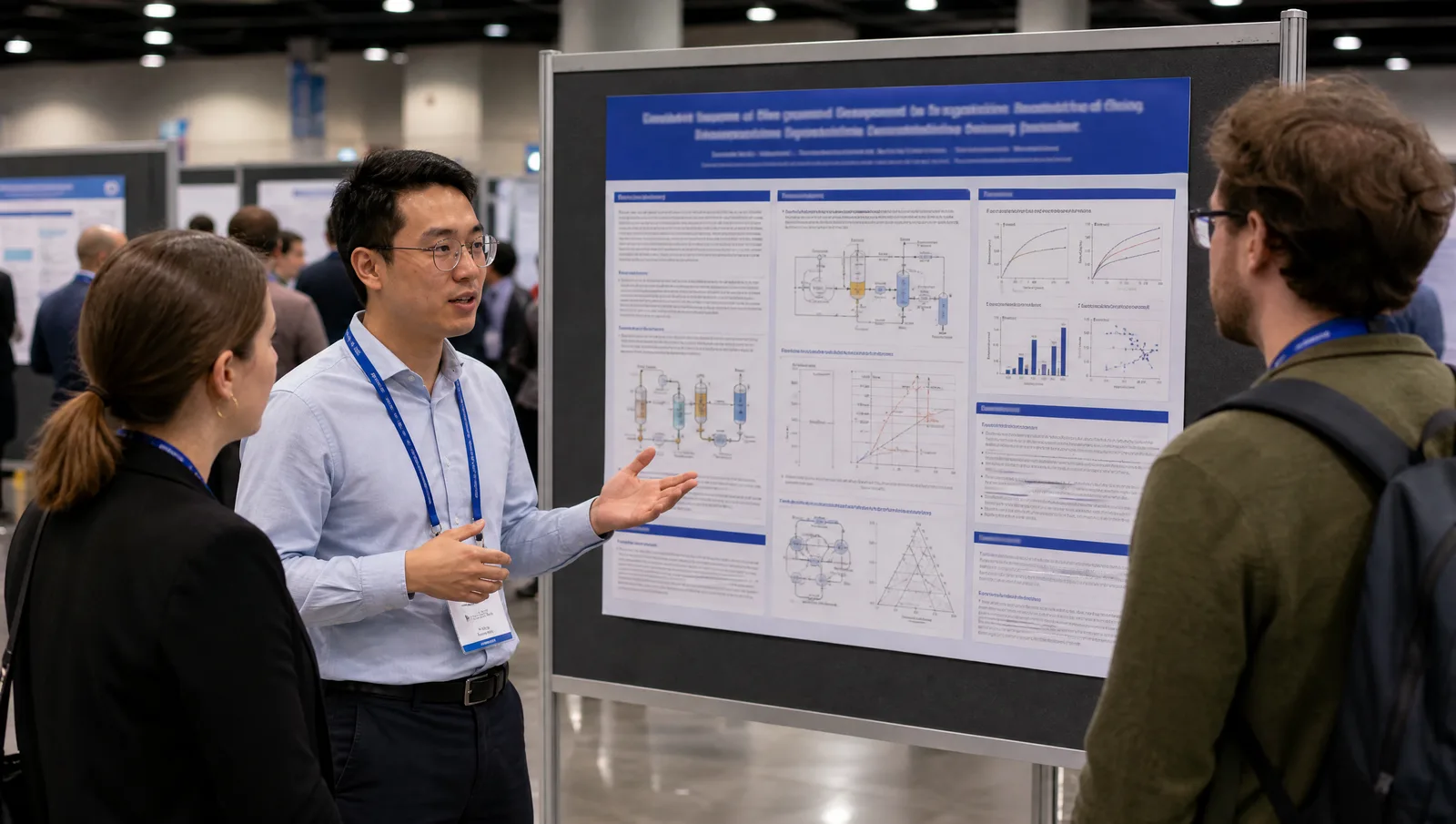
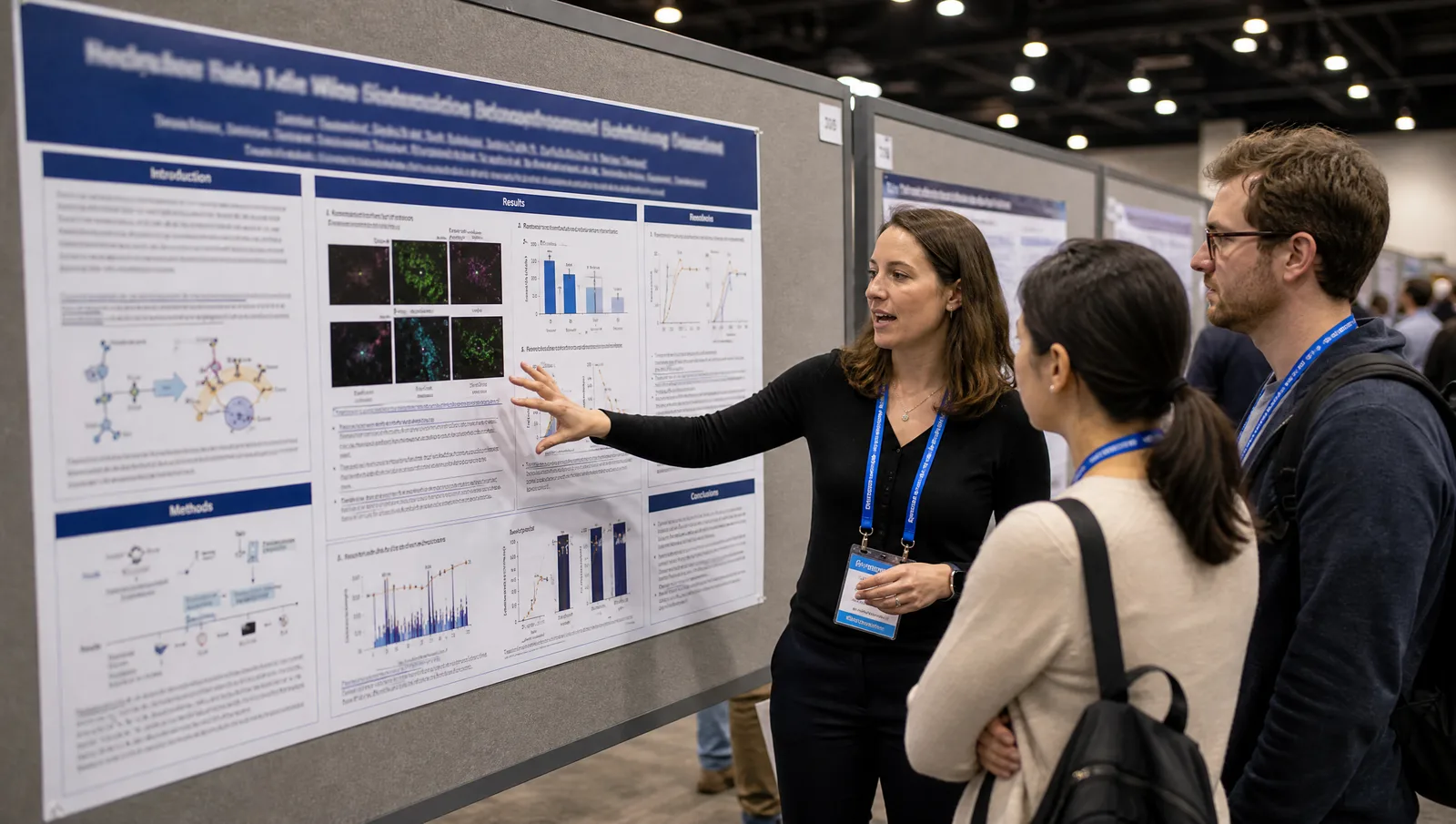
APS Global Physics Summit 2027 poster preparation scene with a physicist reviewing schematic figures beside a draft poster (Figure generated with SciFig)
1. APS Global Physics Summit 2027 at a Glance: Dates, Venues, and Publication Status
APS has confirmed April 11–16, 2027, in Atlanta and lists the Georgia World Congress Center, Omni Hotel at Centennial Park, and Signia by Hilton as meeting venues. The official APS 2027 event page lists those venues, while the 2027 update page says the meeting will take place virtually and in Atlanta. The virtual component is confirmed; its presenter workflow is not.
Field
Official 2027 status
What presenters should do now
Meeting dates
April 11–16, 2027
Reserve the week; verify session-specific times later
Atlanta venues
Georgia World Congress Center, Omni Hotel at Centennial Park, and Signia by Hilton
Wait for the final session assignment before planning room logistics
Attendance mode
Atlanta and virtual
Do not infer the platform, upload format, or live/on-demand rules yet
Abstract submission deadline and acceptance notification
Not published yet
Follow the official 2027 page and email updates
Poster, ePoster, and slide specifications
Not published yet
Do not print, upload, or lock a slide canvas from a previous year
Scientific program and abstract archive
Not published yet
Recheck once APS opens the 2027 program
APS has not published either the 2027 acceptance date or a poster or slide upload deadline, so there is not yet enough official information for a reliable submission timeline. Use the status table above, then recheck the official 2027 event page, any presenter instructions APS publishes, and any author notice you receive before setting production milestones.
2. APS 2027 Poster Size, Format, and Template
APS has not yet published the 2027 poster size, orientation, board dimensions, template, printing rules, or upload requirements. Do not set a final PowerPoint page size or order printing from a previous-year number. Build the scientific figures and a flexible content hierarchy now, then lay them out in the final poster after APS publishes the 2027 presenter specifications.
Warning
The current in-person presenter instructions are explicitly labeled for Denver and the 2026 Summit. That page listed a 96 × 48 inch maximum for 2026, but it does not establish the APS 2027 poster size. Treat it as historical context only, not as a printing specification.
For now, prepare a robust content grid without guessing the board size: one claim-led title, a short context block, a dominant scientific figure, a small number of result panels, and a conclusion that can be read at a glance. Use the scientific poster examples guide to compare hierarchy patterns, but keep the final proportions fluid until APS publishes the 2027 template or dimensions. When you are ready to print, check the official APS 2027 event page and the official presenter-instructions page for the current release.
Build the physics figure before you lock the poster canvas
Draft your apparatus, optical path, quantum circuit, or system schematic now, then place it after you verify the official 2027 size.
Since no 2027 size is on record, the only safe start is a layout you can rescale rather than rebuild. Our conference poster templates ship every common board size in editable PowerPoint, portrait and landscape — build the sheet now and switch files once APS publishes the 2027 specification.
3. APS 2027 ePoster and Slide Instructions: What to Verify
APS has confirmed a virtual component for the 2027 Summit, but none of the 2027 presenter instructions — the ePoster requirement, poster PDF format, video option, slide ratio, slide template, file type, or upload deadline — has been published. The available Summit presenter pages still describe the 2026 meeting. They are useful as future recheck locations, not as evidence that the same workflow will apply in 2027.
The table below lists what APS asked for in 2026 as a picture of the questions the Summit usually answers. None of it carries over to 2027 automatically.
Presenter question
What APS asked for in 2026
Is an ePoster or one-page PDF required?
A one-page poster PDF and an optional video
What is the poster or video upload deadline?
March 12, 2026 on the virtual page
What slide format is accepted?
PDF or PowerPoint
When must slides be uploaded?
At least three hours before the talk
Is the virtual presentation live or on demand?
Several presentation modes
Before uploading anything, check the official 2027 event page, any presenter instructions APS publishes, and any author notice you receive. Contact APS if the general instructions and your notice differ.
4. APS Abstract and Oral Presentation Guidelines Already on Record
APS standing policy already defines useful abstract limits and typical talk lengths, but it does not supply the missing 2027 submission or acceptance dates. The contributed abstract guidelines apply to oral and poster submissions at the Global Physics Summit; the separate speaker and abstract guidelines cover invited speakers. Treat these as policy baselines and still check the 2027 call and assignment when they arrive.
APS policy item
Contributed abstract or talk
Invited abstract or talk
Abstract length
Approximately 1,300 characters
Approximately 2,000 characters
Eligibility / authorship
APS members and reciprocal-society members may submit; APS members may list a non-member presenter
One author: the invitee
Multiple submissions
One contributed oral per presenting author; additional technical abstracts may be posters if space permits
An invited speaker may also submit one contributed abstract and poster
Summit talk time
10 minutes to present + 2 minutes for questions
Usually 30 minutes + 6 minutes for questions
Editing / notice
Summit contributed abstracts can be edited until the submission deadline
Invitation letters usually include submission and registration information in October
The word usually matters for invited talks and letters: it is not a promise of a specific 2027 date or assignment. Likewise, the general contributed-talk timing does not replace a session-specific author notice.
APS has not published a 2027 slide ratio or template either, so a standard 16:9 academic deck is the safe default. Our scientific presentation templates are 16:9 and already ordered the way a contributed talk runs — useful when a 10-minute slot leaves no time to design structure from scratch.
5. Physics Figures for an APS 2027 Poster: Apparatus, Optics, and Quantum Circuits
In our view, a strong APS physics poster needs figures that explain relationships, not decorative images: an experimental apparatus, an optical path, a quantum circuit, or a system schematic should let another physicist trace what enters, what changes, what is measured, and what is reported. Choose the figure that carries your central claim, then make the remaining panels support it rather than competing with it.
For planning purposes, four figure jobs are especially useful:
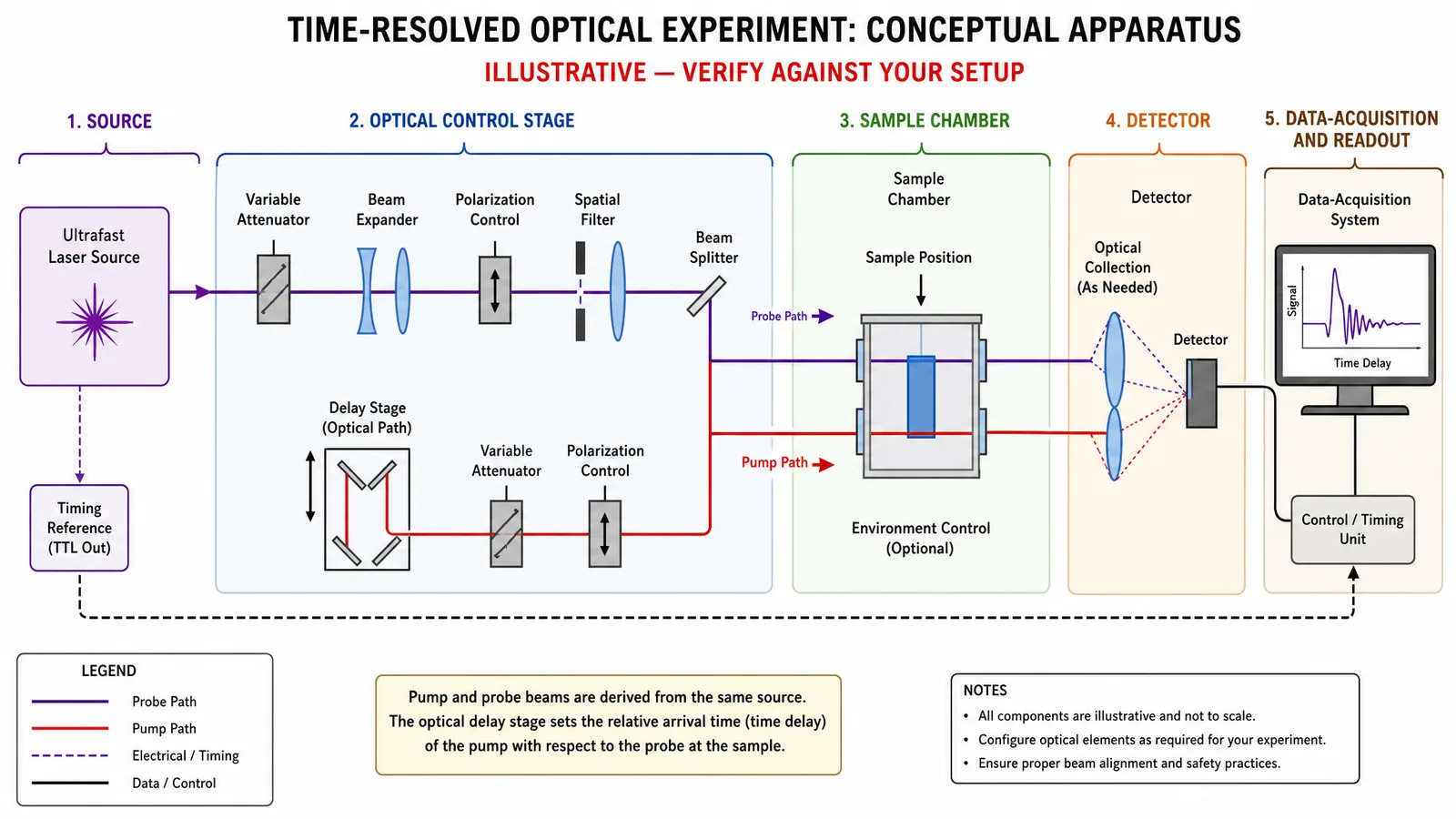
Experimental apparatus diagram — show source, control stage, sample or device, detector, and readout in the order that matches the real setup.
Optical path — distinguish beam branches, propagation direction, components, sample interaction, and detection without ambiguous crossings.
System schematic — separate physical layers, electronics, feedback, and data flow at a level a reader can verify.
The same signal-flow discipline used in a research block diagram helps here: every box needs a defined role, and every arrow needs a meaning. Avoid using a generated statistical chart as a substitute for a plot made from your actual data.
Global Physics Summit 2027 apparatus schematic for a poster figure with laser source, optical control stage, sample chamber, detector, and data-acquisition readout (Figure generated with SciFig)
This apparatus image is an illustrative composition, not a claim about a real experiment. Replace its topology and labels with the source of truth from your lab notebook, instrument diagram, manuscript, or code before using the design.
Turn a physics description into a figure draft
Describe the real components and signal flow of your setup, then review every scientific relationship against your source material.
6. Design APS 2027 Poster Figures for Deliberate Author Review
An APS poster figure is ready only after the author has checked its technical meaning, because a polished figure can still contain a wrong connection, reversed arrow, altered unit, or mislabeled component. An editable workflow is valuable because it creates a correction path; it does not remove the need for expertise.
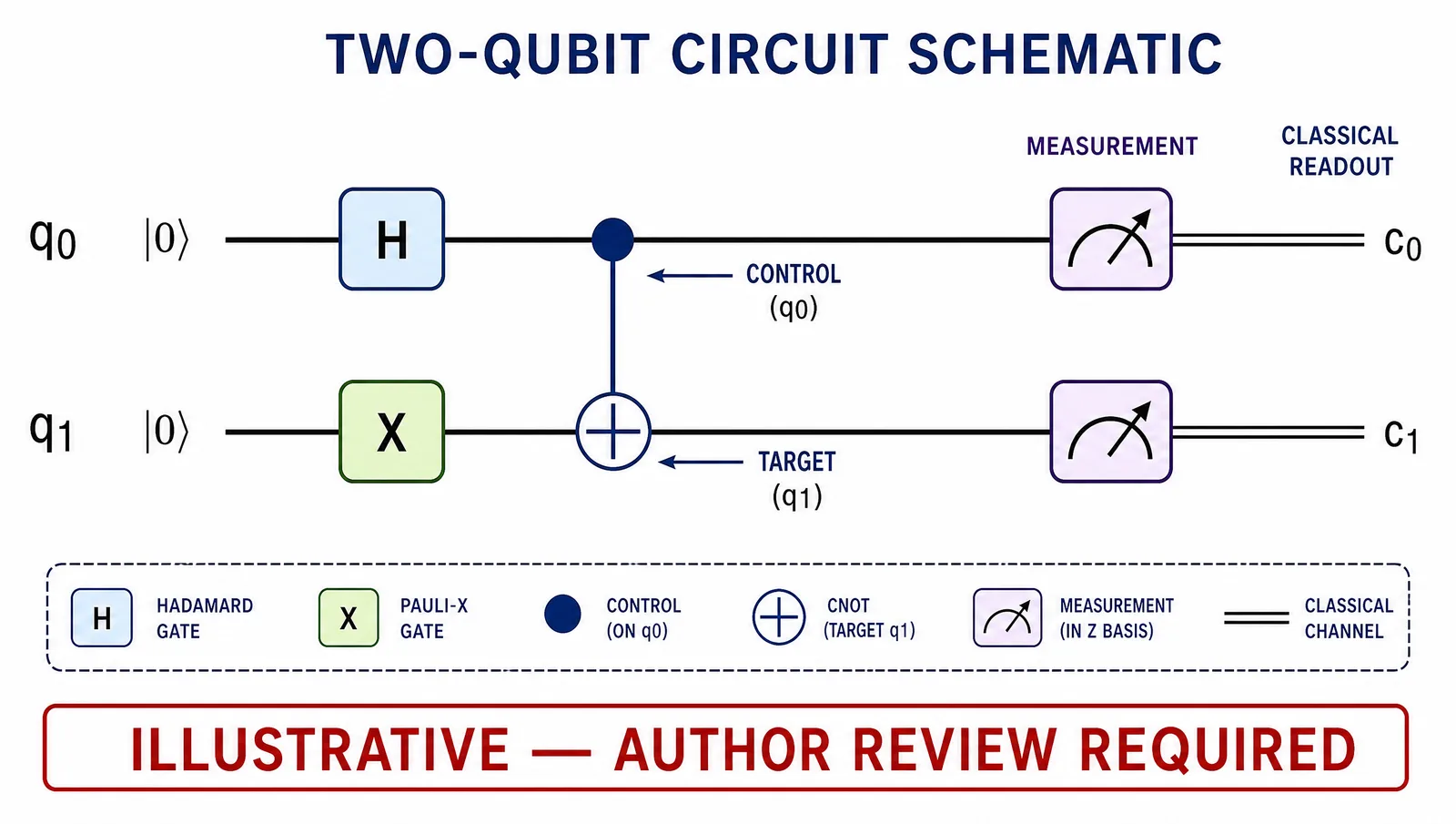
For an experimental apparatus or optical path, review the source-to-detector sequence, every branch, arrow direction, component label, unit, and readout connection. For a quantum circuit, review qubit order, gate order, control and target, measurement placement, and classical-bit mapping. For a broader system schematic, compare every feedback loop and polarity with the study's actual design.
Global Physics Summit 2027 quantum circuit with two qubit wires, a controlled operation, measurement, and classical readout (Figure generated with SciFig)
A practical review pass is easier when the poster has one dominant technical figure and enough whitespace to inspect it. The scientific color palette guide can help separate channels or subsystems, but color must reinforce the topology rather than conceal it.
Tip
Use an author-review checklist beside the figure: topology, direction, labels, units, symbols, measurement chain, and correspondence with the manuscript. If one item is uncertain, return to the source material before printing.
7. Create APS 2027 Scientific Figures in SciFig
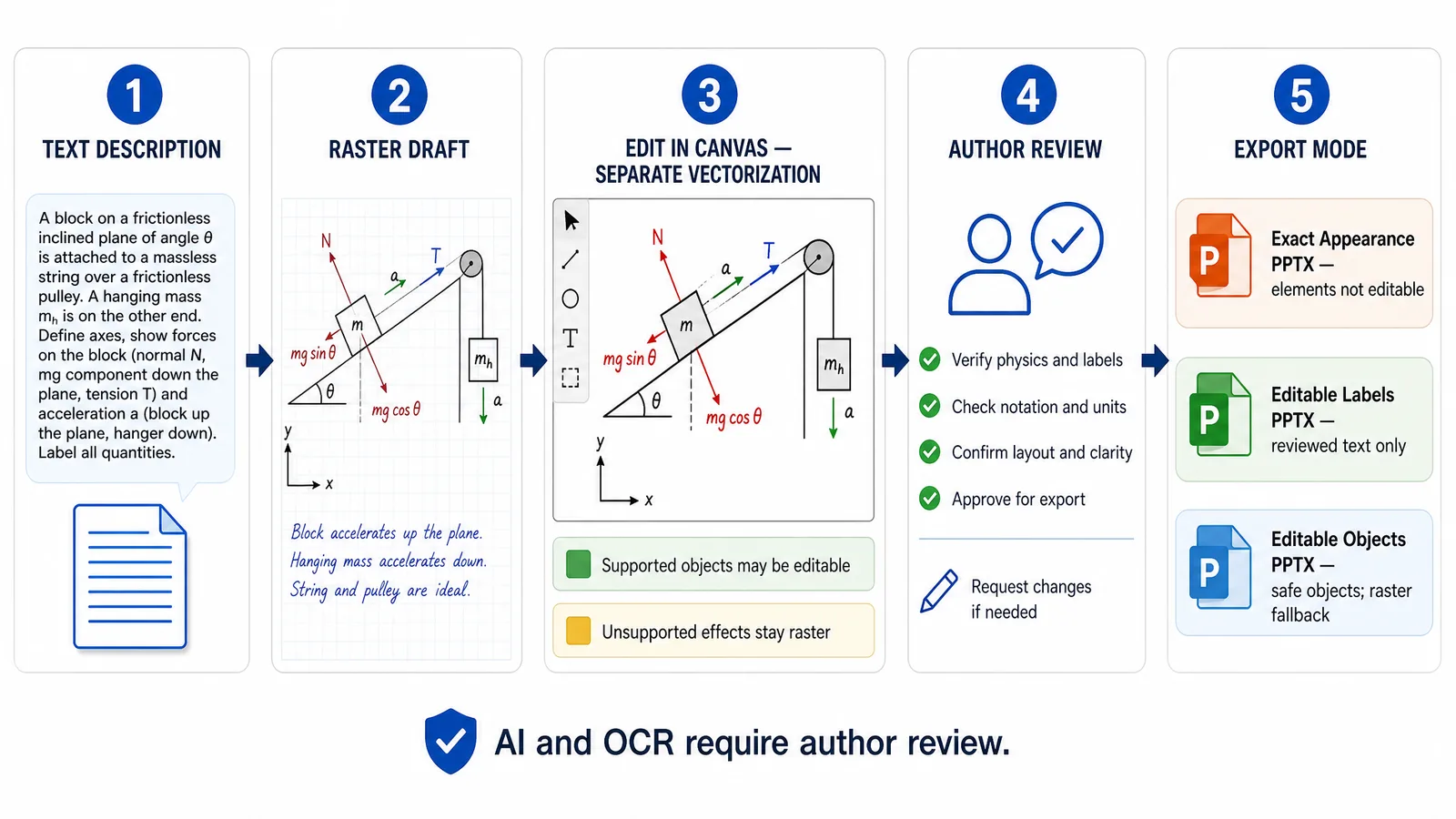
A defensible SciFig workflow treats the first output as a draft, opens Canvas to correct it, and makes the author responsible for the final technical check. Generation gives you a starting figure, not scientific evidence — so compare it with the source material before it reaches a poster.
Choose the input that matches the source of truth. Use Text-to-Figure for a written description; Photo-to-Figure when a photograph supplies subject geometry; Sketch-to-Figure when a sketch supplies layout topology; Reference-to-Figure when an image supplies style only, without carrying over its subject, components, or labels; PDF-to-Figure when a paper supplies scientific context; or Figure Enhancer for conservative clarity improvements followed by checks that the scientific content remains unchanged.
Compare the draft with the source. Check components, gate order, paths, labels, units, and omitted connections before polishing the layout.
Open Edit in Canvas and correct what needs correcting. Labels, arrows, geometry, and layout are all editable elements, so you can bring the figure in line with your apparatus or circuit diagram.
Export the figure. The export toolbar covers PPTX, SVG, JPEG, and PNG — an editable PPTX for a talk, a layered SVG for further vector work, and flat formats for printing or sharing.
Perform the author sign-off. Recheck the final exported asset at poster scale and against the manuscript or experimental record.
APS 2027 SciFig physics figure editor mockup with prompt input, editable quantum-circuit canvas, layers panel, and PPTX, SVG, JPEG, and PNG export buttons (Figure generated with SciFig)
Because the figure stays editable through export, the review pass and the correction happen in the same place: spot a reversed control line or a wrong unit, fix it in Canvas, and export again.
Start with a text description of your APS figure
Draft the figure, correct every label and connection in Canvas, and keep the author review as the final technical gate.
8. Where the APS 2027 Program and Abstract Archive Will Appear
APS has not published the 2027 scientific program, abstract archive, abstract-book PDF, or publication timetable yet. The official APS Global Physics Summit 2026 Meeting Archive contains the prior meeting's presentations, abstracts, and scholarly content, but it is evidence about 2026 only. Do not assume the 2027 archive will use the same path, launch date, or content model.
For now, use the official 2027 event page and its email-update link as the source of truth. Once APS opens the 2027 program, verify whether abstracts are searchable individually, whether a downloadable PDF exists, and how APS wants presenters to cite the record before adding a citation to your poster or CV.
Frequently Asked Questions
The APS Global Physics Summit 2027 runs April 11–16, 2027, in Atlanta, Georgia. APS lists the Georgia World Congress Center, Omni Hotel at Centennial Park, and Signia by Hilton, with a virtual component also confirmed. See the 2027 status summary.
APS has not published the 2027 poster size or orientation yet. The 96 × 48 inch number on the current presenter page is explicitly for 2026 and must not be used as a 2027 printing rule. See the poster-size status.
No official APS 2027 poster template has been published yet. Build flexible scientific figures now, but confirm final dimensions and orientation against the official 2027 event page, any presenter instructions APS publishes, and any author notice you receive. See the template status.
APS has not yet published the 2027 ePoster requirement, PDF format, video option, upload route, or deadline. APS has confirmed a virtual component only. See what to verify.
APS standing guidance limits contributed oral or poster abstracts to approximately 1,300 characters. Summit contributors may edit until the submission deadline, but APS has not published that 2027 date. See the abstract-policy table.
APS standing guidance gives contributed Summit talks 10 minutes plus 2 minutes for questions; invited papers are usually 30 minutes plus 6 minutes. Your 2027 author notice and session assignment remain authoritative. See the oral-guideline section.
APS has not published the 2027 archive route or timetable yet. The official 2026 archive is a previous-year example, not a promise for 2027. See the archive-status section.
APS has not published a 2027 AI-use or disclosure policy yet. Verify the final policy, review every generated label and relationship yourself, and describe the tool honestly if disclosure is required. See the SciFig workflow.
Editorial note: SciFig is an independent scientific illustration tool and is not affiliated with or endorsed by APS. This guide summarizes the official sources below and deliberately leaves unpublished 2027 specifications unresolved. Always confirm the current APS presenter instructions before printing or uploading.