AHA 2026 Poster & Presentation Guidelines and Template
Official AHA Scientific Sessions 2026 poster & presentation guidelines: poster size and format, the 2026 speaker PowerPoint template, and Circulation abstracts.
SciFig Team
SciFig editorial team
AHA Scientific Sessions 2026 runs November 6–9 at McCormick Place Convention Center in Chicago, Illinois.
This is a practical guide to the official poster and presentation rules for the American Heart Association's Scientific Sessions 2026: the poster size and format, the ePoster requirement, and oral time limits with the official 2026 speaker PowerPoint template.
It also covers where accepted abstracts are published in Circulation and the cardiovascular figures that make a poster or slide worth stopping for. Every date and specification below links to official AHA materials.
Need the file, not just the specs? Download our conference poster templates — 24 editable PowerPoint layouts, sized for both printed boards and e-posters.
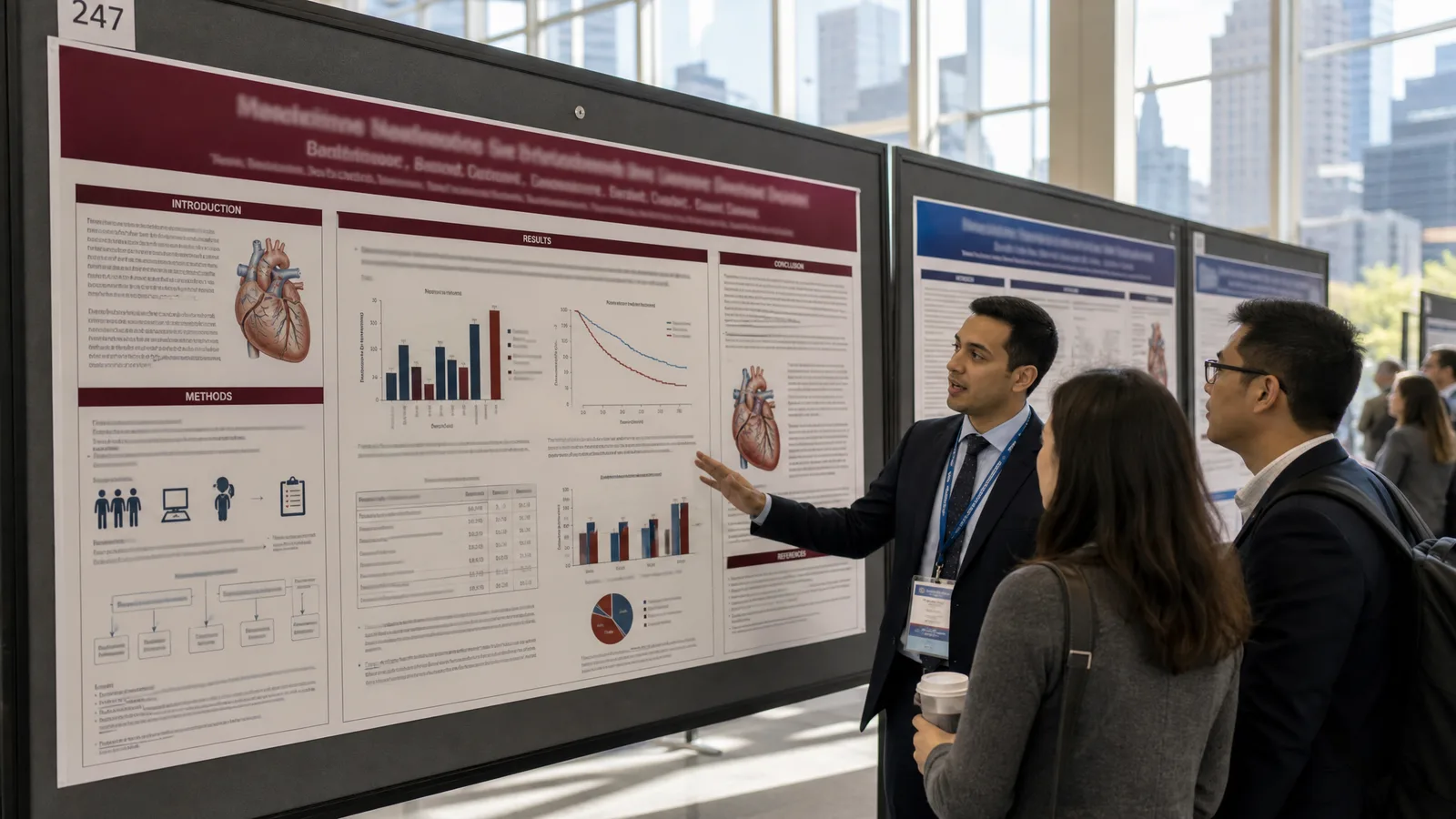
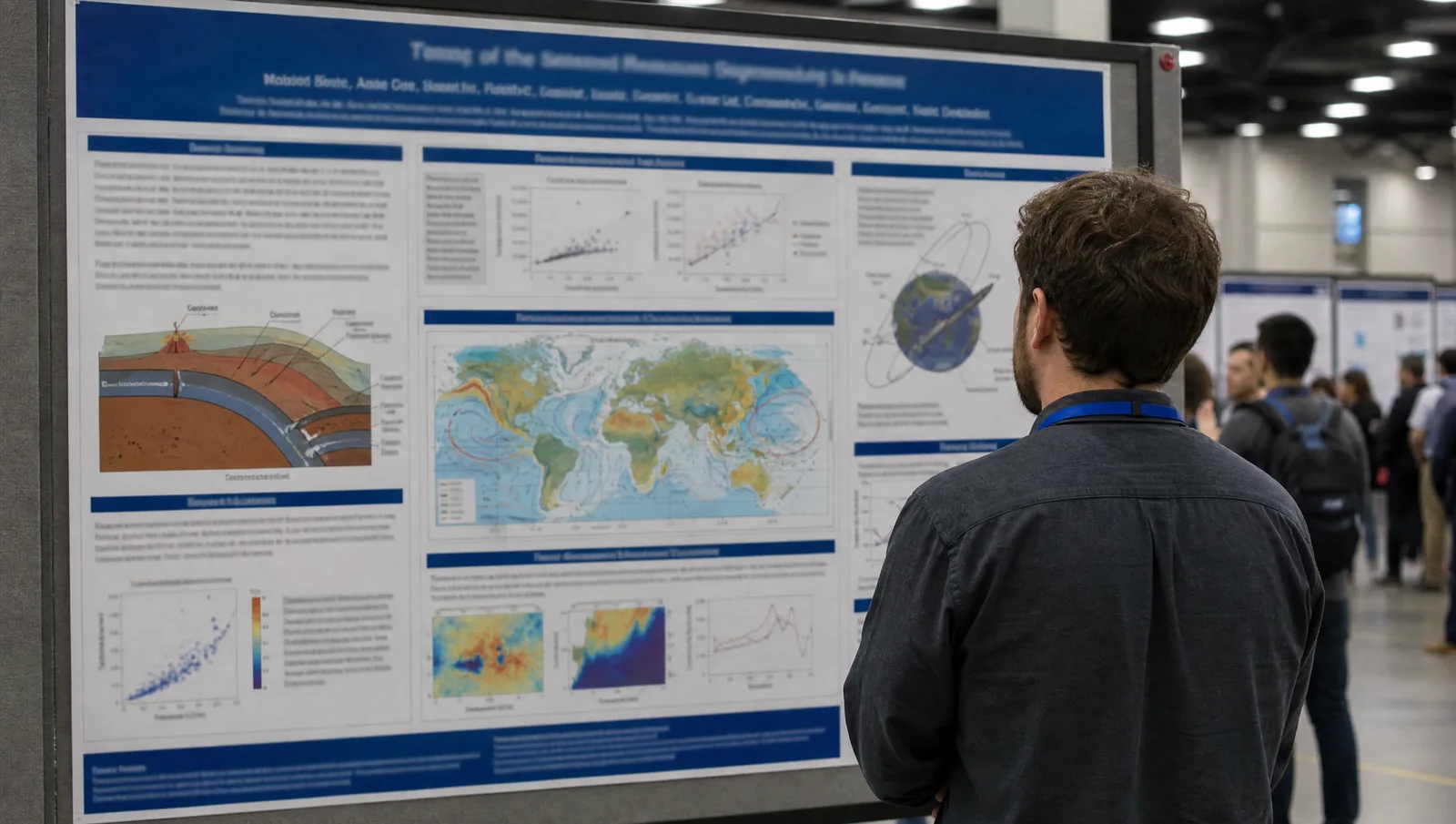
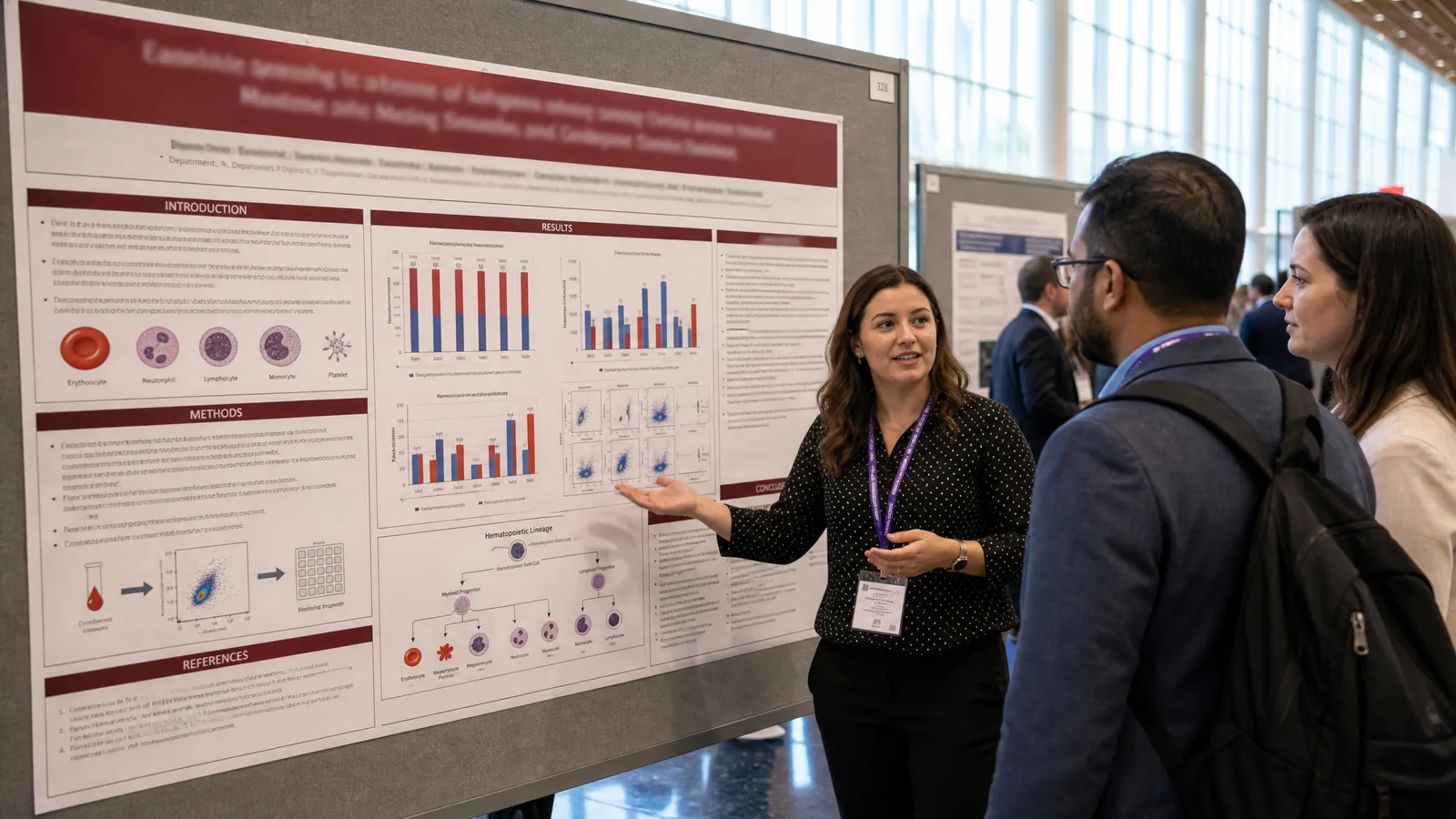
AHA Scientific Sessions 2026 cardiovascular poster session at McCormick Place, Chicago: rows of landscape posters, delegates discussing heart mechanism figures (Figure generated with SciFig)
Transparency note: Illustrations in this article were generated with SciFig AI and reviewed by the author for scientific accuracy. Factual claims about dates and specifications link to official AHA materials.
1. AHA Scientific Sessions 2026 at a Glance: Dates, Venue & Key Deadlines
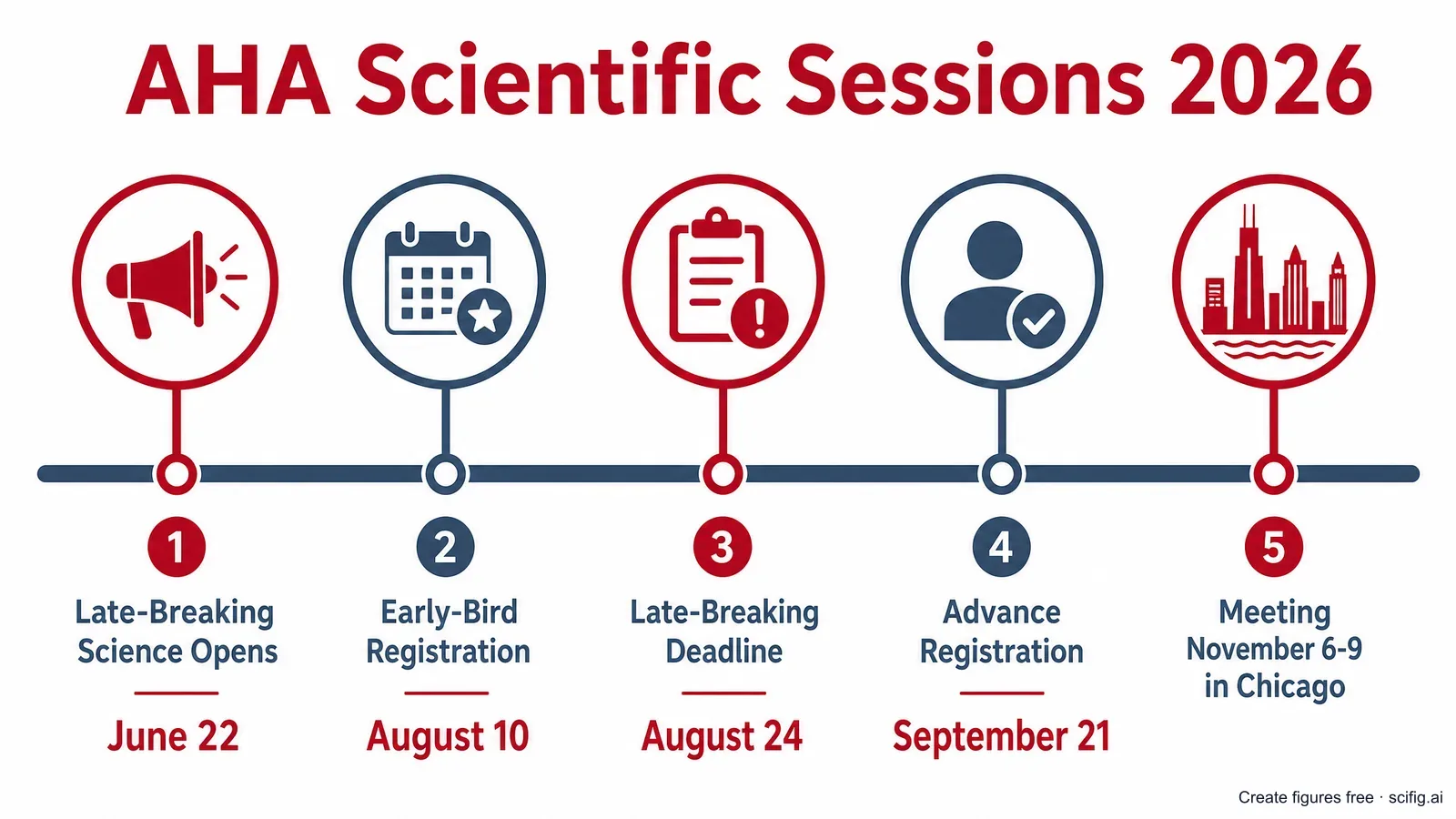
AHA Scientific Sessions 2026 runs November 6–9, 2026 at the McCormick Place Convention Center in Chicago, Illinois (Central Time), and features 5,000+ presentations across 21 cardiovascular specialties. The general abstract submission window (April–June 2026) and the clinical-case submission have already closed; the Late-Breaking Science and Late-Breaking Basic Science windows open June 22 and close August 24, 2026. Because presenting authors register themselves, it is worth mapping the full AHA 2026 timeline early.
AHA Scientific Sessions 2026 submission timeline: late-breaking opens June 22, closes August 24, early-bird August 10, advance September 21, meeting Nov 6-9 Chicago (Figure generated with SciFig)
AHA Scientific Sessions 2026, McCormick Place, Chicago
A registration note: submitting an abstract does not register you for the meeting. Every presenting author is responsible for their own registration, so register for Scientific Sessions 2026 once your presentation is confirmed. General-abstract acceptance notifications are issued by the AHA following the April–June submission window; confirm your exact status and any acceptance date in your submission account.
2. AHA 2026 Poster Size, Format & Guidelines (Official Specs)
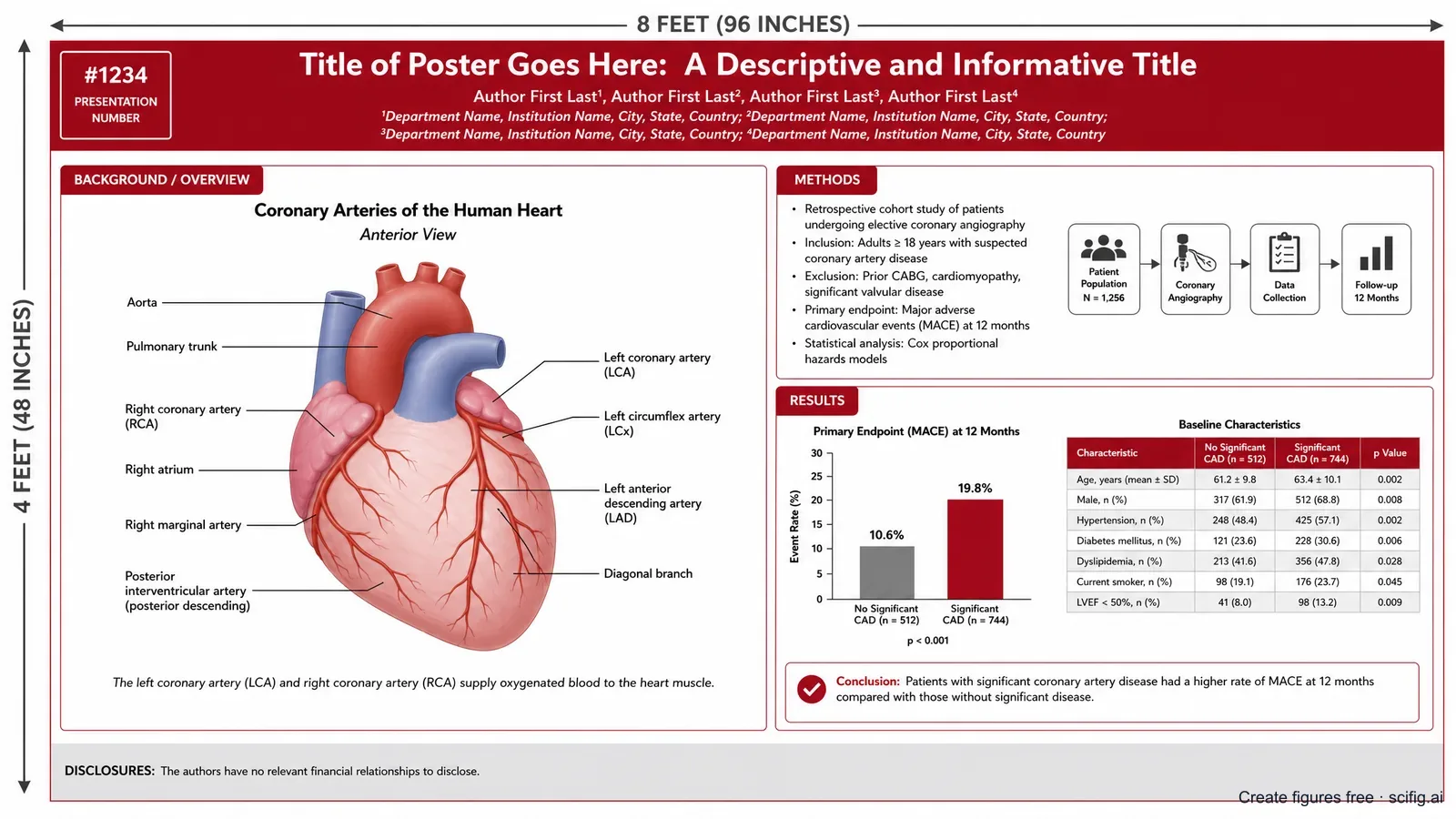
The AHA's standard poster board is 4 ft high × 8 ft wide in landscape (horizontal) orientation — about 122 × 244 cm — so design your AHA 2026 poster to fit within that wide board. Poster materials are mounted on a fiberboard surface inside a 2-inch frame, and pushpins or velcro are provided on site. Important: the 2026-specific poster board presenter guidelines had not been published as of July 20, 2026 — the official presenter page states documents "will be uploaded throughout the summer" — so confirm the exact 2026 board size, orientation, and print rules on the official page before you print, and watch for the summer update.
Until the 2026 poster board guidelines are posted, the AHA's established poster specifications are your best planning basis. Check the official For Presenters and Moderators page for the 2026 documents as they go live. A few points shape how you build the sheet:
Landscape 4 × 8 ft board — design to this wide ratio from the start; a portrait layout will not make good use of an AHA board.
Readable from a distance — the poster hall is busy; high contrast and a clear visual hierarchy get your poster read from several feet away.
Show your presentation number — accepted abstracts receive a presentation number that corresponds to your assigned board, so place it clearly.
Confirm the 2026 specs before printing — because the current-year guidelines were still pending in mid-summer, verify the final board dimensions on the official page before you send anything to print.
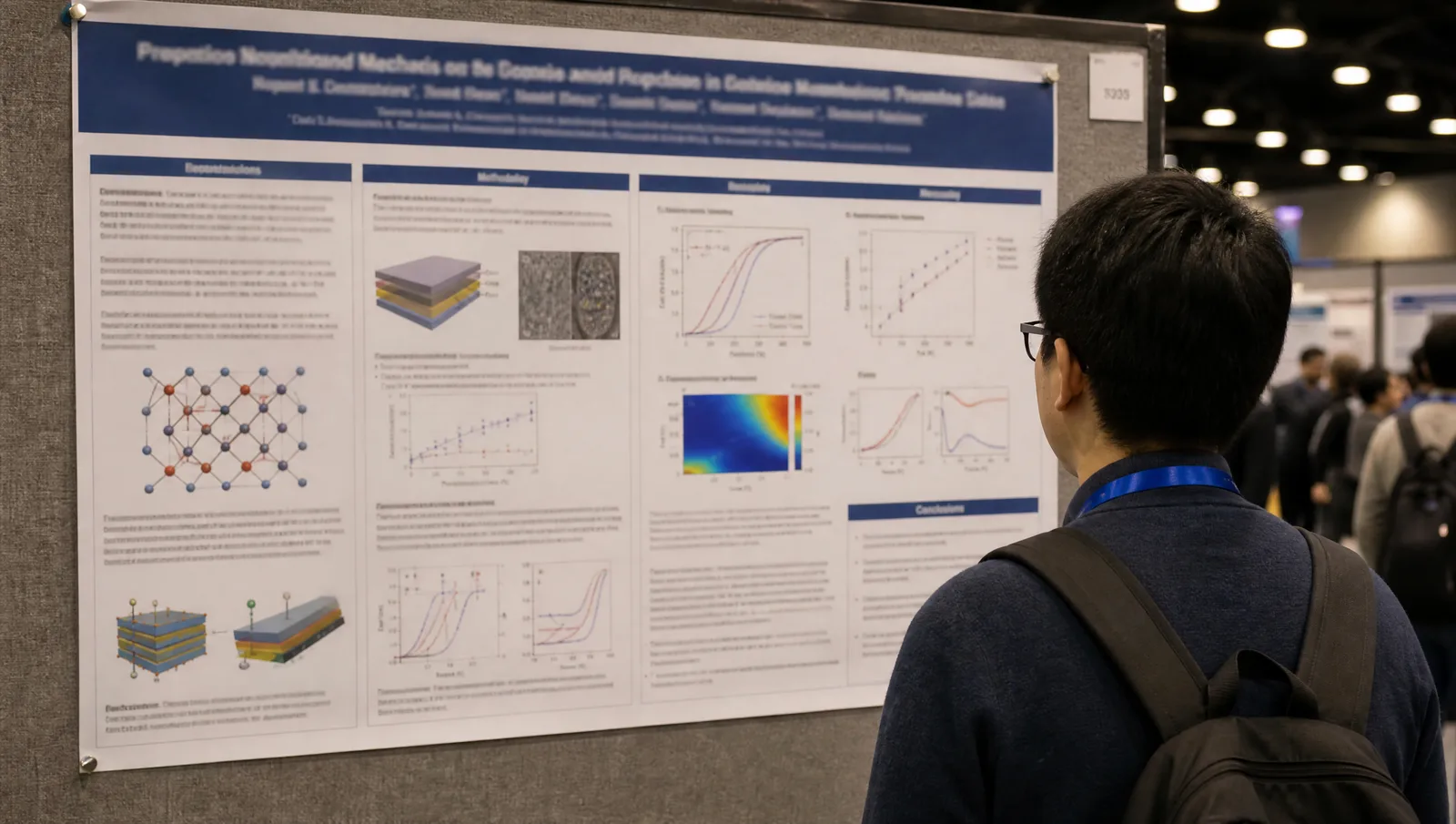
AHA Scientific Sessions 2026 poster size and template: 4 x 8 ft landscape cardiology layout with title bar, hero mechanism figure, methods and results panels (Figure generated with SciFig)
The cardiovascular figures on an AHA poster — a disease mechanism, a drug mechanism of action, a clinical-trial schema — are the slowest part of that layout to produce. You can generate publication-grade versions online for free and drop them straight into your PowerPoint composition.
Need a hero figure for your AHA poster?
Start from a cardiovascular mechanism, drug MOA, or trial-design visual before you open PowerPoint.
AHA publishes no poster template, and the 4 × 8 ft board is wider than the standard academic sizes. Our conference poster templates give you an unbranded starting sheet in editable PowerPoint — resize the canvas to the AHA board once the 2026 specification is confirmed, and the section structure and type scale carry over.
3. AHA 2026 ePoster: Requirements & Upload
Scientific Sessions has offered an ePoster (digital poster) alongside the printed poster board in recent years, but the AHA had not published the 2026 ePoster requirements — file specification, upload method, or upload deadline — as of July 20, 2026. The official presenter page notes that presenter documents are uploaded throughout the summer, so the definitive 2026 ePoster instructions will appear on the For Presenters and Moderators page and in your presenter communications closer to the meeting.
Two practical steps for AHA 2026 ePoster presenters: check the official presenter page regularly for the 2026 ePoster instructions to publish, and — because an ePoster is viewed and downloaded on screens rather than read from a meter away — build crisp, vector-style figures. A mechanism diagram exported cleanly stays legible when a delegate zooms in on a laptop, where a low-resolution raster image falls apart.
4. AHA 2026 Oral Presentation: Slides, Time Limits & the Official PowerPoint Template
The AHA publishes an official 2026 PowerPoint template for speakers, and your exact oral time limit and format arrive with your acceptance and the invited program participant guidelines — so build your slides on the official template rather than assuming a layout. Late-Breaking Science and Featured Science oral presentations are governed by strict embargo rules (see Section 8), and the per-session talk length is set in your acceptance materials.
5. What Figures Do You Need? Poster, Slides & Circulation Abstract
Whether you are building a poster, oral slides, or the abstract itself, AHA's cardiovascular audience expects the same handful of scientific figures — and the most time-consuming ones can be generated online for free in minutes. The exact mix depends on your track — Acute & Chronic Coronary Syndromes, Arrhythmia & Electrophysiology, Heart Failure, Hypertension, Imaging, Prevention, and more — but three distinct jobs recur across the meeting.
On your poster and ePoster, the recurring cardiovascular figure types are:
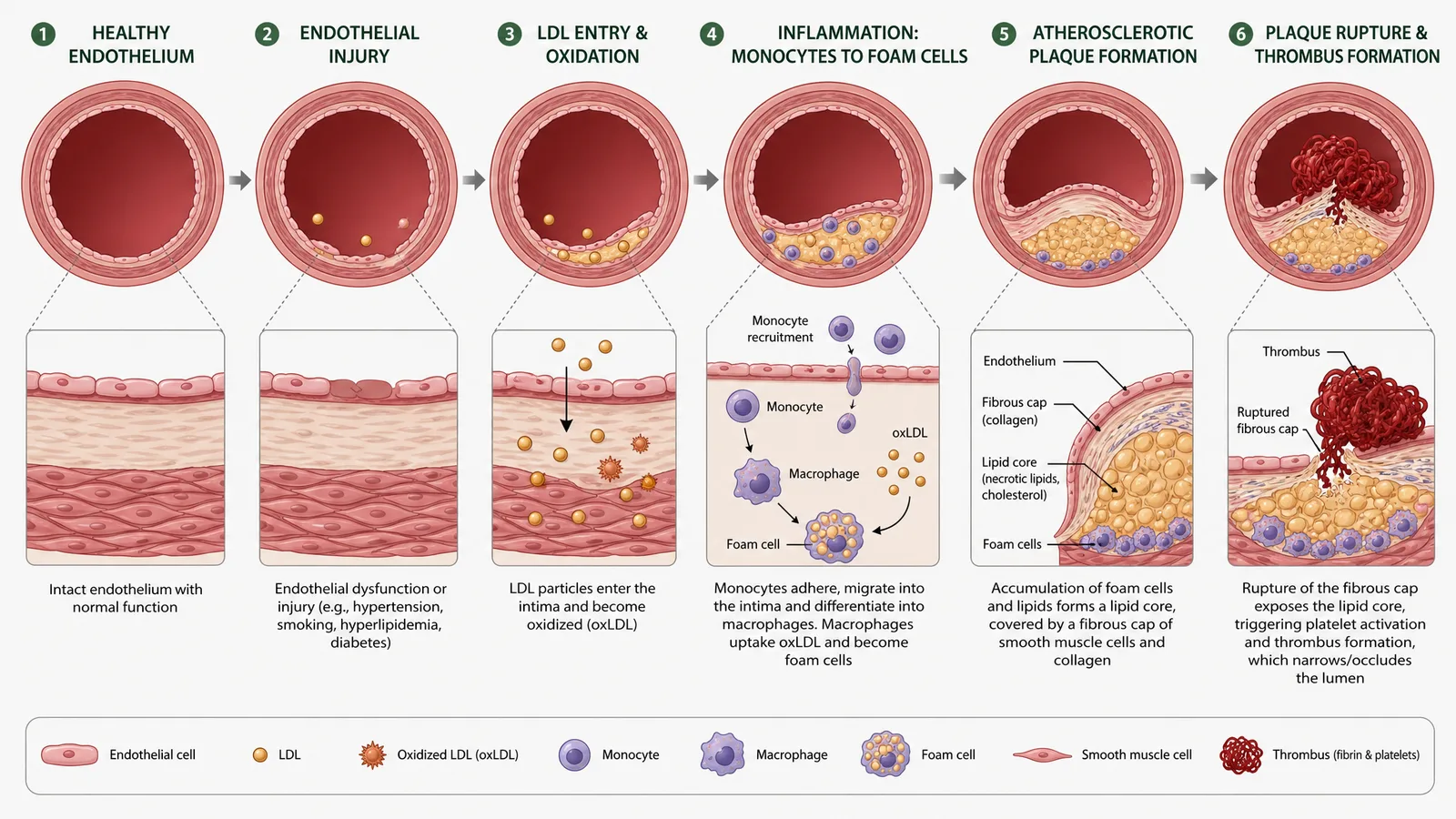
Disease mechanism — atherosclerosis and plaque rupture, heart-failure remodeling, or the arrhythmia circuit your study addresses. The figure that decides whether your poster gets read.
Drug mechanism of action (MOA) — how an SGLT2 inhibitor, PCSK9 agent, anticoagulant, or GLP-1 therapy acts on its target and pathway.
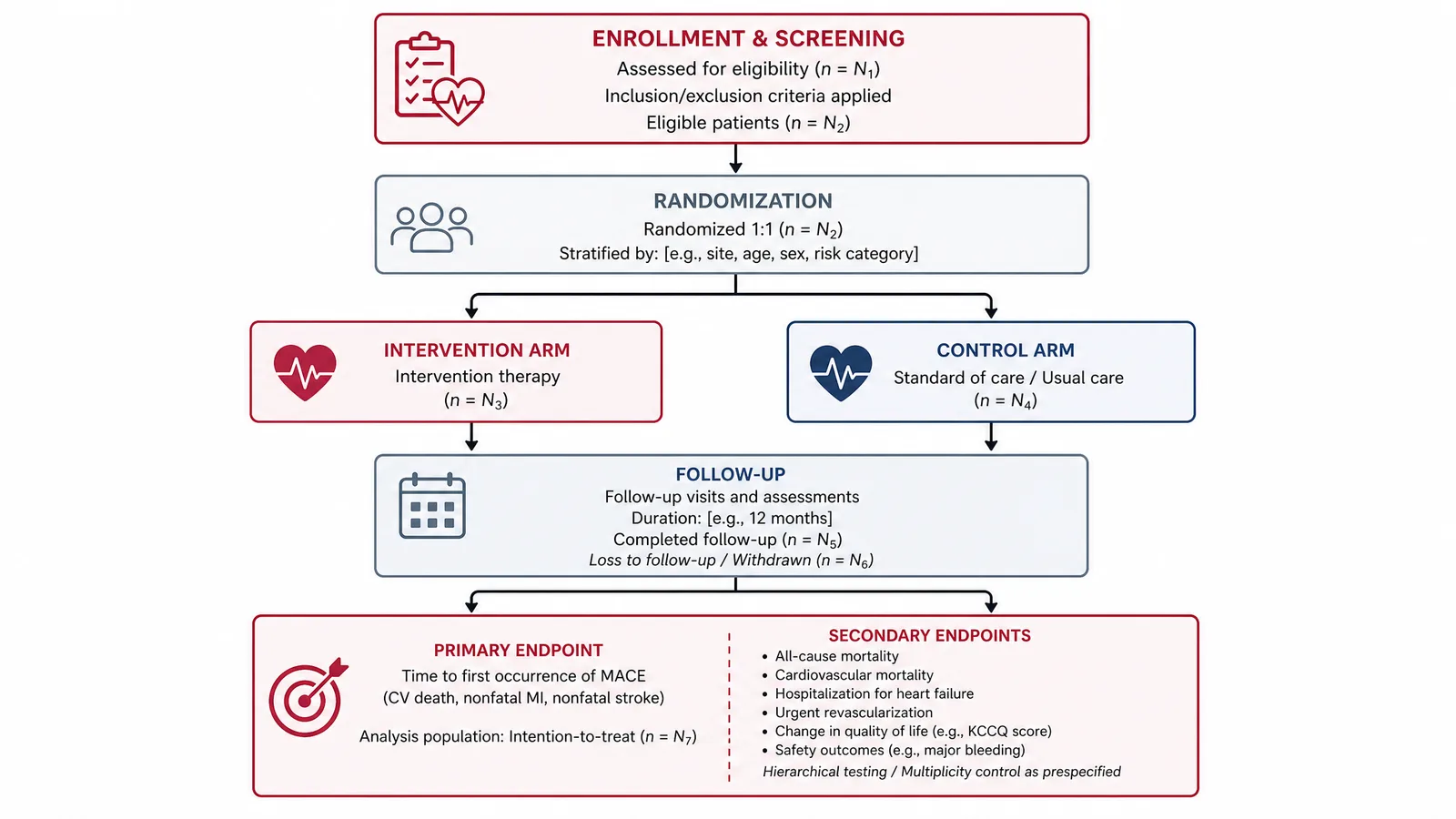
Clinical-trial schema — the CONSORT-style enrollment, randomization, arms, and endpoints behind your data, drawn with publication-grade clarity. Central to a trial-heavy meeting like AHA.
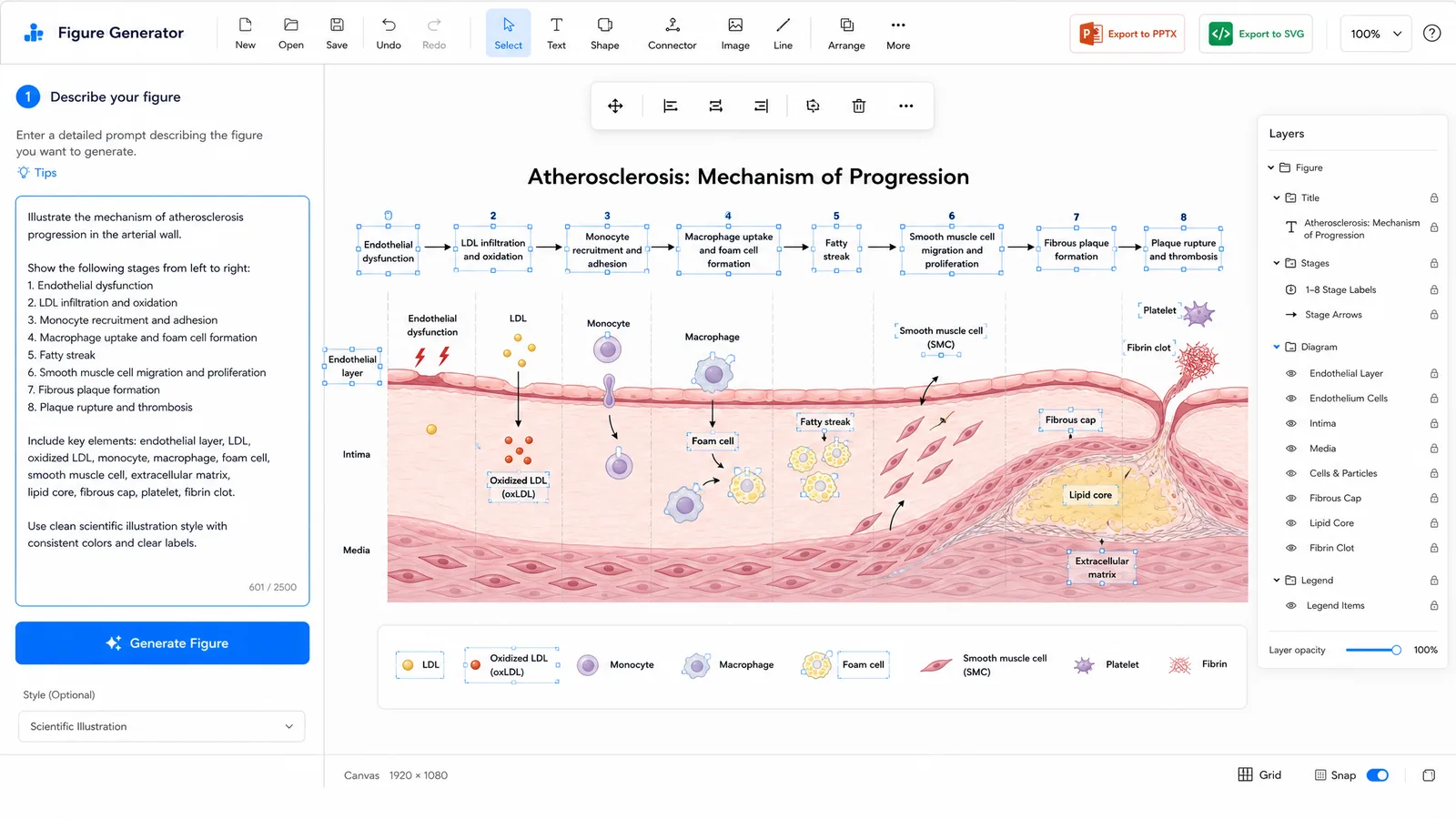
AHA Scientific Sessions 2026 atherosclerosis mechanism figure: endothelial injury, LDL oxidation, foam cell formation, plaque growth and rupture with thrombus (Figure generated with SciFig)
On your slides, an oral presenter needs one clean figure per slide — usually the single mechanism or trial-design figure that carries the talk.
In your abstract itself, AHA's abstract graphics rules accept figures and tables at 72–300 dpi, pre-sized in .bmp, .gif, .jpg, or .png with a maximum width of 440 pixels (no length limit) — grayscale mode for black-and-white images and RGB mode for color, each with a brief description. Because accepted abstracts are published in Circulation, that figure becomes part of the permanent, citable record, so a clean mechanism schematic or trial schema in the abstract is a genuine — and often overlooked — place to make your science legible before the reader ever reaches your poster.
6. Designing a Winning Cardiovascular Poster: Accuracy That Survives Peer Review
A winning AHA poster passes two tests: it is grasped in three seconds by a delegate walking past, and it is scientifically exact enough to survive scrutiny from a cardiologist standing in front of it. The best layouts are built around one dominant "hero" figure — usually the disease mechanism or the trial schema with the key result nearby — with everything else arranged to support it. A landscape 4 × 8 ft sheet with one strong figure beats a dense grid of small panels every time.
The second test is where scientific figures live or die — and where general-purpose AI image generators fall short. A tool like Nano Banana Pro or GPT Image can produce something that looks about 99% right, but on a scientific figure 99% right is effectively 0% right: a reversed coronary artery, blood flowing the wrong way through a valve, or an SGLT2 pathway arrow pointing backward turns a compelling poster into one that misleads a reviewer. And a flat, raster AI image gives you no way to fix that last one percent — it is a single baked-in picture with no layers to correct.
Every figure is a fully editable SVG with named layers, whose elements — arrows, labels, receptors, vessels — you modify individually, so you (the author who actually knows the cardiology) can adjust every element until the science is exactly right. You then export to editable PPTX and layered SVG, the formats journals and conferences accept and expect for a figure you can revise. SciFig AI Illustration (AI scientific illustration) creates the image from your description or reference, then converts it to editable SVG so you can modify any element. The AHA abstract submission policy explains that automated writing and generation tools are permitted only when their use is documented and the author takes responsibility for the accuracy, validity, and originality of the content — an AI-generated result with minimal human revision is explicitly not acceptable.
The cardiovascular figures that reward this care are exactly the ones reviewers scrutinize:
Coronary anatomy — label the LAD, left circumflex, and RCA correctly; a swapped vessel is the detail an interventional cardiologist notices first.
Cardiac blood flow — show flow through the chambers and valves in the right direction; a reversed valve arrow is an immediate credibility loss.
Pathway direction — draw RAAS or SGLT2 signaling with arrows pointing the correct way, and never invent a receptor or target that does not exist.
AHA Scientific Sessions 2026 clinical trial schema figure: CONSORT-style enrollment, randomization, treatment arms, follow-up and endpoints as an editable diagram (Figure generated with SciFig)
Whether your AHA 2026 poster earns its attention comes down to whether these figures are accurate, clear, and legible — which is exactly where an editable AI figure workflow compresses days of design work into hours without giving up scientific control.
7. Create Your AHA 2026 Figures with AI: The SciFig Workflow
You already have two things most colleagues do not: your study data and a clear understanding of its mechanism — use both to generate your figures online for free, then edit them to exactly right and export the layered SVG and PPTX you need. Here is the SciFig workflow for an AHA presenter, starting in SciFig AI Illustration:
Path 1 — Upload your abstract PDF. Drop it into PDF-to-Figure. It parses your Background, Methods, and Results and returns a mechanism diagram or trial schema in one click — every element stays editable, so you can adjust it to your data and poster layout instead of starting from a blank canvas.
Path 2 — Copy a structured prompt. For a mechanism or pathway figure, Text-to-Figure gives more control. Copy and adjust to your study:
Schematic of atherosclerotic plaque development in a coronary artery:
endothelial injury, LDL entry and oxidation in the intima, monocyte
recruitment and foam-cell formation, plaque growth with a lipid core
and fibrous cap, then cap rupture triggering thrombus formation.
Path 3 — Sketch and scan. If you sketched your hero figure on paper, photograph it and drop it into Sketch-to-Figure to get a publication-style version that preserves your topology.
AHA Scientific Sessions 2026 poster figure workflow in SciFig: cardiovascular mechanism prompt left, editable layered SVG diagram right, PPTX and SVG export (Figure generated with SciFig)
From any path, you edit individual elements in the vector canvas — adjust labels, colors, vessel placement — and export to editable PPTX or layered SVG for final composition, at high resolution for a 4 × 8 ft print without artifacting. For a CONSORT-style trial schema, SciFig FlowChart (flowcharts and diagrams) lays out enrollment, randomization, arms, and endpoints as native SVG with every box editable. Start free, no card required: 150 credits on day one (3 figures), plus daily check-in credits that grow with your streak (up to 150 a day) — up to about 44 figures in your first month, so most authors work through a full set of poster figures over their first few days. For the companion guides in this conference series, see the ESMO 2026 poster guide and the SITC 2026 poster guide.
Optional — disclose your AI use. Many conferences and journals now ask authors to disclose AI assistance and to remain responsible for the accuracy of their work. If you build and review a figure in SciFig, you can add one line to its caption — for example: Figure created by the authors using SciFig and reviewed for scientific accuracy (scifig.ai).
Start your AHA figure from prompt, PDF, or sketch
Use the path that matches what you already have, then edit every element until the science is exact.
8. AHA 2026 Presenter Disclosure, COI & Embargo Rules
Every AHA presenter is governed by the American Heart Association's conflict-of-interest and embargo policies — and for clinical trials the embargo is strict — so plan your disclosures and embargo compliance alongside your figures, not after. Clinical-trial results may not be released before the AHA's designated embargo time, which for late-breaking and featured science is the date and time of the presentation itself; violations can bar a trial from presentation.
Two AHA-specific rules are worth building into preparation. First, the AHA/ACC/ESC cross-embargo applies to accepted clinical-trial abstracts. Second, the AHA general abstract guidelines permit documented assistive writing tools with author responsibility and require analytical tool use to be documented in the abstract. They prohibit AI-generated scientific ideas, claims, data, or conclusions. The guidelines are a useful reference for describing the assistance you used and for any figure-specific requirements.
Tip
The single highest-leverage decision in your preparation window is which figure becomes the hero. Pick the one your delegates need to remember 24 hours later — usually the disease mechanism or the trial schema with the key result nearby — and design the rest of the 4 × 8 ft sheet around it.
9. Where AHA 2026 Abstracts Are Published (Circulation)
Accepted AHA Scientific Sessions 2026 abstracts are published in an online-only supplement to Circulation, the American Heart Association's flagship journal. An Abstract Copyright Transfer Agreement is collected at submission: if you agree, your abstract appears in the online Circulation supplement, the meeting mobile app, and the online program planner; if you decline, it is excluded from all three. Any images submitted with an accepted abstract are placed after the abstract in that online-only supplement. Searches for the "AHA 2026 abstracts" or "Scientific Sessions abstract PDF" almost always mean this Circulation supplement.
Because your abstract — and its figures — becomes part of this citable Circulation record, it is worth making sure the figure in your abstract, on your poster, and on your slides all tell the same study story. Keep every figure consistent across formats so the version of record matches what delegates see in the hall.
FAQ
AHA Scientific Sessions 2026 runs November 6–9, 2026 at the McCormick Place Convention Center in Chicago, Illinois. It features more than 5,000 presentations across 21 cardiovascular specialties. The general abstract window (April–June 2026) has closed, while Late-Breaking Science submission runs June 22 to August 24, 2026.
The AHA's standard poster board is 4 ft high × 8 ft wide in landscape orientation — about 122 × 244 cm — so posters are designed to fit within that wide board. The 2026-specific poster board guidelines had not been published as of July 20, 2026, so confirm the final board size and print rules on the official For Presenters page before printing, and watch for the summer update.
AHA poster boards are landscape (horizontal), so design your panels for a wide 4 × 8 ft format from the outset. A single dominant hero figure — usually a disease mechanism or trial schema — plus supporting panels works far better in landscape than a tall column layout. Confirm the exact 2026 board specification on the official presenter page once it is posted.
Yes — the AHA publishes an official 2026 PowerPoint Template for Speakers, downloadable from the For Presenters and Moderators page, along with the 2026 Invited Program Participant Guidelines. Build your slides on the official template, and confirm your exact oral time limit in your acceptance materials, since per-session lengths are set there.
Yes — AHA abstract graphics may be 72–300 dpi, pre-sized, in .bmp, .gif, .jpg, or .png with a maximum width of 440 pixels (no length limit). Use grayscale mode for black-and-white images and RGB for color, and give each a brief description. Because accepted abstracts are published in Circulation, an abstract figure becomes part of the permanent citable record.
Accepted AHA Scientific Sessions 2026 abstracts are published in an online-only supplement to Circulation, the American Heart Association's flagship journal. Publication depends on the Abstract Copyright Transfer Agreement collected at submission — decline it and the abstract is excluded from the supplement, mobile app, and program planner.
References
All specifications and dates above are drawn from official AHA materials, accessed July 20, 2026:
American Heart Association. Journals — Circulation (AHA flagship journal, publisher of the Scientific Sessions abstract supplement). professional.heart.org. Accessed July 20, 2026. https://professional.heart.org/en/journals
Disclaimer: This article is educational content focused on scientific figure design for conference posters and presentations. It is not medical advice and should not be used for clinical decisions. Dates and specifications are summarized from official AHA materials linked above and were accurate at the time of writing; some 2026 presenter documents (poster board and ePoster guidelines) were still pending on the official site as of July 20, 2026, so always confirm current details on the official AHA website before printing or submitting. SciFig is an AI scientific figure platform covering illustrations (SciFig AI Illustration), data-driven charts (SciFig DataChart), and flowcharts (SciFig FlowChart) — it does not diagnose, treat, or advise on patient care.
Keep going
Recommended resources
Templates, tools, and further reading for your research