
Poster references should be few, small, and numbered rather than author-date.
A poster is not a paper, and reference formatting that works in a manuscript actively harms a poster. Every square centimetre spent on citations is taken from the content people walk over to read, so the goal is credibility with minimum footprint.
How Many to Include
Between three and eight. Enough to show the work is grounded, few enough to stay compact.
Include only references that a viewer standing in front of the poster genuinely needs:
- The source of a method you did not develop
- A key prior finding your work builds on or contradicts
- The origin of data you reused
- A standard or guideline you followed
Leave out general background citations, everything you would cite in an introduction for completeness, and anything the poster does not directly depend on.
See AI Scientific Figure Generation in Action
Watch how researchers create publication-ready scientific figures from text descriptions.
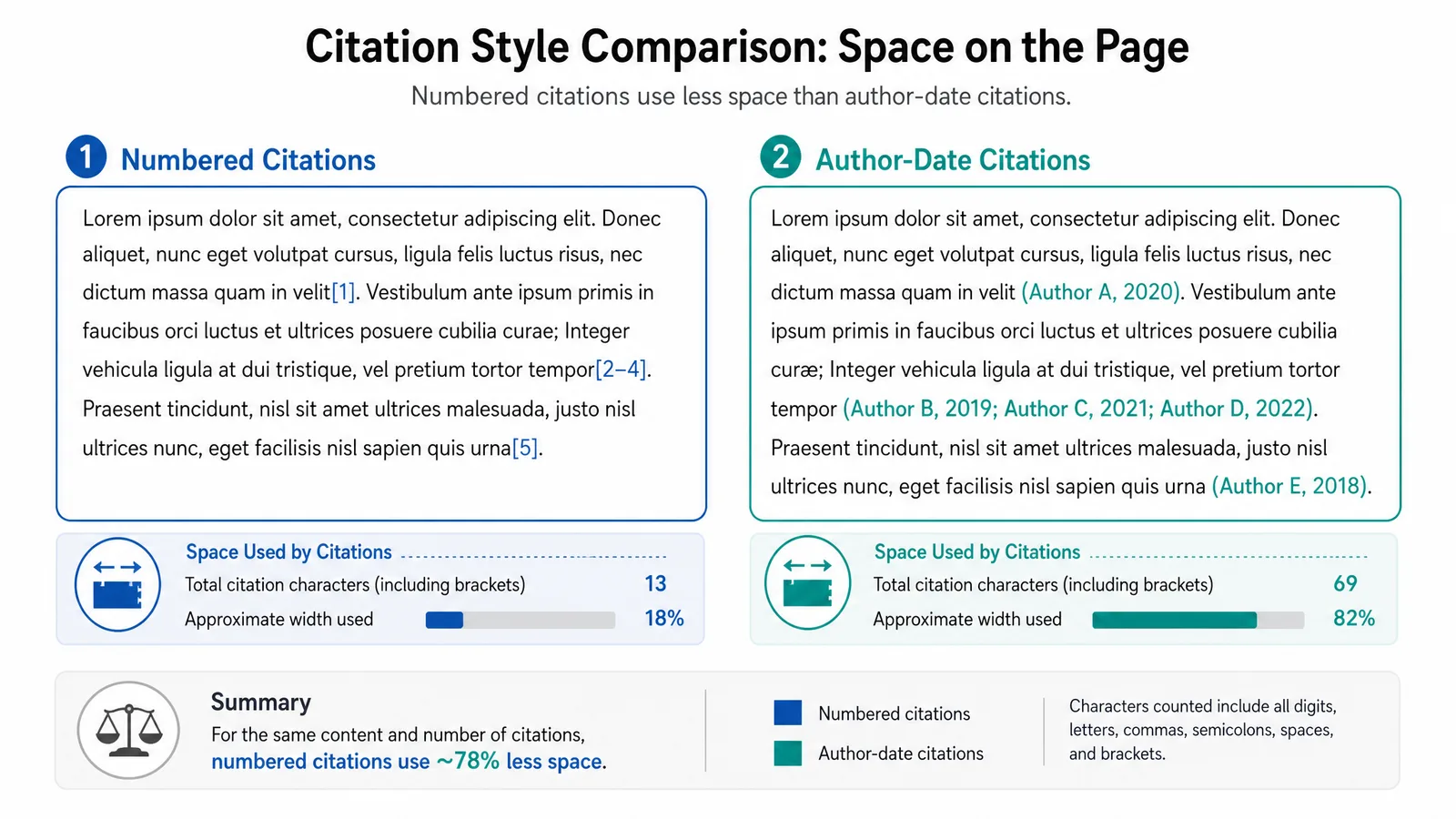
Explore the ToolNumbered, Not Author-Date
[3] costs three characters; (Smith, Alvarez & Nakamura, 2024) costs thirty-five and breaks the visual rhythm of body text repeatedly.| Numbered | Author-date | |
|---|---|---|
| In-text footprint | Minimal | Large |
| Reader can identify source at a glance | No | Yes |
| Suits dense poster layouts | Yes | No |
The trade-off is that readers cannot tell which work you cited without looking down at the list, which on a poster is a minor cost — they are standing in front of you and can ask.
Where a conference or department mandates a style, follow the mandate. Otherwise numbered is the pragmatic default.
Sizing and Placement
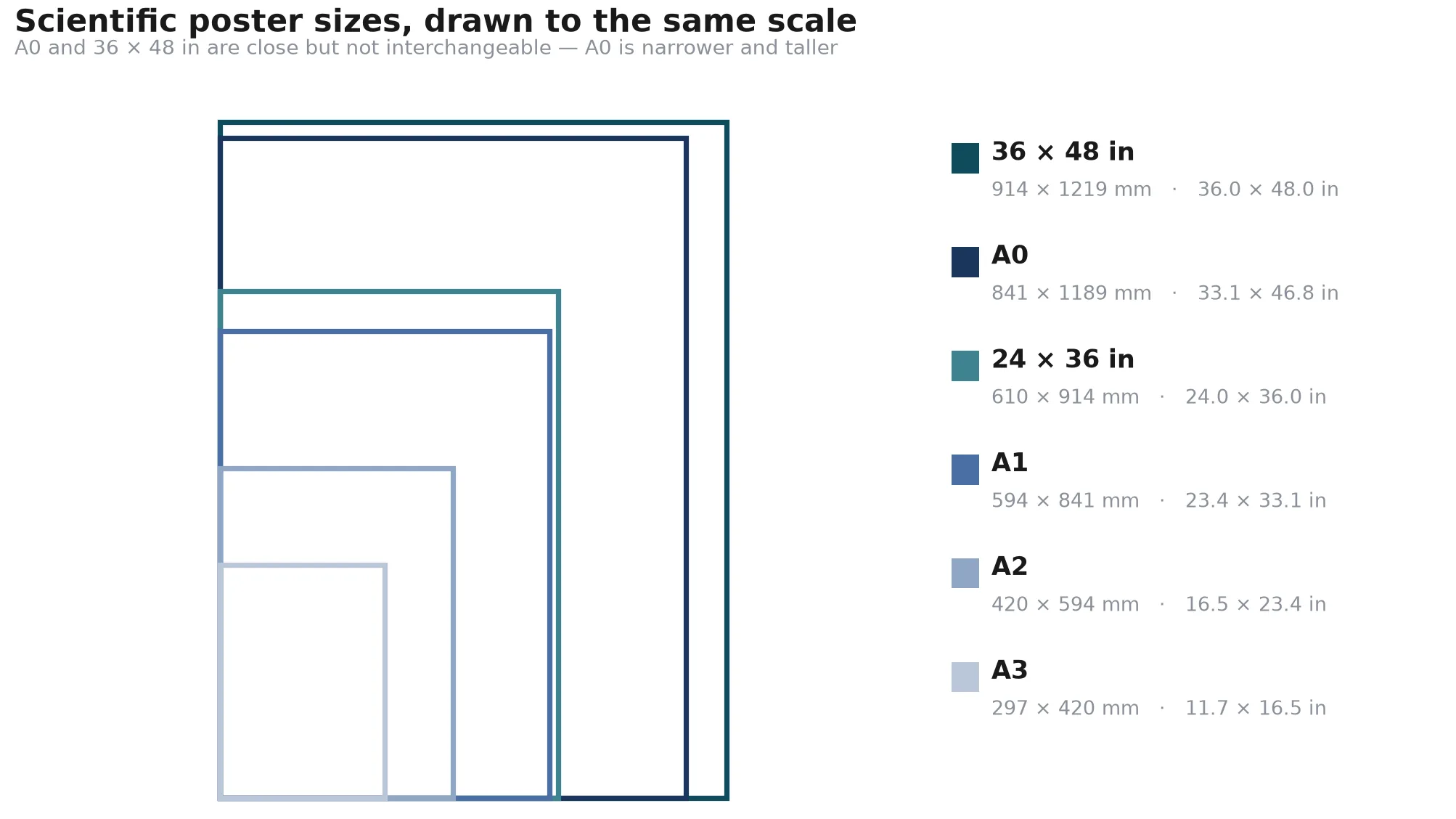
- Type size: smaller than body text but still legible up close, commonly in the region of 14-18 pt on an A0 poster. Nobody reads references from two metres away.
- Placement: bottom of the last column, or a footer strip.
- Formatting: single-spaced, hanging indent optional, title case not required.
- Truncation: abbreviated journal names and et al. after the first author are acceptable and save considerable space.
1. Nakamura et al. Nat Methods 2024;21:455. carries everything a reader needs to find the paper.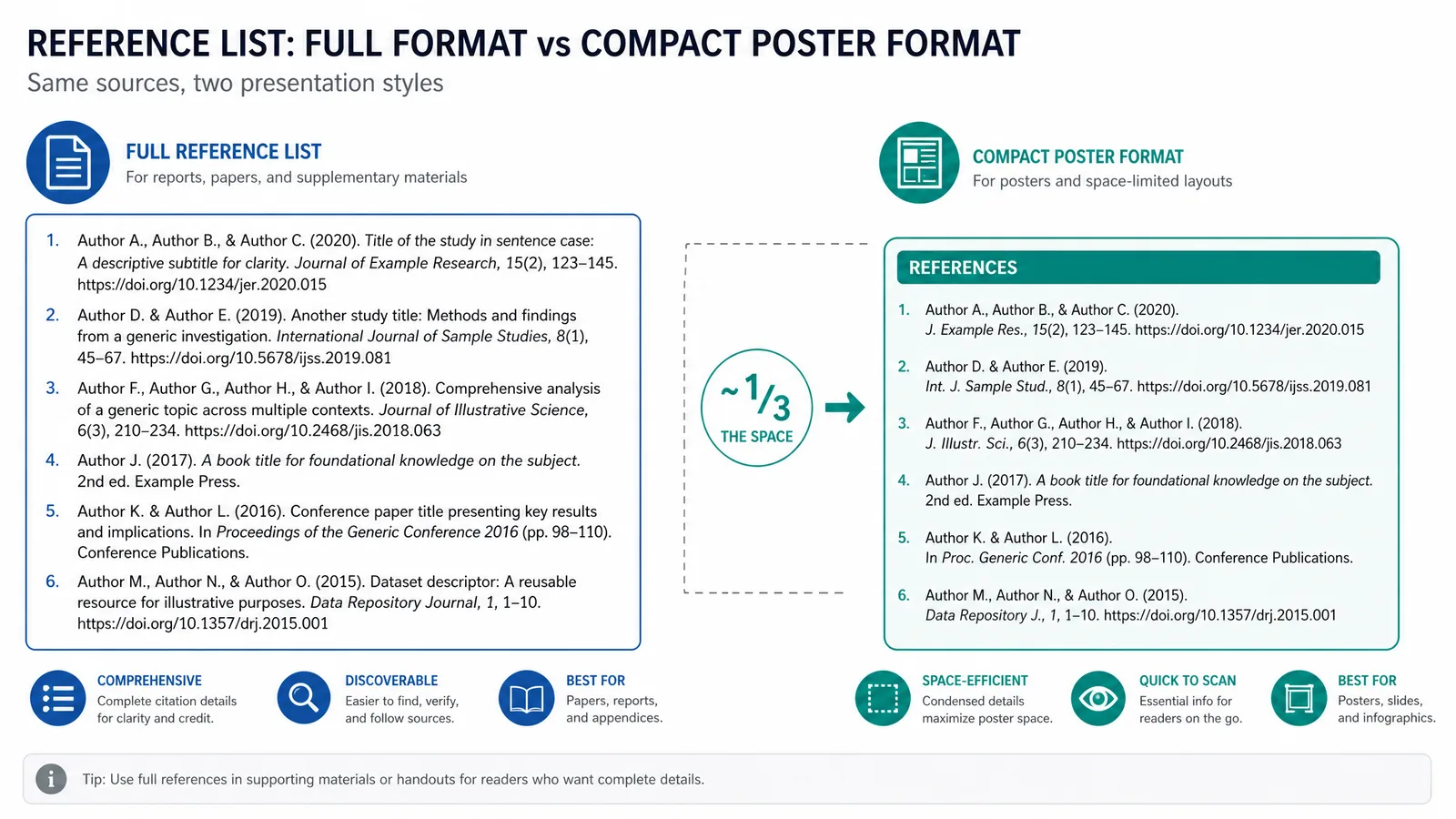
Use a QR Code for the Full List
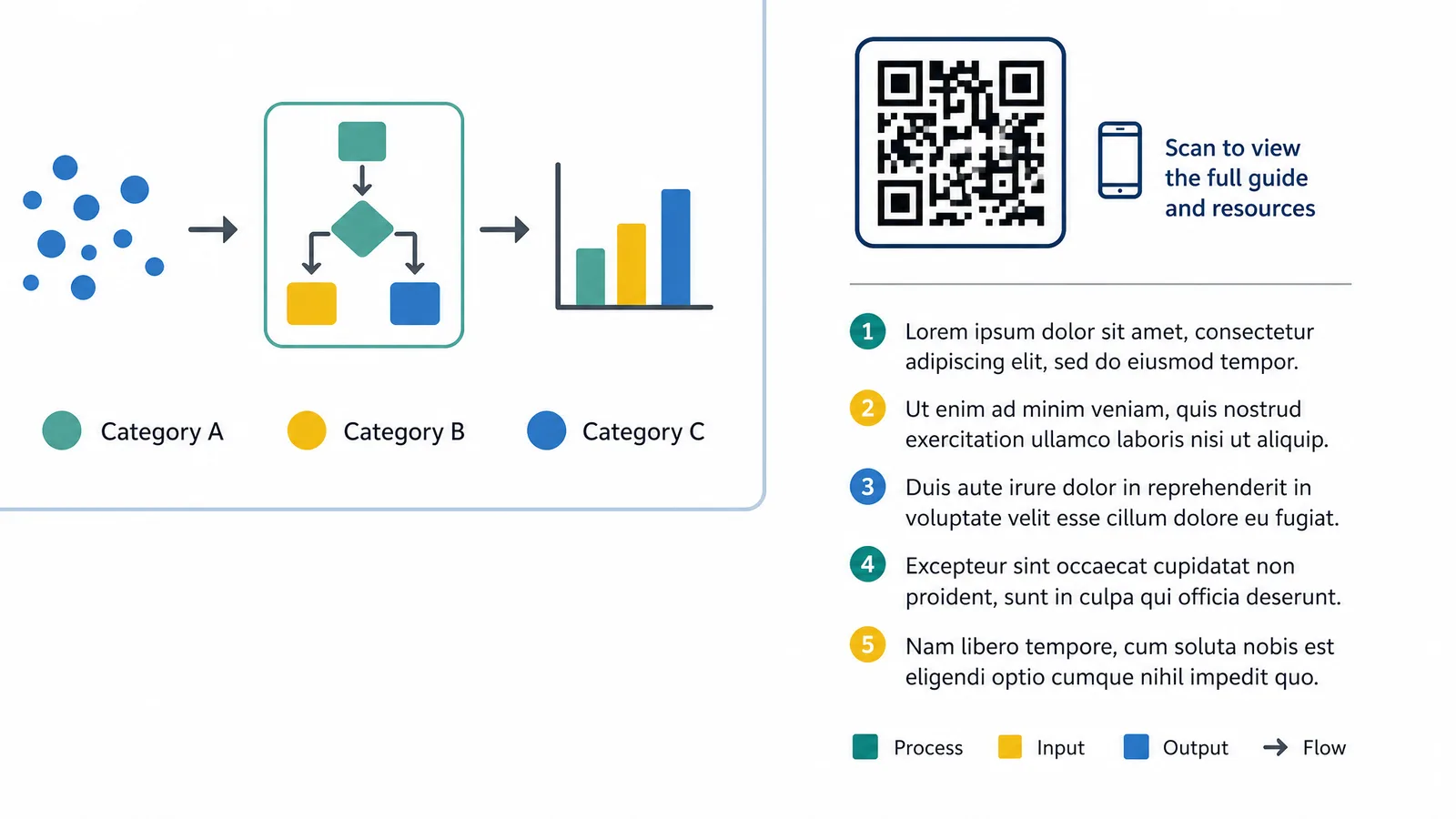
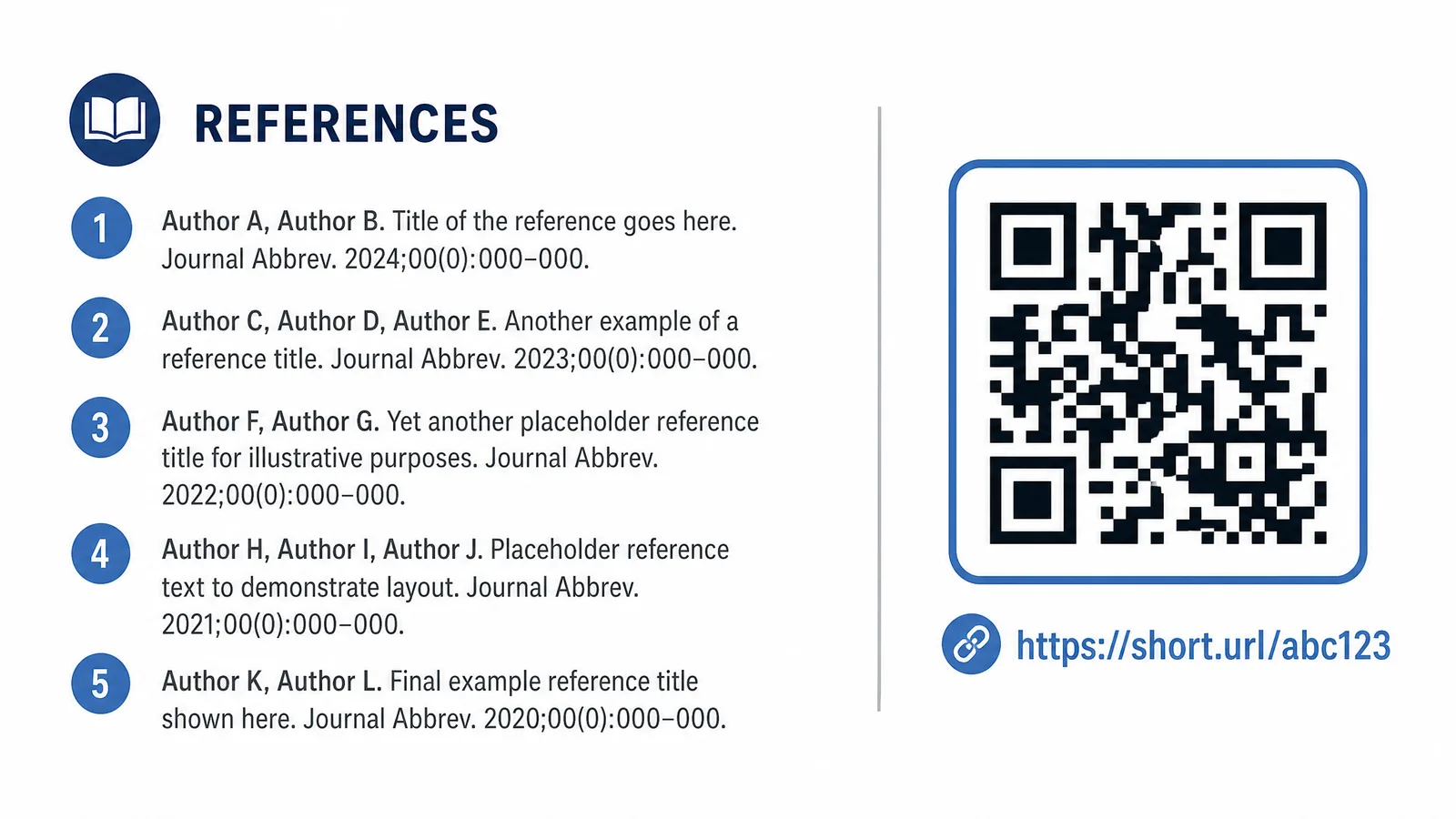
The most useful modern solution. Put three to five critical references on the poster and a QR code linking to the complete list, your preprint, or the project page.
Two cautions. Test the QR code by scanning it from a printed copy, not from the screen — codes rendered too small or at low resolution fail in print. And make sure the destination will still exist in a year; a departmental URL outlives a personal one.
Tip
Print a single page at full scale before committing to a large-format print and check the reference block from about 40 cm away. Reference text is the first thing that becomes illegible when a poster is scaled, and the check costs one sheet of paper.
Create Scientific Figures Now
Describe your scientific figure in natural language — get publication-ready illustrations in minutes.
Try FreeRelated Reading
Related reading: 18 Scientific Poster Examples to Learn From in 2026, Best Research Poster Templates & Makers (2026).