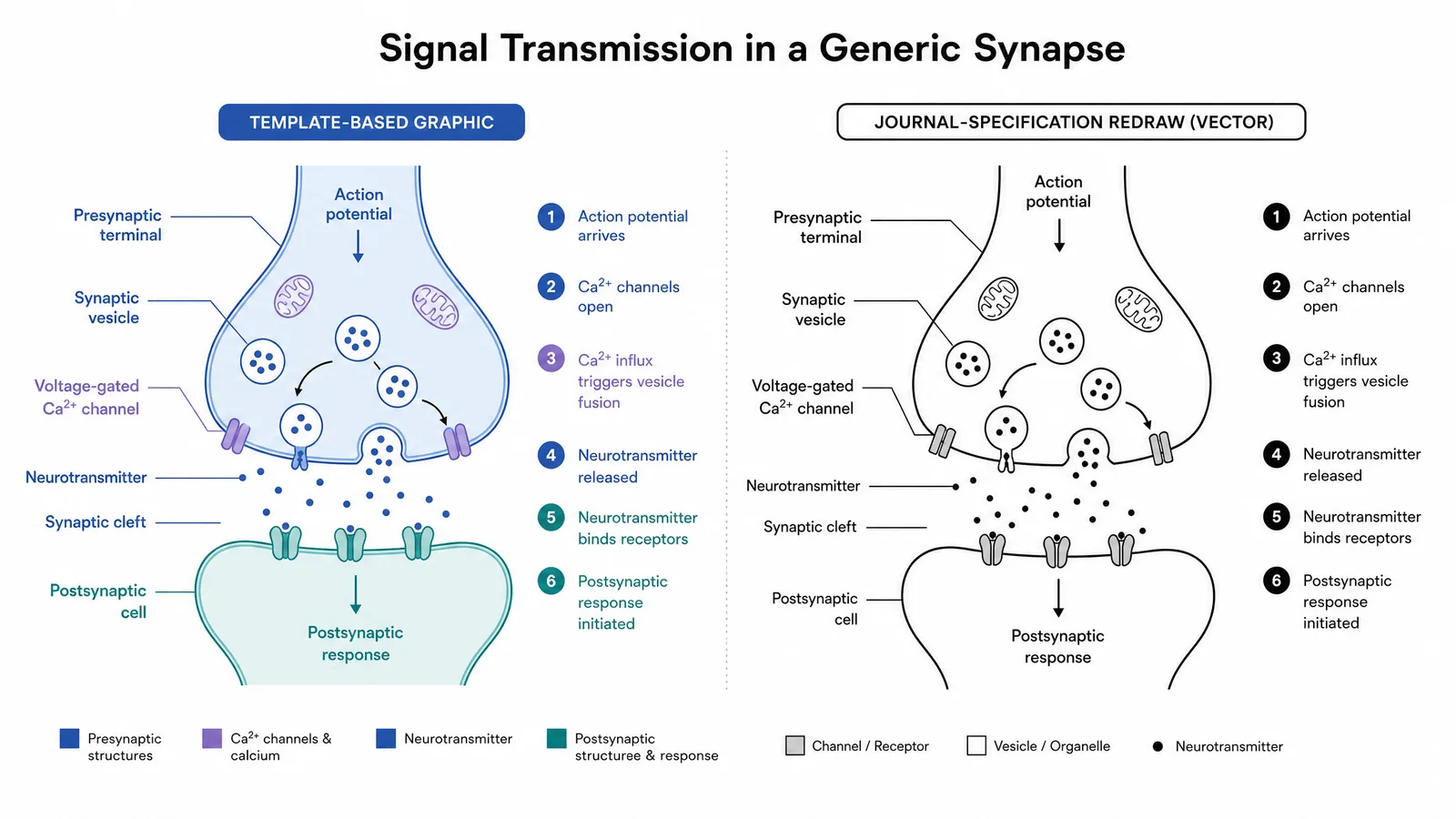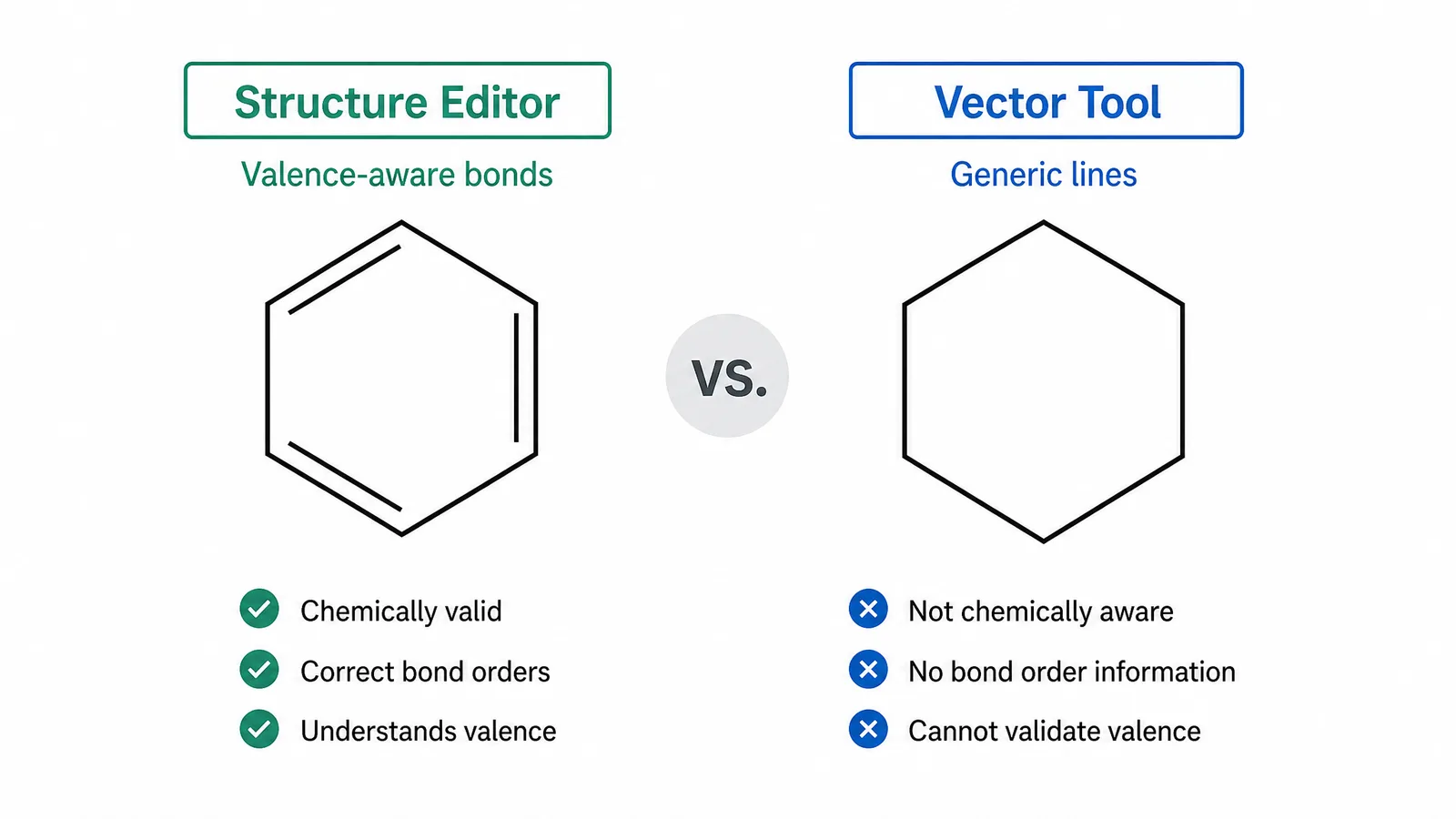

Scientists need a fraction of Illustrator's features but all of its export formats.
That asymmetry is the whole problem. Most figure work is assembling panels, aligning labels, fixing fonts, and exporting to a journal specification. None of that requires a professional illustration suite — but the export requirements, particularly EPS and CMYK, are exactly where cheaper tools tend to fall short.
What Scientific Figure Work Actually Requires
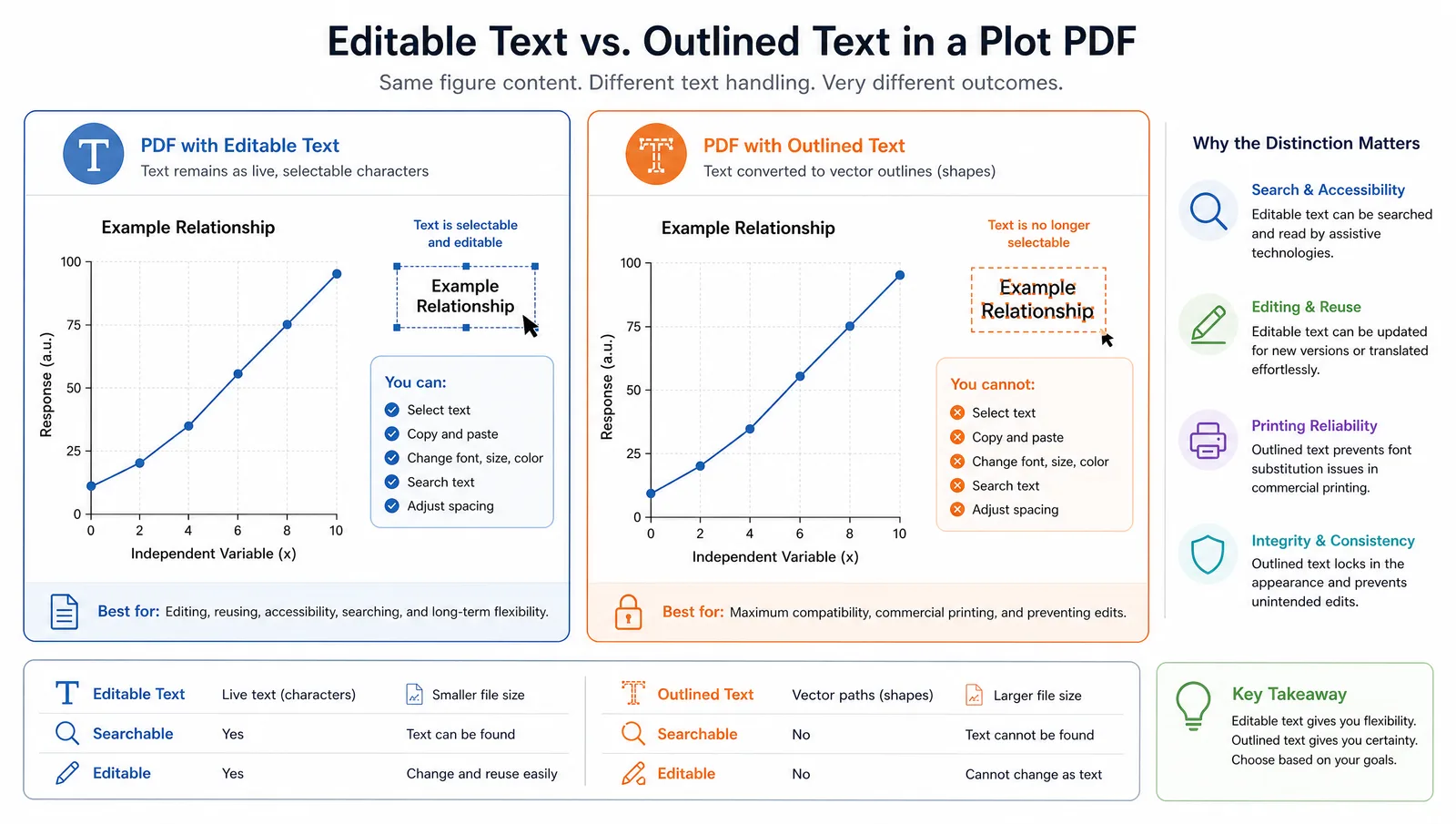
- Open plot output cleanly. PDF and SVG from matplotlib, ggplot2, or GraphPad, with text still editable rather than converted to paths.
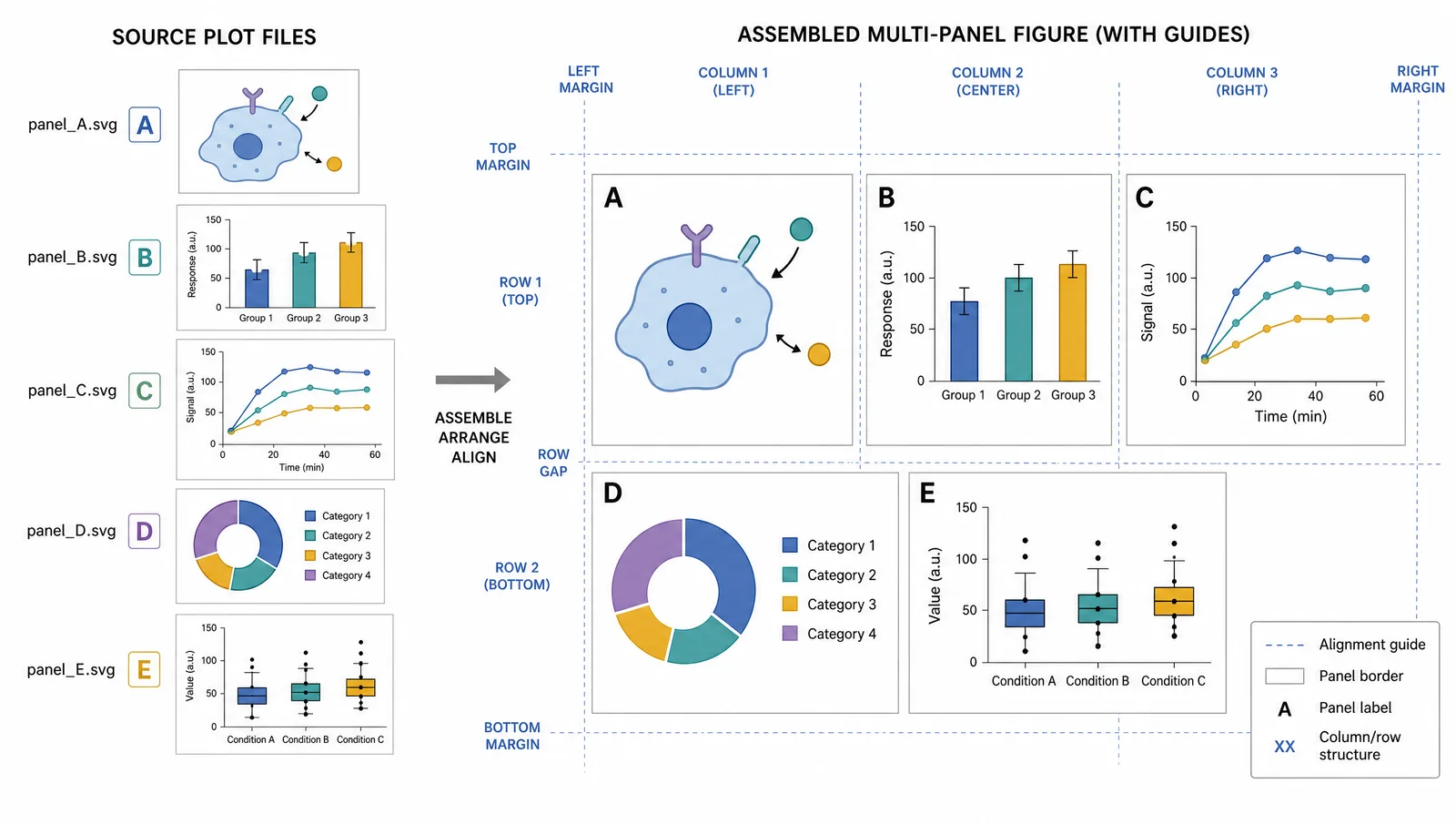
- Assemble multi-panel layouts. Align panels, add A/B/C labels, keep consistent spacing.
- Fix typography. Unify fonts across panels produced by different software.
- Export to specification. PDF, EPS, or TIFF at a required resolution, sometimes CMYK, with fonts embedded or outlined.
Everything else — brushes, gradient meshes, 3D effects — is largely irrelevant.
The Alternatives Compared
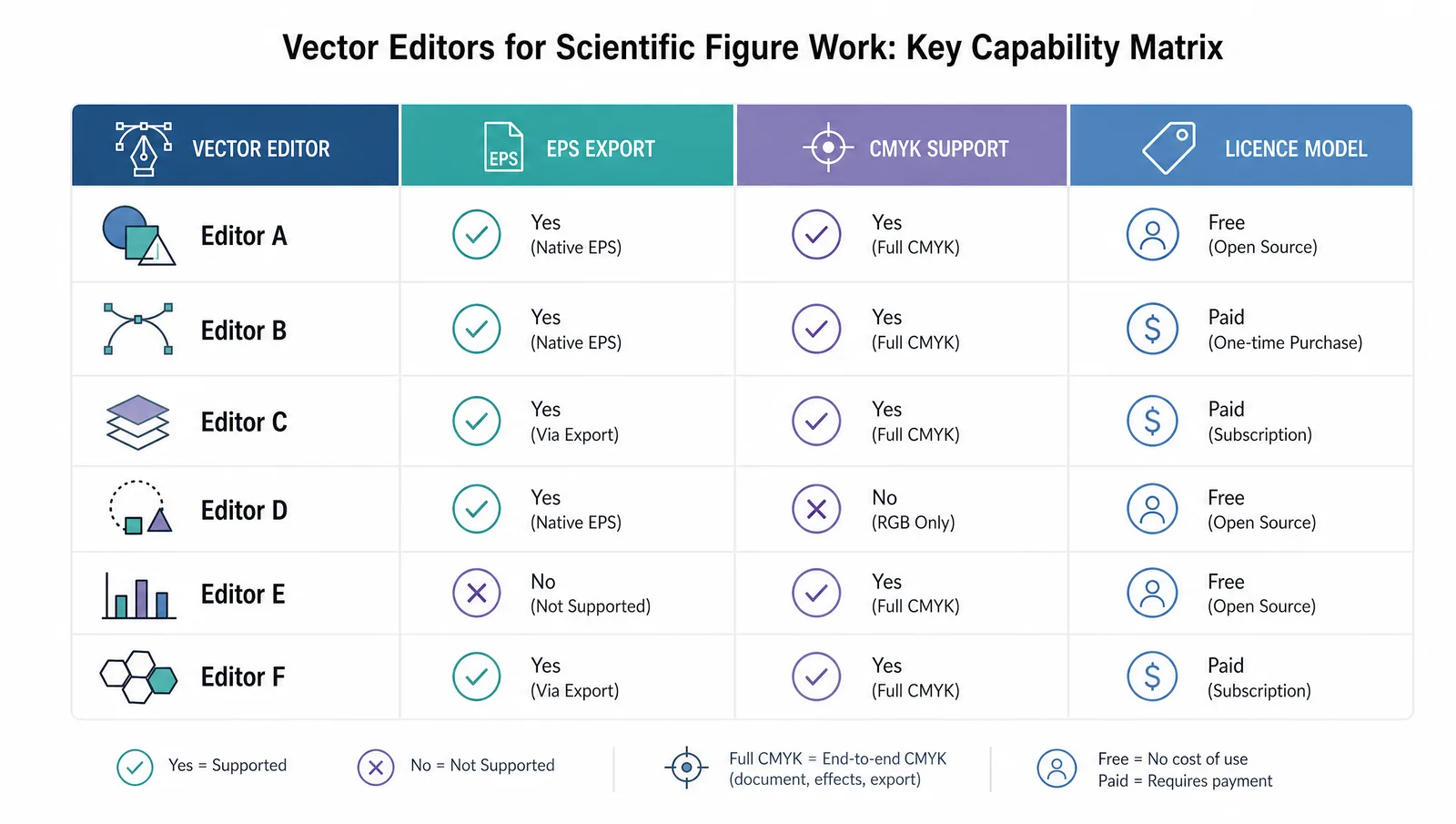
| Tool | Licence | EPS export | CMYK | Opens R/Python PDF cleanly |
|---|---|---|---|---|
| Inkscape | Free, open source | Yes | Yes | Yes |
| Affinity Designer | One-time purchase | Yes | Yes | Yes |
| Figma | Free tier, subscription | No | No | Partial |
| Vectornator / Linearity Curve | Free tier | Limited | Limited | Partial |
| Boxy SVG | One-time or subscription | No | No | Yes |
| LibreOffice Draw | Free, open source | Yes | Limited | Partial |
See AI Scientific Figure Generation in Action
Watch how researchers create publication-ready scientific figures from text descriptions.
Explore the ToolInkscape
The default recommendation. Free, open source, native SVG, exports PDF and EPS, supports CMYK conversion, and opens plot PDFs with text intact. The interface is less refined than Illustrator's and complex documents can feel slow, but no capability required for scientific figures is missing.
Affinity Designer
The strongest paid alternative. One-time purchase rather than subscription, considerably faster on large documents, and its combined vector and raster workspace is convenient for figures mixing micrographs with vector annotation. Export covers PDF, EPS, and CMYK.
Figma
The Font Trap
The most common figure production failure has nothing to do with which editor you use. A figure exported from R using a font not embedded in the PDF will render with a substituted font on the publisher's system, silently changing spacing and sometimes breaking alignment.
Tip
Never let the submitted file be your only copy. Keep the layered source, and export a flattened submission version from it. Reviewers ask for changed panel labels, added significance markers, and rearranged panels routinely, and re-editing a flattened file is far slower than re-exporting from a master.
Refine Figures in the Vector Canvas
Open any AI-generated figure in the editable canvas — layered SVG, 8K PNG, or editable PPTX.
Try Free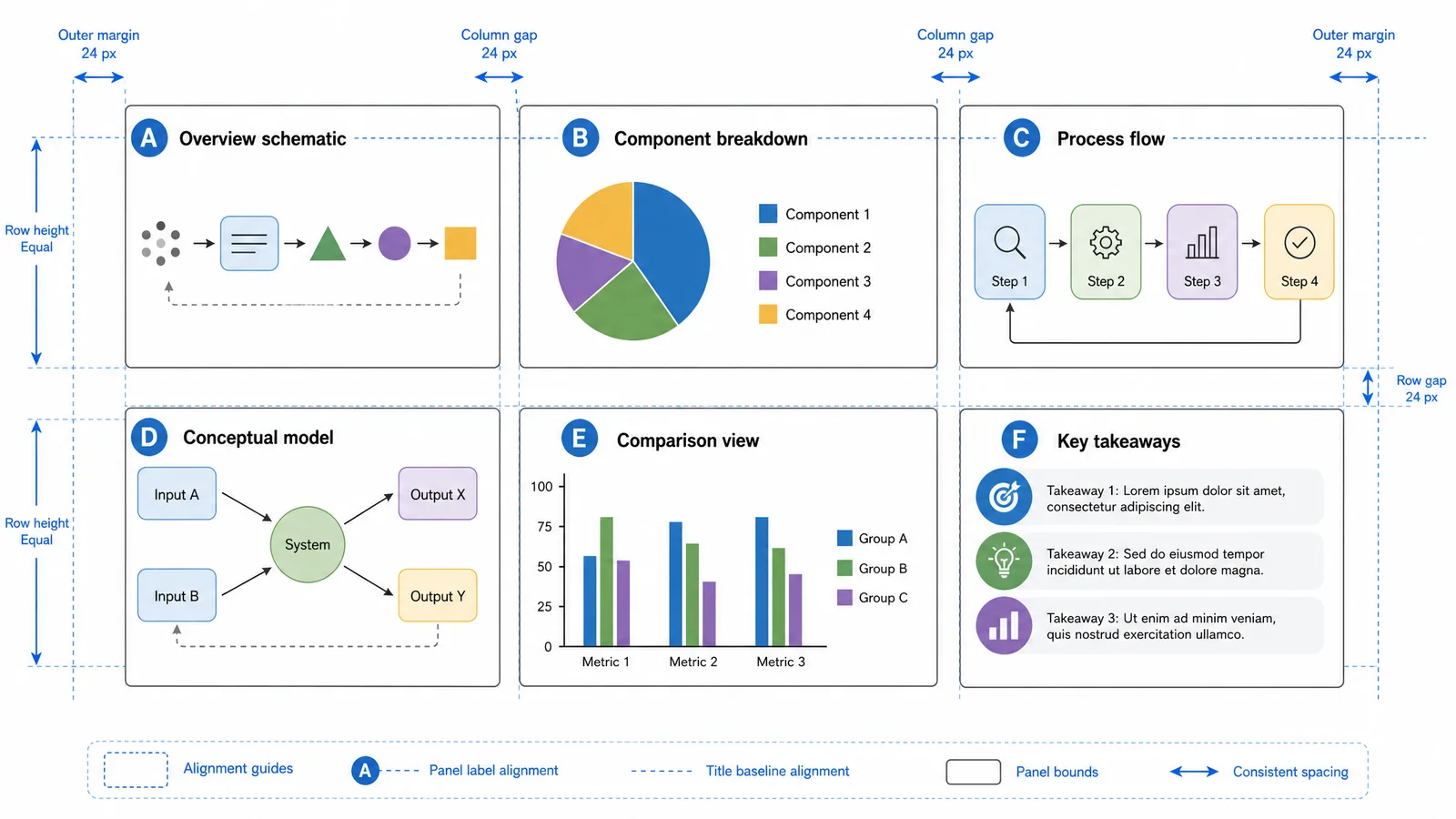
Related Reading
Related reading: 7 Best BioRender Alternatives in 2026 (Free & Paid), Nature-Level Scientific Figures on a Budget.