
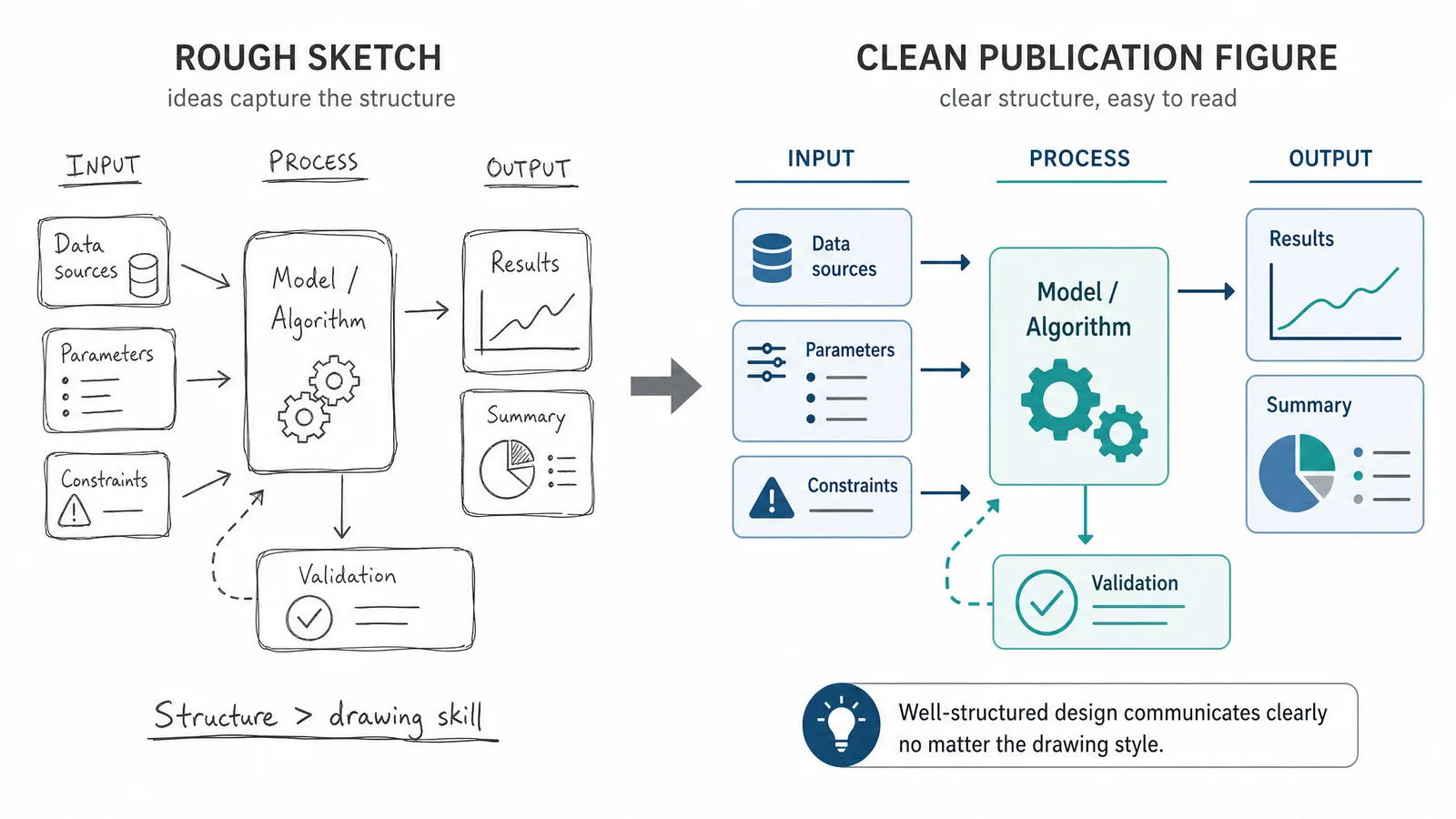
Scientific illustration is about clarity and accuracy, not about drawing skill.
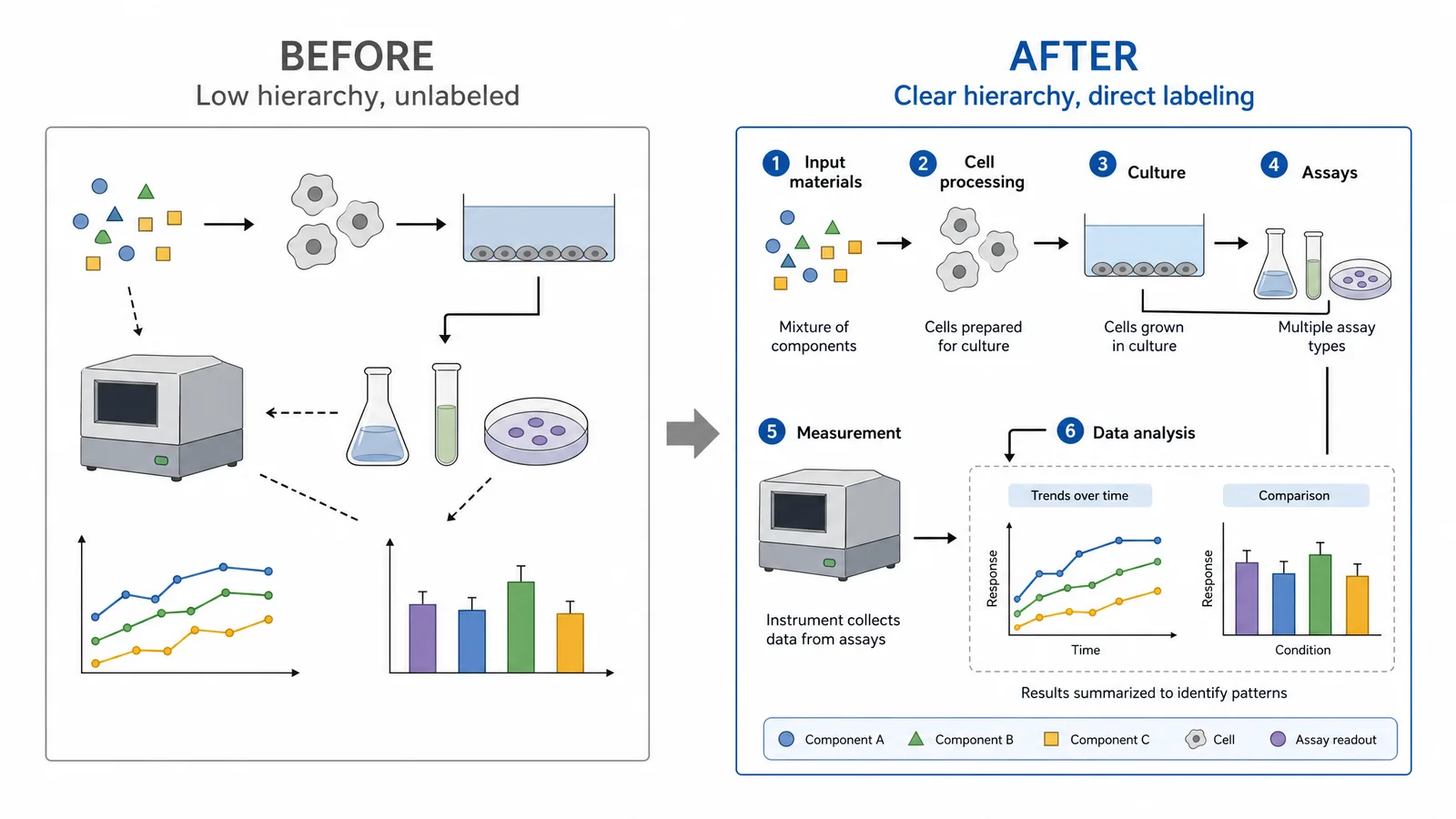
That is the useful thing to learn first. Most researchers assume they cannot make good scientific figures because they cannot draw. In practice the scientific figures that fail do so because of unclear hierarchy, inconsistent conventions, and unlabelled elements — problems of thinking rather than of hand skill.
Start With the Message
Before opening any tool, write one sentence: what should a reader understand from this figure? If you cannot write it, the figure is not ready to draw.
Then decide what the figure must contain to support that sentence, and delete everything else. Most weak scientific figures are not badly drawn — they are trying to say three things at once.
Learn These Four Things First
See Sketch-to-Figure in Action
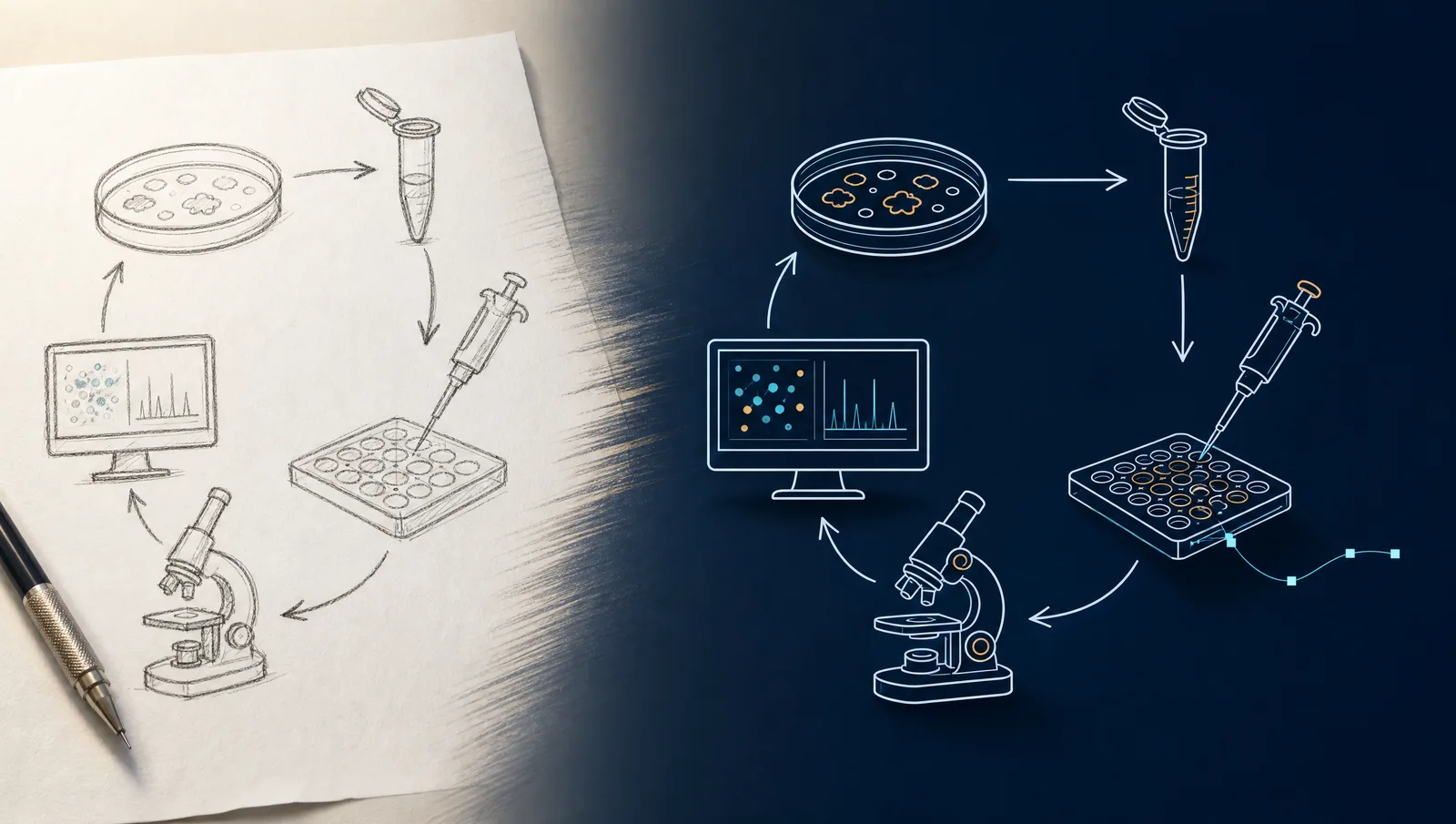
From napkin sketch to Nature-quality scientific figure — powered by SciFig AI.
Explore the ToolTools to Start With
| Stage | Tool | Why |
|---|---|---|
| Sketching | Paper, or any tablet app | Fast, disposable, no tool friction |
| Diagramming | draw.io | Free, easy, exports vector |
| Vector finishing | Inkscape | Free, journal-grade export |
| Data figures | matplotlib / ggplot2 | Bound to real data |
Do not start by learning a professional illustration suite. Start with paper and draw.io, and add tools only when you hit a specific limit.
The Sketch-First Workflow
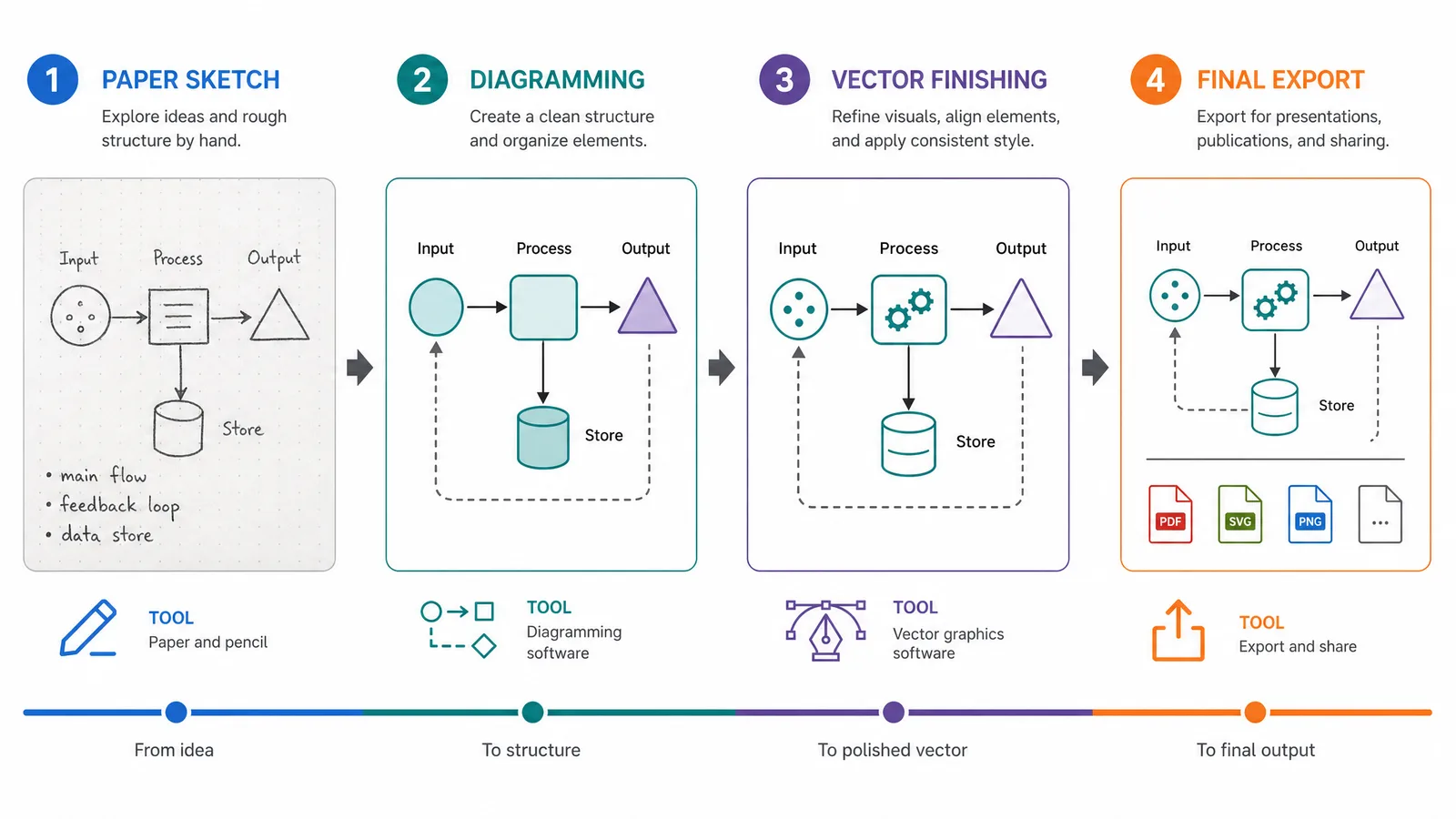
- Sketch on paper. Two minutes, deliberately rough. You are deciding layout, not drawing.
- Try a second layout. The first idea is rarely the best, and the second costs another two minutes.
- Build the structure in a diagramming tool without worrying about appearance.
- Refine — spacing, alignment, consistent colour.
- Export vector at your target's specification.
Sketching first matters because layout decisions are cheap on paper and expensive once elements exist in a file. People who skip it tend to accept the first arrangement because rearranging feels like lost work.
Accuracy Obligations
Scientific illustration carries obligations that general illustration does not:
- Do not invent detail you have not observed or cannot cite.
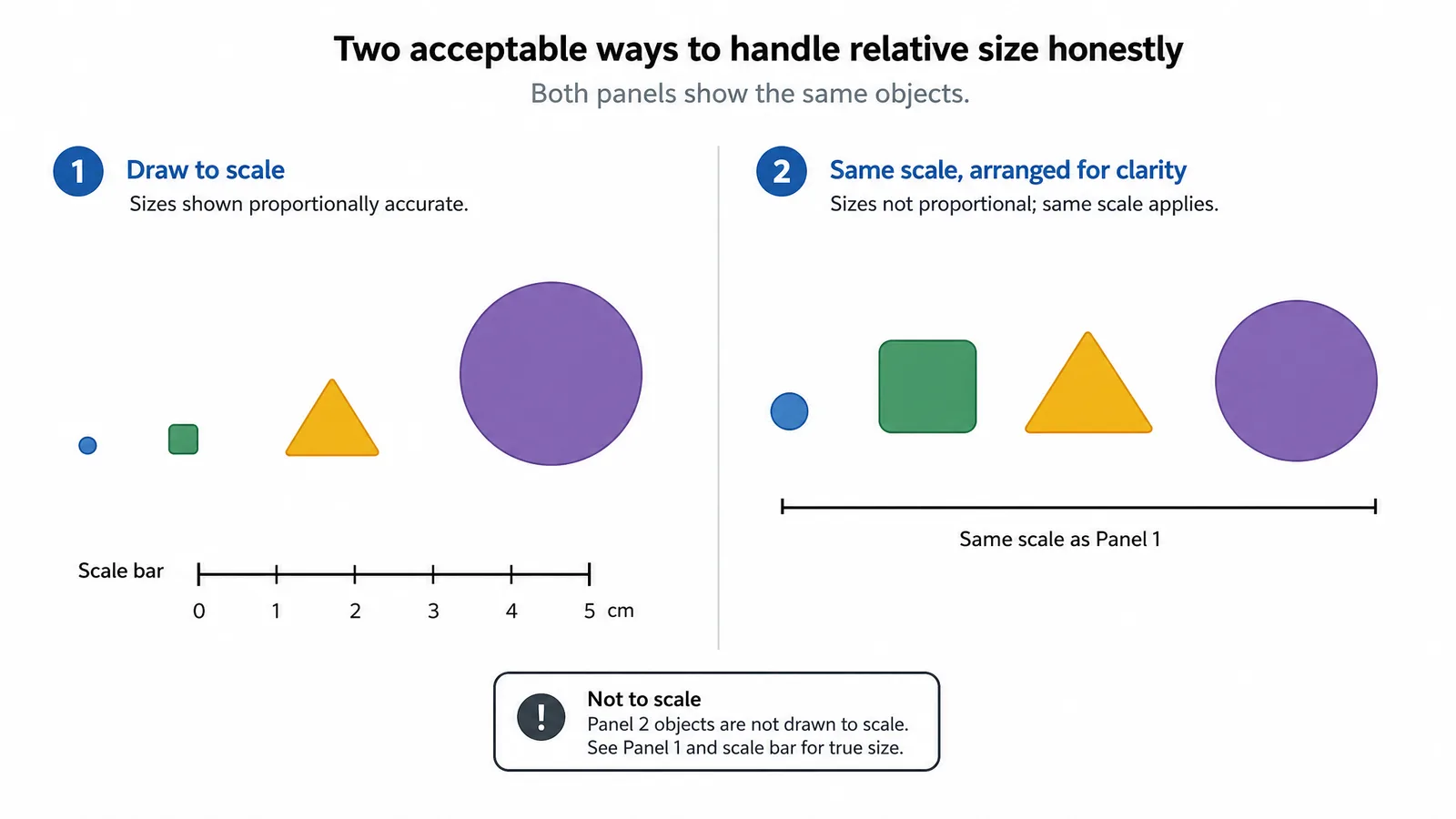
- Keep relative scale honest, or state explicitly that it is not to scale.
- Match orientation conventions in your field — anatomical position, standard map orientation, conventional axis direction.
- Disclose how the figure was made where your journal requires it, including AI assistance.
Tip
Show an early draft to someone outside your subfield and ask what they think it shows. Their first answer tells you what the figure actually communicates, which is frequently not what you intended. This is the highest-value feedback available and it takes two minutes.
Turn Sketches Into Pro Scientific Figures
Upload your hand-drawn sketch, get a polished scientific illustration instantly.
Try FreeRelated Reading
Related reading: Sketch to Publication-Ready Scientific Figures, 5 Common Scientific Figure Mistakes AI Fixes.