
Free Protein Synthesis Diagram Generator
Generate clear protein synthesis figures tracing DNA to mRNA to a finished polypeptide through the nucleus and ribosome — labeled or blank for class or papers.
Start with up to 150 free credits|No credit card required
Get up to 350 free credits on day one when you join through an invite.
Updated
Free Protein Synthesis Diagram Generator— templates & examples
Everything you need to build a clear protein synthesis diagram
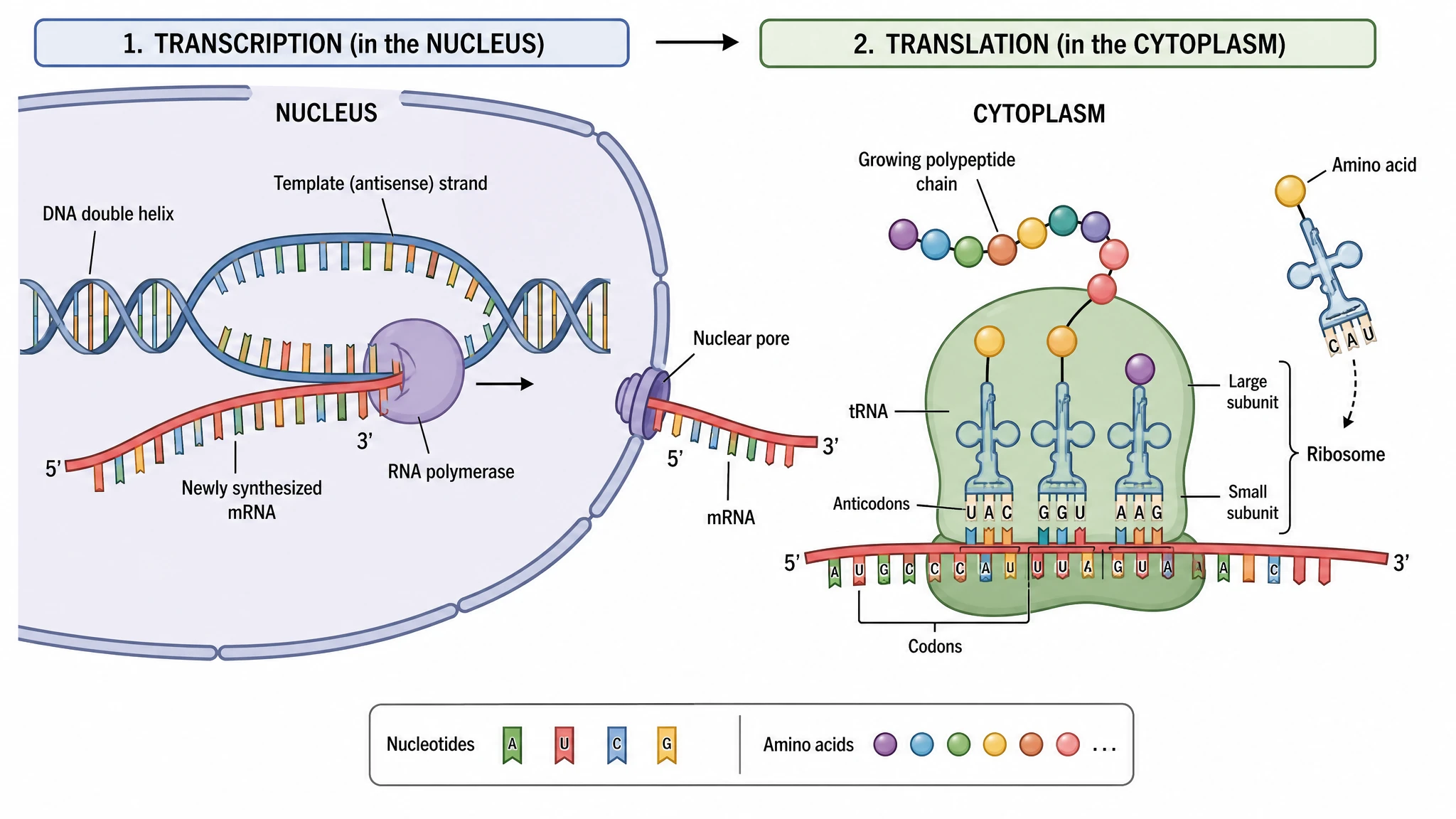
Trace the full path from gene to polypeptide
SciFig's protein synthesis diagram generator draws both stages in one continuous figure — DNA unwinding in the nucleus, mRNA exiting through a nuclear pore, and a ribosome assembling amino acids into a chain — so the handoff between transcription and translation is visible rather than assumed.
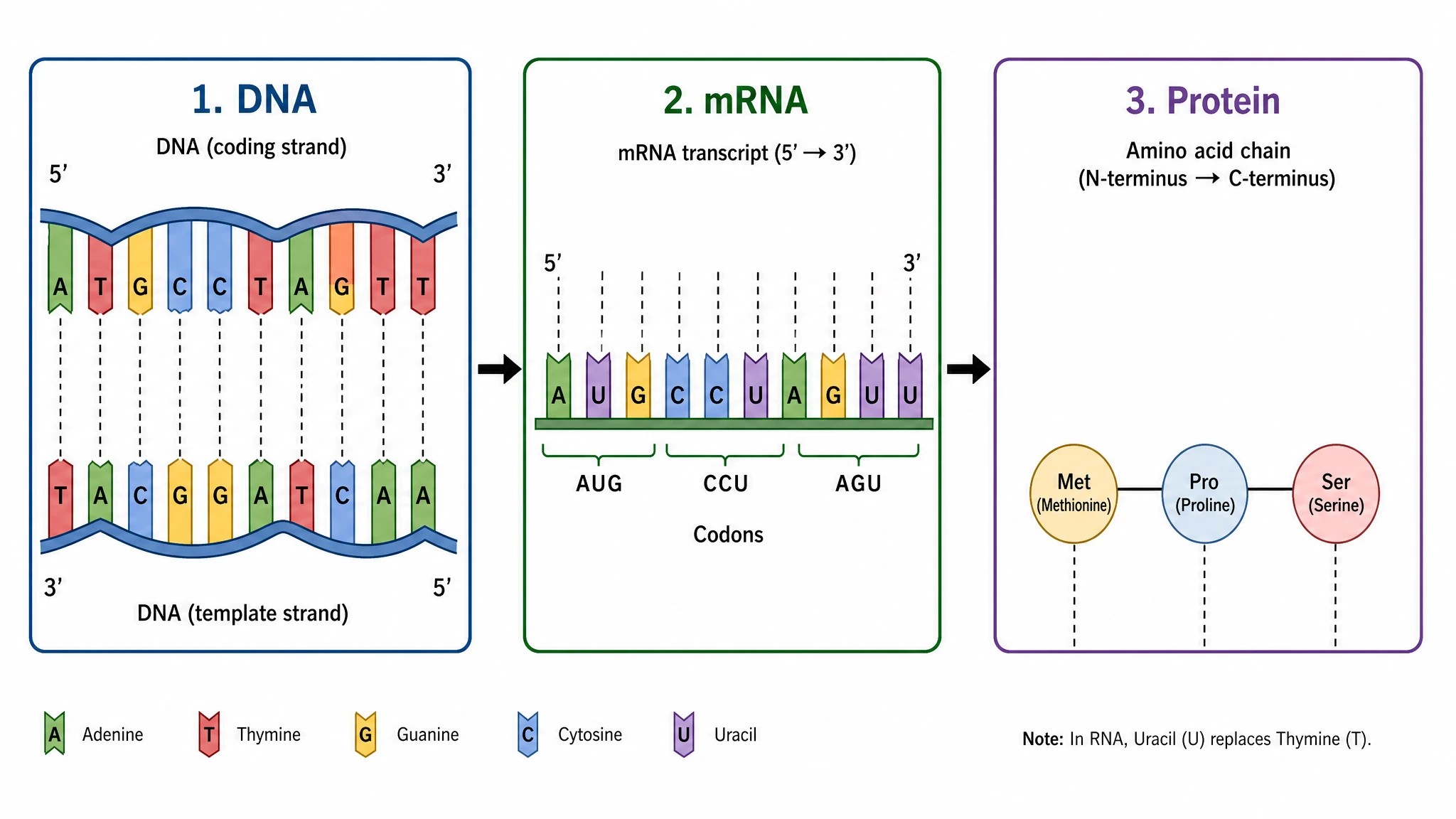
Zoom in on codons, anticodons, and tRNA
Codon reading is where students lose the thread. SciFig can expand the ribosome into a detailed view showing the mRNA codon, the matching tRNA anticodon, and the peptide bond forming, while the same page keeps a simple protein synthesis diagram available for lower-level classes.
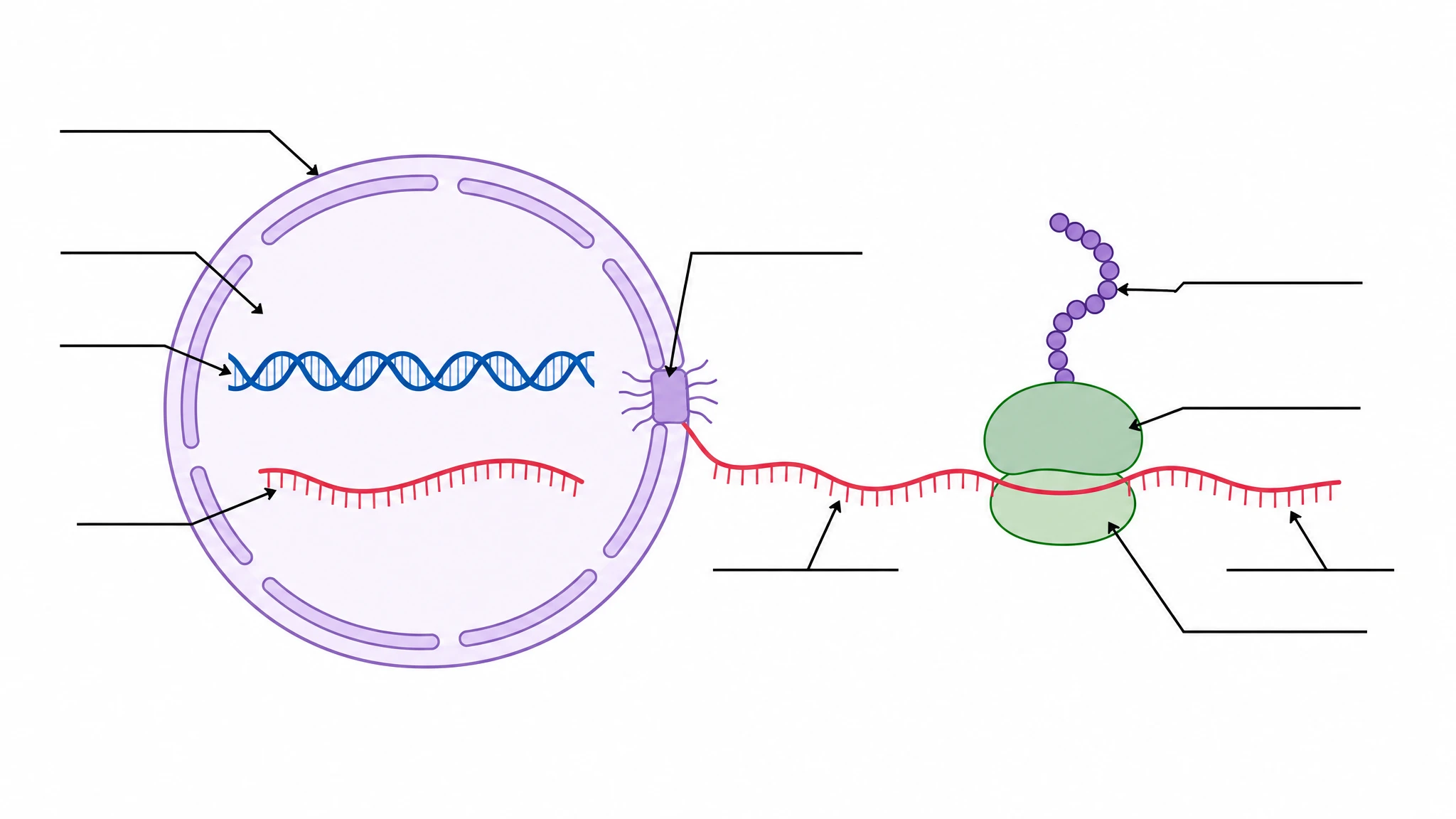
Export labeled or blank versions for teaching
Present a fully labeled protein synthesis diagram in a lecture, then export the identical figure with empty label lines as a revision worksheet. Every version comes out at publication resolution and stays editable, so you can adjust terminology to match your syllabus.
What is a protein synthesis diagram?
Protein synthesis is how a cell reads a gene and builds the polypeptide it encodes, running from DNA in the nucleus to a ribosome in the cytoplasm. A labeled protein synthesis diagram traces that path in two stages: transcription copies the gene into mRNA, then translation reads the mRNA codons while tRNA delivers the matching amino acids. With SciFig's protein synthesis diagram generator you describe the labels you need and get an accurate figure, ready to relabel and export.
Why accurate protein synthesis diagrams matter
- Show how the information in a gene becomes a functional protein
- Separate transcription in the nucleus from translation at the ribosome
- Make the genetic code concrete by pairing codons with specific amino acids
- Required in GCSE, AP Biology, IB, and introductory molecular biology courses
- Explain why mutations in DNA can change a protein's amino acid sequence
- Support research figures on gene expression, antibiotics, and translation inhibitors
Key components of a protein synthesis diagram
- DNA — the double helix holding the gene that will be transcribed
- RNA polymerase — the enzyme that reads the template strand and builds mRNA
- mRNA — the messenger transcript carrying codons out of the nucleus
- Ribosome — the two-subunit machine that reads codons and joins amino acids
- tRNA — the adaptor whose anticodon matches a codon and carries one amino acid
- Polypeptide chain — the growing product that folds into a functional protein
- Nuclear envelope and pore — the boundary the transcript crosses in eukaryotes
Where protein synthesis diagrams are used
- Secondary school and AP Biology lessons on the central dogma
- University molecular biology, genetics, and biochemistry courses
- Textbooks, revision guides, and fill-in-the-blank worksheets
- Research figures on gene expression and translational regulation
- Posters covering antibiotic mechanisms that target bacterial ribosomes
- Student presentations, lab reports, and exam preparation materials
How to make a protein synthesis diagram
Describe your protein synthesis diagram
Tell SciFig what to draw in plain language — no design tools required.
Generate with SciFig
Get a clean, publication-ready figure that matches your description in seconds.
Edit & export
Vectorize it into editable SVG, relabel everything, and export for your paper, poster, or slides.
Free Protein Synthesis Diagram Generator — Frequently Asked Questions
Common questions about Free Protein Synthesis Diagram Generator.
More tools
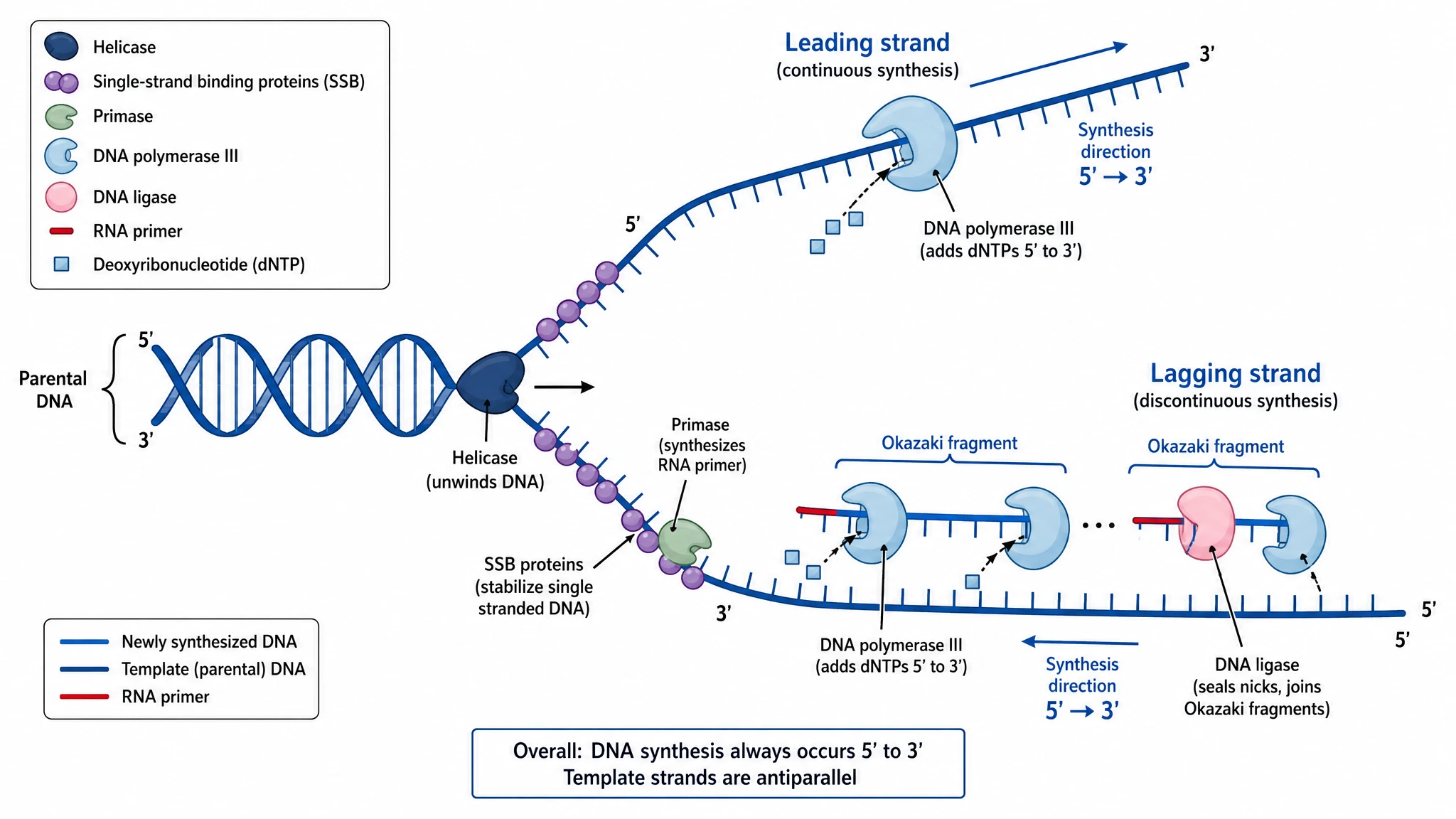
DNA Replication Diagram Generator
Show leading and lagging strand synthesis
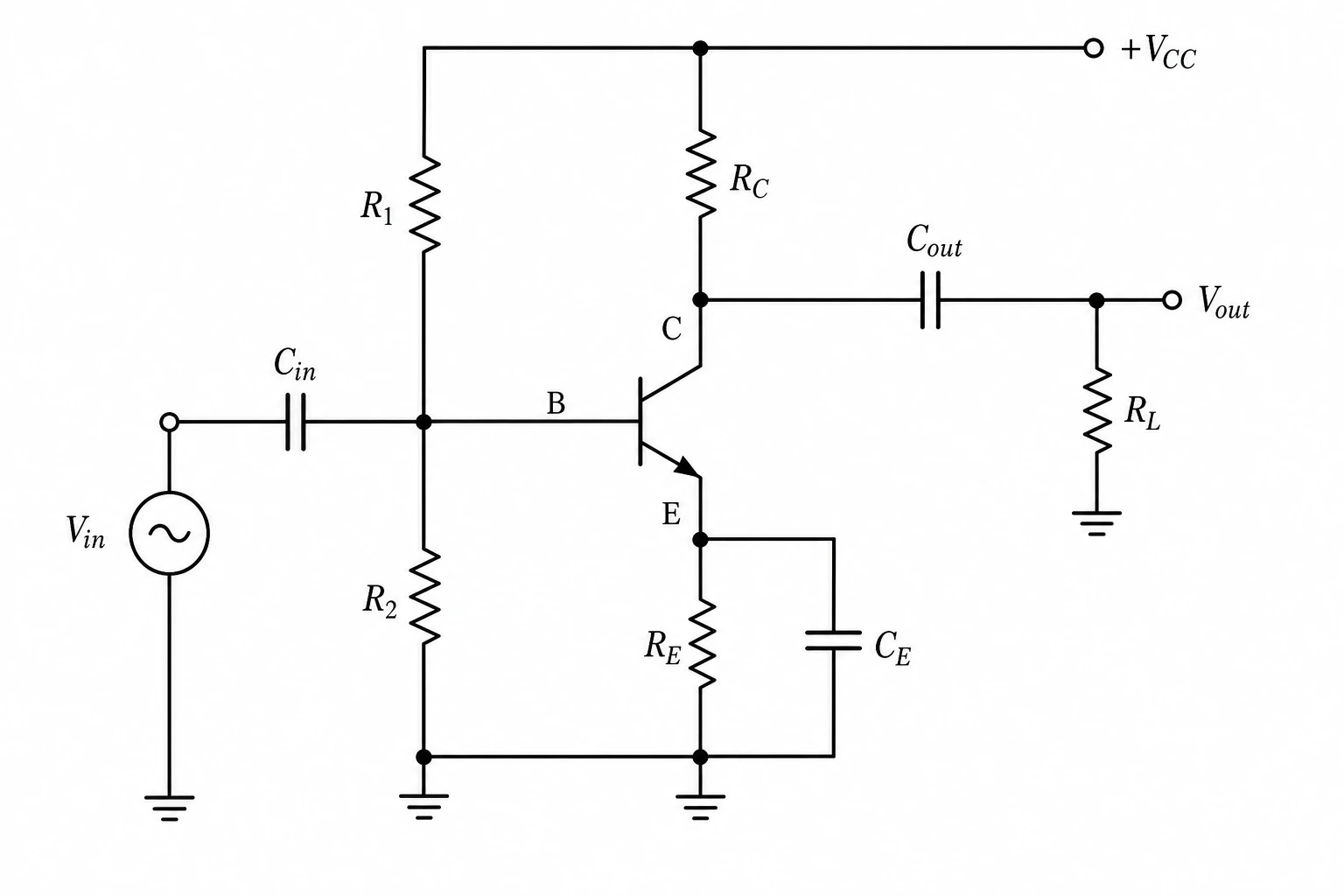
Circuit Diagram Maker
Draw electronic circuit schematics
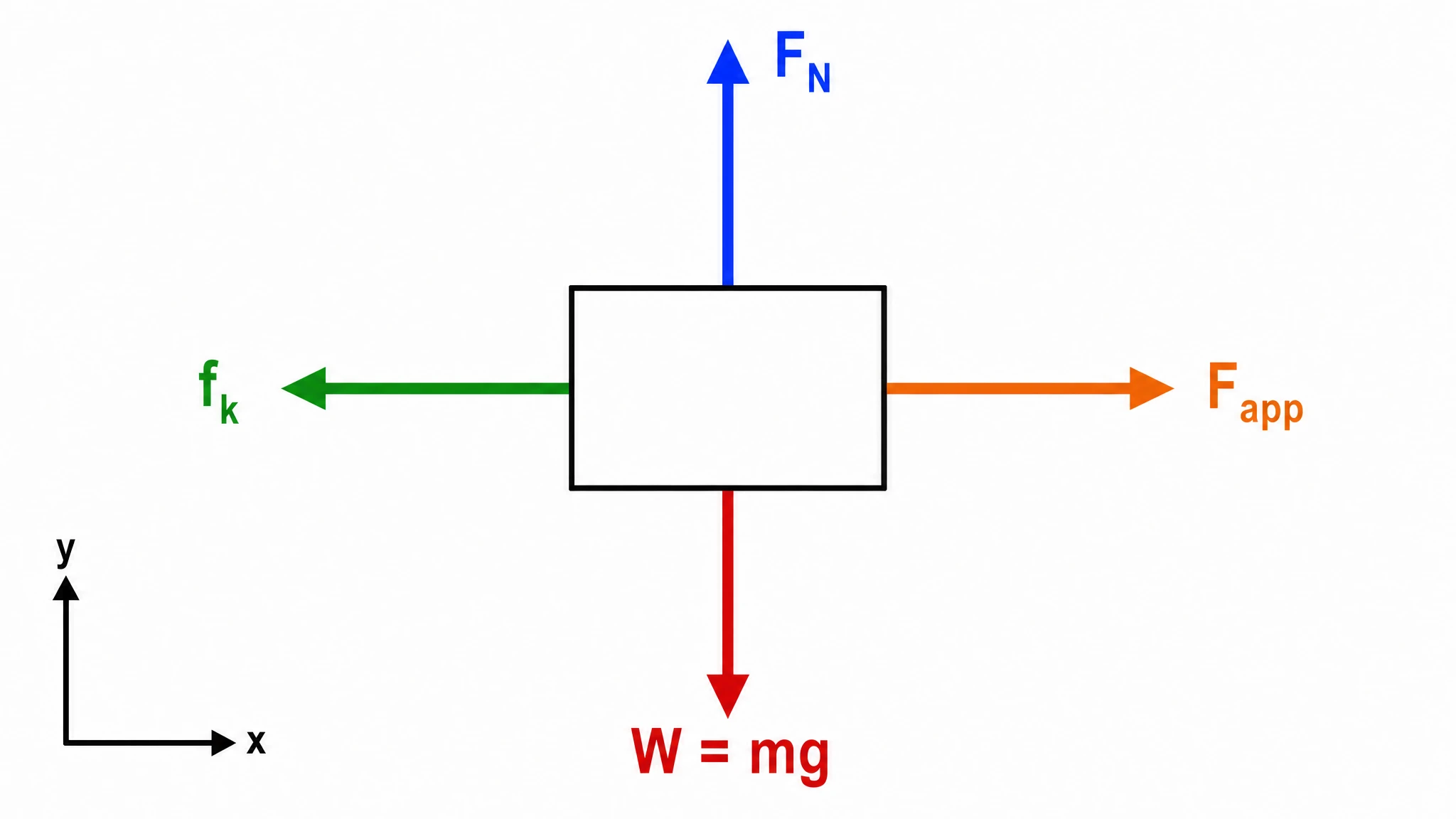
Free Body Diagram Generator
Show forces acting on an object
SciFig
Free AI Scientific Figure Generator for Illustrations, Images, Charts and Flowcharts
Models
Default to GPT Image 2 for journal papers; switch to Nano Banana Pro for slides and posters; pick Nano Banana 2.1 for routine figure work
Tutorials
Seven short walkthroughs of the AI scientific figure generator
Blog
Tutorials, tool comparisons, and publication tips for researchers.
Inspiration
Explore publication-ready illustrations, charts and flowcharts. Copy a prompt or open any template as the starting point for your own figure.
Pricing
View pricing

Ready to publish?
Make your own protein synthesis diagram in minutes.
Start for freeFree to start · No credit card required · Built for researchers