Genomics of Brain Disorders 2026 Poster Guidelines
Genomics of Brain Disorders 2026 poster guidelines: A0 portrait size, abstract deadlines, the 1-minute poster pitch, and the figures your poster needs.
SciFig Team
SciFig editorial team
Genomics of Brain Disorders 2026 runs 16–18 September at Wellcome Genome Campus, Hinxton, UK.
This is a practical guide to the official poster and presentation rules for the 5th Genomics of Brain Disorders conference: the A0 portrait poster board size, the abstract submission window, and the distinctive 1-minute poster pitch format.
It also covers short talk time limits, where accepted abstracts appear, and the genomics and neuroscience figures that make a poster worth stopping for. Every date and specification below links to official Wellcome Connecting Science materials.
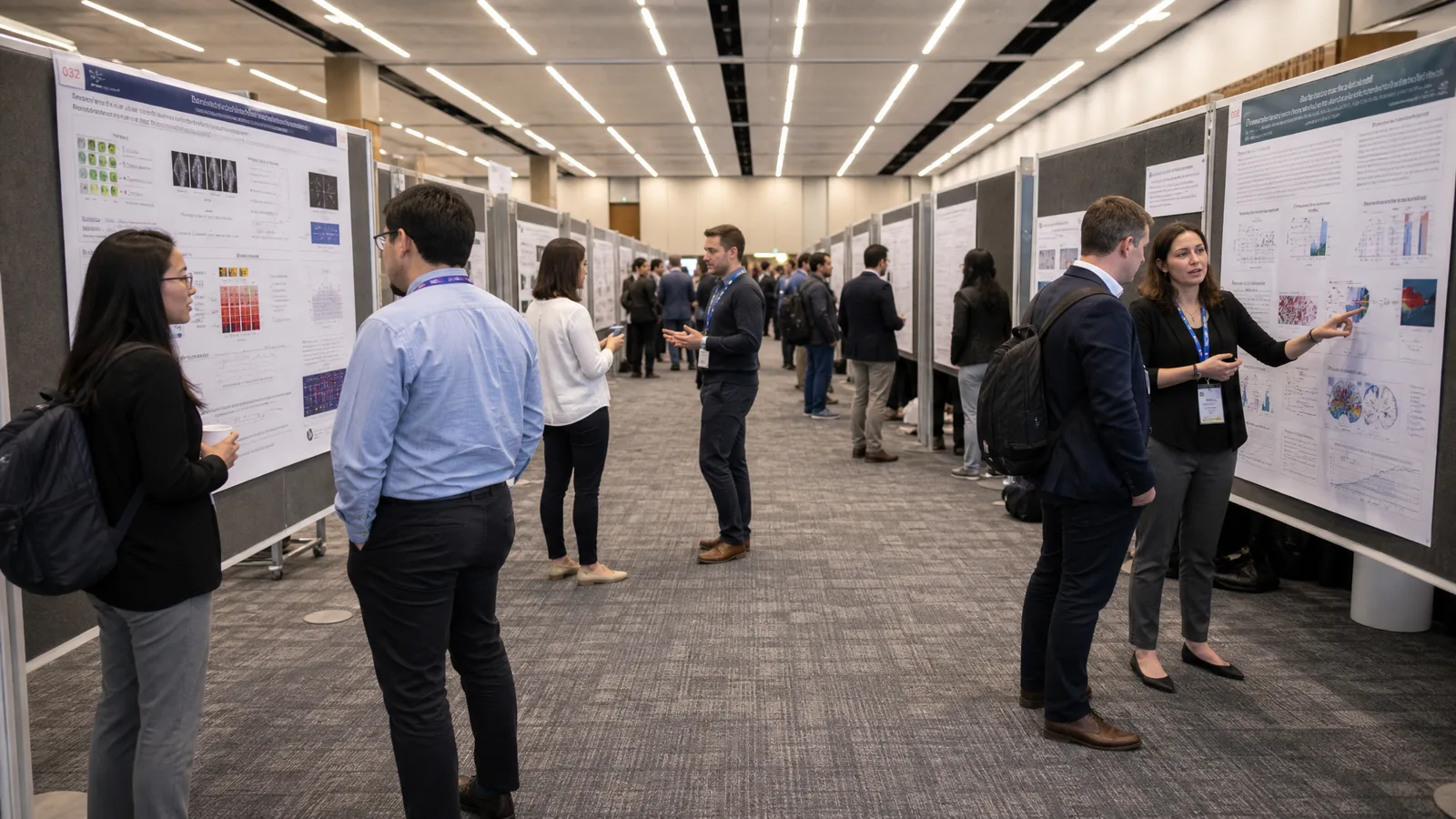
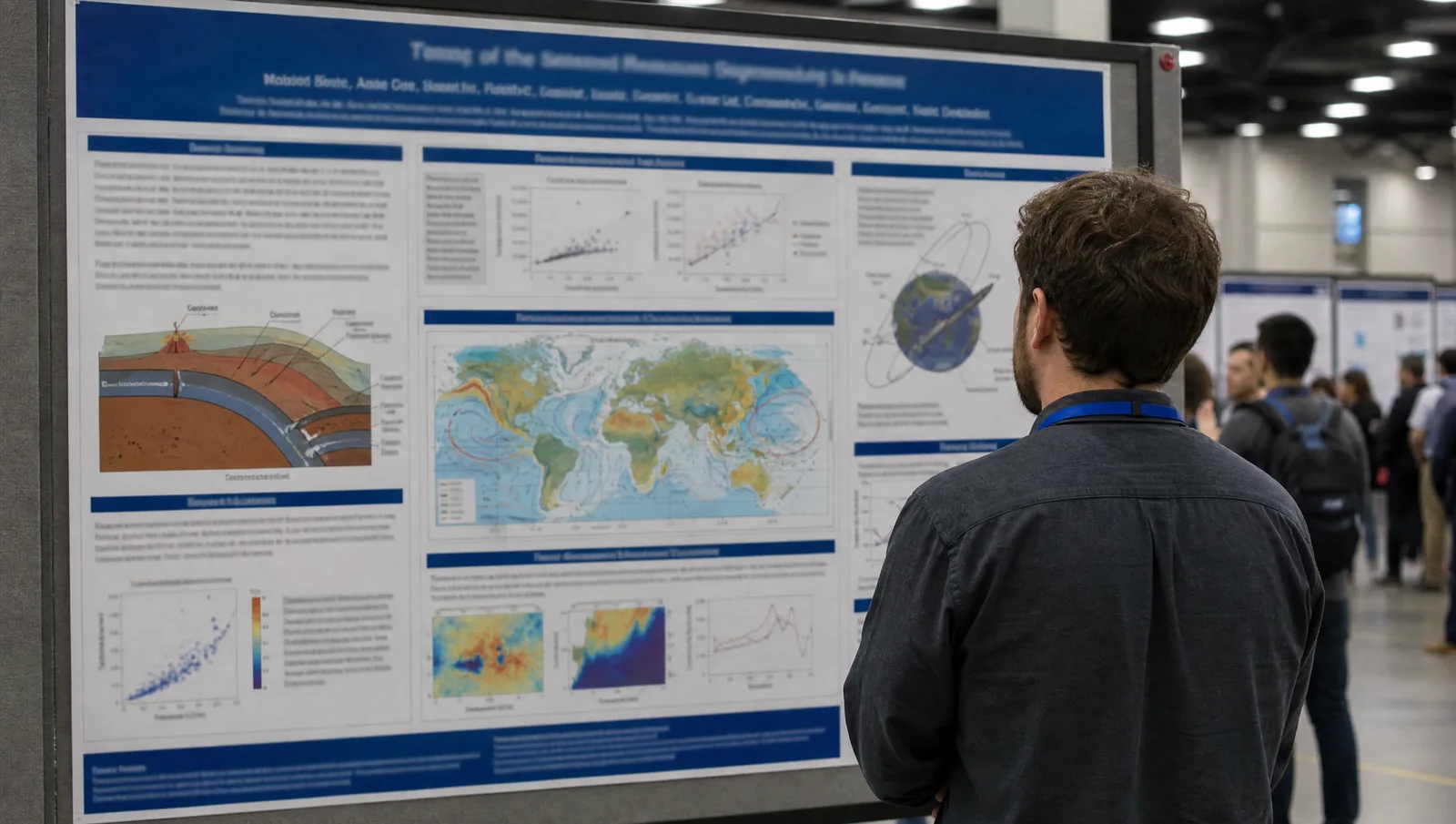
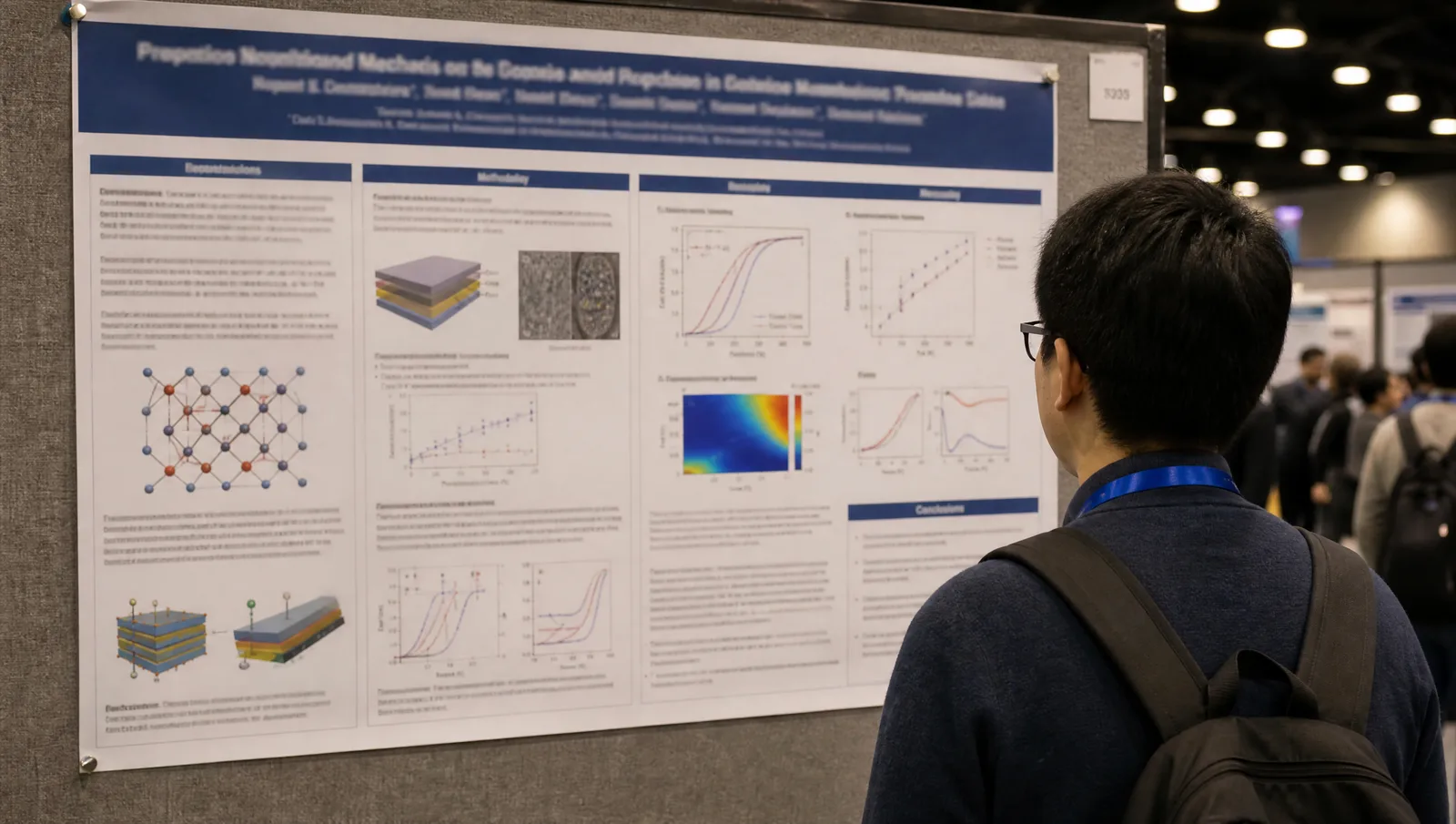
Genomics of Brain Disorders 2026 poster hall at Wellcome Genome Campus: rows of A0 portrait posters on boards, delegates discussing genetic risk figures (Figure generated with SciFig)
Transparency note: Illustrations in this article were generated with SciFig AI and reviewed by the author for scientific accuracy. Factual claims about dates and specifications link to official Wellcome Connecting Science materials.
1. Genomics of Brain Disorders 2026 at a Glance: Dates, Venue, and Deadlines
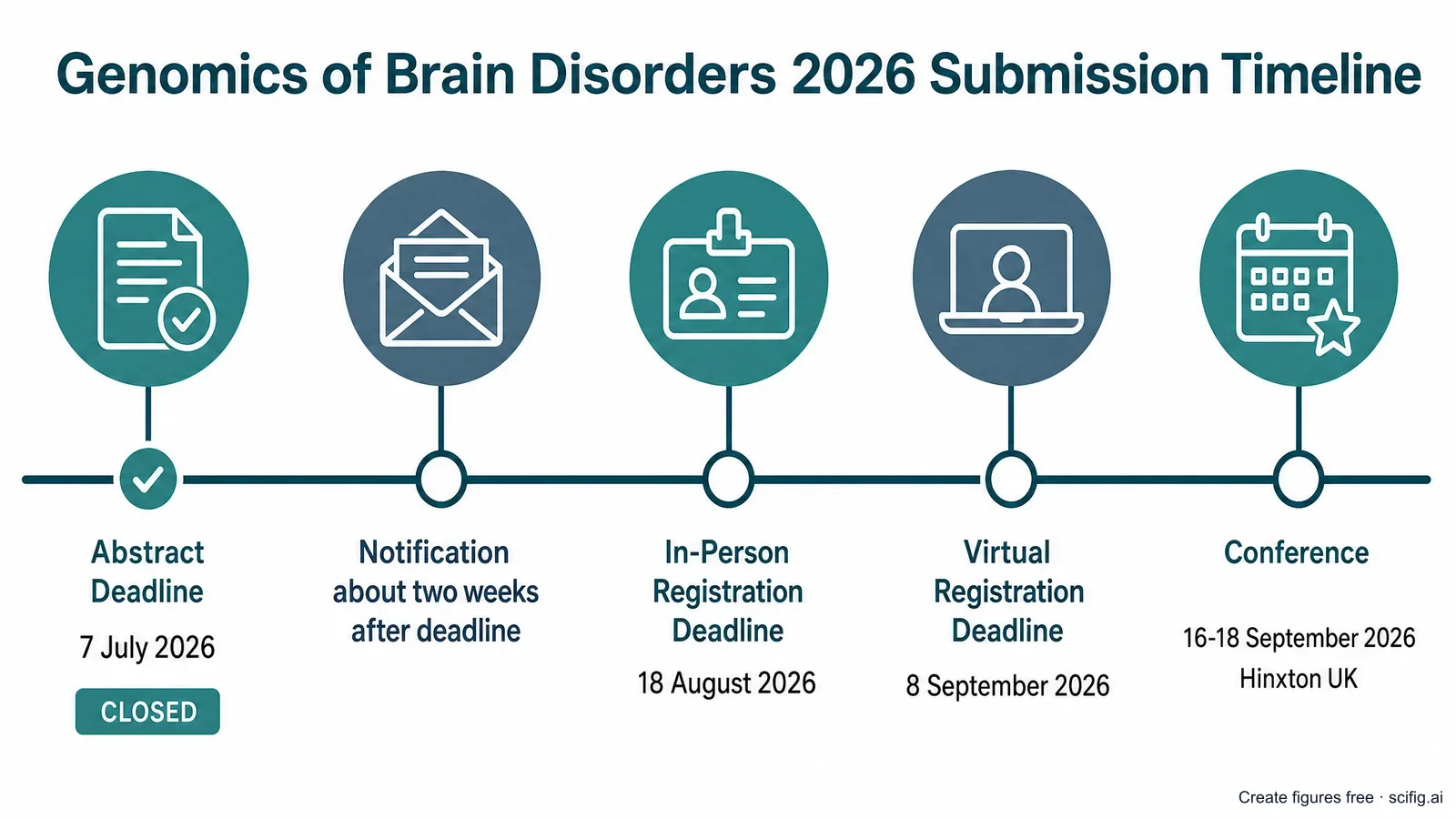
Genomics of Brain Disorders 2026, the 5th conference in this Wellcome Connecting Science series, begins around 12:00 on Wednesday 16 September and closes around 13:00 on Friday 18 September 2026, held as a hybrid meeting at the Wellcome Genome Campus, Hinxton, Saffron Walden CB10 1SA, UK. The abstract submission deadline was 7 July 2026, 11:59 pm UK time; the official event page also lists an "Extended abstract deadline" that is now marked closed, though the specific extended date is not published as of 21 July 2026. Per the official guidance, "you will be notified about 2 weeks after the deadline whether you have been selected to present" — so acceptance notifications land close to when this guide was written, which is exactly the window to plan your poster or slides.
Two further dates matter for anyone attending: in-person registration closes 18 August 2026, and virtual registration closes 8 September 2026. The conference is organized around six themed sessions — from Genes in Context through to From Human Genetics to High-Confidence Targets — chaired by the Scientific Programme Committee (Anders Børglum, Kristen Brennand, Danielle Posthuma, and Mina Ryten), with keynotes from Matthew Hurles (Wellcome Sanger Institute) and Manolis Kellis (MIT). Full session-by-session timing is in the official Genomics of Brain Disorders 2026 draft programme.
Genomics of Brain Disorders 2026 submission timeline: abstract deadline 7 July, notification about 2 weeks later, conference 16-18 September Hinxton (Figure generated with SciFig)
Date
Milestone
7 July 2026, 11:59 pm UK time
Abstract submission deadline (an extended deadline was also offered and is now closed)
~2 weeks after deadline
Presenters notified whether selected for a talk or poster
18 August 2026
In-person registration deadline
8 September 2026
Virtual registration deadline
16–18 September 2026
Genomics of Brain Disorders 2026, Wellcome Genome Campus, Hinxton (hybrid)
2. Genomics of Brain Disorders 2026 Poster Size and Format (Official Specs)
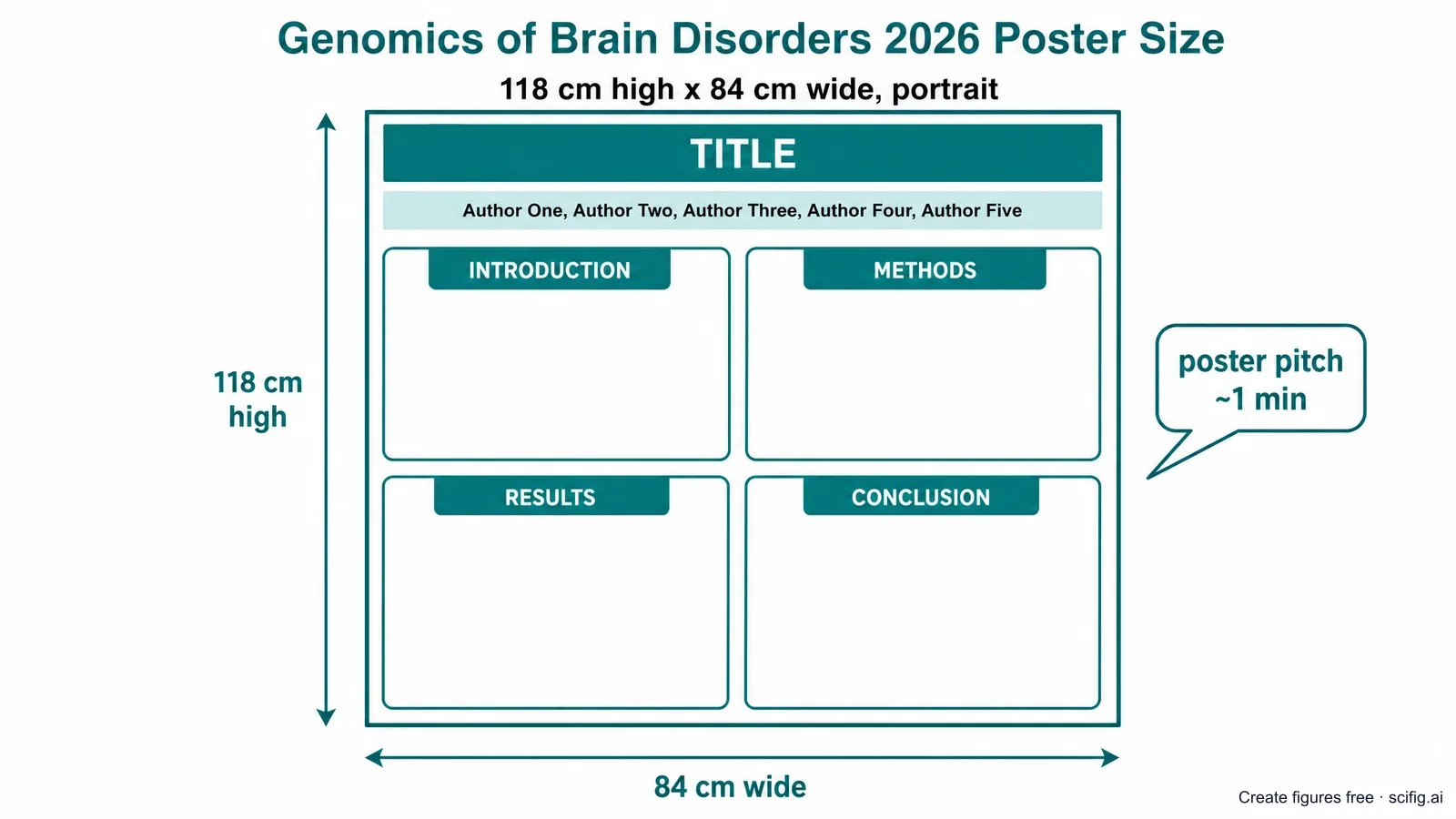
A Genomics of Brain Disorders 2026 poster is A0 portrait — official poster boards accommodate 118 cm high by 84 cm wide of printed material — and accepted posters can be presented either in person at Hinxton or virtually. This is a printed, physical poster (not an e-poster upload), and poster board numbers are allocated at the conference itself. What sets this meeting apart from many larger congresses is that every accepted poster presenter also gets roughly one minute for a "poster pitch" — a short spoken summary of the work, delivered in a dedicated session before the poster viewing and networking reception begins.
A0 portrait (118 × 84 cm) — design your layout tall, not wide; this is the same footprint as many large genetics and neuroscience meetings.
Poster pitch talks run in two dedicated blocks — one for odd-numbered posters, one for even-numbered posters — immediately followed by the poster session and reception for that group, so your one-minute pitch and your poster need to tell the same story at a glance.
In-person or virtual — if you cannot travel to Hinxton, your accepted poster can still be presented virtually, though the official page does not yet publish the exact virtual submission format (not published as of 21 July 2026) — confirm this directly with the organizers once notified.
No official printing-service details are published (not published as of 21 July 2026) — plan to arrive with your poster printed, and check directly with Wellcome Connecting Science if you need on-site printing.
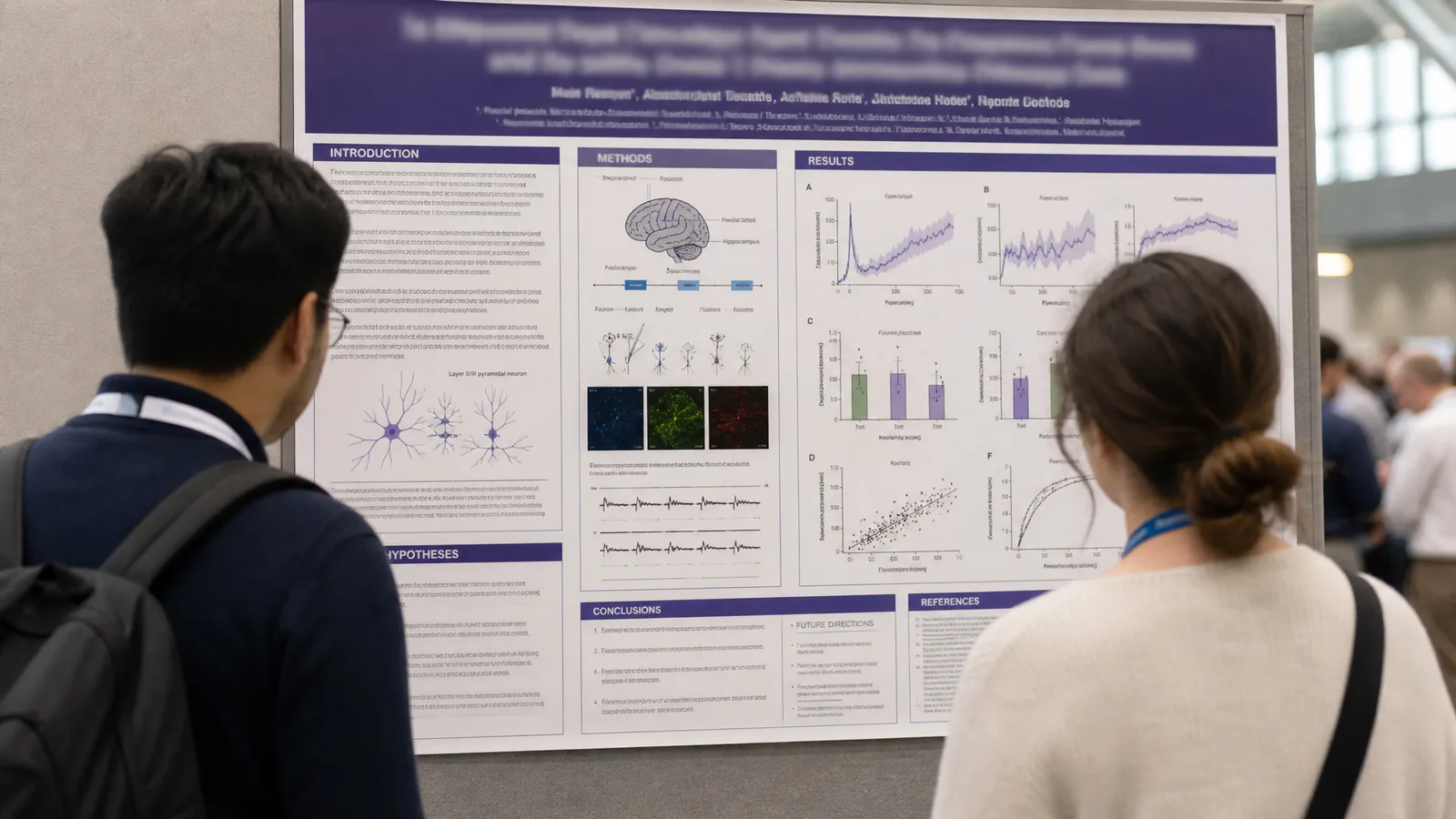
Genomics of Brain Disorders 2026 poster size and template: A0 portrait layout at 118 by 84 cm with title bar, author row, and panels for a genetics poster (Figure generated with SciFig)
The genomics and neuroscience figures on a poster like this — a risk-variant-to-circuit pathway, a variant-to-phenotype schema — are usually the slowest part of the layout to produce well. You can generate publication-grade scientific figures online for free and drop them straight into your poster composition.
Need a hero figure for your Genomics of Brain Disorders poster?
Start from a genetic risk pathway, pedigree schema, or brain circuit mechanism before you open your poster template.
The boards take 118 × 84 cm of printed material — A0 portrait, effectively. Our conference poster templates ship A0 portrait as its own file in editable PowerPoint with the print type scale already applied, so the sheet fits the board without rescaling.
3. What Figures Do You Need? Poster, Poster Pitch, and Short Talk
Whether you are building a poster, your one-minute poster pitch, or a short talk selected from your abstract, the figures that carry a Genomics of Brain Disorders audience are the same handful: a genetic-risk-to-mechanism pathway, a variant-to-phenotype schema, and — where relevant — a brain cell-type or circuit diagram. The exact mix depends on your track (psychiatric genetics, neurodegeneration, neurodevelopmental disorders, functional genomics), but three figure jobs recur across posters, pitches, and talks:
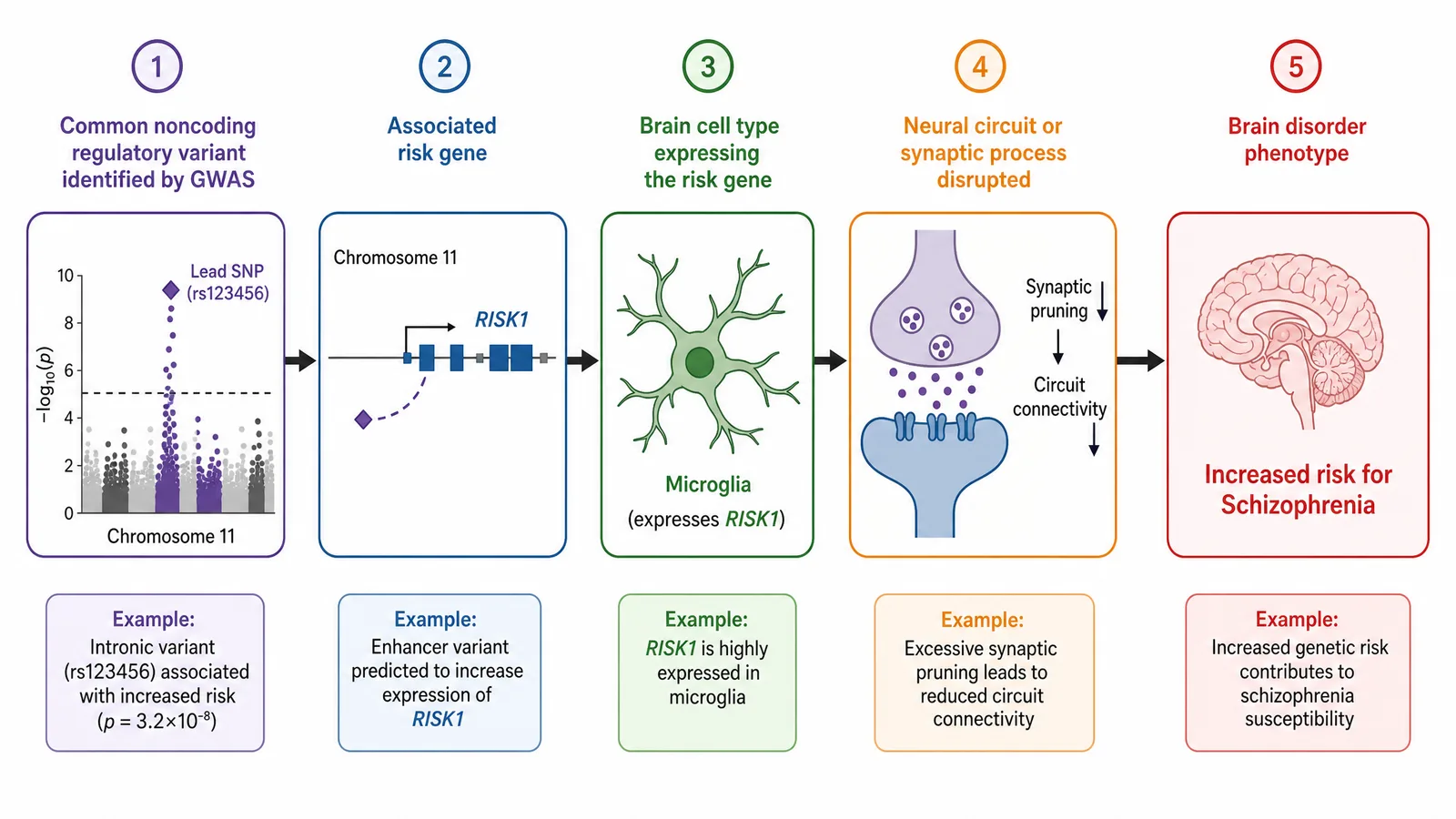
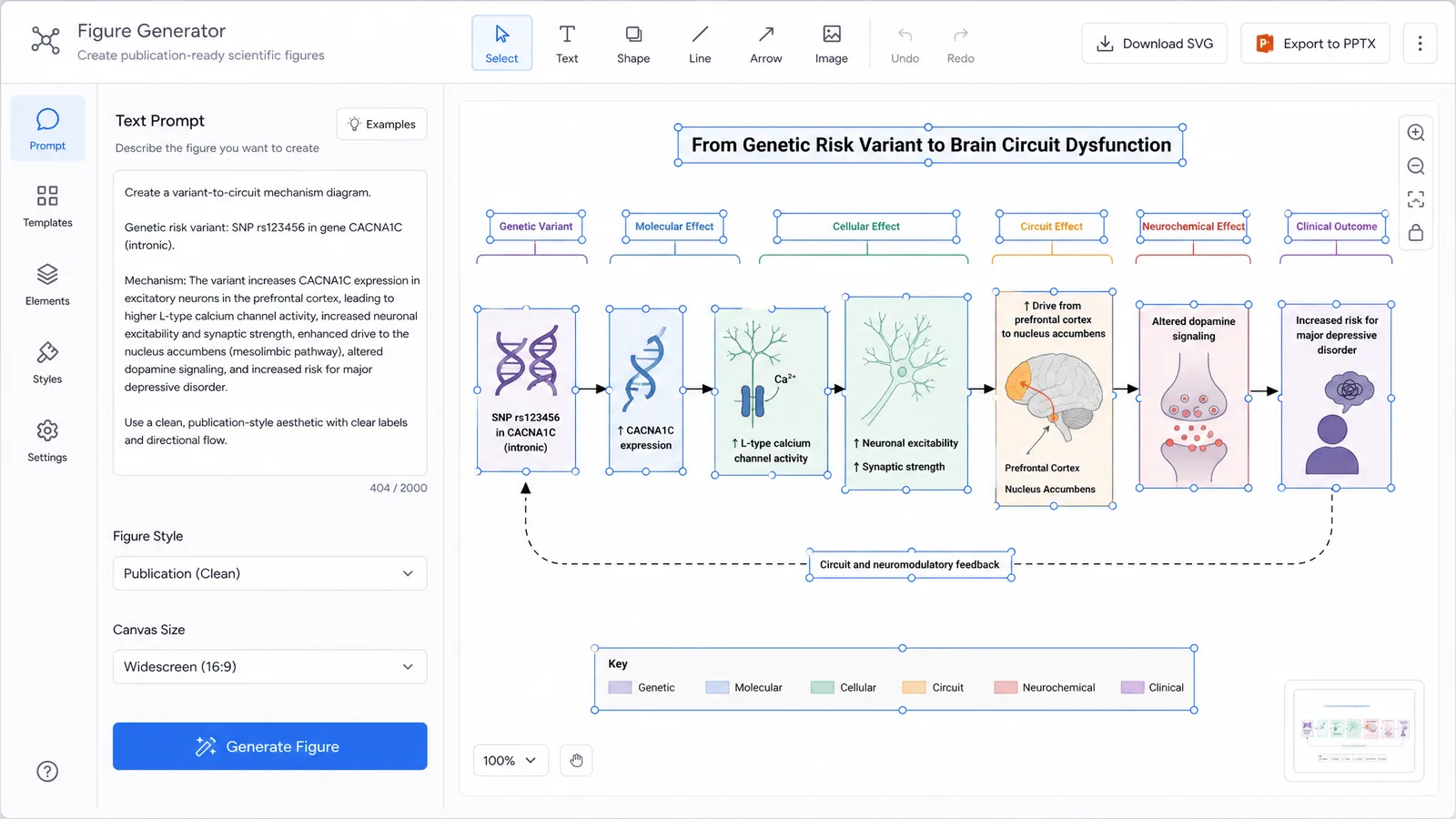
Risk gene to brain circuit pathway — a GWAS or rare-variant finding, the gene it implicates, the brain cell type expressing that gene, and the circuit or process it disrupts. This is the figure that carries most "Genes in Context" and "From Association to Mechanism" posters.
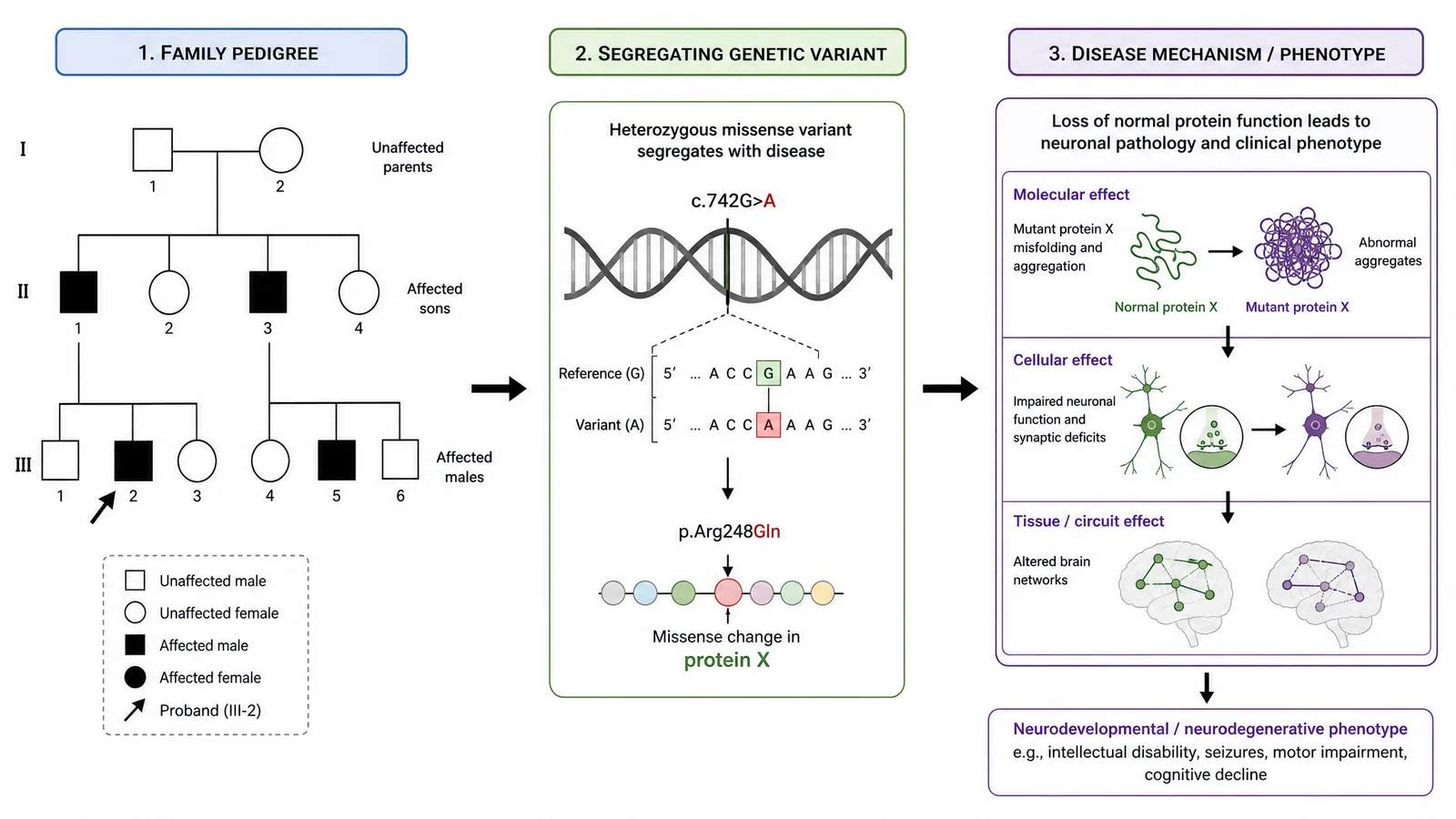
Variant-to-phenotype schema — a pedigree or inheritance diagram connecting a segregating variant to the clinical phenotype, useful for rare-variant and family-based studies.
Brain cell-type or spatial map — a labeled diagram of the cell types or brain regions your single-cell, spatial, or organoid data addresses, relevant to the "Healthy Brain" and "New Tools to Decode Brain Disorders" sessions.
Genomics of Brain Disorders 2026 genetic risk pathway figure: a GWAS risk variant linked to its target gene and the brain cell type expressing it (Figure generated with SciFig)
In your one-minute poster pitch, you have time for exactly one figure to land — usually the same pathway or schema figure that anchors your poster, kept simple enough to describe out loud in under a minute. If your abstract is instead selected for a short talk, the same figure typically becomes your single strongest slide (see §4 for time limits). The official abstract guidelines do not address whether figures are permitted inside the written abstract itself (not published as of 21 July 2026), so the safest approach is to keep your abstract text-only and save your figure for the poster, pitch, and slides.
4. Genomics of Brain Disorders 2026 Short Talks: Selection and Time Limits
Short talks at Genomics of Brain Disorders 2026 are selected directly from submitted abstracts and run in fixed 15-minute slots within each themed session, alongside longer 30-minute invited talks and 60-minute keynotes. The official abstract guidelines are explicit that "committees choose short talks on the basis of the abstract" — a poorly written or badly described finding is unlikely to be selected for an oral slot, regardless of the underlying science.
The same guidelines set the abstract format: a concise title, forename-plus-surname author listing, and a narrative of no more than one page (400 words) that clearly describes the problem, the experiments or analysis done, the results to date, and the conclusions you can draw — while avoiding vague statements like "a solution to XYZ will be presented." A separate references list is explicitly not required. Because abstracts are not edited after submission, the guidelines recommend having a colleague read yours over and check it for sense, spelling, and grammar before you submit — a genuinely undervalued detail when the same text determines whether you get a poster, a pitch, or a 15-minute short talk.
Tip
Since short talks are chosen straight from the abstract text, treat your 400-word abstract as if it were the pitch for your poster's hero figure: a reviewer who cannot picture your mechanism from the words alone is unlikely to select you for the podium.
No slide template is published for the 15-minute short talks, so the deck starts from an empty file. Our scientific presentation templates are 16:9 academic decks already ordered the way a short conference talk runs — and the same opening slide doubles as your 1-minute poster pitch.
5. Designing a Winning Genomics of Brain Disorders Poster: Accuracy That Survives Peer Scrutiny
A winning Genomics of Brain Disorders poster passes two tests: a delegate walking the poster hall grasps the story in seconds from one dominant figure, and a geneticist or neuroscientist standing in front of it finds the mechanism drawn exactly right. The best A0 portrait layouts build around a single hero figure — usually the risk-gene-to-circuit pathway or the variant-to-phenotype schema — with supporting panels arranged underneath it, rather than a dense grid of equally sized boxes.
This is also where general-purpose AI image generators fall short. A tool like Nano Banana Pro or GPT Image can produce something that looks about 99% right, but on a genomics or neuroscience mechanism figure 99% right is effectively 0% right: a reversed causal arrow, a swapped pedigree symbol, or a mislabeled cell type turns a compelling poster into one that misleads a reviewer. A flat, raster AI image also gives you no way to fix that last one percent.
This is the core difference with SciFig. Every figure is a fully editable SVG whose elements — arrows, labels, cells, pedigree symbols — you can correct individually, so you (the author who actually knows the genetics) can adjust any element until the figure matches your science. The figure types that reward this care most at this meeting:
Pedigree symbol accuracy — circles for female, squares for male, filled shading for affected individuals, and a correctly placed proband arrow, following the standardized human pedigree nomenclature genetic counselors rely on. Reversed sex symbols or affected-status shading is a common AI-generation error that misrepresents the inheritance pattern.
Variant-to-mechanism causal direction — the arrow chain must run variant → gene → cell type → circuit → phenotype, matching how GWAS findings and entries in the NHGRI-EBI GWAS Catalog are conventionally represented, not a reversed chain implying the phenotype produced the variant.
Brain cell-type labeling — excitatory (glutamatergic) and inhibitory (GABAergic) neuron labels, or microglia versus astrocyte identity, must match the cell type your data actually implicates; swapping them misattributes which cell type carries the genetic risk signal.
Genomics of Brain Disorders 2026 variant-to-phenotype figure: a family pedigree linked through a segregating variant to a labeled neurodevelopmental mechanism panel (Figure generated with SciFig)
Whether your poster earns attention in the Hinxton poster hall — or in your one-minute pitch — comes down to whether these figures are accurate, clear, and legible, which is exactly where an editable AI figure workflow compresses days of design work into hours without giving up scientific control.
6. Create Your Genomics of Brain Disorders 2026 Figures with AI: The SciFig Workflow
You already have two things most colleagues do not: your accepted abstract and a precise understanding of your study's genetic mechanism — use both to generate your figures online for free, then edit them until they are exactly right. Here is the SciFig workflow for a Genomics of Brain Disorders presenter:
Path 1 — Upload your accepted abstract. Drop your abstract text into PDF-to-Figure. It parses your problem, methods, and results and returns a pathway diagram or pedigree schema in one click. SciFig generates the figure, and every element stays editable so you can adjust it to your data and poster layout — no blank canvas.
Path 2 — Copy a structured prompt. For a variant-to-mechanism figure, Text-to-Figure gives more control. Copy and adjust to your study:
Schematic showing a GWAS-identified risk variant linked to its target
gene, an arrow to the brain cell type expressing that gene, and a final
arrow to the neural circuit process it disrupts, ending in the
associated brain disorder phenotype.
Path 3 — Sketch and scan. If you sketched your pathway or pedigree on paper, photograph it and drop it into Sketch-to-Figure to get a publication-style version that preserves your layout.
Genomics of Brain Disorders 2026 poster figure workflow in SciFig: a genetic risk pathway prompt left, editable SVG diagram right, SVG export (Figure generated with SciFig)
From any path, you edit individual elements in the vector canvas — adjust labels, colors, arrow direction, pedigree symbols — and export to high-resolution SVG for your A0 portrait poster without artifacting. Start free: 150 credits on day one, plus daily check-in credits. For companion guides in this conference series, see the SfN Neuroscience 2026 poster guide and the RSNA 2026 poster guide.
Optional — disclose your AI use. The official Genomics of Brain Disorders guidelines do not currently publish an AI-use policy, but many conferences and journals now ask authors to disclose AI assistance and remain responsible for the accuracy of their work. If you build and review a figure in SciFig, you can add one line to its caption — for example: Figure created by the authors using SciFig and reviewed for scientific accuracy (scifig.ai).
Start your Genomics of Brain Disorders figure from prompt, abstract, or sketch
Use the path that matches what you already have, then edit every element until the genetics and neuroscience are exact.
7. Where Genomics of Brain Disorders 2026 Abstracts Are Published (Programme Book)
Accepted Genomics of Brain Disorders 2026 abstracts appear in the conference programme book; as of 21 July 2026, the organizers have not published any separate journal, DOI, or supplement for the abstracts. This differs from larger clinical congresses where abstracts are published in a dedicated journal supplement — here, the programme book distributed to delegates is the primary record.
If you are searching for "Genomics of Brain Disorders 2026 abstracts" or the "programme book," the official event page and draft programme PDF are the places to check for updates as the conference approaches.
FAQ
A Genomics of Brain Disorders 2026 poster is A0 portrait — poster boards accommodate 118 cm high by 84 cm wide of printed material. This is a printed poster, not an e-poster upload, and board numbers are assigned at the conference. See §2 Poster Size and Format.
Portrait. The official board dimensions are 118 cm high by 84 cm wide — A0 portrait — so design your title bar, author row, and panels for a tall layout rather than a wide one. See §2 Poster Size and Format.
Yes — accepted posters can be presented either in person at Hinxton or virtually, since the conference runs as a hybrid event. The exact file or upload format for a virtual poster presentation is not published as of 21 July 2026, so confirm directly with Wellcome Connecting Science once you are notified of acceptance. See §2 Poster Size and Format.
Every accepted poster presenter gets about one minute to pitch their work out loud, in a dedicated session that runs immediately before the poster viewing and networking reception. It is a distinctive feature of this meeting compared with larger congresses that skip a spoken poster summary entirely. See §2 Poster Size and Format.
The published abstract submission deadline was 7 July 2026, 11:59 pm UK time. The official page also lists a now-closed "Extended abstract deadline" without a published specific date. Presenters are notified about two weeks after the deadline whether they have been selected for a talk or a poster. See §1 At a Glance.
Short talks selected from abstracts run in fixed 15-minute slots within each themed session, alongside 30-minute invited talks and 60-minute keynotes. Selection is based directly on the written abstract, so a clear, well-described 400-word abstract matters as much for an oral slot as for a poster. See §4 Short Talks: Selection and Time Limits.
Accepted abstracts appear in the conference programme book. As of 21 July 2026, no separate journal or DOI supplement has been published for this meeting's abstracts. See §7 Where Abstracts Are Published.
References
All specifications and dates above are drawn from official Wellcome Connecting Science materials, accessed July 21, 2026:
Disclaimer: This article is educational content focused on scientific figure design for conference posters and presentations. It is not medical advice and should not be used for clinical decisions. Dates and specifications are summarized from official Wellcome Connecting Science materials linked above and were accurate at the time of writing; see the official Genomics of Brain Disorders event page for current details before printing or submitting. SciFig is a scientific figure platform covering AI illustrations (SciFig AI Illustration), data charts (SciFig DataChart), and flowcharts (SciFig FlowChart) — it does not diagnose, treat, or advise on patient care.
Keep going
Recommended resources
Templates, tools, and further reading for your research