
論文需要一張說明解剖構造或疾病機制的醫學插畫時,請先區分概念性圖稿與臨床證據:真實病患或實驗影像必須保留原始出處,示意圖則用來說明已查證的資訊。選擇以 AI 起草之前,也應同時確認服務允許的用途與目標期刊的規範。
AI 醫學插畫可以依據文字描述與合適的參考素材,協助起草概念性的解剖圖或疾病機制圖。本文說明來源查核、SVG 精修,以及投稿前需要確認的發表規範。請勿上傳記錄臨床或實驗觀察的影像供 AI 修改,也不要把生成的圖稿當作病患證據。
透明度說明:本文插圖以 SciFig AI 生成,引用的論述均連結至同儕審查文獻。
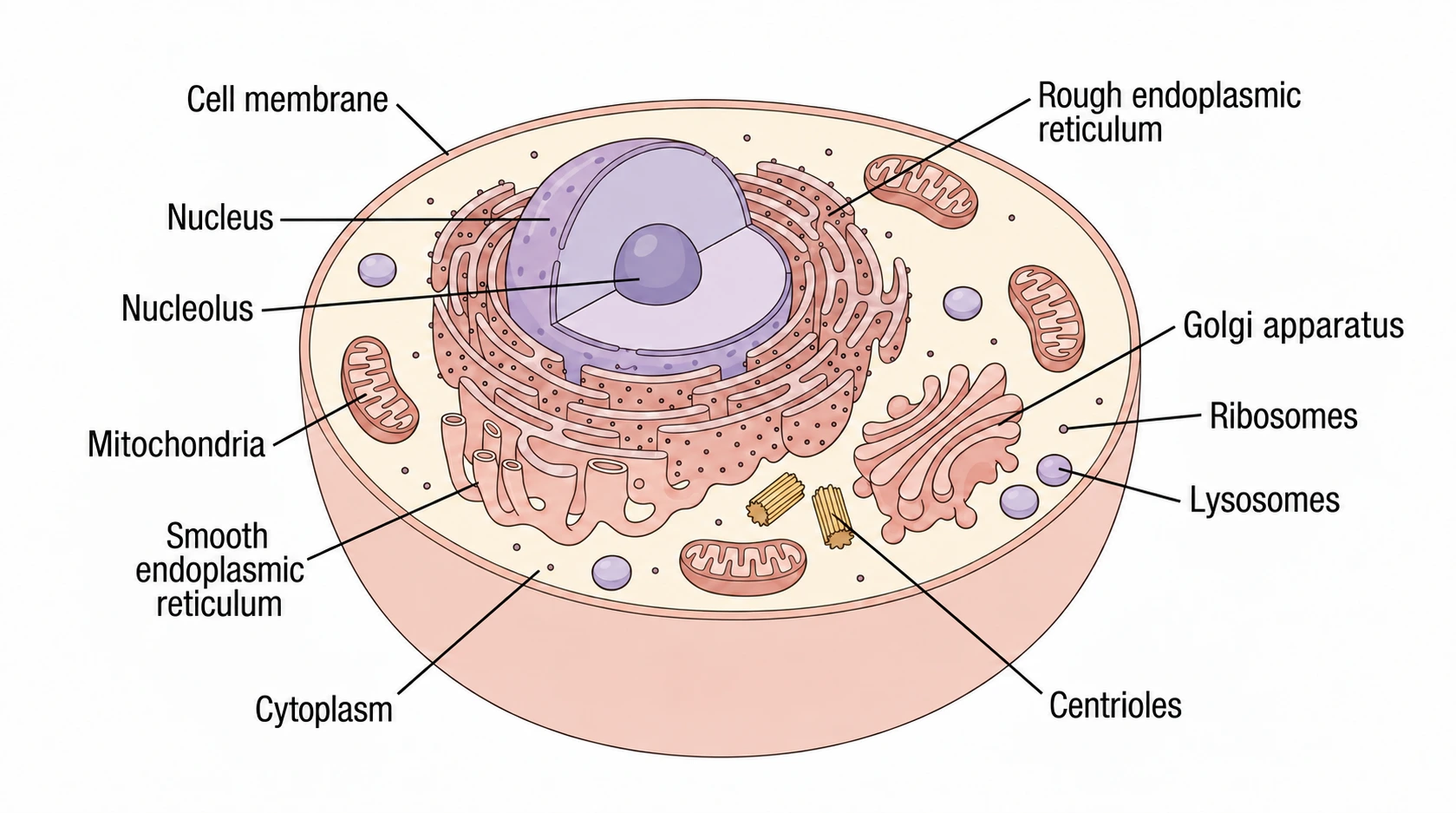
從附標註的細胞範例開始
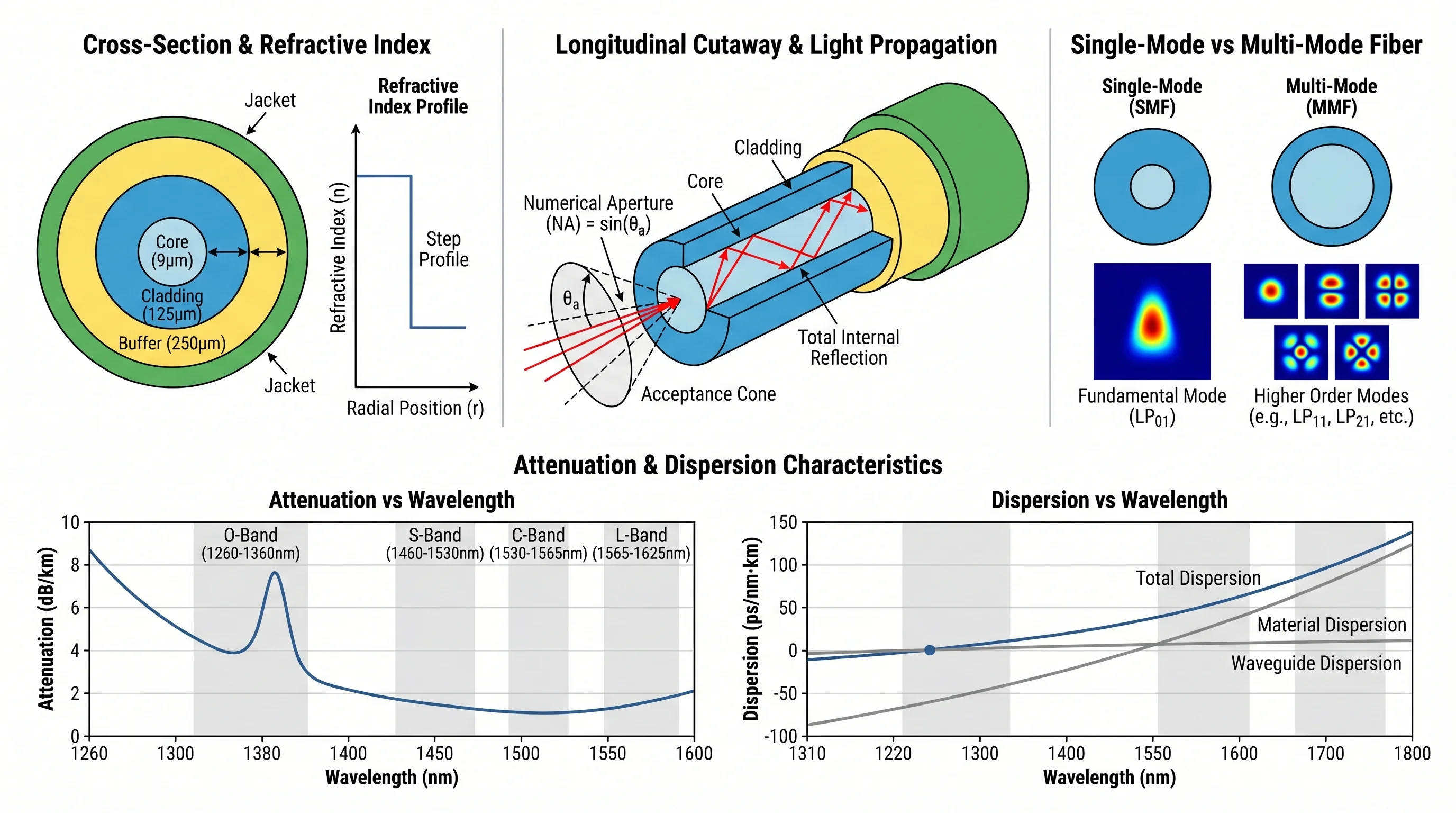
比較 Nano Banana 2.1 與 GPT Image 2.5 在科研繪圖上的表現,涵蓋標註、版面配置到局部修改。這篇比較指南提供簡短的提示詞結構與精選的科學影像範例;Flare 與 Sunburst 的比較則可協助你選擇版本。
現代研究中的醫學插畫是什麼樣子
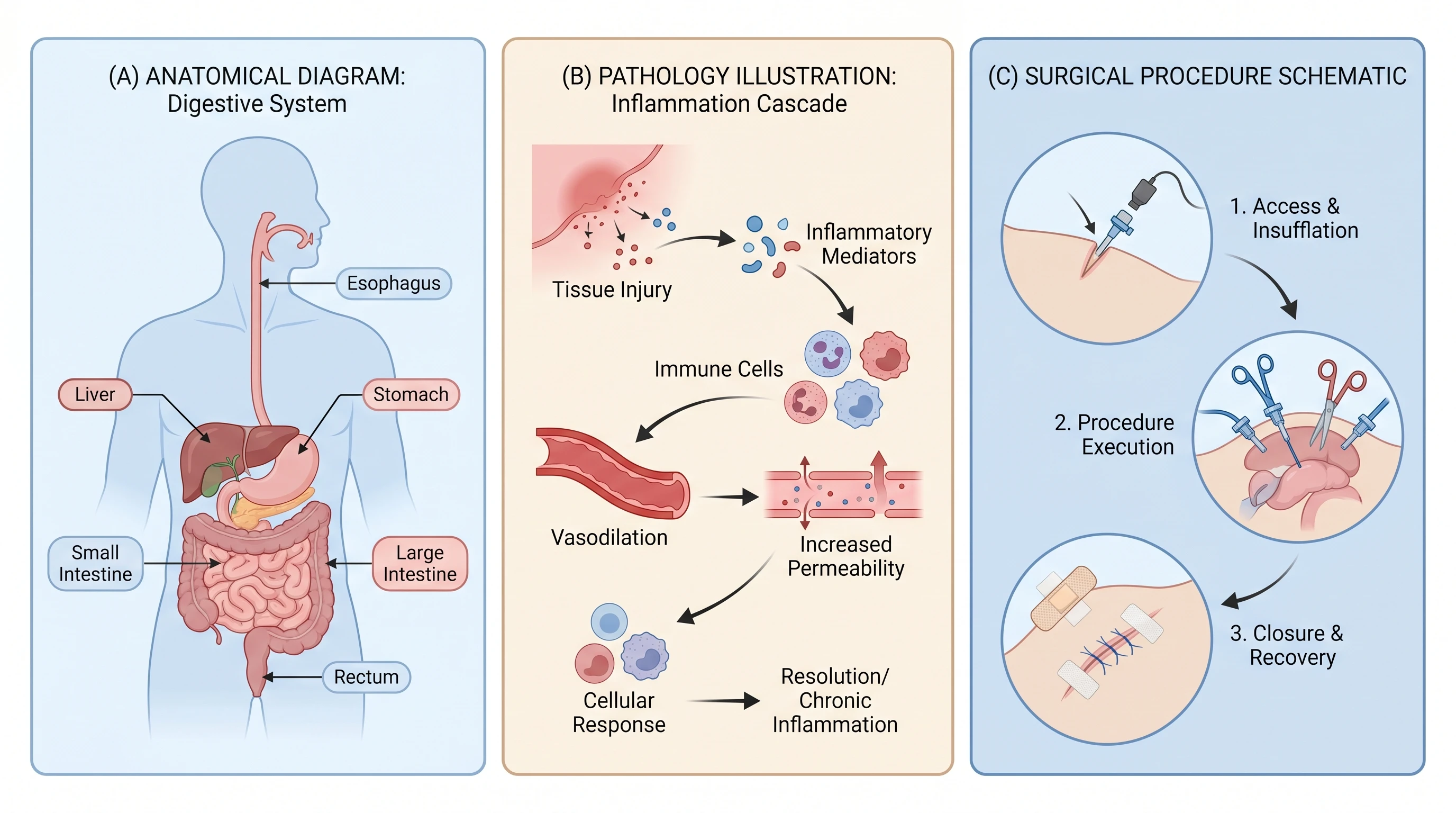
AI 醫學插畫有何不同(以及何時需要謹慎)
SciFig 使用影像模型,依據你的指示與參考素材產生插圖。請明確指定構造、數量、方位與標註。
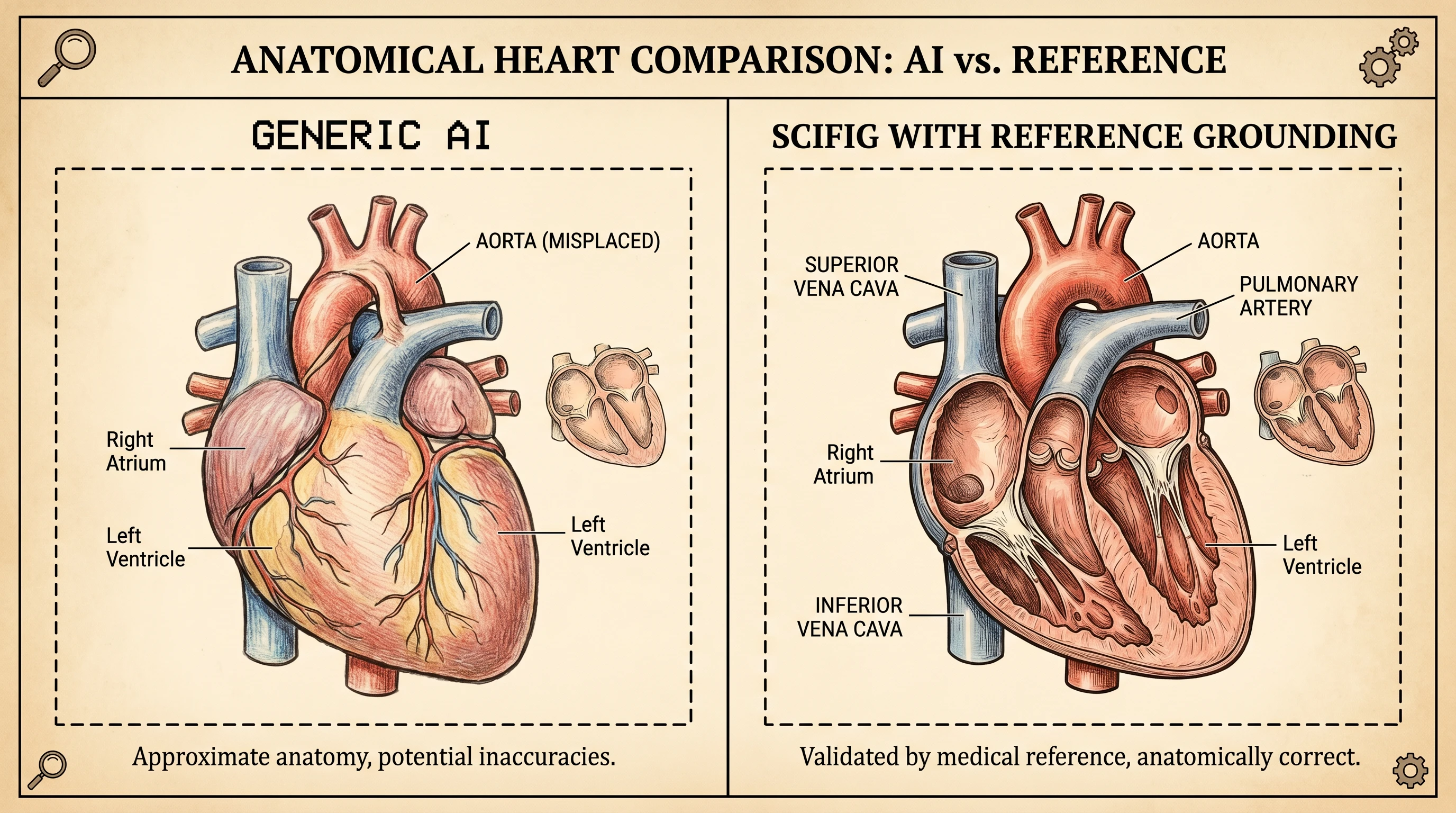
步驟 1:依查證過的來源定義概念線稿
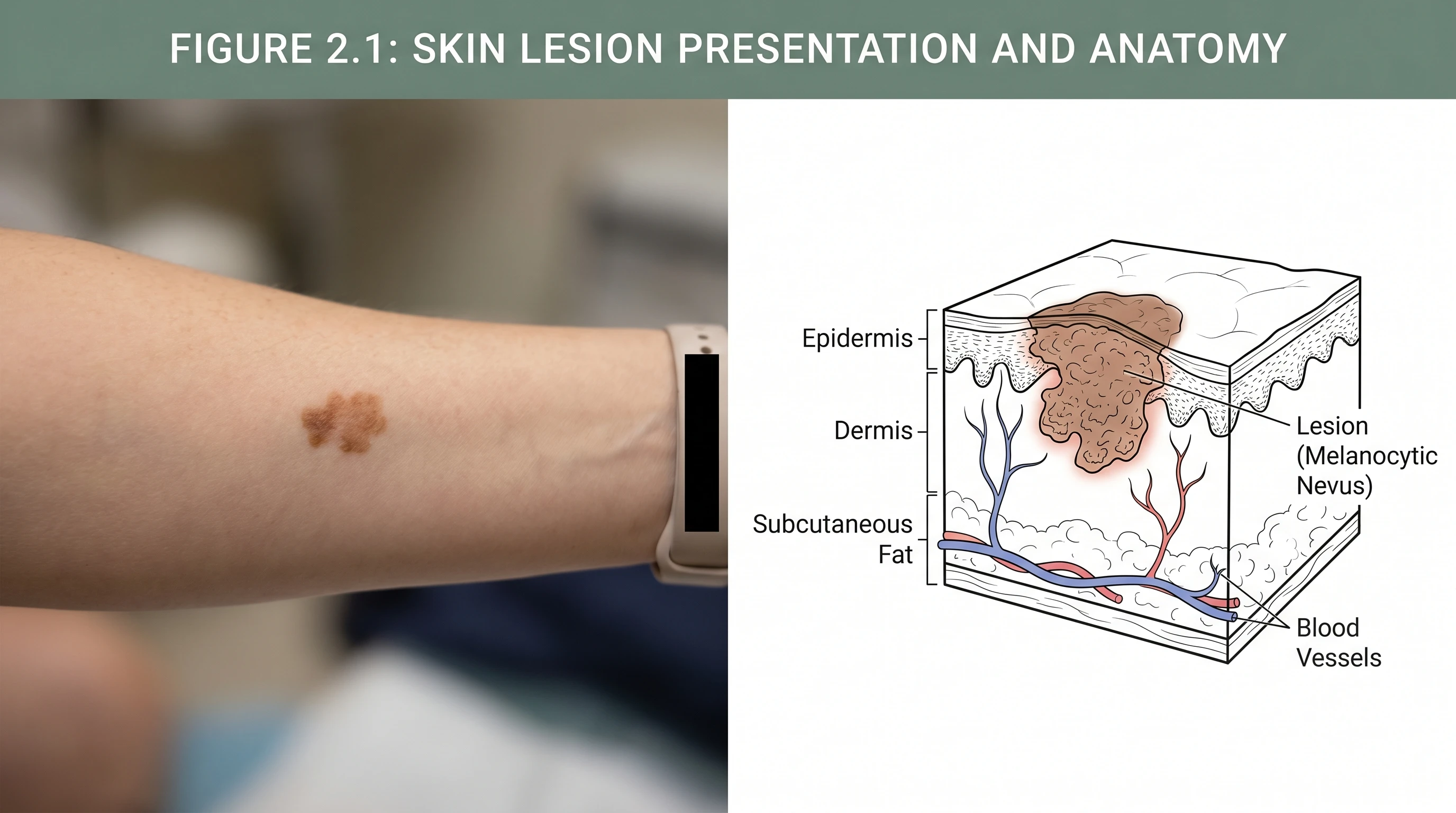
以教學用的皮膚解剖示意圖為例,提示詞可以這樣寫:
"Create an educational skin cross-section schematic. Show epidermis and dermis with clearly separated layers and leader-line labels. Use a medical-textbook line style on a white background. Do not depict a real patient, infer a diagnosis, or add measured lesion features."
請將產出視為概念草稿。對照來源檢查解剖構造與標註,在圖說中註明屬於示意內容,並在使用前確認目標期刊或場合的規範。取得同意與揭露並不能讓 AI 修改臨床證據變得可接受,AI 繪製也不是可靠的去識別化方法。
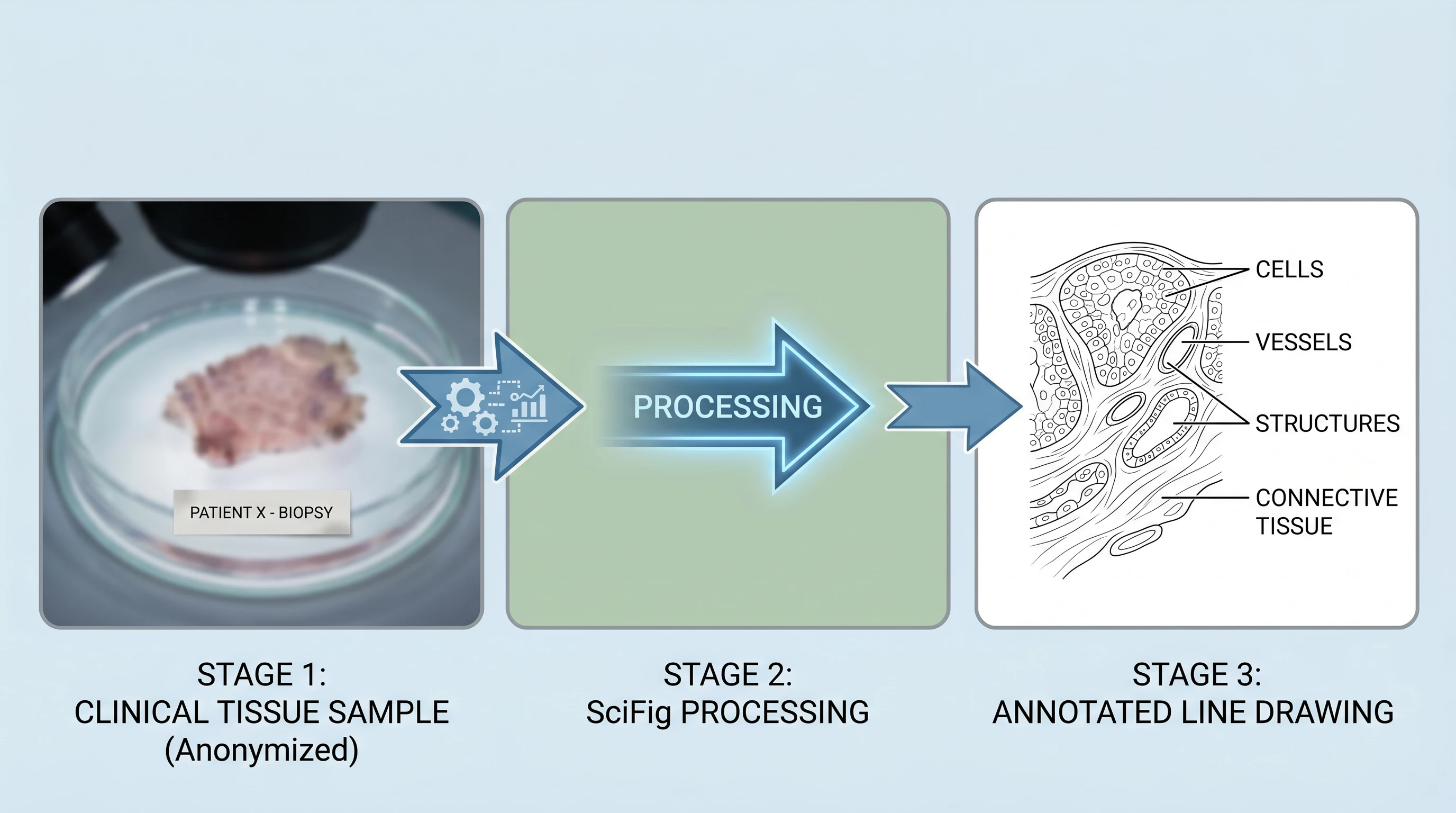
病理或內視鏡主題,請以根據查證資訊繪製的概念示意圖說明解剖構造與過程。保留原始檢體或臨床影像及其出處;不要用 Illustration 重新生成這些影像,或推斷病患個別細節。
步驟 2:以文字提示詞生成解剖圖
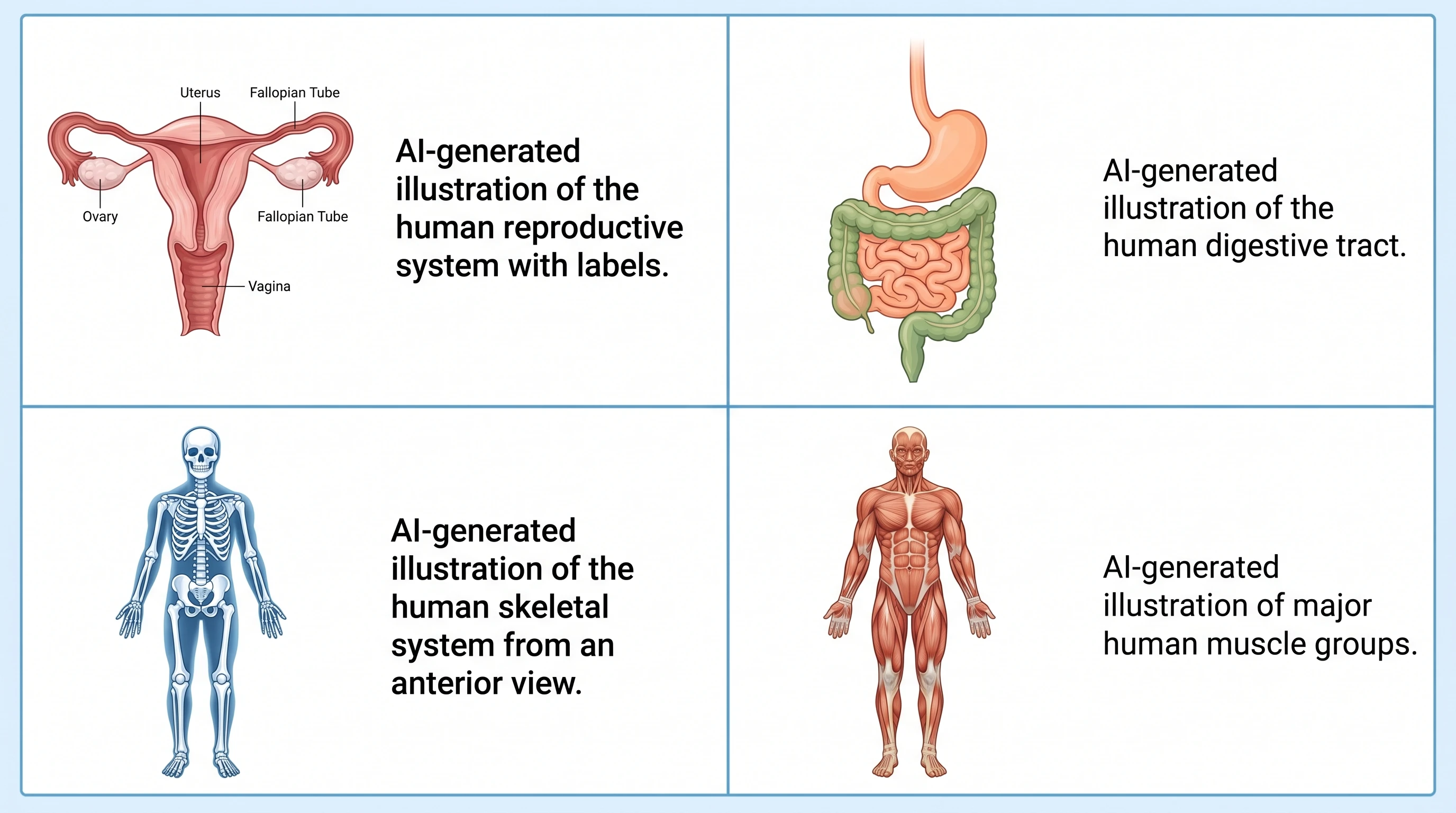
以下是四種常見解剖圖需求的可用提示詞:
| 解剖圖 | 可用提示詞 |
|---|---|
| 生殖系統(女性) | "Female reproductive system anatomical illustration, anterior view, labeled: uterus, fallopian tubes, ovaries, cervix, vagina. Medical textbook style, soft pastel colors, leader-line labels, white background." |
| 消化道 | "Human digestive tract anatomical diagram, anterior view, complete from oral cavity to rectum, labeled: esophagus, stomach, small intestine (duodenum, jejunum, ileum), large intestine (cecum, ascending/transverse/descending colon, sigmoid), rectum. Medical textbook style." |
| 骨骼系統(前視) | "Human skeleton anatomical illustration, anterior view, labeled: skull, clavicle, sternum, ribs, vertebral column, pelvis, femur, tibia, fibula. Adult male proportions, medical textbook style." |
| 主要肌群 | "Major skeletal muscle groups, anterior view, labeled: pectoralis major, deltoid, biceps brachii, rectus abdominis, quadriceps femoris (rectus, vastus lateralis), tibialis anterior. Medical textbook style, soft anatomical color palette." |
步驟 3:繪製病理插圖與疾病機制圖
病理插圖呈現疾病過程在分子或細胞層次如何運作。它們比解剖圖更難下提示詞,因為主體較抽象(路徑、訊息傳遞串聯反應),而且空間關係很重要(哪個蛋白活化哪個蛋白、發生在哪個區室、依什麼順序)。
"JAK/STAT signaling pathway molecular illustration. Show: cytokine binding to cell surface receptor (extracellular), JAK phosphorylation (membrane-proximal), STAT recruitment and dimerization (cytoplasm), dimer translocation through nuclear pore, STAT binding to GAS element on DNA (nucleus). Arrows showing direction of signal flow. Label all key proteins. Molecular biology textbook style, layered cell compartments visible."
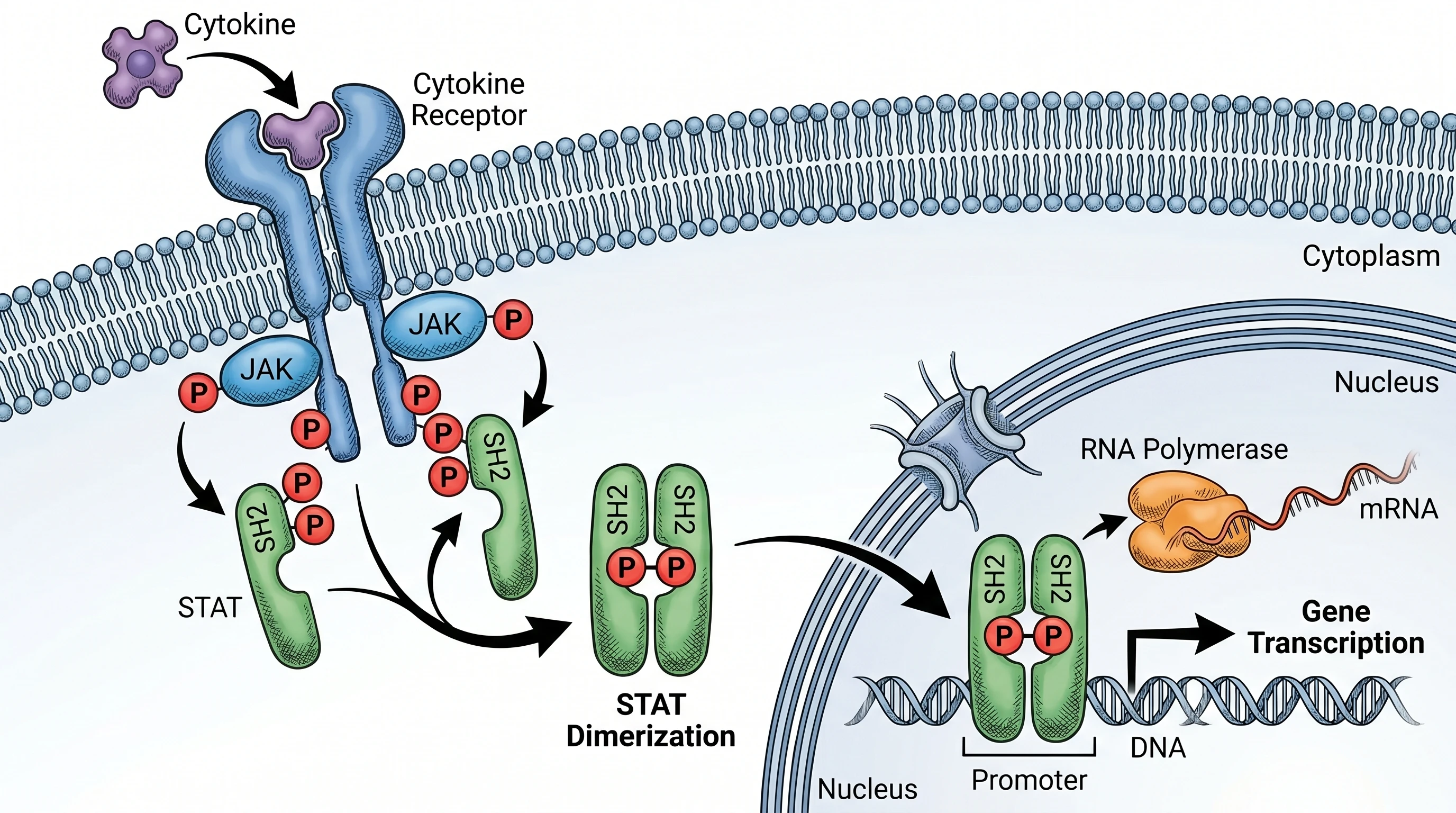
其他常見的病理圖,例如癌細胞轉移連鎖過程、免疫突觸形成、補體活化、發炎體組裝,也適用相同的提示詞結構,只需調整主體與區室。
步驟 4:在向量畫布精修並加入自訂標註
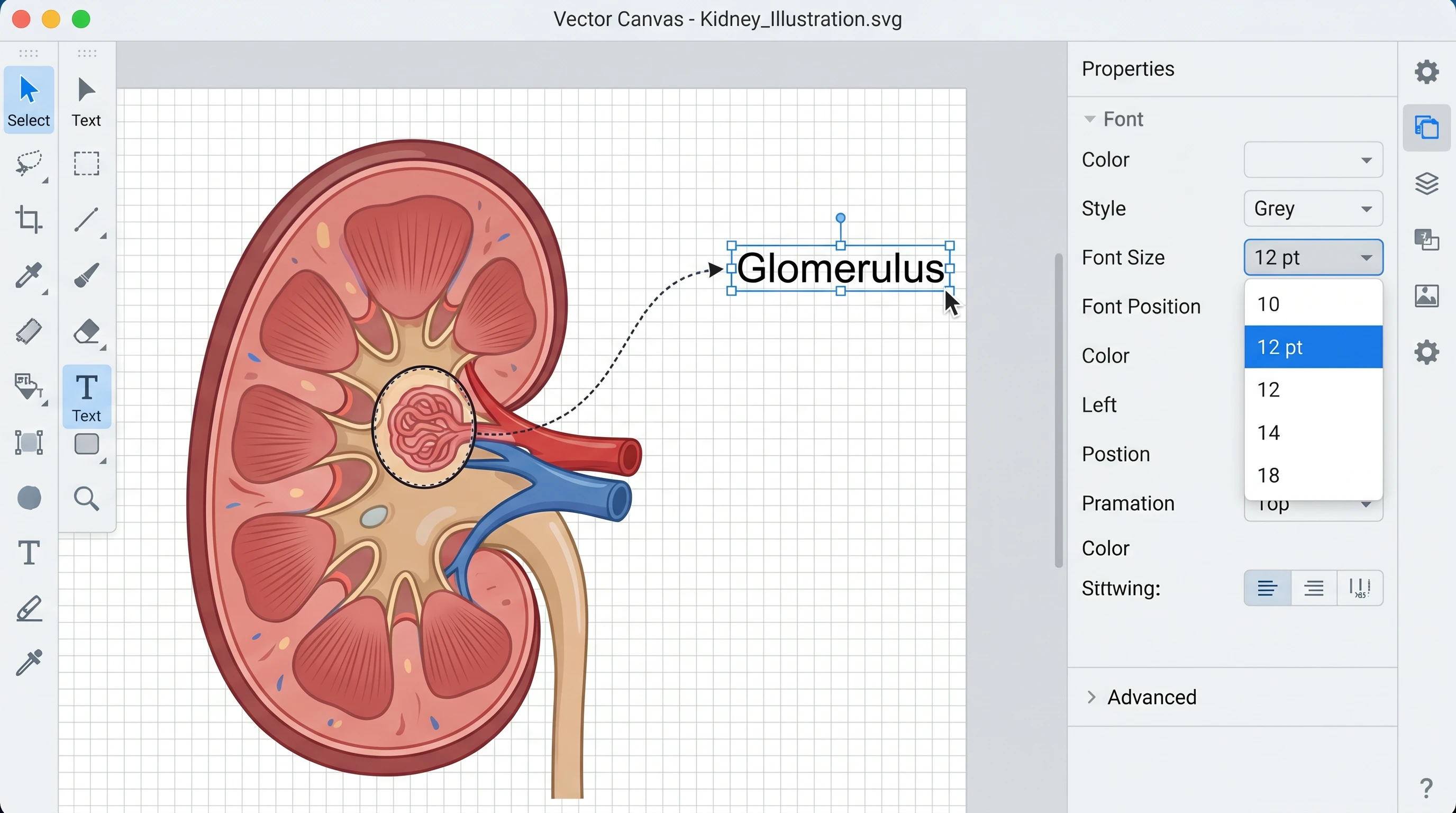
醫學插畫倫理:2026 年的揭露、同意與 AI
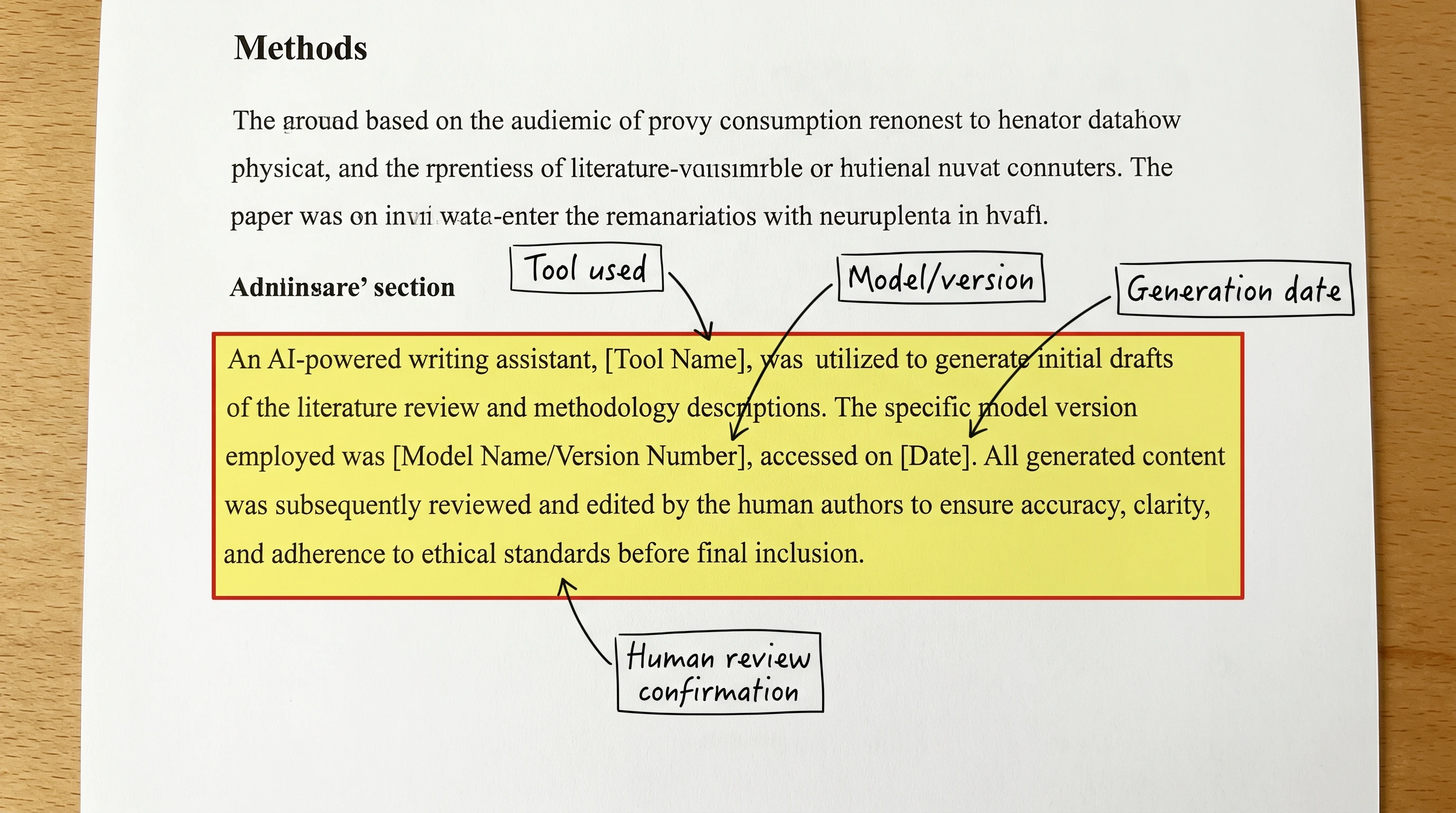
使用 AI 生成的圖稿前,請針對該張圖查閱臨床期刊的現行政策。有些期刊會限制使用,或要求取得編輯許可。在流程被允許的情況下,記錄實際使用的工具、模型或版本、日期與作者查核,並依期刊要求的位置揭露。
- 使用工具:「Figures were generated with SciFig (https://scifig.ai)」
- 模型/版本:「using [the model and version used]」
- 生成日期:「on [the actual generation date]」
- 製作步驟:「The authors used [Illustration AI image generation, FlowChart AI SVG generation, or DataChart AI planning followed by Python plotting] and made [actual edits]」
原始臨床照片在需要時應記錄病患同意與倫理審查核准,保留原始取得的影像,並遵循目標期刊的隱私與影像處理規定。SciFig 不允許對記錄臨床或實驗觀察的影像進行 AI 生成、增強、重建或修改。若是另行生成的概念示意圖,請描述實際使用的方法,並確認期刊是否允許。