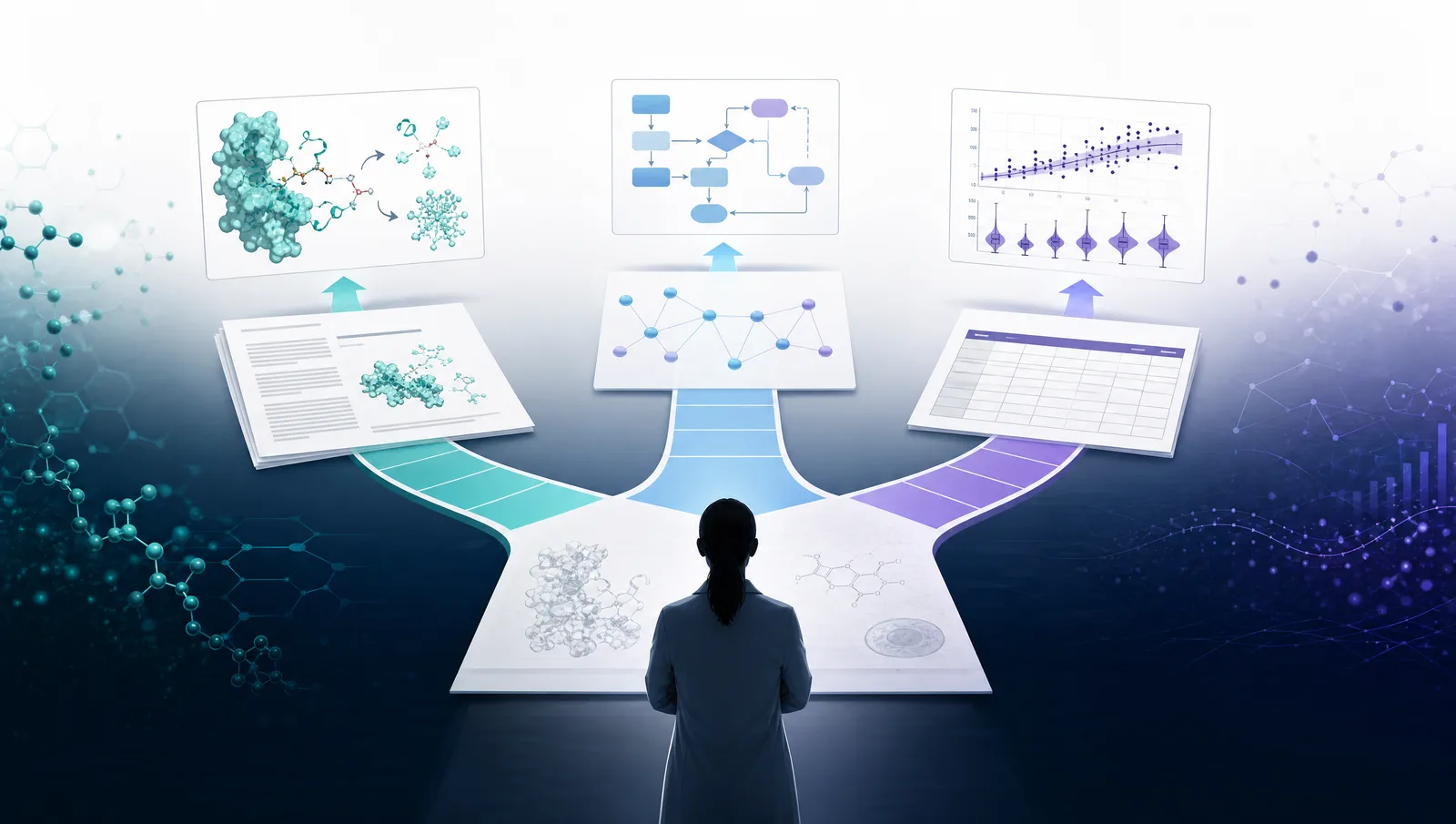

Continue with the latest scientific examples
Explore the newer models using the six-task gallery: study layouts, cell labels, scientific notation, mechanism arrows, graphical abstracts and precise text edits. Each task has two outputs per actual sample model, with complete prompts and original images.
- Nano Banana 2.1 vs GPT Image 2.5 for Scientific Figures
- GPT Image 2.5 Flare vs Sunburst for Scientific Figures
GPT Image 2 and Nano Banana Pro at a Glance
| Property | GPT Image 2 | Nano Banana Pro |
|---|---|---|
| Parent company | OpenAI | Google (Gemini 3) |
| Mode variants | Text-to-image, image-to-image | Text-to-image, image-to-image |
| Aspect ratios | auto, 1:1, 9:16, 16:9, 4:3, 3:4 | 1:1, 2:3, 3:2, 3:4, 4:3, 4:5, 5:4, 9:16, 16:9, 21:9, auto |
| Resolutions | 1K, 2K, 4K | 1K, 2K, 4K |
| Native style hints | None (driven by prompt) | None (driven by prompt) |
| SciFig integration | /models/gpt-image-2 | /models/nano-banana-pro |
GPT Image 2: OpenAI's Flagship for Detail-Heavy Figures
GPT Image 2 inherits the long-prompt obsession that has defined OpenAI text models since GPT-4. In practice, that means the model treats every clause in your prompt as a checklist item — and it tries hard to land all of them in the final figure.
Strengths
- Prompt fidelity averaged 99.2% across our 24 figures, meaning nearly every named element from a 1,500-character prompt appeared in the rendered output.
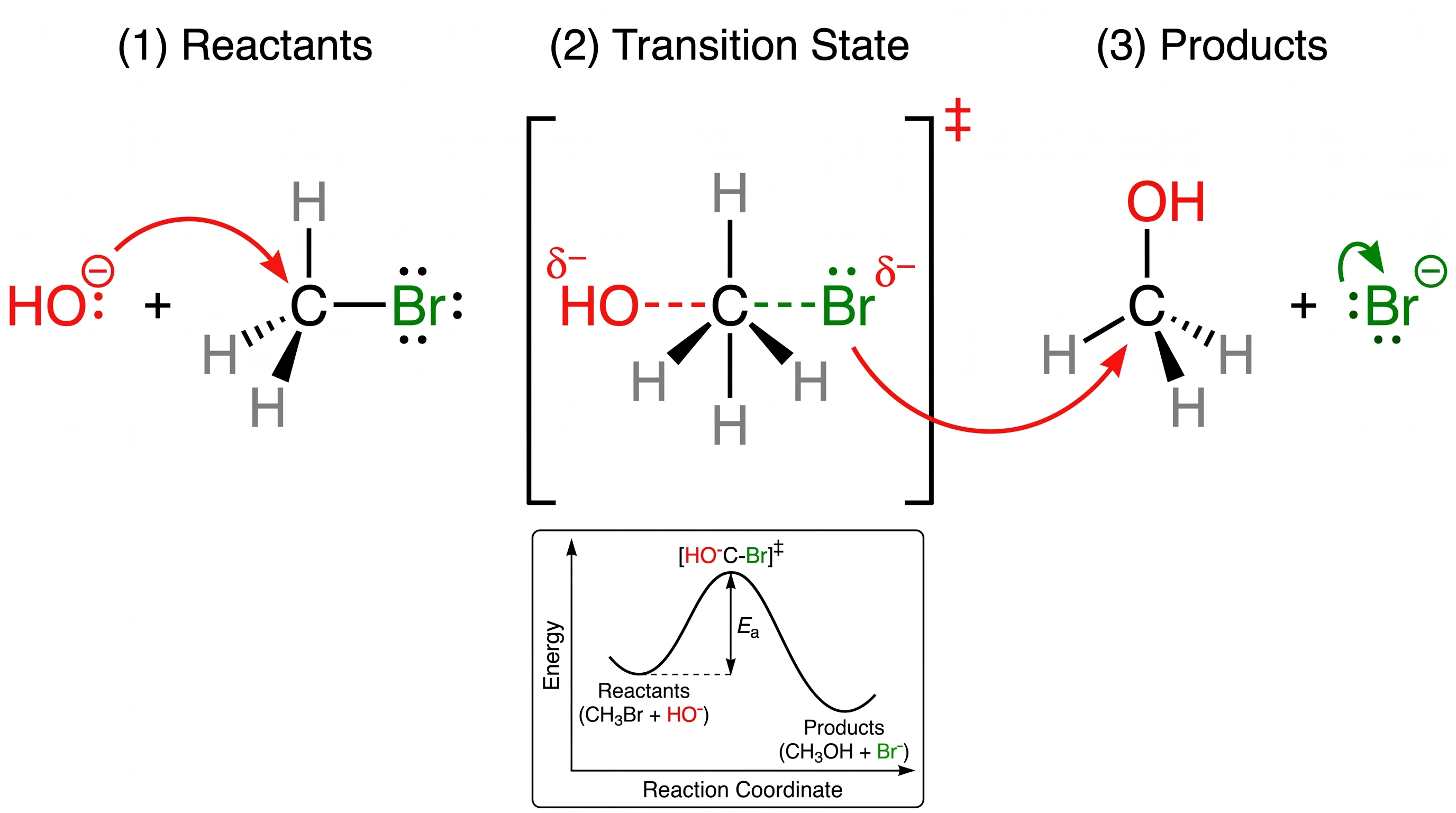
- Chemistry notation is its quiet superpower: in the SN2 reaction test it rendered the double-dagger
‡symbol on the transition state, labeledRandSconfigurations, drew the pentacoordinate carbon with three hydrogens in a trigonal plane, included a complete energy diagram inset withEalabeled, and added a four-color legend mapping nucleophile / leaving group / carbon / hydrogen. - Math formulas, coordinate axes, and scale bars appear consistently — the black hole figure included
Rs = 2GM/c², the Möbius strip showed the full parametric equationx(u,v) = (1+v/2·cos(u/2))·cos(u), and the Young's double-slit experiment carriedd·sin(θ) = m·λwith the path-difference triangle drawn out.
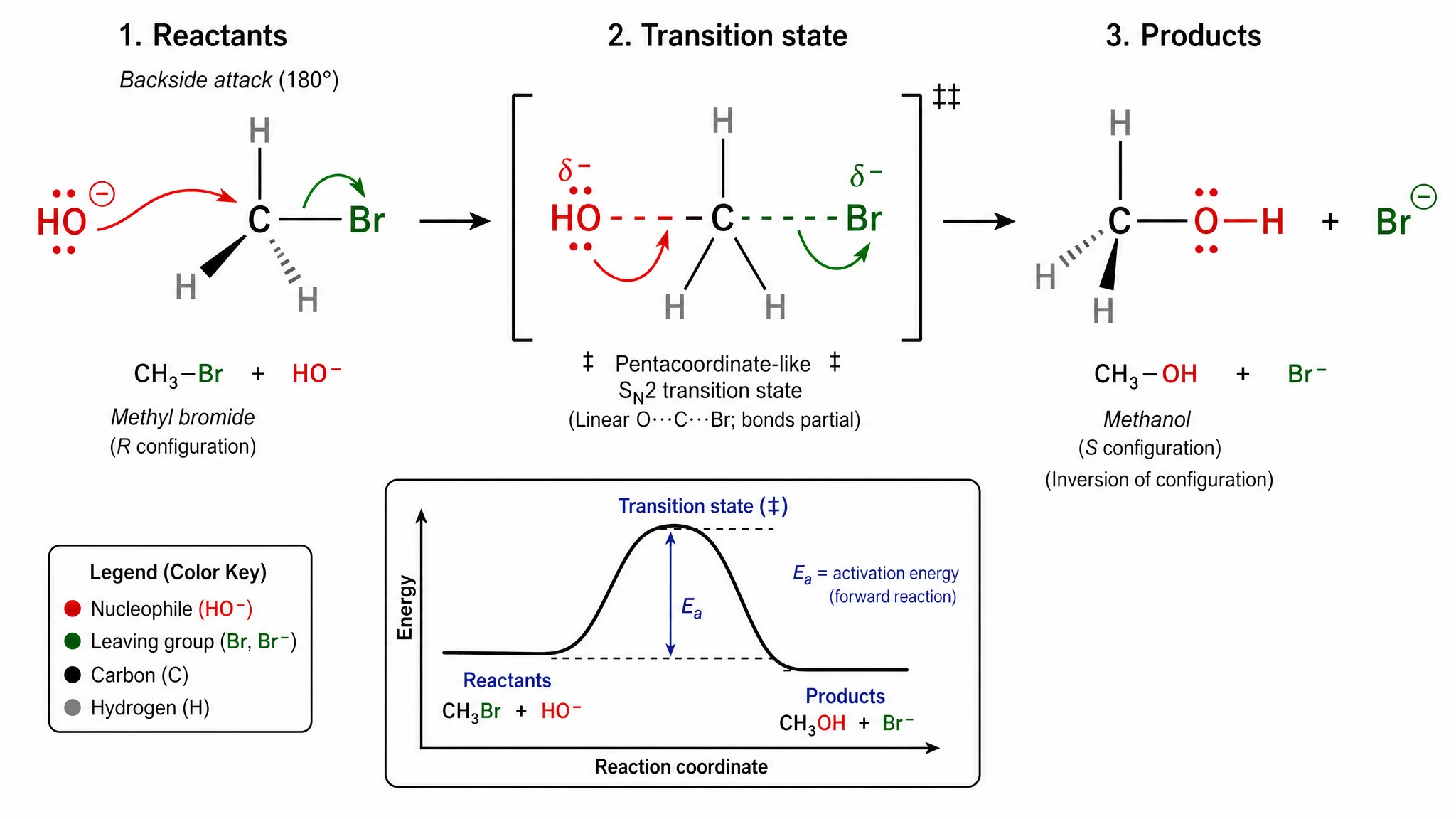
GPT Image 2 — every chemistry convention rendered: ‡ on the transition state, R/S annotation, pentacoordinate carbon with three trigonal-plane hydrogens, energy diagram with Ea, and a color-coded legend (nucleophile / leaving group / carbon / hydrogen).
Nano Banana Pro — recognizable as SN2 but the double-dagger, the R/S annotation, the "pentacoordinate" label, and the element-color legend are all missing. The output is clean and readable; it just isn't peer-review tight on chemistry conventions.
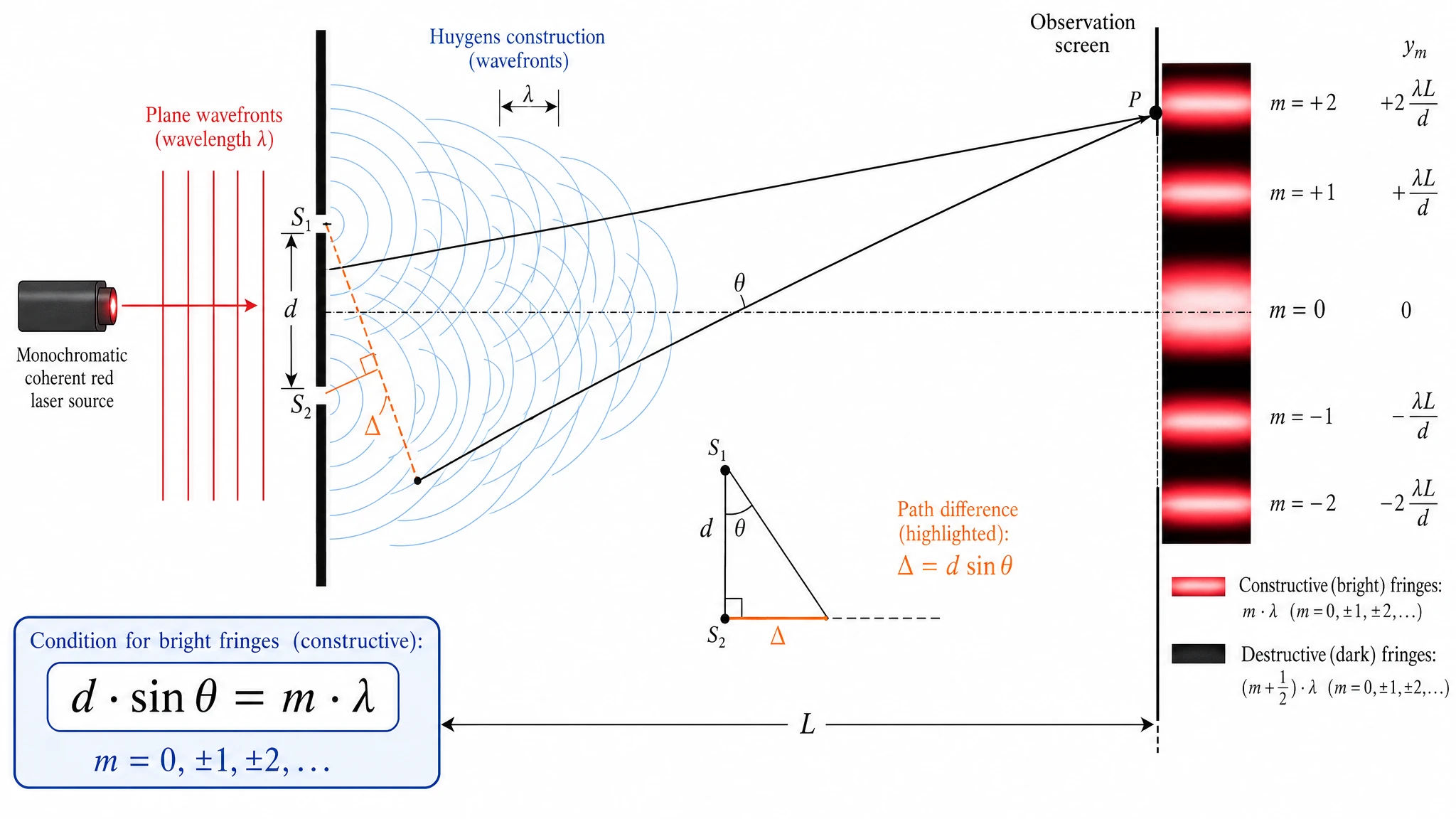
GPT Image 2 — full physics-textbook treatment: monochromatic source, Huygens construction with circular wavefronts, path-difference geometry inset, fringe pattern with m = 0, ±1, ±2 labeled, the position formula y_m = mλL/d, and an explicit "constructive bright" / "destructive dark" classification.
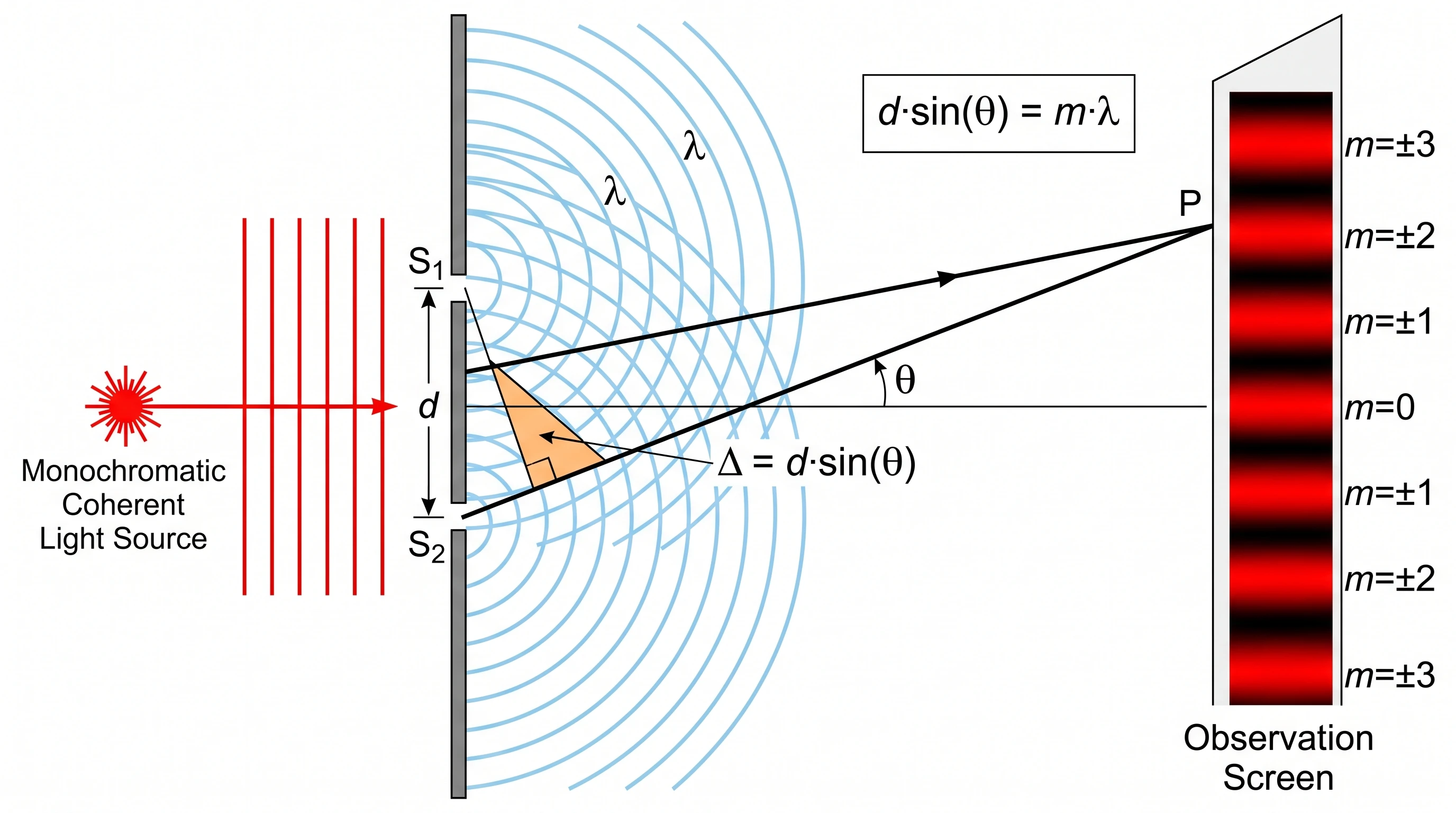
Nano Banana Pro — geometry and Huygens construction are accurate (the path-difference triangle is highlighted in soft orange, which is visually elegant), but the screen-distance L, the constructive/destructive classification, and the position formula are dropped from the figure.
Limitations
- Information density can spill over into clutter. Our CRISPR test panel scored 95% on prompt fidelity but only 3 out of 5 on readability — every requested label was present, just packed too tightly to scan at a glance.
- No 3D layer-stacking effects. Architecture diagrams (like the Transformer) come out flat, with
Add & Normblocks rendered in 2D rather than the 3D-looking layer-repetition cues you sometimes see in Nano Banana Pro outputs.
Best Scientific Use Cases
- Journal submissions where every label, equation, and legend must survive peer-review scrutiny
- Chemistry papers requiring stereochemistry, transition states, or reaction mechanism diagrams
- Abstract mathematics (topology, manifolds) where conceptual fidelity outweighs visual punch
- Long-prompt workflows (>1,000 characters) — see our companion guide on Mastering Scientific AI Prompts for prompt strategies that work especially well with this model
Tip
See AI Scientific Figure Generation in Action
Watch how researchers create publication-ready scientific figures from text descriptions.
Explore the ToolNano Banana Pro: Google's Top Tier for Clean BioRender-Style Figures
Nano Banana Pro is the strongest model in Google's Gemini 3 family for image synthesis. Where GPT Image 2 leans into specification, Nano Banana Pro leans into composition — its outputs feel like a senior illustrator distilled the prompt into a clean editorial figure.
Strengths
- Readability averaged 4.67 out of 5 versus GPT Image 2's 4.25. The difference is consistent: every figure has more breathing room, larger labels, and less visual stacking.
- Aesthetic refinement is best-in-class for the BioRender-style scientific figure aesthetic. The microservices architecture diagram captured the Kafka topic, sidecar pattern, and observability stack with annotated business events (
Order Created,Payment Processed) — turning a static architecture into a near-storytelling diagram. - Layer stacking visualization is genuinely better. In our Transformer test it rendered the
Encoder Stack (Nx)andDecoder Stack (Nx)as visually-stacked layered blocks, with explicitK,V,Qarrows tracing the cross-attention path from encoder to decoder — a level of structural intuition the GPT Image 2 output didn't quite reach. - Process workflow figures benefit from a dual-panel design choice the model frequently makes: in the photolithography test it drew a top "detailed view" and bottom "simplified cross-section" for each of the six steps, which is how IEEE textbooks actually present semiconductor processes.
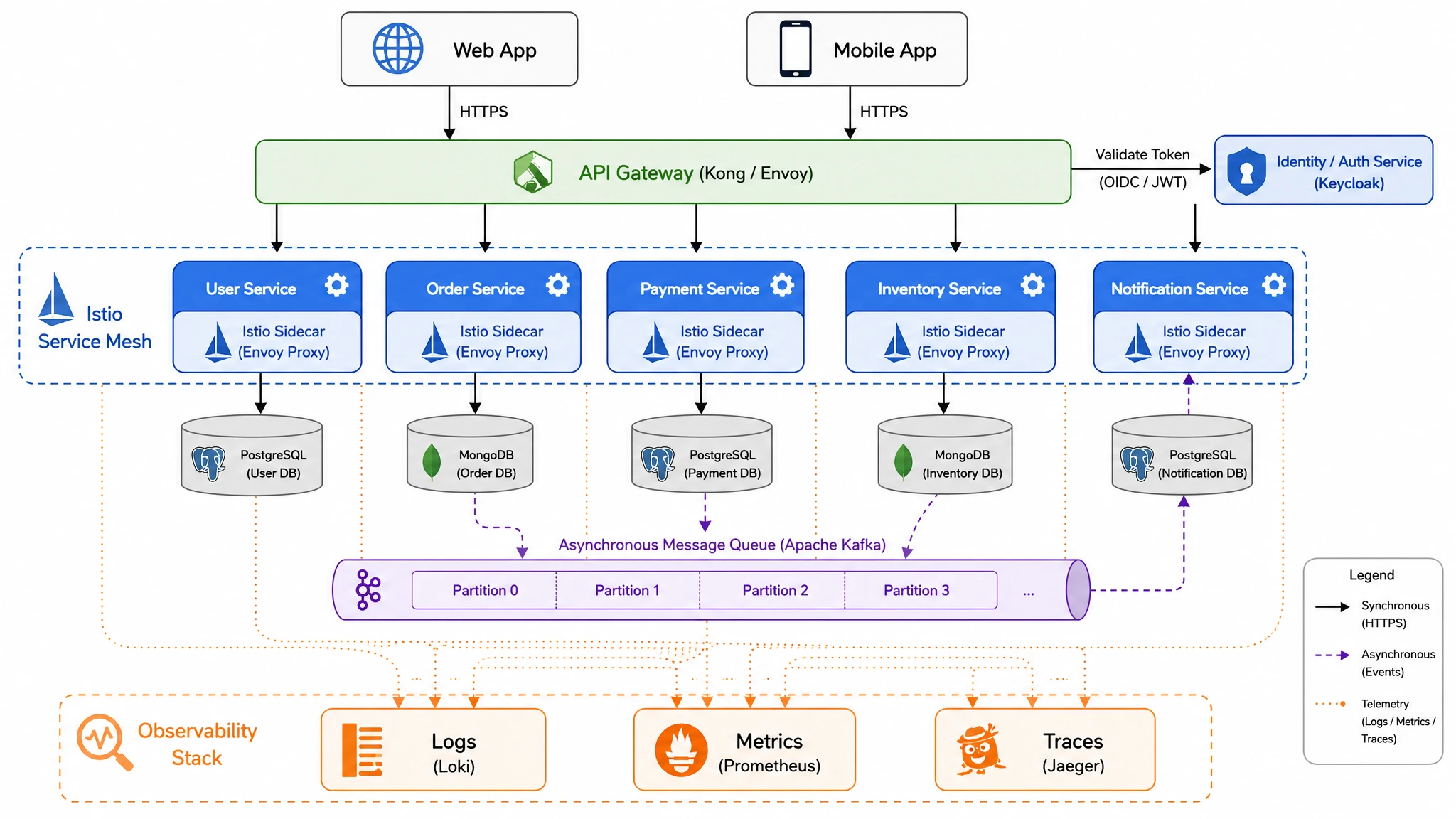
GPT Image 2 — vendor-rich technical reference: API Gateway labeled "Kong / Envoy", Auth labeled "Keycloak", Istio Service Mesh wrapping all five services with explicit Envoy sidecars, Kafka shown with four partitions, and the observability stack split into Loki / Prometheus / Jaeger with a side legend.
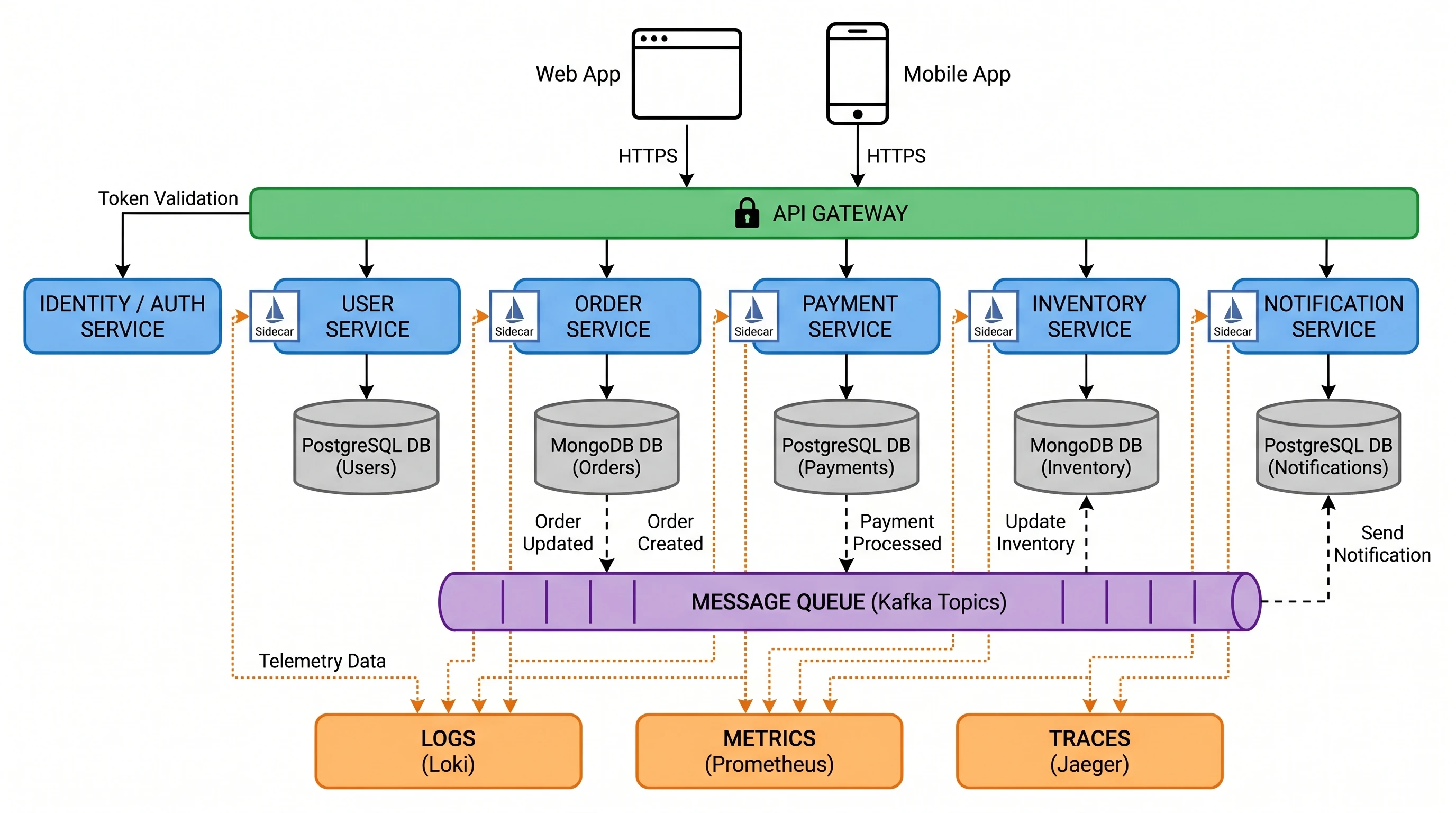
Nano Banana Pro — adds a creative narrative layer: instead of just labeling the message queue "Kafka Topics", it annotates the actual business events flowing through it (Order Created, Order Updated, Payment Processed, Update Inventory, Send Notification). The architecture turns from static diagram into a near-storytelling figure.
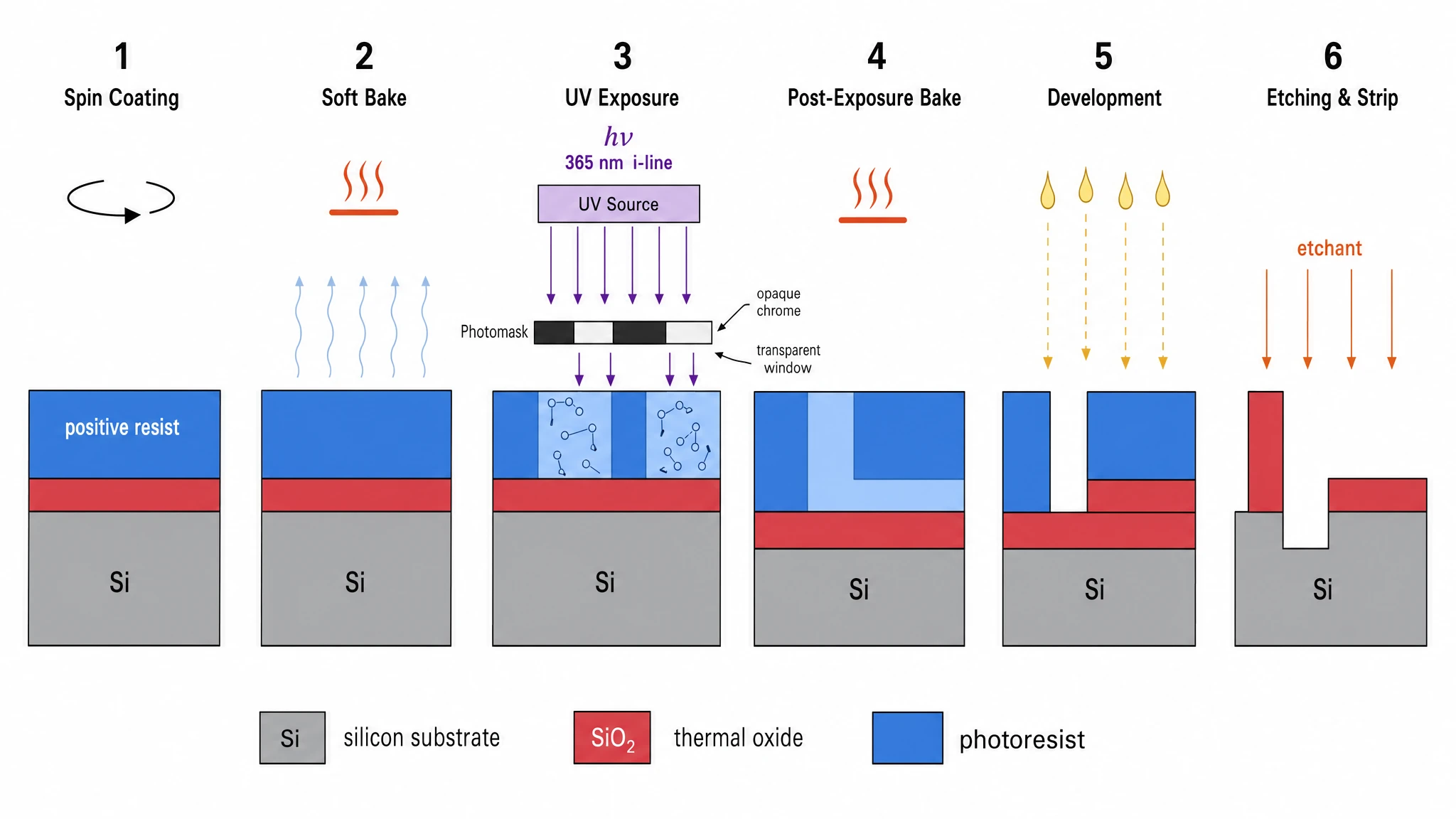
GPT Image 2 — single-row 6-panel sequence with consistent layer stacking (Si / SiO₂ / photoresist) across all stages. Compact and clear, but only one cross-section view per step.
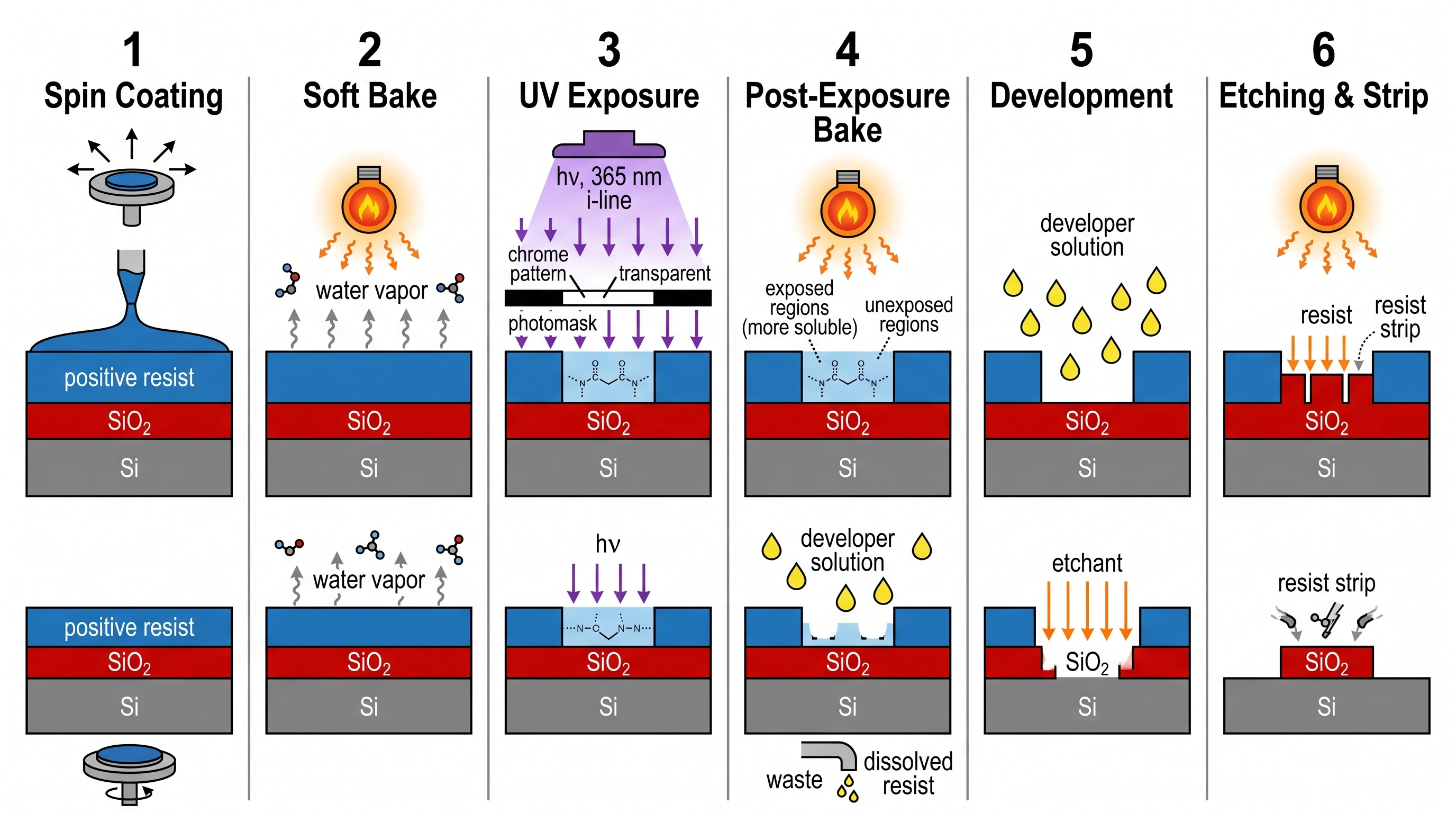
Nano Banana Pro — same 6 steps but each rendered as a dual panel: detailed view on top, simplified cross-section below. This is how IEEE textbooks actually present photolithography. Bonus details like water-vapor symbols during soft-bake and "exposed regions (more soluble)" labels make this output the highest-scoring engineering figure in our benchmark (19/20).
Limitations
- Prompt fidelity averaged 86.1% — about 13 percentage points behind GPT Image 2. Specifically, it tends to drop optional labels, color-key legends, and explicit numeric annotations when the prompt is long.
- Chemistry rigor is its weakest area. In the SN2 test it omitted the double-dagger transition-state marker, the
R/Sstereochemistry annotation, the four-color element legend, and the explicit "pentacoordinate transition state" label — all things GPT Image 2 included. - 3D abstract topology can fail. Our Möbius strip test is the most striking example: Nano Banana Pro rendered the main figure as a plain orientable cylinder (no half-twist) and only included the actual Möbius strip in a small inset — a conceptual error severe enough to mislead a student reader. GPT Image 2 got this right on the first try.
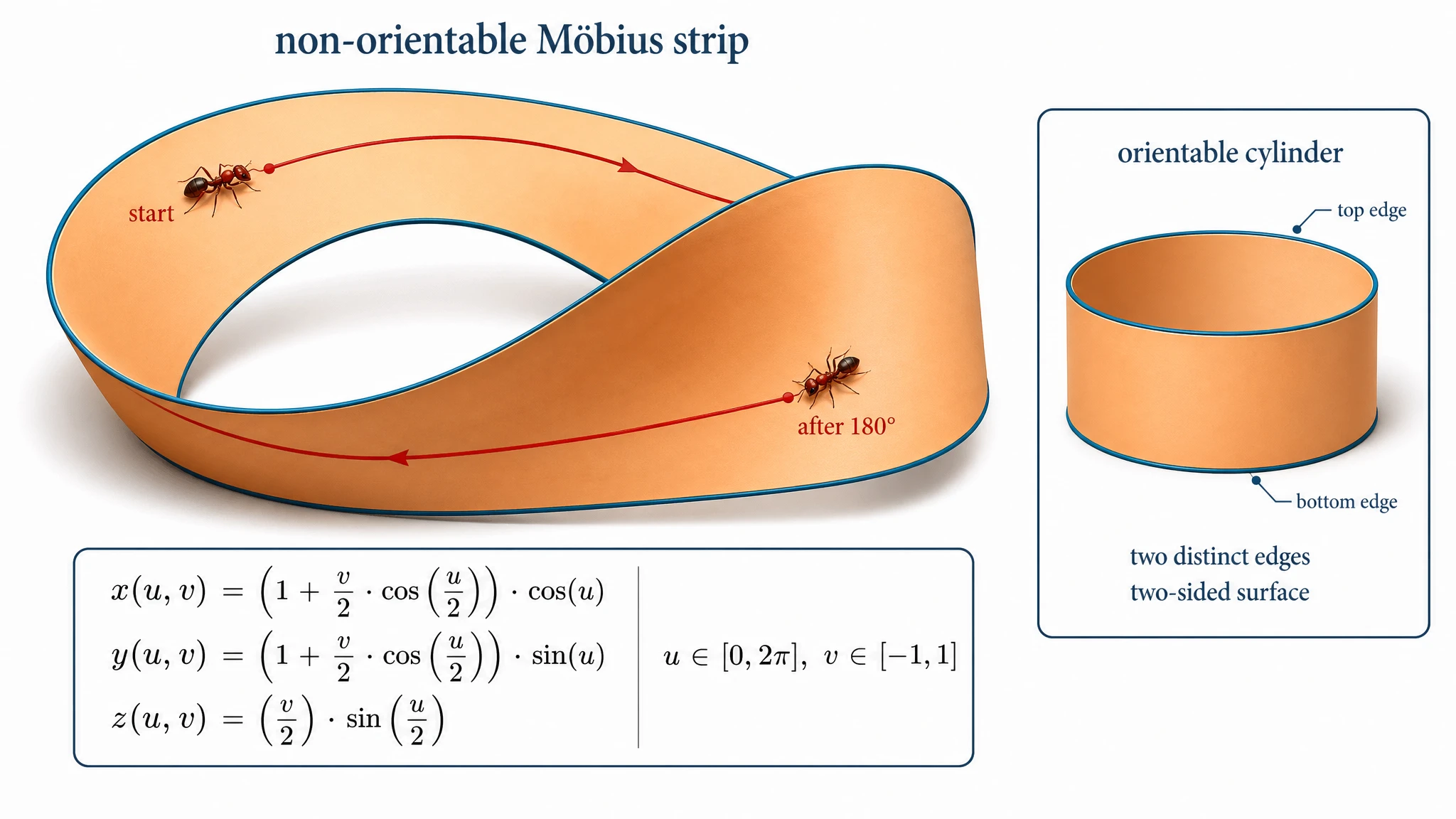
GPT Image 2 — a believable 3D Möbius strip with the half-twist clearly visible. Red ant markers at "start" and "after 180°" demonstrate one-sidedness; the boundary is rendered as a single continuous curve. The cylinder is in the corner inset for comparison, with annotations "two distinct edges" and "two-sided surface". Score: 20/20.
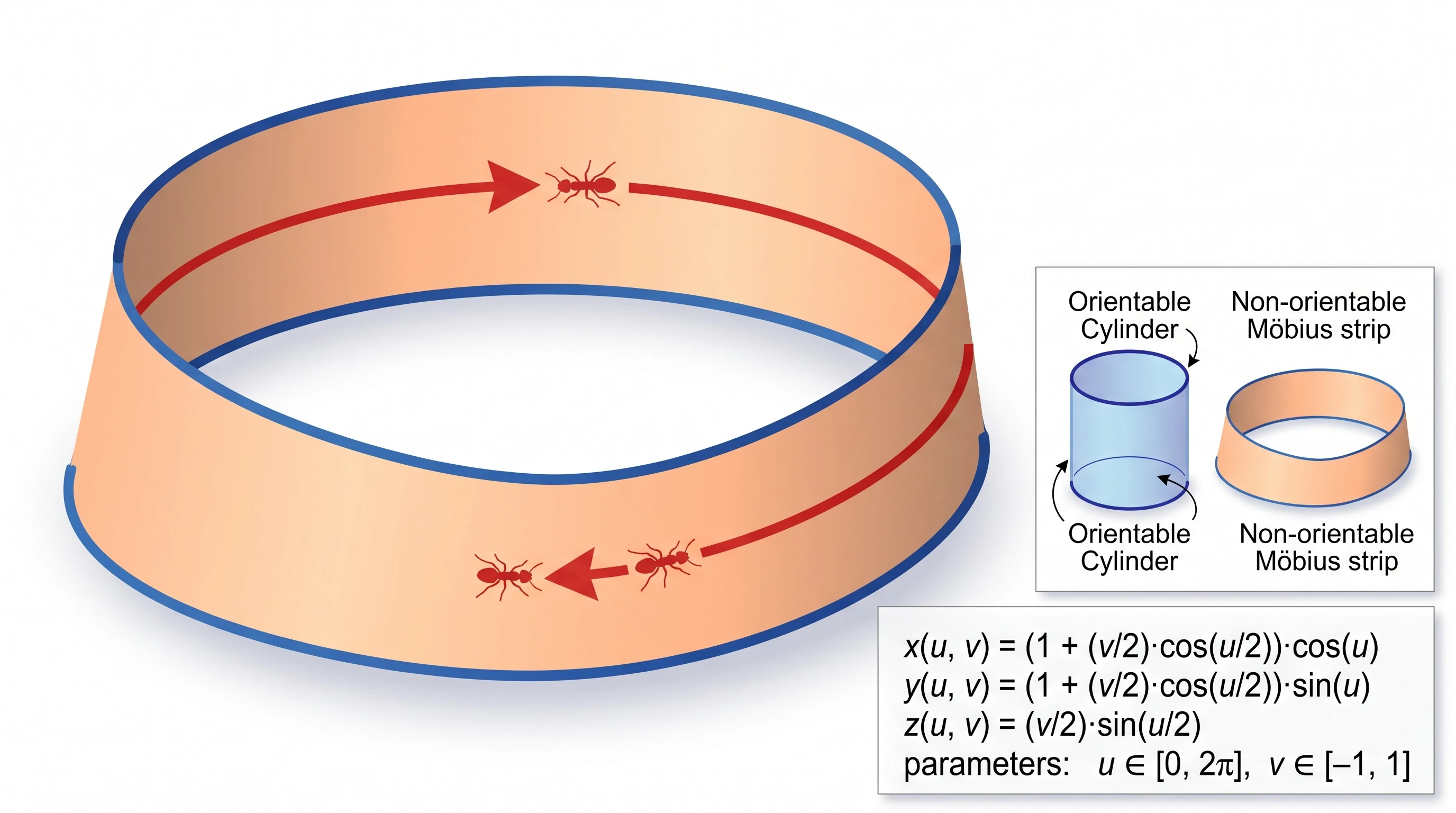
Nano Banana Pro — the main figure is an ordinary orientable cylinder, not a Möbius strip. The actual Möbius strip is shrunken into a tiny corner inset. This is a conceptual error severe enough to mislead any student reading the figure. Score: 11/20 — our second-largest single-prompt gap.
Best Scientific Use Cases
- Conference posters, slide decks, and teaching materials where readability beats dense annotation
- Biology mechanism diagrams (signaling pathways, mechanism cartoons) where BioRender-style simplicity is the genre convention
- ML/CS architecture figures where layer stacking and data-flow arrows matter
- Process workflow figures where dual-panel "detail + simplified" presentation aids comprehension
Head-to-Head: 10 Disciplines, 24 Figures
Before the table, here is the only test that ended in a tie — both flagships hit Nature-cover quality on the same prompt:
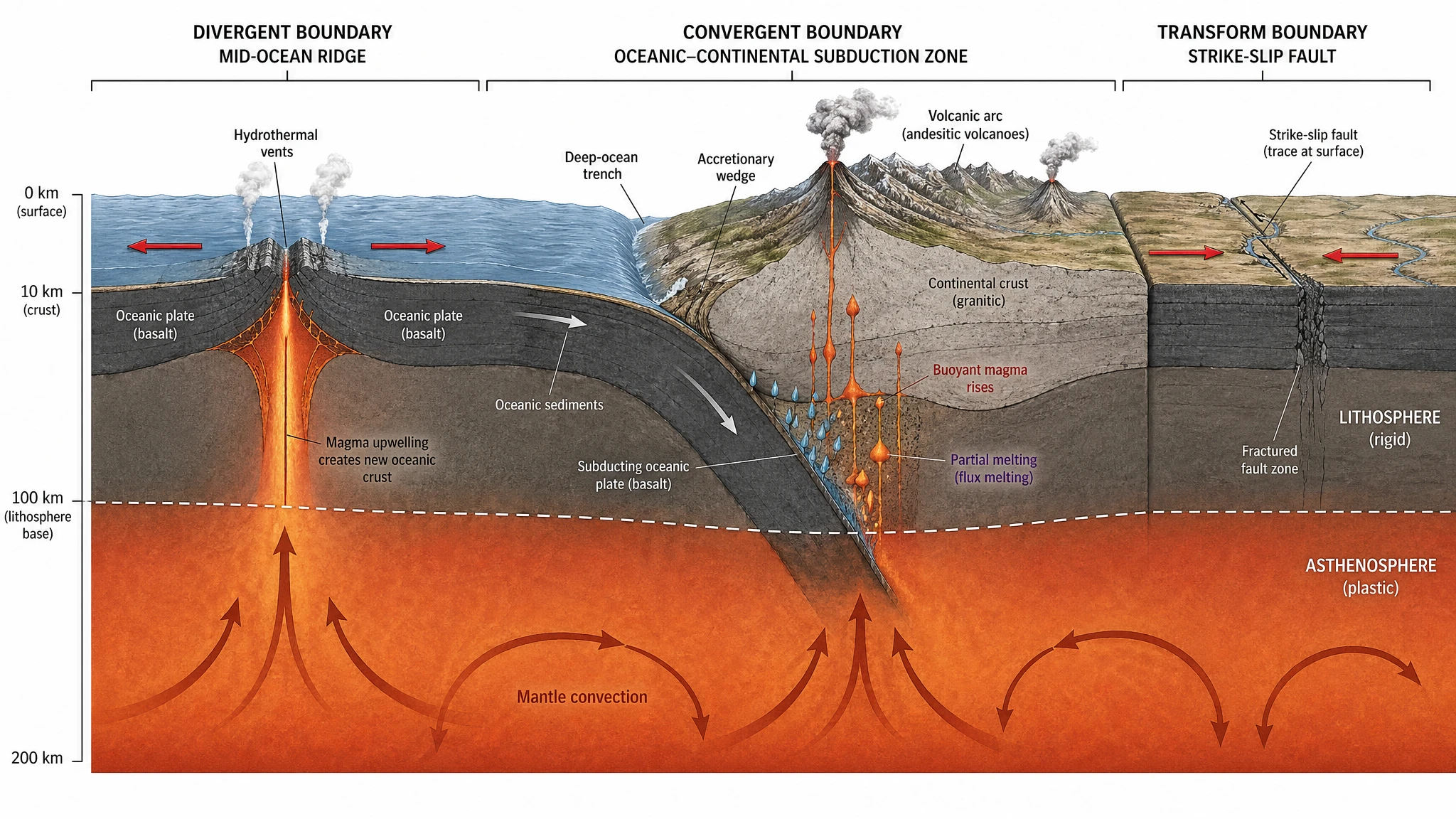
GPT Image 2 — three boundary types side by side with strong volumetric depth, lithosphere/asthenosphere temperature gradient, mantle convection cells. National Geographic / USGS style. Score: 19/20.
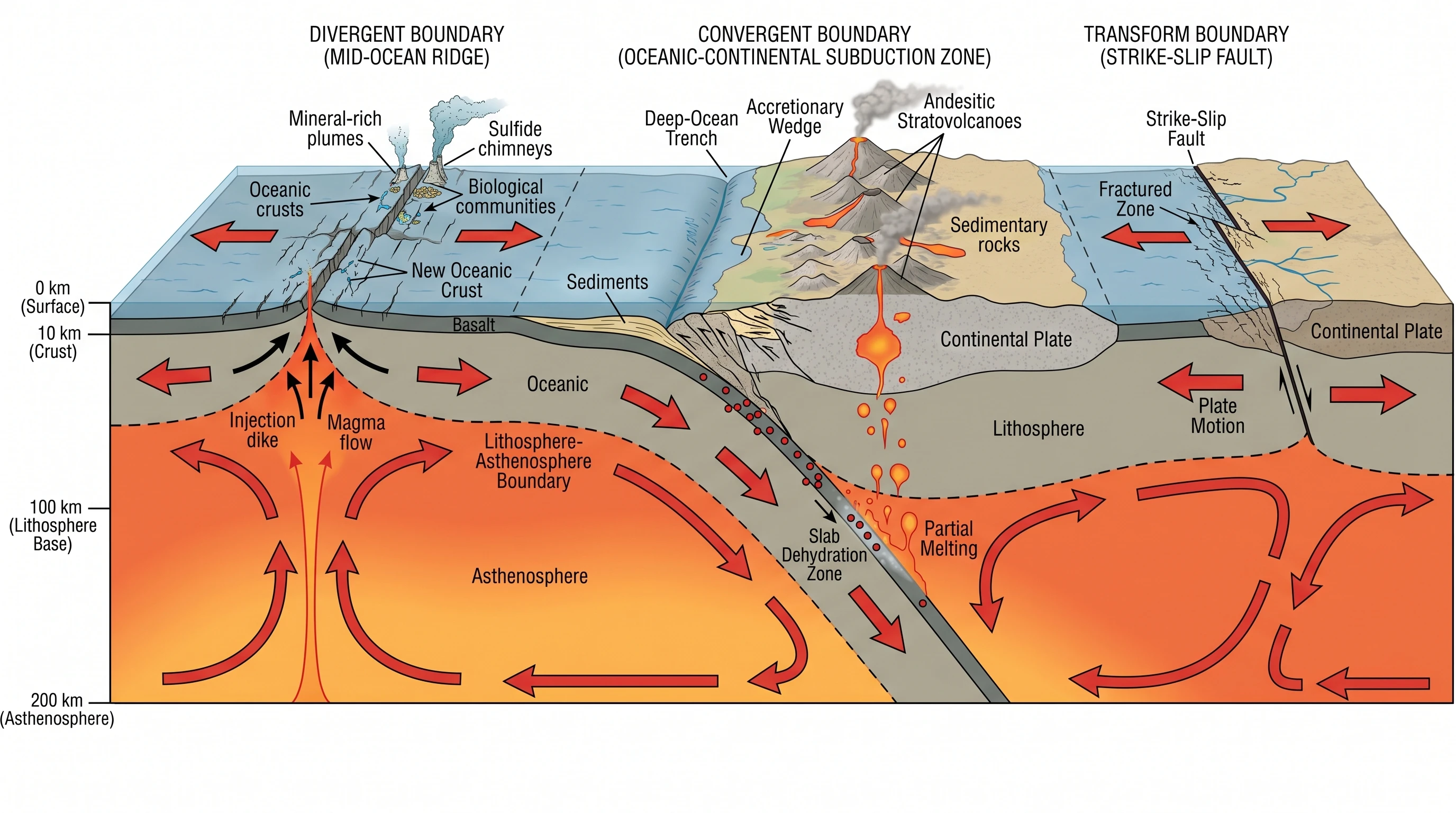
Nano Banana Pro — same scientific accuracy on the three boundary types, with a bonus level of ecological detail (hydrothermal vent biology, sulfide chimneys) and explicit "Slab Dehydration Zone" annotation. Cleaner label spacing. Score: 19/20.
We ran 12 prompts across 10 disciplines, generated each at 16:9 / 2K with both models, and scored every output. Below is the full result. Subjective scores are on a 1–5 scale per dimension; total is the sum of four subjective dimensions (max 20).
| Prompt | Discipline | GPT Image 2 fidelity | NBP fidelity | GPT Image 2 total | NBP total | Winner |
|---|---|---|---|---|---|---|
| EGFR / RAS / MAPK signaling | Biomedical | 100% | 80% | 19 | 18 | GPT Image 2 |
| CRISPR-Cas9 cutting | Biomedical | 95% | 98% | 15 | 18 | Nano Banana Pro |
| Transformer architecture | CS | 100% | 95% | 16 | 18 | Nano Banana Pro |
| Microservices architecture | CS | 100% | 85% | 19 | 18 | GPT Image 2 |
| SN2 substitution | Chemistry | 100% | 70% | 20 | 15 | GPT Image 2 (decisive) |
| Young's double-slit | Physics | 100% | 75% | 19 | 18 | GPT Image 2 |
| Photolithography process | Engineering | 95% | 100% | 17 | 19 | Nano Banana Pro |
| Plate tectonics cross-section | Earth Science | 100% | 95% | 19 | 19 | Tie |
| Möbius strip topology | Mathematics | 100% | 80% | 20 | 11 | GPT Image 2 (NBP rendering error) |
| Black hole accretion disk | Astronomy | 100% | 80% | 19 | 18 | GPT Image 2 |
| Forest food web | Ecology | 100% | 90% | 19 | 18 | GPT Image 2 |
| Hippocampus / LTP | Neuroscience | 100% | 85% | 19 | 18 | GPT Image 2 |
/inspiration?model=gpt-image-2 and /inspiration?model=nano-banana-pro. Every figure on those pages was generated for this benchmark — you can copy the prompt and re-run either model yourself.Create Scientific Figures Now
Describe your scientific figure in natural language — get publication-ready illustrations in minutes.
Try FreeFive Findings That Generalize
1. Long-prompt fidelity is GPT Image 2's signature edge
When we compared the average prompt length (1,400 characters) against the fidelity gap (13.1 percentage points), the pattern was consistent: the longer and more specific the prompt, the more elements Nano Banana Pro tended to drop. This is not a small effect — over 12 prompts, GPT Image 2 hit 99.2% of named elements while Nano Banana Pro hit 86.1%.
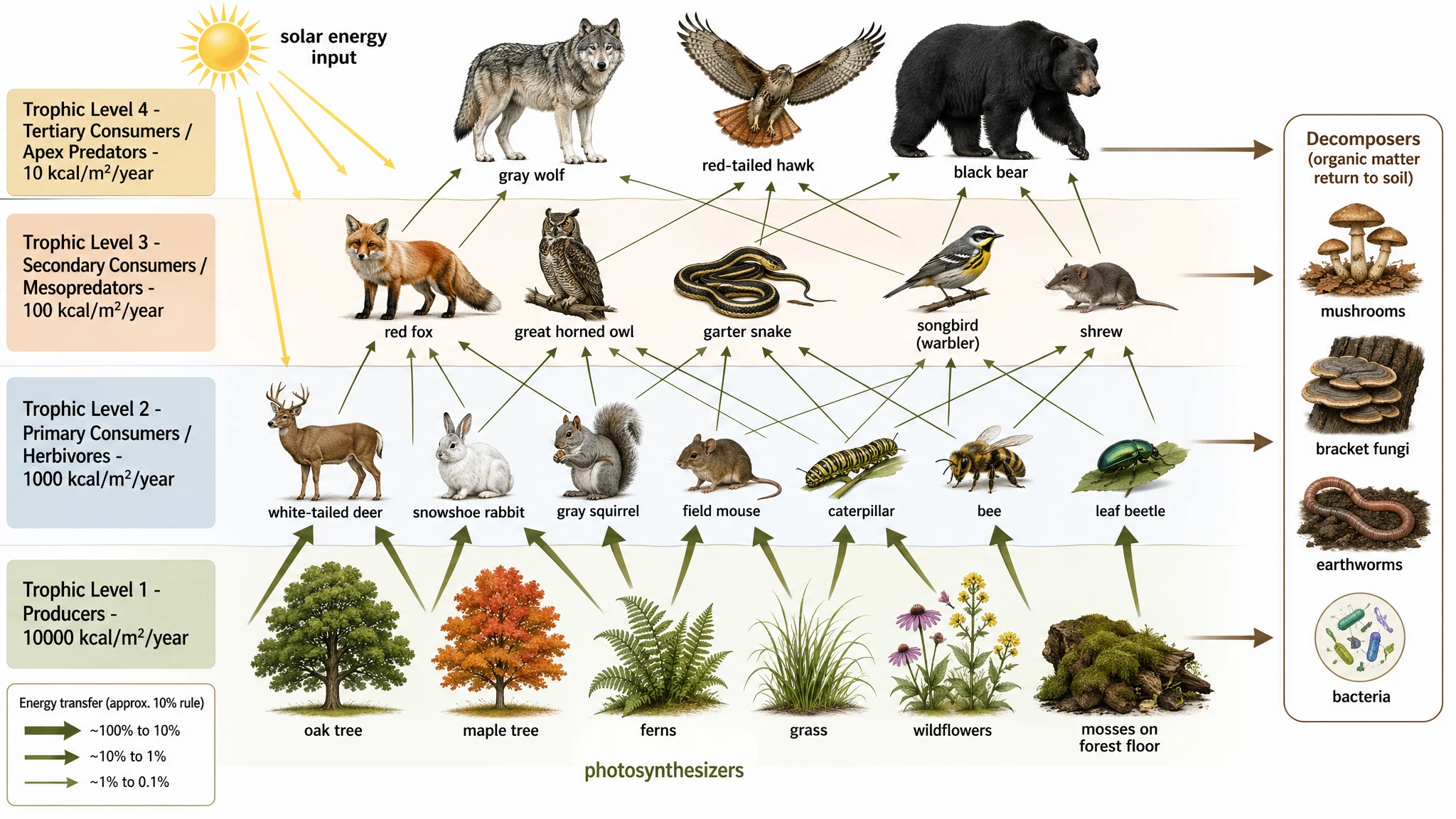
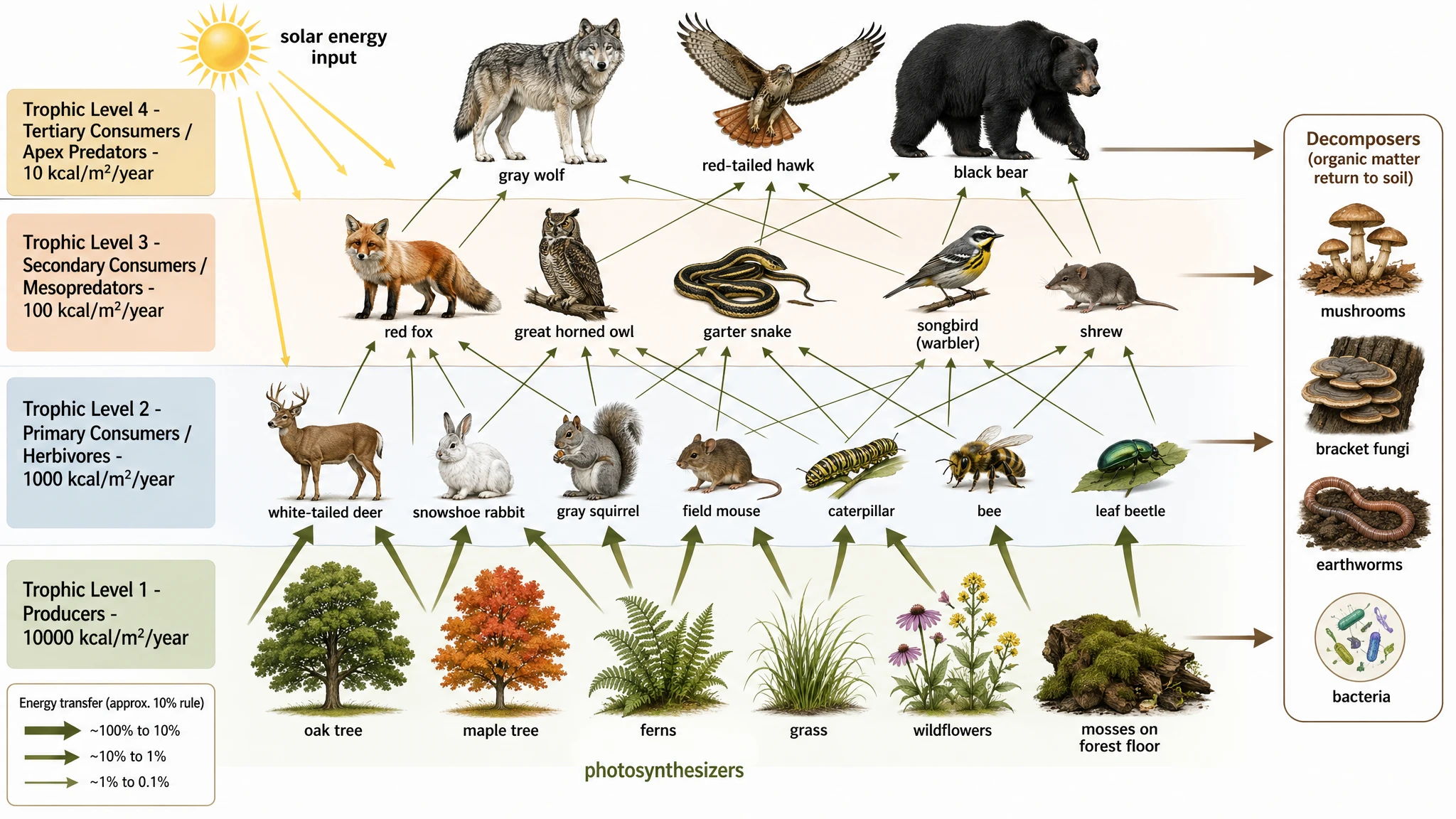
GPT Image 2 — every species named in the 1,600-character prompt landed: oak, maple, ferns, grass, wildflowers, mosses (producers); white-tailed deer, snowshoe rabbit, gray squirrel, field mouse, caterpillar, bee, leaf beetle (herbivores); red fox, great horned owl, garter snake, songbird (warbler), shrew (mesopredators); gray wolf, red-tailed hawk, black bear (apex). Decomposers in a separate right column with bracket fungi / earthworms / bacteria. Energy transfer legend (100% → 10% → 1% → 0.1%) is intact.
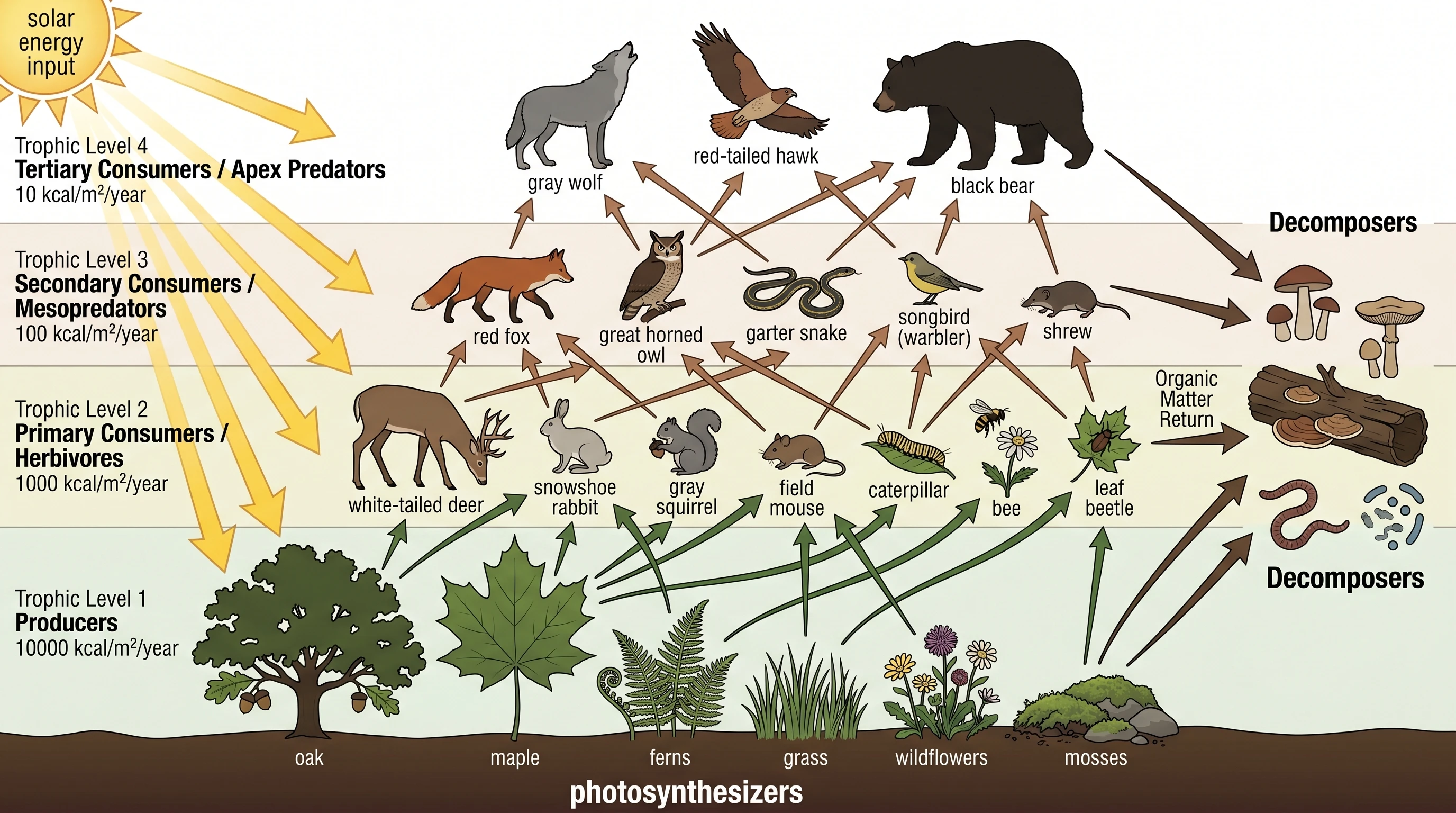
Nano Banana Pro — same four trophic levels, same kcal/m²/year scale, all species recognizable. But it dropped the bracket-fungi / bacteria distinction, dropped the energy-transfer percentage legend, and only labeled "earthworm" rather than the full decomposer column. Caught the broad strokes; missed the textbook-grade footnotes.
2. Chemistry notation is GPT Image 2's quiet moat
The SN2 mechanism test produced our largest single-prompt gap (20 vs 15). GPT Image 2 rendered every standard chemistry convention — double-dagger, partial bonds, R/S stereochemistry, pentacoordinate geometry, energy diagram, color-coded element legend. Nano Banana Pro produced a recognizable mechanism, but missed the double-dagger, omitted the stereochemistry annotation, and didn't draw the legend.
3. Abstract 3D topology can break Nano Banana Pro
4. BioRender-style simplicity is Nano Banana Pro's home turf
Three of the model's wins (CRISPR-Cas9, Transformer, photolithography) share a common pattern: the prompt rewards simplification. CRISPR is a 4-step mechanism — Nano Banana Pro's clean step-by-step visual won over GPT Image 2's denser version. Transformer is a structural diagram — Nano Banana Pro's stacked-layer rendering captured the architecture intuition better.
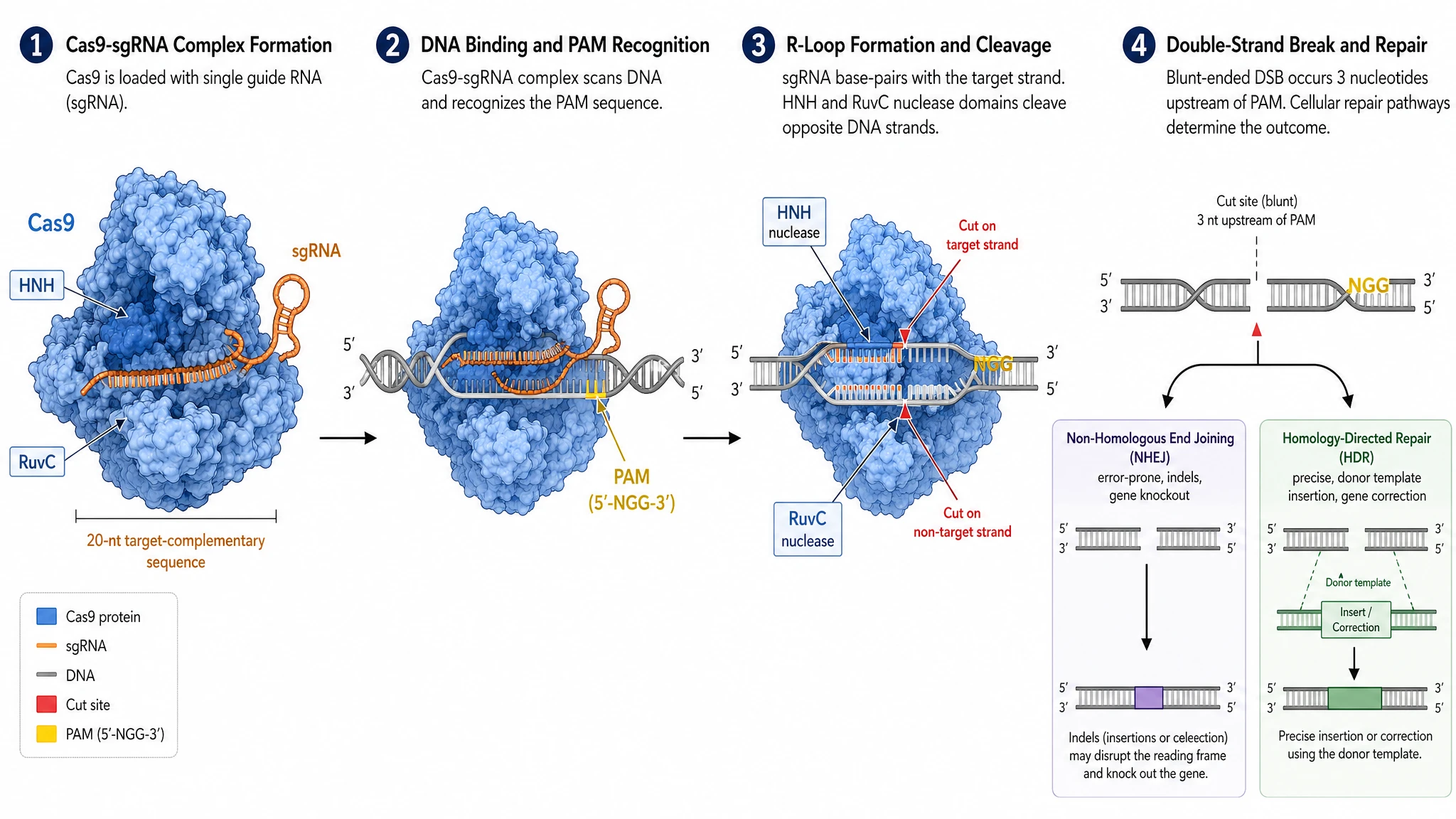
GPT Image 2 — every requested element is present: Cas9 with HNH and RuvC domains, sgRNA with 20-nt target-complementary sequence, PAM (5'-NGG-3') highlighted, R-loop formation, blunt double-strand break "3 nt upstream of PAM", and both NHEJ and HDR repair pathways. Score: 15/20 — the lower readability hurt it because every label is packed in dense 3D rendering.
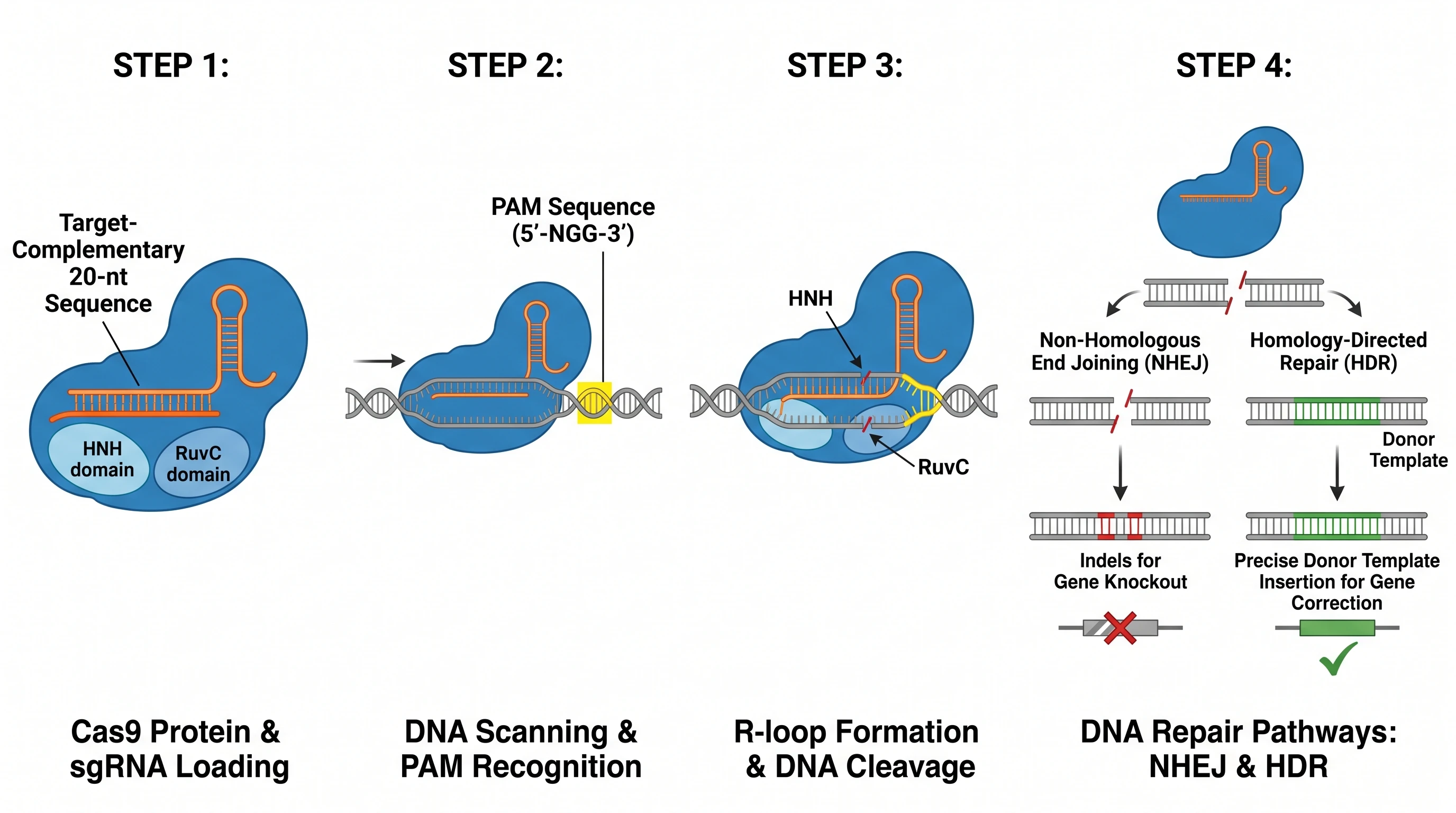
Nano Banana Pro — same 4-step structure, same scientific accuracy, but the BioRender-style flat illustration leaves much more breathing room. Each step has a single focal element. The NHEJ "indels for gene knockout" branch (red strike-through) and HDR "donor template insertion for gene correction" branch (green checkmark) are visually decisive. Score: 18/20 — the genre convention winner.
5. The information density / readability tradeoff is the deepest finding
Average scores across 24 figures expose two consistent profiles:
- GPT Image 2: higher prompt fidelity (99.2%), higher publication readiness (4.58), lower readability (4.25)
- Nano Banana Pro: lower prompt fidelity (86.1%), lower publication readiness (3.92), higher readability (4.67), highest aesthetic score (4.83)
Both are valid figure design philosophies — and they map onto two different end uses. GPT Image 2 is built for the figure that lives next to dense prose in a journal article. Nano Banana Pro is built for the figure that has to communicate on its own at 4 meters away in a conference hall.
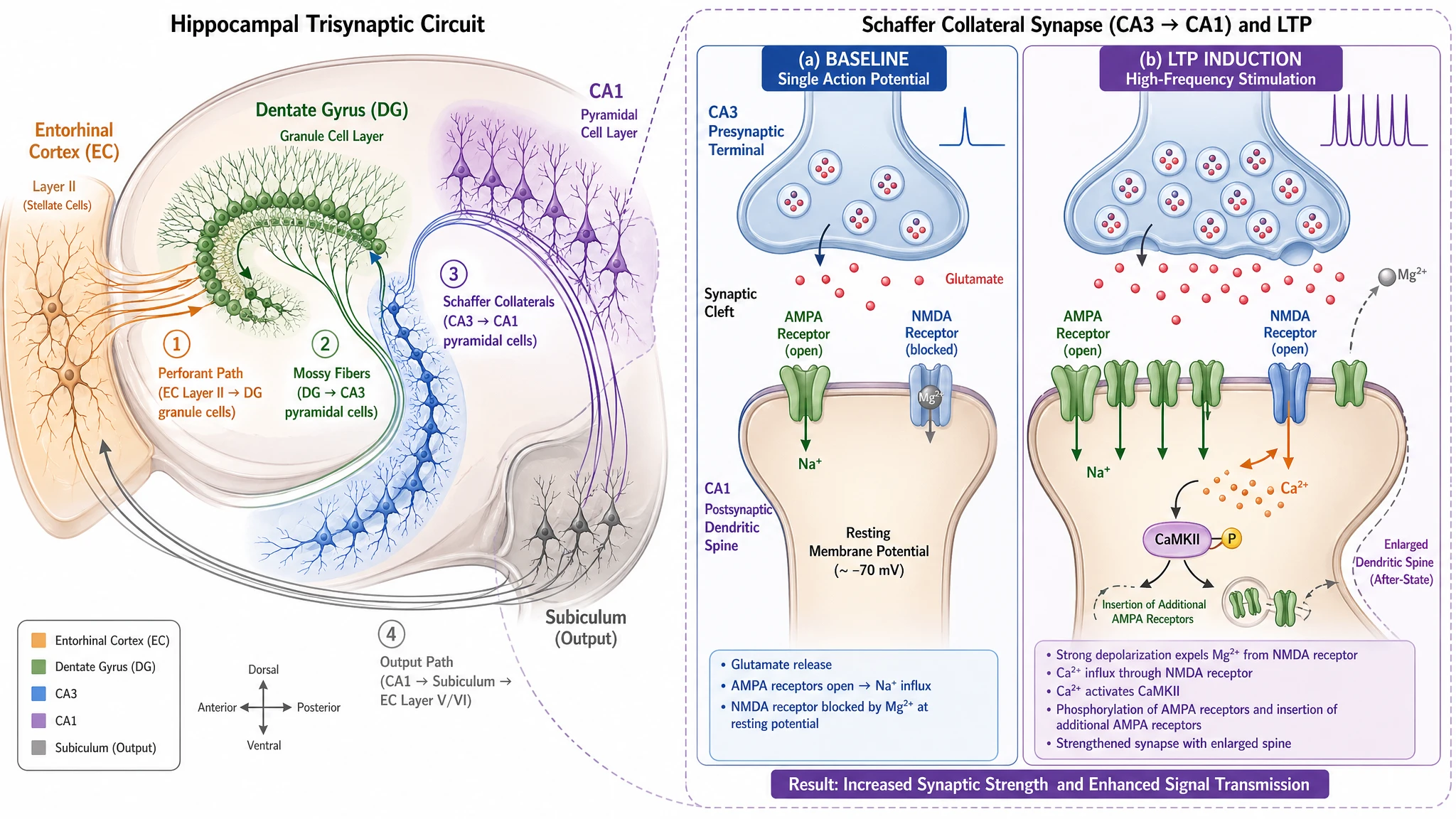
GPT Image 2 — title "Hippocampal Trisynaptic Circuit", anatomy on the left with EC Layer II / V-VI input/output specificity, four-step circuit numbered (Perforant Path → Mossy Fibers → Schaffer Collaterals → Output Path), zoomed LTP mechanism on the right with explicit "Resting Membrane Potential ~ -70 mV", four bullet-point molecular explanations, color legend in corner. Information density at its peak.
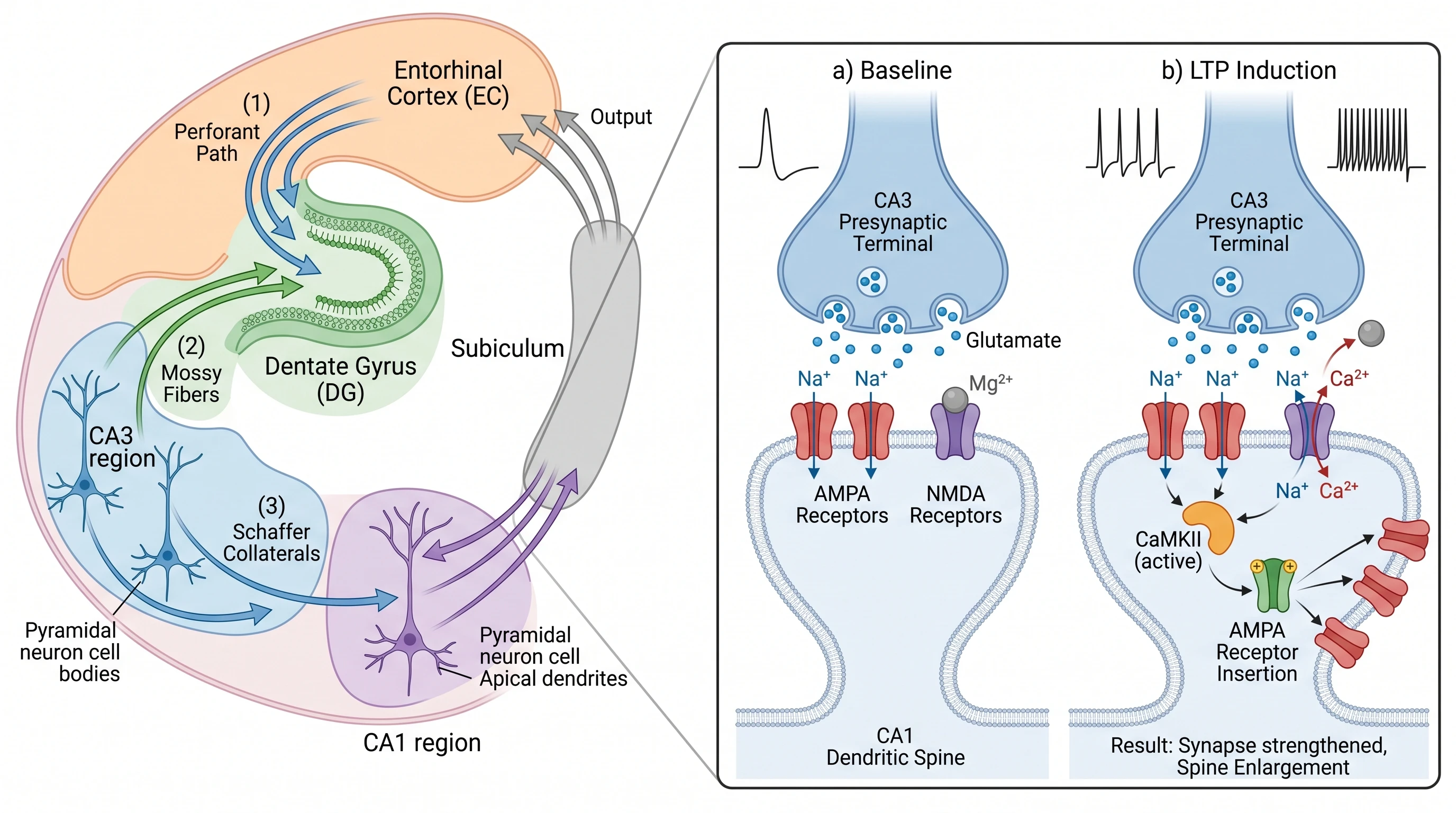
Nano Banana Pro — same anatomy, same circuit, same LTP mechanism. But each region is large, labels are spaced, and the eye has time to follow the data flow. Pyramidal neuron cell bodies and apical dendrites get explicit visual representation. The trade-off is the EC layer specificity (Layer II vs V-VI) and the -70 mV resting potential — both dropped. Result: same content, different reader experience.
Verdict: Which Should You Choose?
Use the decision tree below for edge cases. Different scientific work has different optimal model — match your figure type to one of the four common output destinations (peer-reviewed journal, conference, web, or "not sure"), then drill into the sub-rule for your specific discipline or figure genre.
- Journal submission (Cell, Nature, Science, PNAS)
- Chemistry / stereochemistry / reaction mechanism → GPT Image 2 (decisive)
- Abstract mathematics / topology / manifolds → GPT Image 2 (NBP can fail conceptually)
- Long, dense, label-heavy prompt → GPT Image 2
- Biology mechanism in BioRender-style genre convention → Nano Banana Pro is acceptable, sometimes preferred
- Slide deck / conference poster / teaching material
- Default → Nano Banana Pro (readability + aesthetic edge)
- ML / CS architecture → Nano Banana Pro (layer-stacking visual is stronger)
- Process workflow with multiple steps → Nano Banana Pro (dual-panel design)
- Blog or social media figure
- Default → Nano Banana Pro (cleaner, scrolls better)
- Cover-quality figure (high-end journal cover, National Geographic style)
- Either model works; check our examples gallery to see comparable outputs and pick by aesthetic fit
- You're not sure
- SciFig supports both — just generate from each, side by side, and pick the winner. That's how a real human illustrator works anyway.
Behind the Methodology
We tested 12 scientific prompts spanning 10 disciplines, locked at 16:9 aspect ratio and 2K resolution, generated through the Kie.ai API directly (the same API supplier that powers SciFig's production stack). Each prompt was 1,100–1,800 characters of detailed scientific specification — receptors, kinases, equations, named domains, color preferences. We graded each output on six dimensions: two objective (prompt fidelity, instruction adherence) and four subjective with explicit rubrics (scientific accuracy, publication readiness, readability, aesthetic quality). For every subjective score we recorded the reasoning, so the assessment is reproducible by an outside reader.
/inspiration?model=gpt-image-2 and /inspiration?model=nano-banana-pro. If you re-run any prompt and get a different result, we want to know — that's how this kind of evaluation gets better over time.