
Free Phylogenetic Tree Maker
Create accurate phylogenetic tree diagrams — rooted or unrooted — with labeled taxa, branching lineages, clades, and common ancestors for evolutionary biology.
Start with up to 150 free credits|No credit card required
Get up to 250 free credits on day one when you join through an invite.
Updated
Free Phylogenetic Tree Maker— templates & examples
Everything you need to build your phylogenetic tree
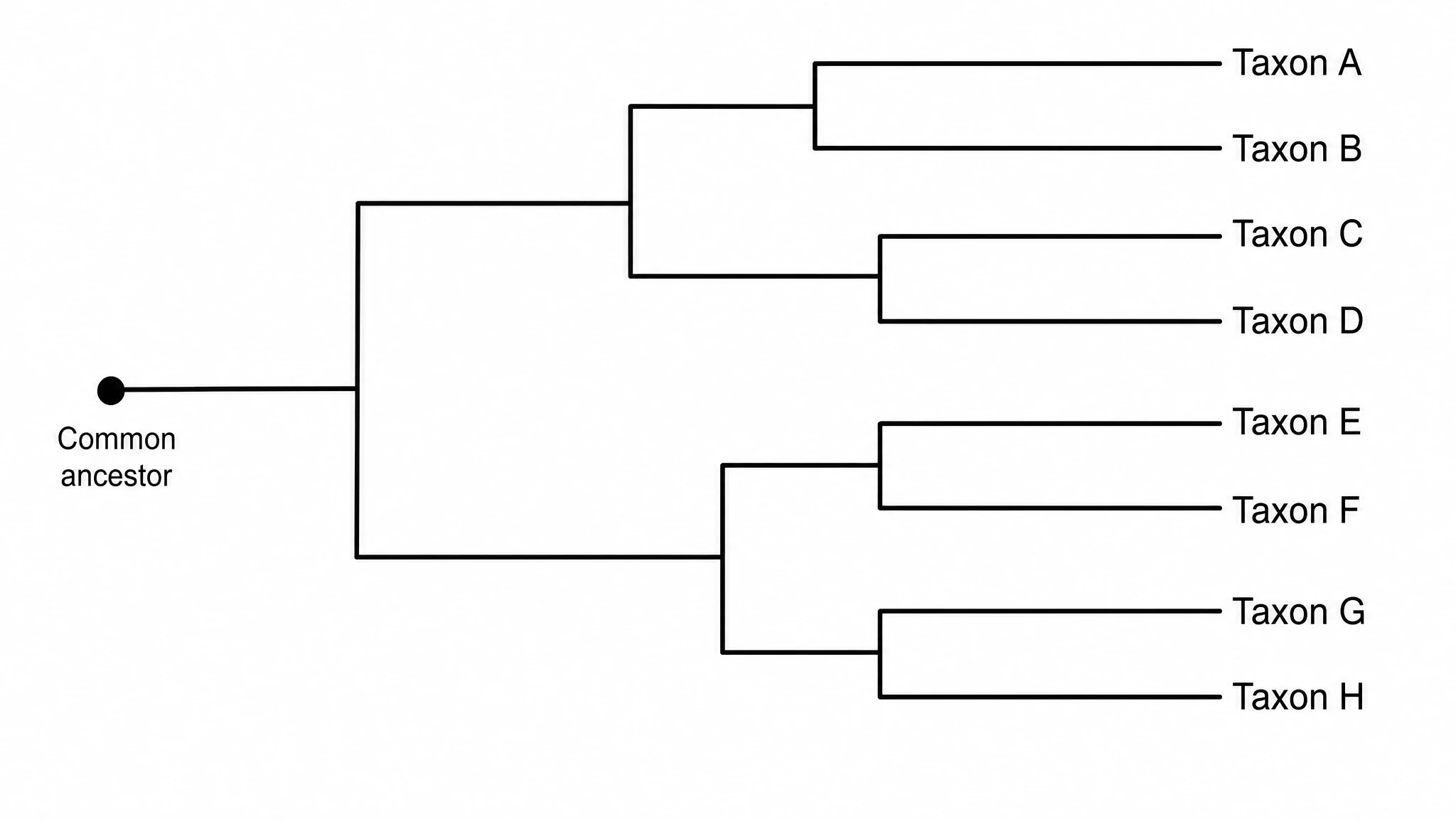
Rooted, unrooted, or circular layouts
Whether you need a rooted phylogenetic tree showing a clear common ancestor, an unrooted evolutionary tree emphasizing relatedness, or a striking circular phylogeny for a large set of taxa, SciFig's phylogenetic tree maker produces them all from one description. Each layout renders branches, nodes, and tips consistently so your taxa, clades, and evolutionary relationships stay readable. Switch between styles without rebuilding the tree from scratch.
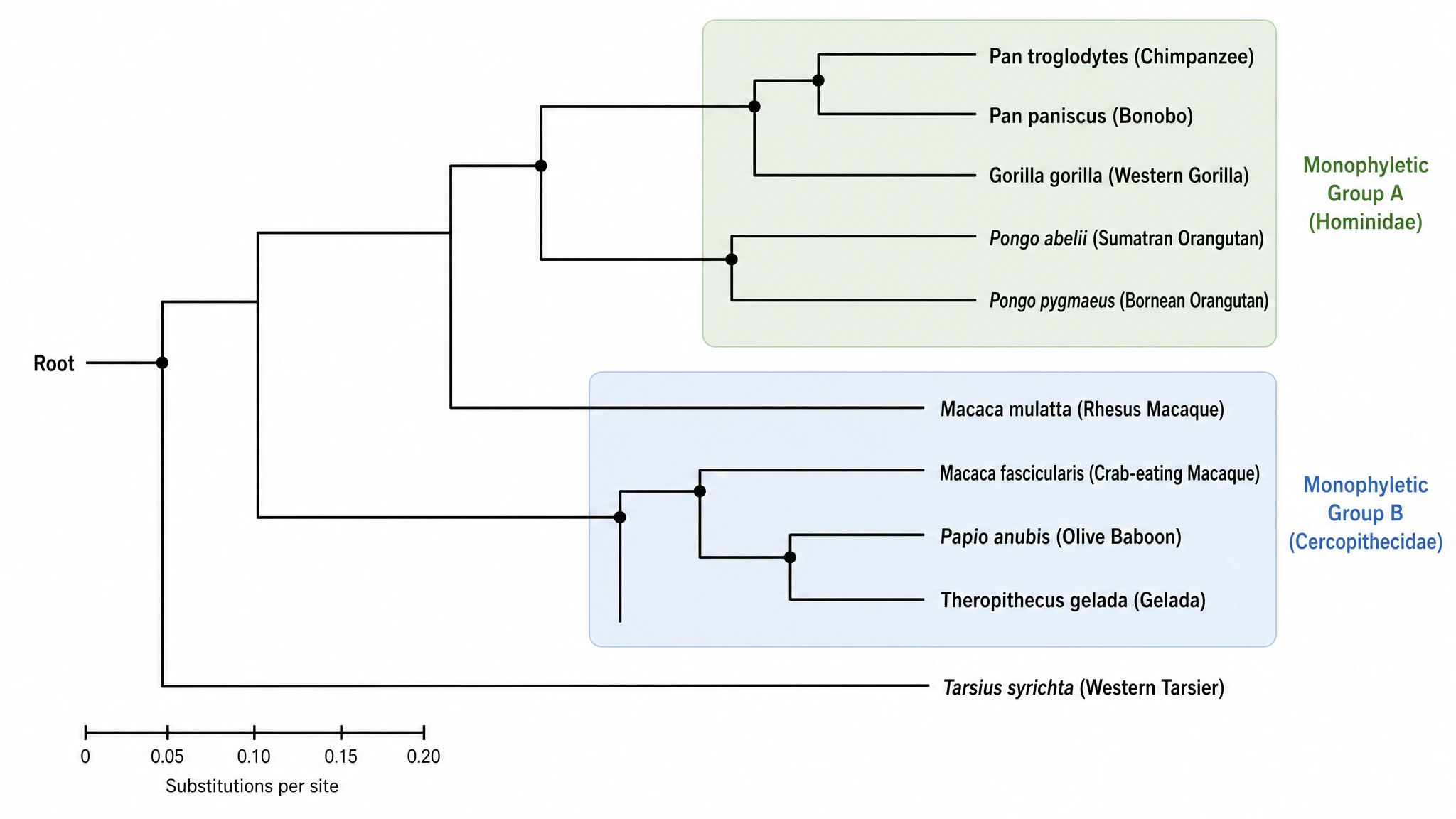
Accurate topology, publication-ready style
SciFig's phylogenetic tree generator follows systematics conventions, so every diagram reflects valid tree topology — taxa at the tips, divergence points at internal nodes, and branches tracing lineages back to common ancestors. The result is a clean evolutionary tree suitable for peer-reviewed manuscripts, grant applications, and lectures, with labeled clades and crisp taxon names. You get a professional phylogenetic tree diagram without wrestling with tree-drawing scripts or vector software.
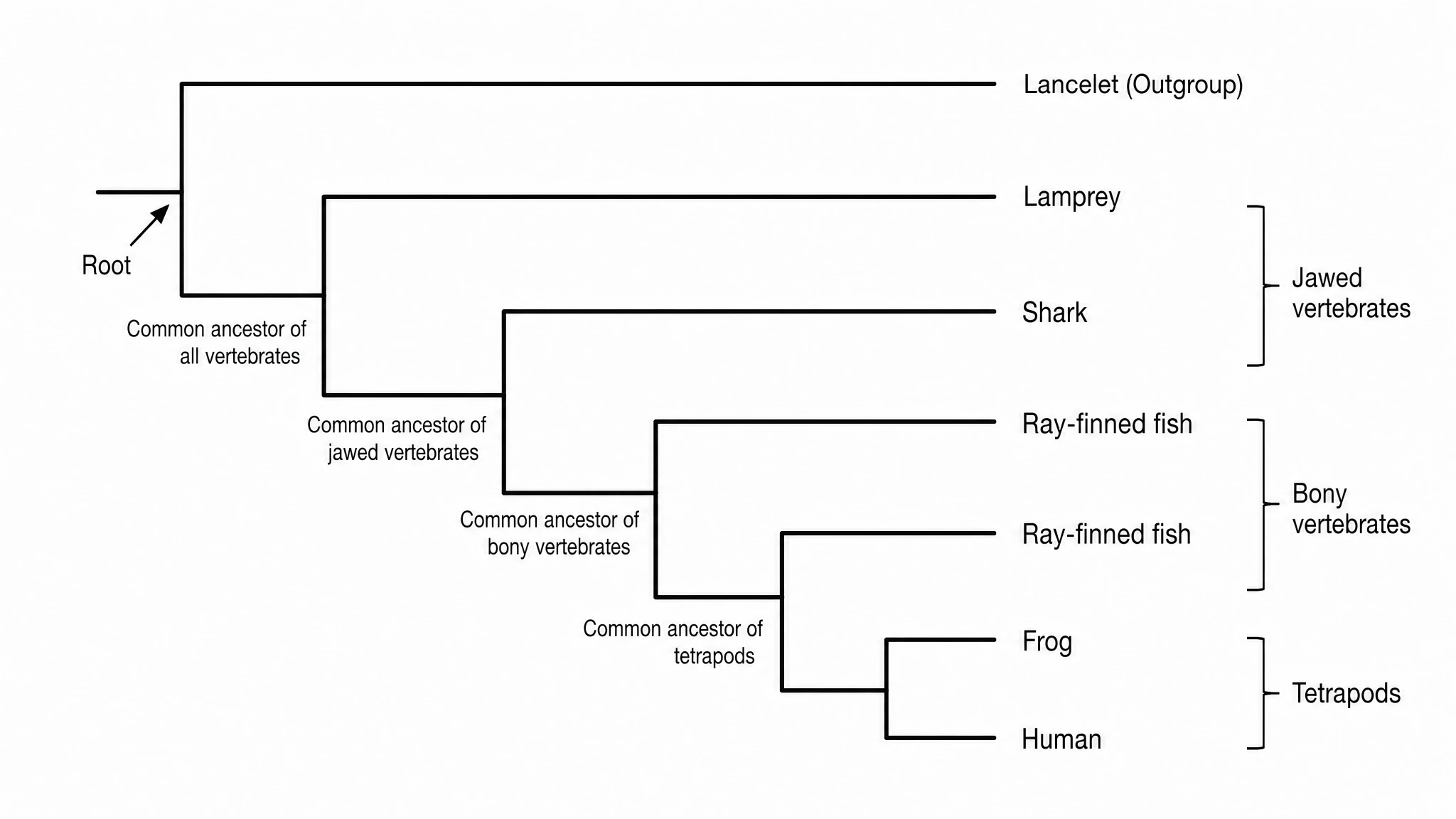
From cladograms to full phylogenies
Use the same tool as a cladogram maker when you only need the branching order of clades, or as a full phylogenetic tree maker when branch lengths must reflect evolutionary distance. Add an outgroup to root the tree, highlight monophyletic clades, and relabel any taxon in seconds. Export the finished phylogeny diagram as a high-resolution image ready to drop into a paper, a slide deck, or a printable biology worksheet for students.
What is a phylogenetic tree?
A phylogenetic tree is a branching diagram that shows the evolutionary relationships among a group of species or taxa, tracing how they descend from shared common ancestors. Tips represent the taxa, internal nodes mark divergence points, branches represent lineages, and monophyletic groups form clades. SciFig's phylogenetic tree maker produces a clean, fully editable evolutionary tree in seconds — choose a rooted, unrooted, or circular layout, relabel each taxon, and export.
Why an accurate phylogenetic tree matters
- A clear phylogenetic tree communicates evolutionary relationships far faster than a table of pairwise distances
- Correct tree topology prevents misinterpretation of which taxa share a recent common ancestor
- Labeled clades let reviewers verify that monophyletic groups are supported by the data
- Rooted phylogenetic trees establish the direction of evolutionary time, essential for ancestral-state inference
- Publication-quality evolutionary tree figures signal scientific rigor to journal editors and reviewers
- Editable diagrams let researchers update taxa and branch positions as new sequence data arrives
- A well-labeled phylogeny diagram is a core teaching asset in evolutionary biology and systematics courses
Key parts of a phylogenetic tree diagram
- Root — common ancestor at the base of the tree from which all taxa descend
- Branches — lineages tracing evolutionary change between divergence events over time
- Nodes — divergence points where one lineage splits into two descendant lineages
- Tips/taxa — species or groups being compared, placed at the ends of the branches
- Clades — monophyletic groups made of an ancestral node plus all of its descendants
- Branch lengths — proportional measures of evolutionary distance or elapsed time
- Outgroup — a distantly related taxon used to root the tree and orient evolutionary direction
Where phylogenetic trees are used
- Evolutionary biology and systematics research mapping relationships among species and taxa
- Molecular phylogenetics papers reconstructing trees from DNA or protein sequence alignments
- Epidemiology and virology studies tracing pathogen lineages and outbreak transmission
- University biology, genetics, and ecology lectures, exams, and review materials
- High-school biology worksheets introducing clades, common ancestors, and evolutionary trees
- Grant proposals and conference presentations requiring clear phylogeny diagrams
- Textbooks, review articles, and open educational resources on the tree of life
How to make a phylogenetic tree
Describe your phylogenetic tree
Tell SciFig what to draw in plain language — no design tools required.
Generate with SciFig
Get a clean, publication-ready figure that matches your description in seconds.
Edit & export
Vectorize it into editable SVG, relabel everything, and export for your paper, poster, or slides.
Free Phylogenetic Tree Maker — Frequently Asked Questions
Common questions about Free Phylogenetic Tree Maker.
More tools

Circuit Diagram Maker
Draw electronic circuit schematics

Free Body Diagram Generator
Show forces acting on an object

Graphical Abstract Maker
Summarize your study in one panel
SciFig
Free AI Scientific Figure Generator for Illustrations, Images, Charts and Flowcharts
Models
Default to GPT Image 2 for journal papers; switch to Nano Banana Pro for slides and posters; pick Nano Banana 2.1 for routine figure work
Tutorials
Seven short walkthroughs of the AI scientific figure generator
Blog
Tutorials, tool comparisons, and publication tips for researchers.
Inspiration
Explore publication-ready illustrations, charts and flowcharts. Copy a prompt or open any template as the starting point for your own figure.
Pricing
View pricing

Ready to publish?
Make your own phylogenetic tree in minutes.
Start for freeFree to start · No credit card required · Built for researchers