
Negative Feedback Loops of the Male HPG Axis
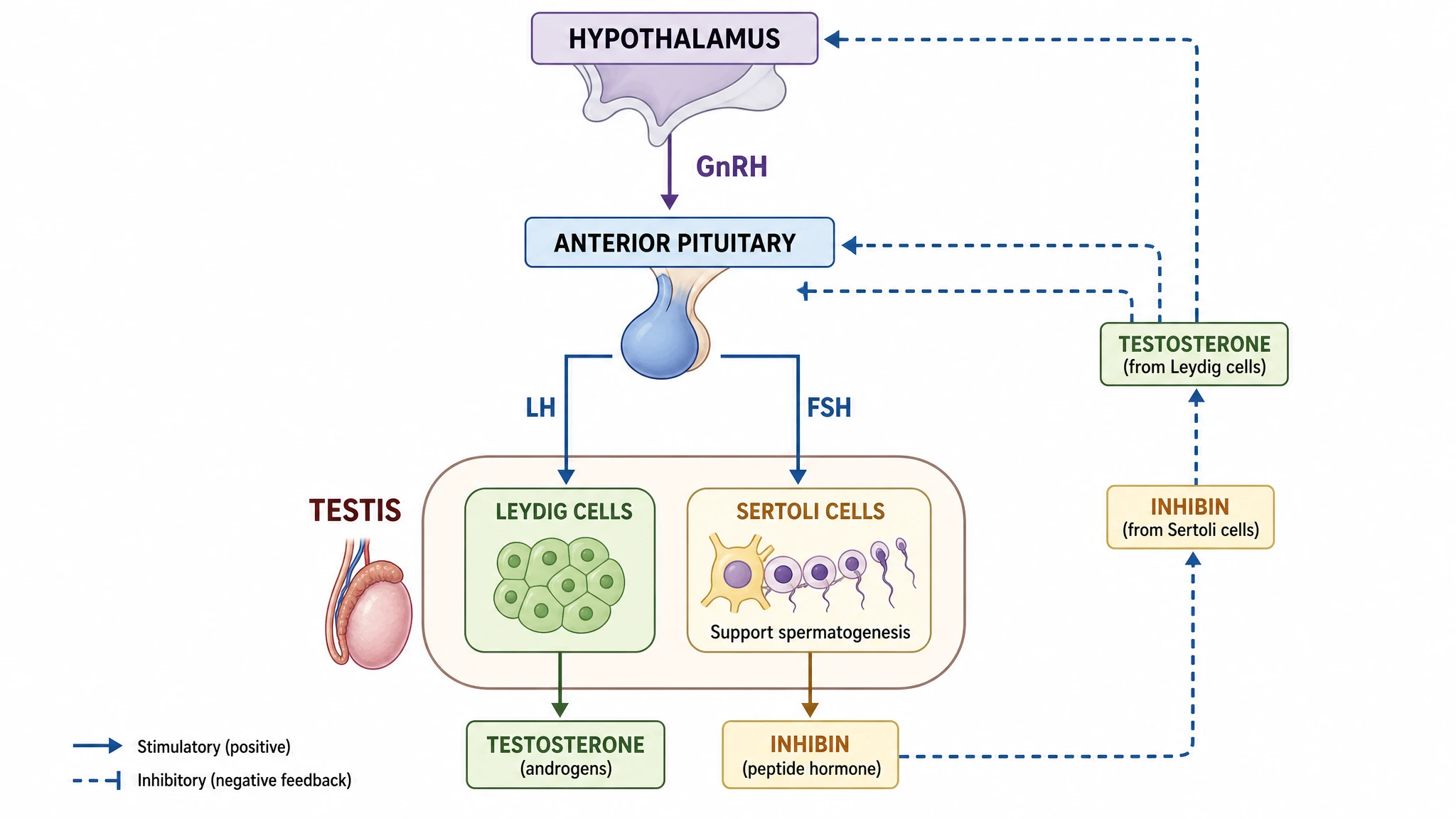
An editable diagram of the male hypothalamic-pituitary-gonadal (HPG) axis showing GnRH, LH and FSH, testosterone, and the negative-feedback loops that regulate them.
Updated

Start with up to 150 free credits|No credit card required
Get up to 350 free credits on day one when you join through an invite.
What is Negative Feedback Loops of the Male HPG Axis?
The male HPG axis is the hormonal loop linking the hypothalamus, pituitary, and gonads. The hypothalamus releases GnRH, which stimulates the anterior pituitary to secrete LH and FSH; LH drives testosterone production by Leydig cells while FSH supports spermatogenesis via Sertoli cells. Testosterone and inhibin then exert negative feedback on the hypothalamus and pituitary. With SciFig you describe the HPG axis in plain language and generate a clean, editable diagram you can relabel and export.
Why Researchers Draw This Figure
- Feedback here is not one loop but several with different targets and different selectivity, and only a diagram can hold them apart without becoming a paragraph of qualifications.
- The two gonadotropins act on two different cell populations in the same organ; collapsing them into a single 'testis' box loses the entire logic of the system.
- Pulsatility is the control variable — continuous exposure to the releasing hormone desensitizes gonadotropes rather than stimulating them, which is the pharmacological basis of agonist therapy and cannot be shown with a steady arrow.
- Aromatization means part of the androgen signal is transduced as estrogen, an inference clinicians rely on and that a text description regularly omits.
- Clinical reasoning runs directly off the diagram: whether gonadotropins are high or low next to a low androgen level distinguishes primary from secondary hypogonadism.
- Exogenous androgen use suppresses the same loop and shuts down intratesticular steroid production, a counterintuitive result that the figure makes obvious.
Components to Label
- GnRH neurons and the KNDy population — kisspeptin, neurokinin B and dynorphin co-expressing neurons in the arcuate nucleus that generate the pulse, released roughly every 90–120 minutes in adult men.
- Hypophyseal portal system — the short vascular link that carries the releasing hormone directly to the anterior pituitary.
- Gonadotropes — the anterior pituitary cells that respond to pulse frequency by secreting LH and FSH, glycoprotein hormones sharing a common α subunit with distinct β subunits.
- Leydig cells — interstitial cells bearing LHCGR; the sole site of significant testicular androgen synthesis, via StAR-dependent cholesterol import and the steroidogenic enzyme chain.
- Sertoli cells — FSHR-bearing somatic cells inside the seminiferous tubule that form the blood–testis barrier and support germ cell development; they secrete androgen-binding protein and inhibin B.
- Long-loop feedback — testosterone, and estradiol produced from it by aromatase, inhibiting both GnRH pulse frequency at the hypothalamus and LH responsiveness at the pituitary.
- Selective FSH feedback — inhibin B from Sertoli cells suppressing FSH at the gonadotrope by blocking activin signaling, with activin and follistatin shown as the local counterweights.
Where This Diagram Is Used
- Differentiating primary (testicular) from secondary (central) hypogonadism from a gonadotropin panel, and teaching that reasoning.
- Explaining anabolic steroid–induced suppression and the resulting azoospermia, and the rationale for hCG or selective estrogen receptor modulator recovery protocols.
- Contrasting GnRH agonists — which suppress only after an initial flare through receptor desensitization — with antagonists that suppress immediately, in androgen deprivation therapy for prostate cancer.
- Male contraception research, where androgen–progestin combinations exploit the same loop to shut down intratesticular steroid production.
- Puberty and its disorders, including congenital GnRH deficiency and Kallmann syndrome, where the defect is located at the top of the chain.
- Reproductive toxicology and endocrine disruptor studies that need an explicit map of which node an exposure is acting on.
What This Template Gives You
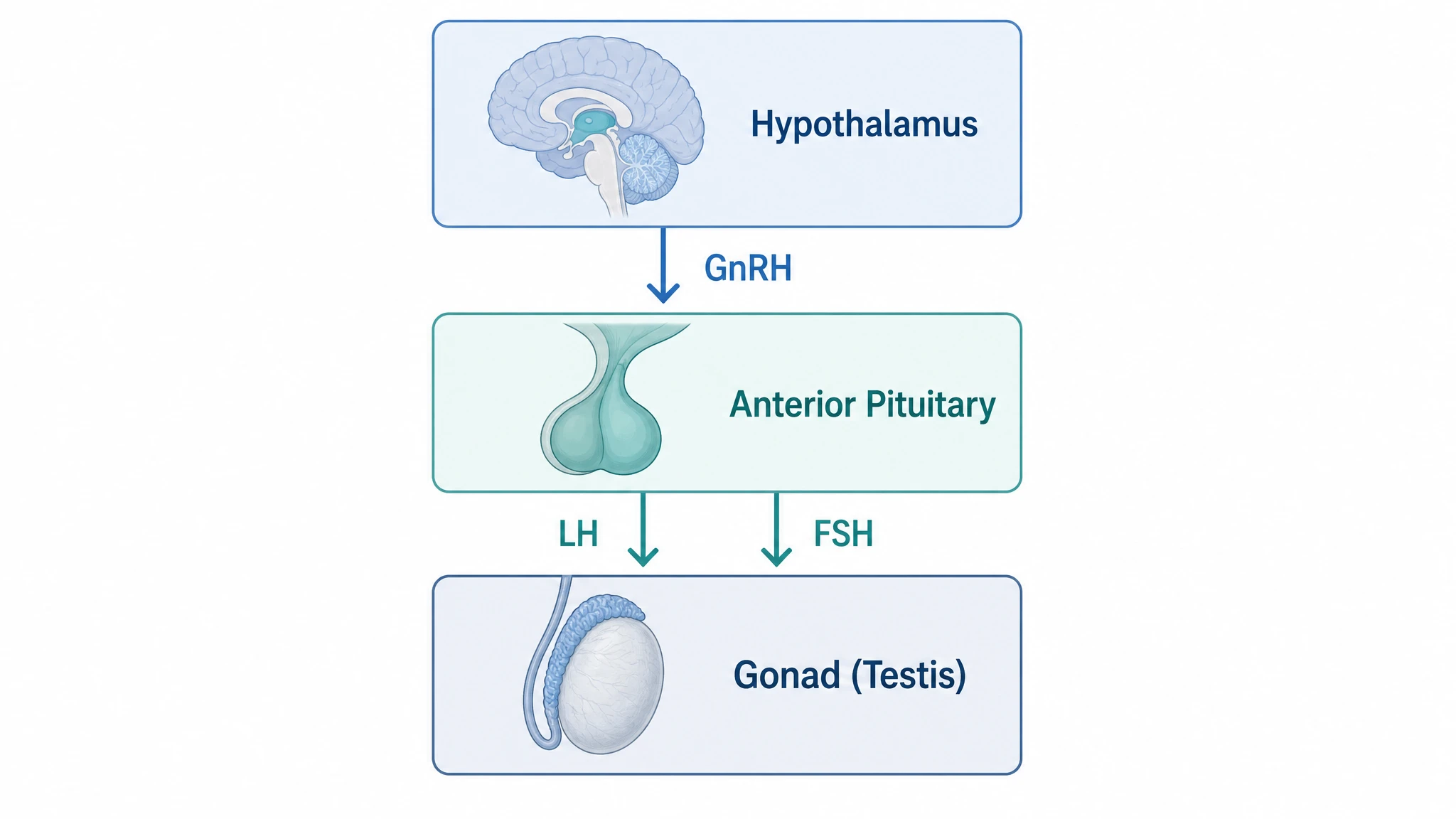
Three levels with the portal circulation drawn correctly
Hypothalamus, anterior pituitary and testis sit on one vertical, connected by the hypophyseal portal system rather than by a generic arrow — GnRH reaches gonadotropes through that private vascular route at concentrations the systemic circulation never sees. Gonadotropins then travel systemically. Separating the two delivery routes prevents the common error of drawing the releasing hormone as if it circulated like a peripheral hormone.
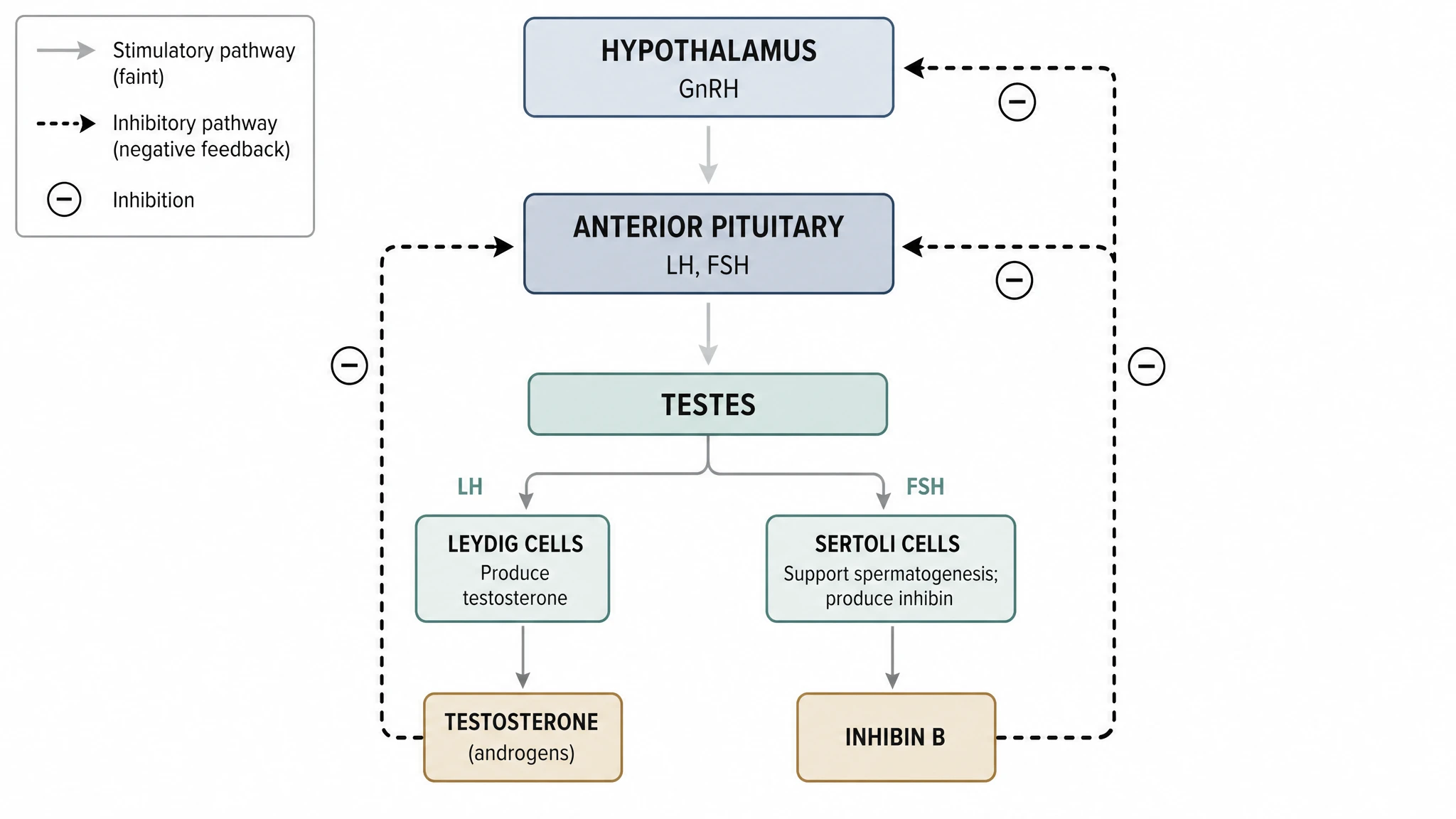
Long-loop and selective feedback drawn separately
Two inhibitory paths are distinguished instead of merged. Androgen — partly after aromatization to estradiol — acts on hypothalamic kisspeptin neurons to slow pulse frequency and on gonadotropes to blunt LH amplitude. Inhibin B acts only at the pituitary and only on FSH, by antagonizing activin signaling. Drawing one arrow for all suppression is the single most frequent inaccuracy in student and review figures.
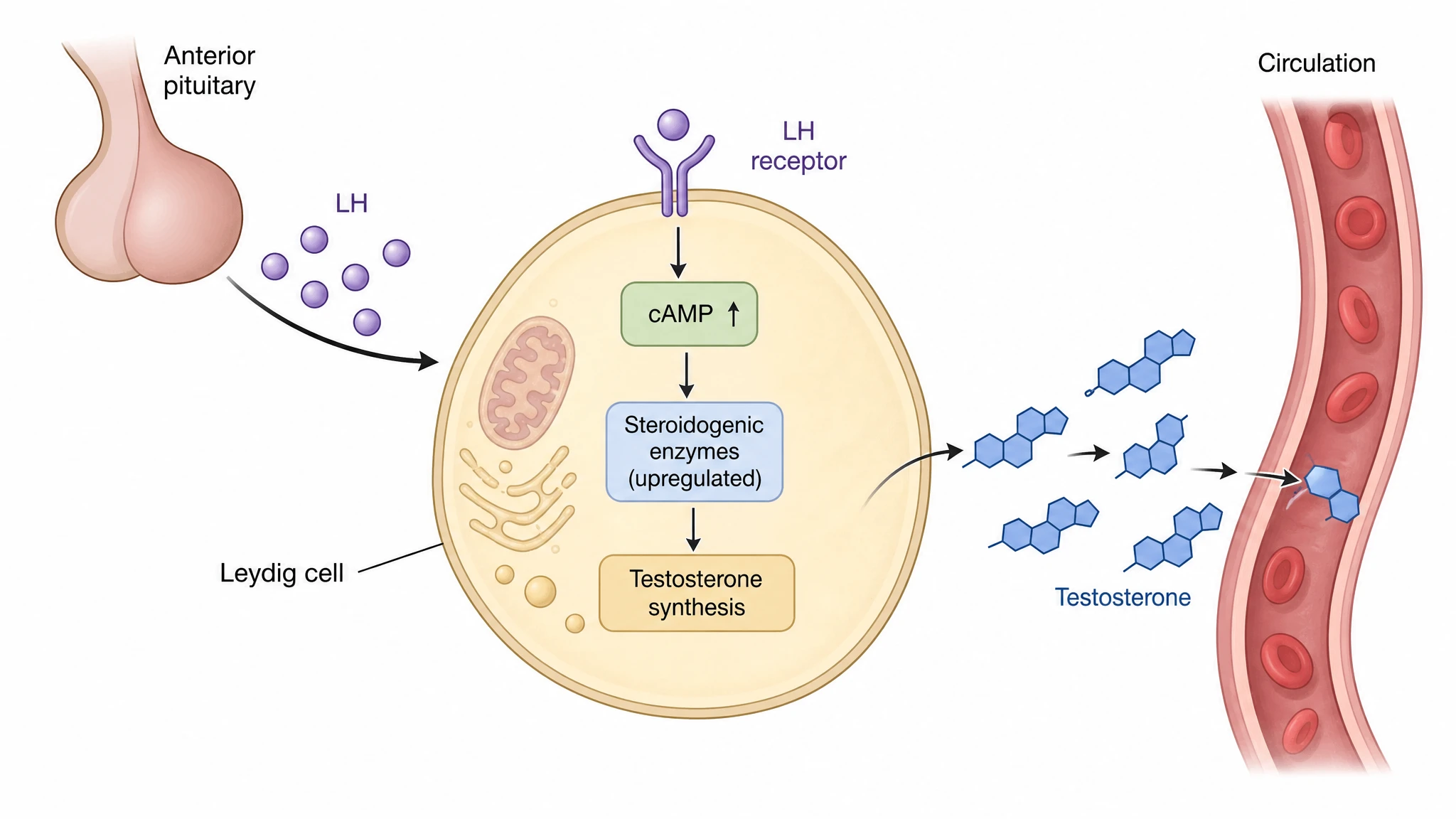
LH acting on Leydig cells and steroidogenesis
The interstitial panel traces the pathway that the question 'which cells does LH act on' actually needs: LH binds LHCGR on Leydig cells, Gs–cAMP–PKA signaling induces StAR, cholesterol is imported into the mitochondrion, and the steroidogenic chain runs from pregnenolone to testosterone. Intratesticular androgen concentration is annotated as far higher than serum, which is why the peripheral value alone cannot report on spermatogenic support.
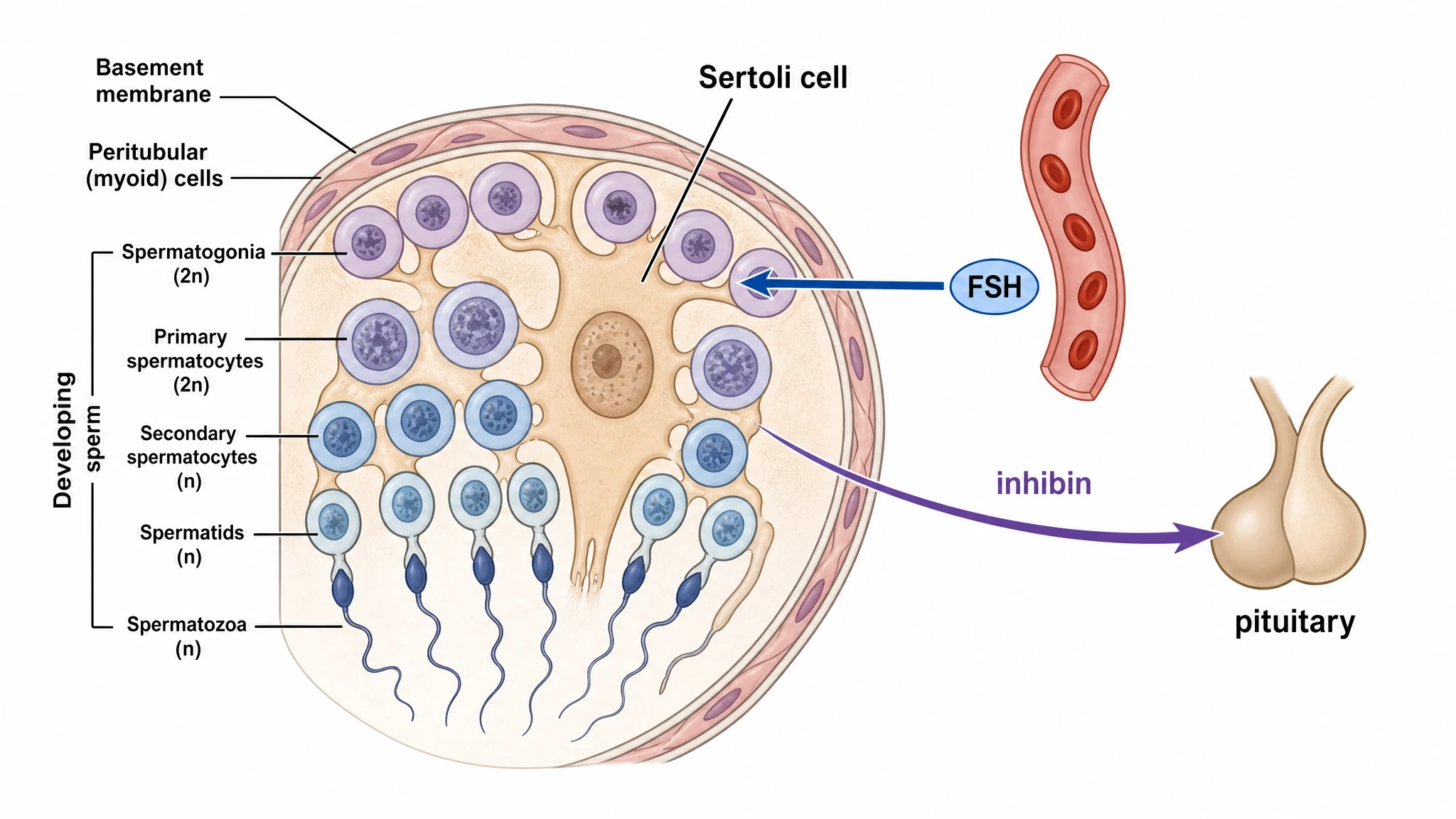
FSH acting on Sertoli cells and the tubule
The tubular panel places FSHR on Sertoli cells and shows the outputs that matter for the loop: androgen-binding protein, aromatase, and inhibin B, the peptide that returns to the pituitary as the selective brake on FSH. Sertoli cells are drawn as the nurse compartment for germ cells behind the blood–testis barrier, which makes clear why gonadotropin and androgen actions on spermatogenesis are indirect.
Negative Feedback Loops of the Male HPG Axis— templates & examples
How to make Negative Feedback Loops of the Male HPG Axis
Describe your figure
Tell SciFig what to draw in plain language — no design tools required.
Generate with SciFig
Get a clean, publication-ready figure that matches your description in seconds.
Edit & export
Vectorize it into editable SVG, relabel everything, and export for your paper, poster, or slides.
Related searches
- hpg axis
- hpga loop lh acts on which cells
- male gonad negative feedback loop
- negative feedback loop testosterone
- testosterone spermatogenesis feedback
- hypothalamic pituitary gonadal axis
- gnrh lh fsh testosterone
- male reproductive hormone axis
- hpg axis negative feedback
- hpg axis diagram
Make figures for
Related pages
Endocrinology Templates
Browse more Endocrinology templates in SciFig's library.
All Templates
Browse every template page in SciFig's library.
Graphical Abstract Maker
Summarize your study in one panel
Scientific Poster Generator
Design a conference research poster
AI Scientific Image Generator
Generate research figures from text
Conceptual Framework Generator
Map variables and their relationships
Frequently Asked Questions
Common questions about Negative Feedback Loops of the Male HPG Axis.

Ready to publish?
Make your own Negative Feedback Loops of the Male HPG Axis in minutes.
Start for freeFree to start · No credit card required · Built for researchers